

A private helicopter crashed on the Greek island of Sifnos on Monday, killing all three people aboard, fire brigade officials said.
The aircraft went down shortly after taking off from the island’s helipad in the Tholos area, killing the pilot and two passengers, officials said. The crash sparked a fire that ignited on impact, sending up a column of dark smoke visible in footage broadcast by local media, which showed the crash site on an arid hillside.
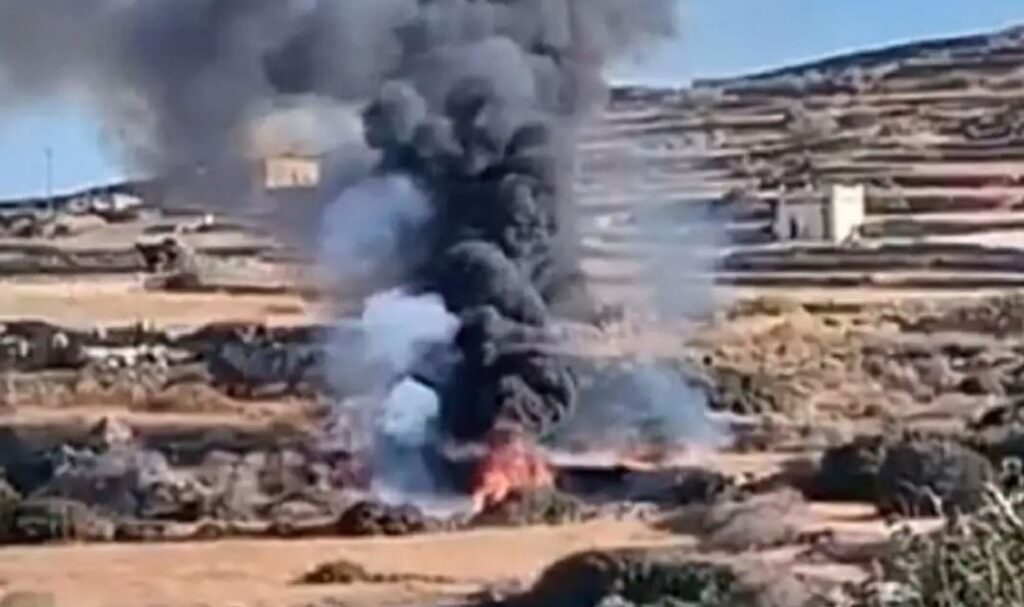
The cause of the crash was not immediately known, and the identities and nationalities of those aboard had not been released as of the latest reports.
What We Know So Far
The aircraft was identified by one outlet as a Bell 206 helicopter. It came down in an inhabited area of the island, though no homes were struck, according to that report. Early accounts differed slightly on the condition of those aboard at the time rescuers arrived, with one outlet initially reporting the three occupants had been found unconscious, while other reports described all three as killed in the crash. That discrepancy reflected the fast moving nature of the initial response rather than a confirmed disagreement over the eventual outcome.
Local firefighting resources on Sifnos were limited, with two firefighters and a single fire engine initially working to contain the blaze at the crash site. A rescue team from the nearby island of Syros was dispatched by speedboat to assist with the emergency response, given the limited resources available on Sifnos itself.
Sifnos has a permanent population of about 2,600 people but has grown increasingly popular with tourists in recent years, making it one of several Greek islands that see substantial seasonal population increases during the summer travel season.
Why This Matters
Monday’s crash comes just weeks after a separate, unrelated helicopter collision during firefighting operations near Athens killed two crew members and left a third survivor. In that incident, a Greek and a Danish national aboard one helicopter were killed after a second helicopter, carrying a British and a Greek crew member, collided with it midair near Psatha in Attica, northwest of Athens. Footage of that collision showed the two aircraft crossing paths at low altitude before one helicopter’s rotor struck the underside of the other, sending it down in flames, while the second helicopter managed an emergency landing with both crew members surviving.
Greek Prime Minister Kyriakos Mitsotakis and President Konstantinos Tasoulas both paid tribute to the firefighters killed in that earlier collision, which occurred while crews battled a wildfire that ultimately destroyed more than 100 homes around Psatha.
Together, the two incidents highlight the elevated aviation risks accompanying Greece’s ongoing wildfire season, which has intensified following a summer marked by record breaking heat waves and unusually little rainfall, conditions scientists have linked to climate change. While destructive wildfires in France and Spain have shown signs of easing in recent weeks, Greece has seen new fires break out following a period of relative calm, keeping emergency aviation resources, including both firefighting and private helicopters, under sustained strain.
What Happens Next
Authorities are continuing to investigate the cause of Monday’s crash, with further details expected as the rescue and recovery operation at the site develops. Confirmation of the victims’ identities is expected once next of kin notifications are complete.
Given Sifnos’s limited local emergency resources, the response to Monday’s crash relied on support from neighboring Syros, a dynamic likely to draw attention to broader questions about emergency response capacity across Greece’s smaller, tourist dependent islands as visitor numbers continue to grow during peak summer months.
Reporting drawn from the Associated Press, Reuters, The Independent, eKathimerini and Greek City Times, citing Greek fire brigade officials.





