

At least 10 people were killed Friday when an overcrowded tourist boat overturned in the Yamuna River near the temple town of Vrindavan in northern India, local officials said.
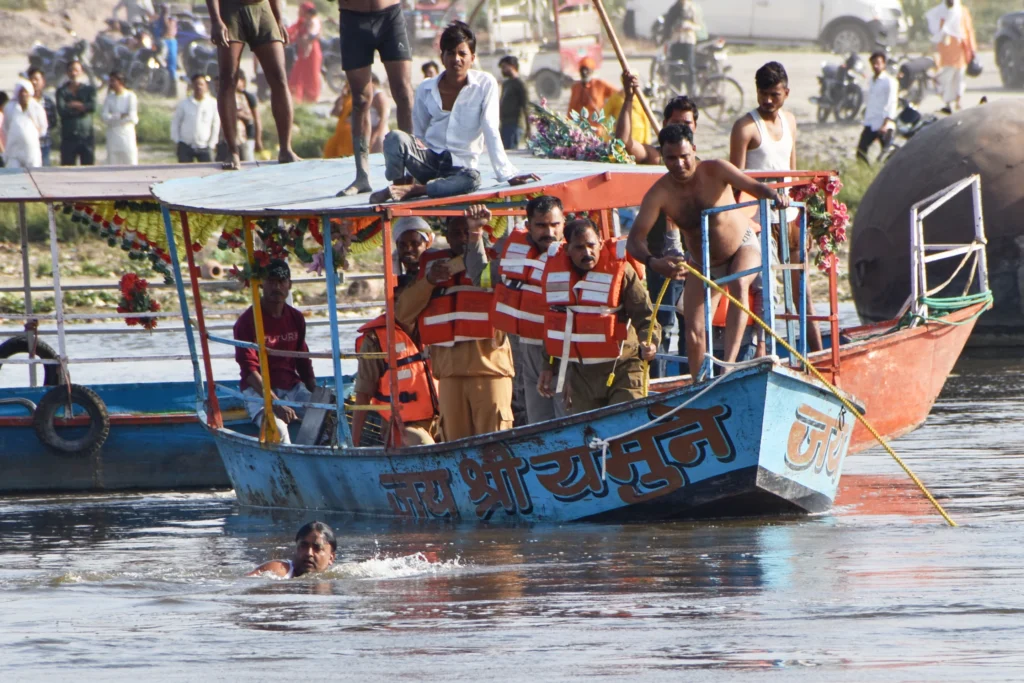
The privately operated vessel, designed to carry about 15 passengers, was transporting roughly 25 people when it capsized midstream, authorities said. Early findings indicate that strong winds destabilized the boat before it collided with a floating bridge and overturned.
Chandraprakash Singh, a senior administrative official, said 15 people were pulled from the water, with four in critical condition. The victims were all Indian nationals, including six women.
Officials said many passengers were not wearing life jackets, and initial inspections suggested the boat was not properly maintained. The operator fled the scene following the incident and remains at large.
The group on board was part of a larger gathering of about 150 visitors traveling in the area, a major pilgrimage destination that draws large crowds year-round.
Fatal boating accidents occur frequently in India, where safety standards are often uneven and overcrowding is common. A similar incident in 2023 in southern India left at least 22 people dead.
The tragedy underscores persistent safety gaps in India’s inland water transport system, particularly in high-traffic religious and tourist destinations. Despite repeated fatal incidents, enforcement of passenger limits and safety regulations remains inconsistent, especially among privately operated vessels.
The absence of life jackets in this case reflects a broader pattern seen in past disasters, where basic safety measures are either ignored or inadequately monitored. While local authorities often announce investigations after such incidents, long-term structural reforms have been slow to materialize.
Vrindavan’s status as a major pilgrimage hub adds another layer of complexity. Seasonal surges in visitors place pressure on transport operators to maximize capacity, sometimes at the expense of safety. Without stricter oversight and penalties for violations, similar incidents are likely to recur.
The operator’s reported flight from the scene also raises questions about accountability and regulatory enforcement. Strengthening licensing systems and ensuring routine inspections could play a critical role in preventing future disasters.
The Associated Press





