

President Donald Trump signaled a potential escalation in the conflict with Iran, saying U.S. warships are being rearmed with advanced weapons as Washington prepares for decisive negotiations aimed at securing a longer-term peace agreement.
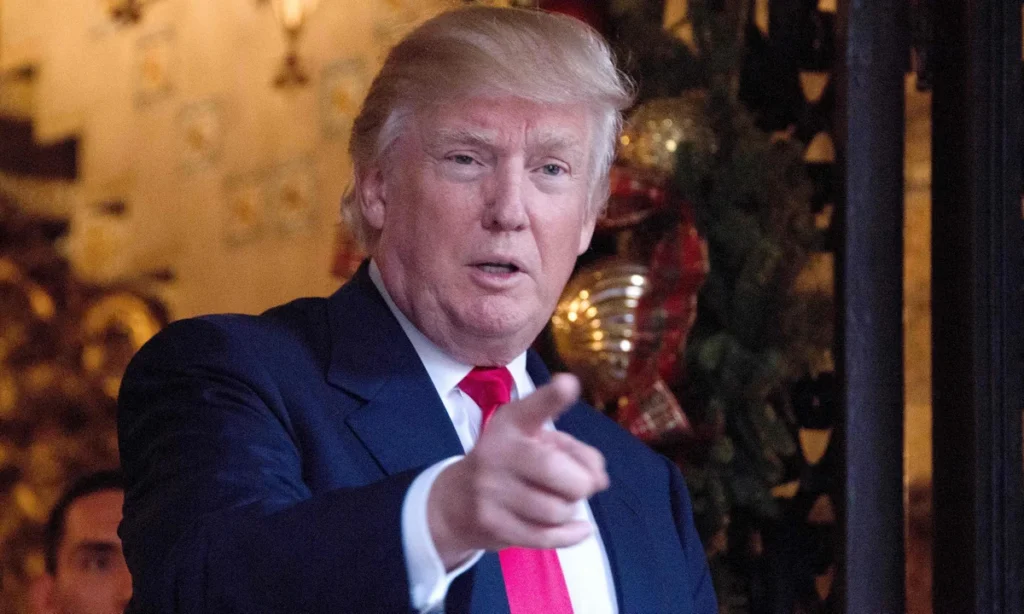
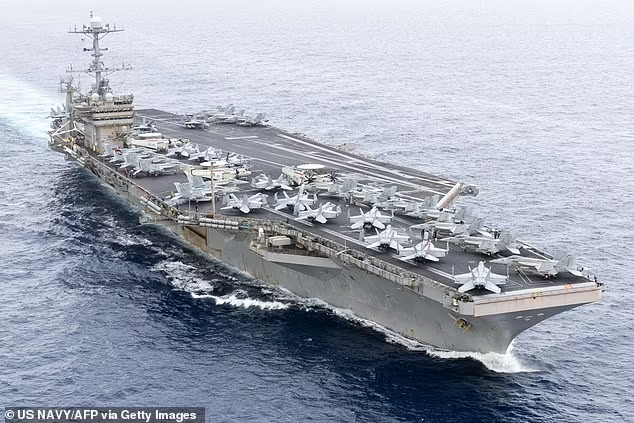
In remarks carried by the New York Post and echoed by The Times of Israel, citing AFP, Trump indicated that military options remain firmly on the table if diplomacy fails. He described an ongoing military buildup, noting that naval forces are being supplied with upgraded weaponry following earlier strikes in the conflict.
“We have a reset going,” Trump said, adding that U.S. forces are being equipped with what he characterized as the most advanced weapons systems. He emphasized that those assets would be used if negotiations do not produce an agreement.
The warning comes as Vice President JD Vance and envoy Steve Witkoff travel to Pakistan for talks expected to test a fragile pause in hostilities announced earlier in the week. Trump has framed the negotiations as a pivotal moment, saying it will soon become clear whether a broader settlement can be reached.
In separate comments posted on his Truth Social platform, Trump cast doubt on Iran’s reliability as a negotiating partner, suggesting inconsistencies between its public statements and private assurances. He reiterated his administration’s position that Iran must abandon any pursuit of nuclear weapons capability as part of a final deal.
Vance also underscored the administration’s cautious stance, signaling openness to diplomacy while warning that the United States would not tolerate bad-faith negotiations. He said the U.S. delegation would approach the talks with clear expectations set by the president.
The developments unfold against a backdrop of heightened tensions in the region, where recent military exchanges and disruptions to key shipping routes have raised concerns about broader instability and global economic fallout.
The latest statements highlight a dual-track strategy by the Trump administration that blends diplomacy with overt military pressure. By publicly emphasizing the rearming of warships, the United States appears to be leveraging deterrence as a negotiating tool, aiming to compel concessions while maintaining readiness for rapid escalation.
This approach carries significant risks. While it may strengthen Washington’s bargaining position, it also raises the likelihood of miscalculation, particularly in a region already strained by overlapping conflicts. Iran’s leadership, facing internal and external pressures, may interpret such signals as coercive, potentially hardening its stance rather than encouraging compromise.
The timing of the remarks is also notable. With global energy markets sensitive to disruptions in major shipping routes, any indication of renewed conflict could trigger volatility in oil prices and broader financial markets. The mere suggestion that military action could resume has already contributed to uncertainty among investors and policymakers.
Diplomatically, the talks in Pakistan represent a critical inflection point. A breakthrough could stabilize the region and restore confidence in international shipping lanes. Failure, however, could set the stage for a rapid return to hostilities, with consequences extending far beyond the immediate conflict zone.
NewYorkPost/TheSun/TimesofIsrael





