

Iranian authorities on Monday carried out the execution of two men convicted of setting fire to a mosque during anti government protests, as rights groups point to a sharp increase in arrests and political executions since the outbreak of conflict earlier this year.
The judiciary, through its Mizan News Agency, announced that Mehrdad Mohammadi Nia and Ashkan Maleki were put to death after the Supreme Court upheld their sentences. Officials identified the pair as key figures in an attack on the Jafari Mosque in Tehran’s Gisha district during demonstrations that spread across the country in late 2025 and early 2026.
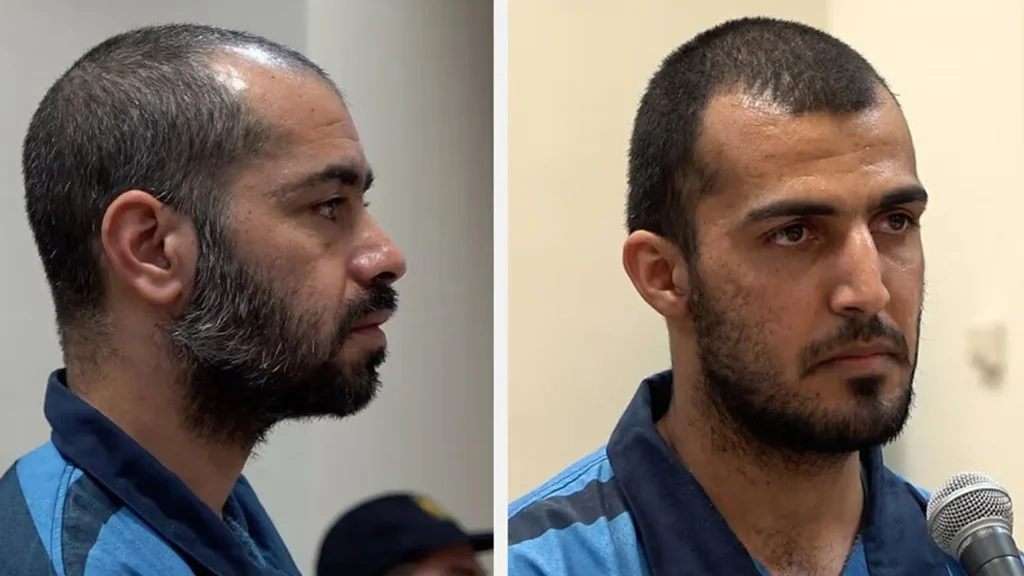
Authorities said the men were found guilty of arson, damaging public property, confronting security forces, blocking roads, and engaging in actions deemed harmful to national security. The judiciary also ordered the seizure of their assets. The specific capital charge applied in the case was not disclosed.
The executions come amid a broader crackdown linked to protests that erupted following the sharp collapse of Iran’s currency, the rial. What began as economic unrest quickly evolved into widespread demonstrations across major cities.
Security forces responded with force in early January, leading to a high number of casualties. Iran’s Supreme Council of National Security has acknowledged more than 3,000 deaths, while a United Nations investigator has placed the toll at no fewer than 5,000. Other estimates from humanitarian groups suggest the number could be significantly higher, though verification remains difficult due to a government imposed internet blackout at the time.
Human rights organization Amnesty International said last week that more than 6,000 people have been detained since the conflict began in February. Those detained include protesters, journalists, lawyers, and activists. The group documented at least 39 executions tied to political cases during the same period, raising concerns about the pace and fairness of judicial proceedings.
Amnesty also cited allegations of enforced disappearances, torture, and coerced confessions, along with trials that failed to meet international legal standards. Iranian officials have repeatedly rejected such claims, maintaining that all convictions follow due legal process and involve serious criminal offenses.
Separate figures from rights monitors indicate Iran remains among the world’s most active countries in carrying out executions. Amnesty’s annual review recorded more than 2,100 executions in 2025 alone, accounting for a large share of global totals.
State media coverage, including reporting cited by Aawsat, framed the executed men as central perpetrators of violence during the protests. Authorities have also accused foreign actors, including the United States and Israel, of encouraging unrest, claims that outside observers and rights groups dispute.
The executions highlight an intensifying strategy by Iranian authorities to reassert control through the judicial system following months of unrest. By linking protest related actions to national security charges, the government appears to be signaling a zero tolerance approach to dissent, particularly during a period of heightened regional tensions.
The scale of arrests and reported executions suggests a coordinated effort to deter future demonstrations. However, such measures may carry long term risks. Analysts note that harsh crackdowns can deepen public grievances, especially when driven by economic hardship and political frustration.
The lack of transparency surrounding charges and trial procedures also raises questions about due process. In high profile cases tied to protests, limited access to independent legal representation and rapid sentencing timelines have drawn sustained criticism from international observers.
At the same time, the broader geopolitical context cannot be ignored. With Iran engaged in ongoing tensions involving the United States and regional actors, domestic stability has taken on added importance for the government. Authorities may view internal dissent as a vulnerability that could be exploited externally.
If current trends continue, Iran could face increasing diplomatic pressure over human rights concerns, even as it prioritizes internal control. The situation underscores a growing divide between domestic policy priorities and international expectations regarding legal standards and civil liberties.
Euronews/Aawsat





