

An Iranian missile and drone attack struck a U.S. military base in Saudi Arabia on Friday, wounding several American service members and damaging multiple aircraft, a U.S. official familiar with the situation said.
The strike targeted Prince Sultan Air Base, a key installation supporting U.S. operations in the region. The official, who spoke on condition of anonymity to discuss sensitive military matters, said the attack involved both a ballistic missile and unmanned aerial vehicles. The number of injured personnel and the severity of their wounds were not immediately disclosed.
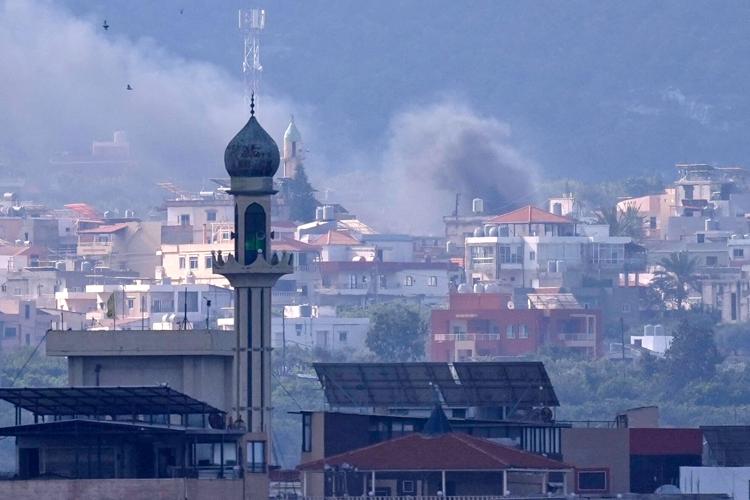
The Associated Press, citing the same official, confirmed that several U.S. refueling aircraft sustained damage in the attack. The Wall Street Journal first detailed the incident, which was later supported by satellite imagery appearing to show damage at the base.
U.S. Central Command said earlier Friday that more than 300 American service members have been wounded since the conflict intensified.
The latest strike follows previous attacks on the same installation. Army Sgt. Benjamin N. Pennington, 26, died days after being wounded in a March 1 attack on the base, underscoring the ongoing risks faced by U.S. personnel in the region.
The escalation comes as Israel carried out airstrikes Friday on Iranian nuclear facilities, targeting a heavy-water plant and a site producing uranium concentrate known as yellowcake. Iran’s Atomic Energy Organization said the strikes caused no casualties and posed no contamination risk, but officials warned of retaliation.
President Donald Trump has continued to apply pressure on Tehran while maintaining that diplomatic efforts are progressing. He again extended his deadline for Iran to reopen the Strait of Hormuz, a critical route for global oil shipments.
Trump said talks aimed at ending the conflict are “going very well,” though Iranian officials have publicly denied engaging in negotiations with the United States.
The Strait of Hormuz remains central to the crisis. Iran’s actions affecting shipping through the narrow waterway have raised concerns about a potential global energy disruption. The route carries a significant share of the world’s oil supply, and any interference has immediate economic consequences.
A Gulf Arab coalition said Thursday that Iran has begun charging ships fees for safe passage through the strait, a move analysts say could further increase tensions and disrupt global markets.
The attack on Prince Sultan Air Base highlights the vulnerability of U.S. military assets in the region, even as Washington has increased its presence. The base serves as a major logistics and refueling hub, supporting air operations across the Middle East.
Military analysts note that damage to refueling aircraft could have broader operational consequences. These planes are essential for extending the range of combat missions, and any disruption could affect the pace and reach of U.S. air operations.
U.S. officials have not announced immediate retaliatory measures following the attack, but the incident is expected to factor into ongoing military planning as the Pentagon evaluates its next steps.
The strike on Prince Sultan Air Base signals a notable escalation in Iran’s approach, demonstrating a willingness to directly target U.S. forces and infrastructure. By combining missile and drone tactics, Iran appears to be employing a strategy designed to challenge air defense systems and increase the likelihood of successful strikes.
The use of drones alongside missiles can complicate defensive responses, as drones may act as decoys or overwhelm detection systems. This layered approach has become increasingly common in modern conflicts and suggests a coordinated effort to exploit potential weaknesses.
Beyond the immediate military impact, the attack fits into a broader strategy that blends military action with economic pressure. Iran’s interference with shipping in the Strait of Hormuz, along with reported fees imposed on vessels, indicates an effort to influence global energy markets and apply indirect pressure on the United States and its allies.
For the United States, the situation presents a complex challenge. Maintaining a strong military posture is intended to deter further aggression, but each additional attack raises the risk of escalation. A direct military response could trigger a wider conflict involving multiple countries in the region.
At the same time, the conflicting signals on diplomacy add uncertainty. While U.S. officials point to progress in talks, Iran’s public denial of negotiations suggests a gap between public messaging and behind-the-scenes efforts.
The attack on U.S. forces in Saudi Arabia may prove to be a turning point, potentially shaping both military strategy and diplomatic efforts as the conflict continues to evolve.





