

Iranian missiles struck areas near Israel’s primary nuclear research hub on Friday, hitting the southern cities of Dimona and Arad and injuring dozens of people in an attack that heightened fears of broader regional escalation.
The Israel Defense Forces said its air defense systems failed to intercept the incoming missiles, allowing them to strike populated areas near the Dimona nuclear research center.
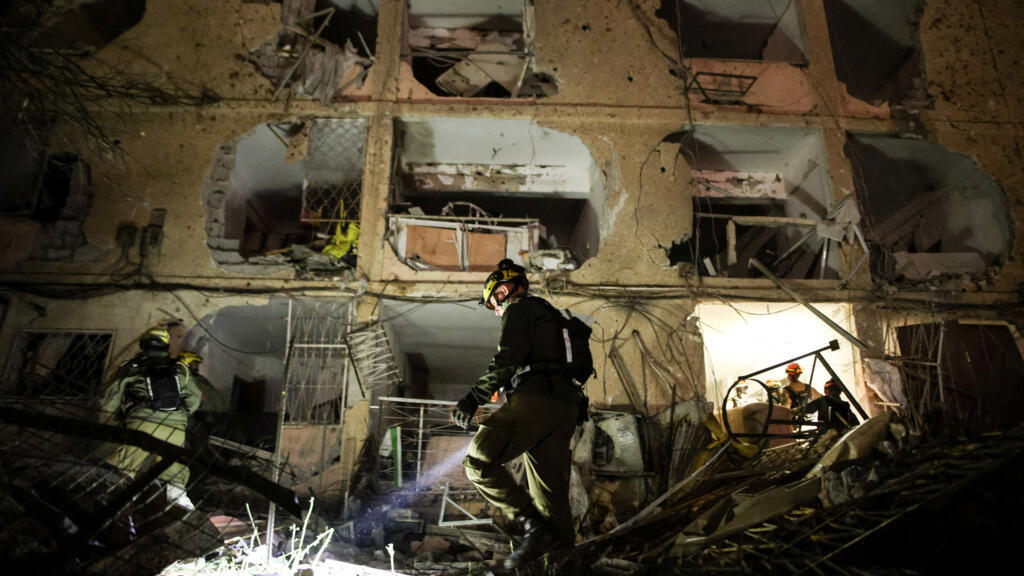
Emergency crews responded to multiple impact sites, including in Arad, where damage was extensive. Footage from the scene showed shattered buildings and a bus with its windows blown out, while firefighters and police worked to secure the area and search for victims.
The Associated Press reported that Israeli rescue teams were responding to what appeared to be a direct strike in Arad, located close to the Dimona facility. Authorities said at least four people were in serious condition, including a young child, while dozens more sustained minor injuries. Several individuals remained unaccounted for as search operations continued.
In Dimona, additional casualties were reported. Emergency services treated more than two dozen people for light injuries, while a 10-year-old boy was listed in serious condition and a woman in her 40s sustained moderate injuries from shrapnel.
The Dimona complex, established in 1958, is widely regarded as the center of Israel’s nuclear program. Although Israel has never officially confirmed possessing nuclear weapons, it is broadly believed to maintain such capabilities under a long-standing policy of ambiguity.
Iran indicated that the strikes were intentional, describing them as part of a response linked to developments involving its own nuclear infrastructure. Tehran had earlier warned it would respond after damage was reported at the Natanz nuclear enrichment facility. Israeli officials have denied responsibility for that incident.
Despite the proximity of the missile impacts to sensitive nuclear facilities, the International Atomic Energy Agency said it had not detected any abnormal radiation levels following the strikes, easing immediate concerns about a nuclear safety incident.
The Israeli military has not provided detailed explanations for why its interception systems failed, an unusual development that is likely to trigger internal reviews. Israel’s layered air defense network has long been considered a key component of its national security posture.
The strike near Dimona marks a notable escalation in the ongoing confrontation between Iran and Israel, signaling a shift toward targets associated with nuclear capability. While previous exchanges have largely focused on military installations, this incident introduces a more sensitive dimension with broader geopolitical implications.
By focusing on Dimona, Iran appears to be signaling a strategy of reciprocal deterrence, responding to perceived threats against its own nuclear program with actions targeting comparable sites. This approach raises the risk of further escalation, particularly if either side interprets such moves as crossing critical red lines.
The failure of Israel’s air defense systems to intercept the missiles may also influence future dynamics. Israel’s defensive capabilities have been central to its deterrence strategy, and any perceived vulnerability could alter calculations on both sides.
The incident also highlights the risks to civilian populations living near strategic facilities. Cities such as Arad and Dimona are not primary military targets, yet their proximity to sensitive infrastructure increases their exposure during conflict.
With tensions already high and global markets reacting to instability in the region, the attack underscores the fragile balance in the Middle East. Any further escalation involving critical infrastructure or symbolic targets could have far-reaching consequences beyond the immediate conflict zone.





