

Iranian forces have seized an oil tanker in the Gulf of Oman while the United States military says it disabled two vessels attempting to reach Iranian ports, marking a sharp escalation in already fragile conditions surrounding a ceasefire effort between the two sides.
Iran’s elite military unit, the Islamic Revolutionary Guard Corps, announced Friday that it had taken control of a tanker identified as the Ocean Koi during what it described as a targeted naval operation. Officials claimed the vessel was intercepted for allegedly attempting to interfere with Iran’s oil exports and economic interests.
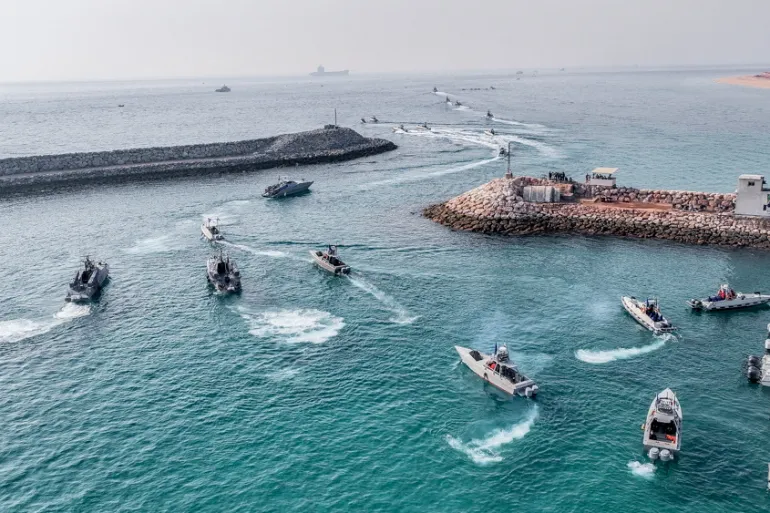
State media released footage showing armed personnel boarding the ship and detaining its crew. Shipping data indicates the vessel is registered in Barbados.
At nearly the same time, U.S. Central Command disclosed that American forces had disabled two Iranian flagged tankers in the same region. The military said the vessels were attempting to access Iranian ports in violation of an ongoing maritime blockade.
Admiral Bradley Cooper stated that U.S. forces remain committed to enforcing restrictions on maritime traffic linked to Iran, emphasizing continued monitoring and intervention in the region.
The developments followed a direct exchange of fire between U.S. and Iranian forces in the Strait of Hormuz just hours earlier. The confrontation raised fresh concerns about the stability of a temporary halt in fighting and the prospects for a longer term agreement.
President Donald Trump said Iran had launched attacks against three U.S. Navy destroyers operating in the strait. Iranian military officials countered with claims that U.S. forces struck an Iranian tanker and another vessel, resulting in injuries to several sailors and leaving others unaccounted for.
Iran’s joint military command also accused the United States of carrying out airstrikes on civilian locations on Qeshm Island, a strategically important area at the entrance to the Strait of Hormuz. In response, Iranian forces said they targeted U.S. naval assets positioned east of the strait and near the port city of Chabahar.
Despite the exchange, President Donald Trump downplayed the incident, describing it as limited and not indicative of a breakdown in the ceasefire. U.S. Secretary of State Marco Rubio indicated that Washington is still awaiting Tehran’s response to a proposed framework aimed at ending the conflict.
Diplomatic efforts continued behind the scenes. Vice President JD Vance held talks in Washington with Mohammed bin Abdulrahman Al Thani, focusing on mediation initiatives led by Pakistan to reduce tensions and encourage negotiations.
Iran’s foreign ministry signaled that it is reviewing the proposal and weighing its response. A spokesperson warned that Iranian forces remain on alert and prepared to respond to any perceived threats.
The seizure of a tanker and the disabling of vessels highlight a dangerous phase in the confrontation between Iran and the United States, where maritime control has become a central tool of pressure. The Strait of Hormuz, through which a significant share of global oil shipments typically passes, is once again at the center of geopolitical tension.
Iran’s actions suggest a shift toward more assertive enforcement of its influence over nearby waterways. By intercepting vessels and signaling new oversight measures, Tehran appears to be attempting to reshape the rules governing maritime movement in the region. This approach may serve both strategic and symbolic purposes, reinforcing claims of sovereignty while demonstrating operational capability.
From the U.S. perspective, disabling vessels tied to Iran reflects a continuation of efforts to limit Tehran’s economic and logistical reach. The enforcement of a blockade underscores Washington’s strategy of applying pressure without necessarily escalating into full scale conflict.
The exchange of fire, even if described as limited by officials, underscores how quickly tensions can rise. Incidents in narrow waterways like the Strait of Hormuz carry heightened risks because of the density of military and commercial traffic. A single miscalculation could disrupt global energy supplies and trigger broader instability.
Diplomatic efforts appear to be running parallel to these confrontations. The involvement of regional mediators, including Qatar and Pakistan, indicates that multiple actors are attempting to prevent further escalation. However, the effectiveness of these efforts depends on both sides demonstrating restraint while negotiations continue.
The broader implication is that maritime security has become a key bargaining chip. Control over shipping routes allows both Iran and the United States to exert influence beyond direct military engagement. For Iran, asserting authority over passage through the strait could strengthen its negotiating position. For the United States, maintaining a blockade reinforces its leverage in talks.
Energy markets are likely to remain sensitive to these developments. Any sustained disruption in the Strait of Hormuz could drive up oil prices and affect global supply chains. Even the perception of instability can influence market behavior, highlighting the economic stakes tied to the conflict.
The situation also reflects a pattern seen in past confrontations, where limited military actions coexist with ongoing diplomatic outreach. This dual track approach creates uncertainty, as progress in negotiations can be undermined by incidents at sea.
Looking ahead, the trajectory of the conflict will likely depend on whether both sides can separate military signaling from diplomatic engagement. If maritime confrontations continue, they could erode trust and complicate efforts to reach a lasting agreement.
Aljazeera





