

Relentless seasonal rains across Kenya have turned deadly once again, leaving at least 18 people dead in the past week and forcing tens of thousands from their homes as floodwaters spread across large parts of the country.
Police officials confirmed Sunday that most of the deaths were linked to drowning incidents as rivers burst their banks and water swept through residential areas. The scale of the destruction has stretched from rural communities to the capital, Nairobi, where entire neighborhoods have been inundated.
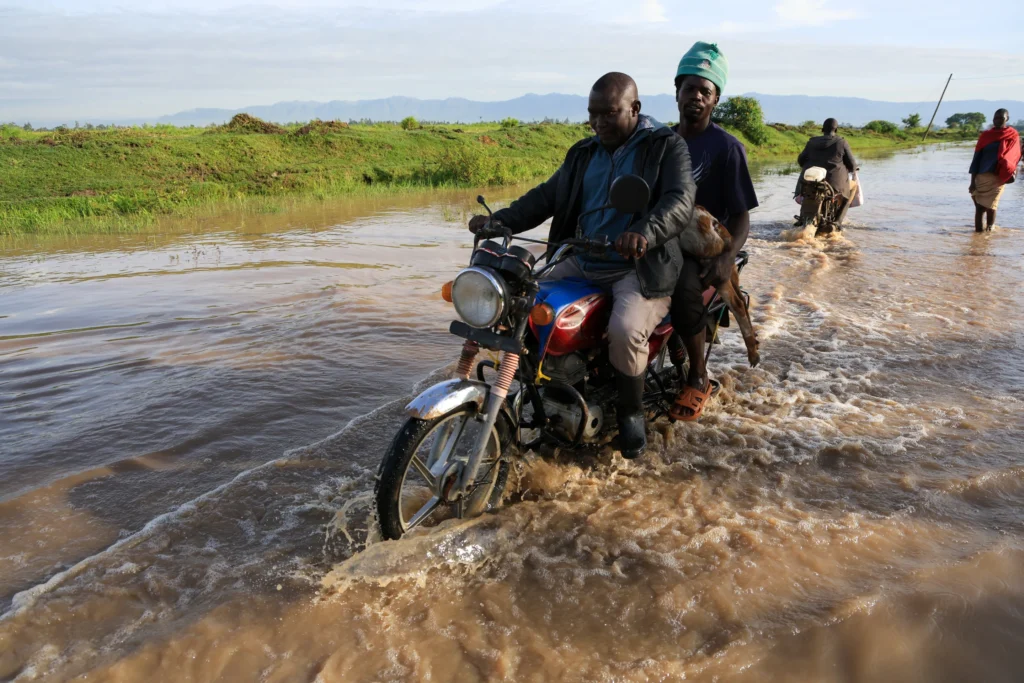
Figures released by Kenya’s Interior Ministry indicate that more than 54,000 households have been affected nationwide. Of those, about 6,000 are in Nairobi, underscoring the reach of the disaster into densely populated urban areas.
The flooding has also crippled essential services. Schools and hospitals have been forced to close after water entered buildings, while at least 17 roads have been rendered impassable, cutting off communities and slowing relief efforts.
The situation has been made worse by landslides in parts of the western Rift Valley, where unstable ground has pushed thousands of residents to abandon their homes. Authorities have issued fresh warnings to communities living along the Tana River and Athi River, urging them to move to higher ground as water levels continue to rise.
Forecasters at the Kenya Meteorological Department have cautioned that the worst may not be over. Weather officials expect intensified rainfall to persist through the first half of May, raising fears of further flooding and additional casualties.
The Associated Press earlier detailed how the seasonal rains, which began in March, have already left a trail of destruction. By the end of that month, more than 100 people had died as storms swept across the country.
Separately, Reuters noted that the death toll from flooding and landslides had climbed to 18, citing Kenya’s National Police Service. Authorities described the situation as a growing national emergency driven by sustained downpours.
Police said landslides have struck several regions, including Tharaka Nithi, Elgeyo-Marakwet, and Kiambu counties. In a statement, the National Police Service stressed that the fatalities highlight the severe risks posed by the continuing weather conditions.
“This underscores the grave danger,” the police said, pointing to the combined threats of flooding and collapsing terrain.
Across the country, the damage is becoming more visible by the day. Flooded roads have isolated villages. Farmland has been submerged, threatening crops and livelihoods. In some areas, families have been forced to shelter in schools or makeshift camps after losing everything.
Residents describe scenes of sudden chaos. Water levels have risen quickly, leaving little time to react. In low-lying areas, homes have been overtaken within hours, with belongings swept away by fast-moving currents.
Government agencies have mobilized emergency response teams, but access challenges remain a major hurdle. Damaged infrastructure has slowed the delivery of aid, while ongoing rains continue to complicate rescue operations.
The crisis is not new for Kenya. Each year, the March-to-May rainy season brings heavy downpours, but recent years have seen more intense and unpredictable weather patterns. This year’s floods appear to be following that trend, with early-season storms already proving deadly.
What is unfolding in Kenya reflects a broader pattern seen across East Africa, where climate variability is reshaping traditional weather cycles. The increasing frequency of extreme rainfall events has raised concerns among scientists and policymakers alike.
Flooding in urban areas like Nairobi highlights a different challenge: rapid population growth combined with strained infrastructure. Drainage systems often struggle to handle large volumes of water, turning streets into rivers and worsening the impact on residents.
Rural regions face their own vulnerabilities. Landslides in the Rift Valley are often tied to deforestation and land use changes, which weaken soil stability. When heavy rains arrive, the ground can give way with little warning.
There are also longer-term implications for food security. Flooded farmland can delay planting seasons or destroy crops entirely, potentially driving up food prices and increasing pressure on already vulnerable households.
Hydroelectric dams, which play a key role in Kenya’s energy supply, are another point of concern. Rising water levels may boost power generation in the short term, but they also raise the risk of controlled water releases that could worsen downstream flooding.
The economic toll is likely to grow as well. Damaged roads disrupt trade routes. Closed schools interrupt education. Health facilities affected by flooding face challenges in treating patients, especially in areas already dealing with limited resources.
Kenya’s experience mirrors challenges seen in other parts of the world, where extreme weather is becoming more common. The current crisis could renew calls for stronger investment in climate resilience, including improved drainage systems, better land management, and more effective early warning systems.
At the same time, the immediate focus remains on saving lives and supporting those displaced. Relief agencies are working to provide food, shelter, and medical care, but needs are expected to rise if the rains continue as forecast.
For many families, the road to recovery will be long. Rebuilding homes, restoring livelihoods, and returning to normal life may take months, if not longer.
As the rainy season continues, authorities face a difficult task: managing an unfolding emergency while preparing for the possibility of even more severe weather in the weeks ahead.
Reuters/AP





