Shirley Emehelu, who left Nigeria for the United States as a toddler, took the oath Monday as New Jersey’s lieutenant governor, becoming the first immigrant to serve as the state’s second-ranking official and putting a Nigerian American in line to act as governor of one of the nation’s most populous states.
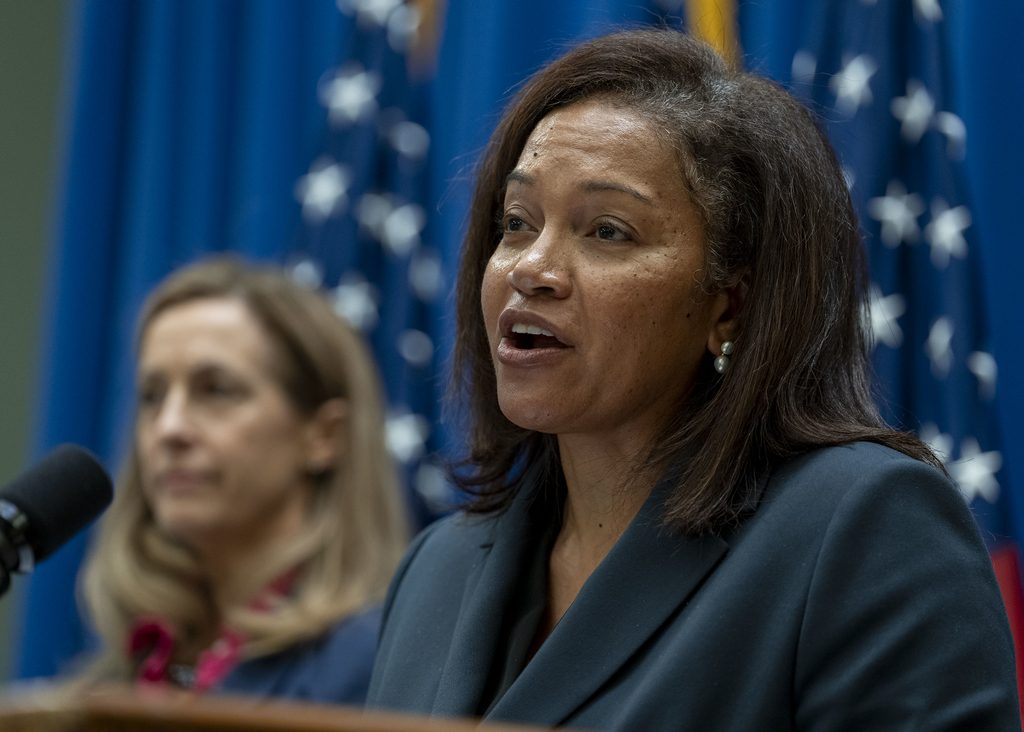
Gov. Mikie Sherrill formally announced the appointment of Emehelu, 48, a veteran prosecutor who had been serving as acting secretary of state, at a Statehouse news conference. State Supreme Court Justice Stuart Rabner administered the oath during the event, NJ.com said.
Emehelu placed her heritage at the center of the moment.
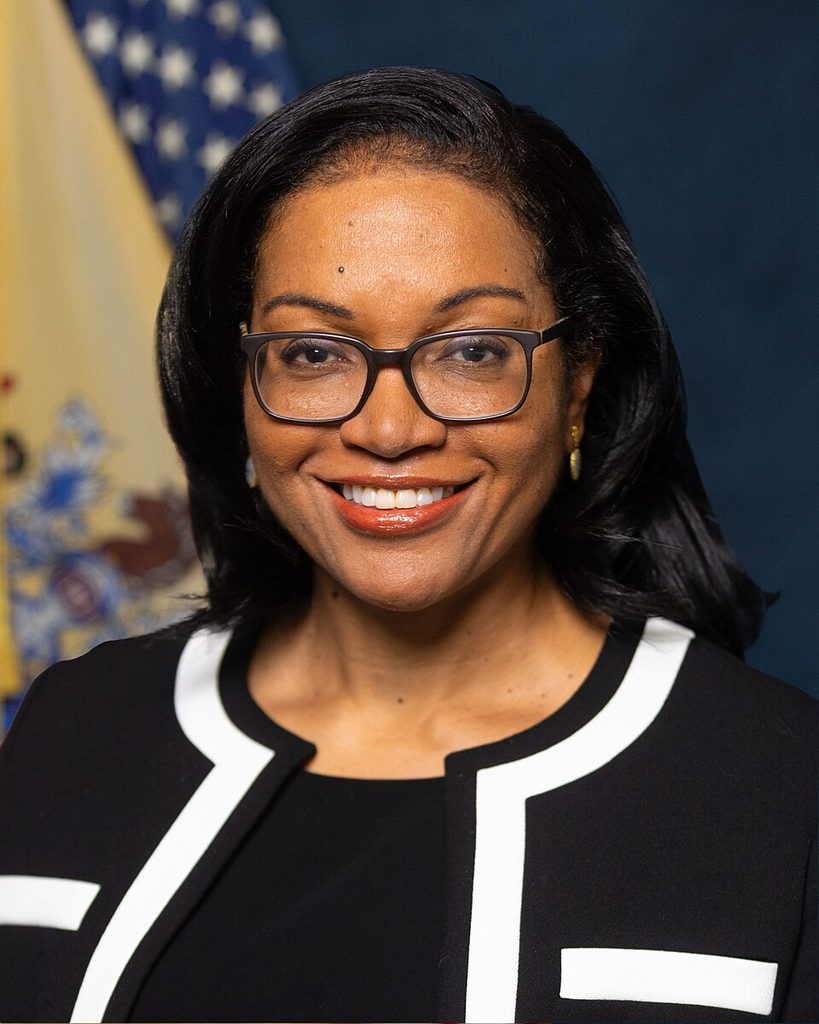
“As a Black woman and a Nigerian American, I’m proud of what this appointment represents for our state, and especially for the communities that share my heritage,” she said. “This is a milestone we can celebrate together.”
The appointment also marks the first time New Jersey’s governor and lieutenant governor are both women. Emehelu — whose surname is pronounced “Emma-hel-loo” — is the fifth person to hold the office since it was created.
A journey from Nigeria to Trenton
Born in Nigeria to parents who were both physicians, Emehelu immigrated to the United States at age 3, according to her Wikipedia biography. Her family lived first in Chicago and later in Pittsburgh.
She went on to earn a bachelor’s degree at Yale University and a law degree from Yale Law School, launching a career in law enforcement that would eventually bring her to the top tier of state government.
From 2010 to 2019, Emehelu worked as an assistant U.S. attorney in New Jersey, prosecuting complex financial fraud and public corruption cases. Politico noted that her work there also included white-collar crime and anti-money laundering efforts. It was in that office in Newark that she worked alongside Sherrill, who later left to run for Congress in 2018.
Emehelu later joined CSG Law, one of New Jersey’s leading law firms, where a resume reviewed by Politico showed she advised clients on “complex financial fraud matters,” including money laundering and securities fraud.
In 2022, she returned to public service as executive assistant attorney general, the third-highest post in the state attorney general’s office, supervising more than 500 lawyers under Attorney General Matt Platkin during Gov. Phil Murphy’s second term. When Sherrill took office in January, she named Emehelu acting state comptroller, then tapped her as acting secretary of state in September.
She has never run for elected office.
“What a profound honor it is to make history with Gov. Sherrill,” Emehelu said, flanked by relatives and Cabinet colleagues. “Through our work, I hope we can inspire the next generation to find their own ways to serve and make a little history of their own, too.”
Emehelu becomes the fourth Black lieutenant governor in state history, after Sheila Oliver, Tahesha Way and Dale Caldwell, and the fourth in a row to hold the post, Politico observed.
Immigrant identity shaped the choice
Sherrill pointed to Emehelu’s immigrant roots as part of her appeal. Black community leaders and advocacy groups had pressed the governor to choose a person of color to replace Caldwell, who had suggested race played a role in the allegations against him.
“I think Shirley, with her experience in the Black community and her experience as from the immigrant community, represents a lot of different voices,” Sherrill said.
The governor also invoked New Jersey’s history as a destination for newcomers. “I’m incredibly proud of our state’s history as the gateway to America, and the beating heart of social progress,” Sherrill said Friday. “And I’m even prouder to build an administration whose leaders embody that legacy.”
Sherrill said gender was not a deciding factor. “I didn’t have a preconceived notion that I needed to have another woman serving here. I felt like as governor, you know, I had that handled,” she said with a smile.
The two women share a long friendship that extends beyond the courtroom. Sherrill described them as fellow “working moms” whose children attended Watchung Elementary School in Montclair.
Replacing Caldwell
Emehelu succeeds Caldwell, who resigned Sept. 25, eight months into the administration, after an investigation commissioned by the governor’s office found he had committed ethics violations and sexual harassment. Caldwell has denied any wrongdoing. The New Jersey Globe first disclosed Emehelu’s pending selection, and Monday was Sherrill’s deadline to name a replacement.
“Back in September, I said I wanted a partner in government who would represent my administration and the people of New Jersey with honor and integrity,” Sherrill said. “I found that partner in Shirley — a leader with an exceptional track record of doing right by people.”
Because Caldwell was elected on Sherrill’s ticket, state law allows the governor to appoint his successor without Senate confirmation. Emehelu can serve through the end of Sherrill’s term and will keep her role as secretary of state, overseeing elections and serving as a liaison to businesses. She will also serve as acting governor whenever Sherrill is out of state, which has been often as the governor campaigns for Democrats nationwide.
Sherrill praised her handling of the Nov. 3 elections, which Emehelu oversaw weeks after taking charge amid efforts by President Donald Trump’s administration to obtain state voter rolls and fallout over noncitizens erroneously added to the rolls years earlier. “Many leaders would have run the other way, but Shirley ran toward the fight,” Sherrill said.
Emehelu said she wants to “make life more affordable” and expand opportunity. “Good government is about prioritizing the people we serve. It’s about honesty, integrity, and transparency,” she said.
Caldwell told NJ.com he wished her “the best of luck.” Assembly Speaker Craig Coughlin said Emehelu “brings with her an impressive background,” while state Democratic Party Chairman LeRoy Jones called her “a champion for people’s rights and a fighter against injustice.”
An immigrant milestone with national resonance
Emehelu’s swearing-in carries significance well beyond New Jersey’s borders. Nigerian Americans form one of the most professionally accomplished immigrant communities in the United States, heavily represented in medicine, law and academia, a pattern reflected in her own family of physicians and her Ivy League education.
Political representation at the highest levels of state government, however, has been rarer. A Nigerian-born official empowered to act as governor offers the diaspora a prominent new figure in American public life.
Her story is also likely to draw attention in Nigeria, where the achievements of citizens and descendants abroad are closely followed and often celebrated as points of national pride.
For Sherrill, the choice serves several purposes. It addresses pressure from Black leaders, highlights the state’s immigrant identity and replaces a relatively unknown running mate with a trusted longtime colleague. The contrast with Caldwell, who came from outside Sherrill’s circle, suggests the governor prioritized familiarity and loyalty after a damaging scandal.
Emehelu’s biggest test is yet to come. Having never faced voters, her standing will rest on her performance as acting governor during Sherrill’s travels and on her stewardship of future elections. Her smooth handling of the Nov. 3 vote under federal scrutiny gives her an early record to build on, and her unique profile ensures she will draw attention far exceeding the limited formal powers of the office.
Sources: NJ.com; Politico; New Jersey Globe; Wikipedia