

NEW DELHI — At least 22 people have been killed and dozens more displaced across northeastern India after days of relentless monsoon rains triggered landslides and flash floods, officials reported Saturday.
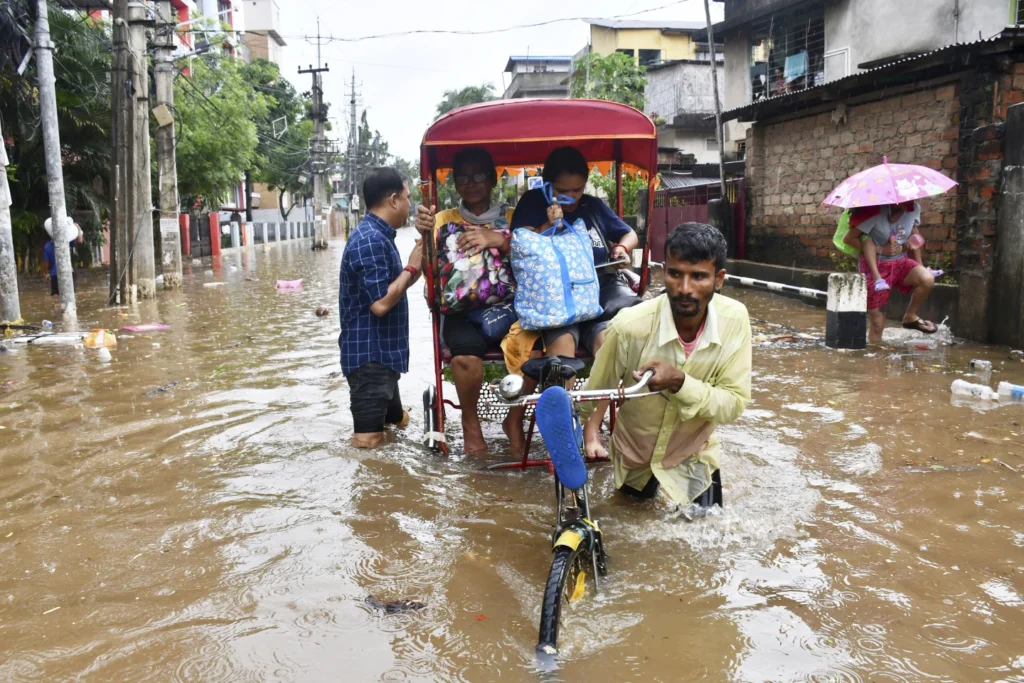
The casualties spanned multiple states in the region, with Assam, Arunachal Pradesh, Mizoram, Tripura, and Meghalaya all affected by severe weather-related disasters as the June-September monsoon season intensifies.
In Guwahati, the capital city of Assam, a mudslide buried several homes on Saturday, killing five people, including three members of one family, according to the state’s official flood bulletin. Emergency workers were still clearing debris as the search for potential survivors continued.
To the northeast in Arunachal Pradesh, seven people lost their lives on Friday when their vehicle was swept off the road by surging floodwaters. Two more fatalities were reported in a separate drowning incident in the same state.
Another eight people died across Mizoram, Tripura, and Meghalaya in the last 24 hours as the unrelenting rainfall led to catastrophic flooding and triggered multiple landslides, according to government figures released Saturday.
Assam’s Chief Minister Himanta Biswa Sarma said electricity was preemptively cut in several neighborhoods to prevent electrocution, as flooded streets and submerged homes created dangerous conditions across Guwahati and surrounding districts.
Heavy rainfall caused widespread flooding in urban areas of Guwahati Friday night, prompting hours-long power outages and leading authorities to shut down schools and colleges on Saturday as a precaution.
The India Meteorological Department (IMD) has forecast continued heavy rains in the region in the coming days, raising the likelihood of further landslides and flash floods, particularly in the mountainous northeastern states.
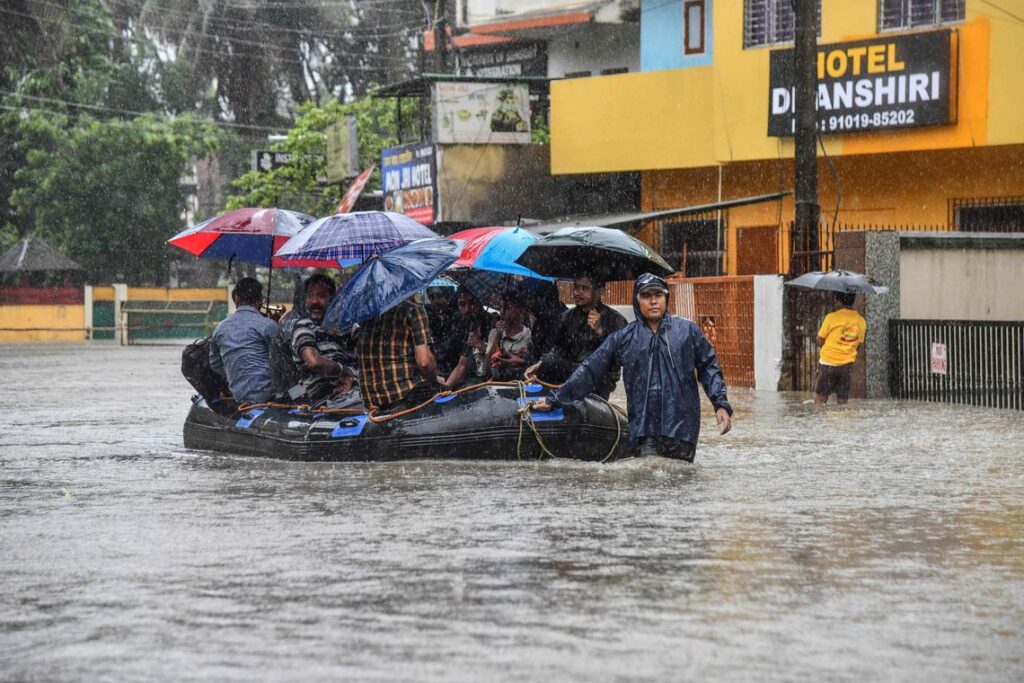
The northeastern belt, which shares borders with countries like China, Myanmar, and Bangladesh, is among India’s most climate-vulnerable zones, often bearing the brunt of intensifying monsoonal patterns.
While India’s monsoon season provides crucial rainfall for agriculture, especially for crops like rice and pulses, it increasingly brings destructive consequences, particularly in ecologically fragile regions.
Climate scientists warn that the Himalayan foothills and northeastern states are especially prone to the effects of global warming, which has made monsoons more erratic and intense in recent decades.
“The increasing frequency of sudden cloudbursts, flash floods, and landslides is tied to rising temperatures and extreme weather events,” researchers note, underscoring the urgent need for improved infrastructure and early warning systems in flood-prone areas.
State and federal disaster response teams have been deployed to provide relief supplies, medical assistance, and temporary shelters to displaced families. Authorities say rescue operations are ongoing in affected districts as they assess the full scale of damage.
With the monsoon season still in its early phase, officials warn the death toll could rise if current rainfall patterns persist, and they are urging residents in high-risk zones to evacuate where necessary.





