

Nigeria’s government has called in South Africa’s acting envoy after new protests and attacks targeting foreign nationals, including Nigerians, raised alarm over safety and strained relations between the two countries.
Officials said the envoy is expected at the foreign affairs ministry in Abuja on Monday, where authorities plan to express strong concern over reports of harassment, violence and destruction of businesses linked to Nigerian citizens living in South Africa.
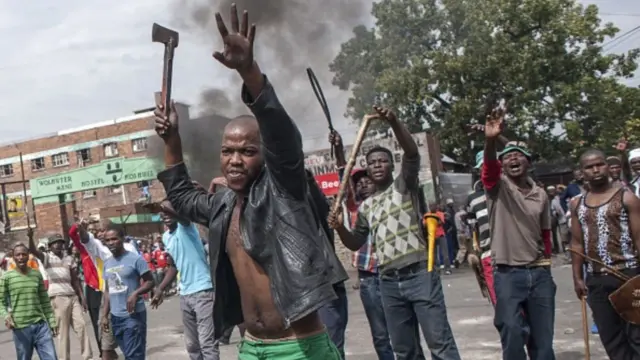
The move follows a wave of demonstrations in parts of South Africa that have, in some cases, turned violent. Witness accounts and local reports describe shops looted and properties damaged, many of them owned by foreigners. Nigerian-owned businesses have been among those affected.
A spokesperson for the ministry, Kimiebi Ebienfa, said the government views the situation as serious and warned it could affect long-standing ties between both nations if not addressed quickly.
Nigeria has also urged its citizens to remain calm, even as anger grows at home over the treatment of Nigerians abroad. Officials say diplomatic steps are already underway to protect citizens and prevent further escalation.
Nigeria and South Africa share one of the continent’s most important partnerships, built on decades of cooperation. That relationship dates back to Nigeria’s support during South Africa’s struggle against apartheid. Yet tensions have surfaced repeatedly in recent years, often triggered by violence against foreign nationals.
Major outbreaks in 2008, 2015 and 2019 left dozens dead and caused widespread destruction. The 2019 crisis led Nigeria to recall its envoy and pull out of a major economic forum in protest, marking one of the lowest points in recent relations.
In response to those past incidents, both countries set up joint systems aimed at preventing violence and improving communication, including early warning channels and consular cooperation. Despite those efforts, tensions have not fully eased, with periodic unrest continuing to target migrants.
The latest developments have again raised fears for the safety of thousands of Nigerians living and working in South Africa. Many rely on small businesses for their livelihoods, making them especially vulnerable during outbreaks of unrest.
Arise TV News noted that the renewed violence has stirred public anger in Nigeria, with calls for stronger action from the government. Leadership Nigeria also reported that the summons is intended to seek explanations from South African authorities and push for urgent measures to protect foreign nationals.
The statement from Nigeria’s foreign ministry emphasized that discussions with the envoy will center on recent protests and documented cases of mistreatment involving Nigerians and their businesses. It added that the government remains committed to defending the rights and dignity of its citizens abroad.
The latest tensions highlight a recurring challenge in Africa’s two largest economies. While Nigeria and South Africa often present a united front on regional issues, domestic pressures can quickly strain that partnership.
In South Africa, high unemployment and concerns about crime have fueled resentment toward foreign workers, who are sometimes blamed for economic hardship. These frustrations can spill into violence, especially in urban areas where competition for jobs and resources is intense.
For Nigeria, the issue carries both political and emotional weight. Nigerians abroad form a large and visible community, and attacks on them often spark strong reactions at home. Governments are expected to respond firmly, even while trying to avoid diplomatic fallout.
The decision to summon the envoy signals that Nigeria wants answers and assurances without immediately escalating the situation. It is a measured step, but one that carries clear pressure. If the violence continues, stronger actions could follow, including diplomatic protests or economic responses.
There is also a broader regional concern. Continued unrest risks undermining efforts to deepen economic integration across Africa. Initiatives tied to the African Union and the African Continental Free Trade Area depend on trust, open borders and the safe movement of people and goods. Persistent attacks on foreigners run counter to those goals.
The coming talks in Abuja could shape what happens next. If both sides can agree on concrete steps to protect foreign nationals and address the root causes of the unrest, tensions may ease. If not, the situation could harden positions on both sides.
For now, the focus remains on safety. Thousands of Nigerians in South Africa are watching closely, hoping that diplomatic talks will lead to real protection on the ground.
Arisetv/Leadershipng





