

A women’s soccer club from North Korea is expected to compete in a regional tournament in South Korea later this month, marking a rare moment of contact between the long-divided neighbors.
Officials in Seoul said Monday that Naegohyang Women’s FC, based in Pyongyang, is scheduled to face Suwon FC Women in the semifinals of the Asian Football Confederation Women’s Champions League on May 20. The match will take place in Suwon, a city just south of the capital.
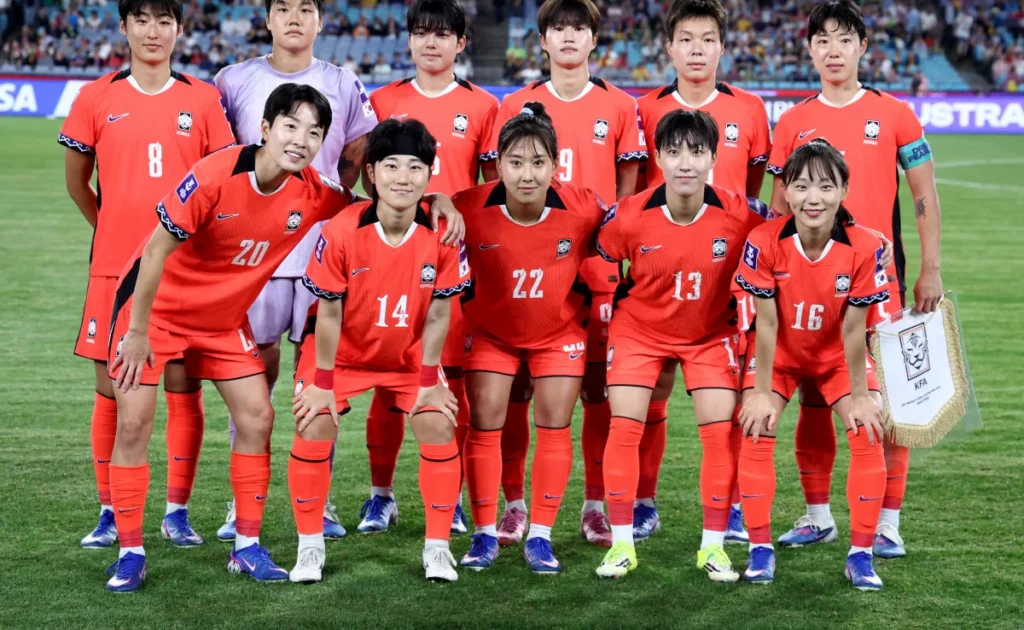
South Korea’s Unification Ministry, which oversees relations with the North, confirmed the planned fixture and described it as part of a regional competition organized under the Asian Football Confederation.
The Korea Football Association said the continental governing body has received a roster of players and staff from the North Korean club who are expected to travel for the match. Officials added that failure to appear could result in disciplinary action from the AFC.
State media in North Korea has not publicly addressed the team’s expected trip.
The planned appearance stands out. Direct exchanges between the two Koreas have been rare in recent years as political tensions deepened. The last time North Korea sent athletes south was in December 2018, when players took part in a table tennis event. That visit came during a brief period of improved ties, which also included North Korean participation in the Winter Olympics hosted by South Korea earlier that year.
Before that, North Korea’s women’s national soccer team competed at the 2014 Asian Games in Incheon, marking the last time female players from the North played on southern soil.
On the field, the visiting club arrives with strong credentials. North Korea’s women’s programs have seen success in youth competitions, holding titles at both the Under-17 and Under-20 levels on the global stage.
Naegohyang Women’s FC has also impressed in the current tournament. The team secured a 3-0 win over Suwon FC Women during the group stage held in Myanmar last November, then advanced past a club from Vietnam in the quarterfinals earlier this year.
The semifinal winner will advance to the final three days later, also in Suwon. In the other semifinal, Melbourne City FC will meet Tokyo Verdy Beleza.
While the match is a sporting event, its meaning goes beyond soccer.
For years, sports have served as a quiet bridge between North and South Korea during moments of reduced tension. Joint teams, shared marches at global events, and athlete exchanges have all appeared at times when diplomacy showed signs of progress.
That has not been the case recently.
Relations between the two countries have cooled sharply since 2019, when talks between North Korean leader Kim Jong Un and Donald Trump broke down over sanctions and nuclear policy. Since then, dialogue has stalled, and cooperation has largely disappeared.
The North has stepped up weapons testing and taken a harder line toward the South, which it now describes as a primary adversary. At the same time, authorities in Pyongyang have moved to limit the spread of South Korean culture inside the country.
In that climate, even a single sports event carries weight.
The upcoming match does not signal a major diplomatic shift on its own. Still, it offers a small window into how limited engagement can continue even when political ties are strained. Sporting events are often easier to arrange than formal negotiations, making them one of the few remaining channels for contact.
For South Korea, hosting the North Korean team presents both an opportunity and a challenge. It allows officials to show openness and stability while managing security and public attention around a sensitive event.
For North Korea, participation may serve multiple purposes. It gives its athletes international exposure and maintains a presence in regional competitions. It may also signal a controlled willingness to engage, even as broader tensions remain unresolved.
There is also a practical side. The Asian Football Confederation tournament carries competitive stakes, and teams are expected to fulfill their fixtures. Financial penalties or sanctions could follow if a club withdraws without cause.
Beyond politics, the match will draw interest from fans. Encounters between teams from the two Koreas are rare, and they often carry an added layer of emotion and curiosity.
Past experiences show that sports exchanges can briefly soften public attitudes, even if they do not lead to lasting political change. Shared moments on the field have, at times, created images of unity that stand in contrast to the broader divide.
Whether this event leads to further interaction remains unclear. Much will depend on the political climate in the months ahead. If tensions continue to rise, this could remain an isolated case. If conditions improve, it could open the door to more exchanges.
For now, attention turns to May 20 in Suwon, where a soccer match will bring together players from two nations that have spent decades apart.
AP





