

Two roadside bombs detonated in quick succession in northwest Pakistan on Saturday, killing at least seven people and injuring several others in an attack that underscores rising militant violence in the region.
The explosions occurred in Bannu district of Khyber Pakhtunkhwa province, near the border with Afghanistan, where security forces have been battling insurgent groups amid a sharp increase in attacks.
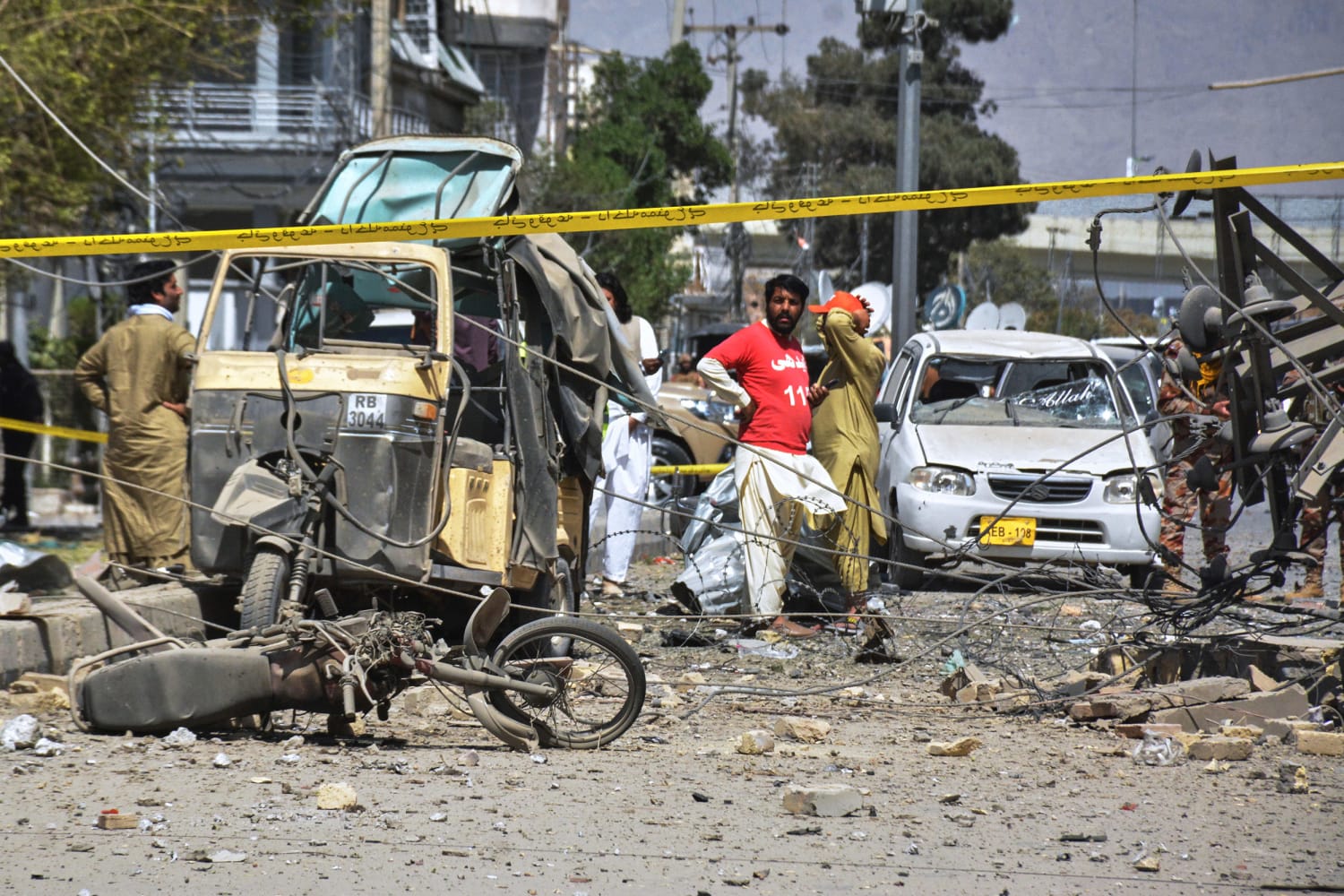
The first device struck a vehicle carrying passengers, while a second blast went off shortly afterward as rescuers moved in to assist victims of the initial explosion, a tactic often used to target emergency responders.
What we know so far
Officials said five people were killed in the first explosion and two more died in the second blast. At least three others sustained injuries and were taken for medical treatment.
Police official Yasir Afridi said both devices were triggered remotely. The second explosion occurred as victims were being transported from the scene, intensifying the toll.
No group immediately claimed responsibility. However, security officials indicated that suspicion is likely to fall on the Tehreek e Taliban Pakistan, a militant group that has carried out similar attacks in the past.
The Straits Times of Singapore also confirmed the sequence of the twin blasts, citing local police accounts that described the targeting of a passenger vehicle followed by a second detonation during rescue efforts.
What authorities are saying
Pakistan’s president, Asif Ali Zardari, condemned the attack and expressed condolences to the families of the victims while wishing the injured a swift recovery.
Prime Minister Shehbaz Sharif also denounced the violence, reaffirming the government’s commitment to combating terrorism and holding those responsible accountable.
In official remarks, Zardari warned those supporting militant networks, referencing both internal and external actors accused of providing safe havens, funding, and logistical backing for attacks.
Security forces have launched a search operation in the area as part of efforts to track down those behind the bombings.
Why this matters
The attack highlights a worsening security situation in Pakistan’s northwest, where militant violence has surged in recent years. The Tehreek e Taliban Pakistan, though distinct from Afghanistan’s Taliban, maintains operational links and has intensified attacks since the Taliban returned to power in Kabul in 2021.
Pakistani authorities have repeatedly accused elements operating from across the Afghan border of enabling such attacks, a claim the Taliban government in Afghanistan continues to deny.
The use of a secondary explosive device aimed at rescuers reflects a troubling escalation in tactics, increasing risks for civilians and emergency responders alike.
What happens next
Investigations are ongoing as security forces expand operations in Bannu and surrounding areas. Officials are expected to increase surveillance and strengthen checkpoints in an effort to prevent further attacks.
The incident may also heighten tensions between Pakistan and Afghanistan, particularly as cross border accusations persist and recent clashes have already strained relations.
Analysts warn that without improved coordination and sustained counterterrorism efforts, attacks of this nature could become more frequent, posing continued risks to stability in the region.
This attack reinforces a pattern of increasingly sophisticated militant operations in Pakistan’s border regions. The use of coordinated explosions suggests careful planning and intelligence gathering, indicating that militant groups retain both capability and intent despite ongoing military pressure.
It also exposes a broader regional challenge. With strained relations between Islamabad and Kabul, gaps in cross border security coordination may be enabling militant movements and planning.
At a strategic level, the persistence of such attacks risks undermining public confidence in security institutions while complicating Pakistan’s economic and political stability. The targeting of civilians and rescuers amplifies the psychological impact, signaling that militant groups are prioritizing visibility and disruption alongside casualties.
AP/StraitsTimes




