

Russian forces launched a sweeping aerial assault across Ukraine that lasted for hours from daylight into the night, killing at least 16 people and injuring more than 80 in one of the largest bombardments in nearly two weeks, Ukrainian officials said Thursday.
The barrage included hundreds of drones and dozens of ballistic and cruise missiles, many of which struck civilian areas, according to Ukrainian authorities. The scale and duration of the attack underscored the sustained intensity of Russia’s campaign, now more than four years into its full-scale invasion.
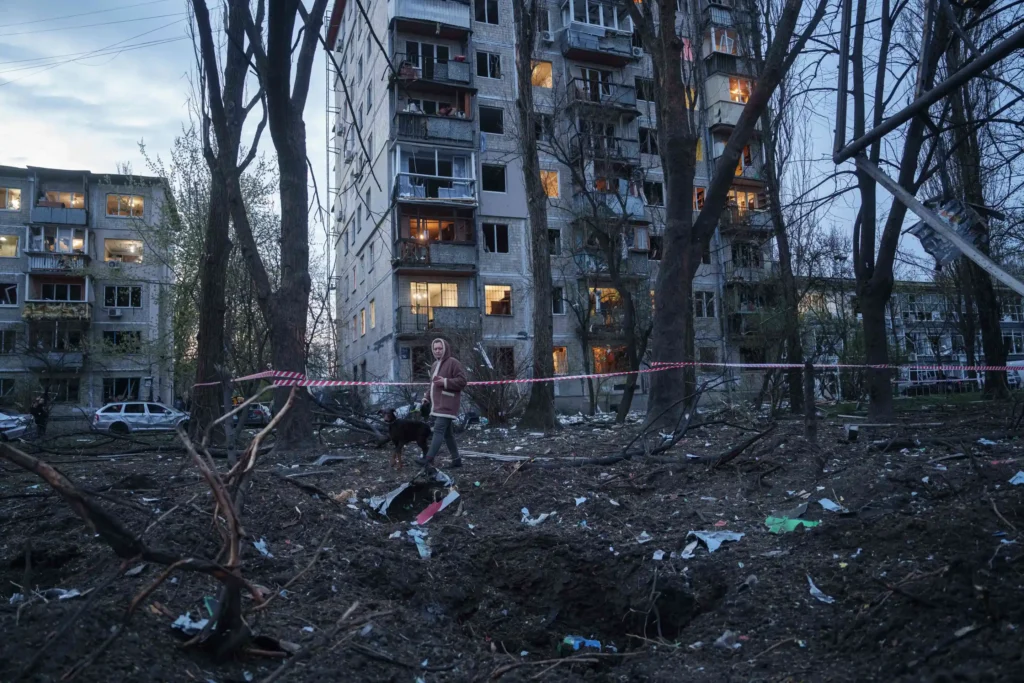
Ukraine’s air force said nearly 700 drones were launched along with multiple missile systems during the assault. Air defenses intercepted or disrupted the majority of incoming threats, downing hundreds of drones and several missiles. However, some projectiles evaded defenses and hit locations across several regions.
At least four people were killed in Kyiv, including a 12-year-old child, while more than 50 others were injured, officials said. In the southern port city of Odesa, nine people died and 23 were hurt. Additional casualties were recorded in the central Dnipro region, where three people were killed and dozens more injured, and in the southern Zaporizhzhia region, where one person was killed.
Ukrainian President Volodymyr Zelenskyy condemned the strikes and renewed calls for stronger international support, especially for air defense systems. “Another night has shown that Russia does not deserve any easing of global policy or sanctions relief,” he wrote on social media.
The attack followed Zelenskyy’s recent diplomatic trip to Europe, where he sought additional military assistance from Germany, Norway and Italy. He said new agreements had been reached to strengthen Ukraine’s air defenses, while noting that some previously promised support has yet to be delivered.
Ukraine’s leadership has also raised concerns that global conflicts, including tensions involving Iran, could strain supplies of advanced Western defense systems. Kyiv has opposed any easing of restrictions on Russian oil exports, arguing that such measures could help fund Moscow’s war effort.
Foreign Minister Andrii Sybiha described the strikes as unlawful attacks on civilians. “Such attacks cannot be accepted. Those responsible must be held accountable,” he said.
Residents described scenes of destruction and fear as explosions shook neighborhoods. In Kyiv, Tetiana Sokol said blasts shattered windows near her home, forcing her to take shelter with her dog as debris scattered across the area. She described the chaos as overwhelming, with damage throughout her home and pets missing after the attack.
The United Nations says more than 15,000 Ukrainian civilians have been killed since the war escalated into a full-scale conflict in 2022, with airstrikes contributing heavily to the toll. While daily attacks have become routine, large-scale assaults like the latest one highlight the continued danger facing civilians.
The scale of the latest Russian assault reflects a continued reliance on mass aerial tactics designed to overwhelm Ukraine’s air defense systems. By deploying large numbers of drones alongside missiles, Moscow appears to be testing the limits of Ukraine’s interception capabilities, forcing defenders to spread resources across multiple threats at once.
This approach has both military and psychological effects. Even when a high percentage of incoming weapons are intercepted, the sheer volume increases the chance that some will reach their targets. The resulting damage to residential areas and infrastructure contributes to ongoing fear and instability among civilians.
Ukraine’s push for additional air defense systems highlights a key challenge. Advanced systems such as Patriot batteries are effective but limited in number, and their deployment must be carefully managed. As global demand for these systems rises, Ukraine faces growing competition for access.
The broader geopolitical situation also plays a role. Ukraine’s concerns about sanctions policy and energy markets reflect the link between economic pressure and military capability. Any changes that improve Russia’s financial position could allow it to sustain or expand its campaign.
At the same time, the attack underscores the importance of international coordination. Zelenskyy’s outreach to European partners shows the need for continued support, but delays in delivering promised assistance could have immediate consequences for Ukraine’s defenses and civilian safety.
From a humanitarian perspective, repeated strikes on populated areas raise serious concerns about adherence to international law. The continued impact on residential neighborhoods has drawn criticism from global organizations and governments.
Looking ahead, the intensity of such attacks may depend on both battlefield developments and diplomatic efforts. Strengthening air defenses could reduce the effectiveness of future strikes, while any reduction in support could leave Ukraine more vulnerable.
For civilians across Ukraine, however, the immediate reality remains unchanged. Large-scale attacks continue to disrupt daily life, damage homes and infrastructure, and cause loss of life, highlighting the ongoing human cost of the conflict.
The Associated Press





