

A federal judge has barred President Donald Trump from renaming the John F. Kennedy Center for the Performing Arts after himself and stopped efforts to shut down the landmark venue for a sweeping overhaul, ruling that the moves violated federal law.
U.S. District Judge Christopher Cooper said Congress made clear the cultural institution must retain the name of John F. Kennedy and cannot be altered by executive action or decisions made by a board aligned with the president.
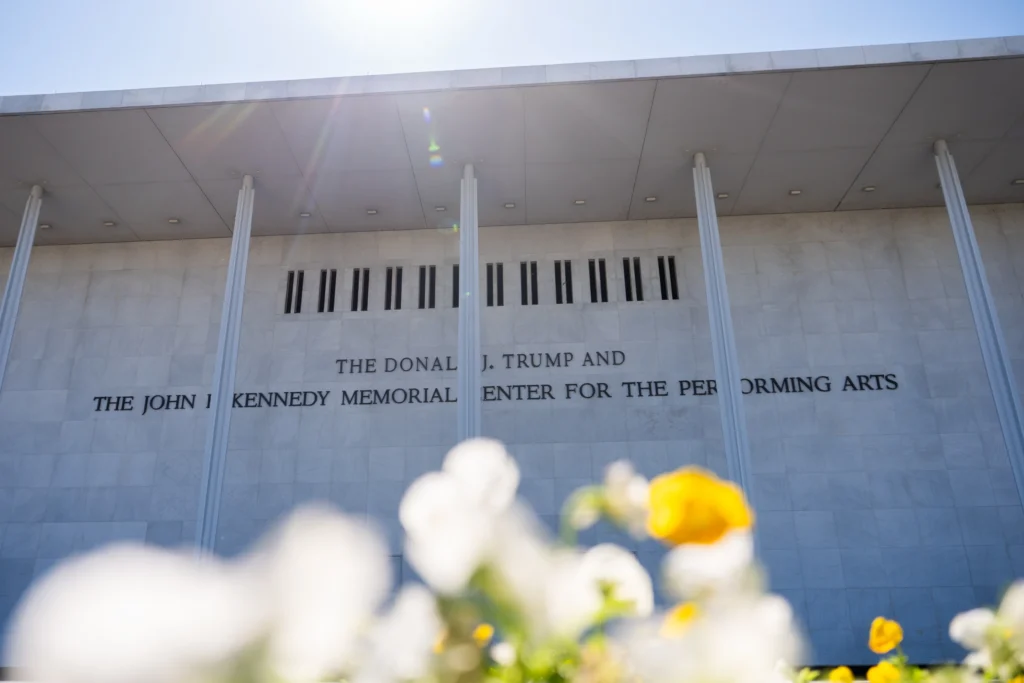
“Congress gave the Kennedy Center its name, and only Congress can change it,” Cooper wrote in an injunction issued Friday, emphasizing that no individual can be formally memorialized on the building without legislative approval.
The decision also blocks the administration from forcing the center to close for an extended renovation project, though the ruling leaves room for independent action by the board if it conducts a broader and more balanced review of its obligations.
The judge found that the board’s earlier vote to close the facility was flawed and based on limited information, describing the process as failing to account for the institution’s full legal responsibilities and the impact on its cultural mission.
The case stems from a lawsuit filed by Joyce Beatty, an Ohio Democrat and member of the center’s board, who challenged the addition of Trump’s name to the building and the planned shutdown. She argued the effort amounted to an unlawful attempt to rebrand a national memorial.
Following the ruling, Beatty said the decision protects a public institution that belongs to the American people and preserves its intended purpose as a tribute to Kennedy.
Court filings show that officials at the center had defended the naming change by pointing to fundraising tied to Trump’s involvement. Executive director Charles Matthew Floca warned that removing the president’s name could disrupt financial support and threaten programming.
The judge did not block ongoing maintenance or repair work, acknowledging evidence that the facility requires upgrades. However, he made clear that any large scale closure must follow proper governance procedures rather than presidential direction.
President Donald Trump reacted sharply to the ruling, criticizing the court and indicating he may step back from the proposed renovation effort. In public remarks, he suggested that without authority to reshape the institution, he sees little reason to remain involved.
The John F. Kennedy Center for the Performing Arts has continued to host performances, though at a reduced pace amid uncertainty over its future. Federal officials and legal observers expect the administration to challenge the ruling, potentially setting up a broader legal battle over executive power and control of national cultural sites.
The ruling highlights a constitutional boundary that often surfaces in disputes over federal landmarks: the division of authority between Congress and the executive branch. By reinforcing that only lawmakers can rename a congressionally designated memorial, the court has drawn a clear line against unilateral changes tied to political leadership.
The case also reflects a broader pattern in President Donald Trump’s approach to reshaping Washington’s symbolic landscape. From proposed construction projects to aesthetic changes in federal spaces, the administration has sought to leave a visible imprint on national institutions. Legal resistance to those efforts suggests limits to how far executive authority can extend in altering historically protected sites.
For the Kennedy Center, the decision preserves its identity as both a performing arts hub and a living memorial. Any prolonged uncertainty, however, could affect donor confidence, programming schedules and long term planning. Cultural institutions rely heavily on stable governance, and legal disputes of this scale can ripple through funding and operations.
At a national level, the outcome may influence how future administrations approach federally designated landmarks. Courts could continue to serve as a check on attempts to reinterpret or rebrand public memorials without congressional approval, reinforcing the role of legislative authority in preserving historical legacy.
TheIndependent





