

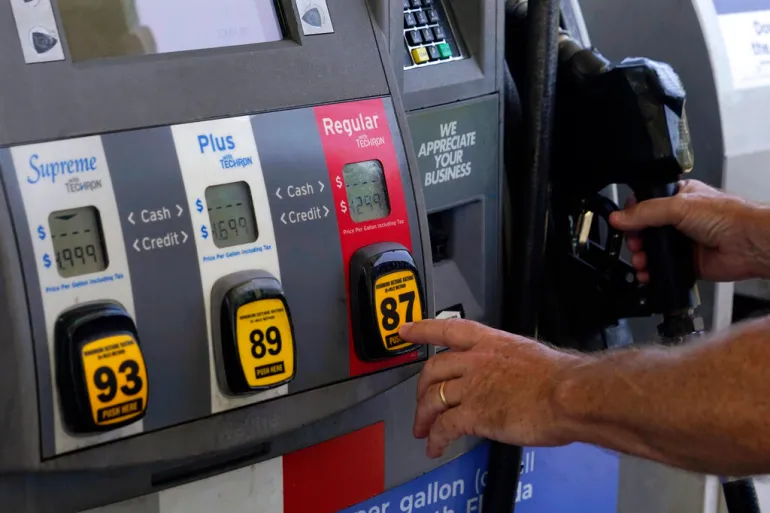
Gasoline prices across the United States have climbed to a new high during the ongoing Iran conflict, with the national average reaching $4.39 per gallon in the largest single-day increase since a ceasefire was announced in early April.
Data released Friday shows prices jumped sharply overnight, rising a combined 16 cents in just over 24 hours. The spike marks the steepest daily increase since early March and underscores mounting pressure on consumers as energy markets remain volatile.
Since hostilities began, the average cost of regular unleaded fuel has surged more than 47%, reflecting the broader impact of disruptions to global oil supply chains.
Crude oil prices have also continued their upward trajectory. U.S. benchmark crude settled near $102 per barrel at the end of the week, while Brent crude — the international standard — closed at approximately $108 per barrel, representing gains of roughly 80% since the start of the conflict.
The latest price surge follows comments from Donald Trump, who indicated that the United States intends to maintain its naval blockade on Iranian oil exports. The blockade, enforced since mid-April, is designed to restrict Tehran’s ability to generate revenue from energy sales.
Speaking at the White House, Trump argued that the strategy is placing significant economic pressure on Iran and could hasten an end to the conflict. He also suggested that fuel prices would fall quickly once hostilities cease.
Market analysts, however, have expressed skepticism about a rapid decline. Many point to ongoing risks surrounding the Strait of Hormuz, a critical maritime corridor through which a significant portion of the world’s oil supply passes. Iran has demonstrated its ability to disrupt shipping in the region, raising concerns that supply constraints could persist even after a ceasefire.
Financial institutions have issued increasingly stark forecasts. Analysts at Citigroup warned that Brent crude prices could climb as high as $150 per barrel if the strait remains restricted through the end of June. Such a scenario would likely push gasoline prices even higher, intensifying inflationary pressures across the global economy.
Energy companies are also signaling strain within the sector. Mike Wirth said supply disruptions could force a reduction in demand across multiple industries if conditions do not improve. Meanwhile, Darren Woods indicated that a portion of his company’s oil production has already been affected by the conflict.
Even if shipping routes reopen, industry leaders caution that recovery will take time. Woods noted it could take up to two months for oil flows to normalize, followed by additional delays before fuel reaches consumers.
The surge in prices comes amid political debate in Washington over the status of the conflict. Some administration officials have suggested that active hostilities have effectively ended, while members of Congress are considering whether to invoke the War Powers Resolution, which requires legislative approval for extended military engagements.
House Speaker Mike Johnson has argued that congressional intervention is unnecessary, maintaining that the United States is not formally at war. However, financial markets appear unconvinced, with oil prices continuing to climb in response to ongoing uncertainty.
Public reaction has grown increasingly vocal as fuel costs rise. Online forums and regional communities have seen a surge in complaints from drivers facing steep increases at the pump, particularly in states where prices have jumped dramatically since the conflict began.
Analysts at the energy research firm Kpler have also raised questions about the effectiveness of the U.S. blockade in the short term. Because of delays in shipping and payment cycles, the impact on Iran’s oil revenue may not be fully realized for several months. This lag could limit the immediate economic pressure on Tehran, potentially prolonging the standoff.
The sharp rise in gasoline prices highlights the fragile balance between geopolitical strategy and economic consequences. While the blockade aims to weaken Iran’s financial position, it also constrains global oil supply, driving up costs for consumers and businesses worldwide.
The situation underscores the outsized influence of the Strait of Hormuz on energy markets. Even partial disruptions can trigger significant price swings, as traders factor in the risk of supply shortages. The current spike reflects not only reduced output but also uncertainty about future conditions.
For U.S. policymakers, the timing presents a challenge. Rising fuel prices have historically carried political consequences, particularly in the lead-up to elections. With inflation already a concern for many households, sustained increases at the pump could shape public sentiment and economic outlook.
From a global perspective, the الأزمة has exposed vulnerabilities in energy infrastructure and supply chains. Countries heavily reliant on imported oil may face increased costs for transportation, manufacturing and agriculture, amplifying economic strain.
The divergence between political messaging and market behavior is also notable. While officials emphasize progress toward de-escalation, investors continue to price in risk, suggesting limited confidence in a near-term resolution.
Looking ahead, the trajectory of gas prices will depend largely on developments in the Strait of Hormuz and the broader diplomatic landscape. A reopening of shipping lanes could ease pressure, but analysts caution that rebuilding supply chains will take time.
In the meantime, consumers are likely to face continued volatility, with energy costs remaining a central issue in both economic policy and everyday life.
NBC





