

The United States intercepted and seized an Iranian-flagged cargo vessel near the Strait of Hormuz on Sunday, prompting a warning from Tehran that it will respond, as tensions escalate days before a ceasefire deadline.
President Donald Trump said a U.S. Navy destroyer operating in the Gulf of Oman halted the vessel after issuing repeated warnings. In a social media post, Trump said the ship, identified as the Touska, attempted to bypass a naval blockade and was disabled before being boarded by U.S. forces.
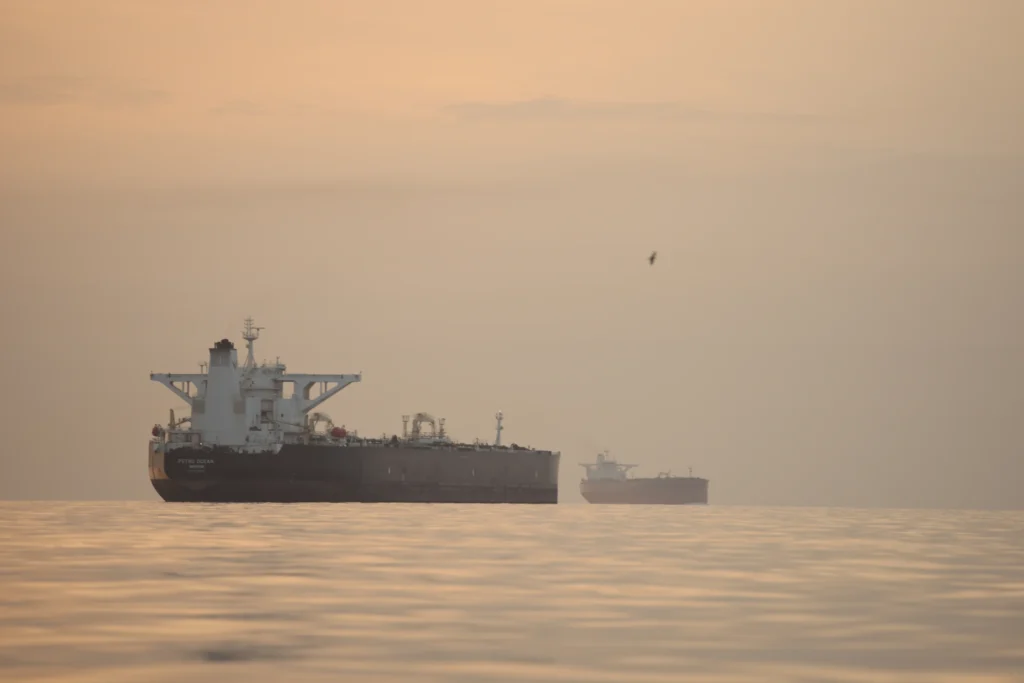
U.S. Central Command confirmed that the vessel was stopped after several hours of warnings but did not provide additional details or respond to follow-up questions. It was not immediately clear whether there were injuries among the crew.
Iranian state media condemned the operation, describing it as an act of piracy and indicating that a response would follow. The incident marks the first known seizure since the United States began enforcing a blockade on Iranian shipping routes last week.
The development adds new uncertainty to a fragile ceasefire set to expire within days and raises questions about the viability of planned diplomatic talks between Washington and Tehran. U.S. officials had indicated that a delegation would travel to Islamabad for another round of negotiations, though Iranian participation remains unclear.
Iranian media suggested that the talks may not proceed, citing skepticism about U.S. intentions. In a reported phone call with Pakistan’s prime minister, Iranian President Masoud Pezeshkian criticized recent U.S. actions and expressed doubts about Washington’s commitment to diplomacy.
Separately, Foreign Minister Abbas Araghchi conveyed similar concerns during discussions with his Pakistani counterpart, pointing to what he described as inconsistent messaging from the United States.
Despite the uncertainty, preparations in Islamabad appeared to continue, with heightened security measures reported across the city. A U.S. official said Vice President JD Vance is expected to lead the American delegation, joined by envoys Steve Witkoff and Jared Kushner.
Iranian officials have acknowledged receiving new proposals from Washington but said significant differences remain, particularly over nuclear activity and access to the Strait of Hormuz.
The strategic waterway remained largely closed Sunday, with hundreds of vessels waiting at either end for clearance. The disruption has intensified concerns about global energy supplies, as the strait typically handles a substantial share of the world’s oil shipments.
Iran had briefly indicated it would reopen the route following a temporary truce in regional fighting, but reversed course after the United States maintained its blockade. Iranian forces also fired on vessels attempting to pass through the strait on Saturday, further escalating tensions.
Both Washington and Tehran have accused each other of violating the ceasefire. Iranian officials have warned that any escalation could lead to broader retaliation, including targeting energy infrastructure in the region.
The conflict, now in its eighth week, has resulted in thousands of deaths across multiple countries, according to reporting from The Associated Press.
The seizure of an Iranian-flagged vessel represents a significant escalation in an already volatile standoff. Maritime confrontations in the Strait of Hormuz carry global implications due to the waterway’s central role in energy transportation. Any disruption can quickly ripple through international markets, affecting fuel prices and economic stability.
The incident also complicates diplomatic efforts. While negotiations were expected to resume, actions such as vessel seizures can undermine trust and reduce the likelihood of meaningful progress. Iran’s swift condemnation suggests that the operation may harden its negotiating stance rather than encourage compromise.
The competing strategies of both sides are becoming more pronounced. The United States appears to be using economic and military pressure to force concessions, while Iran is leveraging its geographic position to control access to a critical shipping route. Each approach carries risks, particularly if miscalculations lead to broader conflict.
The situation highlights the fragile balance between diplomacy and confrontation. With the ceasefire nearing its end, both sides face a narrowing window to reach an agreement. Failure to do so could lead to renewed hostilities with far-reaching consequences.
Energy markets remain especially sensitive to developments in the region. Even temporary closures or threats to the Strait of Hormuz can trigger price volatility, underscoring the global stakes of the standoff.
In the coming days, attention will focus on whether negotiations proceed and whether either side signals a willingness to de-escalate. The outcome will likely shape not only the immediate conflict but also broader geopolitical dynamics in the region.
AP





