

Chuck Norris, the martial arts champion turned Hollywood action star who became a defining figure of 1980s cinema and later a television mainstay in Walker, Texas Ranger, has died at the age of 86, his family confirmed Friday.
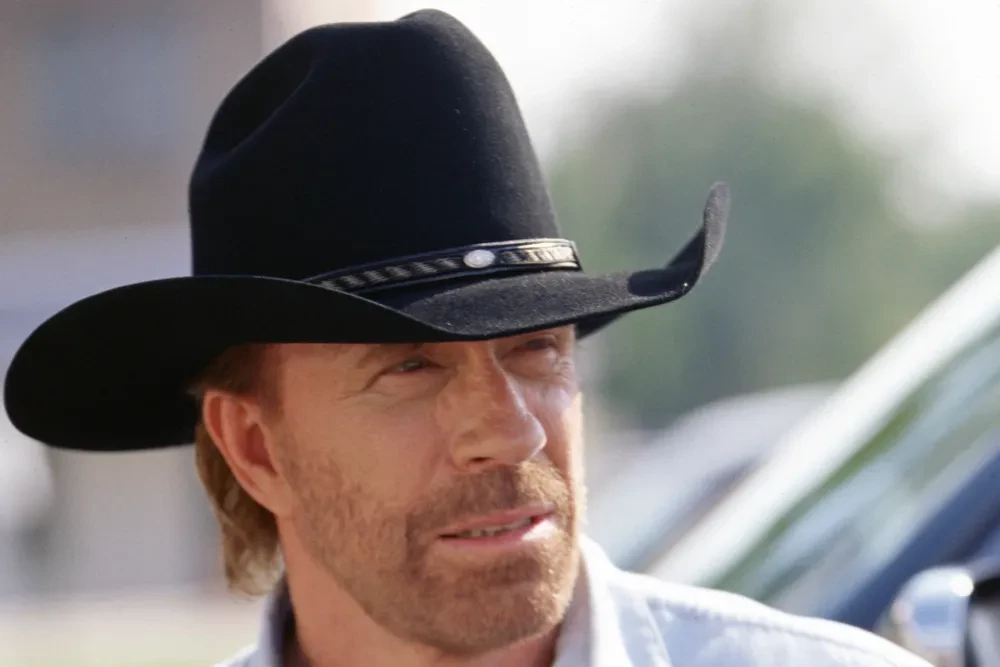
A statement shared on the actor’s Instagram account said Norris died Thursday surrounded by loved ones. The family did not disclose the cause of death, noting only that he was at peace in his final moments.
The announcement followed accounts from Variety that Norris had been hospitalized in Hawaii earlier in the week.
Norris rose to prominence as a martial artist before transitioning into film, where his stoic presence and physical prowess made him a staple of action cinema. A six-time undefeated World Professional Middleweight Karate Champion, he brought authenticity and discipline to roles that often cast him as a lone enforcer of justice.
His film credits include Code of Silence, Missing in Action, and The Delta Force, productions that helped cement his reputation as a symbol of American strength during the Cold War era. On television, he became widely recognized for portraying Cordell Walker, a principled Texas Ranger, in Walker, Texas Ranger, which aired from 1993 to 2001 and reached audiences worldwide.
Norris made his film debut opposite Bruce Lee in the 1973 martial arts classic The Way of the Dragon, featuring a now-iconic fight sequence set in Rome’s Colosseum. Decades later, he appeared alongside fellow action stars Sylvester Stallone, Arnold Schwarzenegger, and Bruce Willis in The Expendables 2, reinforcing his status as a genre legend.
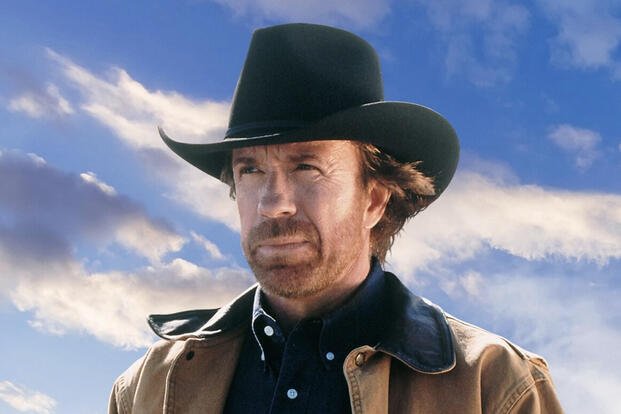
At the height of his career, Time characterized Norris as the “ultimate tough guy,” reflecting his dominance in the action film category during the 1980s. His roles often featured him overcoming overwhelming odds, dispatching multiple adversaries with martial arts precision and unwavering resolve.
Beyond his on-screen persona, Norris became an unexpected cultural phenomenon in the early days of social media. Beginning in 2005, a wave of viral humor known as “Chuck Norris Facts” exaggerated his toughness into mythic proportions, transforming him into an enduring internet icon. The jokes, widely shared online and later compiled into books, introduced him to a new generation far removed from his cinematic peak.
Born Carlos Ray Norris on March 10, 1940, in Ryan, Oklahoma, he was the eldest of three brothers. His early life was marked by hardship, including financial instability and his father’s struggles with alcoholism. Norris later wrote in his memoir, Against All Odds: My Story, that he was shy and withdrawn as a child, often avoiding speaking in class.
After graduating from high school, he enlisted in the U.S. Air Force in 1958 and was stationed in South Korea, where he began training in martial arts, including Tang Soo Do. That experience laid the foundation for his later success as both a competitor and instructor.
Following his military service, Norris opened martial arts schools in California and quickly gained recognition in competitive circuits. Among his students was Steve McQueen, who encouraged him to pursue acting. Norris later credited McQueen with advising him to rely on visual storytelling rather than dialogue, guidance that shaped his screen presence.
Norris went on to star in more than two dozen films, many of which performed strongly at the box office and resonated with military audiences. He maintained close ties to U.S. service members, including visits to troops in Iraq in 2006 and 2007.
In 1990, he founded Chun Kuk Do, his own martial arts system, and established the nonprofit Kickstart Kids, which focuses on teaching martial arts and character development to young people.
Outside entertainment, Norris was active in conservative political circles and collaborated with organizations such as the National Rifle Association. He also contributed commentary to WorldNetDaily, a right-leaning media platform.
An author as well as an actor, Norris published several books, including his memoir and the self-help title The Secret of Inner Strength, along with works on fitness, martial arts, and fiction.
He is survived by his family, including five children.
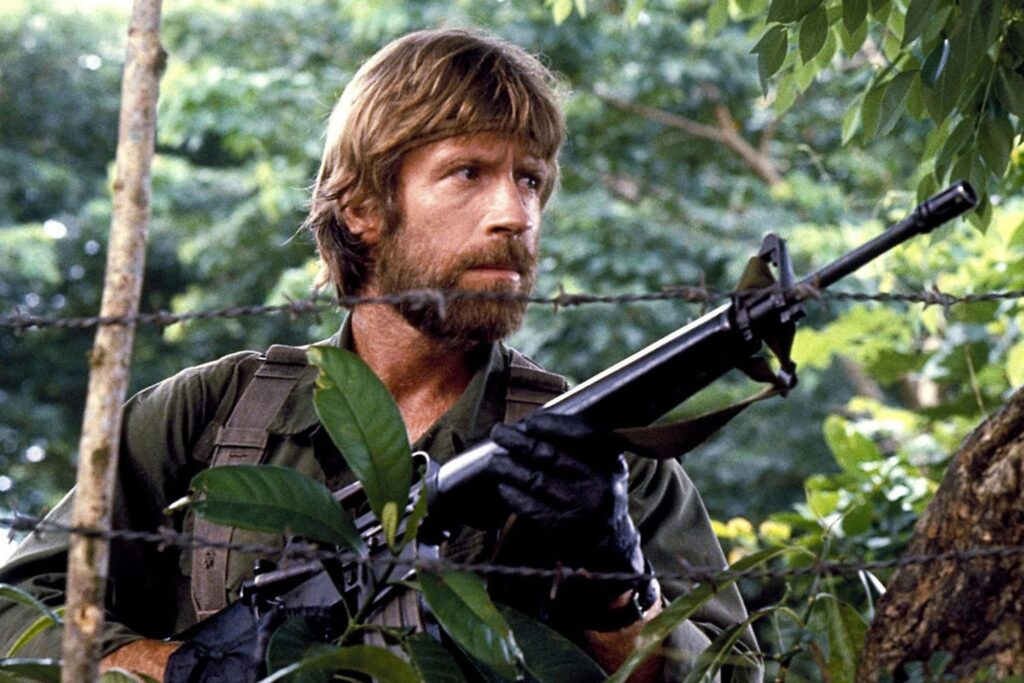
Throughout his career, Norris defended the action genre against criticism that it glorified violence. In a 1994 interview with the Los Angeles Times, he emphasized that storytelling—not aggression—was at the heart of his work, arguing that audiences ultimately connect with narratives in which justice prevails.
Norris’ death marks the passing of a distinctive era in Hollywood, when action stars were defined less by special effects and more by physical credibility and screen presence. Unlike many contemporaries, Norris entered film with a proven martial arts pedigree, lending authenticity to roles that might otherwise have seemed exaggerated. This authenticity helped differentiate him in a crowded field that included larger-than-life figures like Stallone and Schwarzenegger.
His career also reflects a broader evolution in American pop culture. During the Cold War, his films often portrayed clear moral binaries, with Norris embodying the archetypal American hero confronting external threats. These narratives resonated strongly with audiences seeking reassurance during a period of geopolitical tension.
Yet his later transformation into an internet phenomenon reveals an unusual second act. The “Chuck Norris Facts” phenomenon turned his serious, stoic image into a form of affectionate satire, extending his cultural relevance well into the digital age. Few actors have managed such a transition from traditional stardom to meme-driven legacy without diminishing their original body of work.
Norris’ influence also extends into martial arts education and youth development through Kickstart Kids, which continues to operate in schools. This aspect of his legacy underscores a commitment to discipline and personal growth that paralleled his on-screen values.
In assessing his impact, Norris occupies a unique space at the intersection of martial arts, film, television, and internet culture. His career illustrates how a figure rooted in physical performance and traditional media can adapt—intentionally or not—to new forms of cultural expression, ensuring enduring recognition across generations.





