

President Donald Trump has suggested that the United States could consider taking control of Iran’s primary oil export hub, signaling a potential escalation in tensions as negotiations between the two countries continue.
In an interview published Monday by the Financial Times, President Donald Trump said the United States has multiple options regarding Iran’s Kharg Island, a critical facility for the country’s oil shipments.
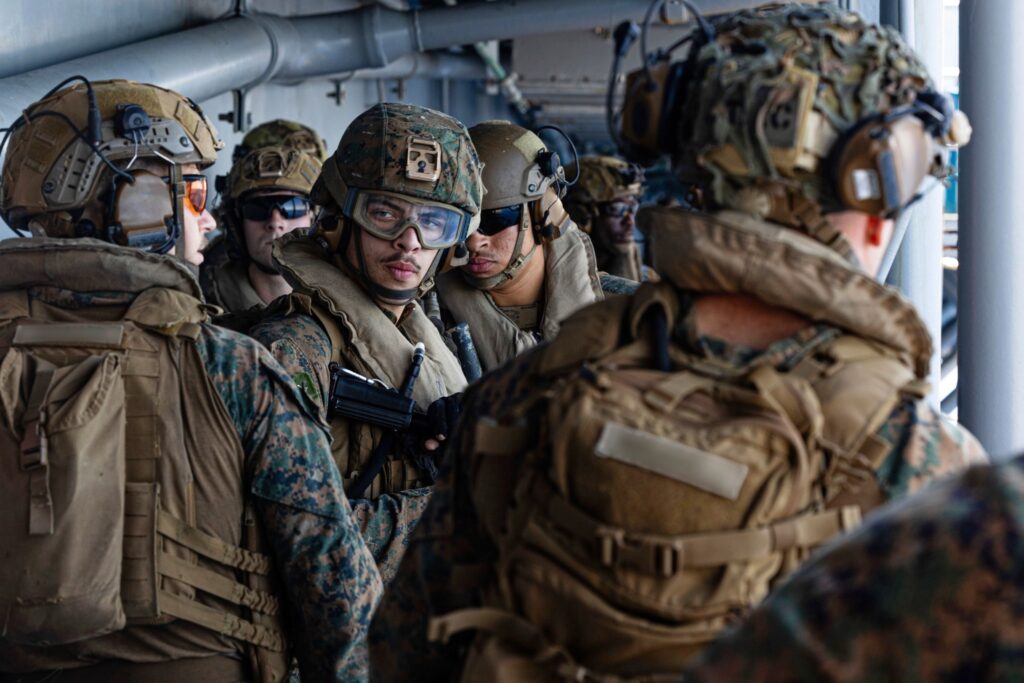
“Maybe we take Kharg Island, maybe we don’t. We have a lot of options,” Trump said in the interview. He added that any such move would likely require a sustained presence by U.S. forces.
Kharg Island serves as Iran’s main oil terminal, handling a significant portion of its exports. Any effort to seize or control the site would represent a major shift in U.S. policy and could have far reaching consequences for global energy markets and regional stability.
President Donald Trump downplayed Iran’s defensive capabilities at the location, saying he believed the island could be taken with relative ease. His remarks follow earlier U.S. airstrikes that Washington said targeted military positions linked to Iranian forces in the area.
Iran has warned that it would respond forcefully to any ground operation on its territory. Officials in Tehran have threatened retaliatory action, including potential attacks and military operations involving nearby countries, if foreign troops attempt to land.
At the same time, President Donald Trump indicated that diplomatic efforts with Iran are ongoing. Speaking to reporters aboard Air Force One on Sunday night, he said progress had been made on a proposed ceasefire framework.
“We’re doing extremely well in that negotiation,” Trump said, while cautioning that talks with Iran have historically been unpredictable.
He also said Iran had responded positively to a multi point ceasefire proposal put forward by the United States, though he did not provide specific details about the terms under discussion.
“They’re agreeing with us on the plan,” Trump said. “They gave us most of the points.”
In a separate development, President Donald Trump said Iranian authorities had permitted a number of oil tankers to pass through a key shipping route at the entrance to the Gulf, describing the move as a gesture tied to ongoing talks.
According to Trump, the number of vessels allowed to transit the waterway had increased in recent days, signaling what he characterized as cooperation from Iranian officials.
The route is one of the world’s most important shipping lanes for oil, and any disruption or restriction there can have immediate global economic effects.
The president pointed to the role of Iran’s parliamentary speaker in authorizing the tanker movements, describing him as a key figure in recent developments. The official has remained active on social media during the conflict, often issuing statements critical of the United States while maintaining a prominent public presence.
The combination of military signaling and diplomatic engagement reflects a complex moment in relations between Washington and Tehran. While discussions over a ceasefire suggest a possible path toward de escalation, the suggestion of seizing a major oil facility underscores the risk of further confrontation.
President Donald Trump’s remarks highlight a dual track approach that blends negotiation with the threat of force. By raising the possibility of seizing Kharg Island, the administration is signaling leverage in ongoing talks, but such a move would carry significant risks.
Control of the island would directly affect Iran’s ability to export oil, placing pressure on its economy. However, it could also trigger a wider conflict, drawing in regional actors and disrupting global energy supplies. Even the suggestion of such action can influence oil prices and market stability.
The reference to tanker movement through a major shipping route suggests that both sides may be testing limited forms of cooperation while maintaining a firm stance publicly. Allowing oil shipments to proceed could be viewed as a confidence building measure, though its long term significance remains unclear.
The situation also underscores the importance of key individuals within Iran’s leadership structure. Public messaging from senior officials can serve both domestic and international audiences, shaping perceptions of strength and control.
Ultimately, the coming weeks will determine whether diplomatic efforts can reduce tensions or whether the situation moves closer to open conflict. The balance between negotiation and military posturing remains delicate, with significant consequences for the region and beyond.
AP





