

President Donald Trump removed Attorney General Pam Bondi from her post on Thursday, ending a turbulent tenure marked by internal tensions, political pressure and controversy over the handling of records tied to financier Jeffrey Epstein.
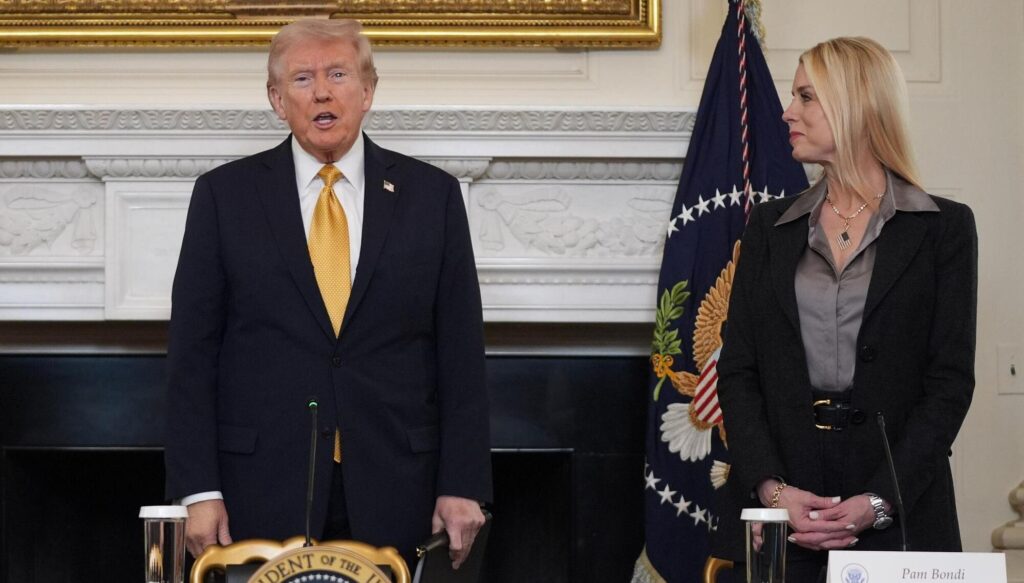
Trump announced the decision in a message on social media, saying Deputy Attorney General Todd Blanche, a former personal lawyer to the president, will take over leadership of the Justice Department on an interim basis. In the same message, Trump praised Bondi as “a great American patriot and a loyal friend,” crediting her with overseeing a broad crackdown on crime and signaling she will move into a private sector role.
Bondi confirmed her departure in a separate message, calling her time leading the department “the honor of a lifetime” and saying she would assist with the transition over the coming weeks. Blanche also responded publicly, thanking Trump and vowing to continue enforcing the law and supporting law enforcement agencies.
The move follows months of growing dissatisfaction within the White House over Bondi’s performance, particularly her handling of the Epstein case files and the pace of legal action against individuals Trump has criticized. People familiar with the matter told Reuters that Trump had expressed frustration repeatedly in recent months and had discussed replacing her with several potential candidates, including Environmental Protection Agency administrator Lee Zeldin.
According to those sources, Trump informed Bondi of his decision during a meeting at the White House on Wednesday after allies urged him to act decisively. Her dismissal makes her the second senior cabinet official to be removed in recent weeks, following the departure of Homeland Security Secretary Kristi Noem in early March.
Bondi’s tenure was defined in large part by controversy surrounding the release of documents connected to Epstein, who faced accusations of running a sex trafficking operation involving underage girls. Critics, including some of Trump’s political allies and lawmakers from both parties, accused the Justice Department of mishandling the release of records and failing to provide full transparency.
The issue became a persistent political challenge for the administration, drawing renewed attention to Trump’s past association with Epstein, which the president has said ended decades ago. The department eventually released millions of pages of documents following a law passed by Congress, but the disclosures did little to quiet criticism due to redactions and concerns about the handling of sensitive information.
Bondi defended the department’s actions, arguing that the administration had been more transparent than previous ones and that legal teams worked quickly to review large volumes of material. Still, the controversy intensified, leading to a congressional subpoena and a planned appearance by Bondi before lawmakers.
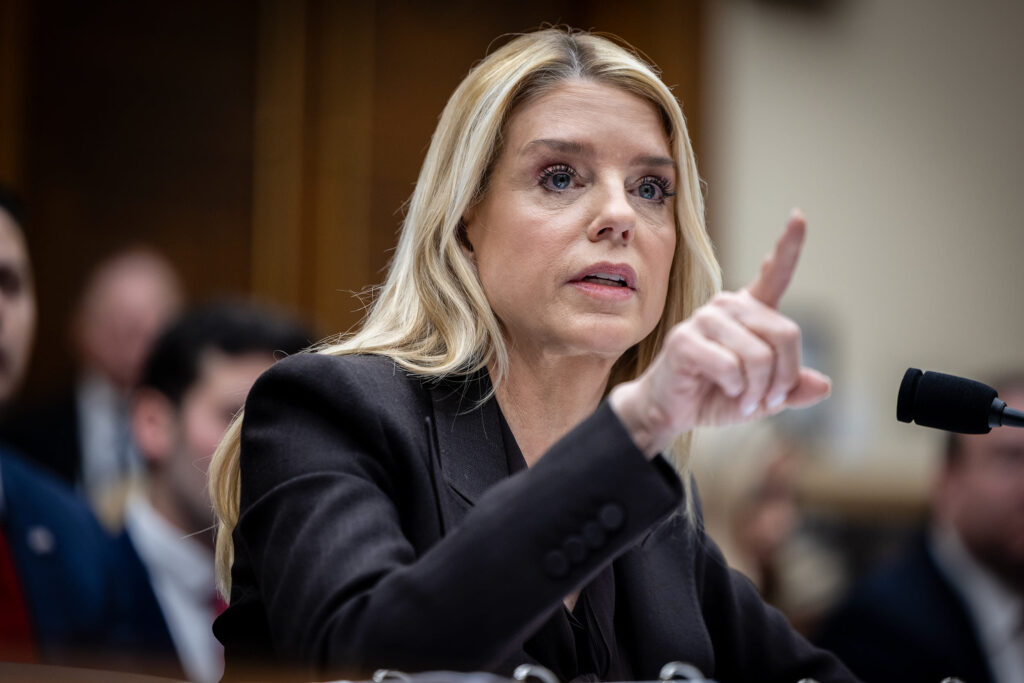
During her time in office, Bondi also drew scrutiny for reshaping the Justice Department’s operations. Critics said she weakened long-standing norms designed to keep federal investigations independent from political influence, while supporters argued she was aligning the department more closely with the administration’s priorities.
The department pursued a number of high-profile investigations involving individuals seen as opponents of Trump, including cases against former Federal Bureau of Investigation Director James Comey and New York Attorney General Letitia James. Those cases were later dismissed in court, with a judge ruling that the prosecutor who brought them had not been properly appointed.
Bondi’s leadership also coincided with a significant departure of career attorneys from key divisions within the department. Advocacy groups and former officials argued that the changes undermined institutional stability, while administration allies said the moves were necessary to restore trust among supporters.
“Pam Bondi took a sledgehammer to the Justice Department,” said Stacey Young, a former department lawyer and head of an advocacy group supporting career staff, reflecting criticism from opponents of her approach.
At the same time, Bondi maintained that her focus was on addressing violent crime and rebuilding confidence among the president’s supporters after Trump faced legal challenges while out of office. She frequently defended the department’s direction in public appearances, including contentious exchanges with lawmakers during congressional hearings.
According to reporting from NPR and PBS, Bondi’s removal follows a 14-month period marked by clashes with lawmakers, internal upheaval and continued debate over the role of the Justice Department in politically sensitive cases. Both outlets noted that her leadership represented a sharp shift from previous practices, particularly in how investigations were initiated and pursued.
Bondi’s removal highlights the continuing tension between political leadership and the traditional independence of federal law enforcement. The Justice Department has long operated under norms intended to separate prosecutorial decisions from direct political influence, and her tenure tested those boundaries in ways that drew strong reactions from both supporters and critics.
The Epstein file controversy proved especially damaging because it combined public demand for transparency with political sensitivities. Even a large release of documents failed to resolve concerns, illustrating how issues tied to high-profile figures can remain politically charged regardless of official actions.
Trump’s decision to replace Bondi with a close ally, even on a temporary basis, suggests a continued emphasis on loyalty and alignment with his agenda within the department. This approach may lead to further shifts in how federal investigations are prioritized and conducted.
The broader impact could extend beyond the Justice Department. Changes in leadership and strategy may influence ongoing and future legal actions, as well as the relationship between the executive branch and the judicial system.
In the longer term, the episode may shape debates over the balance between political authority and institutional independence in law enforcement, an issue that has become increasingly prominent in recent years.
Reuters/PBS/NPR





