

Iran will allow ships to pass through the Strait of Hormuz for the next two weeks under military oversight, its foreign minister said Tuesday, as Tehran and the United States reached a temporary ceasefire agreement aimed at easing a nearly 40-day conflict that has disrupted global shipping and driven up fuel prices.
President Donald Trump announced the two-week pause in military action less than 90 minutes before his deadline for Iran to reopen the key waterway or face expanded strikes on its infrastructure. The agreement is contingent on Iran ensuring the safe and immediate reopening of the strait, a route that carries about one-fifth of the world’s oil supply.
“This will be a two-sided ceasefire,” Trump said, adding that both countries had made significant progress toward a broader agreement on long-term peace.
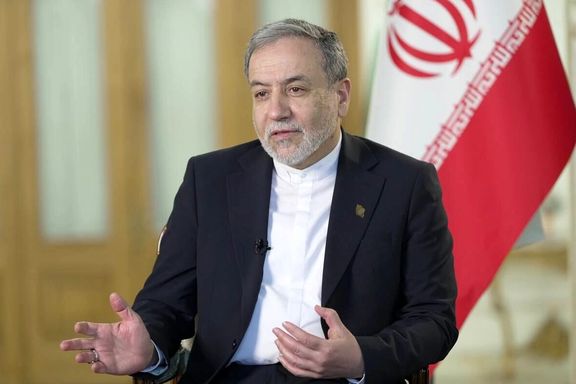
Iran’s foreign minister said passage through the strait would be permitted during the two-week period, with Iranian forces managing traffic. He added that Iran would halt its defensive operations if attacks against the country stop.
The breakthrough triggered an immediate reaction in global markets. Oil prices dropped sharply, with Brent crude falling about 14 percent within an hour of the announcement, reflecting expectations of restored supply and reduced risk of further disruption.
Iran’s national security authorities confirmed the ceasefire but cautioned that it does not mark the end of the conflict. In a statement, officials said the country remains ready to respond to any renewed attacks.
The agreement follows weeks of escalating violence that saw strikes on military and infrastructure targets, including key sites linked to Iran’s oil production. The Strait of Hormuz had been effectively closed during the conflict, sending shockwaves through global energy markets and increasing pressure on both sides to reach a resolution.
Diplomatic efforts are continuing, with officials indicating that direct talks between the United States and Iran are under consideration, though no final arrangements have been confirmed.
Iran has outlined conditions for a broader peace deal, including the lifting of long-standing economic sanctions and guarantees against future military action. U.S. officials have signaled that discussions remain ongoing but emphasized that no final agreement has been reached.
The temporary ceasefire came after mediation efforts by several countries seeking to prevent further escalation. Officials said negotiations intensified in the final hours before the deadline, with both sides under pressure to avoid a wider conflict that could further destabilize global markets.
Despite the agreement, uncertainty remains over whether the two-week pause will lead to a lasting settlement. Officials on both sides have acknowledged that significant differences remain, particularly over sanctions and long-term security arrangements.
The conflict has resulted in significant casualties and damage across the region, including the deaths of U.S. service members and widespread destruction of military assets. It has also imposed a heavy economic cost, with disruptions to oil supply affecting prices worldwide.
The agreement to reopen the Strait of Hormuz, even temporarily, represents a critical turning point in the conflict, given the waterway’s central role in global energy supply. Its closure had immediate and far-reaching economic consequences, highlighting how regional conflicts can quickly impact markets worldwide.
The two-week ceasefire appears to be a tactical pause rather than a comprehensive resolution. For the United States, it offers an opportunity to secure key objectives without immediate escalation, while Iran gains temporary relief from sustained military pressure and the possibility of sanctions negotiations.
However, the arrangement remains fragile. Iran’s insistence on long-term guarantees and sanctions relief presents a major hurdle, while the United States is likely to resist concessions that could weaken its strategic position.
The sharp drop in oil prices following the announcement underscores how closely global markets are tied to developments in the region. Any breakdown in the agreement could quickly reverse those gains and renew volatility.
Diplomatic momentum in the coming days will be crucial. If negotiations progress, the ceasefire could serve as a foundation for a broader agreement. If not, the conflict risks returning to escalation once the two-week period expires.
The situation remains fluid, with both sides balancing military pressure and diplomatic engagement as they test the possibility of a longer-term resolution.
NewYorkPost





