

Gunmen invaded Mbwelle village in Bokkos Local Government Area of Plateau State, Nigeria, on Thursday night and killed at least eight persons, mostly members of the same family, in a prolonged assault that lasted several hours without security forces intervening despite the community’s proximity to Bokkos town and military installations.
Those killed included Elder Iliya Mangut Dakus, Mr. Luck Titus Dakus, Mr. Habila Istifanu Dakus, Mr. Hassan Istifanus Dakus, Mrs. Hassan Moses Dakus, Biggie Lucky Dakus, Sunday Gideon Dakus, and Mr. Innocent Barnabas Makwin. The concentration of victims from the Dakus family suggests either deliberate targeting based on family vendettas or that attackers focused on a single compound where extended family members resided together.
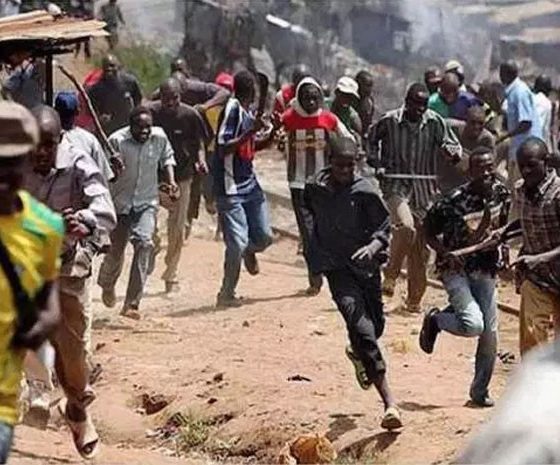
The Chairman of the Community Peace Observers in Bokkos Local Government Area, Nigeria, Kefas Mallai, confirmed the killings to The PUNCH in Jos on Friday. He disclosed the attack occurred around 11 p.m. when the assailants invaded the community and opened fire indiscriminately on residents, leaving approximately three other persons injured while some community members remained missing—suggesting the death toll could rise once searches of surrounding areas are completed.
Mallai emphasized: “There was an attack last night at Mbwelle village. The village is very close to Bokkos town. So far eight persons have been confirmed dead this morning.” The proximity to Bokkos town—a district headquarters with government presence and security installations—makes the prolonged attack without intervention particularly troubling for residents questioning whether security forces possess the capability or willingness to protect rural populations.
“The people are saying they want to protest because the security men have not protected them and the attack lasted for hours and yet, no presence of security to repel the assailants until those people finished and left. No trace,” Mallai revealed, conveying community outrage that gunmen could operate for extended periods before departing unmolested by military or police forces supposedly responsible for preventing such violence.
He added: “The attack lasted for several hours with no visible security presence to repel the attackers.” The emphasis on duration suggests this was not a brief raid but rather a sustained assault during which security forces theoretically had ample time to deploy reinforcements and engage the attackers if they possessed the will and capacity to do so.
Mallai further alleged that security forces did not respond despite the area’s proximity to their installations, and that personnel were currently deployed to protect a specific community suspected by natives of Bokkos to be the origin of the attackers. The explosive allegation—that security forces prioritize protecting suspected attacker communities over defending victims—reflects deep distrust between Plateau State residents and authorities they believe have chosen sides in communal conflicts.
Youth Leader of Bokkos Christopher Luka also confirmed the incident, characterizing it as “a sad and devastating assault on the people of Bokkos and Plateau State as a whole.” His language framing the attack as assault on the entire state rather than merely one village suggests he views it as part of broader patterns of violence targeting specific ethnic or religious communities.
“The gunmen came around 11pm and started shooting sporadically. They targeted one family mostly. We have eight confirmed dead, some seriously injured, and others still unaccounted for,” Luka disclosed, providing additional evidence that attackers focused on a particular household rather than killing randomly throughout the village.
Efforts to obtain reaction from the Plateau State Police Command spokesman, DSP Alfred Alabo, proved unsuccessful as of press time. The Media Officer for the Joint Military Taskforce, Chinonso Oteh, was not immediately available to speak on the incident when contacted. “I will get back to you,” he stated without providing substantive information about military response to the attack or investigations underway.
The PUNCH documented that Bokkos and other neighboring local government areas of Plateau State have faced security challenges in recent years. The situation escalated last week when the Berom Youth Moulders Association raised alarm over unrelenting ambushes and killings targeting residents in Barkin Ladi, Riyom, and Jos South local government areas, even with security operatives on the ground.
In a statement signed by its National Publicity Secretary Rwang Tengwong, the group led by National President Dalyop Mwantiri characterized the attacks as a calculated campaign of terror allegedly aimed at grabbing ancestral lands. The land-grabbing accusation transforms the violence from random criminality into systematic ethnic cleansing designed to displace indigenous populations and transfer control of territories to outsider groups.
According to the association, on Wednesday gunmen ambushed travelers returning from mining activities around the Great Commission area along Bokkos Road, heading to Nding in Fan District of Barkin Ladi Local Government Area, at approximately 4:15 p.m. The attackers opened fire on the victims, killing Mr. Ayuba Pam of Nding Sesut. Two others, Mr. Alfred Dung and Mr. Nathaniel Bitrus, sustained serious injuries and were receiving treatment in hospital.
In a separate incident the same evening around 6:30 p.m., gunmen ambushed and killed Mr. Christopher Joshua, a father of three from the Byei community in Riyom Local Government Area, along the Gwolhoss–Byei road as he returned home from daily activities. The targeting of individuals on rural roads during daylight or early evening hours suggests attackers maintain sufficient control over territories to conduct operations without fear of security force intervention.
The Berom Youth Moulders described the incidents as part of sustained aggression against Berom communities and expressed concern that such ambushes continued on busy rural roads used by farmers, miners, and travelers despite security agencies knowing the flashpoints and hideouts of the attackers. The assertion that authorities know attack locations and perpetrator bases but fail to act transforms the issue from mere security incapacity into potential complicity or deliberate inaction.
The association called on security agencies to immediately increase surveillance and patrols along critical corridors, including the Great Commission–Bokkos road, Great Commission–Gashish axis, Rahoss–Rim road, Kwi–Farin Lamba road, Gwolhoss–Jol–Sho road, and Rim–Bachi road. The lengthy list of dangerous routes illustrates how extensive territories have become effectively ungovernable as armed groups operate with apparent impunity.
The Thursday night massacre in Mbwelle village represents the latest incident in escalating violence that has transformed Plateau State from Nigeria’s “Home of Peace and Tourism”—its official slogan—into one of the nation’s most dangerous regions where rural populations live under constant threat of nighttime raids, highway ambushes, and targeted killings.
The violence in Plateau State reflects broader patterns of farmer-herder conflicts, ethnic tensions, land disputes, and religious divisions that have plagued Nigeria’s Middle Belt region for decades. However, the systematic nature of recent attacks and allegations about land-grabbing objectives suggest the violence has evolved beyond spontaneous clashes into organized campaigns with strategic territorial objectives.
For residents of Mbwelle village now burying eight neighbors—including entire branches of the Dakus family tree—the failure of security forces to intervene during hours of gunfire confirms their worst suspicions that government protection extends only to favored communities while others are abandoned to their fate. The determination to protest despite risks of violent suppression demonstrates how profoundly the attack has shaken community trust in authorities.
The concentration of eight deaths within one extended family will devastate Mbwelle’s social fabric as survivors confront not merely individual losses but the decimation of family networks providing economic support, childcare, agricultural labor, and emotional sustenance. The injured struggling to recover in hospital face uncertain futures given Nigeria’s inadequate rural healthcare infrastructure.
For the still-missing community members, families endure agonizing uncertainty about whether their loved ones fled into surrounding bush and will eventually return, were abducted by attackers for ransom or other purposes, or lie dead in locations not yet discovered by search teams. The ambiguity compounds grief and prevents proper mourning or burial according to cultural traditions.
As Plateau State authorities maintain silence about the massacre and security forces offer no explanations for their absence during the prolonged assault, residents of Bokkos and surrounding areas draw conclusions about governmental priorities and their own vulnerability that will shape their responses to future threats.
Whether those responses involve increased self-defense preparations, migration to safer regions, or organized resistance against both attackers and apparently indifferent security forces remains uncertain.
For now, Mbwelle village mourns eight dead, tends three wounded, searches for the missing, and demands answers about why hours of gunfire failed to summon any security response in a nation where government officials insist they are winning the fight against criminality and terrorism that increasingly appears to be winning the fight against governmental authority itself.





