

Suspected Boko Haram militants riding motorbikes stormed two villages in northeast Nigeria, killing at least 20 people in coordinated attacks that underscore the insurgency’s continuing capacity to terrorize rural communities despite years of military campaigns intended to eliminate the threat.
The assaults are part of a surge by Boko Haram and its Islamic State splinter group known as Islamic State West Africa Province, who have stepped up deadly attacks on military bases and villages in Nigeria’s insurgency-ravaged northeast.
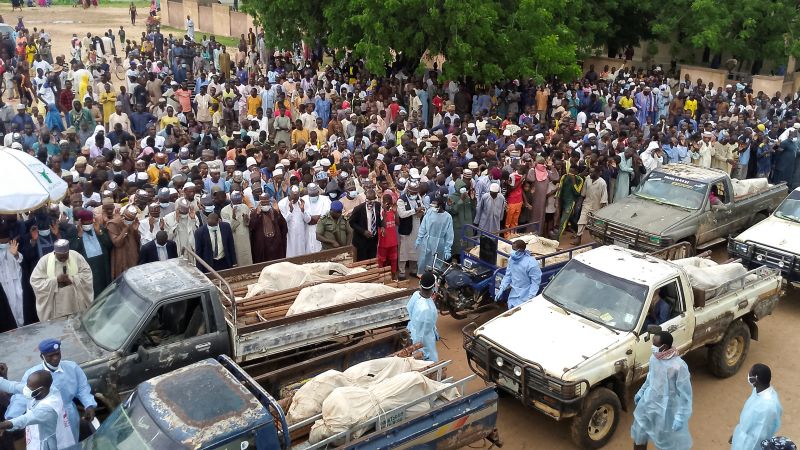
The gunmen raided the villages of Pubagu and Mayo-Ladde in the states of Borno and neighboring Adamawa respectively on Tuesday afternoon after overwhelming local vigilantes, Mada Saidu, chairman of Askira-Uba district where one of the attacks occurred, disclosed to Reuters.
At least 11 people were killed in Pubagu and nine in Mayo-Ladde. Homes and shops were torched and food supplies looted, Saidu confirmed—a pattern of destruction designed to render communities uninhabitable and force populations into displacement camps where government and aid agencies struggle to provide adequate assistance.
Islamist militants have waged a 17-year insurgency seeking to carve out an Islamic state in northeast Nigeria, killing thousands and displacing at least 2 million people, aid groups indicate, despite major military campaigns to root them out that have consumed billions in defense spending.
According to The Associated Press, the attack took place late Tuesday in Pubagu, a community in a remote area on the fringes of Sambisa forest in Borno state—the epicenter of Nigeria’s long fight against an Islamic insurgency. Villagers disclosed they buried the victims Wednesday and attributed the attack to the extremist Boko Haram group.
The local council chairman Mwada Saidu Uba told The Associated Press that the village had previously been considered a safe haven. “Pubagu is one of the locations in our council area that had never suffered such an attack until yesterday,” he stated after the funerals. The two injured were receiving treatment at a nearby hospital, he added.
Usman Rumirgo, a local ward official, revealed the assailants set several houses ablaze before leaving the area. Vulnerable rural communities regularly come under fire from Islamic extremists and bandits who take advantage of Nigeria’s vast rural areas and security gaps that allow militants to operate with apparent impunity.
Among the most prominent Islamic militant groups active in Nigeria are Boko Haram and its breakaway faction affiliated with the Islamic State group and known as Islamic State West Africa Province. There is also the Islamic State-linked Lakurawa group, as well as other “bandit” organizations that specialize in kidnapping for ransom and illegal mining.
Sahara Reporters confirmed that at least 12 victims, including women and young children, have escaped from a faction of Boko Haram, officially known as Jama’atu Ahlis Sunna Lidda’awati wal-Jihad, in Ngoshe community of Borno State. The Borno South Youth Alliance disclosed this to SaharaReporters on Wednesday, confirming that the victims have safely reached a nearby town, although the exact location remains undisclosed for security reasons.
According to the alliance, those who escaped captivity are Aisha Audu (20), Hajara Audu (18 months), Aisha Idrisa (17), Hafsat Idrisa (4 months), Aisha Abubakar Bama (22), Maryam Umar (11 months), Zainabu Umar Mbasuwa (22), Salma Abubakar (2 months), Musa Umar (7), Suleiman Umar (9), Aisha Abubakar (17), and Aisha Musa (10).
In a statement, the group expressed relief over the development but warned that many more victims are still believed to be held by the insurgents in the area. “Borno South Youth Alliance is pleased to announce that the following women and children who were previously held in Ngoshe captivity have reportedly escaped and are now safe in a nearby town. The exact location is being withheld for security reasons,” the statement indicated.
“While we are grateful for this development, we must state clearly that a larger number of victims are still believed to remain in captivity,” the alliance emphasized, conveying ongoing humanitarian crisis as hundreds remain enslaved by militants.
The group further revealed that its President Samaila Ibrahim Kaigama has been briefed on the situation and is expected to release a video update to provide additional details. Ngoshe, located in the Gwoza axis of Borno State, has long been a hotspot of insurgent activity, with communities repeatedly targeted by Boko Haram factions operating in the region.
On April 20, 2026, SaharaReporters documented that Boko Haram had issued a chilling 72-hour ultimatum to the Nigerian government, threatening to execute 416 captives, mostly women and children, if its demands were not met.
In a disturbing video obtained by SaharaReporters, a spokesperson for the terrorist group declared that the countdown had begun, warning that failure by authorities to comply would result in mass killings of those held in captivity in Borno State.
The masked spokesperson, speaking in Hausa, identified the group and reaffirmed its allegiance, stating: “We are a group of people from Jama’atu Ahlis Sunna Lidda’awati wal-Jihad, devoted to our cause. Our leader is Imam Abu Mu’min al-Muhajir. Today is the 19th of April, 2026. May God guide us.”
He added that the message was directed at multiple stakeholders, including the Nigerian government and the Borno South Youth Alliance, while drawing a distinction from what he referred to as “our government.” “We are sending a message today to BOSYA, the South Youth Alliance, and the Nigerian government, not our government. This is our first message, and it will also be the last,” the terrorist declared.
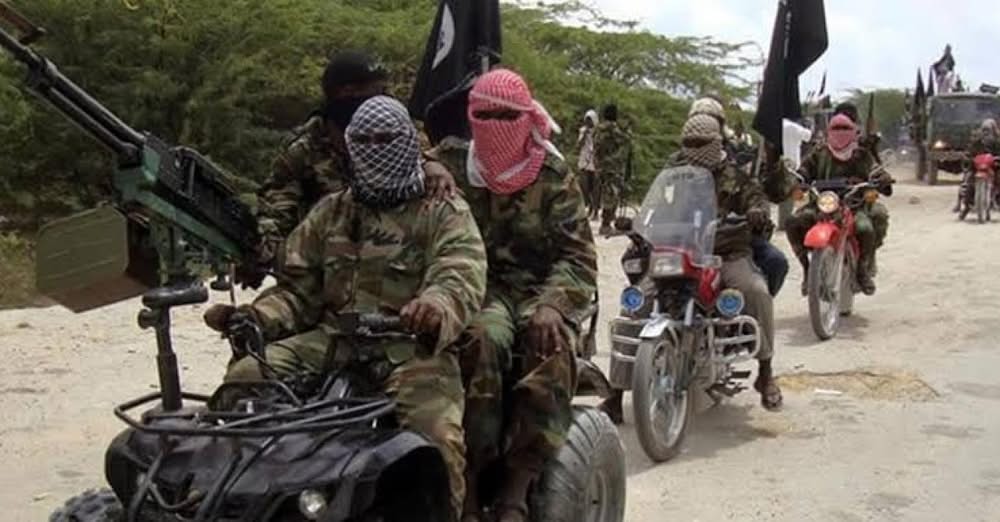
The insurgent group warned that both sides had already exchanged demands, insisting there should be no alterations or delays. “We are giving you seventy-two (72) hours. If you do not fulfill what we have told you, you have already made your demands known, and we too have made our own demands clear to you, based on sacrifice and fear of God. Do not add or change anything beyond what we have told you. These are clear and direct instructions,” he stated.
The spokesperson threatened immediate executions if the ultimatum expired unmet. “If these demands are not met within seventy-two hours, we will begin to execute the women and small children, every one of them. All those you see in this video; you will not see them alive again. They will be shot,” he declared—chilling threat that illustrates militants’ willingness to murder innocent civilians to extract concessions.
The twin attacks on Pubagu and Mayo-Ladde represent the latest evidence that Boko Haram and its splinter factions retain operational capacity despite military operations that Nigerian authorities have repeatedly claimed were defeating the insurgency. The coordination required to assault two separate villages simultaneously demonstrates organizational sophistication that contradicts governmental narratives about degraded militant capabilities.
For residents of northeast Nigeria who have endured 17 years of violence, the attacks confirm that security remains elusive despite assurances from Abuja that the insurgency is being contained. The fact that Pubagu had never previously suffered attack suggests militants are expanding operations into areas previously considered safe—a pattern that could trigger additional displacement as vulnerable communities conclude nowhere offers protection.
The looting of food supplies alongside killing and burning creates compound humanitarian crisis as survivors lose both shelter and sustenance while dealing with trauma of witnessing neighbors murdered. Aid agencies working in the region already struggle to meet needs of 2 million displaced persons, and additional attacks generating more refugees further strain inadequate resources.
The escape of 12 captives from Ngoshe provides rare good news amid the violence, though the alliance’s warning that many more remain in captivity underscores the scale of kidnapping operations that Boko Haram conducts to obtain ransom payments, forced labor, sexual slaves, and potential recruits.
The 72-hour ultimatum threatening execution of 416 captives represents terrorism at its most calculating—using innocent lives as bargaining chips to extract concessions while demonstrating willingness to carry out mass murder if demands are not met. Whether Nigerian authorities will negotiate with terrorists or refuse on principle while hundreds face execution creates agonizing dilemma with no good options.
As funerals proceeded Wednesday for the 20 killed in Tuesday’s attacks, and as 12 escaped captives received care in undisclosed locations while 416 others faced execution deadlines, the 17-year insurgency shows no signs of resolution despite military campaigns, international assistance, and countless governmental promises that victory was imminent.
For the 2 million displaced persons living in camps, for rural villagers wondering if their community will be next target, and for families whose loved ones remain in captivity facing threatened execution, the insurgency represents ongoing nightmare that successive Nigerian administrations have proven unable to end despite the conflict’s devastating human and economic costs that have transformed the entire northeast into war zone where normal life has become impossible.
SaharaReporters/AP/Reuters





