

BAMAKO, Mali — Armed men in masks stormed into Mountaga Tall’s home just before midnight Saturday and dragged him away. No warrant. No explanation. His wife tried to photograph them. They roughed her up and took her phone.
By Sunday morning, one of Mali’s most prominent lawyers and junta critics was gone — and his family had no idea where.
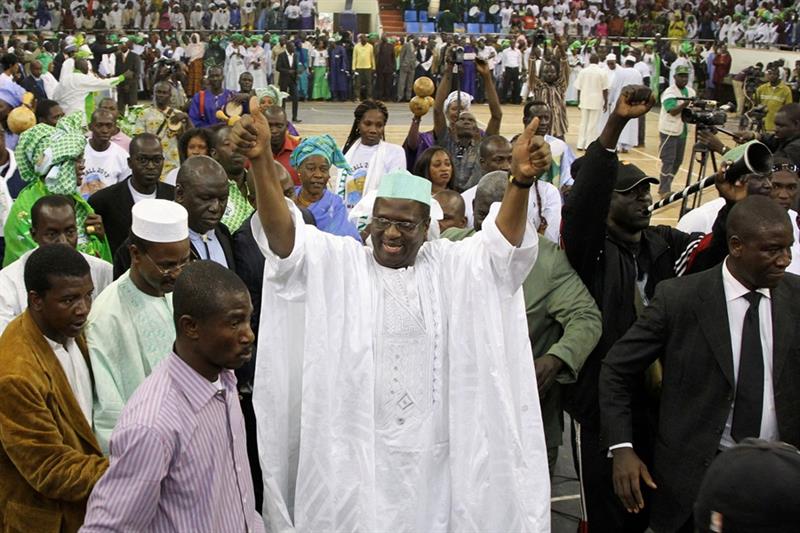
Tall’s relative Mahmoud Touré confirmed the abduction to the Associated Press. The men, Touré said, were from the armed forces.
“They did not explain why and did not present an arrest warrant,” Touré told AP. “The soldiers mistreated Mountaga Tall’s wife and took his phone.”
A family member who witnessed the scene told AFP that “two men in balaclavas came to take him away, they left with him.” The family has since filed a formal complaint for kidnapping and disappearance with security forces. The Malian government has not commented.
Mountaga Tall is not a minor figure. He served as Mali’s minister of education and science from 2016 to 2017 and leads the National Congress for Democratic Initiative, a political party openly opposed to military rule. As a lawyer, he has spent recent months in courtrooms defending politicians and military officers arrested by the junta for criticizing the government.
He was also one of the key figures in the M5-RFP movement — the coalition of protest groups whose street pressure helped bring down former President Ibrahim Boubacar Keita in 2020. When the military officers who seized power initially took over, Tall was among those who gave them a degree of political cover. He later broke with them entirely and became one of their sharpest public critics.
His legal work made him a direct thorn in the junta’s side. He had filed challenges in multiple courts contesting the military government’s decision to dissolve political parties. He was simultaneously serving as defense counsel for several officers the junta had arrested on charges of attempting to destabilize state institutions.
Now he is the one who has been taken.
Tall’s abduction comes in the middle of the worst security crisis Mali’s military government has faced since taking power. On April 26, coordinated attacks struck Bamako and multiple other cities across the country in what the Associated Press confirmed was among the heaviest assaults on the Malian army since 2012.
The attackers were a joint force — the Islamic militant group Jama’at Nusrat al-Islam wal-Muslimin, known as JNIM and linked to Al-Qaeda, fighting alongside the Azawad Liberation Front, a Tuareg-led separatist movement. Together they seized several towns and military bases. At least 23 people were killed, among them civilians and children, according to UNICEF. Mali’s defense minister, Sadio Camara, was also killed in the attacks.
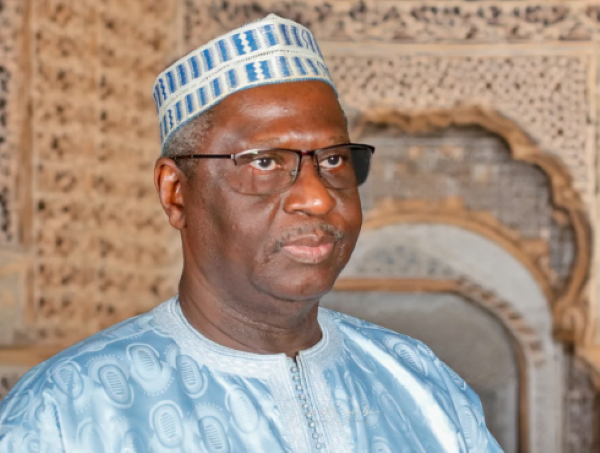
The scale of the assault shook the junta visibly. On Friday, the military government’s prosecutor’s office said it had obtained what it called solid evidence that certain members of the armed forces helped plan, coordinate, and execute the attacks from within — an accusation of internal betrayal that sent a wave of arrests across the military establishment.
The same prosecutor’s office also accused Oumar Mariko — an exiled opposition politician, former lawmaker, and one-time presidential candidate — of involvement in the attacks. Mariko has not been brought back to Mali and the basis for the accusation has not been publicly detailed.
The arrest wave following the April 26 attacks has targeted military personnel suspected of complicity. Tall’s abduction fits a broader and more troubling pattern — the silencing of civilian critics, lawyers, and political opponents under the cover of the security emergency.
His family has filed the kidnapping complaint. The government has said nothing. No charge has been announced. No location disclosed. AFP and AP both confirmed the abduction through family members on the ground in Bamako, and neither Malian authorities nor the junta’s spokesperson had offered any response as of Sunday.
The timing is unlikely to be coincidental. Tall represented the exact kind of legal opposition the junta has struggled to suppress through normal channels — his court filings against the dissolution of political parties were working their way through the judiciary. His clients included the very officers the junta had already imprisoned. His removal from the picture, even temporarily, benefits the government in multiple active legal proceedings.
The abduction of a defense attorney in the middle of active cases he is litigating is not a side effect of a security crackdown. It is the crackdown itself, applied to the legal system.
Mali’s military government has steadily dismantled the formal institutions of political opposition since seizing power in 2020 — dissolving parties, arresting critics, and now, it appears, removing the lawyers who represent them. That progression follows a recognizable pattern in states where military governments consolidate power over time: the first targets are the politicians, the second are the journalists, and the third are the lawyers, because lawyers are the ones who can make a legal record of what is happening.
Tall’s case sits at the intersection of all three threats from the junta’s perspective. He was a politician. He was a public critic. And he was building legal challenges that, if they succeeded, could have forced the government to restore political freedoms it had abolished.
The international community’s response to Mali’s security crisis has been complicated by the junta’s expulsion of French forces, its embrace of Russian military contractors, and its withdrawal from the Economic Community of West African States. Those ruptures have left fewer external pressure points available to human rights organizations and foreign governments that might otherwise push for Tall’s release.
What happens to Mountaga Tall in the coming days will say a great deal about whether any institution in Mali — legal, political, or international — retains enough independence to hold the junta accountable for what happened in his home just before midnight on Saturday.
Englishahram/AP





