

The United States has confirmed the death of another service member in Iraq as American forces intensified their military campaign against Iran, underscoring a rapidly expanding conflict that now stretches from Iraq and Jordan to the Persian Gulf and the Strait of Hormuz.
The latest casualty comes as U.S. forces launched another wave of strikes against Iranian military targets, while Tehran responded with fresh missile and drone attacks against American allies across the region. Military officials say the exchange of attacks has pushed the confrontation closer to a broader regional war, with growing implications for global energy markets and international security.
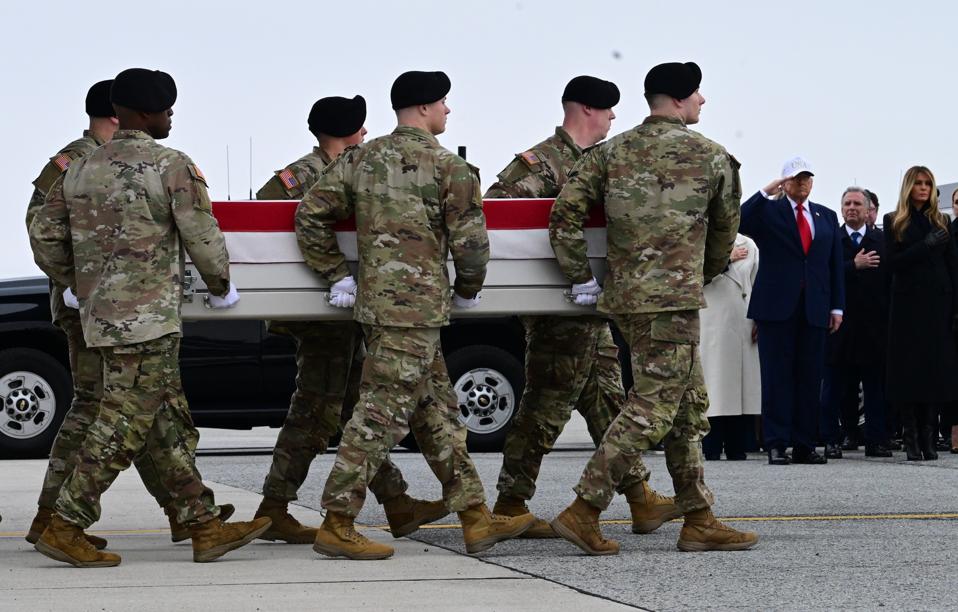
What we know so far
U.S. Central Command said the American service member died Saturday in northern Iraq during the controlled detonation of unexploded ordnance recovered from a downed Iranian attack drone. Another service member sustained minor injuries during the operation and received medical treatment.
Military officials have not released the identity of the fallen soldier pending notification of family members.
The latest death raises the number of American military personnel killed since the conflict began on Feb. 28 to 17.
The announcement followed Friday’s Iranian attack in Jordan, where two U.S. service members were killed while defending American positions from incoming missiles and drones. A third service member remains unaccounted for, although Central Command said search teams have recovered unidentified human remains from the attack site and forensic examinations are underway.
The military said previously injured personnel have since returned to duty after receiving treatment.
Washington expands military operations
The announcement coincided with another round of U.S. airstrikes targeting Iranian military infrastructure, marking the ninth consecutive night of American attacks.
Central Command said the latest operation was designed to weaken Iran’s military capabilities, particularly systems believed to threaten commercial shipping through the Strait of Hormuz.
The command also said the strikes were intended to retaliate against Iranian forces blamed for attacks that killed American troops in Jordan.
President Donald Trump defended the military response, saying the latest strikes honored the service members killed in recent attacks while reaffirming that preventing Iran from obtaining nuclear weapons remains a central objective of the campaign.
During a brief interview with NewsNation, Trump dismissed Iran’s announcement that it would no longer comply with an earlier memorandum of understanding between Washington and Tehran.
Conflict spreads across the region
Military operations have intensified significantly since a temporary ceasefire reached one month earlier collapsed, triggering renewed fighting across multiple fronts.
The conflict has evolved beyond direct confrontations between Washington and Tehran, with neighboring countries increasingly caught in the crossfire.
Iran has launched repeated missile and drone attacks against U.S. military facilities and allied infrastructure throughout the Gulf region, while American aircraft have expanded strikes against military installations inside Iran.
The latest escalation has transformed the Strait of Hormuz into one of the world’s most dangerous waterways as both sides seek to gain strategic advantage over a maritime corridor that normally carries nearly one fifth of global oil supplies.
Iranian attacks widen
Iranian state media said U.S. strikes hit areas near the southern city of Sirik and locations near Shadegan, close to Iraq’s border.
Explosions were also reported near Abadan in southwestern Iran.
Iran’s Atomic Energy Organization condemned what it described as an American strike on the construction site of the Darkhovin nuclear power project.
The International Atomic Energy Agency acknowledged it was reviewing reports of the attack, adding that the facility remains in the early stages of construction and contained no nuclear material during its most recent inspection.
Meanwhile, Iranian forces launched drone attacks targeting American military facilities in Kuwait, including Al Adiri Camp and Ali Al Salem Air Base, Iranian state television said.
Kuwaiti officials also confirmed another attack on one of the country’s desalination facilities, marking the second consecutive day that critical civilian infrastructure has come under fire.
Bahrain intercepted additional Iranian missiles and drones, while Jordan activated its air defense systems and reported shooting down three incoming missiles before they reached populated areas.
Jordan later summoned Iran’s senior diplomat to formally protest repeated attacks affecting its territory.
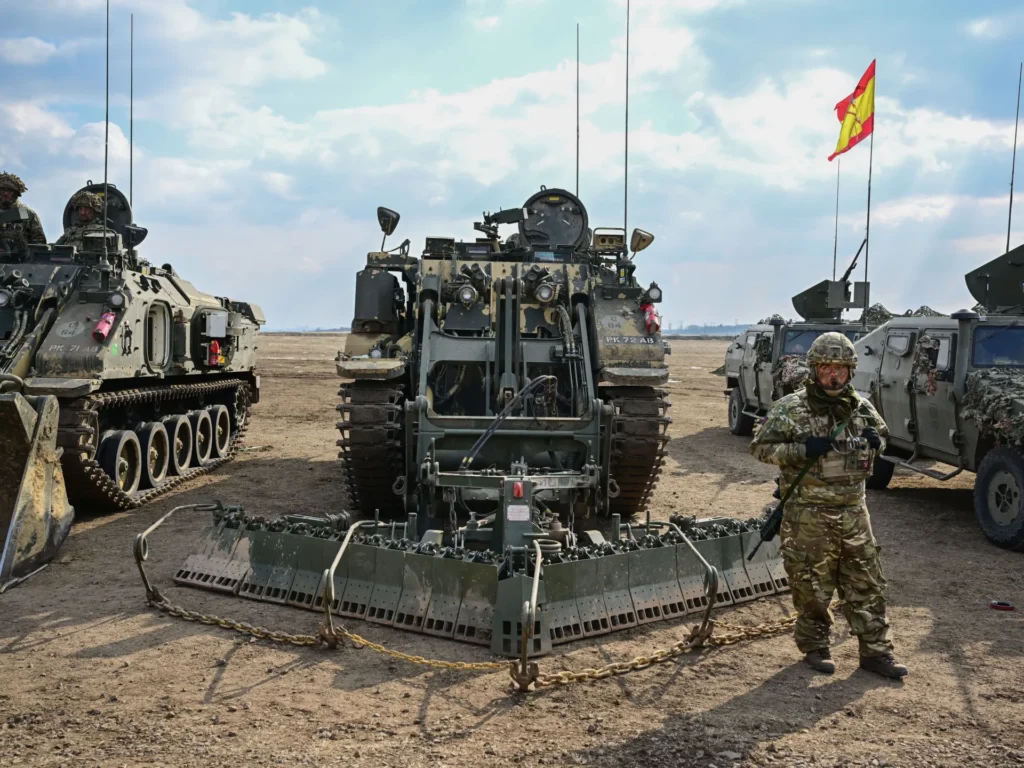
Regional tensions deepen as Gulf states activate air defenses
The conflict widened further as several U.S. allies across the Middle East responded to another wave of Iranian missile and drone attacks, prompting heightened security measures and renewed diplomatic protests.
Jordan’s military said its air defense units intercepted several Iranian missiles before they reached their intended targets. Officials reported no casualties or property damage but described the attacks as another serious violation of the country’s airspace.
The Jordanian government later summoned Iran’s chargé d’affaires to protest the repeated attacks, while officials reiterated that the kingdom would continue defending its territory against any unauthorized military activity.
Bahrain also activated its air defense systems after detecting incoming drones and missiles. The U.S. Embassy in Manama issued a security advisory warning American citizens that Iran could target unspecified locations in the Bahraini capital, although officials did not identify any specific sites.
Kuwait likewise came under renewed attack as authorities confirmed that one of the country’s major water desalination facilities was struck for a second consecutive day. Government officials said the attack triggered fires but did not interrupt electricity generation or water production.
The Kuwaiti Ministry of Electricity, Water and Renewable Energy said emergency crews quickly contained the damage and that the national power grid remained stable.
With approximately 90 percent of Kuwait’s drinking water produced through desalination, officials described the facilities as critical national infrastructure.
The six nation Gulf Cooperation Council condemned the attacks, accusing Iran of targeting civilian infrastructure protected under international humanitarian law.
Strait of Hormuz emerges as central battlefield
The struggle for control of the Strait of Hormuz continues to define the military campaign as both Washington and Tehran attempt to disrupt each other’s strategic and economic objectives.
Central Command said recent operations are intended to weaken Iran’s ability to threaten commercial shipping passing through the waterway, one of the world’s busiest oil transit routes.
President Donald Trump has repeatedly indicated that Washington will continue targeting infrastructure supporting Iran’s military operations until Tehran reduces its ability to interfere with international shipping.
American naval operations have also intensified around Iranian ports after the United States expanded maritime enforcement efforts designed to restrict Iranian oil exports.
Military officials said several commercial vessels have been redirected while Iranian shipping activities continue to face increasing pressure.
A maritime security organization supported by the U.S. Navy warned that risks to commercial shipping remain extremely high.
Officials described deliberate hostile action against merchant vessels as highly likely, noting that shipping traffic has fallen sharply since fighting resumed.
Before the conflict escalated, nearly 140 commercial ships passed through the Strait of Hormuz each day. Current traffic remains only a fraction of those levels.
Meanwhile, British military authorities reported that a commercial vessel caught fire near Oman’s coastline early Monday. Officials have not determined what caused the incident, although it occurred during another night of heavy military activity across the Gulf.
Iran’s Revolutionary Guard claimed that four commercial vessels attempted to navigate the waterway using an unauthorized route supported by the United States.
Iranian officials said two vessels turned back while two others were involved in what they described as an accident. They provided no additional details.
Diplomatic efforts struggle as military campaign expands
While military operations continue to intensify, diplomatic efforts aimed at preventing a broader regional conflict have shown little progress.
Secretary of State Marco Rubio met Lebanese President Joseph Aoun on Sunday to discuss implementation of a U.S. backed security framework signed in June.
The agreement focuses on strengthening Lebanon’s security institutions while reducing tensions along Israel’s northern border.
Aoun is expected to meet President Donald Trump this week to present proposals that include disarming Hezbollah and securing Israel’s withdrawal from parts of southern Lebanon.
Israeli officials also indicated they are preparing for the possibility of a wider regional conflict.
Defense officials said additional American aerial refueling aircraft are expected to arrive in the region, providing greater operational flexibility should Washington decide to expand military operations inside Iran.
Reuters said U.S. officials had already begun deploying additional aircraft and military assets before the latest Iranian attacks, reflecting expectations that the conflict could continue escalating.
Defense Secretary Pete Hegseth paid tribute to the American troops killed during the campaign, saying their sacrifice would strengthen the United States’ resolve.
Military officials said more than 420 American service members have been wounded since hostilities began in late February.
Iran’s Health Ministry said recent U.S. strikes killed at least 50 people and wounded more than 500 others during the latest phase of the fighting.
Overall casualties across the conflict now number in the thousands, with most deaths reported in Iran and Lebanon.
Why this matters
The latest escalation represents one of the most dangerous phases of the conflict since fighting began earlier this year.
Unlike previous confrontations largely confined to direct military exchanges, the conflict now involves multiple countries across the Middle East and increasingly threatens critical civilian infrastructure, international shipping lanes and global energy markets.
The Strait of Hormuz alone carries roughly one fifth of the world’s seaborne oil exports, making any prolonged disruption capable of affecting fuel prices, inflation and supply chains worldwide.
The repeated attacks on desalination plants, transportation infrastructure and commercial shipping also increase humanitarian risks for millions of civilians throughout the Gulf region.
Military analysts warn that each additional exchange raises the possibility of accidental escalation involving countries not directly participating in the conflict.
What happens next
American military officials have indicated that operations against Iranian military infrastructure will continue as long as threats to U.S. forces and commercial shipping persist.
Iran has likewise vowed to maintain retaliatory operations against American military assets and regional allies while accusing Washington of violating previous diplomatic understandings.
With ceasefire efforts effectively collapsed and both governments expanding military operations, analysts expect continued exchanges across Iraq, Jordan, the Gulf states and the Strait of Hormuz in the coming days.
Diplomatic efforts remain active, but no immediate negotiations capable of ending the fighting have been announced.
The latest developments suggest the conflict has entered a more sustained phase rather than a temporary exchange of retaliatory strikes. Both Washington and Tehran appear focused on weakening each other’s strategic advantages while avoiding direct ground combat. However, attacks on energy infrastructure, maritime shipping and neighboring countries significantly increase the risk of broader regional instability.
If shipping through the Strait of Hormuz remains disrupted, the consequences could extend well beyond the Middle East, affecting oil markets, inflation and international trade. Continued military losses on both sides may also increase domestic political pressure for either a negotiated settlement or a wider military campaign.





