Pakistani security forces killed 22 militants in a series of intelligence-led raids on hideouts in the country’s restive northwest, the military said Thursday, in the latest phase of an intensifying campaign against insurgents along the border with Afghanistan.
The operations took place on Nov. 16 and 17 in the South Waziristan, Bannu and Tank districts of Khyber Pakhtunkhwa province, the military’s media wing, Inter-Services Public Relations, said in a statement.
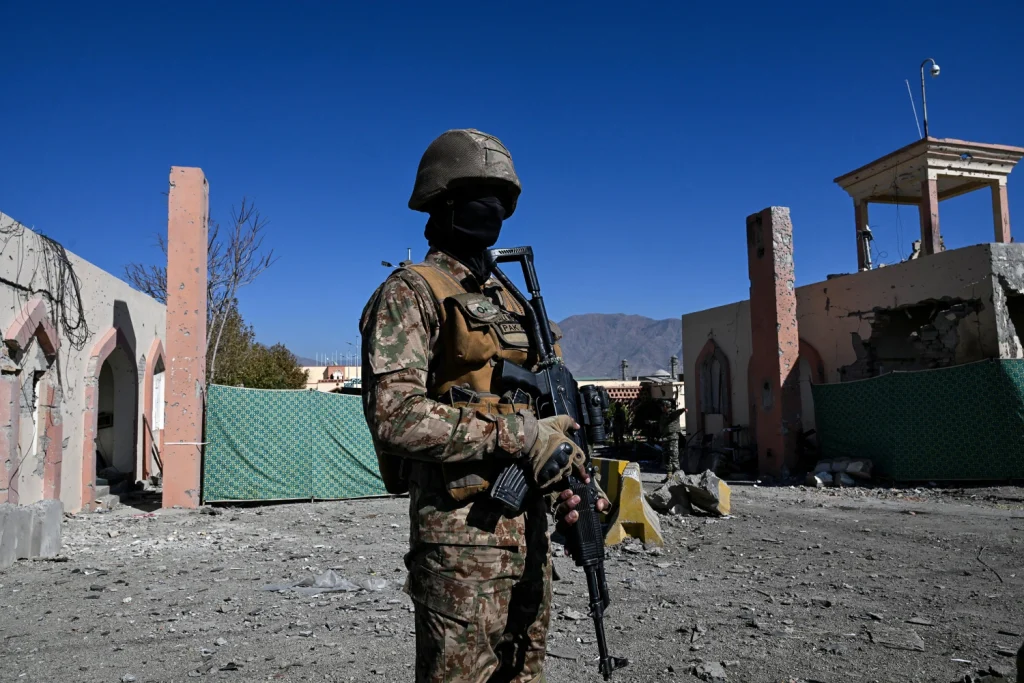
The ISPR identified the dead as members of “Fitna al-Khwarij,” the term Pakistani authorities use for the Pakistani Taliban, and alleged the group is sponsored by India. There was no immediate response from New Delhi, The Associated Press said. Pakistan frequently accuses Afghanistan and India of backing the Pakistani Taliban and other militant groups, accusations both countries reject.
The military’s claims could not be independently verified. Access to the border regions is tightly restricted for journalists.
Heaviest toll in South Waziristan
The deadliest clash occurred in South Waziristan, where troops moved on a reported militant location after receiving intelligence, setting off an intense exchange of fire that killed 15 militants, according to the ISPR statement, as reported by Balochistan Pulse.
In Bannu district, security forces struck militant hideouts in two separate encounters, killing six, the military said. A further militant was killed in a clash in Tank district.
Troops recovered weapons and ammunition from the dead, who the military said had been involved in numerous attacks in the area. Search-and-clear operations were underway to find any remaining militants, it said.
The military said counterterrorism efforts would continue under Azm-e-Istehkam, a campaign approved by the Federal Apex Committee under Pakistan’s National Action Plan, to root out what it called foreign-sponsored terrorism.
Leaders praise forces
President Asif Ali Zardari and Prime Minister Shehbaz Sharif issued separate statements commending the security forces for killing “Indian-supported” militants and pledging to press on against militancy, the AP said. Sharif said militants and their backers would not be permitted to spread unrest and that the nation stood behind the forces confronting them.
The raids follow an announcement last week that security forces had killed 74 militants over several days in operations in the northwest and in southwestern Balochistan province.
Surge in militant violence
Attacks on Pakistan’s police and security forces have increased sharply in recent years. Authorities attribute most of the violence to the Pakistani Taliban, known as Tehrik-e-Taliban Pakistan or TTP, and allied groups.
The TTP is separate from, but allied with, Afghanistan’s Taliban, who seized power in Kabul in 2021. Many TTP leaders and fighters are believed to operate from hideouts across the Afghan border, a situation that has strained relations between Islamabad and Kabul.
A rising tempo of operations amid regional friction
The latest raids, coming days after the military reported killing 74 militants, point to an escalating counterinsurgency effort in Pakistan’s northwest. Districts such as South Waziristan and Bannu have long been flashpoints, and the frequency of announced operations suggests security forces are under pressure to show results as militant attacks continue.
The military’s language reflects a broader political framing. By labeling the TTP “Fitna al-Khwarij” and describing it as Indian-sponsored, Pakistani authorities cast domestic militancy as a product of foreign interference. That framing serves to rally public support and place blame on rivals, but it also raises tensions with New Delhi, which denies any role. Without independent verification, the claim of Indian backing remains contested.
The Afghan dimension is equally significant. Islamabad’s assertion that TTP fighters shelter across the border has repeatedly soured relations with the Taliban government in Kabul. Each cycle of violence in Khyber Pakhtunkhwa risks deepening that dispute, and past episodes have included cross-border tensions.
The inability to independently confirm casualty figures is a persistent issue. Restricted access means the military’s accounts, including the number killed and their affiliations, often stand alone. Rights groups have at times raised concerns about transparency in such operations, though no specific allegations have emerged regarding these raids.
For residents of affected districts, sustained military operations can bring both relief from militant violence and disruption from security sweeps. The ongoing search operations signal that the campaign is far from over, and continued clashes appear likely as the military pursues its stated goal of eliminating militant networks in the region.
Sources: The Associated Press (AP); Balochistan Pulse