

Former Venezuelan President Nicolás Maduro is due back in a federal courtroom on Wednesday as his legal team continues efforts to challenge the legality of the United States military operation that removed him from Venezuela and brought him to New York to face sweeping drug trafficking charges.
Maduro and his wife, Cilia Flores, have remained in federal custody since January after United States Special Forces detained them during a nighttime operation in Caracas and transferred them to the United States. Both have pleaded not guilty to charges that could carry life prison sentences if prosecutors secure convictions.
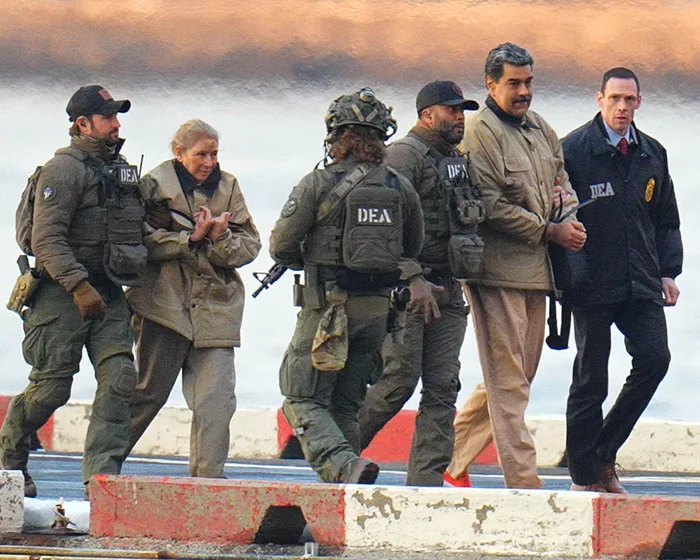
The high profile case has become one of the most significant international criminal prosecutions in recent United States history, raising questions that extend beyond narcotics allegations to issues involving sovereignty, jurisdiction and international law.
According to the Associated Press, Maduro is expected to use Wednesday’s pretrial hearing to continue challenging what his defense describes as an unlawful military seizure. Prosecutors, however, maintain that the operation lawfully brought an accused drug trafficking suspect before a United States court to answer longstanding criminal charges.
What We Know So Far
Federal prosecutors accuse Maduro of participating in a long running conspiracy that allegedly moved thousands of tons of cocaine toward the United States with assistance from elements of Venezuela’s security apparatus and major drug trafficking organizations.
Maduro has repeatedly denied the allegations.
During his initial court appearance in January, he declared in Spanish that he was innocent and described himself as Venezuela’s constitutional president.
His attorney, Barry Pollack, has argued that the case cannot proceed without first addressing what he describes as the unlawful military abduction of a foreign head of state.
Maduro and Flores have remained at a federal detention facility in Brooklyn and have not requested release on bail while pretrial proceedings continue.
No trial date has yet been formally approved by the court.
Court Filing Proposes 2027 Trial
Reuters said attorneys representing both the United States Department of Justice and Maduro jointly proposed beginning the criminal trial in June 2027, providing the court with an initial timetable for handling the complex case.
The proposal, filed before Wednesday’s hearing, outlines several stages of litigation before any jury is selected.
Under the proposed schedule, Maduro’s legal team would file its first motions seeking dismissal of the indictment by September 2.
Among those anticipated filings is an argument that Maduro is entitled to immunity from prosecution because he served as the head of a sovereign state.
A second round of defense motions would follow after prosecutors provide classified evidence for review, with additional filings proposed by January 11, Reuters said.
United States District Judge Alvin Hellerstein will ultimately decide whether to adopt or modify the proposed schedule.
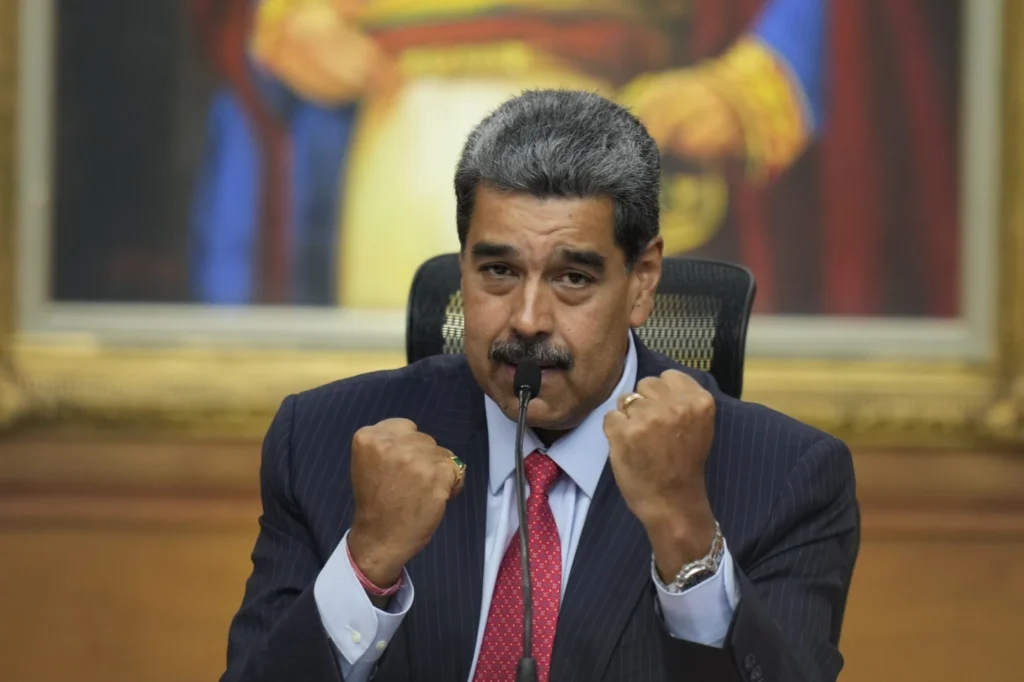
Defense Challenges Legality of Arrest
Maduro’s attorneys have indicated that the central legal battle will focus on whether the United States had lawful authority to seize him inside Venezuela.
The defense maintains that international legal protections should shield a foreign head of state from criminal prosecution under these circumstances.
Maduro has repeatedly described himself as a “prisoner of war” and has accused Washington of orchestrating his removal from office through military force.
His lawyers argue that the legality of his capture must be resolved before any criminal trial can proceed.
The Trump administration has defended the January operation as a targeted law enforcement mission tied to an indictment originally filed several years earlier.
What Authorities Are Saying
United States prosecutors continue to argue that Maduro led a criminal conspiracy involving large scale cocaine trafficking destined for the United States.
The Department of Justice has consistently maintained that the criminal charges are supported by extensive evidence gathered during a years long investigation.
The Trump administration has characterized Maduro as a corrupt authoritarian leader responsible for criminal conduct and political repression.
Maduro has rejected those accusations, insisting that the prosecution is politically motivated and designed to remove him from power.
Reuters noted that Washington stopped recognizing Maduro as Venezuela’s legitimate president in 2019 after disputing the legitimacy of his elections.
Why This Matters
The Maduro prosecution represents far more than an ordinary narcotics case.
It could establish important legal precedents concerning the criminal prosecution of former foreign leaders who are forcibly brought before United States courts.
The proceedings are also likely to test how American courts balance allegations of international drug trafficking against arguments involving sovereign immunity and international law.
Diplomatically, the case continues to strain already fractured relations between Washington and Caracas while attracting close attention from governments across Latin America and beyond.
If the court allows Maduro’s immunity arguments to proceed, the case could influence how future prosecutions involving foreign political leaders are handled.
What Happens Next
Judge Alvin Hellerstein is expected to consider the proposed litigation schedule and address procedural issues during Wednesday’s hearing.
Defense attorneys are preparing multiple motions seeking dismissal of the indictment before any trial begins.
Should the proposed timetable remain intact, substantive legal arguments over immunity, jurisdiction and classified evidence will dominate proceedings throughout the coming months before the court determines whether the case moves toward a jury trial in 2027.
Until then, Maduro and Flores are expected to remain in federal custody as one of the most closely watched international criminal cases in the United States continues.
Story Sources: Associated Press (AP), Reuters.





