A federal grand jury in Texas has indicted the alleged leaders of a powerful Mexican drug cartel and 19 other people, accusing them of running an operation that trafficked drugs into the United States, smuggled firearms south into Mexico and moved migrants across the border for profit, The Associated Press said.
The indictment, returned Wednesday in federal court in the Western District of Texas, names Mexican nationals Johnny Hurtado Olascoaga, known as “El Pez,” and his brother Jose Alfredo Hurtado Olascoaga, known as “El Fresa,” as the heads of La Nueva Familia Michoacana. Both are fugitives.
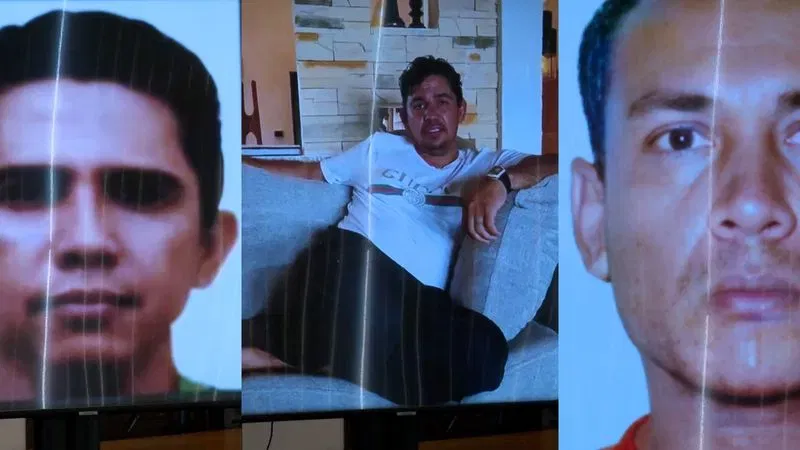
All 21 defendants face racketeering charges. Prosecutors allege the cartel relied on violence, extortion and bribery to sustain its criminal enterprise.
Charges span drugs, guns, money and people
The brothers are charged with conspiring to distribute and import cocaine, heroin and methamphetamine, trafficking firearms including .50-caliber rifles, international money laundering and human smuggling.
They are among 16 defendants who remain at large and are believed to be in Mexico, according to the U.S. Attorney’s Office for the Western District of Texas. The U.S. government is offering rewards of $5 million and $3 million for information leading to their capture.
Only five of the accused are in federal custody, prosecutors said. Gregory Torres, a lawyer for Rogelio Ponce Esquivel, a 33-year-old Mexican national charged in the case and in custody, declined to comment. It was not clear whether the other four detained defendants had attorneys.
The charges are allegations, and the defendants are presumed innocent unless proven guilty.
Straw buyers and southbound guns
The indictment details an alleged pipeline of weapons from the United States into Mexico. Prosecutors say Edgar Aguilar Cruz, a Mexican national, arranged firearm purchases “by numerous straw purchasers throughout Texas and the Southeastern United States,” with couriers later transporting the guns into Mexico. He is also accused of running the cartel’s human smuggling operations, moving people across the border and within the United States.
U.S. citizens are among those charged. Prosecutors allege a 23-year-old man served as a “mid-level drug trafficker who coordinates drug trafficking logistics” for the cartel, mainly in Texas and North Carolina, and that a 35-year-old man recruited people to buy guns for the organization.
Cash from drug sales and human smuggling was frequently moved back to Mexico alongside firearms, the indictment says. Cartel members and associates discussed acquiring military-grade weapons such as rocket-propelled grenades, and leaders decorated their guns with gold plating and images of cartoon and religious figures, authorities said.
Expanding into mining and Chinese chemical trade
The indictment also alleges that the cartel has expanded into controlling mines and has bartered with Chinese companies, trading Mexican minerals for chemicals used in drug production.
A designated terrorist organization
La Nueva Familia Michoacana, founded in 2006, operates in the Mexican states of Michoacán and Guerrero and produces and distributes drugs, authorities say. The Hurtado Olascoaga brothers took control in 2011.
The cartel is one of nearly two dozen Latin American and Caribbean criminal groups the Trump administration has designated as foreign terrorist organizations.
A case built on the guns-for-drugs cycle
The indictment highlights a two-way flow that U.S. and Mexican officials have long described as central to cartel power: drugs and migrants moving north, and guns and cash moving south. The allegation that straw purchasers across Texas and the Southeast supplied weapons, including .50-caliber rifles capable of piercing armored vehicles, underscores how U.S.-sourced firearms can fuel violence in Mexico. The Mexican government has repeatedly pressed Washington to curb such trafficking, and this case is likely to be cited in that ongoing debate.
Charging all 21 defendants with racketeering signals prosecutors’ intent to target the organization as a whole rather than isolated crimes. Racketeering statutes allow prosecutors to link leaders to the actions of lower-level members, a tool frequently used against organized crime.
The practical limits are clear, however. With 16 defendants, including both alleged leaders, believed to be in Mexico, the case depends heavily on capture and extradition. The multimillion-dollar rewards reflect that challenge. Recent extraditions and transfers of cartel figures from Mexico to the United States show such outcomes are possible, but they often take years.
The terrorist designation adds another dimension. It gives U.S. authorities broader tools, including sanctions and material-support charges, and raises the stakes for anyone doing business with the group.
The allegations about mining and trades with Chinese companies for drug-making chemicals point to cartels diversifying their revenue and supply chains. If substantiated, they would fit growing concern about the international networks supplying precursor chemicals and could feed into broader U.S. policy discussions about China’s role in the drug trade.
The presence of U.S. citizens among the accused also illustrates that cartel operations extend well beyond Mexico’s borders, relying on domestic recruits for logistics, sales and weapons procurement.
Source: The Associated Press (AP)