Mexican special forces captured Fausto Isidro Meza Flores, the cartel boss known as “El Chapo Isidro” and one of the FBI’s 10 most wanted fugitives, in a nighttime raid in northern Sinaloa state that erupted into hours of gun battles, burning roadblocks and helicopter fire, leaving at least 11 people dead.
Mexico’s Defense Ministry said four soldiers and seven suspected cartel gunmen were killed in the operation in the city of Guasave, which began Friday night and stretched into Saturday morning, The Associated Press said. Meza Flores was flown to Mexico City on Saturday to be handed to prosecutors.
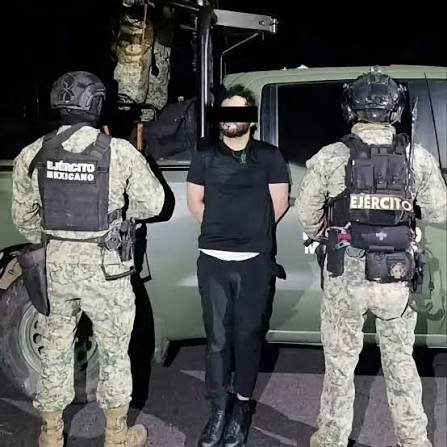
Mexican officials said intelligence provided by the Trump administration helped locate him, though they gave few details about the cooperation.
Raid and counterattack
The Defense Ministry said elite troops reached the “target area” using “stealth and surprise,” sealing off the building where Meza Flores was hiding. After coming under attack “with gunfire and explosives,” soldiers entered a house and detained him, the ministry said, as cited by The Guardian.
Also arrested were his alleged second-in-command, Germán Rolando Gálvez Meza, known as “El Serafín,” and a man identified as José N, described as a financial operator. In total, eight suspects were detained. Three were flown to Mexico City and five were handed to the attorney general’s office in Culiacán.
Video released by the Defense Ministry showed Meza Flores and two others being escorted by heavily armed soldiers onto a military aircraft.
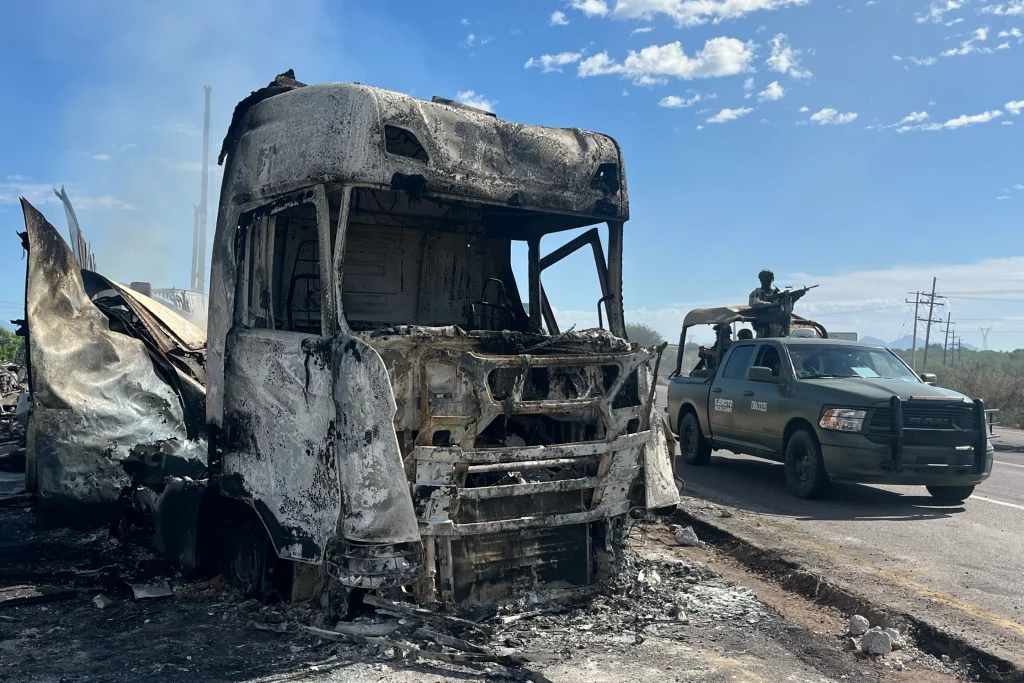
The fighting made it difficult to get him out of the city. A federal official, speaking anonymously because he was not authorized to discuss the case, told the AP that soldiers and National Guard special forces could not extract Meza Flores until 4 a.m. Saturday, as gunmen kept up at least “10 roadblocks” of burning vehicles. “Getting him (Meza Flores) out was extraordinary,” the official said.
A city in terror
Residents of Guasave, a municipality of about 290,000 in Sinaloa’s agricultural heartland, said gunfire broke out around 7 p.m. Friday and quickly spread. Military helicopters and drones circled overhead, with helicopters firing on locations across the city.
Videos showed spectators screaming and running from gunfire at Kuroda Park stadium, where a professional baseball game between the Venados de Mazatlán and Algodoneros de Guasave was halted as players fled the field, The Guardian said, citing CNN.
“The fighting was happening all over Guasave,” said Alma Camacho, a local journalist. “It spread throughout the city.”
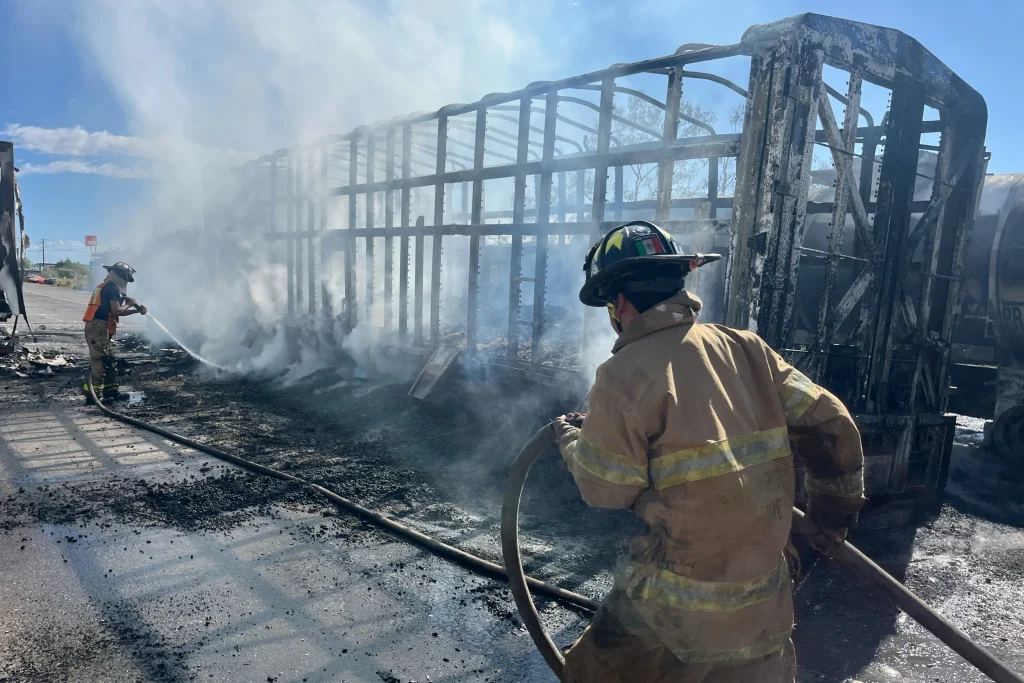
Paola Sánchez, a Guasave firefighter, said thousands of people sheltered in grocery stores and other buildings. “Last night, many businesses were burned … along with cars and trucks,” she told the AP. Firefighters themselves had to take cover in their station until Saturday morning.
By Saturday, an uneasy calm had settled, though burned-out trucks still blocked the highway into town. “The aftermath of last night’s war still lingers. Burned cars in the streets, several Oxxo stores completely burned down,” Camacho said, adding that residents remained “very afraid” because security forces were not visible on the streets.
Sinaloa state officials said “the situation is under control.” Security Secretary Omar García Harfuch said troops would stay in the state to protect civilians, mourned the four fallen soldiers and called the arrest “an important step in pacifying Sinaloa.”
Who is Meza Flores?
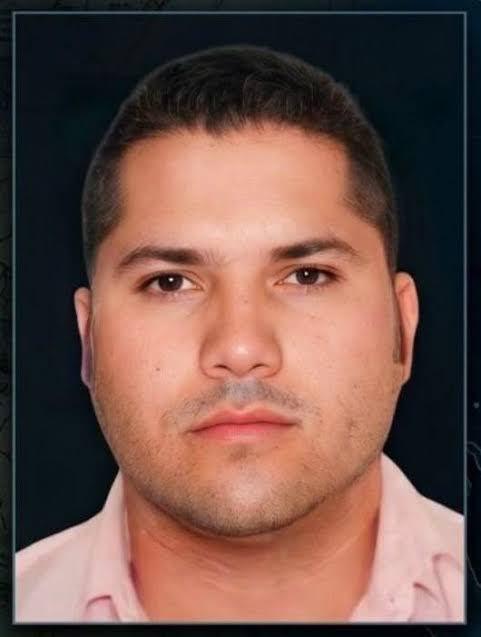
Meza Flores, 44, rose through the ranks of the Beltrán Leyva cartel before forming his own group, the Meza Flores Transnational Criminal Organization, the AP said. Mexico’s Defense Ministry described him as the leader of the Beltrán Leyva organization, which is allied with Los Mayos, one of two warring factions of the Sinaloa Cartel. The U.S. Justice Department described him as a senior leader of the Sinaloa Cartel.
His main area of operations spanned Guasave, Los Mochis and the lower Sierra, NDTV said, citing CNN. In 2024, Mexico’s navy seized more than a ton of fentanyl in Guasave, the largest such seizure in the country’s history.
He evaded capture for more than a decade. He was first indicted in the United States in 2012, sanctioned by the Treasury Department under the Kingpin Act in 2013, and in 2017 the State Department offered up to $5 million for information leading to his arrest, The Guardian said.
A federal grand jury in Washington returned a second superseding indictment Sept. 25 charging him with narcoterrorism, conspiracy to provide material support to a terrorist organization, leading a continuing criminal enterprise, drug trafficking conspiracy, money laundering and firearms offenses, including use of a machine gun and a destructive device, the Justice Department said. If convicted, he faces the death penalty or mandatory life in prison.
According to court documents, his organization allegedly murdered rivals in public, kidnapped and tortured rival cartel members and police officers, and trafficked multi-ton quantities of cocaine, methamphetamine, heroin, marijuana and fentanyl into the United States.
Celebration in Washington and Mexico City
U.S. officials hailed the arrest. “Results like these don’t happen overnight. They are built on sustained cooperation and trust. This is what partners can accomplish together,” U.S. Ambassador Ronald Johnson wrote on X. “We will continue the hunt.”
Attorney General Todd Blanche praised Mexico’s military and said the operation was supported by an interagency effort including the Homeland Security Task Force. He extended condolences to the families of the soldiers killed.
FBI Director Kash Patel said Meza Flores was the 11th Ten Most Wanted fugitive captured under the Trump administration. “Chapo Isidro built an empire in the shadows. Today’s sunrise was his sunset,” said Adam Gordon, U.S. attorney for the Southern District of California, whose office is prosecuting the case alongside the Justice Department’s narcotics section.
The DEA also commended Mexican authorities.
Experts warn of more violence
The capture is the latest high-profile blow against cartel leaders under President Claudia Sheinbaum, who faces pressure from President Donald Trump to crack down on criminal groups. Sheinbaum has pursued cartels more aggressively than her predecessors, and homicides have fallen significantly during her two years in office, the AP said. In February, the military killed Nemesio Oseguera Cervantes, “El Mencho,” leader of the Jalisco New Generation Cartel.
But security analyst David Saucedo said the approach targets leaders without dismantling their networks. “What is evident is this is a product of pressure from the United States,” he said. “They arrested the No. 1 and No. 2, but the entire network of hit men, street-level drug dealers, businesses and political and police connections remains intact.”
Analysis: A major win with a familiar risk
Meza Flores’ capture is a significant achievement for both governments. Removing a long-sought fugitive who appears on the FBI’s most wanted list and faces narcoterrorism charges allows Washington and Mexico City to point to tangible results of their security cooperation. For Sheinbaum, it reinforces her image as tougher on cartels than her predecessors while easing pressure from the Trump administration.
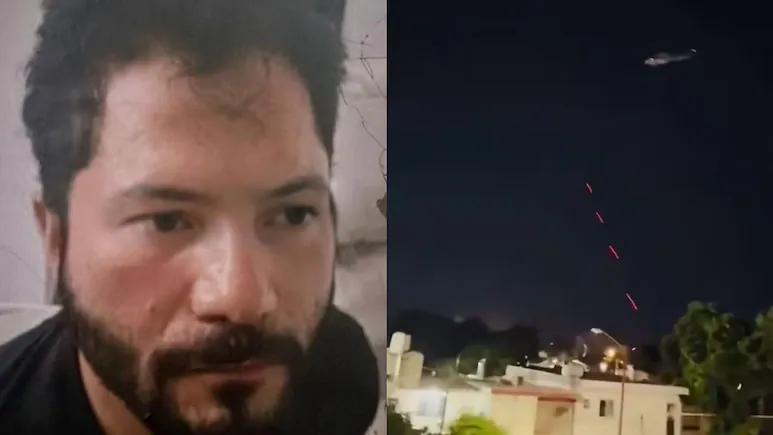
Yet the violent night in Guasave also illustrates the costs. The organization’s ability to block streets, burn businesses and fight soldiers for hours shows how much firepower and local control it holds. That capacity does not disappear with the arrest of its top leaders, as Saucedo warned.
The so-called kingpin strategy has a mixed record in Mexico. Capturing or killing leaders has repeatedly led to splintering and succession struggles that can drive up violence. Sinaloa is already gripped by war between two Sinaloa Cartel factions, and the removal of a key ally of Los Mayos could shift the balance and spark new fighting over territory and drug routes.
The coming weeks will test whether authorities can follow the arrest with sustained pressure on the wider network, including finances and alleged political and police ties. Extradition will also be closely watched, given the U.S. charges and the recent pattern of Mexico sending high-profile cartel figures north.
For Guasave’s residents, the immediate concern is safety. With burned vehicles still on the roads and security forces largely out of sight, many fear the violence may not be over.
Sources: The Associated Press (AP); The Guardian; NDTV, citing CNN; CNN; U.S. Department of Justice