Home Blog Page 126

Russia Launches 650 Drones, 38 Missiles in Pre-Christmas Attack on Ukraine, Killing 3, Including 4-Year-Old Child

0

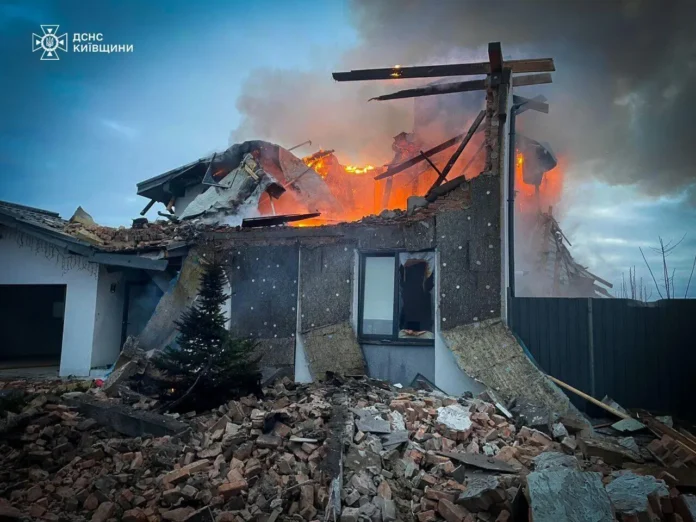
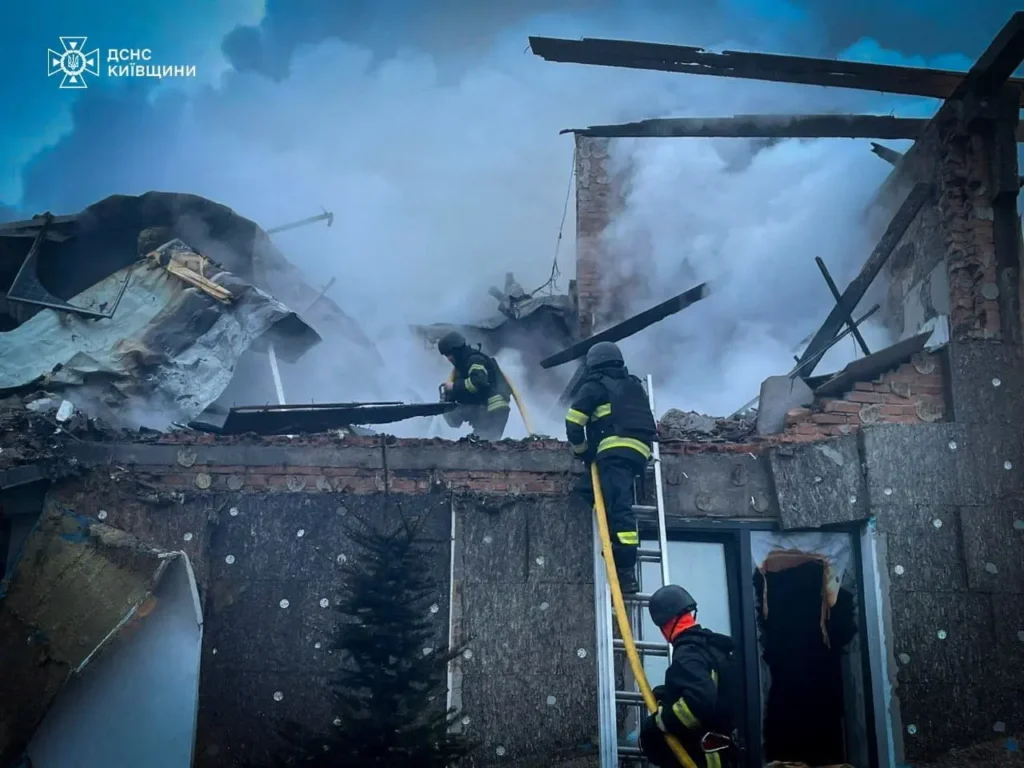
KYIV, Ukraine — Russia unleashed more than 650 drones and three dozen missiles on Ukraine in a sweeping assault that began overnight and continued through daylight hours Tuesday, killing at least three people including a 4-year-old child just two days before Christmas, Ukrainian officials said.
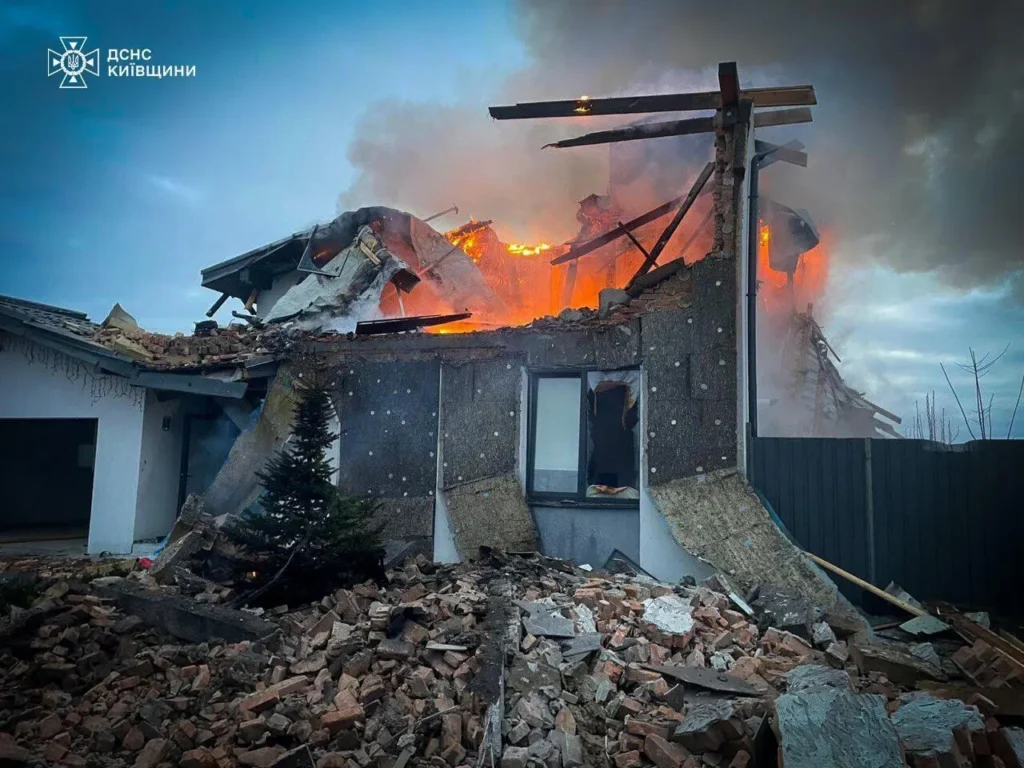
The bombardment struck residential areas and energy infrastructure across 13 regions, triggering widespread power outages amid bitter winter temperatures, Ukrainian President Volodymyr Zelenskyy said. The assault came one day after Zelenskyy characterized recent progress toward a negotiated settlement as “quite solid,” raising questions about Russian commitment to peace efforts.

“A strike before Christmas, when people want to be with their families, at home, in safety. A strike, in fact, in the midst of negotiations that are being conducted to end this war. Putin cannot accept the fact that we must stop killing,” Zelenskyy wrote on Telegram, directly blaming Russian President Vladimir Putin for the timing and scale of the offensive.

The attack represents “an extremely clear signal of Russian priorities,” Zelenskyy stated, suggesting the bombardment demonstrates Putin’s intention to continue the invasion despite ongoing diplomatic discussions. Ukrainian and European officials have repeatedly complained that Putin is not genuinely engaging with U.S.-led peace initiatives.

Russia launched 635 drones of various types and 38 missiles during the operation, Ukraine’s air force said. Ukrainian air defenses intercepted 587 drones and 34 missiles, officials reported, though the weapons that penetrated defenses caused significant casualties and infrastructure damage.

The child victim died in Ukraine’s northwestern Zhytomyr region, Ukrainian emergency services said. A drone strike killed a woman in the Kyiv region, while another civilian perished in the western Khmelnytskyi region, according to Zelenskyy. At least five additional people sustained injuries in strikes on Kyiv, Ukrainian officials said.

The assault marked the ninth large-scale Russian attack on Ukraine’s energy system this year alone, acting Energy Minister Artem Nekraso said. Multiple western regions lost power entirely, while emergency power outages were implemented across the country, the Associated Press reported. Nekraso said restoration efforts would commence once security conditions permitted.

Ukraine’s largest private energy supplier, DTEK, confirmed that the attack targeted thermal power stations in what the company described as the seventh major strike on its facilities since October. DTEK’s thermal power plants have sustained more than 220 hits since Russia’s full-scale invasion began in February 2022, killing four workers and wounding 59, the company stated.

Authorities in the western regions of Rivne, Ternopil and Lviv, along with the northern Sumy region, reported damage to energy infrastructure or power outages following the attack. In the southern Odesa region, Russia struck energy, port, transport, industrial and residential infrastructure, regional head Oleh Kiper said. A merchant ship and over 120 homes sustained damage in Odesa, he reported.

The timing of the assault—during the final preparations for Christmas celebrations—appears calculated to maximize psychological impact on Ukrainian civilians already enduring nearly three years of conflict. Zelenskyy’s statement suggested the attack was designed to undermine Ukrainian morale and demonstrate Russian military capability during a period when peace negotiations have generated international attention.

“Now is the time to respond,” Zelenskyy wrote on X, arguing that “the world is not putting enough pressure on Russia.” The Ukrainian leader’s comments reflect mounting frustration with what Kyiv perceives as insufficient Western support for compelling Moscow toward genuine negotiations, the New York Post reported.

President Donald Trump has pressed for months for a peace agreement between the warring parties, but negotiations have stalled over fundamentally divergent demands from Moscow and Kyiv. U.S. envoy Steve Witkoff said Sunday he conducted “productive and constructive” talks in Florida with Ukrainian and European representatives, though Trump offered a more measured assessment Monday, saying simply, “The talks are going along.”

The contrast between Witkoff’s optimism and Trump’s restraint may signal challenges in bridging the gap between Russian territorial demands and Ukrainian sovereignty concerns. Moscow has insisted on recognition of its annexation of Ukrainian territory, while Kyiv maintains that any settlement must respect Ukraine’s territorial integrity and provide security guarantees preventing future Russian aggression.
Russia, for its part, acknowledged attacking Ukrainian energy and military facilities while claiming to have captured two villages along the front line. The Russian Ministry of Defense has consistently characterized its strikes on energy infrastructure as legitimate targeting of military-supporting facilities, though international humanitarian law questions the legality of attacks that primarily affect civilian populations.

Meanwhile, a Ukrainian overnight drone attack ignited a fire at an industrial facility in Russia’s southern Stavropol region, Russian officials said. The Ukrainian strike represents part of Kyiv’s strategy of conducting long-range attacks on Russian territory to demonstrate its military reach and complicate Moscow’s prosecution of the war.

The pattern of escalating attacks during periods of diplomatic activity has characterized the conflict throughout 2024. Both sides appear to be positioning for maximum military advantage before any potential settlement, leading to intensified operations that paradoxically increase civilian suffering even as peace talks progress.

The Christmas-timed assault raises profound questions about the viability of current negotiation efforts. If Russia conducts massive civilian-affecting attacks during supposedly serious peace discussions, as Zelenskyy argues, it suggests Moscow views negotiations as a tactical pause rather than a genuine path toward ending hostilities. Alternatively, the strikes may represent hardliners within the Russian military and political establishment seeking to undermine any diplomatic opening.

Energy infrastructure attacks have become a defining feature of Russia’s military strategy, particularly as conventional ground offensives have yielded limited territorial gains. By systematically degrading Ukraine’s electrical generation and distribution capacity, Russia aims to make the country ungovernable and unsustainable, forcing either capitulation or massive Western financial commitments to rebuild infrastructure that Russia can strike again.

The human cost of this infrastructure warfare extends beyond immediate casualties. Millions of Ukrainians face recurring power outages during winter months, when heating becomes essential for survival. Hospitals struggle to maintain operations, water systems fail intermittently, and economic activity contracts as businesses cannot operate reliably. The cumulative effect represents a form of siege warfare applied to an entire nation.

International responses to Tuesday’s attack will test Western resolve in supporting Ukraine through what may be a prolonged endgame phase. European governments face domestic political pressure over energy costs and migration while attempting to maintain military and financial assistance to Kyiv. The United States under Trump has signaled interest in reducing its Ukraine commitment, creating uncertainty about long-term support sustainability.

As Christmas approaches, the bombardment serves as a stark reminder that peace negotiations alone do not end violence. Until Russia and Ukraine reach a mutually acceptable settlement—or until one side achieves decisive military advantage—Ukrainian civilians will continue bearing the burden of attacks designed to break national will and force political concessions through suffering rather than diplomacy.

NewYorkPost/AP

Mexican Navy medical plane crashes near Galveston, killing at least 5 on humanitarian mission

0

A Mexican Navy aircraft on a humanitarian medical mission crashed into waters near Galveston on Monday, killing at least five people and triggering a large-scale emergency response along the Texas coast, authorities said.

The small plane was transporting a young medical patient and seven others when it went down in Galveston Bay near the base of the causeway linking Galveston Island to the mainland. Mexico’s Navy said four of those aboard were naval officers and four were civilians, including a child. Among the civilian passengers were two members of a nonprofit organization that assists Mexican children with severe burns, arranging emergency transport to a specialized hospital in Galveston.

U.S. Coast Guard Petty Officer Luke Baker confirmed that at least five people died in the crash but said officials were still working to identify the victims. Search and recovery efforts continued in the bay as investigators assessed the wreckage.

Mexico’s Navy, known as the Marines, said in a statement issued to The Associated Press that it was extending its “deepest condolences to the families of those who lost their lives in this tragic accident.” The Navy added that the aircraft had been operating as part of a coordinated medical mission but provided no additional details about the circumstances leading up to the crash.

The aircraft was working in coordination with the Michou and Mau Foundation, a nonprofit that facilitates emergency transfers of children with life-threatening burns to Shriners Children’s Hospital in Galveston. The foundation acknowledged the incident in a social media post, saying it shared in the families’ grief and reaffirmed its commitment to providing “humane, sensitive, and dignified care” to children with severe burn injuries.

Emergency responders converged on the scene Monday afternoon in the busy coastal area, which is a popular beach destination roughly 50 miles southeast of Houston. Local, state and federal agencies deployed boats, divers, drones and patrol units as visibility conditions remained challenging.

Sky Decker, a professional yacht captain who lives about a mile from the crash site, said he rushed to the area in his boat after hearing about the incident. He told The Associated Press that police officers guided him through thick fog to the wreckage, which was almost completely submerged.

Decker said he entered the water and discovered a severely injured woman trapped beneath seats and debris inside the aircraft. He described a narrow air pocket that allowed her to breathe as fuel fumes mixed with the surrounding water. He also recovered the body of a man seated in front of her, whom he said had already died. Both appeared to be civilians, Decker said.

The Texas Department of Public Safety said teams from the Federal Aviation Administration and the National Transportation Safety Board arrived at the scene Monday evening. An NTSB spokesperson confirmed the agency was aware of the crash and had begun gathering information. The Galveston County Sheriff’s Office said its dive team, crime scene unit, drone operators and patrol officers were assisting in the response.

The cause of the crash remained under investigation. Mexico’s Navy said the aircraft suffered an “accident” while approaching Galveston but did not elaborate. It was not immediately clear whether weather played a role, though fog has lingered along the upper Texas coast in recent days. National Weather Service meteorologist Cameron Batiste said visibility dropped to about a half mile around the time of the crash.

Beyond the immediate tragedy, the incident highlights the risks involved in cross-border humanitarian missions that routinely move critically ill patients to specialized care. Investigators are expected to examine flight data, maintenance records and environmental conditions as they work to determine what went wrong during the aircraft’s final approach.

NBC

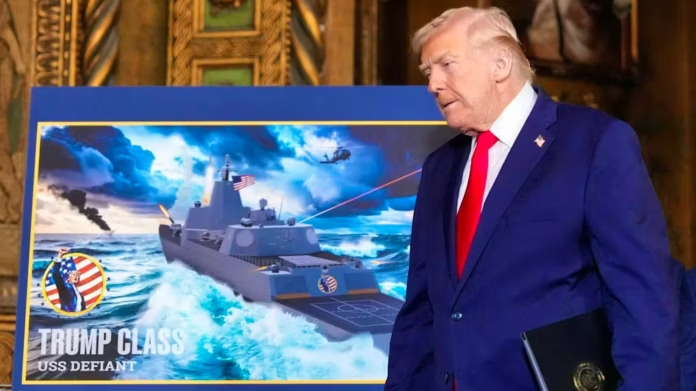
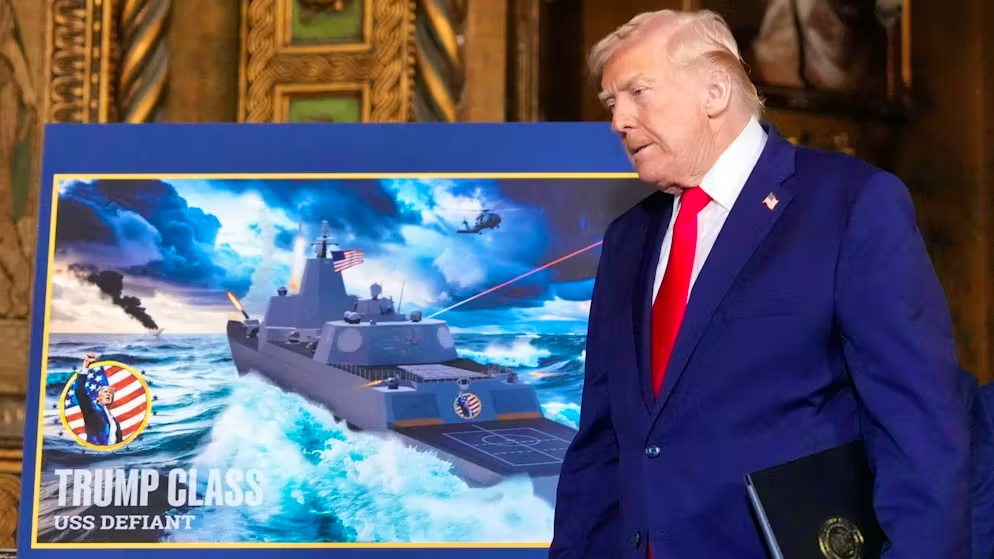
Trump Unveils Nuclear-Armed Battleship Class Bearing His Name, Reviving Warfare Technology Dormant Since 1991

0

PALM BEACH, Fla. — President Donald Trump unveiled plans Monday for a new class of nuclear-capable battleships bearing his name, reviving a vessel type the United States has not deployed in combat since the 1991 Gulf War and marking the latest instance of the president attaching his identity to federal institutions and infrastructure.

Navy Secretary John Phelan announced the “Trump-class battleships” at an event at Trump’s Mar-a-Lago estate, describing the initial vessel—designated USS Defiant—as “the largest, deadliest and most versatile and best-looking warship anywhere on the world’s oceans.”

The warships will carry conventional guns and missiles alongside advanced weapons systems including hypersonics, electromagnetic rail guns and high-powered directed energy lasers, according to Phelan. The Navy secretary confirmed the vessels will also deploy nuclear-armed sea-launched cruise missiles, representing a significant expansion of the nation’s strategic nuclear capabilities.

Trump indicated plans for eventually constructing 20 to 25 battleships in the new class. “We envision that these ships will be the first of a whole new class of battleships to be produced in the years to come,” the president said during Monday’s announcement.

The Navy will lead design efforts for the Trump-class vessels, which the Defense Department expects to complete early next decade. Trump stated he will personally participate in design decisions “because I’m a very aesthetic person,” suggesting presidential involvement in the ships’ visual appearance and configuration.

The president traced the concept’s origins to his first administration. “These have been under design consideration for a long time, and it started with me in my first term, because I said, ‘Why aren’t we doing battleships like we used to?'” Trump said Monday.

The announcement resurrects a warship category the United States abandoned after the Cold War. American forces last deployed battleships during Operation Desert Storm against Iraq in 1991, when the vessels provided naval gunfire support for ground operations. The Navy subsequently decommissioned its remaining battleships, viewing them as obsolete in an era of aircraft carriers, guided missile cruisers and submarines.

Naval warfare experts have long debated battleship relevance in contemporary combat. Supporters argue heavily armored surface combatants could provide resilient platforms for advanced weapons systems and absorb damage that would disable lighter vessels. Critics contend battleships present large, vulnerable targets in an age of precision-guided missiles and that their construction diverts resources from more versatile platforms like carriers and submarines.

The decision to name the class after Trump continues a pattern of the president affixing his identity to federal facilities and programs during his second term. Last week, a board handpicked by Trump voted to rename the John F. Kennedy Center for the Performing Arts in Washington the Trump-Kennedy Center. The Interior Department added Trump’s name to the U.S. Institute of Peace headquarters in Washington this month, and displayed a national park pass for 2026 that will bear the president’s image in a video released last month.

The legality of several naming decisions faces legal challenges from critics who argue federal law prohibits naming facilities after living individuals or requires congressional approval for such designations. The moves have drawn sharp criticism from Democrats, who characterize the rebranding efforts as unprecedented self-aggrandizement that violates historical norms around naming federal properties.

Trump characterized the new battleships as a general deterrent rather than a response to any specific adversary. “It’s a counter to everybody. It’s not China. We get along great with China,” he said. “It’s just everybody. You don’t know who comes along, but we just wanted peace through strength. Hopefully we never have to use them, but there will never be anything built like these.”

The “peace through strength” formulation echoes Cold War-era defense rhetoric, particularly associated with President Ronald Reagan’s military buildup during the 1980s. Trump has repeatedly invoked this framework to justify defense spending increases and modernization programs, arguing that overwhelming military superiority prevents conflict by making potential adversaries reluctant to challenge American interests.

The battleship announcement raises immediate questions about cost, construction timelines and strategic rationale. Modern capital ships typically require a decade or more from initial design to operational deployment, with costs often exceeding original estimates. The Navy’s recent shipbuilding programs have experienced significant delays and budget overruns, including the Gerald R. Ford-class aircraft carriers and Zumwalt-class destroyers.

Nuclear-armed sea-launched cruise missiles represent a particularly contentious element of the Trump-class concept. The Obama administration retired these weapons, arguing they provided redundant capabilities available through other nuclear delivery systems and raised risks of miscalculation during crises. The Trump administration’s Nuclear Posture Review called for their restoration, citing concerns about Russian intermediate-range nuclear systems and the need for diverse response options.

Critics of nuclear-armed cruise missiles on surface ships contend they blur distinctions between conventional and nuclear weapons, potentially lowering the threshold for nuclear use during conflicts. Arms control advocates argue the weapons undermine strategic stability by creating ambiguity about U.S. intentions and capabilities during crises.

The battleship revival also intersects with broader debates about Navy force structure and the service’s goal of expanding to a 355-ship fleet. Congress and defense analysts have questioned whether the Navy can afford to simultaneously maintain current forces, conduct necessary maintenance, and fund construction of new vessels across multiple ship classes. The addition of an entirely new battleship category could strain already tight shipbuilding budgets.

Defense contractors will likely compete intensely for Trump-class construction contracts, which could generate tens of billions of dollars in revenue over two decades if the president’s vision of 20 to 25 vessels materializes. Major shipyards including General Dynamics Bath Iron Works, Huntington Ingalls Industries and others would need to expand capacity or prioritize battleships over other programs.

The announcement’s timing—at Mar-a-Lago rather than a Navy facility or Pentagon venue—reflects Trump’s preference for staging major policy rollouts at properties bearing his name. The choice of location reinforces the personal branding element of the battleship naming decision, presenting the vessels as extensions of Trump’s identity rather than purely military assets.

Congressional reaction will prove crucial to the program’s future. While the president can direct the Navy to develop designs, actually building the ships requires appropriations that only Congress can authorize. Lawmakers from both parties will scrutinize cost estimates, operational requirements and strategic justifications before committing to what would represent one of the most significant naval construction programs in decades.

As the Trump-class battleship concept moves from announcement to actual design and development, defense planners face fundamental questions: Does the United States need heavily armored surface combatants in an era of hypersonic missiles and unmanned systems? Can the Navy afford an expensive new ship class while maintaining existing capabilities? And does naming warships after a sitting president serve national interests or primarily advance personal legacy considerations?

NBC

Kenya’s Ruto Vows to Make Kenya First-World Nation ‘At Any Cost’

0

BARINGO, Kenya — President William Ruto declared Monday that his administration will transform Kenya into a first-world nation “at any cost,” outlining an ambitious development trajectory modeled after Asian economic success stories and powered by a Ksh 5 trillion infrastructure investment program.

Speaking at the Kimalel goat auction during the Baringo Cultural Festival, the head of state insisted the country’s development journey is “irreversible” and will follow the path taken by Singapore, Malaysia and Hong Kong—nations that successfully transitioned from third-world to first-world economies within a generation.

“This country, Kenya, we are going to do what other countries did, to become first world. We will make Kenya a first-world country, at any cost,” Ruto said, according to Citizen.digital.

The president characterized his Bottom-Up Economic Transformation Agenda not as campaign rhetoric but as a structured blueprint to elevate Kenya from developing nation status to advanced economy standing. “Bottom-Up was not and is not a slogan. It was a plan to uplift Kenya. We have not changed the plan; we are simply implementing it,” he stated.

Ruto’s ambitious pledge comes as Kenya navigates significant economic headwinds including elevated inflation, currency depreciation and a substantial debt burden that has constrained government spending. The president’s insistence on achieving first-world status “at any cost” raises questions about the financial sustainability of proposed programs and the trade-offs required to fund transformative infrastructure while managing fiscal constraints.

The head of state pointed to progress across multiple sectors as evidence that his development agenda is gaining traction. In healthcare, millions of Kenyans have accessed treatment under the Social Health Authority, marking a departure from the previous national health insurance system. Education reforms have eased the transition to Competency-Based Education while new classroom construction and improved learning infrastructure have expanded access.

In agriculture, more than 12 million bags of subsidized fertilizer have been distributed to farmers, with procurement for the next planting season already completed. Ruto cited these interventions as contributing to improved food security across the country.

“We have reinvigorated agriculture, securing Kenya’s place as a food-sufficient nation. Our healthcare system has been revamped to be more inclusive, more affordable, and accessible to every citizen, everywhere,” the president said, as AllAfrica.com corroborated.

Infrastructure development features prominently in Ruto’s vision. The president announced that Baringo County’s road budget has increased to Ksh 3.4 billion, with construction set to begin in February. Nationally, 178 roads will be built next year, he disclosed.

Addressing traffic congestion affecting western Kenya, Ruto pledged to expand the Rironi-Naivasha road to eight lanes. “Take photos of that congestion because it will be the last time you see it,” he told constituents.

Earlier Monday, while commissioning the 132kV Lessos-Kabarnet transmission line project, the president highlighted the Ksh 1.5 billion initiative that will provide stable and affordable power to Baringo and portions of Elgeyo-Marakwet counties. “It will deliver critical services, accelerate employment for our youth, and power our economic growth,” he stated. An additional Ksh 1.3 billion electricity connectivity program is underway, with Ksh 530 million already committed.

During Tobong’u Lore celebrations in Turkana County, Ruto revealed that Kenya will be halfway through the Ksh 5 trillion development plan by next year. Significantly, he stated that large-scale projects under the plan will be funded not through additional taxation or conventional debt, but through a National Infrastructure Fund and a Sovereign Wealth Fund.

“National Infrastructure Fund is a generational strategy to preserve value, mobilising capital, accelerating delivery, and ensuring Kenya becomes stronger, wealthier, and more competitive,” the president explained.

The financing mechanism represents a critical element of Ruto’s development strategy, though details about how these funds will be capitalized and managed remain sparse. Traditional sovereign wealth funds typically require substantial initial endowments derived from natural resource revenues or accumulated fiscal surpluses—resources Kenya has limited access to given its current economic circumstances.

Major infrastructure projects underway include the 60,000-seater Talanta Sports City Stadium, nearing completion and designed to position Kenya as a global sporting destination. Another flagship initiative is the Bomas International Convention Complex, the largest facility of its kind in East and Central Africa, scheduled for completion by April 2026 and intended to accommodate modern international conferences.

The president highlighted the Affordable Housing Programme as a cornerstone of the administration’s development agenda, claiming it has created over 500,000 jobs for youth, restored dignity to families and renewed hope in communities nationwide.

“We are delivering on our promises. We are moving Kenya decisively toward first-world status. This vision will be realised within our lifetime. It is inevitable. It is irreversible. It is unstoppable,” Ruto declared.

The Kimalel Goat Auction, where Ruto delivered his address, itself reflects modernization efforts. For the first time since its inception in 1992, the sale has integrated digital technology, allowing buyers to participate remotely rather than attending physically. The innovation is expected to broaden markets, increase efficiency and reduce costs for local farmers. This year’s auction anticipated over 4,200 goats changing hands, AllAfrica.com reported.

Beyond livestock trade, the event remains a vibrant cultural and social gathering. Attendees enjoy boat races on Lake Baringo featuring traditional rafts locally known as Kaldich alongside motorboats, offering displays of skill and tradition while fostering community cohesion and celebrating regional cultural heritage.

The late President Daniel arap Moi pioneered the auction in 1992 with a vision to improve livelihoods of Baringo’s pastoral communities by providing dependable markets and better prices for livestock. Over decades, the initiative has helped generations of farmers educate their children, build resilience and sustain communities through livestock wealth.

Ruto’s first-world ambitions echo aspirations voiced by previous Kenyan leaders, though the explicit invocation of Asian development models and the “at any cost” framing represent a more assertive rhetorical approach. Singapore and Malaysia achieved rapid economic transformation through strategic investments in education, infrastructure and governance reforms, combined with advantageous geographic positions facilitating trade and foreign investment.

Whether Kenya can replicate such success trajectories remains uncertain given differing structural conditions. Singapore benefited from its position as a strategic port city with minimal hinterland governance challenges. Malaysia leveraged natural resource wealth and manufacturing-oriented foreign direct investment. Kenya faces different circumstances including larger geographic scale, more diverse ethnic and regional dynamics, limited natural resource endowments and a more challenging regional security environment.

Critics of ambitious development proclamations note that previous Kenyan administrations have announced transformative visions that ultimately fell short of objectives due to implementation challenges, corruption, political instability and inadequate financing. Skepticism about whether current proposals will deliver promised outcomes persists among analysts who point to governance gaps, institutional weaknesses and the gap between policy announcements and ground-level execution.

The president’s emphasis on Bottom-Up Economic Transformation suggests an approach prioritizing grassroots participation and broad-based development over elite-centered or trickle-down models. Whether this translates into tangible improvements in living standards for ordinary Kenyans will determine the agenda’s success and Ruto’s political fortunes as his administration approaches the midpoint of its term.

As Kenya pursues this ambitious development trajectory, questions remain about resource allocation, project prioritization, implementation capacity and the sustainability of proposed financing mechanisms. The coming years will reveal whether Ruto’s first-world vision represents achievable policy objectives backed by effective execution or aspirational rhetoric disconnected from economic realities and institutional capabilities.

Source:Citizendigital/Allafrica

United States Imposes Partial Visa Restrictions on Nigeria Starting January 1 in Border Security Overhaul

0

ABUJA, Nigeria — The United States will implement partial visa restrictions targeting Nigerian nationals beginning January 1, 2026, suspending most tourist, student and immigrant visa issuances as part of an expanded border security initiative affecting 19 countries worldwide.

The US Mission in Nigeria announced Monday that the restrictions will take effect at 12:01 a.m. Eastern Standard Time under Presidential Proclamation 10998, titled “Restricting and Limiting the Entry of Foreign Nationals to Protect the Security of the United States.” Nigeria joins 18 other nations subject to the measures: Angola, Antigua and Barbuda, Benin, Burundi, Côte d’Ivoire, Cuba, Dominica, Gabon, The Gambia, Malawi, Mauritania, Senegal, Tanzania, Togo, Tonga, Venezuela, Zambia and Zimbabwe, according to Punchng.

The proclamation mandates partial suspension of nonimmigrant B-1/B-2 visitor visas—used for tourism and business travel—as well as F, M and J student and exchange visitor visas. The policy extends to all immigrant visas, including green card applications, though limited exceptions apply, Sahara Reporters stated.

US officials clarified that foreign nationals already holding valid visas issued before the January 1 effective date remain unaffected by the proclamation. “Foreign nationals, even those outside the United States, who hold valid visas as of the effective date are not subject to Presidential Proclamation 10998. No visas issued before January 1, 2026, at 12:01 a.m. EST, have been or will be revoked pursuant to the Proclamation,” the State Department emphasized.

The restrictions apply exclusively to foreign nationals physically outside the United States on the effective date who do not possess valid American visas as of January 1. Lawful permanent residents of the United States—commonly known as green card holders—remain exempt from the suspension regardless of their current location.

Additional exemptions include immigrant visas for ethnic and religious minorities facing persecution in Iran; dual nationals applying with passports from countries not subject to the suspension; Special Immigrant Visas for eligible US government employees under American immigration law; and participants in certain major international sporting events.

The proclamation eliminates several categorical exemptions previously available under Presidential Proclamation 10949. Immediate family immigrant visas—including spousal, child and parent categories—adoption-related visas, and Afghan Special Immigrant Visas no longer qualify as automatic exceptions for nationals subject to the suspension.

However, discretionary waivers remain possible on a case-by-case basis. The Secretary of State, coordinating with the Secretary of Homeland Security, may determine that an individual’s travel serves US national interests. Similar discretionary authority extends to the Department of Homeland Security, while the Attorney General may approve travel advancing a critical national interest involving the Department of Justice.

Visa applicants from affected countries may continue submitting applications and attending scheduled interviews, though US Mission officials cautioned that such applicants “may be ineligible for visa issuance or admission to the US” under the new regulations.

The announcement represents the latest in a series of policy decisions affecting Nigerian travelers, students and prospective immigrants. In October, the United States added Nigeria to its list of countries accused of violating religious freedom, citing persistent insecurity and attacks on Christian communities. This designation was followed by Nigeria’s inclusion on a revised travel restriction list imposing partial entry limitations.

The US has progressively tightened immigration and visa policies affecting Nigerians throughout 2025. Earlier this year, the validity of most nonimmigrant visas issued to Nigerian nationals was reduced to single-entry visas with three-month durations, significantly curtailing the flexibility previously enjoyed by frequent travelers for business, family visits or tourism purposes.

The restrictions carry substantial implications for Nigeria, Africa’s most populous nation and largest economy, which maintains extensive diaspora connections to the United States. Hundreds of thousands of Nigerians reside in America, with significant concentrations in Texas, Maryland, Georgia, New York and California. These communities maintain strong familial, economic and cultural ties to their country of origin, making visa restrictions particularly disruptive.

Nigerian students represent one of the largest African contingents in American higher education institutions, contributing substantially to university revenues through international student tuition. The suspension of F, M and J visas threatens this educational pipeline, potentially redirecting Nigerian students toward alternative destinations including the United Kingdom, Canada, Australia and increasingly China, which has aggressively courted African students with scholarship programs and reduced barriers to entry.

The economic impact extends beyond education to include business travel, medical tourism and family reunification—sectors where Nigerian participation has historically been robust. Many Nigerian professionals maintain business relationships with American companies, attend conferences and training programs, or seek specialized medical treatment unavailable domestically. The visitor visa suspension complicates these activities, potentially redirecting economic activity to competing destinations.

The timing coincides with Nigeria’s ongoing economic reforms under President Bola Tinubu’s administration, which has sought to attract foreign investment, stabilize currency markets and rebuild investor confidence following years of economic stagnation. Perceived international isolation through visa restrictions could complicate these efforts by reinforcing negative perceptions about Nigeria’s security environment and governance challenges.

American officials have not publicly specified the criteria used to determine which countries face visa restrictions under the proclamation, though previous similar measures have cited concerns about document security, identity verification, information sharing between governments and security screening cooperation. Nigeria has faced longstanding criticism regarding passport security, with documented cases of fraudulent document production and insufficient biometric data integration.

The proclamation also extends partial visa suspension to nationals of Turkmenistan for all immigrant visas, with the same limited exceptions applying. This addition brings the total number of affected countries to 20, though Turkmenistan faces different restrictions than the 19 nations subject to both immigrant and nonimmigrant visa suspensions.

The policy shift reflects broader trends in American immigration enforcement under the current administration, which has emphasized border security, enhanced vetting procedures and reduced overall visa issuance as national security priorities. Similar restrictions have been implemented targeting various countries since the administration’s inauguration, though the scope and scale of the current proclamation exceeds previous measures.

For Nigerian applicants with pending visa applications or scheduled interviews, the announcement creates immediate uncertainty. While the State Department confirmed that application processing will continue, the practical effect appears to be that most applications from Nigerian nationals will face automatic denial under the proclamation’s terms unless specific exemptions apply or discretionary waivers are granted.

The waiver process remains undefined in publicly available documentation, leaving questions about application procedures, approval criteria, processing timelines and success rates. Historical precedent from previous travel restrictions suggests that discretionary waivers are granted sparingly and typically require compelling evidence of extraordinary circumstances or critical national interest justifications.

Nigerian government officials have not yet issued formal responses to the proclamation, though the restrictions are likely to generate diplomatic discussions between Abuja and Washington regarding the underlying security concerns prompting the visa suspension. Previous travel restrictions affecting Nigeria have prompted diplomatic engagement aimed at addressing American concerns and potentially securing removal from restricted country lists.

The restrictions’ effectiveness in achieving stated security objectives remains debatable. Critics of broad nationality-based visa restrictions argue they are blunt instruments that punish law-abiding travelers and students while doing little to address actual security threats, which typically require targeted intelligence-driven approaches rather than categorical exclusions based on country of origin.

Proponents contend that visa restrictions incentivize foreign governments to improve document security, enhance information sharing and cooperate more effectively on security screening—objectives that align with American interests regardless of the restrictions’ direct security benefits. By this logic, the temporary disruption to travel serves longer-term security enhancement goals.

For the Nigerian diaspora in America, the restrictions create immediate family reunification challenges. Many Nigerian-Americans hoping to bring spouses, children or parents to the United States through immigrant visa petitions will face indefinite delays unless they qualify for exemptions or successfully obtain discretionary waivers. The elimination of automatic exemptions for immediate family immigrant visas represents a significant departure from previous policy approaches that prioritized family unity.

Educational institutions across the United States that recruit Nigerian students may need to recalibrate enrollment projections and financial planning, as the F and M visa suspensions will directly impact their ability to admit Nigerian applicants for programs beginning in 2026 and beyond. Universities with established Nigerian student populations may face particular disruption as current students complete degrees but cannot be replaced by new cohorts.

As the January 1 effective date approaches, Nigerian nationals considering American travel, study or immigration face critical decisions about whether to proceed with applications, defer plans to alternative destinations, or await clarification about waiver procedures and potential policy modifications. The coming weeks will reveal whether diplomatic engagement between the two nations yields any adjustments to the proclamation’s implementation or whether the restrictions remain in full effect as currently announced.

Trump Administration Recalls US Ambassador to Nigeria in Sweeping Diplomatic Overhaul Targeting 29 Countries

0

The Trump administration has recalled US Ambassador to Nigeria Richard Mills as part of a sweeping diplomatic reorganization removing nearly 30 career diplomats from ambassadorial positions worldwide, marking a significant shift in American foreign policy representation that disproportionately affects Africa.

Mills and at least 28 other chiefs of mission were notified last week that their tenures would conclude in January, according to two State Department officials who spoke on condition of anonymity to discuss internal personnel moves. The Associated Press confirmed that all affected ambassadors had assumed their posts during the Biden administration but had survived an initial purge earlier in Trump’s second term that primarily targeted political appointees.

The recall represents a notable disruption in US-Nigeria relations at a critical juncture when the West African nation serves as a key American partner in regional security, economic collaboration and development initiatives. Nigeria, Africa’s most populous country and largest economy, plays a pivotal role in counterterrorism efforts against Boko Haram and Islamic State affiliates, making continuity in diplomatic leadership particularly significant for ongoing security cooperation.

Africa emerged as the continent most affected by the removals, with ambassadors from 13 countries being recalled: Burundi, Cameroon, Cape Verde, Gabon, Ivory Coast, Madagascar, Mauritius, Niger, Nigeria, Rwanda, Senegal, Somalia and Uganda, Politico first reported. The concentration of recalls across African nations raises questions about the administration’s strategic priorities regarding a continent where China and Russia have significantly expanded their diplomatic and economic footprint in recent years.

Asia follows with ambassadorial changes affecting six countries: Fiji, Laos, the Marshall Islands, Papua New Guinea, the Philippines and Vietnam. Four European nations (Armenia, Macedonia, Montenegro and Slovakia) are impacted, along with two each in the Middle East (Algeria and Egypt), South and Central Asia (Nepal and Sri Lanka), and the Western Hemisphere (Guatemala and Suriname).

The State Department defended the wholesale changes Wednesday, characterizing them as “a standard process in any administration.” Officials emphasized that ambassadors serve at the pleasure of the president and exist as personal representatives expected to advance current administration policies.

“An ambassador is a personal representative of the president, and it is the president’s right to ensure that he has individuals in these countries who advance the America First agenda,” the State Department stated, according to Punchng.

The recalled diplomats are not losing their foreign service positions and will return to Washington for alternative assignments should they wish to accept them, officials confirmed. However, the abrupt nature of the notifications and the January termination timeline have sparked concern among lawmakers and the American Foreign Service Association, which represents US diplomats.

Ambassadors typically remain at their posts for three to four years regardless of administration changes, with career diplomats valued for their institutional knowledge, regional expertise and relationships cultivated over years of service. The simultaneous removal of nearly 30 career professionals represents a departure from traditional diplomatic practice and signals the administration’s determination to install personnel fully aligned with its foreign policy vision.

The timing of Mills’ recall carries particular implications for Nigeria, where the United States maintains substantial interests spanning counterterrorism, energy security, trade relations and democracy promotion. Nigeria faces multiple security challenges including insurgencies in the northeast, communal violence in the Middle Belt region, and criminal networks operating across the Niger Delta and northwestern states.

American diplomatic engagement has focused on supporting Nigerian security forces, promoting good governance, combating corruption and facilitating bilateral trade relationships. The departure of an experienced ambassador mid-mission could create gaps in institutional knowledge and relationship continuity at a moment when coordinated responses to regional security threats demand sustained diplomatic attention.

The broader shake-up reflects the Trump administration’s emphasis on loyalty and ideological alignment over traditional foreign service expertise. While presidents possess authority to appoint and remove ambassadors, the scale of simultaneous career diplomat removals is unusual and has generated criticism from foreign policy professionals who warn that political considerations should not override diplomatic competence and regional knowledge.

Critics argue that replacing experienced career diplomats with political appointees potentially lacking relevant expertise or language skills undermines America’s diplomatic effectiveness. Career foreign service officers typically possess deep understanding of host countries’ political dynamics, cultural contexts and key relationships built over extended periods—assets that cannot be quickly replicated by newcomers regardless of their political alignment.

The American Foreign Service Association has expressed concern about the removals, though it declined to comment specifically on individual cases. The union representing US diplomats has historically advocated for the value of career professionals in maintaining diplomatic continuity across administration changes.

For Nigeria, the ambassadorial transition occurs as the country navigates complex domestic challenges including economic reform, security sector restructuring and preparations for its 2027 presidential elections. The United States has invested significantly in supporting Nigerian democratic institutions, judicial reform and civil society organizations—programs requiring sustained diplomatic engagement and relationship management.

The Trump administration has signaled intentions to recalibrate America’s global diplomatic posture, emphasizing bilateral relationships that deliver clear benefits to American interests while questioning multilateral commitments and foreign aid programs. How this approach manifests in US-Africa policy specifically remains to be determined, though the concentration of ambassadorial removals across the continent suggests potential shifts in engagement priorities.

Nigeria’s strategic importance to the United States extends beyond security cooperation to include energy partnerships, as the country historically ranked among America’s top African oil suppliers before domestic shale production reduced import dependence. With global energy markets in flux and African nations increasingly courted by competing powers, maintaining robust diplomatic representation serves American economic and strategic interests.

The State Department has not announced replacements for Mills or other recalled ambassadors, leaving uncertainty about when new chiefs of mission might arrive at their posts. The intervening period will likely see deputy chiefs of mission or chargés d’affaires managing embassy operations—capable professionals but lacking the authority and access that ambassadorial rank provides in engaging host government leadership.

The diplomatic shake-up exemplifies the Trump administration’s broader approach to government: asserting presidential authority, prioritizing loyalty over conventional qualifications and disrupting established institutional practices in pursuit of policy objectives. Whether this approach enhances or diminishes American diplomatic effectiveness will become apparent as new ambassadors assume their posts and embassy operations adapt to leadership transitions.

For career foreign service officers observing these developments, the removals send signals about the administration’s expectations and the relative value placed on professional expertise versus political alignment. The willingness to simultaneously recall nearly 30 career ambassadors suggests that traditional pathways to senior diplomatic positions may face fundamental restructuring under current leadership.

As Mills prepares to depart Nigeria and embassy staff anticipate new leadership, the bilateral relationship enters a period of uncertainty. The strength of institutional ties between the two countries—spanning security cooperation, economic engagement and people-to-people connections—should provide some continuity. However, effective diplomacy depends substantially on personal relationships and deep contextual knowledge that ambassadors cultivate, making leadership transitions inherently disruptive regardless of circumstances.

The coming months will reveal whether the Trump administration’s approach to diplomatic appointments strengthens America’s global position by ensuring ideological coherence, or whether the removal of experienced career professionals undermines diplomatic effectiveness in countries where nuanced understanding and established relationships prove essential to advancing American interests.

AP/Punchng

5 Nigerian-Descent Players Fuel Titans’ Historic Home Victory Over Chiefs

0

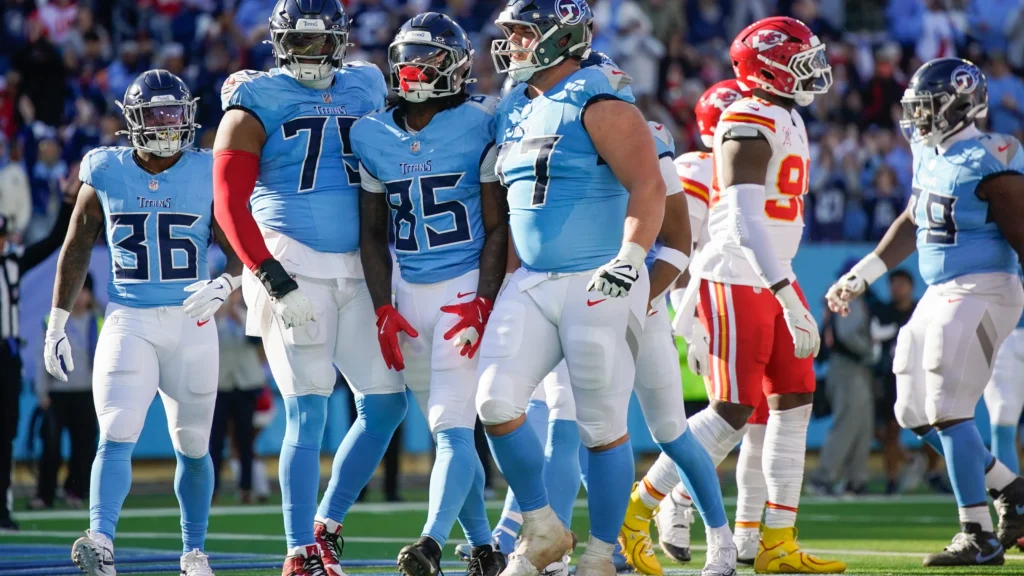
NASHVILLE, Tenn. — Five players of Nigerian descent delivered pivotal performances Sunday as the Tennessee Titans snapped an 11-game home losing streak with a resounding 26-9 victory over the Kansas City Chiefs, highlighting the expanding influence of Nigerian-American talent across the National Football League.

The quintet of Nigerian-heritage players combined for two touchdowns, a safety, a sack and key receptions in Tennessee’s first home triumph since November 3, 2024, demonstrating the significant contributions African diaspora athletes are making to American professional football.

Tight end Chigoziem Okonkwo opened the Nigerian players’ scoring with a 7-yard shovel pass touchdown from rookie quarterback Cam Ward late in the first half, putting the Titans ahead permanently. Wide receiver Chimere Dike added a 1-yard touchdown reception in the third quarter as Tennessee (3-12) improved to 1-7 at home this season, the Associated Press reported.

Three-time Pro Bowl defensive tackle Jeffery Simmons anchored the defensive effort, recording a safety by tackling running back Kareem Hunt in the end zone for an early 2-0 lead in the second quarter. Simmons, one of the NFL’s premier interior defenders, also batted down two passes during the contest, showcasing his versatility and impact.

“Once again, Jeff’s Jeff,” interim coach Mike McCoy said of Simmons. “What he’s done, getting the safety, the way he played, the ways he leads. It’s unbelievable.”

Wide receiver Elic Ayomanor contributed three receptions for 58 yards, while linebacker Jaylen Harrell recorded one sack among Tennessee’s four total sacks on the day. Additional Nigerian-descent players on the 2025 roster include linebacker Oluwafemi Oladejo, drafted in 2025, and tight end Thomas Odukoya, though they were not specifically highlighted in game statistics.

The collective performance of these Nigerian-heritage athletes underscores a broader trend in American football: the rising prominence of players with roots in Nigeria, a West African nation of over 200 million people that has become an increasingly important talent pipeline for U.S. professional sports.

Nigerian-Americans have emerged as significant contributors across the NFL in recent years, with their combination of athleticism, size and competitive drive translating effectively to football’s physical demands. The concentration of five such players on a single roster making meaningful contributions in one game represents a notable milestone in the league’s diversification.

Ward, who threw for 228 yards and two touchdowns, posted his highest passer rating of the season at 122.3, surpassing Marcus Mariota for the most passing yards by a franchise rookie. His connection with Nigerian-heritage receivers Okonkwo and Dike proved instrumental in Tennessee’s offensive success.

“It’s a good win just because it was the first time we played good enough, complementary, all three phases,” Ward said.

Running back Tony Pollard rushed for 102 yards, achieving three consecutive 100-yard rushing performances for the first time in his career. Tyjae Spears added a 4-yard rushing touchdown, and Joey Slye converted a 27-yard field goal as the Titans generated a season-high 376 yards of offense against a Chiefs defense that entered ranked eighth in the NFL in fewest yards allowed.

“What a great team win,” McCoy said. “That’s the way it’s supposed to be. It’s been a long time coming since we’ve won a home game here.”

The victory ended a drought that matched the franchise’s worst home skid since relocating to Tennessee in 1997. The previous 11-game home losing streak occurred during the 2014-15 seasons, another period that featured a coach dismissed early in his second season and concluded under interim leadership.

The defeat assured Kansas City (6-9) of its first losing record since 2012—the franchise’s most recent season without Andy Reid as head coach. The Chiefs have lost four consecutive games, their longest skid since 2017, and six of their last seven contests.

“Nobody likes to lose in this business,” Reid said. “But my hat goes off for the guys that put together all these years. That’s part of it. We can learn from it and need to do that going forward. Sometimes a good kick in the tail there helps you, coaches and players.”

Kansas City arrived severely depleted by injuries, with quarterback Patrick Mahomes on injured reserve following a season-ending torn ACL suffered the previous week. Right tackle Jawaan Taylor also remained sidelined, and the team declared nine players out Friday, including five starters: wide receiver Rashee Rice, left tackle Jaylon Moore and cornerback Trent McDuffie.

Gardner Minshew made his first start of the season replacing Mahomes but departed with a knee injury early in the second quarter. Reid said after the game that he had no immediate results and that Minshew would undergo an MRI examination.

With Minshew injured, the Chiefs turned to Chris Oladokun—himself of Nigerian heritage—just signed from the practice squad to the active roster, to play in only his second career game. The backup quarterback handed off on his first five snaps before connecting with Travis Kelce for his first NFL completion, then drove Kansas City to three Harrison Butker field goals. Oladokun finished 11 of 16 for 111 yards.

“I probably could give him better stuff to work with,” Reid said of Oladokun. “In particular, give him some more reps during the week. He didn’t have any reps to lead him in, but for what he was asked to do, I thought he did a nice job.”

The Nigerian-American presence on both sidelines—with five players contributing significantly for Tennessee and Oladokun stepping in for Kansas City—illustrates how deeply Nigerian heritage has penetrated NFL rosters across the league. This representation extends beyond individual achievement to reflect broader demographic shifts in American sports and society.

Nigerian immigration to the United States has accelerated over recent decades, with the community now representing one of the most educated and economically successful immigrant groups in the country. Second-generation Nigerian-Americans have increasingly excelled in athletics, leveraging cultural values emphasizing education, hard work and achievement to reach elite levels in various sports.

In football specifically, Nigerian-Americans have demonstrated particular success as pass rushers, defensive linemen, tight ends and linebackers—positions where their combination of size, speed and agility proves advantageous. Simmons epitomizes this trend as a dominant interior defensive lineman whose athleticism allows him to impact games in multiple ways.

The Titans had a 1-yard touchdown run by Pollard nullified with approximately 4 minutes remaining when Simmons was flagged for illegal formation after failing to report as eligible to referee Clete Blakeman. The defensive tackle believed his physical presence should have been sufficient notification.

“I mean, I’m a defensive player,” Simmons said. “You see I wear a big arm brace, red sleeve, looking right at you, and I’m throwing my arm up and rubbing my chest (pointing out his No. 98).”

Titans left tackle Dan Moore injured a right knee early in the second quarter but returned to action. Cornerback Marcus Harris suffered a knee injury in the second quarter and did not return.

The victory provides Tennessee momentum entering the final two games of a disappointing season, though the franchise remains positioned for a high draft pick. For the Nigerian-heritage players who contributed to Sunday’s triumph, the performance offers validation of their growing impact on professional football’s highest level.

As the NFL continues evolving into an increasingly diverse league reflecting America’s changing demographics, the success of Nigerian-American players like Okonkwo, Simmons, Dike, Ayomanor and Harrell serves as testament to the talent emerging from immigrant communities and the opportunities available to athletes from diverse backgrounds.

Their collective contribution to ending Tennessee’s home losing streak represents more than individual achievement—it symbolizes the expanding multicultural fabric of American football and the valuable perspectives and abilities that diversity brings to the sport. As younger generations of Nigerian-Americans continue entering football pipelines at youth, high school and college levels, their representation at the professional level will likely increase further, enriching the game with varied experiences and exceptional athletic talent.

Actor James Ransone, Known for ‘The Wire’ and Horror Film Roles, Dies by Suicide at 46

0

LOS ANGELES — James Ransone, the character actor who earned critical acclaim for his portrayal of the troubled dock worker Ziggy Sobotka in HBO’s “The Wire” and later appeared in horror films including “It: Chapter Two,” has died at age 46, the Los Angeles County Medical Examiner confirmed.

Ransone died Friday, December 19, according to the medical examiner’s office, as cited by People.com. TMZ independently verified the death and reported that the medical examiner’s website lists the manner of death as suicide by hanging. The Los Angeles Police Department responded to a residence call, where officers completed a death investigation report with no foul play suspected.

Born June 2, 1979, in Baltimore, Maryland, to Joyce Peterson and James Ransone II, the actor found his breakthrough role in 2003 when he joined the second season of David Simon’s acclaimed crime drama “The Wire.”

Ransone’s portrayal of Ziggy Sobotka—the impulsive, self-destructive son of a union leader navigating Baltimore’s declining dock industry—showcased his ability to inhabit deeply flawed, emotionally complex characters. His performance across all 12 episodes of the show’s second season drew widespread critical praise, with many viewers citing Ziggy as among their favorite characters despite the role’s tragic trajectory. The character’s descent from misguided hustler to tragic figure demonstrated Ransone’s range and willingness to embrace uncomfortable, morally ambiguous material.

The role established Ransone as a distinctive presence in independent and genre cinema, leading to collaborations with innovative filmmakers who valued his authenticity and commitment to character work.

He portrayed the adult version of Eddie Kaspbrak in “It: Chapter Two,” the 2019 sequel to the Stephen King adaptation, taking over the role that Jack Dylan Grazer played as a child. Ransone brought nervous energy and vulnerability to the hypochondriac character reuniting with childhood friends to confront an ancient evil.

His other film work included significant roles in Sean Baker’s groundbreaking 2015 film “Tangerine,” shot entirely on iPhone cameras and celebrated for its authentic portrayal of Los Angeles transgender sex workers. Ransone also appeared in “The Black Phone” in 2021 and its sequel “Black Phone 2,” released earlier this year, as well as the “Sinister” horror franchise.

Ransone’s television career extended beyond “The Wire” to include appearances in “Law & Order,” “CSI: Crime Scene Investigation,” “Hawaii Five-0,” “Burn Notice” and, most recently, Natasha Lyonne’s mystery series “Poker Face.”

His early career included his first major role in the controversial 2002 film “Ken Park,” in which he starred as Tate, gaining initial industry recognition before his career-defining work in “The Wire.”

Following news of Ransone’s death Sunday, HBO shared a tribute on X featuring a photograph of the actor in “The Wire” alongside the message: “In loving memory of James Ransone.”

Production company Blumhouse, which worked with Ransone on “The Black Phone” and “Sinister” films, posted their own remembrance on X: “We are saddened by the passing of James Ransone. We are grateful to have worked with him on The Black Phone and Sinister movies. Our thoughts are with his loved ones.”

Ransone’s death highlights the ongoing mental health crisis affecting the entertainment industry, where performers often face unique pressures including career instability, public scrutiny and the emotional demands of inhabiting troubled characters. Industry observers have increasingly called for improved mental health resources and support systems for actors, particularly those working in independent and genre productions where budgets may not accommodate comprehensive wellness programs.

The actor’s body of work demonstrated a consistent attraction to complex, often marginalized characters existing on society’s fringes. From Ziggy’s desperate attempts to prove himself on Baltimore’s docks to his various roles in horror and independent cinema, Ransone gravitated toward material that examined human vulnerability, desperation and resilience. This thematic consistency suggests an artist deeply engaged with exploring the psychological dimensions of characters others might dismiss or overlook.

His Baltimore roots informed much of his work, particularly his authentic performance in “The Wire,” which drew heavily on the city’s working-class culture and economic struggles. Growing up in the same environment he later portrayed gave Ransone an innate understanding of the character’s context and motivations, contributing to the role’s emotional resonance.

The loss represents another tragedy in an industry that has faced numerous high-profile deaths in recent years, prompting renewed conversations about mental health awareness, suicide prevention and the resources available to performers navigating the psychological challenges of their profession.

If you or someone you know is struggling with suicidal thoughts, please contact the National Suicide Prevention Lifeline at 988 or visit 988lifeline.org for immediate support and resources.

Ransone is survived by his family, whose privacy should be respected during this difficult time. Details regarding memorial services have not been publicly announced.

His performances will continue to reach audiences through his extensive body of work, preserving his contributions to contemporary film and television. “The Wire” in particular has found new generations of viewers through streaming platforms, ensuring that Ransone’s most celebrated role will introduce his talent to audiences for years to come.

The entertainment community’s swift tributes reflect the respect Ransone earned among colleagues and collaborators throughout his career, recognized as a dedicated professional who brought depth and humanity to every role he inhabited.

TMZ/People/AP

3rd Russian General Killed in Moscow Car Bombing as Ukraine Suspected in Escalating Assassination Campaign

0

MOSCOW — A senior Russian military commander died Monday after an explosive device detonated beneath his vehicle in southern Moscow, marking the third assassination of a high-ranking officer on Russian territory within a year and underscoring Ukraine’s expanding capacity to strike deep inside its adversary’s heartland.

Lt. Gen. Fanil Sarvarov, 56, head of the Operational Training Directorate of the Russian Armed Forces’ General Staff, succumbed to injuries sustained when the bomb exploded under his car on Yasenevaya Street, Svetlana Petrenko, spokesperson for Russia’s Investigative Committee, announced in a statement.

“An explosive device planted under the bottom of a car was detonated” Monday morning, Petrenko stated. “Investigators are pursuing numerous lines of inquiry regarding the murder. One of these is that the crime was orchestrated by Ukrainian intelligence services.”

Kremlin spokesman Dmitry Peskov confirmed that President Vladimir Putin had been immediately informed about Sarvarov’s killing. NBC News has requested comment from the Ukrainian government, which has not yet responded to the allegations.

The assassination continues a disturbing pattern of targeted killings of senior Russian military officials, demonstrating what Western intelligence analysts describe as Ukraine’s sophisticated intelligence penetration and operational reach within Russia’s capital. The brazen nature of the attacks—occurring in daylight in residential neighborhoods—raises serious questions about Russian security service effectiveness and the Kremlin’s ability to protect high-value targets in its own territory.

Just over a year ago, on December 17, 2024, Lt. Gen. Igor Kirillov, chief of the military’s nuclear, biological and chemical protection forces, was killed by a bomb concealed on an electric scooter outside his apartment building, the Associated Press reported. Kirillov’s assistant also perished in that blast. Ukraine’s security service publicly claimed responsibility for that operation.

In April, Ukrainian intelligence agencies took credit for killing Lt. Gen. Yaroslav Moskalik, deputy head of the main operational department in the General Staff, in a car bombing near the Russian capital, according to officials. A suspected perpetrator was quickly arrested following that incident.

Putin characterized Kirillov’s killing as a “major blunder” by Russia’s security agencies, stating they should learn from the failure and improve their efficiency. Monday’s successful assassination of Sarvarov, despite those pledges, suggests that corrective measures have proven inadequate and that Ukraine maintains operational networks capable of conducting sophisticated attacks in Moscow.

The Defense Ministry noted that Sarvarov had previously fought in Chechnya and participated in Moscow’s military campaign in Syria, indicating his extensive combat experience and prominence within the Russian military establishment. His position overseeing operational training placed him at the center of efforts to prepare Russian forces for combat operations.

Moscow has blamed Ukraine for numerous bombings and attacks across Russian territory throughout the ongoing conflict. Beyond high-profile assassinations, Ukraine has demonstrated its ability to reach far inside Russia to strike the Kremlin’s warplanes and naval vessels with increasingly sophisticated tactics.

In June, Operation Spiderweb saw Ukraine deploy swarms of drones at several Russian airfields, destroying at least 10 aircraft and damaging dozens of others, NBC News reported. This month, Kyiv claimed one of its underwater drones destroyed a Russian submarine at a Black Sea port, an assertion Russia denied.

The escalating assassination campaign represents a strategic shift in Ukraine’s approach to the conflict, moving beyond conventional military operations to target Russia’s military leadership structure directly. Western intelligence officials, speaking on condition of anonymity, have suggested that eliminating senior commanders disrupts operational planning, degrades institutional knowledge and creates psychological pressure on military leadership considering their personal vulnerability.

The timing of Sarvarov’s assassination carries particular significance, occurring as diplomatic efforts to end the conflict have intensified. President Donald Trump has pushed for a peace agreement, with new negotiations held over the weekend involving representatives from both sides.

Putin’s special envoy Kirill Dmitriev was scheduled to brief the Russian leader Monday after returning from discussions with members of Trump’s team in Miami, Peskov stated. Dmitriev said Saturday the talks had proceeded constructively with Trump’s special envoy Steve Witkoff and his son-in-law Jared Kushner.

Witkoff met separately with Ukrainian and European representatives, characterizing those discussions as “productive and constructive.” Despite the optimistic rhetoric, the White House’s months-long peace initiative has failed to bridge the chasm between Moscow’s maximalist territorial demands and the grave concerns held by Kyiv and European allies about legitimizing Russian territorial conquest.

The assassination complicates peace negotiations by demonstrating Ukraine’s capability to inflict costs on Russia’s military establishment regardless of diplomatic progress. Some analysts suggest the timing may be deliberate, signaling to Moscow that Ukraine retains offensive options even as diplomatic channels remain open, thereby strengthening Kyiv’s negotiating position.

The repeated success of assassination operations in Moscow exposes vulnerabilities in Russian domestic security architecture that the Kremlin cannot easily address. Unlike conventional military targets that can be hardened or relocated, senior military officials must maintain some degree of accessibility for operational effectiveness. This creates inherent security trade-offs that Ukrainian intelligence services have evidently learned to exploit.

Russian security services face the challenge of identifying and dismantling Ukrainian intelligence networks operating within Moscow while avoiding the paranoia and internal purges that could further damage military effectiveness. The rapid arrests of suspected perpetrators following previous assassinations suggest Russian investigators can identify operational cells after attacks occur, but preventing strikes before they happen has proven more elusive.

The pattern of attacks also raises questions about insider assistance, as successfully placing explosive devices under vehicles or planting bombs near apartment buildings typically requires surveillance, timing and local knowledge difficult to achieve without some degree of internal support or collaboration from Russian citizens.

For Ukraine, the assassination campaign serves multiple strategic objectives beyond removing specific military commanders. Each successful operation inside Moscow undermines Russian citizens’ sense of security, demonstrates the government’s inability to protect even high-ranking officials, and creates a psychological impact that conventional military operations cannot replicate.

However, the tactic carries risks. Assassinations on Russian soil could harden public opinion against negotiated settlements, provide Putin with domestic justification for escalation, and potentially trigger retaliatory strikes against Ukrainian leadership or civilian infrastructure. The delicate balance Ukraine seeks to maintain involves demonstrating offensive capability while avoiding provocations that could derail diplomatic processes or justify Russian escalation.

As the conflict enters its third year, the expanding scope of operations inside Russian territory reflects Ukraine’s evolution from a defensive posture focused on territorial protection to a more offensive strategy targeting Russia’s military capacity and leadership infrastructure. Whether this approach accelerates diplomatic resolution or further entrenches the conflict remains an open question as both sides assess their positions and the international community watches for signs of breakthrough or escalation.

AP/NBC

Final 130 Nigerian Students Freed from Armed Gang, Ending Month-Long Captivity Crisis

0

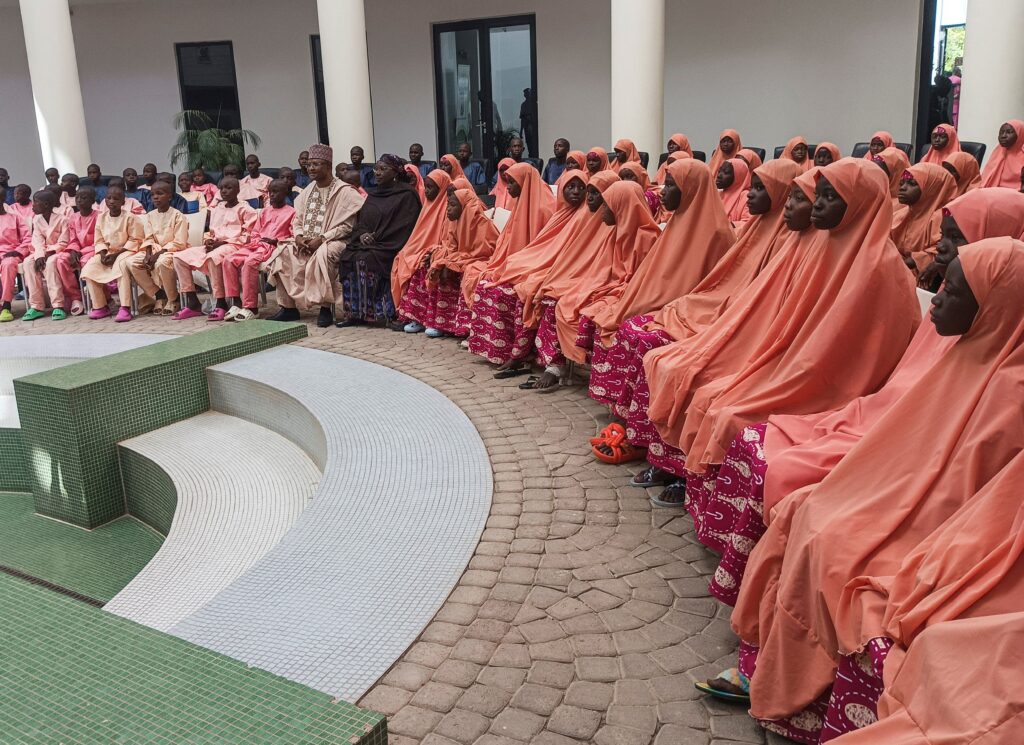
ABUJA, Nigeria — The final 130 schoolchildren held captive following a mass kidnapping at a Catholic boarding school in Nigeria’s Niger State have been freed, presidential spokesman Sunday Dare announced Sunday, concluding a month-long ordeal that gripped the nation and highlighted persistent security failures in the country’s northern regions.

“Another 130 abducted Niger State pupils released, none left in captivity,” Dare stated on X, accompanying his announcement with a photograph showing smiling children. The spokesman did not disclose circumstances surrounding their release, including whether ransom was paid or how negotiations unfolded.

Armed bandits stormed St. Mary’s Private Catholic School in Papiri village during the early morning hours of November 21, abducting 303 children and 12 teachers, the Christian Association of Nigeria stated. The victims included boys and girls, some as young as 10 years old, Reuters confirmed.

Within 48 hours of the initial assault, 50 students managed to escape and return to their families, the Christian Association of Nigeria said at the time. On December 8, Nigerian government officials announced that security forces had rescued 100 of the kidnapped victims through military operations.

Dare’s Sunday announcement placed the final group of released students at 130, slightly fewer than previously believed to remain in captivity. CNN has contacted the Nigerian president’s office seeking clarification on the discrepancy. Presidential spokesman Onanuga stated the total number of freed students now stands at 230, though the mathematics of successive releases leaves questions about the exact accounting of victims.

The November abduction represents the latest episode in an escalating pattern of armed group attacks targeting vulnerable civilian populations, particularly educational institutions, for ransom extraction. The incident sparked national outrage over deteriorating security conditions in northern Nigeria, where criminal gangs have made school kidnappings a lucrative enterprise with devastating social consequences.

Nigeria’s security crisis stems from multiple overlapping conflicts. Violence repeatedly erupts from communal and ethnic tensions, as well as from disputes between farmers and herders competing for limited access to land and water resources in regions experiencing environmental degradation and population pressure. These underlying tensions create opportunities for armed criminal networks to operate with relative impunity.

The proliferation of school kidnappings accelerated dramatically after Boko Haram militants abducted 276 girls from a government secondary school in Chibok in April 2014, an international incident that generated the #BringBackOurGirls campaign and exposed Nigeria’s inability to protect students in conflict-affected regions. That abduction established a template that criminal gangs have since exploited, recognizing that schools provide concentrated populations of valuable hostages whose captivity generates intense public pressure on government officials to negotiate.

The phenomenon has transformed education into a high-risk activity in parts of northern Nigeria, with many schools closing temporarily or permanently due to security concerns. Parents face agonizing decisions about whether to send children to school, balancing educational aspirations against kidnapping risks. The educational disruption compounds existing development challenges in regions already struggling with poverty, unemployment and limited government services.

Armed bandit groups operating in Nigeria’s northwest and north-central regions have evolved into sophisticated criminal enterprises, often maintaining camps in remote forest areas beyond effective government control. These groups finance operations through kidnapping, cattle rustling and extortion, creating parallel economies that challenge state authority and undermine legitimate commerce.

The Nigerian government has deployed military and police forces to combat the armed groups, conducting operations that officials characterize as rescues though observers note many releases likely involve ransom payments that officials publicly deny. The reluctance to acknowledge ransom payments reflects political sensitivities around appearing to reward criminal behavior, even as families and communities frequently have no alternative to securing their children’s safety.

President Bola Tinubu’s administration has faced mounting criticism over its security strategy in northern regions, with opposition politicians and civil society organizations arguing that military operations alone cannot address the underlying governance failures that allow armed groups to flourish. Critics contend that effective responses require not just kinetic military action but comprehensive programs addressing youth unemployment, community development and restoration of state presence in ungoverned spaces.

The St. Mary’s abduction demonstrates how criminal networks have refined their operations, conducting nighttime raids on boarding schools where students are concentrated and vulnerable. The boarding school model, designed to provide quality education in regions with limited day schools, has become a liability in the current security environment, offering kidnappers easy access to large numbers of children in isolated locations with minimal security.

International observers have expressed concern about Nigeria’s deteriorating security situation and its regional implications. The country’s inability to secure its territory encourages similar criminal activity in neighboring states and undermines economic development across West Africa’s most populous nation. Foreign investors cite security concerns as a major impediment to operations in affected regions, limiting job creation and economic opportunities that might otherwise reduce the pool of potential recruits for armed groups.

The release of the final St. Mary’s students offers relief to families and communities that have endured weeks of uncertainty and anguish. However, it does little to address the systemic vulnerabilities that enabled the abduction or prevent future incidents. Without fundamental improvements in security sector effectiveness, community resilience and governance capacity in affected regions, Nigerian families will continue facing the impossible choice between pursuing education and ensuring their children’s safety.

As the freed students reunite with families and begin processing their traumatic experiences, questions persist about the long-term psychological impact of captivity and whether adequate mental health services exist to support their recovery. The broader challenge facing Nigeria is whether this latest high-profile release will catalyze meaningful security sector reforms or simply mark another chapter in an ongoing crisis that shows no signs of resolution.

CNN/Reuters