A Nigerian national has been sentenced to more than nine years in a United States federal prison after authorities uncovered his role in a long-running online fraud operation that targeted victims through romance and other financial scams.
The U.S. Department of Justice said Charles Nnamdi Emesim, 53, received a 115-month prison sentence from Robert Wier, a federal judge in Kentucky, following his conviction for conspiracy to commit money laundering.
Prosecutors established that Emesim, a legal resident of Newark, New Jersey, handled funds generated from a range of fraudulent schemes conducted over more than a decade. Authorities described the operation as involving internet and telephone-based scams, including romance fraud, lottery deception, investment schemes, and impersonation tactics.
Investigators determined that from late 2013 through mid-2024, Emesim controlled at least 17 bank accounts tied to himself and his businesses. These accounts were used to receive and move money obtained from victims across the United States, with total losses exceeding $700,000.
Officials said at least 23 individuals were persuaded to send funds through various means, including cash deposits, wire transfers, and prepaid financial instruments. In one case outlined in court filings, an elderly widow in Kentucky was deceived into believing she was in a romantic relationship with a fictitious individual.
Authorities said the scheme escalated when the victim was introduced to a supposed government official who claimed he could assist in transferring funds. The victim later met the impersonator in person, handed over additional money, and even purchased electronic equipment for him. Investigators concluded that Emesim himself posed as that official during the encounter.
Federal prosecutors said the suspect routinely withdrew cash from accounts or redirected funds to associates and relatives, including individuals based overseas, in an effort to conceal the origin of the money.
Federal Bureau of Investigation agents led the investigation, while Assistant U.S. Attorney Kate Dieruf handled the prosecution. Officials emphasized that the crimes caused significant financial and emotional harm, particularly to vulnerable victims.
During sentencing, the court described the conduct as deeply harmful, noting that victims suffered not only monetary losses but also psychological distress from prolonged deception.
Under federal sentencing rules, Emesim must serve the majority of his prison term and will remain under supervision for three years following his release.
The case highlights the growing sophistication of romance scams, which increasingly combine emotional manipulation with structured financial operations. Unlike isolated fraud attempts, this scheme relied on sustained engagement with victims, building trust over time before introducing financial requests.
Law enforcement agencies have identified romance scams as one of the most damaging forms of cyber-enabled crime because they often target individuals who may be isolated or emotionally vulnerable. The inclusion of in-person meetings, as described in this case, marks a concerning evolution, blurring the line between digital and physical deception.
The scale of the operation, spanning more than a decade, also reflects the challenges authorities face in tracking financial crimes that cross jurisdictions and rely on multiple accounts and intermediaries. The use of legitimate business fronts and layered transactions can delay detection and complicate prosecution.
This sentencing signals a continued push by U.S. authorities to impose significant penalties on those involved in international fraud networks. It also underscores closer cooperation between financial institutions and investigators in identifying suspicious activity linked to scam operations.
At a broader level, the case serves as a reminder of the persistent risks associated with online relationships in an increasingly digital world. While enforcement actions can disrupt networks, experts say prevention efforts — including public awareness and financial safeguards — remain critical in reducing the impact of such crimes.
The Nigeria Police Force has transferred an alleged cyber fraud suspect to the United States to face prosecution over a long-running online romance scam operation that authorities say defrauded victims of large sums of money.
Police spokesperson Anthony Placid announced that the suspect, identified as Samuel Ugberease, also known by several aliases, “Putsammy”, “Putput”, and “Sammy” was handed over to U.S. authorities following the completion of legal proceedings and coordination between both countries’ law enforcement agencies. The account was detailed by Premium Times and corroborated by Punch Nigeria.
Authorities said the extradition was facilitated through the INTERPOL National Central Bureau in Abuja after a court in Lagos approved the request under Nigeria’s extradition laws.
Investigators allege that between 2014 and 2018, the suspect and associates ran a coordinated scheme that targeted women in the United States, particularly in North Carolina. The group is accused of creating false online identities and fabricated romantic relationships to gain victims’ trust before persuading them to send money under false claims, including staged emergencies.
Officials further indicated that proceeds from the scheme were routed through multiple bank accounts to disguise their origin and movement. In one instance outlined by police, the suspect is linked to losses exceeding $1.5 million from a single victim.
The suspect was first taken into custody at Murtala Muhammed International Airport in December 2025 after arriving from South Africa, following an international arrest alert issued by U.S. authorities.
Law enforcement officials emphasized that the extradition reflects expanding cooperation between Nigeria and international partners in tackling financial crimes that cross borders. The police said they continue to rely on intelligence sharing and global policing networks to pursue suspects involved in cyber fraud and organized crime.
The extradition underscores a broader shift in how countries confront cyber-enabled financial crime, particularly schemes built around emotional manipulation. Romance scams have become one of the fastest-growing forms of online fraud globally, largely because they exploit trust rather than technical vulnerabilities.
Nigeria has long faced international scrutiny over cybercrime networks, but recent high-profile arrests and extraditions suggest increased willingness by authorities to collaborate with foreign governments. This case signals a more assertive posture aimed at restoring confidence in Nigeria’s financial and digital systems.
The involvement of international policing frameworks such as INTERPOL highlights how transnational fraud cases are increasingly handled through coordinated legal channels rather than isolated national efforts. Such cooperation is critical, as victims, perpetrators and financial transactions often span multiple jurisdictions.
At the same time, the scale of alleged losses — including a single case exceeding $1.5 million — illustrates the financial and psychological toll these scams inflict. Victims are frequently drawn into prolonged interactions that blur the line between deception and emotional dependence, making recovery more complex.
The case may also serve as a warning to criminal networks that anonymity online is becoming harder to maintain as digital investigations grow more sophisticated. However, experts caution that enforcement alone will not eliminate the threat, as scammers continue to adapt tactics and exploit new platforms.
As the suspect prepares to face charges in the United States, the outcome could further define how aggressively cross-border fraud cases are prosecuted and may shape future cooperation between both countries in combating cybercrime.
Clarence Carter, the influential Southern soul singer and songwriter known for hits including Strokin’ and Patches, has died at the age of 90, his representatives confirmed Thursday.
Carter died Wednesday night in hospice care near Atlanta, according to a statement shared by associates. Rodney Hall, president of FAME Studios in Alabama, described the singer as a foundational figure in the studio’s legacy and a longtime member of its creative circle.
Health details provided through a spokesperson for Candi Staton, Carter’s former wife, indicated he had recently been diagnosed with advanced prostate cancer. Complications including sepsis and pneumonia contributed to his death.
Born in Montgomery, Alabama, Carter rose to prominence in the late 1960s and 1970s, blending emotional storytelling with a distinctive voice that helped define the Southern soul sound. He began his career alongside fellow blind musician Calvin Scott before launching a solo path that quickly gained national attention.
His early solo single “Tell Daddy” helped establish his songwriting reputation, later inspiring Etta James to record a response track. Carter’s breakthrough came with “Slip Away,” a 1968 release that climbed into the top tier of the pop charts and cemented his crossover appeal.
Known for his versatility, Carter balanced deeply emotional songs with bold, humorous tracks. His holiday-themed “Back Door Santa” became a seasonal favorite, while “Strokin’” gained cult status for its provocative lyrics and enduring popularity in nightlife settings. The song later reached new audiences through its inclusion in films such as The Nutty Professor and Killer Joe.
In contrast, “Patches,” released in 1970, showcased Carter’s storytelling depth with a narrative about hardship and resilience in rural Alabama. The song earned a Grammy Award for Best R&B song and remains one of his most celebrated works.
Throughout his career, Carter released a string of successful tracks, including “Snatching It Back,” “The Feeling Is Right,” and “Too Weak to Fight,” the latter achieving gold certification. He continued recording into later life, releasing his final album, “Mr. Old School,” in 2020 and a last single, “Danger Point,” in 2024.
Carter married Staton in 1970, and the couple had one son before separating three years later. He is survived by his children and extended family.
Hall said Carter’s influence extended far beyond his recordings, describing him as a defining voice in American music and a gifted guitarist and songwriter who shaped the sound of an era.
Clarence Carter’s career reflects a pivotal era in American music when regional sounds like those from Muscle Shoals gained national and global recognition. His work helped bridge traditional rhythm and blues with mainstream pop audiences, expanding the commercial reach of Southern soul.
His ability to shift between heartfelt storytelling and playful, boundary-pushing lyrics also mirrors broader cultural changes during the late 20th century, when music increasingly explored themes once considered taboo. Songs like “Strokin’,” while controversial, demonstrated how artists could challenge norms and still achieve lasting popularity.
Carter’s legacy is also notable for his longevity. Remaining active into his later years, he adapted to changing industry dynamics while maintaining a loyal fan base. His continued output into the 2020s highlights both personal resilience and the enduring appeal of classic soul music.
Beyond his catalog, Carter’s life story — including his success as a blind performer in a competitive industry — underscores a narrative of persistence that resonates across generations. His contributions to the Muscle Shoals sound, alongside collaborators at FAME Studios, helped shape a musical tradition that continues to influence artists today.
As the music industry reflects on his passing, Carter’s recordings remain a testament to the emotional depth and stylistic diversity that defined one of soul music’s most enduring voices.
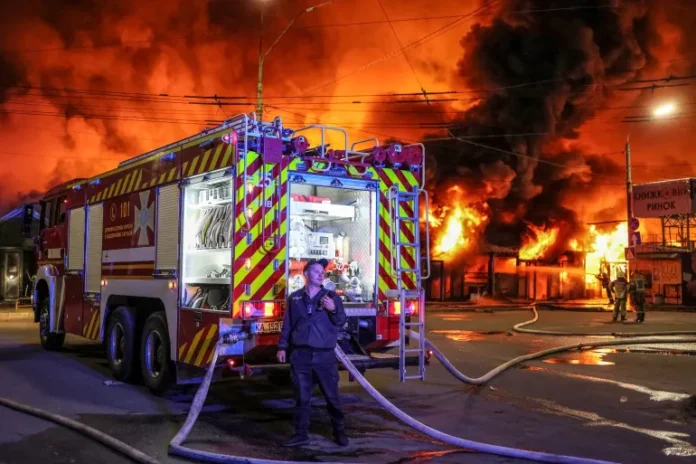
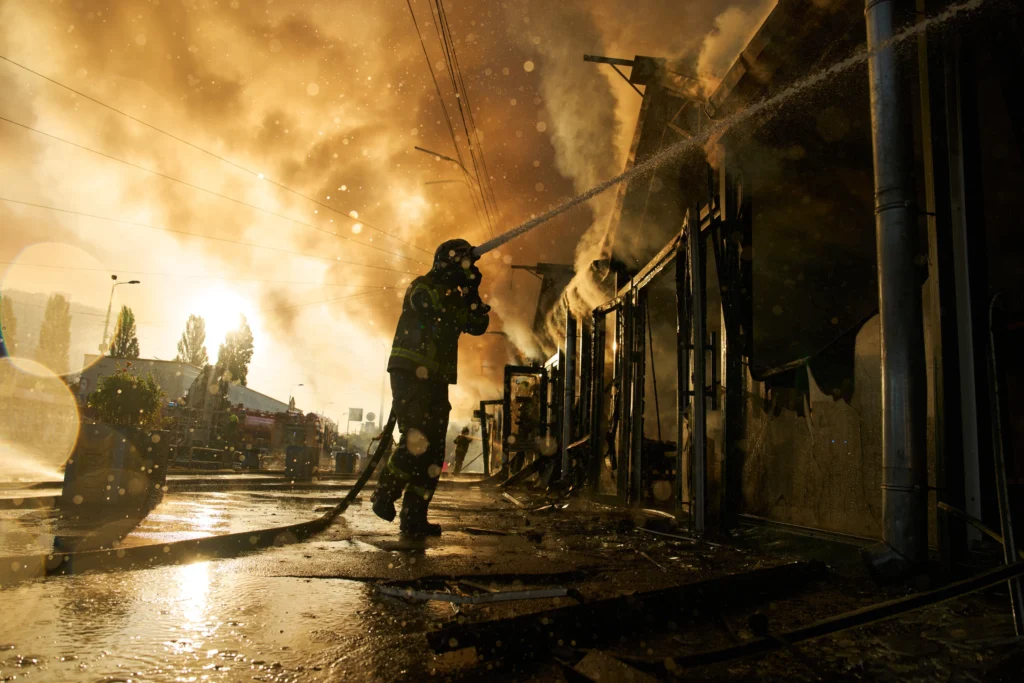
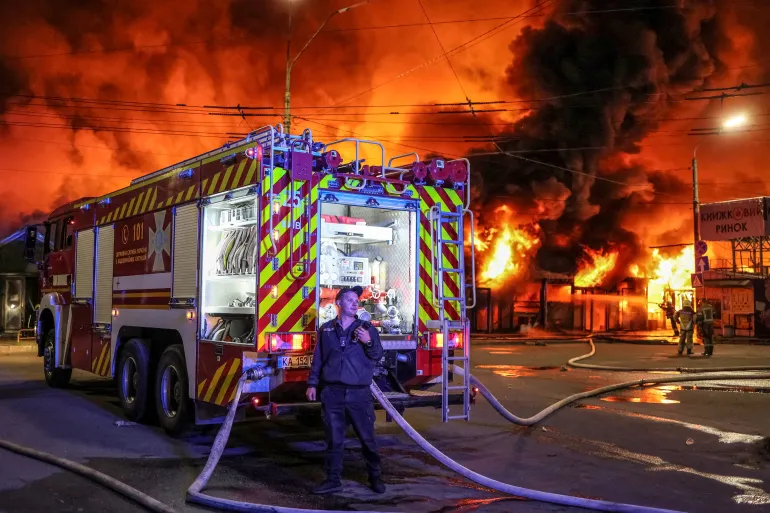
KYIV, Ukraine — A nine-story apartment building in Kyiv’s Darnytsia neighborhood collapsed in a Russian missile strike before dawn Thursday, killing nine people including a 12-year-old girl and trapping dozens beneath concrete rubble, as Russia launched its third consecutive day of massive aerial bombardment in what Ukrainian officials called the largest aerial assault since the full-scale invasion began in 2022.
Emergency workers picked through the debris as wisps of smoke rose from the building’s ruins in the early morning light. The structure’s entrance had been obliterated in the strike, trapping residents inside before they could escape. All 18 apartments in the building were destroyed. More than 30 people were pulled out injured. About 20 remained unaccounted for.
“There were people there, children. What happened to them? You have to understand, an entire building collapsed,” said Alla Komisarova, 74, a pensioner who lives across from the destroyed building. “I heard something flying, it’s flying nearby. And then there was such a terrible sound, and our house, which is opposite, jumped and staggered.”
Lyudmila Hlushko, 78, said she was jolted awake around 3 a.m. “Then the house shook violently and there was a loud bang, breaking the glass in my house,” she told the Associated Press. Windows shattered across the surrounding neighborhood.
“It was a terrible night,” said neighbor Nadiia Lobanova. “We’re used to this. Well, it’s impossible to get used to this, but somehow we held on.”
Kyiv Mayor Vitali Klitschko declared Friday a day of mourning. Damage was recorded across six districts of the capital.
The Scale of the Assault
The overnight attack on Kyiv was part of a campaign that has grown in scale with each passing day. Ukrainian President Volodymyr Zelensky said Russia had fired more than 1,560 drones at Ukrainian population centers since Wednesday — more than 670 drones and 56 missiles in Thursday’s overnight assault alone. In total, 180 sites across the country were damaged, including more than 50 residential buildings.
Ukraine’s air force said its defenses shot down or jammed 693 Russian targets overnight — 41 missiles and 652 drones — achieving an interception rate of more than 93 percent. Fifteen missiles and 23 drones still scored direct hits across 24 locations. Debris from downed drones fell across 18 additional areas.
Air force spokesperson Yurii Ihnat told Ukrainian public broadcaster Suspilne the strain on air defenses was severe. “We are now experiencing the largest strikes since the start of the full-scale invasion,” Ihnat said.
Cities across Ukraine absorbed punishment through the night. Kremenchuk, Bila Tserkva, Kharkiv, Sumy, and Odesa were all struck. In Kharkiv, 28 people including three children were wounded and civilian infrastructure was targeted, regional governor Oleh Syniehubov confirmed. Strikes on energy infrastructure cut power to customers in Kyiv and 11 other regions, national grid operator Ukrenergo said. Port infrastructure in the southern Odesa region and railway lines were also hit.
A vehicle carrying United Nations humanitarian staff delivering aid to residents in the southern city of Kherson was struck by Russian drones, Foreign Minister Andrii Sybiha confirmed. The vehicle was clearly marked. It was hit twice, in two separate locations. Nobody was hurt.
Zelensky said initial analysis identified a recently manufactured Russian Kh-101 cruise missile as the weapon that destroyed the Kyiv apartment building and called for renewed international efforts to cut off Russian access to such technology.
Russia’s Defense Ministry claimed its military targeted Ukraine’s military-industrial complex — air bases, fuel facilities, and transport infrastructure — and said it hit all its intended targets. Among the weapons deployed, Moscow said, were Kinzhal hypersonic missiles capable of flying at 10 times the speed of sound. Russia made no immediate comment on the civilian casualties.
While Trump Was in Beijin
The timing of the assault was not lost on Ukrainian officials. U.S. President Donald Trump arrived in Beijing Wednesday for talks with Chinese President Xi Jinping — a visit that had generated cautious hope that the two most powerful leaders in the world might apply combined pressure on Moscow to end the war.
Sybiha addressed both governments directly. “At the very time when leaders of the most powerful countries are meeting in Beijing, and the world hopes for peace, predictability and cooperation, Putin launched hundreds of drones, ballistic and cruise missiles at the capital of Ukraine,” he posted on X. “I am certain that the leaders of the United States and China have enough leverage over Moscow to tell Putin to finally end the war. Only pressure on Moscow can make him stop.”
Zelensky was less diplomatic. Russian President Vladimir Putin had said just days earlier, on Saturday, that the war was “coming to an end.” Zelensky’s response to Thursday’s carnage was pointed. “These are definitely not the actions of those who believe the war is coming to an end,” he said.
The attacks directly contradicted the ceasefire Trump said he had brokered for May 9 through 11. Fighting continued throughout that 72-hour window, though Ukrainian officials said it was reduced in intensity. The resumed full-scale bombardment following the ceasefire’s expiration made clear that the pause had changed nothing in Russia’s military posture or intentions.
British Defense Secretary John Healey called Thursday’s attack “shocking” and said he had accelerated United Kingdom deliveries of air defense systems to Ukraine.
Wednesday’s Attack Set the Stage
Thursday’s destruction followed a devastating Wednesday. A rare daytime attack on Kyiv that day killed at least six people in an assault involving 800 drones that struck approximately 20 regions across Ukraine in one of the longest single attacks of the war.
The Kyiv office of defense contractor Skyeton, which specializes in reconnaissance drones, was destroyed in the overnight strikes, though the company said it had anticipated such targeting and relocated its production beforehand.
More than 1,500 rescue workers were deployed across Ukraine to respond to the two-day assault’s aftermath, including nearly 600 in Kyiv alone. At least 22 civilians were killed across the two days combined, officials confirmed.
In a separate development, Hungary summoned the Russian ambassador over a drone attack near its border with Ukraine — a notably sharp shift in tone from new Prime Minister Péter Magyar toward Moscow after years of warm relations under his predecessor Viktor Orbán.
Latvia’s Prime Minister Evika Silina resigned Thursday after her coalition government lost its majority following pressure over the government’s handling of multiple incidents involving stray drones crossing into Latvian territory from the direction of Ukraine.
The Gap Between Putin’s Words and Russia’s Bombs
The three-day bombardment carries a specific message, and it is addressed as much to Washington and Beijing as it is to Kyiv. Putin told reporters Saturday that the war was coming to an end. Days later, Russia launched what Ukrainian officials called the largest aerial assault of the entire conflict. The gap between those two things is not an accident — it is a strategy.
Russia’s negotiating posture has consistently used escalation as leverage. When diplomatic momentum builds toward a settlement, Moscow intensifies military pressure to establish that any agreement must be made on Russian terms, not because Russia has run out of weapons or will. The timing of this week’s assault — synchronized with Trump’s Beijing trip and the post-ceasefire window — signals that Putin intends to keep fighting until he gets a deal that reflects the territorial and political gains Russia has made, not one imposed by outside pressure.
For Trump, the optics are difficult. He declared the May 9-11 ceasefire a success. Russia spent the days immediately following it flattening apartment buildings in Kyiv. His argument that he has leverage over Putin — and that engaging Moscow diplomatically will produce results — takes a significant credibility hit every time a Kh-101 missile destroys a nine-story building full of sleeping families.
Ukraine’s 93 percent interception rate is genuinely impressive and reflects years of investment in layered air defense. But the mathematics of the current campaign work against Kyiv in a specific way: when Russia fires 1,560 drones and missiles over 48 hours, the 7 percent that get through still kill people, collapse buildings, and cut power to millions. Quantity is its own quality, and Russia has demonstrated a willingness to sustain this volume of fire regardless of international condemnation.
Sybiha’s appeal to Trump and Xi is the clearest articulation of what Ukraine needs right now — not just weapons and solidarity, but the kind of direct great-power pressure on Moscow that neither government has yet chosen to fully apply. Whether that pressure materializes before another apartment building collapses in Kyiv is the question on which the war’s next chapter turns.
A man stands in front of a damaged and burnt house following a deadly gunmen attack in Yelwata, Benue State, Nigeria, June 16, 2025. REUTERS/Marvellous Durowaiye
Gunmen on motorcycles rode into a residential compound on Aliade Street in the early hours of Monday and killed eight people, executing four as they slept and shooting four more who stepped outside after hearing the gunfire — the latest in a string of cult-related killings that have turned parts of Nigeria’s Benue State capital into a shooting gallery.
The attack happened between 2 a.m. and 2:30 a.m., according to Makurdi Local Government Area Chairman Joseph Keffi, who confirmed the killings and their cult connection in a phone conversation with journalists Monday morning.
A man stands in front of a damaged and burnt house following a deadly gunmen attack in Yelwata, Benue State, Nigeria, June 16, 2025. REUTERS/Marvellous Durowaiye
“It is quite ugly and pathetic,” Keffi said.
The trigger, he explained, was a conflict that started elsewhere and followed a man to his friend’s doorstep. A suspected cult member from the North Bank area of Makurdi had a falling out with his group and fled to stay with an acquaintance at High Level, another part of the city. His former associates tracked him there. What followed was a massacre of people who had nothing to do with the dispute.
“Unfortunately, those killed were not cult members, but because they accommodated the boy, they were attacked,” Keffi said.
Residents who spoke to journalists on condition of anonymity described the attackers arriving on motorcycles and moving directly to their target compound with apparent foreknowledge of who was inside and where they were sleeping. The first four victims were woken up and shot where they lay. The second four died when they came out to see what the noise was.
Bodies from the attack were deposited at the morgue of Benue State University Teaching Hospital and a private medical facility in Makurdi.
Benue State Commissioner of Police Ifeanyi Emenari confirmed the attack but disputed the death toll, saying the number of casualties was lower than eight without providing a specific figure. He said the police public relations officer would issue a formal statement.
Monday’s bloodshed did not arrive without warning. Less than a week earlier, at least three people were killed in a separate cult clash in Agwan Jukun, also within Makurdi, in attacks along Market Street and Wukari Street that began around 8 p.m. on a Sunday night and continued into the early hours of Monday. Residents described armed youths moving through the area with surgical precision, going straight for specific targets while neighbors fled and businesses shut without warning.
“They came into the area around 8 p.m. and went straight for their targets. It was clear they knew who they were looking for,” one resident said at the time.
Another resident alleged the attackers had inside information about their victims’ movements — a detail that points to infiltration of community networks and makes the violence harder to predict or prevent.
The neighborhoods bearing the brunt of Makurdi’s cult war — North Bank, Wadata, High Level, and Wurukum — have seen repeated clashes over recent months as rival criminal networks fight for territory and settle scores with weapons and motorcycles in the hours when most people are asleep.
Keffi raised an allegation Monday that goes beyond the immediate attack and points to a deeper failure of the justice system in containing the violence. He said residents had identified one of the primary cult leaders responsible for repeated attacks in Makurdi — a man who operates on a cycle of striking, fleeing the state, and returning to kill again.
“He comes in, strikes, and leaves. Right now, he is not in the state. The day he returns, he kills and disappears again. We do not know how he escapes,” Keffi said.
He added that the suspect had been arrested before and subsequently released — a pattern that residents say has repeated itself across multiple gang leaders and has fundamentally undermined confidence that arrests lead to accountability.
Security agencies were notified following Monday’s attack, and Keffi said operatives were already working to track those responsible. The area around the Aliade Street compound was cordoned off as investigations continued.
What Makurdi is experiencing is not random urban violence. It is the product of a specific and recurring failure — the inability or unwillingness of the criminal justice system to break the cycle once it has been identified.
The chairman of the local government knows who one of the primary perpetrators is. Residents know. The police have previously arrested him. He was released. He came back. People died again. That sequence, repeated across Makurdi’s most affected neighborhoods, has created a population that no longer believes the arrest of a gang leader changes anything, because experience has taught them it does not.
Cult violence in Benue State draws from multiple sources. Economic marginalization pushes young men toward criminal networks that offer income, protection, and identity. Weak prosecution allows known gang leaders to cycle through the justice system without consequence. Political patronage occasionally shields criminal figures who provide election-day muscle. And a community that has watched neighbor after neighbor killed in the night learns that the safest response is silence — which is exactly what the gangs count on.
The victims on Aliade Street Monday morning were not combatants. They were people who gave a friend a place to sleep and paid for it with their lives. Their deaths are not just a crime story. They are the outcome of a system that has consistently failed to match its stated commitment to security with the institutional follow-through that commitment requires.
Residents have been calling for sustained police operations, dismantling of cult networks, and prosecution of arrested suspects for months. The calls keep coming because the killings keep coming. Until one of those realities changes, nothing in Makurdi changes.
(Reuters/France24) — At least 100 civilians were killed when a military airstrike hit a crowded market in northwest Nigeria’s Zamfara state, the rights organization Amnesty International said Tuesday, calling for an urgent investigation into one of the deadliest incidents in the region in recent weeks.
The strike struck the Tumfa market in the Zurmi district on Sunday, an area affected by armed groups and ongoing military operations. Witness accounts cited by Amnesty indicated that military aircraft were seen over the area earlier in the day before returning hours later to launch the attack on the busy marketplace.
Medical facilities in Zurmi and nearby communities have been treating dozens of wounded survivors, the group said, noting that many of the victims were women and young girls who had gathered for trade.
Nigeria’s military did not immediately issue a public response to the latest allegations but has consistently maintained that its air operations are guided by intelligence and aimed at armed groups rather than civilians. Previous incidents have drawn similar denials even as casualty figures from local sources have raised concerns about the impact on noncombatants.
The strike marks the second major incident in recent weeks involving a crowded market. In April, another air operation in northeastern Nigeria killed scores of people at a weekly trading hub. Authorities later opened an inquiry into that incident, though findings have not been publicly released.
Accounts from residents in Zamfara suggest growing anxiety over the increasing risk faced by civilians caught between armed groups and military operations. In rural areas where state presence is limited, markets often serve as vital economic lifelines, drawing large crowds and increasing the potential for mass casualties when violence occurs.
Additional information gathered by international media, including Agence France-Presse as cited by France 24, indicates that the death toll remains contested, with some community leaders offering lower estimates while others place the number even higher. A local resident described scenes of devastation, with bodies severely damaged by the blast and survivors searching for missing relatives.
The violence unfolded against a broader backdrop of insecurity in northern Nigeria, where armed groups — often described locally as bandits — carry out raids, kidnappings, and attacks on villages. These groups operate alongside a long-running insurgency in the northeast, stretching security forces and complicating efforts to distinguish between civilian and militant targets.
Amnesty International said the strike reflects a troubling pattern in which civilians bear the brunt of violence from both armed groups and military responses. The organization described the attack as unlawful and said it demonstrated a disregard for civilian life.
On the same day as the Zamfara strike, separate violence attributed to armed groups reportedly claimed dozens of additional lives in the region, underscoring the scale of insecurity facing communities. In one incident, travelers were killed in an attack unrelated to the airstrike, while coordinated assaults in nearby areas added to the overall toll.
The Nigerian military has previously acknowledged the complexity of its operations, particularly in regions where armed groups blend into civilian populations or operate within community spaces such as markets. However, repeated incidents involving civilian casualties have intensified calls for greater transparency and accountability.
The reported deaths in Zamfara highlight a deepening challenge for Nigeria’s security strategy: balancing aggressive action against armed groups with the protection of civilian populations. Air power has become a central tool in combating banditry and insurgency, especially in remote areas where ground operations are difficult. Yet such tactics carry significant risks when intelligence is incomplete or when targets are located within densely populated civilian zones.
Markets, in particular, present a dilemma. While they are essential gathering points for local economies, they are also sometimes used by armed groups for logistics or taxation. This dual use complicates military targeting decisions and increases the likelihood of tragic outcomes.
The repeated occurrence of mass-casualty airstrikes raises questions about operational oversight and the effectiveness of existing safeguards designed to prevent civilian harm. Without transparent investigations and accountability measures, public trust in state institutions may erode further, especially in regions already experiencing limited government presence.
At the same time, the persistence of armed groups reflects deeper structural issues, including poverty, weak governance, and longstanding tensions between farming and herding communities. These factors have fueled the growth of loosely organized but highly mobile armed networks that are difficult to dismantle through military means alone.
International scrutiny is also likely to intensify. Human rights organizations and foreign partners may push for clearer rules of engagement and independent reviews of military operations. For Nigeria, maintaining credibility while addressing security threats will require not only tactical adjustments but also broader efforts to stabilize affected communities.
Ultimately, the Zamfara incident underscores the human cost of a conflict that shows few signs of easing. As authorities weigh their next steps, the demand for justice from affected families is likely to remain a central issue in the national conversation.
(AP) — The president of Uganda, Yoweri Museveni, extended his four-decade hold on power Tuesday after taking the oath of office for another five-year term, as growing attention centers on his son, Muhoozi Kainerugaba, who has emerged as a dominant figure in the country’s political and security landscape.
The 81-year-old leader was sworn in during a ceremony in the Kampala suburb of Kololo, capital of Uganda, where thousands gathered to witness his eighth inauguration. Military displays, including flyovers by fighter jets, underscored the role of the armed forces in a system that analysts say is increasingly shaped by the president’s inner circle.
Museveni, who first seized power in 1986, now enters what many observers believe could be his final term. Yet uncertainty surrounds how leadership will transition in a country where he has been the only president for most citizens’ lifetimes.
His son, Kainerugaba, Uganda’s army chief, played a prominent role in organizing the inauguration events, overseeing military preparations and reinforcing his growing visibility in state affairs. The 52-year-old general has publicly declared his intention to succeed his father, signaling ambitions that have shifted from speculation to an increasingly central political reality.
Inside Uganda’s ruling establishment, momentum appears to be building behind Kainerugaba. Anita Among recently told lawmakers that efforts would be made to support his presidential aspirations, reflecting a broader trend among political elites aligning themselves with the general.
While no formal succession plan has been announced, analysts outline two possible paths: a transition shaped through legislative maneuvering within the ruling party or a less conventional transfer of power driven by military influence. An open electoral contest remains uncertain, particularly with strong opposition figures such as Bobi Wine expected to challenge any bid for the presidency.
Kainerugaba’s rise has not been without controversy. Critics have long pointed to what they describe as a coordinated effort to position him for leadership, often referred to in political discourse as a structured succession plan. Both father and son have previously rejected such claims, though recent developments have added weight to those concerns.
Observers note that the general already wields significant authority, particularly in defense and security matters. Some analysts argue that a functional shift in power has already taken place behind the scenes, even as Museveni remains the formal head of state.
Kainerugaba’s leadership style contrasts sharply with that of his father. While Museveni has maintained influence through political alliances and negotiations, his son is seen as more direct and confrontational, including through public statements and actions within the military hierarchy. He has ordered investigations and arrests of senior officers over alleged misconduct, moves that have drawn both praise and criticism.
Museveni’s presidency has been marked by a complex legacy. He is credited with bringing relative stability to Uganda after years of conflict and for maintaining economic growth in key sectors. However, his tenure has also faced criticism over democratic backsliding, including the removal of presidential term and age limits and the sidelining of political opponents.
Recent legislation passed by lawmakers has heightened those concerns. The law imposes strict limits on foreign funding for organizations without government approval, raising alarm among civil society groups and opposition figures who view it as a constraint on political dissent.
Museveni’s latest inauguration represents more than a continuation of leadership; it signals a critical phase in Uganda’s political evolution. After 40 years in power, the question is no longer whether a transition will occur, but how it will unfold and under what conditions.
The growing prominence of Kainerugaba suggests that Uganda may be moving toward a system where political authority is closely tied to military influence. This raises concerns about the balance between civilian governance and security structures, particularly in a region where such dynamics have historically shaped political outcomes.
The alignment of key political figures behind Kainerugaba points to a consolidation of power that could limit competitive political space. If succession is managed internally within the ruling establishment, it may reduce the likelihood of a fully contested electoral process, potentially reshaping Uganda’s democratic framework.
At the same time, the presence of an organized opposition, led by figures like Bobi Wine, indicates that public demand for political change remains strong. Any transition that appears predetermined could deepen tensions and trigger unrest, especially among younger populations who have only known one leader.
Regionally, Uganda’s stability has been a cornerstone of its role in East Africa, including its contributions to security operations beyond its borders. A smooth transition would likely reinforce that position, while a contested or uncertain process could introduce new risks.
Ultimately, the coming years may define not only Museveni’s legacy but also the direction of Uganda’s political future. Whether the country experiences a managed handover, a competitive election, or a more abrupt shift will shape its institutions and governance for decades to come.
(AP/PakistanToday) — A bomb concealed in a rickshaw tore through a crowded marketplace in northwest Pakistan on Tuesday, killing at least nine people and injuring more than two dozen others, officials said, in the latest surge of violence in a region near the Afghan border.
The explosion struck a busy bazaar in Lakki Marwat, located in Khyber Pakhtunkhwa province, where civilians, vendors and commuters were moving through the area when the device detonated. Police chief Azmat Ullah confirmed that two traffic officers and a woman were among those killed.
Authorities indicated that the blast appeared to target police personnel stationed nearby, though most of the victims were civilians caught in the open market. The force of the explosion damaged surrounding shops and scattered debris across the area, leaving a trail of destruction in one of the district’s commercial centers.
Emergency teams rushed to the scene shortly after the blast, transporting the wounded to nearby medical facilities. Hospital officials confirmed that women and children were among those receiving treatment, with several victims in critical condition.
No group immediately stepped forward to claim responsibility for the attack. However, suspicion in similar incidents has often centered on Tehrik-e-Taliban Pakistan, which has intensified attacks on security forces in recent years. The group issued a statement distancing itself from the bombing, saying it had no involvement.
Local coverage from Pakistan Today cited police and hospital officials who initially placed the death toll lower before confirming additional casualties as rescue efforts continued. Emergency responders from Rescue 1122 deployed ambulances and personnel to the site, while hospitals declared emergency measures to manage the influx of injured victims.
The explosion occurred near a police facility in the Sarai Naurang area, a densely populated part of the district. Authorities said the device had been planted in or near a three-wheeled vehicle commonly used for transport, turning it into a deadly improvised bomb.
Tuesday’s attack comes just days after another major assault in the nearby Bannu district, where a coordinated bombing and gun attack on a security post left at least 15 police officers dead. That incident prompted the government in Islamabad to summon a senior Afghan diplomat to register a formal protest, citing concerns over cross-border militant activity.
Prime Minister Shehbaz Sharif condemned the latest bombing and expressed condolences to the victims’ families. In a statement, he said the government remained determined to eliminate militant violence and directed authorities to swiftly identify those responsible and bring them to justice.
Pakistan has long accused neighboring Afghanistan’s leadership of allowing armed groups to operate from its territory. Officials in Kabul have consistently rejected those claims, maintaining that they do not permit attacks against other nations from their soil.
The Lakki Marwat bombing highlights a troubling resurgence of militant activity in Pakistan’s northwest, particularly in districts close to the Afghan border where security challenges have persisted for years. The use of a vehicle-borne explosive device in a crowded civilian area reflects a shift toward tactics designed to maximize casualties and spread fear beyond traditional military targets.
Although the group most often linked to such attacks denied responsibility, the broader pattern of violence suggests a complex and evolving militant landscape. Splinter factions, loosely affiliated networks and opportunistic actors have increasingly blurred lines of accountability, making it more difficult for authorities to pinpoint perpetrators quickly.
The timing of the blast, coming days after a deadly assault in Bannu, signals a possible escalation aimed at testing the state’s security response and exploiting perceived vulnerabilities. Analysts note that repeated attacks in quick succession can strain local law enforcement capacity and undermine public confidence in safety measures.
Beyond immediate security concerns, the incident underscores deeper regional tensions between Pakistan and Afghanistan. Accusations of cross-border militancy continue to complicate diplomatic relations, even as both countries face pressure to prevent further instability. The absence of a formal ceasefire or coordinated border security framework leaves room for continued friction and sporadic violence.
The targeting of a marketplace also raises broader concerns about civilian exposure in conflict zones. Markets in these regions often serve as vital economic hubs, and attacks on such spaces disrupt livelihoods while amplifying fear among residents. For many communities, the psychological impact of these incidents can be as damaging as the physical destruction.
Security experts warn that without sustained counterterrorism efforts and improved intelligence coordination, similar attacks could persist. The challenge for Pakistani authorities will be balancing immediate response measures with long-term strategies that address the root causes of militancy, including governance gaps and economic instability in border regions.
Investigators continued to examine the blast site and gather evidence as officials worked to determine responsibility. Authorities said updates would follow as the situation develops.
LAREDO, Texas (AP/NBC)— Six people were found dead inside a sealed cargo boxcar at a Union Pacific rail yard in Laredo, Texas, on Sunday afternoon, baked to death in temperatures that climbed to 105 degrees in one of the deadliest suspected human smuggling discoveries along the Texas-Mexico border in recent memory.
A Union Pacific employee found the bodies around 3 p.m. and called police. Officers arrived to find five men and one woman dead inside the shipping container. One of the male victims appeared to be a teenager. None had made it out.
Webb County Medical Examiner Dr. Corinne Stern completed an autopsy on the female victim — a 29-year-old Mexican national — and ruled her death accidental, caused by hyperthermia. Heat stroke killed her. Stern said she believes the same cause will apply to all six once the remaining autopsies are finished.
“I’ve ruled that an accidental death,” Stern said, adding her belief that the others died the same way.
She estimates the group died within eight hours of being sealed inside. “Based on my examination on the scene and what I know of from the investigation, I really believe they were dead in less than eight hours,” Stern said.
The Webb County Medical Examiner’s Office identified a second victim Monday — a 24-year-old man from Honduras. Identification cards and cellphones recovered from the scene suggested the group originated from Mexico and Honduras. Fingerprints were taken and shared with U.S. Border Patrol through the Missing Alien Agency program to confirm identities. All six victims’ phones were turned over to investigators for data extraction. The Mexican consulate was contacted after the woman was identified.
Homeland Security Investigations confirmed it is treating the case as a potential human smuggling operation. “HSI is actively investigating this case as a potential human smuggling event with assistance from the Laredo Police Department and Texas Rangers,” the agency said in a statement.
Inside the Investigation
The train’s origin was not immediately established, and investigators said that question sat at the center of the ongoing inquiry. Jose Baeza, public information officer for the Laredo Police Department, described the rail yard’s scale to put the challenge in context.
“Imagine a loading dock at a seaport, but for trains,” Baeza said. “This is where they load and unload a lot of rail cars.”
The travel history of the specific shipping container had not been determined. Investigators also had not established why the six people inside did not attempt to exit the container as conditions deteriorated — a question that may point to the container being locked from the outside, a common method used by smugglers to prevent detection during transit.
Union Pacific said in a statement it was “saddened by this incident” and was cooperating fully with law enforcement. The company has operated inspection portals at border crossings for years that scan trains and photograph their contents to detect contraband and unauthorized passengers. How six people passed through that system undetected remained an open question Sunday night.
Laredo sits on one of the busiest trade corridors in North America. As of 2024, Port Laredo handled 62 percent of Texas’s land port trade, valued at nearly $340 billion, according to the Texas Comptroller of Public Accounts. The same infrastructure that moves hundreds of billions of dollars in commercial goods also creates the chokepoints and slow zones that smuggling networks have exploited for decades.
Stern did not soften the broader picture. “This was a horrific scene,” she said, before noting that migrant deaths are a routine reality in the 10-county region her office covers. “This spring has been busier than it was this time last year,” she added — a statement that carries its own weight given what last year looked like.
The Smuggling Network Behind the Deaths
Sunday’s discovery did not occur in isolation. It sits within a long and bloody history of human smuggling operations that treat human beings as cargo — sealed in containers, packed into trucks, hidden in rail cars — and abandon them when things go wrong.
In 2022, 53 migrants were found dead in the back of a sweltering tractor-trailer in Texas in what remains the deadliest human smuggling incident in American history. Two smugglers were subsequently sentenced to life in prison for their roles in those deaths.
A parallel case out of a 2021 crash in Mexico showed how these networks operate across borders and jurisdictions. At least 160 migrants, many from Guatemala, were packed into a semitrailer truck that struck the support base of a pedestrian bridge in Chiapas state on Dec. 9, 2021, and overturned. At least 53 people were killed. More than 100 were injured. Video from the scene showed bodies and survivors tangled inside the collapsed freight container, including unaccompanied children.
Daniel Zavala Ramos, 42, a Guatemalan national, pleaded guilty in federal court in Laredo to conspiring to smuggle migrants from Guatemala through Mexico to the United States in a scheme that placed lives in jeopardy and caused serious injuries and deaths. He faces a possible life sentence. Sentencing is set for July 7. Five co-defendants remain in pretrial proceedings.
Prosecutors described a smuggling operation that moved migrants on foot, inside minibuses, cattle trucks, and tractor trailers, using Facebook Messenger to coordinate document transfers and provide scripts to unaccompanied children on what to say if they were caught.
Ramos was extradited from Guatemala in 2025 after his arrest on the third anniversary of the crash in 2024.
Smuggling on trains crossing into the United States has been a persistent concern for decades. Trains heading north from Mexico frequently slow or stop before crossing the border, creating windows for smugglers and migrants to board or conceal themselves and their cargo. Union Pacific has invested in scanning technology specifically to address the problem, but Sunday’s deaths suggest the measures have limits.
Border encounters along the southern border dropped significantly toward the end of the Biden administration and have reached record lows under Trump’s second term. In Laredo’s sector, Border Patrol agents were encountering approximately 40 people per day crossing illegally in March — making it the third busiest of nine sectors along the border. Fewer legal crossings have not eliminated the smuggling networks. They have changed their methods.
The six people who died Sunday in that boxcar in Laredo were not statistics when they climbed into that container. They were people who made a calculation — that the risk of the journey was worth whatever waited on the other side. The smugglers who put them there made a different calculation: that the profit was worth the risk to themselves, not the risk to their cargo.
That asymmetry is the defining feature of human smuggling economics. The smugglers collect payment upfront. The migrants bear all the physical risk. When a container gets too hot or a truck overturns, the smugglers are typically miles away, and the people they were paid to move are the ones who die.
The legal consequences, when they come, are severe — life sentences in the 2022 Texas truck case, potential life imprisonment for Zavala Ramos in the 2021 Chiapas crash. But enforcement after the fact does not reach the six people who died in Laredo on a Sunday afternoon when the temperature hit 105 degrees and nobody came to open the door.
Dr. Stern’s observation that this spring has been busier than last year for migrant deaths in her region suggests that record-low border encounter numbers have not translated into fewer people attempting the crossing. They may simply be attempting it in more dangerous ways, through more dangerous intermediaries, in containers that are harder to detect and harder to escape.
The rail yard in Laredo will process thousands more containers this week. The scanning portals will take their photographs. And somewhere in the network that put six people in that boxcar, someone is already calculating the next shipment.
CAMBRIDGE, Massachusetts — A gunman who opened fire on passing vehicles along a busy stretch of Memorial Drive in Cambridge, Boston, on Monday was subdued after a brief exchange of gunfire with a state trooper, authorities said, in an incident that sent drivers scrambling for cover and prompted a large emergency response near the Charles River.
The violence unfolded shortly after midday near the River Street corridor, where witnesses described a barrage of gunfire striking vehicles and shattering windows. Law enforcement officials indicated that the suspect discharged multiple rounds at random cars before a trooper confronted him within minutes.
Authorities confirmed the suspect was taken into custody by early afternoon after dropping his weapon. He was transported to a hospital along with at least one civilian who sustained a gunshot injury. Officials said no law enforcement personnel were wounded and emphasized that there was no continuing threat to the public.
Eyewitnesses recounted a chaotic scene as bullets struck vehicles in traffic. One driver told WBZ-TV that he ducked inside his car as the suspect approached. “I dropped down behind the dashboard,” he said, recalling how a state trooper arrived and quickly took position before returning fire.
Another witness, driving a small school transport vehicle, described fleeing on foot through nearby brush as shots rang out. “I was running for my life,” she said, adding that the gunfire sounded continuous and intense.
Residents in nearby buildings also reported hearing rapid bursts of gunfire. One observer said the sound resembled dozens of shots fired in quick succession and described seeing the suspect shouting in the roadway.
Law enforcement agencies, including Massachusetts State Police and local officers, secured the scene and closed portions of Memorial Drive as investigators began processing evidence. Emergency medical teams treated victims at the scene before transporting some to area hospitals.
Officials indicated that emergency calls reporting gunfire triggered the swift response. A trooper arriving at the scene engaged the suspect within moments, a move authorities said likely prevented additional injuries on the heavily traveled roadway.
Governor Maura Healey said she was monitoring the situation and commended first responders for acting quickly to contain the threat and protect the public. She urged residents to avoid the area while investigators continued their work.
Preliminary information reviewed by local media, including CBS News, indicated the suspect may have had prior encounters with law enforcement. Officials have not released full details about his identity or motive, but confirmed that investigators are examining whether the incident is linked to earlier concerns raised before the shooting.
Authorities also noted that officers had attempted a welfare check tied to concerns about the suspect’s condition earlier in the day. The connection between that check and the shooting remains under review.
Traffic along Memorial Drive, a major route bordering the Charles River and connecting Cambridge to nearby Boston, remained partially shut down for several hours. Police vehicles lined the roadway as investigators documented damage to multiple cars, including shattered headlights and bullet impacts.
While officials have not yet established a clear motive, the nature of the attack — targeting random vehicles in broad daylight — underscores growing concerns about unpredictable acts of violence in public spaces across the United States. Incidents involving individuals firing at passing motorists remain rare but carry a high potential for mass casualties, particularly in densely populated urban corridors like Cambridge.
The rapid response by law enforcement in this case appears to have been a decisive factor in limiting harm. Experts in public safety frequently emphasize that immediate engagement by trained officers can reduce the duration and severity of active shooting incidents. The trooper’s quick intervention, as described by witnesses, likely disrupted what could have escalated into a more deadly situation.
The episode also highlights ongoing challenges tied to mental health crises and access to firearms. Reports that authorities had earlier concerns about the suspect’s wellbeing suggest a possible warning sign that may not have translated into preventive action. Analysts note that gaps between identifying risk and intervening effectively remain a persistent issue in law enforcement and public health systems.
In addition, the incident reflects the vulnerability of everyday environments — from highways to residential streets — where routine activities can suddenly become dangerous. Memorial Drive, typically known for its scenic views and commuter traffic, became the site of panic within moments, illustrating how quickly normal conditions can shift.
Officials are expected to examine whether earlier interventions could have altered the outcome and to assess broader safety measures, including response coordination and public alert systems.
Authorities said the investigation remains ongoing, with further details expected as evidence is reviewed and witnesses are interviewed.