LONDON (BN24)— Cristiano Ronaldo has sharply criticized his former club, Manchester United, suggesting that some players lack the mindset necessary to uphold the club’s historic standards.
Speaking to Piers Morgan on his show Piers Morgan Uncensored, Ronaldo described his disappointment over the current state of a team he considers “one of the most important clubs of the century.” He emphasized his sadness at seeing Manchester United struggle, despite its legacy in world football.
Ronaldo, who returned to United last season before departing again, defended current United coach Ruben Amorim, insisting the Portuguese manager is doing all he can under difficult circumstances.
“He is doing his best,” Ronaldo said. “What are you going to do? Miracles. Miracles are impossible. We say in Portugal, ‘Miracles is only in Fatima.’ And he’s not gonna do miracles.”
Despite praising the talent on the squad, Ronaldo questioned whether some players fully understand the responsibilities of representing Manchester United. “They have good players, but they don’t have, some of them, in mind what Manchester United is,” he said.
Ronaldo also criticized the club’s current structure, contrasting it with the foundation that produced legends like Nicky Butt, Gary Neville, Roy Keane, and David Beckham. “You have to follow with the intelligent people, smart people, to create a base for the future as Manchester United have done so many years ago,” he said.
He concluded with cautious hope for the club’s future: “I hope that changes in the future, present/future, because the potential of the club, it’s amazing. It’s one of the most important clubs of the century.”
A deadly UPS cargo plane crash in Louisville, Kentucky, has now claimed at least 11 lives, including a child, as investigators confirm that one of the aircraft’s engines detached mid-takeoff before the massive explosion that engulfed the area.
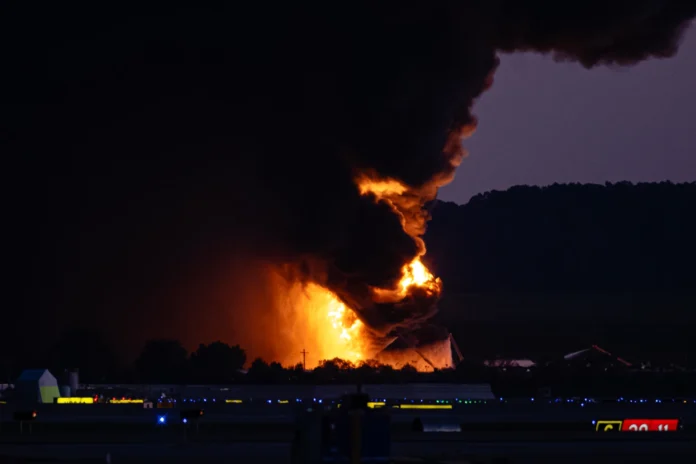
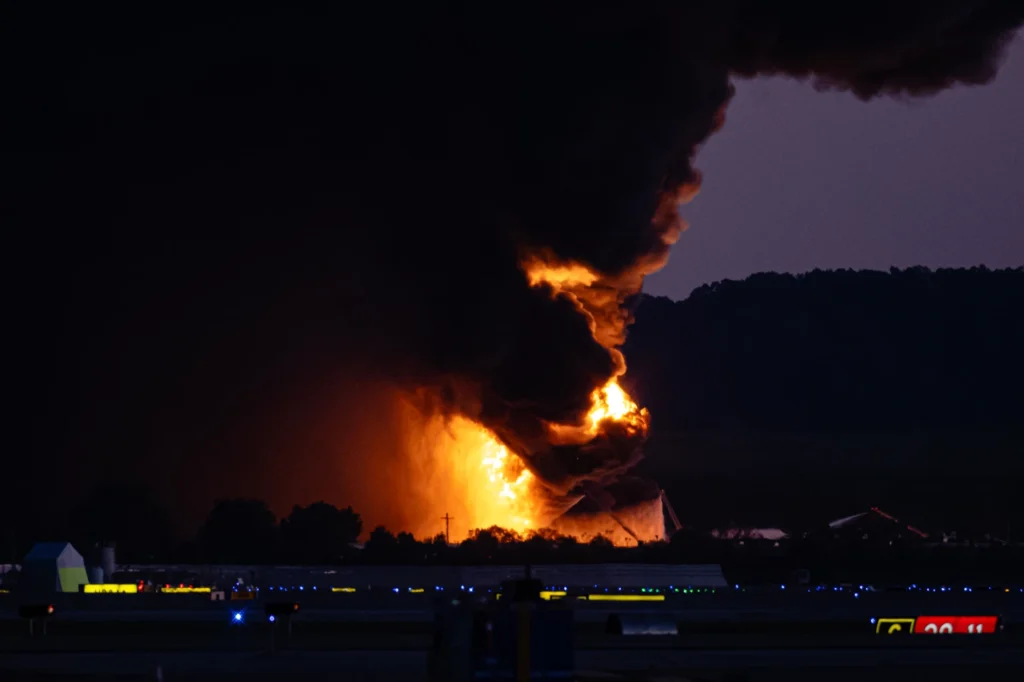
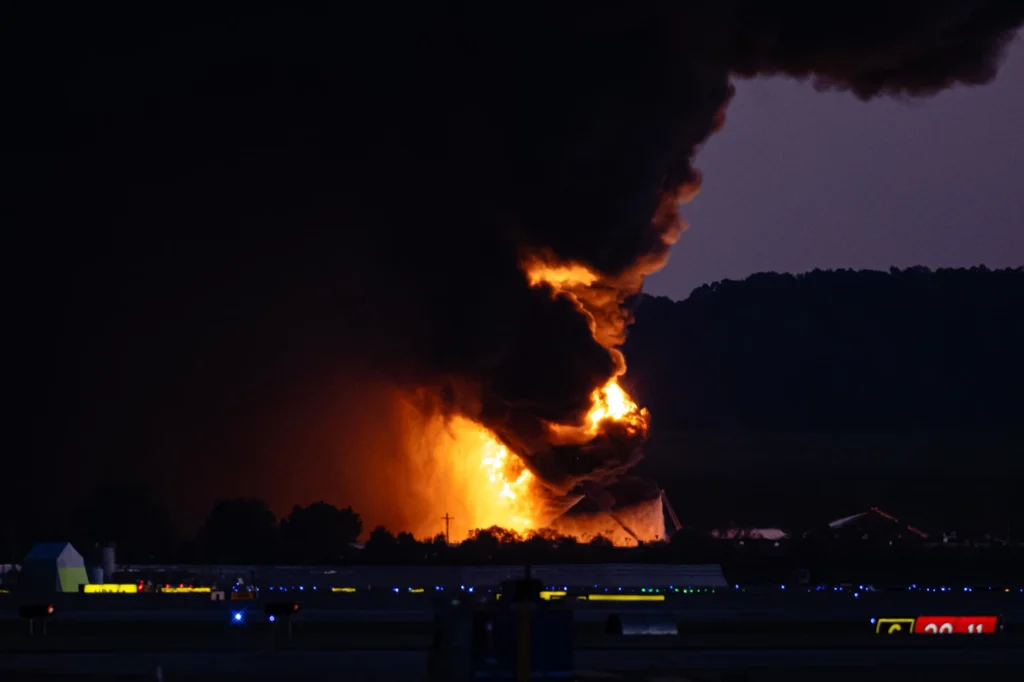
Federal officials said Wednesday that the McDonnell Douglas MD-11’s left wing caught fire just before its left engine separated and fell to the runway at Louisville Muhammad Ali International Airport. The aircraft, bound for Honolulu, lifted briefly off the ground before crashing near the end of the runway around 5:15 p.m. Tuesday.
Todd Inman of the National Transportation Safety Board (NTSB) said investigators have recovered both the cockpit voice recorder and flight data recorder. The engine was later found on the airfield, confirming early reports from airport surveillance footage showing it detaching during takeoff. “There are a lot of different parts of this airplane in a lot of different places,” Inman said, describing a debris field stretching nearly half a mile.
Kentucky Gov. Andy Beshear said the toll is expected to grow as search teams continue to comb through wreckage spread across multiple properties near the UPS Worldport, the global air hub for the company. “Finding survivors seems unlikely,” Beshear said, calling the crash “one of the most devastating aviation disasters Kentucky has ever seen.”
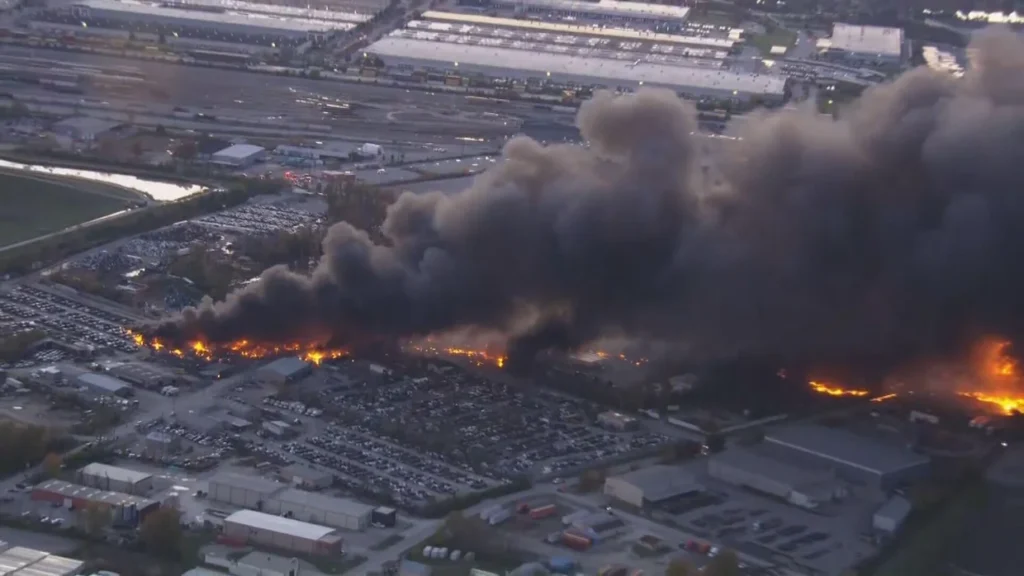
The inferno consumed the cargo plane and spread to nearby businesses, including Kentucky Petroleum Recycling and Grade A Auto Parts, where the governor said a child who died was with a parent. Smaller explosions continued for hours as crews battled the flames, forcing authorities to issue a shelter-in-place order for neighborhoods north of the airport to the Ohio River.
Fire Chief Mark Little of the Okolona Fire District said recovery efforts are ongoing and expected to take several days. “It will take us quite a while,” he said. “There’s still debris we have to move and search.”
Hospitals in Louisville reported treating at least 18 people, with two in critical condition in the University of Louisville burn unit.
UPS confirmed that the aircraft, built in 1991, was part of its long-haul international fleet and said it is working closely with federal investigators. “We are terribly saddened,” the company said in a statement. “Our thoughts are with the families of those affected and our colleagues at Worldport.”
Louisville Metro Council member Betsy Ruhe emphasized the emotional toll the tragedy has taken on the community. “We all know somebody who works at UPS,” she said. “This hits home for everyone in Louisville.”
Experts say the crash bears striking similarities to the 1979 American Airlines disaster at Chicago’s O’Hare Airport, in which a DC-10 lost its left engine during takeoff, killing 273 people. Both aircraft models used General Electric engines.
As the NTSB continues to investigate, officials say determining the exact cause could take months. “It could have been an engine separation that ripped out fuel lines or a fire that burned through the mounting,” said former crash investigator Jeff Guzzetti. “It’s too soon to tell.”
Gov. Beshear said Kentucky’s Team Emergency Relief Fund is accepting donations to help victims’ families with funeral and recovery costs. “In Kentucky, we grieve together and we support one another,” he said.
California voters have approved Proposition 50, a ballot measure that will overhaul the state’s congressional map in a move expected to strengthen Democratic prospects in several key districts ahead of the 2026 midterm elections, CBS News projected Tuesday night.
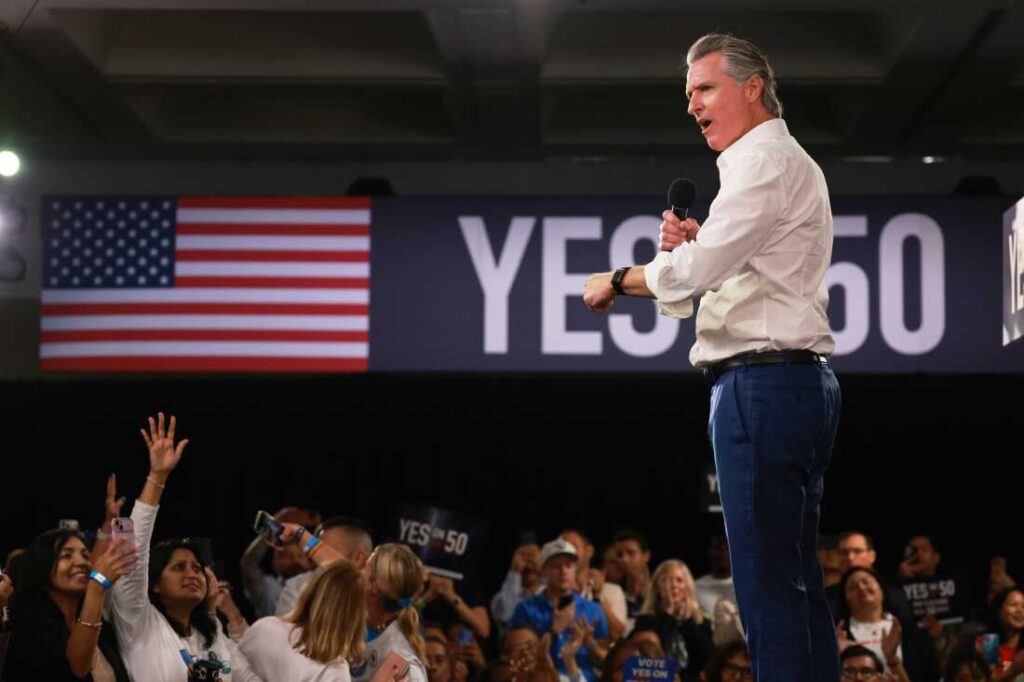
Gov. Gavin Newsom speaks during a campaign event on Proposition 50, Saturday, Nov. 1, 2025, in Los Angeles. (AP Photo/Ethan Swope)
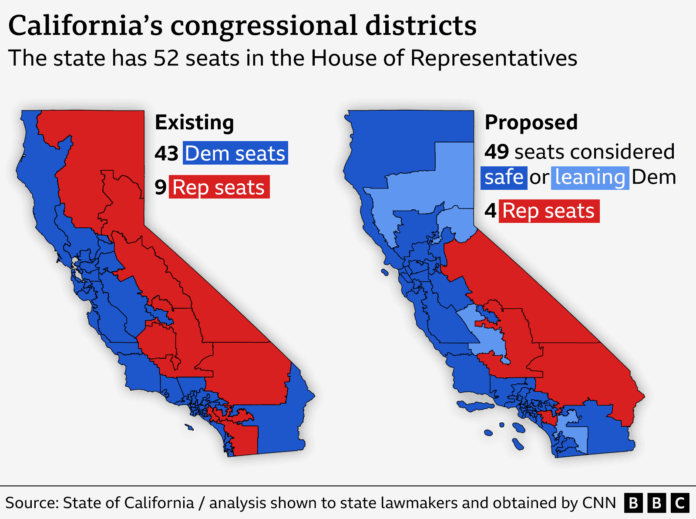
The measure — strongly supported by Gov. Gavin Newsom and Democratic legislative leaders — will replace California’s existing congressional district maps, drawn by the state’s independent redistricting commission, with new maps crafted by the Legislature. The redrawn boundaries aim to make five Republican-held U.S. House seats more competitive for Democrats, a move that Newsom and his allies framed as a response to GOP-led redistricting efforts in states such as Texas.
“It was not just a victory tonight for the Democratic Party — it was a victory for democracy and for the people of this country,” Newsom said after the vote. “We’re proud that California continues to lead the nation in standing up for fairness and representation.”
Reaction across party lines
The passage of Proposition 50 immediately drew both celebration and condemnation.
Democratic billionaire Tom Steyer, a major backer of the initiative, hailed the result as “an enormous victory for our state, our country and our democracy.” Democratic National Committee Chair Ken Martin called it “a testament to the leadership of Governor Newsom and Democrats across California who refused to back down to President Trump and the Republican Party.”
Republicans, however, blasted the measure as partisan gerrymandering disguised as reform. GOP Rep. Kevin Kiley, whose 3rd District is among those affected, said the measure “burns everything down” by escalating the “redistricting arms race” between states.
Rep. Doug LaMalfa, another Republican whose district will be reshaped, vowed legal action. “Should these results stand, the imbalance between rural and urban voices in California will only worsen,” LaMalfa said. “We expect to file suit this week.”
Jessica Millan Patterson, chair of the “No on Prop 50” campaign, called the measure “a power grab by Sacramento elites” and said the campaign’s defeat was due to “tens of millions poured in to promote these gerrymandered maps.”
What Proposition 50 does
Proposition 50 overturns the state’s independent redistricting process, which voters created to ensure nonpartisan mapmaking after the 2020 Census. Under the new law, the Legislature will take over the process, giving Democrats — who already hold 43 of California’s 52 congressional seats — more influence in shaping the districts.
Democrats have said the change is necessary to counter Republican efforts in states like Texas, where recent redistricting has produced five new GOP-leaning congressional districts.
If Proposition 50 had failed, the state would have continued using the existing maps until after the 2030 Census. Instead, new district lines will now be drawn in time for the 2026 midterms.
The road ahead
Republican opponents, led by former Gov. Arnold Schwarzenegger and GOP donor Charles Munger Jr., are preparing court challenges. Munger, who spent more than $30 million opposing the measure, said he was “saddened by the passage of Proposition 50” but added that the campaign “educated Californians about the stakes.”
Newsom, meanwhile, urged other Democratic-led states to follow California’s lead. “We need our friends in New York, Illinois, Virginia and Colorado to meet this moment head-on,” he said.
While Proposition 50 gives Democrats a potential advantage in several House races, analysts caution that outcomes in 2026 will still depend on national trends and voter turnout.
Indiana, PA (BN24) – Democrats claimed a series of significant victories in key races across the United States on Tuesday night, marking the party’s strongest electoral performance since President Donald Trump’s return to power. In contests spanning from New York to Virginia and New Jersey, voters rejected Trump-backed candidates and reaffirmed Democratic control in several battleground states and major cities.
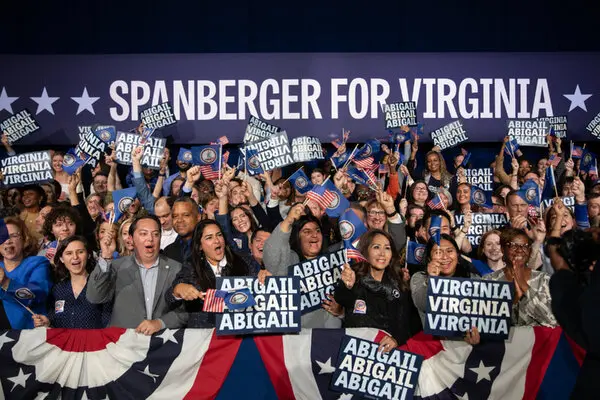
In Virginia, former Rep. Abigail Spanberger defeated Republican Lt. Gov. Winsome Earle-Sears, flipping the governor’s office in a decisive rebuke of Trump’s agenda. Democrats also secured the attorney general’s race and expanded their majority in the state legislature. Spanberger, addressing supporters in Richmond, said voters “chose pragmatism over partisanship” and sent a message that Virginia would not be defined by “chaos or division.”
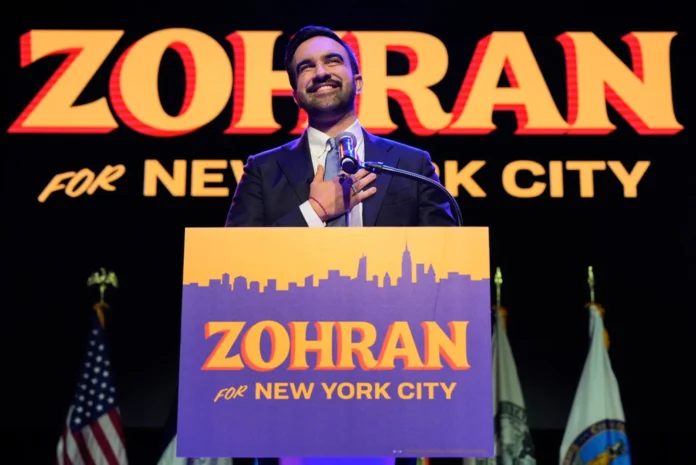
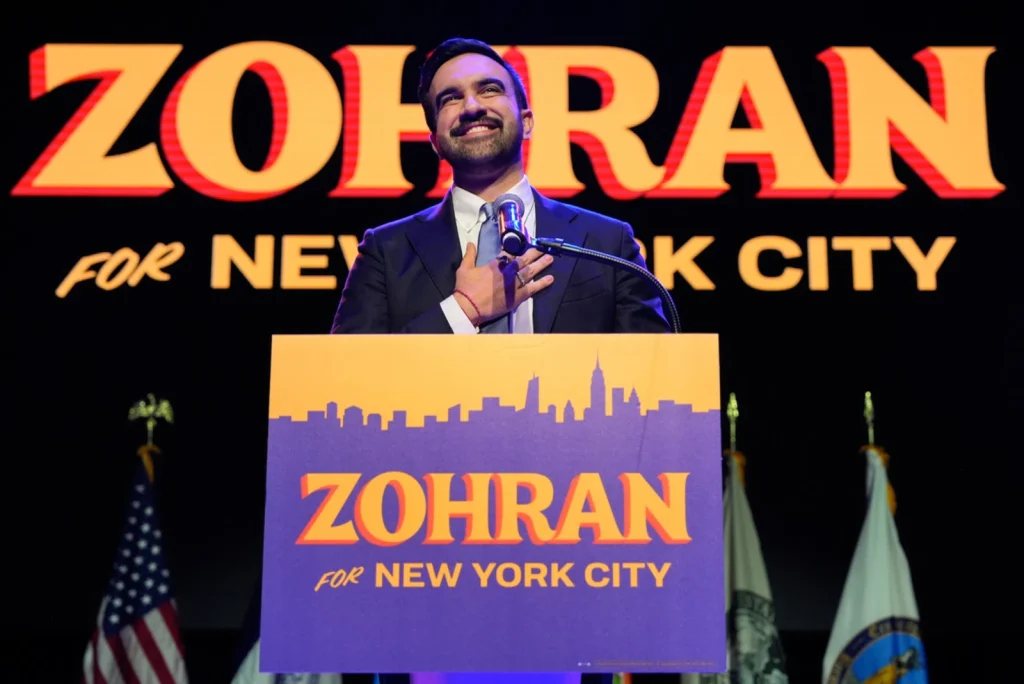
In New Jersey, Democratic Rep. Mikie Sherrill prevailed over Republican Jack Ciattarelli in the governor’s race, defying GOP hopes for an upset. Meanwhile, in New York City, Democratic socialist Zohran Mamdani defeated Trump-endorsed former Gov. Andrew Cuomo, further underscoring the widening gap between Trump and urban voters in his hometown.
Democrats also celebrated a structural win in California, where voters approved a new congressional map designed to add up to five additional Democratic seats in next year’s midterm elections.
The results delivered a major morale boost to Democrats, who framed the night as a referendum on Trump’s leadership and his administration’s handling of the economy and federal workforce. “At long last, it’s a fantastic night to be a Democrat,” said Matt Bennett, co-founder of the centrist think tank Third Way, calling the outcome “deep, meaningful, and energizing.”
Republicans, meanwhile, downplayed the results, arguing that the off-year elections were held largely in blue-leaning states and not indicative of national sentiment. A senior Trump adviser described the losses as “a lose-lose scenario” given the president’s limited involvement. Trump himself responded late Tuesday, blaming the results on his absence from the ballot and the ongoing government shutdown, saying, “TRUMP WASN’T ON THE BALLOT, AND SHUTDOWN, WERE THE TWO REASONS THAT REPUBLICANS LOST ELECTIONS TONIGHT.”
The NBC News Exit Poll showed that a majority of voters said Trump was not a major factor in their decision. However, among those who cited him as influential, more said they voted to oppose him than to support him.
Democrats quickly cast the victories as a harbinger for the 2026 midterms. House Minority Leader Hakeem Jeffries, D-N.Y., hailed the outcome as “a rout for Democrats across the country” and said the results underscored voter fatigue with Trump’s policies. “As long as we stay focused on lowering costs and fighting extremism, tonight’s results will be repeated next year,” Jeffries told NBC News.
Republican strategists acknowledged that Trump’s presence continues to polarize key swing-state voters. “Hopefully some folks get the clue that we need to be talking about and doing something about the economy,” said one veteran GOP consultant, adding that Trump’s political team “did not go all-in where it mattered most.”
Even some Democrats warned against overconfidence. Political strategist Michael Ceraso said the results reflect more of a rejection of Trump than a unified Democratic vision. “These elections are more about who we are than about Trump himself,” he said. “Voters may complain about him, but they’re not ready to break up with him yet.”
Still, the night’s overall narrative was clear: in the first major test since Trump’s return to the White House, Democrats showed resilience, energized by concerns about democracy, cost-of-living pressures, and the president’s polarizing leadership.
Washington (BN24) – At least three people are dead and 11 others injured after a UPS cargo plane crashed and exploded shortly after takeoff Tuesday evening from Louisville Muhammad Ali International Airport, Kentucky officials said. The fiery crash has prompted a massive emergency response and a shelter-in-place order for neighborhoods north of the airport amid fears of additional explosions.
The McDonnell Douglas MD-11, operated by UPS Airlines, crashed around 5:15 p.m. local time while attempting to depart for Honolulu, according to the Federal Aviation Administration (FAA). Video footage captured flames erupting from the aircraft’s left wing moments before it lifted briefly off the runway, then slammed back down and exploded in a massive fireball that could be seen miles away.
Kentucky Gov. Andy Beshear confirmed the fatalities late Tuesday and warned that the casualty numbers could rise as rescue crews continue to search the wreckage. “We’re asking all Kentuckians to pray for those that have been impacted,” Beshear told The Associated Press. He said the crash site remains “a very dangerous situation” due to flammable materials and debris scattered across the area.
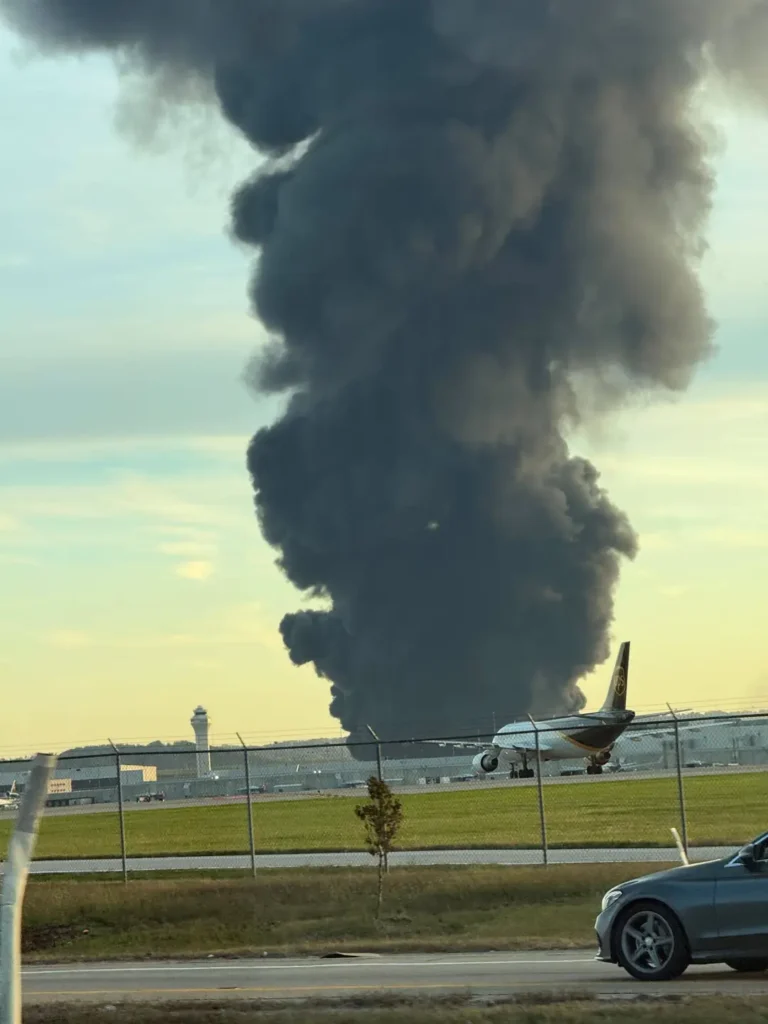
Emergency crews from across Louisville Metro responded to the scene, battling intense flames as thick smoke billowed into the sky. “Because of the magnitude of the fire, some responders have had to shelter behind different things,” Beshear said.
Louisville Mayor Craig Greenberg described the plane’s fuel load as an “extreme reason for concern,” warning that fire and hazardous materials posed ongoing risks for nearby communities. The crash occurred close to the end of a runway near airport service buildings, leaving debris and twisted metal spread across the tarmac.
The Louisville Metro Emergency Services issued a shelter-in-place order for all areas north of the airport extending to the Ohio River, urging residents to remain indoors as hazardous materials teams worked to secure the site.
The MD-11 aircraft, manufactured in 1991, was part of UPS’s global air fleet based at its Worldport facility in Louisville, the company’s largest package-sorting hub. The facility employs thousands and handles up to 300 daily flights, processing more than 400,000 packages per hour.
UPS released a brief statement acknowledging the crash and confirming it is cooperating fully with federal investigators. “Our focus is on the safety and well-being of our employees and the surrounding community,” the company said.
Both the FAA and the National Transportation Safety Board (NTSB) have launched investigations into the crash. Preliminary reports suggest the plane encountered engine trouble moments after takeoff, but officials have not confirmed the cause.
The Louisville airport is located just ten minutes from downtown Louisville, near residential neighborhoods and tourist attractions along the Indiana state line. Authorities have not yet identified the victims.
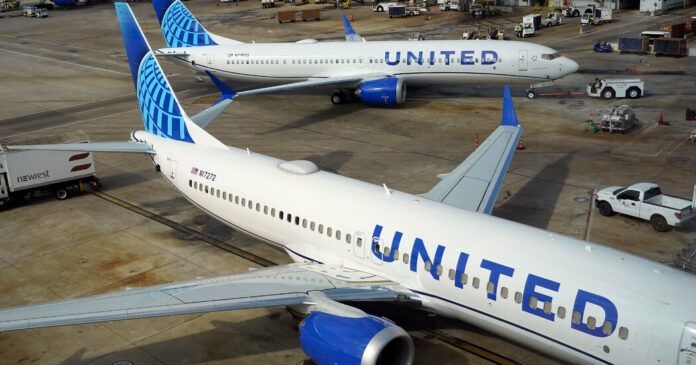
Flights at Ronald Reagan Washington National Airport in Virginia were temporarily halted Tuesday afternoon after a bomb threat was made against a United Airlines flight arriving from Houston, prompting an immediate security lockdown and large-scale emergency response near the nation’s capital.
The incident began shortly before 11:30 a.m., when air traffic controllers received reports of an “unconfirmed bomb threat” targeting United Flight 512, according to air traffic audio reviewed by WUSA9. Controllers immediately ordered the aircraft to divert from the terminal and instructed pilots to move the plane to a remote area of the tarmac.
“We’ve got to get you away from the airport,” an air traffic controller was heard telling the flight crew. “Someone called and said there was a bomb on 512… they said if it landed, it would explode.”
The Federal Aviation Administration (FAA) confirmed that a ground stop was issued, halting all inbound and outbound flights at the busy Washington, D.C.-area airport. Passengers aboard the aircraft were evacuated and bused to the terminal, while the plane was searched by federal and local law enforcement.
U.S. Transportation Secretary Sean Duffy confirmed in a post on X that the flight landed safely and that no hazards were found. “Passengers were evacuated, and law enforcement conducted a full search of the aircraft,” Duffy wrote.
By 12:50 p.m., airport officials announced that runways had reopened and normal flight operations had resumed. However, more than 120 flights were delayed, and several incoming aircraft were diverted to other airports during the investigation, according to data from FlightRadar24.
The FBI Washington Field Office later confirmed that its agents had completed a full sweep of the aircraft and found no explosives or threats on board. “The situation has been resolved safely,” the bureau said in a statement.
In an update on social media, Reagan National Airport officials said all operations had been paused “while passengers on a United Airlines flight were being offloaded and bused to the terminal.” The airport urged travelers to check with their airlines for the latest flight information and to expect residual delays throughout the afternoon.
The airport, located less than five miles from the White House and U.S. Capitol, remained under heightened security for several hours following the threat. A person briefed on the incident told Reuters that the response was conducted “out of an abundance of caution.”
United Airlines did not immediately respond to requests for comment.
The temporary shutdown underscores the sensitive security environment surrounding the D.C. area, where air traffic disruptions are rare but taken extremely seriously given the airport’s proximity to key government buildings.
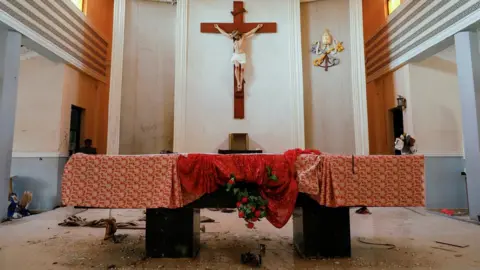
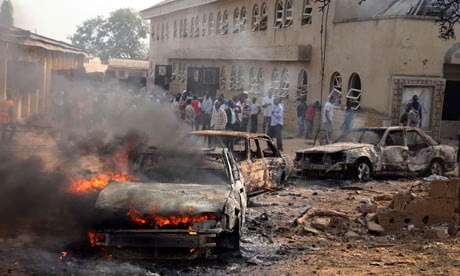
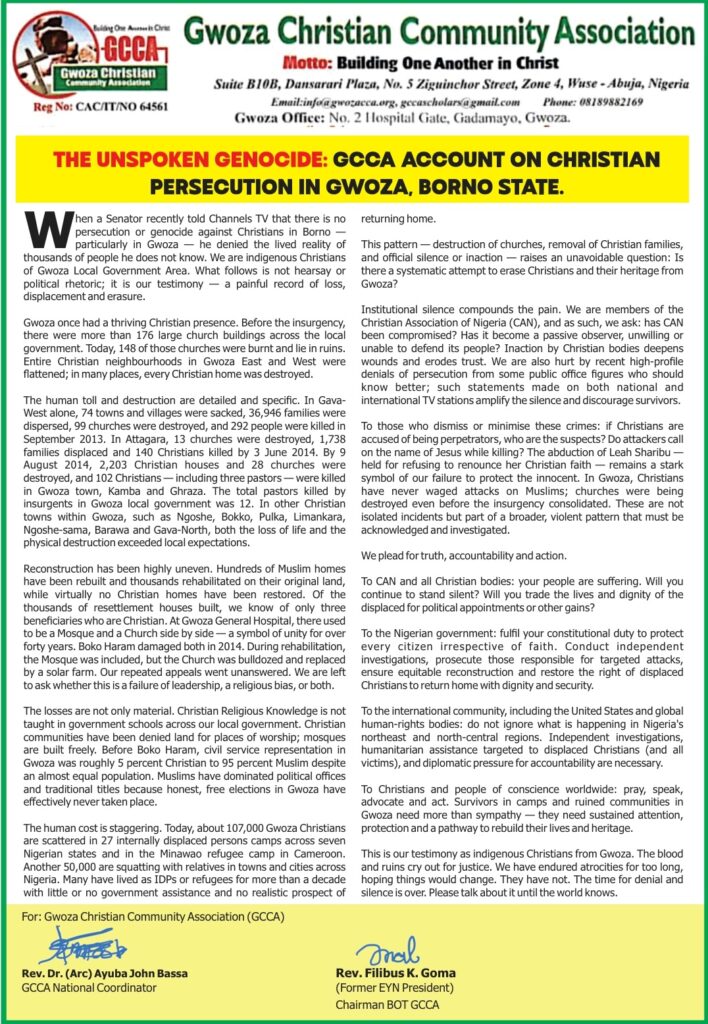
MAIDUGURI, Nigeria (BN24) — The Gwoza Christian Community Association (GCCA) in Borno State says 148 of 176 churches in the community have been burned to the ground, leaving only ruins behind after years of Boko Haram insurgency in northeastern Nigeria.
In a statement titled “The Unspoken Genocide: GCCA Account on Christian Persecution in Gwoza, Borno State,” signed by Rev. Dr. (Arc) Ayuba John Bassa and Rev. Filibus K. Goma, the group described a pattern of destruction, displacement, and killings that has erased nearly all traces of Christian life in the area.
According to the GCCA, Gwoza once had a vibrant Christian population, but entire neighborhoods in Gwoza East and West were leveled during the insurgency. The group said 74 towns and villages were attacked, 36,946 families displaced, and 292 people killed in a single 2013 assault on Gwoza West.
In Attagara alone, 13 churches were destroyed and 1,738 families displaced. By June 2014, the group said 2,403 Christian homes and 28 churches had been razed across Gwoza, Kamba, and Gharza. Twelve pastors were among those killed.
The statement accused Boko Haram of carrying out a “systematic attempt to erase Christians and their heritage” from the region. It also criticized both the Nigerian government and Christian institutions for remaining silent, questioning whether the Christian Association of Nigeria (CAN) has “become a passive observer.”
Reconstruction in the region has been “highly uneven,” the GCCA said, alleging that while thousands of Muslim homes have been rebuilt, “virtually no Christian homes have been restored.” Of the thousands of resettlement houses constructed, the association claimed only three belong to Christians.
The group pointed to the demolition of the Gwoza General Hospital Mosque, once a symbol of interfaith unity, during rehabilitation to make way for a solar farm, despite appeals to preserve it.
The GCCA added that Christian Religious Knowledge is no longer taught in local schools, Christians are denied land for worship, and mosques now occupy sites where churches once stood. Before Boko Haram’s rise, Christians made up about five percent of Gwoza’s population, but today more than 107,000 live as internally displaced persons or refugees, most without government aid.
The association urged the Nigerian government to protect citizens “irrespective of faith” and to investigate and prosecute those responsible for targeted attacks. It also called on international bodies, including the United States and global human rights organizations, to conduct independent humanitarian investigations and provide assistance to displaced Christians.
“We have endured atrocities for too long, hoping things would change. They have not,” the statement read. “The time for denial and silence is over. Please talk about it until the world knows.”
The report, shared by journalist Steven Kefas, has renewed debate over the persecution of Christians and the long-term devastation left by Boko Haram’s campaign across Nigeria’s northeast.
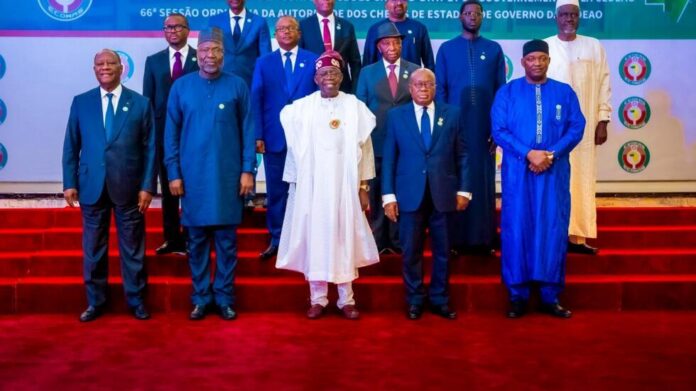
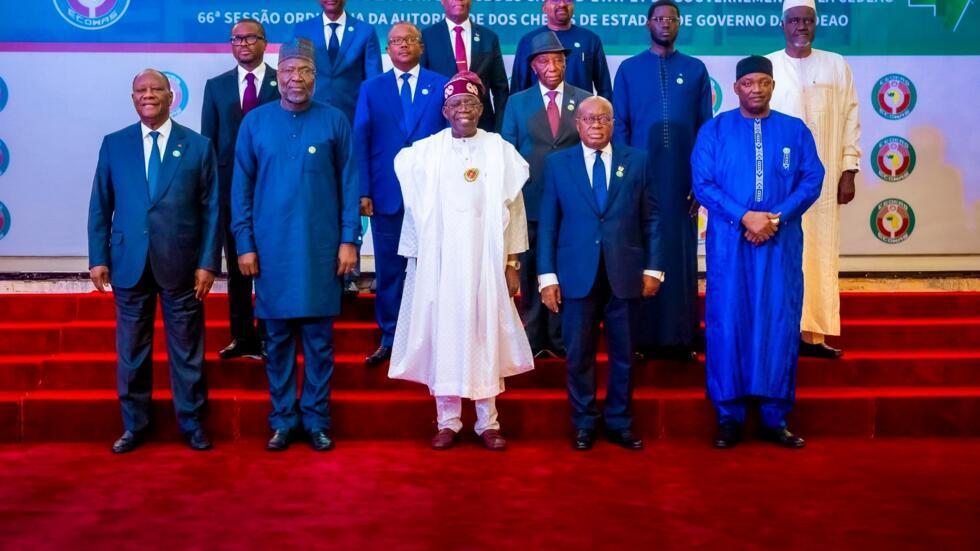
ABUJA, Nigeria (BN24) — The Economic Community of West African States (ECOWAS) has strongly condemned and rejected recent comments by former U.S. President Donald Trump alleging a “Christian genocide” in Nigeria, describing the claim as false, divisive, and dangerous to the peace and unity of the region.
In a strongly worded communiqué issued Tuesday, ECOWAS said such remarks risk deepening mistrust among communities and emboldening extremist groups operating in parts of West Africa. The bloc accused those spreading the claims of attempting to “sow division, fuel insecurity, and undermine social harmony” within member states.
The regional body emphasized that violent extremist networks in the region target victims indiscriminately, regardless of religion, ethnicity, or gender. “Extremist networks have indiscriminately targeted people of diverse faiths Muslims, Christians, and followers of traditional religions,” ECOWAS stated. “As independent reports have confirmed over the years, terrorist-related violence does not discriminate based on religion, gender, or ethnicity.”
The communiqué added that there is no evidence to support allegations of a coordinated campaign or genocide against Christians in Nigeria or elsewhere in West Africa. Instead, the violence, ECOWAS said, stems from terrorism, banditry, and political instability, all of which transcend religious lines.
ECOWAS called on the United Nations, international partners, and foreign governments to reject what it described as “false and dangerous narratives” and to work collaboratively with African nations in addressing the root causes of insecurity. “The bloc urges the UN and all global partners to treat as false any claims that these terrorist groups target one faith or that a genocide against a religious group is taking place in the region,” the statement read.
The organization further appealed for sustained international cooperation in combating violent extremism, urging partners to support West African-led initiatives that promote peace, development, and resilience in affected communities.
The ECOWAS statement comes after Trump, in a recent media interview, claimed that Christians in Nigeria were being systematically targeted and killed, warning that the United States might consider military intervention or suspend aid to the country. The remarks triggered widespread concern across the subregion, with leaders warning that such rhetoric could inflame tensions in already volatile areas.
Regional analysts say the ECOWAS response reflects growing frustration among African governments over what they view as oversimplified or misleading portrayals of complex conflicts in the region. They argue that while religious identities are often exploited by insurgent groups, the underlying issues are rooted in poverty, weak governance, and competition over resources.
ECOWAS reaffirmed its commitment to promoting peace, stability, and interfaith harmony in West Africa, stressing that unity and collaboration remain central to defeating terrorism and safeguarding the region’s progress. “We strongly reject these false and dangerous claims that seek to deepen insecurity in communities and weaken social cohesion,” the communiqué concluded.
LISBON (BN24) — Portuguese football legend Cristiano Ronaldo has confirmed he will marry his long-time partner, Georgina Rodríguez, following the 2026 FIFA World Cup. The Al-Nassr forward said the couple has decided to tie the knot next summer, describing their relationship as one built on trust, patience, and deep affection.
In part one of his new interview with British journalist Piers Morgan, Ronaldo revealed that the long-awaited wedding will take place after the World Cup a tournament he hopes to end by lifting the trophy with Portugal. “Not yet,” Ronaldo said when asked if the date had been set. “We plan to do it after the World Cup with the trophy! But she is not the person who likes big parties. She prefers private things. So I will respect these decisions.”
The revelation marks a milestone in a romance that began in 2016, when the couple reportedly met at a Gucci store in Madrid, where Rodríguez was working as a sales assistant. Their relationship has since grown into one of the most followed partnerships in global sports, marked by public devotion and shared family life.
Ronaldo, 40, proposed to Rodríguez earlier this year, confirming their engagement in August after nearly a decade together. The Argentine-Spanish model and influencer announced the news on Instagram, posting a photograph of her diamond ring with the caption: “Yes, I do. In this and in all my lives.” The post garnered millions of likes within hours, with fans and celebrities congratulating the couple.
Speaking to Morgan, Ronaldo reflected on the proposal and the emotions surrounding it. “One thing that I love is that she didn’t care about the ring,” he said. “She asked me if I was honest, and I said, ‘I want you, and I want to marry you.’ I didn’t cry, but I had tears in my eyes.”
Jewelry experts have since estimated the ring’s value at around £1.5 million. The piece, believed to feature a 15- to 20-carat diamond, was described by luxury engagement specialist Laura Taylor as “one of the most impressive rings in recent years.”
“A diamond of this size is almost certainly set in platinum for durability, which enhances its brilliance and gives it a timeless elegance,” Taylor explained. “If the diamond is natural and of top-tier quality within the D-F colour range and flawless or near-flawless in clarity, its value could easily exceed £1.5 million.”
Ronaldo and Rodríguez share two biological children and are raising three others from Ronaldo’s previous relationships. The family, who split their time between Riyadh and Madrid, often shares glimpses of their life on social media, including family vacations, birthdays, and the children’s milestones.
Rodríguez, 31, has carved out her own career as a model, entrepreneur, and television personality. She stars in the hit Netflix reality series I Am Georgina, which chronicles her life as a mother, businesswoman, and partner to one of the world’s most successful athletes. The show has drawn millions of viewers, offering an intimate look at her transformation from retail worker to global celebrity.
Despite their fame, Ronaldo emphasized that his future wife values privacy and simplicity. “She’s not someone who enjoys being the center of attention at big events,” he said. “Our wedding will reflect that something private, meaningful, and surrounded by the people we love.”
For Ronaldo, who is entering what could be his final World Cup, the marriage represents both a personal and symbolic closure to an extraordinary career. Having won five Ballon d’Or awards and numerous domestic and international titles, the Portuguese captain said his focus remains on achieving one last dream leading Portugal to another World Cup triumph.
The 2026 World Cup, jointly hosted by the United States, Canada, and Mexico, may be Ronaldo’s last major tournament. If Portugal lifts the trophy, it would mark a historic finale for a player widely regarded as one of the greatest in football history.
The couple’s upcoming marriage has already become one of the most anticipated celebrity events of 2026, but true to their statements, it is expected to be a low-key affair attended only by close family and friends.
As Ronaldo told Morgan, the focus will not be on extravagance but on love, family, and the next chapter of a relationship that has already spanned nearly a decade. “Georgina is my home,” he said. “After football, she is my world.”
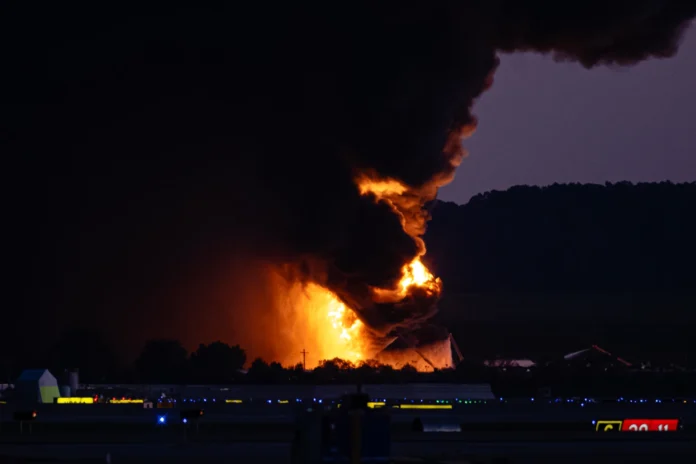
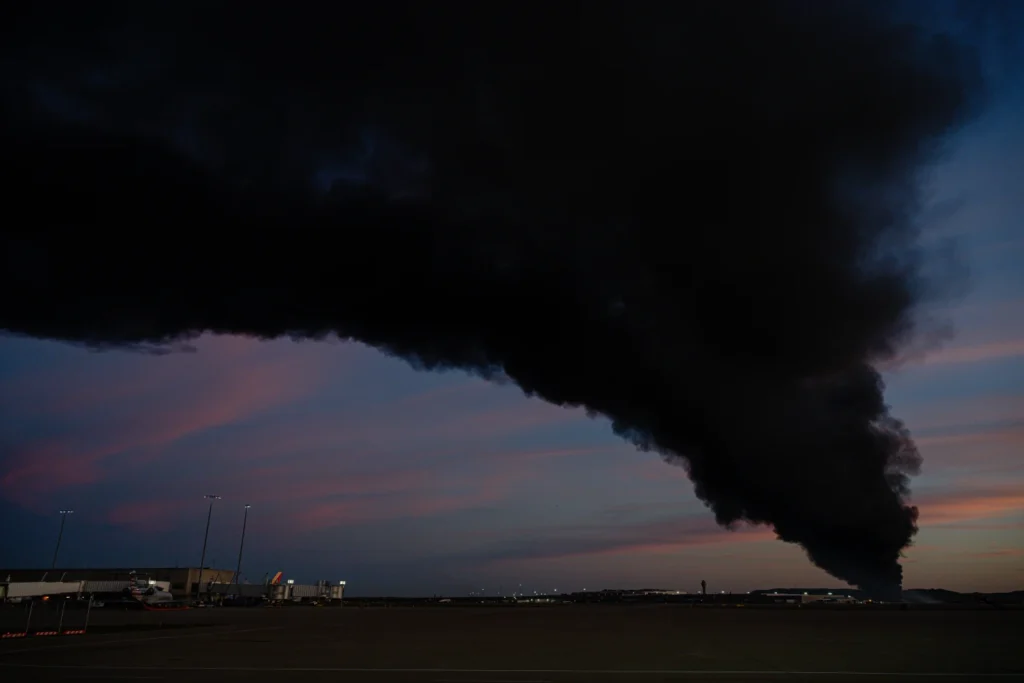
Louisville (BN24) – A UPS cargo plane carrying three crew members crashed and burst into flames shortly after takeoff from Louisville Muhammad Ali International Airport on Tuesday evening, igniting a large fire and prompting emergency response teams to rush to the scene. The crash, which occurred at approximately 5:15 p.m. local time, sent thick plumes of black smoke billowing into the sky and forced officials to issue a shelter-in-place order for neighborhoods north of the airport.
According to the Federal Aviation Administration (FAA), the aircraft—UPS Flight 2976, a McDonnell Douglas MD-11 manufactured in 1991—had just departed for Honolulu, Hawaii, when it went down near the airport’s perimeter. The Louisville Metro Police Department confirmed that injuries were reported, though the full extent remained unclear Tuesday night.
UPS, in an initial statement, said it had not yet confirmed any injuries or fatalities. “Our focus is on our crew members and their families. We are cooperating with authorities and will share more information as it becomes available,” the company said.
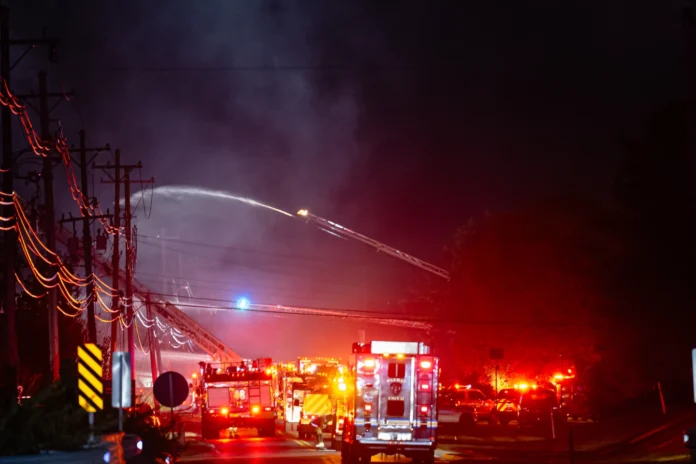
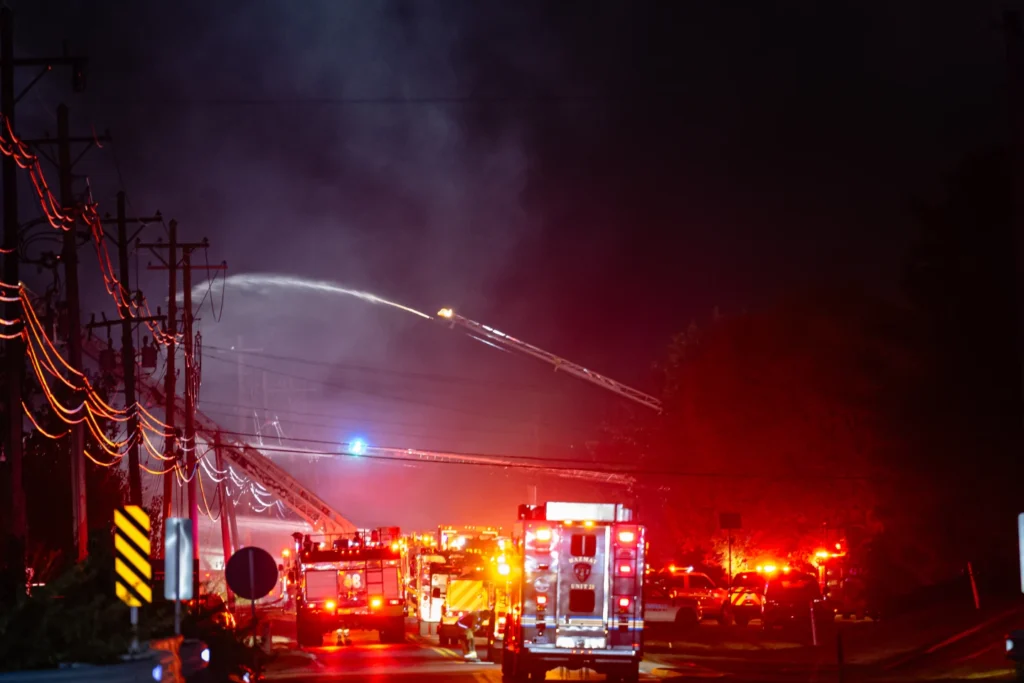
Emergency crews from Louisville Metro Fire and Airport Fire Services worked to extinguish a massive blaze fueled by the aircraft’s large quantity of jet fuel. Television footage and eyewitness videos showed flames and thick black smoke stretching across a nearby parking area as firefighters battled to contain the inferno.
Louisville Mayor Craig Greenberg confirmed that multiple injuries had been reported, adding that “all of our emergency resources are on the scene right now.” He also noted that the plane’s fuel load had significantly intensified the fire.
Kentucky Gov. Andy Beshear said he was monitoring the situation closely. “First responders are onsite, and we will share more information as available. Please pray for the pilots, crew, and everyone affected,” Beshear posted on X. Later, he confirmed he was traveling to Louisville to oversee the state’s response.
Authorities extended the shelter-in-place order to all areas between the airport and the Ohio River, citing heavy smoke and potential airborne hazards. Residents were urged to avoid the area as emergency crews continued to douse the flames and secure the crash site.
UPS, one of Louisville’s largest employers, operates its global air hub and headquarters from the airport, known by its code SDF. The facility handles hundreds of daily flights and employs more than 25,000 workers in the region.
Both the FAA and the National Transportation Safety Board (NTSB) announced they will jointly investigate the cause of the crash. The NTSB said a team of investigators would arrive in Louisville by Wednesday morning to begin collecting evidence from the wreckage.
As night fell, the fire appeared largely contained, but officials said the situation remained “fluid and dangerous.” The fate of the crew members had not yet been confirmed, and authorities urged patience as rescue and recovery efforts continued through the evening.