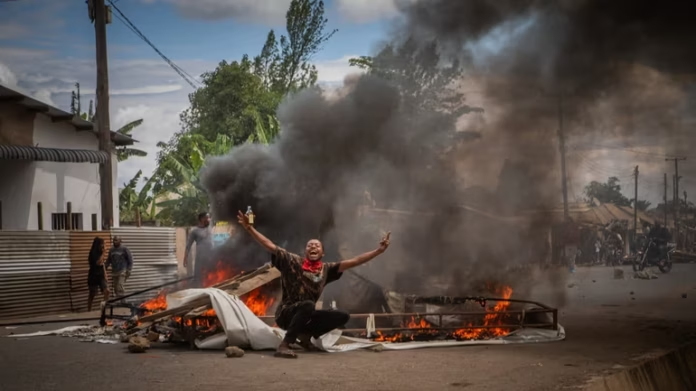
DAR ES SALAAM (BN24)— Protests intensified Thursday across Tanzania’s major cities after a general election that many residents and opposition figures described as unfair and marred by repression. In Dar es Salaam, police used tear gas and fired gunshots into the air to disperse demonstrators who returned to the streets following violent clashes during Wednesday’s vote.
Demonstrators in the commercial capital, as well as in northern cities including Arusha and Mwanza, protested the disqualification of President Samia Suluhu Hassan’s two most prominent challengers and what they describe as an escalating clampdown on political dissent. Witnesses reported that government offices and other buildings had been set ablaze during Wednesday’s unrest, prompting authorities to impose an overnight curfew in Dar es Salaam, a city of more than seven million residents. Internet access, disrupted during the election, was slowly returning by Thursday.
Human rights activist Tito Magoti said he had received reports of at least five deaths linked to Wednesday’s protests, while a diplomatic source told Reuters there were credible reports of at least 10 fatalities in Dar es Salaam. Government officials and police spokespeople did not respond to repeated requests for comment, and Reuters could not independently verify the casualty figures.
Provisional results announced by the state-run Tanzania Broadcasting Corporation showed Hassan winning commanding majorities across numerous constituencies. The president, who has held office since 2021 following the death of John Magufuli, initially received praise for easing restrictions on opponents and reducing censorship that had intensified under her predecessor. However, critics note that the current administration has continued to face accusations of unexplained abductions and harassment of political opponents. Although Hassan ordered an investigation into alleged abductions last year, no official findings have been released.
Dozens of protesters returned to the streets Thursday in at least three neighborhoods of Dar es Salaam, where police fired tear gas and gunshots, according to Reuters witnesses. Smaller demonstrations were also reported in Arusha and Mwanza. The British government confirmed that international flights to and from Dar es Salaam’s airport had been canceled, and flights to Arusha and near Mount Kilimanjaro were also suspended.
Magoti described the protests as a reflection of Tanzania’s growing civic consciousness. “The people are rewriting our political culture from being cows, if I use this word respectfully … to being active citizens,” he said.
The unrest stems largely from the exclusion of the opposition’s leading parties. Tanzania’s main opposition party, CHADEMA, was disqualified in April after refusing to sign a government-mandated code of conduct, and its leader, Tundu Lissu, was charged with treason. The candidate of ACT-Wazalendo, another opposition party, was also barred from contesting. As a result, Hassan faced only minor-party challengers in the presidential race, raising concerns about the credibility and competitiveness of the election.
The government instructed civil servants to continue working from home through Friday and advised the general public to remain indoors unless necessary, a directive posted on the official Instagram account of government spokesperson Gerson Msigwa.
Political analysts say the protests highlight Tanzania’s increasingly tense political landscape and underscore longstanding concerns about the fairness of elections in the country. Opposition parties and rights organizations have criticized the government for undermining democratic processes through disqualifications, arrests, and intimidation. The unrest also tests Hassan’s leadership at a time when she has sought to balance political reform with continuity from Magufuli’s more authoritarian style.
The ongoing demonstrations carry broader implications for Tanzania’s stability, economic activity, and international image. Dar es Salaam, as the nation’s economic hub, has seen businesses shuttered and transport disrupted. Meanwhile, Zanzibar, the semi-autonomous archipelago that also held elections on Wednesday, continues to experience political tension amid long-standing local grievances and opposition suppression.
Observers warn that if the government fails to address citizens’ demands for transparency and inclusivity, Tanzania could face prolonged unrest and damage to its democratic institutions. For now, the protests signal a significant moment in the country’s political evolution, with citizens increasingly willing to challenge state authority despite heavy-handed government responses.
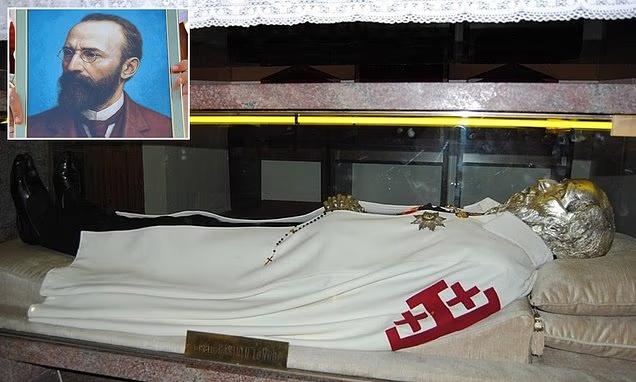
VATICAN CITY (BN24)— In an extraordinary testament to redemption and faith, Pope Leo XIV has declared Bartolo Longo, a former Satanic priest who later devoted his life to God, as one of the newest saints of the Catholic Church. The canonization, announced Sunday at St. Peter’s Basilica, included six others, among them three nuns, a Venezuelan physician known as the “doctor of the poor,” and an archbishop martyred during the Armenian genocide.
Born in 1841 in the southern Italian town of Latiano, Longo was raised in a devout Catholic family and trained as a lawyer at the University of Naples. His spiritual life took a dark turn following his father’s death, when he became deeply involved in occult practices. Historical records and Church documents describe that he allegedly served as a Satanic priest, performing rituals, practicing extreme fasting, and even claiming to have made a pact with a demon.
However, Longo’s life underwent a profound transformation after meeting Professor Vincenzo Pepe, who guided him back to Catholicism. Renouncing his past, Longo vowed celibacy and dedicated himself to acts of penance and charity. He joined the Dominican Third Order in 1871 and committed his life to spreading devotion to the Rosary and serving the poor.
Over the following decades, Longo became known for his charitable works in the city of Pompeii. He founded the Pontifical Shrine of the Blessed Virgin of the Rosary of Pompeii, which later became one of Italy’s most visited Marian pilgrimage sites. He also established an orphanage for girls in 1887 and an institute for the sons of prisoners in 1892, followed by another home for the daughters of prisoners in 1922.
Longo’s dedication extended to his voluntary service at the Neapolitan Hospital for Incurables, where he cared for patients for two years. His deep compassion and reformative zeal earned him the nickname “Apostle of the Rosary.”
Miracles attributed to Longo’s intercession began to emerge during his lifetime. According to accounts recorded by the Catholic News Agency, the day he unveiled a portrait of Our Lady of the Rosary in Pompeii, a 12-year-old girl suffering from incurable epilepsy was reportedly healed completely. This event fueled public devotion to the Virgin Mary and solidified Pompeii’s reputation as a center of faith and healing.
Longo died in 1926, leaving behind a powerful legacy of faith and transformation. His journey from a man who claimed to have “sold his soul to the devil” to one who became a servant of the Church has been held up by Vatican officials as an example of the power of repentance and divine grace.
During the canonization Mass on October 19, Pope Leo XIV highlighted Longo’s life as a symbol of hope for those struggling with sin and doubt.
“Today we have before us seven witnesses, the new Saints, who, with God’s grace, kept the lamp of faith burning,” Pope Leo said. “May their intercession assist us in our trials and their example inspire us in our shared vocation to holiness.”
Archbishop Tommaso Caputo of Pompei, speaking with EWTN following the canonization, reflected on Longo’s transformation and enduring legacy. “Longo arrived in Pompeii to take care of the properties of the countess,” Caputo said. “Walking through those streets was dangerous because of the presence of bandits and malaria, he felt an inner inspiration. From that moment, he became an instrument of the Virgin’s mercy.”
Longo’s canonization represents one of the most remarkable conversion stories in Church history. His life, once defined by darkness, has become a testament to forgiveness, redemption, and the transformative power of faith, a journey from Satanic ritual to sainthood that now holds a permanent place in the annals of Catholic history.
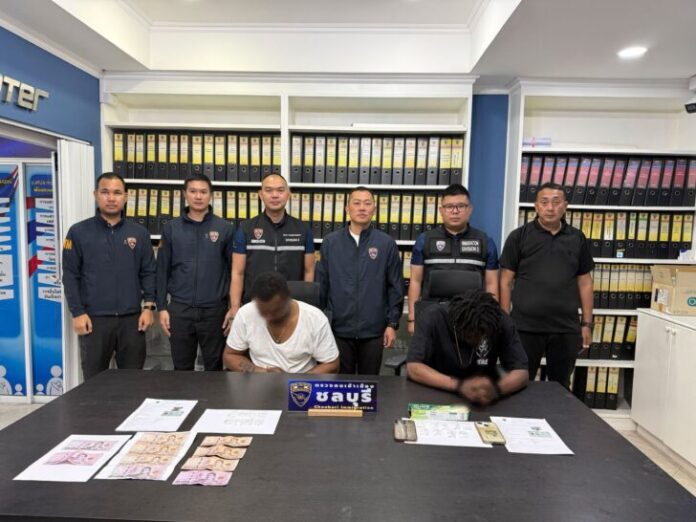
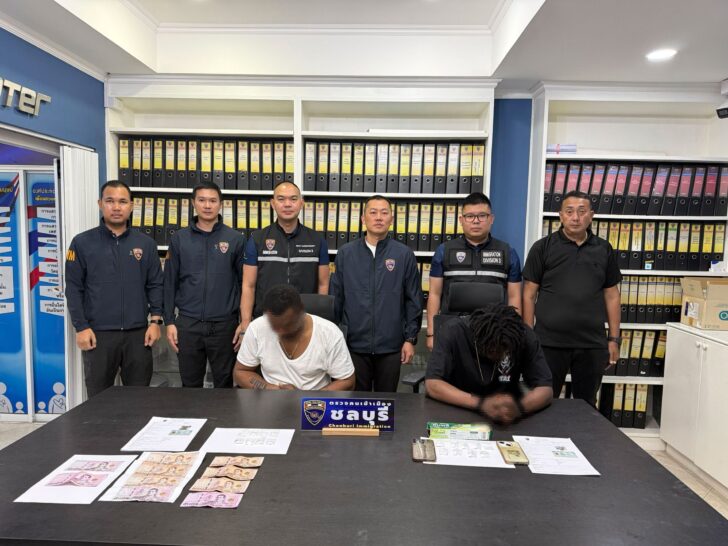
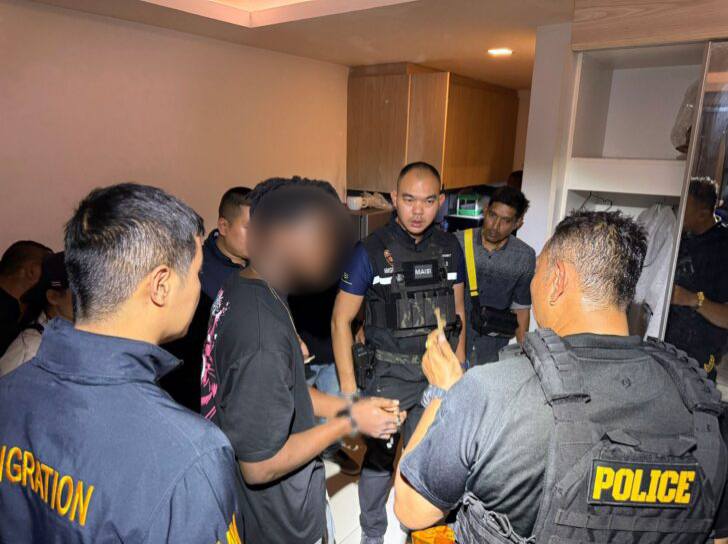
PATTAYA, Thailand (BN24)— Two Nigerian men believed to be part of a wider drug trafficking network in Bangkok were arrested in Chonburi province after one attempted to swallow packets of cocaine to destroy evidence, Thai police said Thursday.
The arrests followed a coordinated operation between Chonburi Immigration and Pattaya City Police, targeting foreign drug syndicates operating along Thailand’s eastern seaboard. Authorities identified the suspects as Amarachi and Ikenna, both Nigerian nationals who had overstayed their tourist visas.
The sting operation, conducted on Wednesday, October 29, 2025, in the Jomtien area of Pattaya, led to the recovery of 33 grams of crystal methamphetamine (known locally as “ice”) and 9 grams of cocaine concealed inside cigarette packs and toothpaste boxes.
During the raid, police said one of the suspects tried to swallow small pellets of cocaine in an effort to eliminate evidence. Officers acted quickly, prying open the man’s mouth and recovering the drugs before they could be ingested.
According to Pattaya police, the two men are linked to a larger Nigerian-led drug trafficking ring operating across Bangkok’s nightlife districts, particularly around the Nana Plaza area. The network reportedly uses a “mouth-concealment method,” in which suspects hide small drug packets in their mouths to evade detection during police patrols.
The Chonburi arrests were connected to an earlier Bangkok Metropolitan Police operation carried out on October 26, in which narcotics suppression officers disguised as construction workers stormed several locations around Sukhumvit Soi 11, a nightlife hub in the Nana district. That pre-dawn raid resulted in the arrest of eight Nigerian nationals and one Thai accomplice, dismantling what authorities described as a key cell in a transnational drug network catering to tourists.
Officers in the Bangkok operation seized several grams of cocaine, mobile phones used for arranging drug sales, and cash proceeds. Investigators said data retrieved from the phones helped trace connections between the Bangkok group and the suspects later arrested in Pattaya.
Both operations were part of an ongoing national crackdown on foreign criminal organizations involved in the narcotics trade and visa violations. Thai authorities say many foreign suspects in the network entered the country legally but overstayed their visas to continue illicit activities.
Pol. Maj. Gen. Songprod Sirisukha, Commander of Immigration Division 3, praised the collaboration between agencies, calling it a major victory against cross-border drug syndicates.
“We will relentlessly crack down on all forms of transnational crime, restoring safety to Pattaya and tourists worldwide,” Sirisukha said.
Authorities said the investigation is ongoing, with further arrests expected as police expand their probe into related drug operations in Bangkok and other tourist cities.
Thailand’s government has increased scrutiny of foreign nationals involved in criminal enterprises, following several high-profile arrests this year that exposed growing drug distribution networks tied to nightlife and tourism sectors.
Police added that the latest operation demonstrates the country’s commitment to dismantling transnational drug trafficking cells and ensuring the safety of both residents and international visitors.
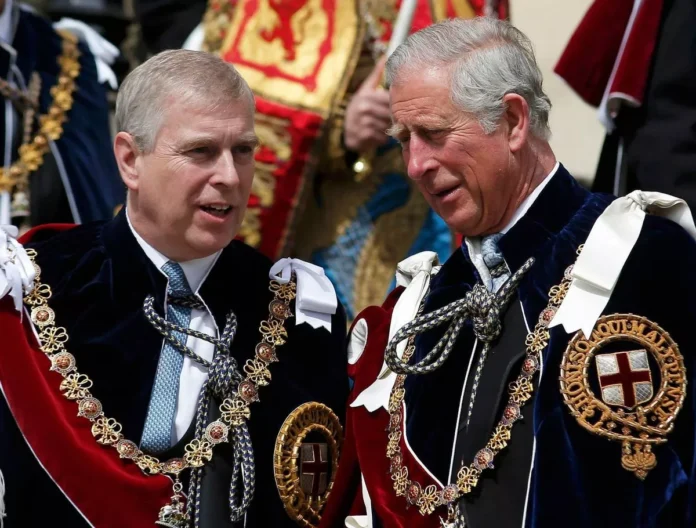
LONDON (BN24) — Prince Andrew will no longer be known as a prince and is to leave Royal Lodge, Buckingham Palace confirmed in a bombshell statement released tonight.
The palace said he will now be known as Andrew Mountbatten Windsor with immediate effect. The announcement comes as the palace said the “censures are deemed necessary” amid the ongoing scandal over Jeffrey Epstein, whom Andrew lied about cutting ties with.
“His Majesty has today initiated a formal process to remove the Style, Titles and Honours of Prince Andrew,” the statement said. “Prince Andrew will now be known as Andrew Mountbatten Windsor. His lease on Royal Lodge has, to date, provided him with legal protection to continue in residence. Formal notice has now been served to surrender the lease and he will move to alternative private accommodation.”
“These censures are deemed necessary, notwithstanding the fact that he continues to deny the allegations against him,” the statement continued. “Their Majesties wish to make clear that their thoughts and utmost sympathies have been, and will remain with, the victims and survivors of any and all forms of abuse.”
In the wake of the announcement, a number of cars were seen going through the gate to Windsor’s Great Park on Bishopsgate Road, near to Royal Lodge.
It is understood King Charles III is in the process of sending royal warrants to the Lord Chancellor to remove his brother’s titles and honours. Andrew is said to have not objected.
Although the former duke has been stripped of all his remaining titles, those of his daughters, Princess Beatrice, thirty-seven, and Princess Eugenie, thirty-five, will remain. Amid the controversy it was previously understood that His Majesty Charles was very keen to “protect” his nieces who remain Her Royal Highnesses as granddaughters of Queen Elizabeth.
“He wouldn’t have wanted to sign off on anything that would impact them,” a source told the Daily Mail.
It is understood Prince William and the Royal Family fully support the King’s leadership on the recent move.
Andrew’s departure from the Royal Lodge, where he paid “peppercorn rent” over twenty years, comes amid an ongoing row over the residence since his dukedom title was stripped earlier this month. As of today, it is understood Andrew has been served notice to surrender the lease at the thirty-bedroom mansion and will move out of the residence as soon as practically possible.
The younger brother of the King will be moved to a property on the Sandringham estate but the specifics regarding the relocation are unknown. Andrew’s ex-wife, Sarah Ferguson, will make her own living arrangements after moving out of the royal grounds of Windsor Castle.
The move was entirely down to the King and his advisers, without pressure from the government or other family members such as Prince William, sources told the Daily Mail. “The process has been under way for some while but there was a need to get it right in the face of some very big challenges,” an insider said.
Notice was not served on Prince Andrew to move. It was his lease, so it was up to the former Duke of York to serve notice himself, suggesting that he is not fighting the process.
The former duke has lived at the Grade II-listed mansion on the grounds of Windsor Castle for over two decades with Fergie, despite their divorce in 1996.
It comes as His Majesty had made it clear he would not hesitate to take “further action” if his younger brother continued to cling on to his dukedom and other honours after he lied about cutting ties with paedophile financier Epstein, the Daily Mail previously revealed.
Despite the tsunami of growing evidence mounting against him, the sixty-five-year-old was understood to still be “digging his heels in” with a “startling lack of contrition,” in a situation the King deemed “intolerable,” sources previously said.
Last week, the row over the Royal Lodge continued to grow amid damning revelations in a posthumous memoir from Andrew’s sex abuse accuser Virginia Giuffre, who took her own life this year, aged forty-one.
Nobody’s Girl: A Memoir of Surviving Abuse and Fighting for Justice was released this month, with the manuscript having been completed before she died. The explosive book revolves around her years spent as a sex slave to Epstein and his British madam Ghislaine Maxwell.
Extracts published by The Guardian show Ms Giuffre, who said she was trafficked by Epstein three times for sex with Andrew, called the ex-duke “entitled” and viewing sex as his “birthright.”
Within the four-hundred-page autobiography, she also alleged the ex-duke said “thank you” in a “clipped British accent” after their alleged first encounter when she was seventeen. She also recalled how Ghislaine Maxwell praised her following the encounter, saying, “You did well, the prince had fun.”
Andrew denied having sex with Ms Giuffre but forked out millions in an out of court settlement in February 2022.
The Royal Family had been prepared for the further scandal the book would likely cause, knowing it was to be published this month.
In the wake of the Giuffre scandal, Andrew is facing a private prosecution over allegations of sexual assault, corruption and misconduct in public office. Anti-monarchy campaign group Republic said it has instructed lawyers to investigate the prince and, if appropriate, press ahead with legal proceedings.
The Daily Mail understands the allegations it is focusing on relate to claims he sexually assaulted Giuffre, that he asked a royal protection officer to look into her background and impropriety when he served as an official UK trade envoy.
Republic said it is mounting its own bid to take him to court because the legal and political response to the claims has been “weak and inadequate” to date. It said it has made a “powerful, principled argument for justice to be done for the victims of sexual abuse, and for those who corrupt public office to be held accountable.”
“If not us, then who?” asked Graham Smith, CEO of the anti-monarchy group. “It’s a devastating indictment on the UK’s criminal justice system, police and politicians – not to mention the king and heir – that we must resort to a private prosecution.”
A private prosecution brought by Republic would not involve a statutory prosecutor such as Crown Prosecution Service, which brings cases on behalf of the Crown. They are commonly brought by organisations such as the RSPCA but can be brought by private individuals.
Earlier this evening Ms Giuffre’s family spoke out after the former duke was stripped of his remaining titles. Her brother Skye and sister-in-law Amanda said: “Today, an ordinary American girl from an ordinary American family, brought down a British prince with her truth and extraordinary courage. Virginia Roberts Giuffre, our sister, a child when she was sexually assaulted by Andrew, never stopped fighting for accountability for what had happened to her and to countless other survivors like her. Today, she declares victory.”
It is understood earlier this month the Metropolitan Police was “actively” looking into the claims Andrew had asked his personal protection officer to investigate Ms Giuffre, and that he was interviewed by detectives at home last week.
A bombshell email published by the Mail on Sunday earlier this month revealed how Andrew asked his taxpayer-funded protection officer to dig into her past two months after the infamous photo of him with Giuffre and Maxwell came to light.
Scandalous correspondence from Andrew to Epstein emerged, with the former duke telling the paedophile “we are in this together” a day after the infamous picture of the royal with his alleged then-teenage sex victim Ms Giuffre was released.
The correspondence was sent to Epstein twelve weeks after Andrew had supposedly ceased all contact with the convicted sex offender. The leaked email provides definitive proof the Prince lied in his car-crash interview with BBC’s Newsnight when he claimed he “never had any contact” with the disgraced financier after the pair were famously pictured walking together in New York’s Central Park in December 2010.
Democratic Congressman Suhas Subramanyam, who has previously called for Prince Andrew to testify before a US Congressional committee about his links to Jeffrey Epstein and Ghislaine Maxwell, has again urged Andrew to give evidence.
Sarah Ferguson, Andrew’s ex-wife, will now be known as plain Sarah Ferguson. Following revelation of emails to Epstein, Sarah was dropped by seven charities after “humbly apologising” to Epstein after disavowing him amid his conviction for child sexual abuse offences.
After Andrew and his ex-wife agreed to relinquish their titles, Buckingham Palace released a statement on the Prince’s behalf. It marked the first time it had spoken for him since his car crash Newsnight interview in 2019.
The statement read: “In discussion with The King, and my immediate and wider family, we have concluded the continued accusations about me distract from the work of His Majesty and the Royal Family. I have decided, as I always have, to put my duty to my family and country first. I stand by my decision five years ago to stand back from public life. With His Majesty’s agreement, we feel I must now go a step further. I will therefore no longer use my title or the honours which have been conferred upon me. As I have said previously, I vigorously deny the accusations against me.”
Politicians from across the aisle supported King Charles’ decision. Liberal Democrat leader Sir Ed Davey said His Majesty is “absolutely right” to strip Andrew of titles, while Tory leader Kemi Badenoch remarked how the decision must have been “very difficult” for the King.
“It’s clear that Andrew’s position had become totally untenable, having disgraced his office and embarrassed the country,” Sir Davey said. “This is an important step towards rebuilding trust in our institutions and drawing a line under this whole sorry saga.”
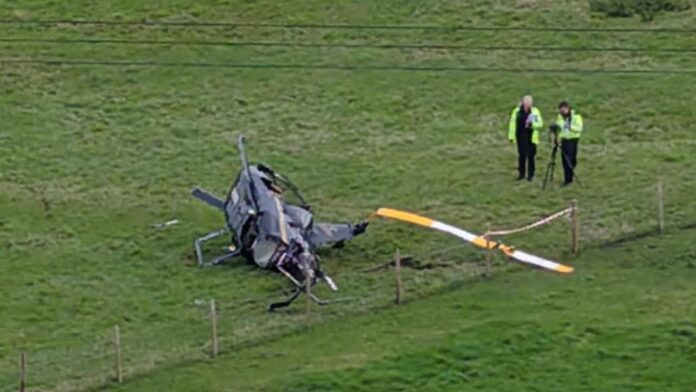
DONCASTER, England (BN24) — A 70-year-old man has died after a private helicopter crashed in a field near Doncaster on Thursday morning, authorities said. Three others, including a 10-year-old boy, suffered minor injuries in what investigators have described as a “tragic incident.”
South Yorkshire Police said emergency crews were called to the scene off Ings Lane in Bentley shortly after 10 a.m. The aircraft, a Robinson R44 Raven II, had taken off minutes earlier from Gamston Airport near Retford before coming down in a nearby field.
The victim, who sustained serious injuries, was pronounced dead at the scene despite efforts from emergency responders. His family has been informed and is being supported by police.
The helicopter’s pilot, a 41-year-old man, and two passengers — a 58-year-old woman and a 10-year-old boy — were treated for minor injuries. Police said all three are expected to recover.
Detective Chief Inspector Gary Magnay, Silver Commander for the operation, expressed condolences to the victim’s family. “Our thoughts are with the family and loved ones of the man who sadly died in this tragic incident,” he said. “We and our emergency services colleagues remain at the scene and have launched a full joint investigation alongside the Air Accidents Investigation Branch.”
Witnesses said the helicopter narrowly missed nearby homes before crashing. One resident told Yorkshire Live that she initially thought a train had derailed due to the large number of emergency vehicles rushing to the scene. “It’s just missed our house,” she said. “At first we all thought it was a train crash because of all the sirens.”
Photographs from the crash site showed the helicopter on its side with debris scattered across a plowed field. A large police cordon was established around the area, and authorities urged residents to avoid Ings Lane and use alternative routes while investigations continue.
A spokesperson for the Air Accidents Investigation Branch (AAIB) confirmed that a team had been deployed. “The AAIB has been made aware of an accident near Doncaster and has sent investigators to commence an inquiry,” the spokesperson said.
Retford Gamston Airport confirmed that the aircraft was based at the facility and operated by an onsite tenant. “We can confirm an aircraft based here operated by an onsite tenant has been involved in an incident. We have no further information at this time,” the airport said in a statement.
Local MP Ed Miliband, who represents Doncaster North, expressed his condolences to the victim’s loved ones. “This is devastating news, and my thoughts are with the family and friends of the victim of this terrible incident,” Miliband said. “The whole of Doncaster will be united in keeping them in their thoughts today.”
Authorities continue to investigate the cause of the crash, with police appealing to anyone who may have witnessed the incident or captured footage of the helicopter prior to the crash to come forward.
President Donald Trump has slashed the U.S. refugee admissions ceiling to a record low of 7,500 for the 2026 fiscal year, marking the most restrictive policy in the nation’s modern history and signaling a dramatic pivot toward selective refugee intake focused primarily on white South Africans.
The new cap, published Thursday in the Federal Register, represents a sweeping reduction from the 125,000-refugee ceiling set under President Joe Biden and underscores Trump’s broader effort to overhaul America’s refugee and asylum policies. The White House document stated that the limited admissions were “justified by humanitarian concerns or otherwise in the national interest,” but offered no further explanation.
The Trump administration’s plan, confirmed by multiple government officials, centers on admitting predominantly white South Africans from the country’s Afrikaner minority. Trump has repeatedly claimed that Afrikaners face racial persecution in South Africa, an allegation strongly denied by Pretoria.
The 7,500-person cap marks a stunning reversal from previous decades, when the U.S. routinely resettled tens of thousands fleeing war and oppression across the globe. When Trump took office, he paused all refugee admissions, declaring they could resume only if proven to be in America’s best interest. The current determination builds upon that stance, suggesting the administration will also consider admitting “other victims of illegal or unjust discrimination in their respective homelands.”
Refugee advocates reacted with outrage. “By privileging Afrikaners while continuing to block thousands of refugees already vetted and approved, the administration is once again politicizing a humanitarian program,” said Sharif Aly, president of the International Refugee Assistance Project (IRAP). Krish O’Mara Vignarajah, president of Global Refuge, said the decision “undermines the program’s purpose as well as its credibility.”
Human Rights First condemned the cut as a “new low point” for U.S. foreign policy. “This decision will further destabilize front-line states that host most of the world’s refugees, undermining U.S. national security in tandem,” said Uzra Zeya, the group’s president.
The administration’s move comes amid a global effort by Trump officials to reshape post-World War II asylum frameworks. During last month’s United Nations General Assembly, top U.S. officials called on world governments to join a campaign to “redefine” international refugee obligations—aiming to curb asylum protections worldwide.
According to Reuters, internal U.S. documents from April suggested the administration could also prioritize European refugees who face discrimination for holding nationalist or anti-immigration views. Those proposals were not included in the public determination but align with Trump’s stated desire to refocus refugee admissions toward “Western values.”
Critics say the reduction will cripple humanitarian programs that historically reflected American leadership in global resettlement. “Refugees strengthen the workforce and contribute to the U.S. economy,” said Gideon Maltz, CEO of the Tent Partnership for Refugees. “Dismantling this program today is not putting America first.”
In a related shift, the White House said oversight of refugee support programs will move from the State Department to the Department of Health and Human Services—a reorganization likely to further centralize control under Trump’s domestic policy agenda.
The United States, once a global leader in refugee resettlement, admitted about 100,000 refugees under Biden in 2024. Trump’s ceiling of 7,500 marks a historic low, redefining America’s role as a destination for the world’s displaced.
SEOUL, South Korea (BN24) — President Donald Trump has directed the U.S. military to resume nuclear weapons testing for the first time in more than three decades, a move that marks a sharp shift in long-standing American defense policy and raises global concerns about a new nuclear arms race.
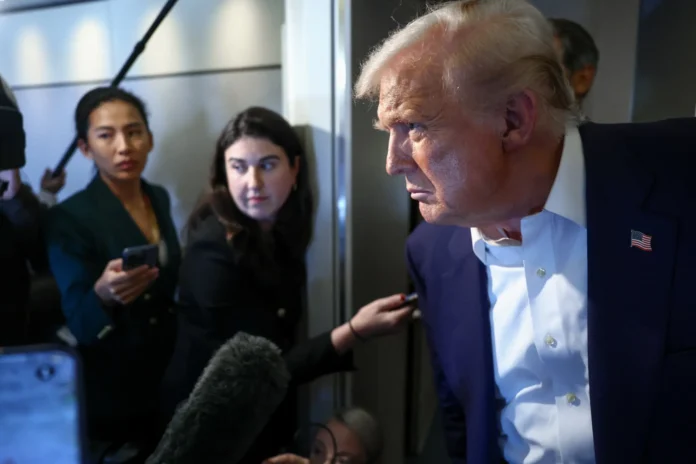
In a social media post late Wednesday, just before his meeting with Chinese President Xi Jinping in South Korea, Trump announced that he had instructed the Department of War to begin testing nuclear weapons “on an equal basis” with Russia and China.
“Because of other countries’ testing programs, I have instructed the Department of War to start testing our Nuclear Weapons on an equal basis,” Trump wrote. He added that the process would “begin immediately.”
The United States, which has not conducted a nuclear weapons test since 1992, possesses the world’s largest nuclear arsenal, followed by Russia and then China, which Trump called a “distant third.” The announcement came only days after Trump condemned Russia for testing a nuclear-powered missile reportedly capable of unlimited range.
Trump acknowledged the “tremendous destructive power” of nuclear arms but said he had “no choice” but to modernize the U.S. nuclear arsenal during his first term to ensure military parity with global rivals. “China’s nuclear program will be even within five years,” Trump warned, suggesting an urgent need to strengthen deterrence.
The timing of the announcement—issued as Trump was en route aboard Marine One to meet Xi at Gimhae International Airport—underscored the geopolitical stakes. After their meeting, Trump told reporters aboard Air Force One that the locations of upcoming U.S. nuclear tests had not yet been determined but insisted such measures were “appropriate” to match other nations’ testing efforts.
The United States last tested a nuclear bomb on September 23, 1992, at an underground site in Nevada. That experiment, known as “Divider,” marked the country’s 1,054th nuclear weapons test. Former President George H.W. Bush issued a moratorium on testing later that year as the Cold War came to a close.
Russia announced over the weekend that it had successfully tested two new delivery systems capable of carrying nuclear warheads, including a missile designed to evade U.S. defenses and an underwater drone known as Poseidon. While neither test involved an actual nuclear detonation, the developments heightened global tensions.
According to the Center for Strategic and International Studies, China has nearly doubled its nuclear arsenal over the past five years and could surpass 1,000 warheads by 2030. The U.S. currently maintains an estimated 5,225 warheads, while Russia’s stockpile sits at roughly 5,580, according to the Arms Control Association.
Trump’s directive also comes roughly 100 days before the New Strategic Arms Reduction Treaty (New START) between the U.S. and Russia is set to expire in February 2026. The treaty, the last remaining nuclear arms control agreement between the two nations, caps each side at 1,550 deployed warheads capable of crossing continents.
The Nevada Test Site, located about 65 miles north of Las Vegas, remains operational and could be reactivated if authorized, according to the National Museum of Nuclear Science and History.
The U.S. first entered the nuclear age with the Trinity test in July 1945 in Alamogordo, New Mexico, before dropping atomic bombs on Hiroshima and Nagasaki later that year—actions that ended World War II but ushered in the nuclear era.
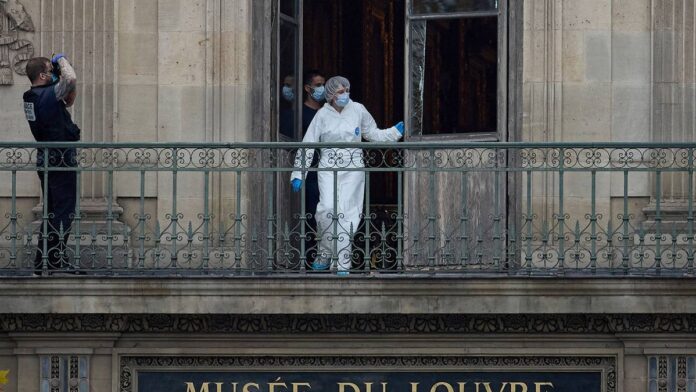
French authorities have arrested five additional suspects in connection with the daring theft of French crown jewels from the Louvre Museum, intensifying one of France’s most sensational art heist investigations in recent history. Despite the arrests, the priceless treasures remain missing.
Paris Prosecutor Laure Beccuau announced Thursday that the suspects were detained late Wednesday night in Paris and its surrounding region. Their identities have not been released. One of the detainees is believed to be part of the four-person crew that stormed the Louvre’s Apollo Gallery in broad daylight on Oct. 19, escaping with jewels valued at 88 million euros ($102 million).
The heist, which lasted less than eight minutes, stunned France and the global art world. Thieves reportedly forced open a window, cut through glass display cases with power tools, and fled with eight ornate pieces from the historic French crown jewel collection before security could intervene.
Two other members of the robbery team were previously arrested on Sunday and formally charged Wednesday with criminal conspiracy and theft committed by an organized gang. Prosecutor Beccuau said both suspects partially admitted their roles in the crime during questioning.
“Searches last night and overnight did not allow us to find the goods,” Beccuau told RTL radio Thursday morning, confirming that investigators are still working to trace the missing jewels.
The Louvre Museum, home to some of the world’s most celebrated masterpieces, has not publicly commented on the arrests. Security measures at the institution have reportedly been reviewed and reinforced since the incident.
The heist has revived memories of previous high-profile European art thefts and renewed debate over the vulnerability of even the most secure museums.
Hurricane Melissa barreled through the Caribbean on Wednesday, leaving behind a trail of death and devastation that stretched from Cuba to Haiti. Authorities confirmed that at least 25 people were killed in Haiti alone, while the total regional death toll approached 30 as rescue operations continued in Jamaica and Cuba.
Melissa made landfall in Jamaica on Tuesday as the strongest hurricane ever to strike the island, packing sustained winds of 185 mph (298 kph). The Category 5 storm flattened communities, shredded power lines, and left more than three-quarters of the country without electricity.
By Wednesday evening, Melissa had weakened to a Category 1 storm as it moved northeast through the Bahamas, where authorities completed the evacuation of nearly 1,500 residents from low-lying islands.
Haiti Flooded and Devastated
Though Melissa’s core did not directly hit Haiti, the country endured days of relentless rain and flooding that caused widespread destruction. Officials said at least 25 people died in the coastal town of Petit-Goave, where a river overflowed its banks, sweeping away homes and families. Among the dead were at least 10 children, and another 12 people remained missing.
Haiti’s disaster management agency reported that over 1,000 homes were submerged, leaving thousands displaced. With ongoing gang violence and more than 1.3 million already homeless, the storm compounded what was already one of the world’s worst humanitarian crises.
“The flooding made it impossible to sleep or sit,” said Fortune Vital, a displaced resident in Les Cayes. “If the hurricane comes on top of all the problems we already have, we’ll simply die.”
Jamaica’s Worst Hurricane in History
In Jamaica, the destruction was catastrophic. U.S. forecaster AccuWeather estimated that Melissa caused $22 billion in damages and economic losses — a blow that could take a decade to recover from.
Floodwaters swept through St. Elizabeth, an agricultural hub, where authorities reported at least four deaths. In Kingston, officials said 77% of the island remained without power as of Wednesday.
Prime Minister Andrew Holness visited the storm-ravaged Black River Hospital, where staff described working by flashlight to treat patients as windows shattered around them.
“It was the most terrifying experience of my life,” one hospital worker said. “It was as if missiles were blowing through the glass.”
The government opened more than 25,000 emergency shelters and urged residents to stay inside until conditions improved.
Cuba’s Eastern Coast Cut Off
Melissa hit Cuba’s southeastern coast overnight as a Category 3 storm with winds of 120 mph (193 kph), striking near Guama, about 25 miles west of Santiago de Cuba. At least 241 rural communities were left isolated, and communications were severed across much of Santiago province, affecting more than 140,000 people.
Cuban authorities evacuated over 735,000 residents before the storm’s arrival. While no deaths were immediately reported, the government said damage to crops, power infrastructure, and housing was extensive.
President Miguel Díaz-Canel urged citizens to remain alert, warning that heavy rains and landslides could still cause additional harm. “A major hurricane landfall in the dark is incredibly dangerous,” said AccuWeather’s lead hurricane expert, Alex DaSilva.
Scientists Warn of Climate-Driven Intensification
Meteorologists said Hurricane Melissa ranks as the third-most intense hurricane ever recorded in the Caribbean, behind Hurricane Wilma in 2005 and Hurricane Gilbert in 1988. Scientists say such storms are becoming stronger and more frequent due to warming ocean temperatures driven by greenhouse gas emissions.
The Caribbean Community Climate Change Centre said Melissa’s “rapid intensification” underscored the need for greater international funding through the U.N.’s Loss and Damage Fund — a mechanism designed to help developing nations recover from extreme weather disasters.
“The devastation of Melissa is a clear warning that the Caribbean is on the front lines of the climate crisis,” the center said.
Global Response and Aid
Relief efforts are now underway across the region. Several nations have pledged emergency funds, food aid, and rescue teams. In Jamaica’s Montego Bay, residents described being trapped by floodwaters before rescuers broke into homes to save them.
“All the trees that my dad planted — all of them are gone,” one survivor said.
As the Caribbean begins to assess the full extent of Melissa’s damage, the storm stands as a grim reminder of the growing human cost of climate-fueled disasters.
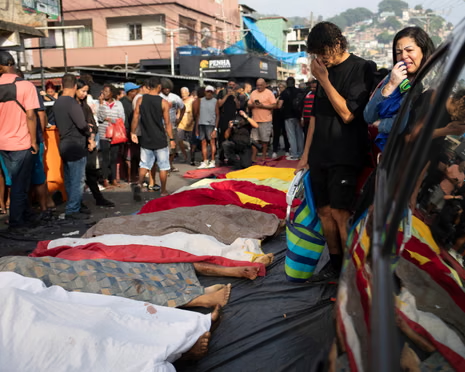
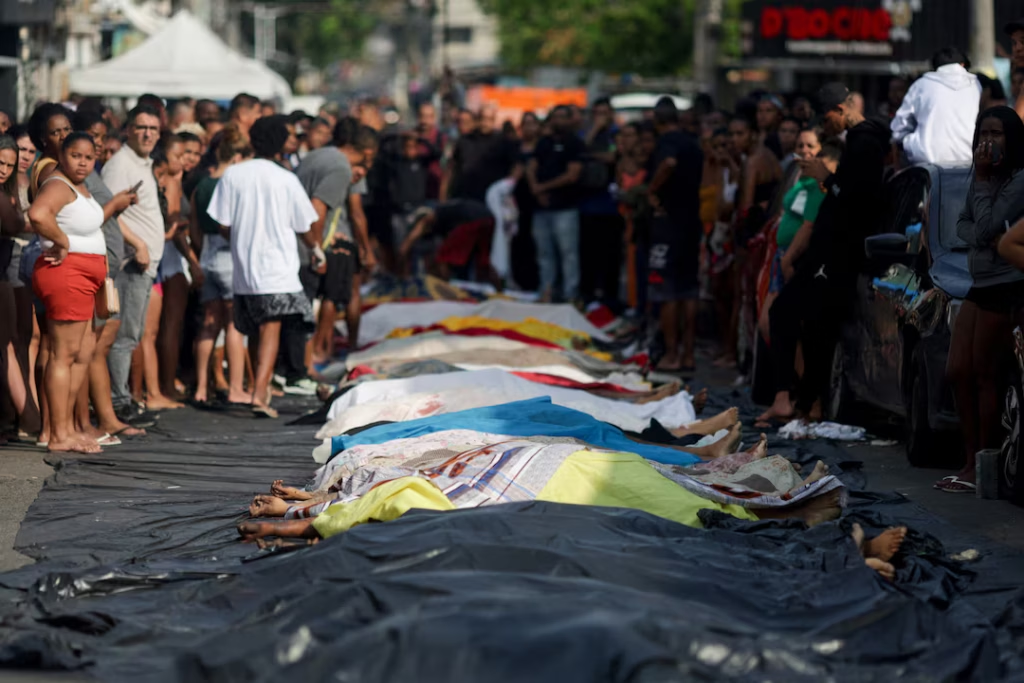
RIO DE JANEIRO (BN24) — Residents of Rio de Janeiro’s Penha neighborhood lined a main street with dozens of corpses after Brazil’s deadliest police operation left at least 119 people dead, authorities confirmed Wednesday, triggering international condemnation and grief across the city.
The large-scale raid, which police said targeted the powerful Comando Vermelho drug gang, unfolded over several days and culminated in scenes of horror as families searched for loved ones among the dead. Witnesses described hearing gunfire echoing from the forested hillside where special forces ambushed fleeing suspects.
State security chief Victor Santos told reporters that the “elevated lethality of the operation was expected but not desired,” insisting the mission had been planned for over two months. Public defenders said the actual death toll may reach 132, making it Brazil’s most violent police action on record.
Officials said the raid was unrelated to upcoming global climate events in Rio, including meetings tied to the United Nations COP30 and the C40 Summit, which will host leaders such as Prince William.
Overnight, residents dragged dozens of bodies from the nearby forest, lining them across the asphalt under makeshift coverings of sheets and plastic bags. “I just want to take my son out of here and bury him,” said Taua Brito, a grieving mother who stood beside the body of her teenage son, surrounded by mourners and stunned onlookers.
By afternoon, hundreds joined a motorcycle caravan from Penha to the governor’s palace, waving Brazilian flags smeared with red palm prints — a haunting symbol of protest against state violence.
The death toll has already eclipsed the 2021 Jacarezinho raid, in which 28 people were killed, and the infamous 1992 Carandiru prison massacre in São Paulo, when police shot dead 111 inmates during a riot.
The United Nations Human Rights Office urged Brazil to conduct an immediate and impartial investigation, calling the operation part of a “disturbing pattern of extremely lethal police raids in marginalized communities.”
Relatives and human rights lawyers said many of the victims bore signs of torture and execution-style killings. “Several families reported bound limbs, knife wounds, and gunshots to the face and neck,” said attorney Guilherme Pimentel, who is assisting victims’ families at the Rio police morgue.
Rio Governor Claudio Castro defended the operation, claiming all those killed were “criminals firing guns from the forest.” He rejected allegations of abuse, calling the dead “narcoterrorists.”
“I don’t think anyone would be walking in the forest on the day of the conflict,” Castro said, insisting the only true victims were the four police officers killed.
Authorities said 113 suspects were arrested and 118 firearms seized, describing the operation as the largest in Rio’s history.
President Luiz Inacio Lula da Silva was reportedly caught off guard by the scale of the violence. Justice Minister Ricardo Lewandowski said the federal government had not been informed beforehand and would meet with state officials to discuss possible federal intervention.
Lula returned to Brasilia late Tuesday from a trip to Malaysia and convened an emergency meeting with Vice President Geraldo Alckmin and senior cabinet members to address the crisis, his office confirmed.
As Rio de Janeiro prepares to host international leaders for climate events next week, the massacre has cast a long shadow over Brazil’s security forces — raising new fears about impunity and the escalating militarization of policing in the country’s poorest neighborhoods.