BRUSSELS (BN24)—The European Commission said on Friday that Facebook, Instagram, and TikTok are in breach of European Union rules designed to ensure transparency on digital platforms, potentially exposing the companies to fines of up to 6% of their worldwide annual turnover.
Preliminary findings from the EU executive show that Meta, the parent company of Facebook, Instagram, and TikTok, has failed to provide researchers with sufficient access to platform data as required under the Digital Services Act (DSA). Such data sets are intended to allow independent scientists to study the impacts of harmful content, including material that glorifies violence against children.
The commission also cited shortcomings in Meta’s user protections, stating that the company does not offer straightforward mechanisms for reporting illegal content or challenging content moderation decisions. These gaps, the EU said, undermine public trust and accountability, key pillars of democratic governance.
“Our democracies depend on trust. That means platforms must empower users, respect their rights, and open their systems to scrutiny,” said European Commission Vice-President Henna Virkkunen. She added that the preliminary assessments are part of ongoing efforts to hold digital platforms accountable to society and their users.
The investigation into the three social media platforms, launched in 2024, also examines whether Meta violates rules protecting minors, particularly regarding exposure to addictive algorithms. EU officials in Brussels have expressed frustration at Meta’s perceived lack of cooperation during the probe.
Meta now has the opportunity to respond to the allegations or adjust its platforms to avoid potential penalties. Should the commission determine that the company has violated EU law, fines could reach six percent of its global annual revenue.
The findings could intensify ongoing tensions between the EU and the United States. Some observers note that the enforcement of EU digital rules may strain relations with Washington, where former President Donald Trump has repeatedly criticized EU legislation as anti-competitive. Meanwhile, Facebook founder and CEO Mark Zuckerberg has reportedly aligned more closely with Trump’s political network, adding a further layer of geopolitical sensitivity to the EU investigation.
The European Commission’s announcement underscores increasing scrutiny of social media giants, highlighting the EU’s commitment to transparency, user safety, and responsible platform governance. Analysts say the preliminary report could serve as leverage in negotiations with Meta and other digital platforms as the EU seeks stronger enforcement of its digital rulebook.
LONDON (BN24)— British rapper and Netflix star Ghetts, whose real name is Justin Clarke-Samuel, has been charged in connection with a fatal hit-and-run in Ilford, northeast London, authorities confirmed. The 41-year-old allegedly struck a 20-year-old man on October 18 and failed to stop at the scene, police said.
The victim later died in hospital, prompting prosecutors to expect a formal change in the charge from causing serious injury by dangerous driving to causing death by dangerous driving at the next court hearing. Ghetts appeared at Stratford Magistrates’ Court on Monday and was remanded into custody. He is scheduled to appear at Barkingside Magistrates’ Court on October 27. Police have appealed for witnesses to come forward to assist with their investigation.
Ghetts, a prominent figure in British music and culture, has collaborated with artists including Skepta, Stormzy, and Ed Sheeran. He won the Best Male Act at the 2021 MOBO Awards and received the MOBO Pioneer Award in 2024 for his contributions to British black culture. His 2021 album, Conflict of Interest, reached number two on the UK album charts and has received extensive airplay on national radio stations including BBC Radio 1, Kiss 100, and BBC Radio 1Xtra.
The artist has also been recognized for his live performances, having appeared at Glastonbury in 2024, as well as previously in 2022 and 2008 on the BBC Introducing stage. In addition to his music career, Ghetts starred in the critically acclaimed Netflix series Supacell in 2024. Originally from Woodford Green in East London, he remains a widely influential figure in the UK entertainment scene.
Authorities have emphasized the seriousness of the incident and urged anyone who witnessed the crash or has information to contact the police. The investigation is ongoing, and charges are expected to be updated as the legal process progresses.
LONDON(BN24) — Britain could be on the brink of a “massive crime wave,” Conservative politicians warned Thursday, as the National Audit Office (NAO) highlighted the risks posed by Labour’s justice reforms. Shadow Justice Secretary Robert Jenrick said the government’s plan to reduce prison sentences and increase community-based punishments could overwhelm the probation system and endanger public safety.
The NAO report, published Thursday, concluded that the Probation Service is under severe strain and will struggle to manage rising numbers of offenders supervised outside of prison. Analysts warned that staffing shortfalls could exceed 3,000 next year, adding to long-standing performance issues in the £1.45 billion-a-year service.
“The Probation Service won’t be able to cope with the mass release of dangerous prisoners,” Jenrick said. “They are being asked to do an impossible task. The warning lights are flashing red: this Bill puts the British people in significant danger. The consequence of Labour’s Sentencing Bill will be a massive crime wave of more sexual assaults, rapes, and violent crime committed in our communities. It has to be avoided at all costs.”
Official crime statistics released earlier this week show a spike in offenses such as shoplifting and drug-related crimes during Labour’s first year in power. The NAO report warned that the Probation Service, which met only 26 percent of its own performance targets in 2024-25—down from 50 percent in 2021-22—faces growing pressure as more responsibilities are shifted from prisons to probation officers.
The report projected that even after a recruitment drive, probation will face a shortfall of 3,150 staff by 2026-27. Many of Labour’s reforms, part of the ongoing Sentencing Bill, are designed to reduce prison overcrowding and shorten court backlogs, but they will also result in tens of thousands fewer offenders being sent to jail each year and more being released early.
Auditors highlighted that changes to the supervision of offenders outside prison could increase the size and risk profile of the probation caseload. “Some practitioners we spoke to raised concerns about the potential risk of schemes leading to adverse outcomes for public safety or effective rehabilitation of offenders,” the report said.
Home Secretary Shabana Mahmood, who previously spearheaded Labour’s “soft justice” plan as justice secretary, argued that increased use of community punishments would create a “prison outside prison.” The reforms largely implement recommendations from an independent sentencing review by former Conservative Justice Secretary David Gauke, which projected the creation of nearly 9,800 jail spaces by 2028. The NAO cautioned that these reforms could further exacerbate pressures on probation.
The warning comes as the government faces mounting scrutiny over the ability of probation officers to manage high-risk offenders, with critics arguing that insufficient staffing and resources could lead to increased criminal activity and threats to public safety.
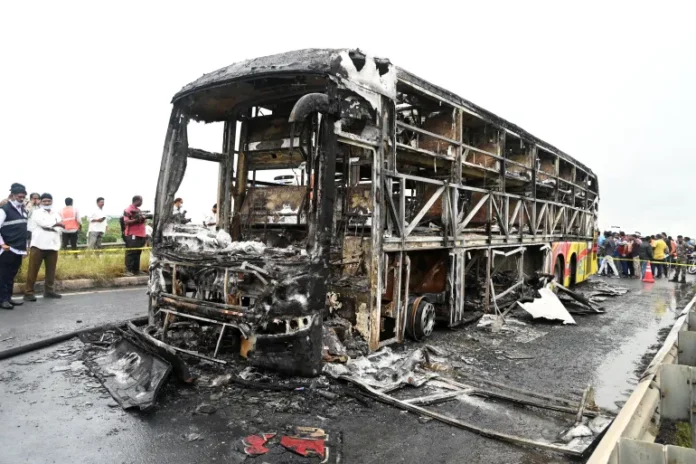
KURNOOL, India (BN24) — A devastating crash in southern India on Friday morning left at least 25 people dead when a passenger bus caught fire after colliding with a motorcycle on a highway in Andhra Pradesh. The fire, which quickly engulfed the vehicle, trapped dozens of passengers, many of whom were sleeping at the time of the crash.
The tragic accident occurred near Chinnatekuru village in Kurnool district, about 130 miles south of the state capital, Hyderabad. Police confirmed that the bus, which was traveling between Hyderabad in Telangana state and Bengaluru in Karnataka, was carrying 44 passengers at the time of the incident.
According to senior police officer Vikrant Patil, the crash occurred when the motorcycle collided with the rear of the bus, which was speeding along the highway. The motorcycle became lodged beneath the vehicle, dragging behind it for some distance. The friction caused by the dragging motorcycle ignited sparks, which then triggered a fire in the bus’s fuel tank.
“The fire started rapidly, and within minutes the entire bus was consumed by flames,” Patil said. “Many of the passengers were asleep at the time and did not have time to react when the fire broke out.”
Passengers who were awake managed to break windows and escape the burning vehicle. Authorities said 18 people, including a few with minor injuries, were able to flee the bus, but it is unclear how many others managed to get out. Tragically, many passengers were unable to escape the inferno in time.
“Some people were able to smash windows and jump out, while others were trapped and burned alive,” Patil said. “By the time we arrived, the fire had already spread through the bus, and the situation was beyond control.”
The bus driver attempted to extinguish the fire using a fire extinguisher, but the flames were too intense. Firefighters arrived at the scene, but by that point, the bus was hollowed out, and the damage was already catastrophic. Authorities said the unidentified motorcycle rider, whose body was found near the bus, also died in the incident.
A forensic team is investigating the cause of the crash, though officials have ruled out foul play. Preliminary findings suggest that the collision and the subsequent fire were the primary causes of the fatalities.
The tragic accident highlights ongoing safety concerns in India’s transportation system, especially concerning passenger buses. Earlier this month, at least 20 people were killed in a similar incident in Rajasthan, where a suspected short circuit triggered a fire on a bus.
The bus was part of a fleet operating between Hyderabad and Bengaluru, two major cities in southern India. The incident occurred on National Highway 44, a key route connecting southern and northern India. It is unclear how many passengers had boarded the bus at the time of the crash, as the official passenger list is still being verified.
The local government and Indian authorities have vowed to investigate the incident thoroughly. The regional police chief confirmed that investigators are reviewing both the bus’s mechanical condition and possible human error.
Prime Minister Narendra Modi expressed his condolences on social media, calling the loss “heartbreaking.” Andhra Pradesh Chief Minister N Chandrababu Naidu also extended his sympathies to the families of the victims. The state government has promised compensation for the families of those who died in the fire.
Local villagers who witnessed the scene have described the incident as chaotic, with several people desperately trying to help others escape from the burning bus.
“The smoke and flames were so thick. It was difficult to see anything,” said one resident, who declined to give their name. “We could hear people shouting, but the fire was too strong. It was too late to help.”
This incident underscores the persistent issue of road safety in India, where traffic accidents and fires on passenger vehicles are frequent. In recent years, authorities have pushed for better enforcement of safety standards, but incidents like this continue to highlight the vulnerability of both passengers and drivers.
The deadly fire has also sparked calls for greater safety regulations for inter-state buses, especially in light of the growing number of fatalities linked to fires and crashes on Indian highways.
A nine-year-old girl was found dead inside a home in the quiet Oxfordshire village of Islip after police were called to reports that three children had been assaulted on Tuesday, authorities said.
Thames Valley Police said officers discovered three children at the property. Two were rushed to the hospital for treatment and later discharged, while the third child — a nine-year-old girl — was pronounced dead at the scene by paramedics.
A 49-year-old woman from Oxfordshire was also taken to the hospital in what police described as a life-threatening condition. She remains under police supervision while receiving medical care.
Detective Inspector Amy Fox, the senior investigating officer, called the incident “an unimaginable tragedy” and confirmed that investigators are not currently seeking anyone else in connection with the case. “Our deepest sympathies are with the child’s family, friends, and all who knew and loved her,” Fox said. “We are doing everything we can to support those affected and to uncover the full circumstances behind this heartbreaking event.”
Detective Chief Inspector Sally Spencer said a post-mortem examination had been conducted but that the cause of death has not yet been determined. The child’s family is being supported by specially trained officers as the investigation continues.
A police cordon was set up around the home while forensic teams examined the scene. Officers have since concluded their work at the property but will maintain a visible presence in the area throughout the weekend to reassure residents and gather any additional information.
“This remains a highly sensitive and complex investigation,” Fox added. “We encourage anyone with concerns or information to speak with our officers.”
Residents of Islip expressed shock and sorrow at the tragedy, describing the area as a normally peaceful community.
“I’ve lived here for 15 years. Nothing like this has ever happened,” said neighbor Vicky Preston, 50. “It’s an absolute tragedy. My heart goes out to the family and friends who knew her.”
Another resident, who asked not to be named, said she was the one who called police after the children ran to her for help. “It’s just awful. They’re traumatized,” she said.
Others in the close-knit village echoed the devastation. “They were a busy young family, always working,” one neighbor said. “It’s terribly sad — I can’t imagine what on earth must have happened.”
Thames Valley Police said updates will be provided as soon as further details become available.
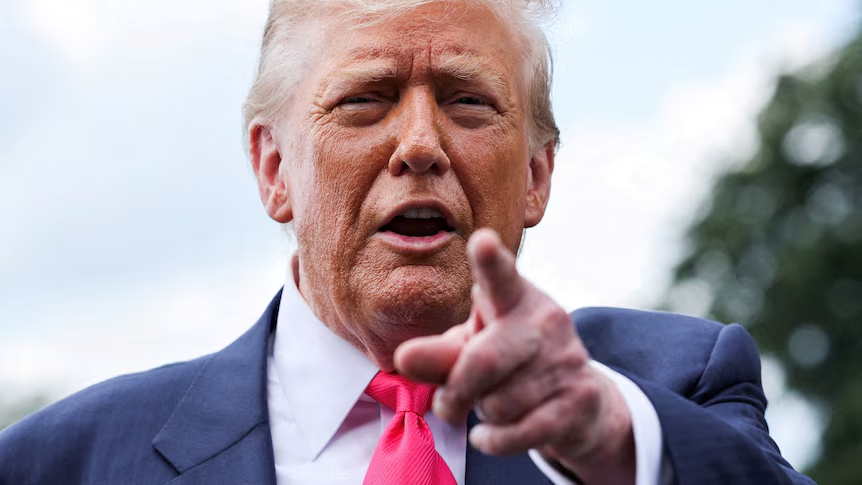
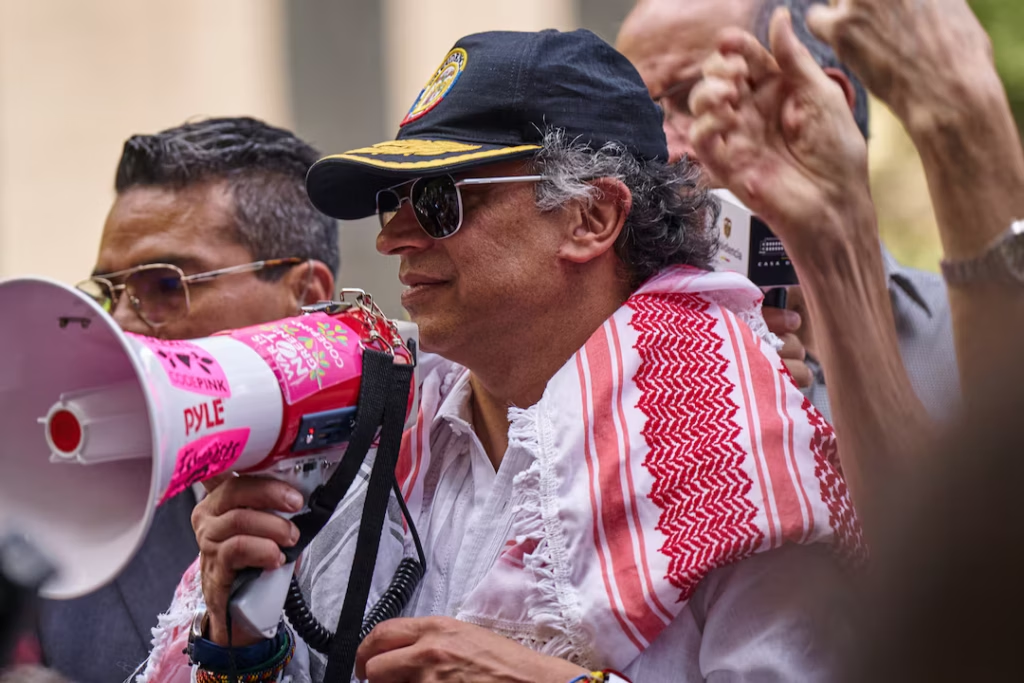
WASHINGTON (BN24) — The United States imposed sanctions Friday on Colombian President Gustavo Petro, intensifying a growing feud between President Donald Trump and one of Washington’s longtime Latin American allies. The move followed Trump’s public accusations that Petro has failed to curb cocaine production and allowed drug cartels to thrive.
The unprecedented sanctions target Petro personally, along with his wife, son, and Colombia’s Interior Minister Armando Benedetti, under U.S. authorities that allow punitive measures against those allegedly involved in international narcotics trafficking. The decision marks a major rupture in decades of close U.S.-Colombian cooperation on anti-drug efforts.
“Since President Gustavo Petro came to power, cocaine production in Colombia has exploded to the highest rate in decades, flooding the United States and poisoning Americans,” Treasury Secretary Scott Bessent said in a statement. “President Petro has allowed drug cartels to flourish and refused to stop this activity. Today, President Trump is taking strong action to protect our nation and make clear that we will not tolerate the trafficking of drugs into our nation.”
The sanctions, among the harshest ever imposed on a sitting Colombian president, place Petro on a short list of sanctioned world leaders that includes those of Russia, Venezuela, and North Korea.
Petro, a leftist and former guerrilla, fired back on X, calling the move “a complete paradox.” He wrote, “Fighting drug trafficking for decades, and effectively, has brought me this measure from the government of the very society we helped so much to stop their cocaine consumption. But not one step back, and never on our knees.”
The confrontation erupted after Petro accused the U.S. of “murder” for firing at a civilian boat off the Venezuelan coast that he said belonged to “a humble family,” not a rebel group. Trump responded by labeling Petro “an illegal drug leader,” accusing him of shielding traffickers and undermining regional stability.
Benedetti, who was also sanctioned, denounced the U.S. measures as politically motivated, saying he was targeted merely for defending Petro. “This proves the U.S. anti-drug fight is a sham,” he said on X.
“This is the harshest sanction ever against a sitting Colombian president and his family,” said Sergio Guzman of Colombia Risk Analysis. “If this is the targeted pressure the U.S. has been planning, then the impact will fall directly on Petro’s inner circle rather than the Colombian economy.”
The rift comes amid escalating tensions between Washington and several Latin American governments. U.S. forces have stepped up operations in the southern Caribbean, striking vessels in international waters that American officials claim are drug smuggling routes—though those claims have been disputed by regional leaders.
Trump and Petro have clashed repeatedly since Trump returned to office in January, with disagreements over anti-narcotics strategy and regional security widening the gap. Last weekend, Trump threatened to impose higher tariffs on Colombian imports and confirmed Wednesday that all U.S. funding to the country had been suspended.
In a separate statement Friday, the State Department said Secretary of State Marco Rubio would not certify Colombia’s counter-narcotics efforts, a move that could block additional U.S. assistance.
Petro’s government insists it has made measurable progress in combating drug production. Colombia’s foreign ministry said the country seized more cocaine under Petro than in any previous administration and claimed coca crop expansion has dropped from 43% in 2021 to just 3% in 2024. “President Petro reiterated the importance of the United States basing its assessments on accurate data regarding Colombia’s fight against drugs,” the ministry said in a statement.
Despite those assurances, the Trump administration maintains that Petro’s policies have emboldened traffickers. “We will no longer subsidize failure,” Trump said earlier this week. “Colombia must take real action or face real consequences.”
The sanctions underscore a dramatic realignment in U.S.-Colombia relations, shifting from decades of partnership in anti-narcotics operations to open confrontation between the two governments.
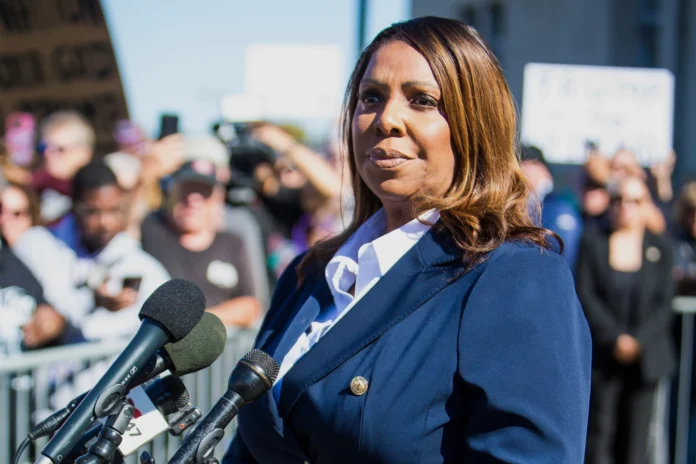
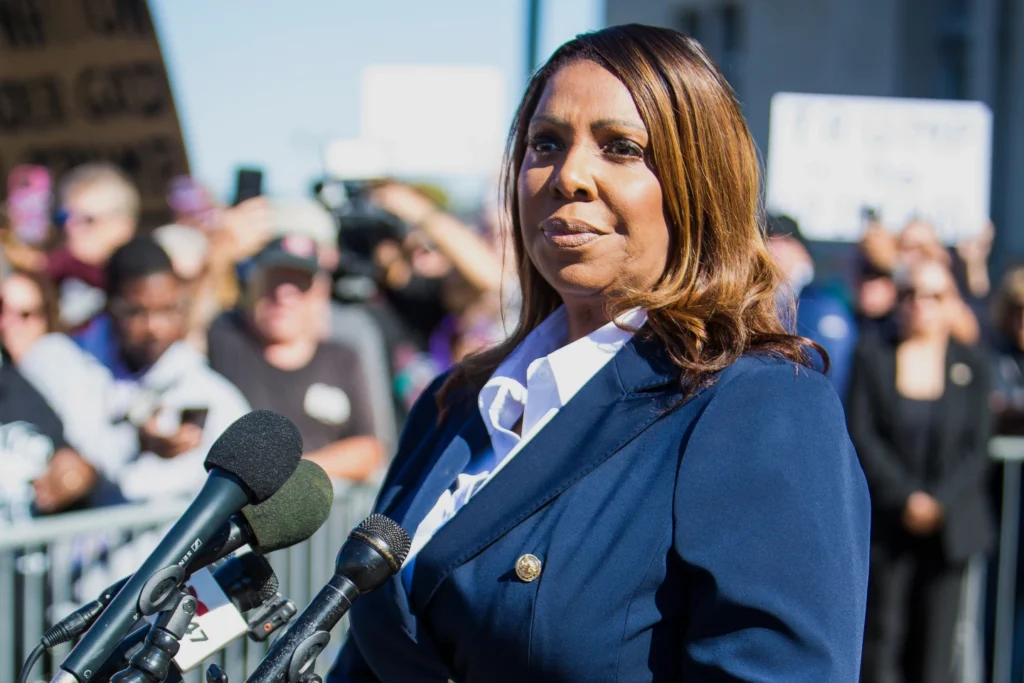
NewYork (BN24) – New York Attorney General Letitia James pleaded not guilty Friday to federal mortgage fraud charges, accusing President Donald Trump’s administration of using the justice system “as a tool of revenge” against political opponents.
James entered her plea in federal court in Norfolk, Virginia, setting the stage for a politically charged courtroom clash between the Republican president and one of his most prominent Democratic critics. The indictment accuses James of lying on mortgage documents to secure favorable loan terms when purchasing a modest home in Norfolk, where she has family ties.
“My faith is strong, and I have this belief in the justice system and the rule of law, and I have a belief in America,” James said after the hearing. Smiling as she exited the courthouse to chants of “We stand with Tish!” from supporters, she added, “There’s no fear today.”
James, who brought the landmark civil fraud case against Trump that led to a half-billion-dollar judgment against him before it was partially overturned on appeal, said her indictment is political payback. “This is about a justice system being used as a weapon against those who simply did their job and stood up for the rule of law,” she told reporters.
The indictment charges James with bank fraud and making false statements to a financial institution. Prosecutors allege that when purchasing her Norfolk home in 2020, she falsely claimed it would serve as a second residence under a “second home rider” clause, but instead rented it to tenants, enabling her to obtain better loan rates typically unavailable for investment properties.
James’ attorney, Abbe Lowell, said the defense would move to dismiss the case as a “vindictive prosecution” brought at the president’s direction. A trial date was set for Jan. 26.
Her indictment followed the resignation of Erik Siebert, the former U.S. attorney for the Eastern District of Virginia, who stepped down after Trump administration officials pressured him to pursue charges. Siebert was replaced by Lindsey Halligan, a former Trump lawyer and White House aide with no prior experience as a federal prosecutor. Halligan personally presented the case to a grand jury after being appointed by Attorney General Pam Bondi.
Trump had publicly urged Bondi to prosecute James and other political rivals, posting on his social media platform: “We can’t delay any longer, it’s killing our reputation and credibility. JUSTICE MUST BE SERVED, NOW!!!”
James is the third prominent Trump adversary to face federal charges this month, fueling criticism that the administration is weaponizing the Justice Department. Former FBI Director James Comey and ex–national security adviser John Bolton also pleaded not guilty to charges brought after Trump publicly called for their prosecution.
Defense lawyers for both James and Comey have challenged Halligan’s appointment, citing political interference. James’ legal team has also filed a motion to bar prosecutors from leaking information about the case after Halligan reportedly contacted a journalist through an encrypted messaging platform to discuss details of the prosecution.
The Justice Department is also investigating separate mortgage fraud allegations involving Democratic Sen. Adam Schiff and Federal Reserve Board member Lisa Cook, two other frequent Trump critics who deny wrongdoing.
James, who became New York’s first female attorney general in 2018, has been one of Trump’s most persistent legal adversaries. Her civil fraud lawsuit against Trump and his companies led to findings that he inflated the value of his real estate assets to deceive lenders and insurers. Although an appeals court later reduced the penalty, the case cemented James’ national profile — and made her a target of Trump’s ongoing attacks.
As the legal and political battlelines sharpen, James vowed to keep fighting. “I believe in the rule of law,” she said outside court. “And I will continue to do my job for the people of New York.”
WASHINGTON (BN24) — The U.S. military is sending the world’s largest aircraft carrier to the waters off South America in the latest escalation and buildup of military forces in the region, the Pentagon announced Friday.
Defense Secretary Pete Hegseth ordered the USS Gerald R. Ford and its strike group to deploy to U.S. Southern Command to “bolster U.S. capacity to detect, monitor, and disrupt illicit actors and activities that compromise the safety and prosperity of the United States,” Pentagon spokesman Sean Parnell said in a social media post.
The deployment will dramatically increase the number of service members and ships dedicated to the Trump administration’s campaign to counter narcotics traffickers in the region.
Parnell said on X that Hegseth “has directed the Gerald R. Ford Carrier Strike Group and embarked carrier air wing to the U.S. Southern Command” area of responsibility. Southern Command is responsible for the Caribbean Sea, Central and South America and the surrounding waters.
The “enhanced U.S. force presence” will “bolster U.S. capacity to detect, monitor, and disrupt illicit actors and activities that compromise the safety and prosperity of the United States homeland and our security in the Western Hemisphere,” Parnell said.
The USS Gerald R. Ford is the Navy’s newest and most advanced aircraft carrier, having been commissioned into service in 2017. At more than eleven hundred feet long with a displacement of one hundred thousand long tons, the carrier is the largest in the world. It is powered by two nuclear reactors and can reach a top speed of thirty-four point five miles per hour, according to the Navy.
The carrier group will join eight U.S. vessels that are already in the region, including three destroyers, one cruiser, a littoral combat ship, an amphibious assault ship and two transport ships.
The Ford is currently in the Mediterranean Sea, a defense official told CBS News, along with three destroyers.
Deploying an aircraft carrier represents a major escalation of military power in a region that has already seen an unusually large U.S. military buildup in the Caribbean Sea and the waters off Venezuela.
News of the decision to send the carrier group to Latin America comes after the U.S. launched another strike on a vessel allegedly operated by the Venezuelan gang Tren de Aragua that Hegseth said was trafficking drugs in the Caribbean Sea.
The secretary said on X that the strike killed all six men who were on board and took place in international waters. He said it was the first strike to take place at night. “The vessel was known by our intelligence to be involved in illicit narcotics smuggling, was transiting along a known narco-trafficking route, and carrying narcotics,” he wrote. Hegseth posted a video, marked unclassified, showing the vessel as it was hit.
This latest strike appears to be the tenth carried out by the Trump administration against alleged drug trafficking boats over the past several weeks, which have now led to more than forty deaths. The first several took place in the Caribbean Sea, but this week the administration’s campaign broadened into the Pacific Ocean.
The U.S. military has conducted its tenth strike on a suspected drug-running boat, Hegseth said Friday, blaming the Tren de Aragua gang for operating the vessel and leaving six people dead in the Caribbean Sea.
The pace of the strikes has quickened in recent days from one every few weeks when they first began to three this week, killing a total of at least forty-three people since September. Two of the most recent strikes were carried out in the eastern Pacific Ocean, expanding the area where the military has launched attacks and shifting to where much of the cocaine from the world’s largest producers is smuggled.
The aircraft carrier deployment represents the most significant military escalation in the region since the Trump administration began its aggressive counter-narcotics campaign. The addition of the Ford strike group will provide the U.S. military with enhanced surveillance, intelligence-gathering and strike capabilities across a vast maritime area.
The carrier strike group typically includes the aircraft carrier, guided-missile destroyers, guided-missile cruisers and an attack submarine, along with embarked aircraft squadrons. The Ford can carry more than seventy-five aircraft and has a crew of approximately four thousand five hundred sailors.
The deployment comes amid escalating tensions with Venezuela, where President Donald Trump has authorized CIA covert operations and disclosed plans to potentially oust President Nicolas Maduro. Trump said Venezuelan leader Maduro offered “everything” including the country’s natural resources to secure a deal with the United States.
The military buildup in Latin America has raised concerns among legal experts and Democratic lawmakers who question whether the strikes on suspected drug boats adhere to international laws of war. The Trump administration argues it is engaged in a war with narcoterrorist groups from Venezuela, making the strikes legitimate.
Admiral Alvin Holsey, who leads U.S. Southern Command, announced Thursday he would step down at the end of this year, two years ahead of schedule, in a surprise move amid the escalating Venezuela tensions. Sources indicated there had been tension between Holsey and Hegseth over operations in the Caribbean.
Less than a week ago, the Pentagon announced its counter-narcotics operations in the region would not be led by the Miami-based Southern Command but by II Marine Expeditionary Force, a unit capable of rapid overseas operations based at Camp Lejeune in North Carolina. That decision surprised U.S. military observers, since a combatant command like Southern Command would normally lead high-profile operations.
The expanded military presence in Latin American waters reflects the Trump administration’s determination to combat drug trafficking through aggressive military action. The deployment of an aircraft carrier provides capabilities far beyond traditional counter-narcotics operations, including air superiority, strike operations and command and control functions.
Critics have questioned the legal basis for strikes that have killed more than forty people, many of whom were never confirmed to be armed or engaged in hostile actions. The administration maintains the operations target narcoterrorist organizations that pose a direct threat to U.S. national security.
The Ford deployment will significantly expand U.S. military presence in waters where China and Russia have also increased their naval activities in recent years. The carrier provides a powerful symbol of American military might and commitment to the region.
ABUJA, Nigeria (BN24)— President Bola Tinubu has launched a sweeping reorganization of Nigeria’s military leadership, appointing new Service Chiefs in a strategic move to reinforce the nation’s response to rising insecurity. The appointments, which take effect immediately, mark one of the most significant military leadership changes since Tinubu assumed office.
General Olufemi Oluyede has been named the new Chief of Defence Staff, replacing General Christopher Musa, whose tenure was characterized by significant operational challenges in the fight against insurgency and banditry across the country. Other appointments include Major-General W. Shaibu as Chief of Army Staff, Air Vice Marshal S.K. Aneke as Chief of Air Staff, and Rear Admiral I. Abbas as Chief of Naval Staff. Major-General E.A.P. Undiendeye retains his position as Chief of Defence Intelligence, ensuring continuity in intelligence operations.
According to the Presidency, the shake-up reflects Tinubu’s commitment to strengthening Nigeria’s security architecture, enhancing coordination among the Army, Navy, and Air Force, and injecting fresh energy into the country’s defence operations. Sunday Dare, the President’s Special Adviser on Media and Public Communication, said the changes “signal a renewed focus on professionalism, operational efficiency, and strategic synergy within the Armed Forces.”
The appointments come amid persistent security challenges across Nigeria, including insurgency in the northeast, banditry in the northwest, and separatist agitations in the southeast. Analysts view Tinubu’s move as an effort to address longstanding operational gaps in military leadership and restore public confidence in the Armed Forces.
President Tinubu expressed gratitude to the outgoing Service Chiefs, particularly General Musa, describing them as patriots who “gave their best to protect the nation.” He urged the new commanders to embrace the responsibilities entrusted to them by prioritizing discipline, vigilance, and unity of purpose. “The expectations of Nigerians are high, and the new Service Chiefs must rise to meet them,” the President said.
Observers note that the appointments reflect a broader strategy by Tinubu’s administration to reform the defence sector and align military leadership with national security priorities. The new leadership team is expected to play a critical role in modernizing operational tactics, improving intelligence-sharing mechanisms, and enhancing coordination with other security agencies.
The decision has already sparked reactions from security experts, lawmakers, and civil society groups, who largely view the overhaul as a necessary step to tackle the country’s complex security landscape. With the new Service Chiefs in place, the Tinubu administration aims to signal resolve, strengthen accountability, and ensure that the Armed Forces remain a credible force in protecting Nigeria’s citizens and national interests.
La Mesa, Calif (BN24) — A 25-year-old police officer with the La Mesa Police Department was killed on Monday night after being struck by a vehicle while stopping to assist motorists involved in a traffic accident. Officer Lauren Craven, who had joined the department earlier this year, was providing aid on Interstate 8 when the fatal incident occurred just before 10:30 p.m.
According to the La Mesa Police Department, Officer Craven was driving eastbound on I-8 near Fairmount Avenue, returning to La Mesa from San Diego Central Jail, when she saw a collision involving two vehicles. She pulled over to offer assistance and exited her patrol car to help those involved in the crash. Tragically, while she was outside her vehicle, another car struck her.
California Highway Patrol (CHP) officers arrived on the scene shortly after and performed lifesaving efforts, but despite their attempts, Officer Craven was pronounced dead at the scene.
Officer Craven had only joined the La Mesa Police Department in February 2024 and was assigned to the Patrol Division. Described by her peers as tenacious, courageous, and compassionate, she quickly made an impact with her dedication to service.
“The La Mesa Police Department is deeply saddened by the loss of Officer Craven,” a department statement said. “Her selflessness in her final moments reflected the same unwavering commitment to public service that defined her career.”
The California Highway Patrol is handling the investigation, but no further details about the incident or the other individuals involved have been released at this time.
In a statement, the La Mesa Police Department extended its gratitude to the allied agencies supporting them during this difficult time. “We ask that the La Mesa community keep Officer Craven, her family, and the La Mesa Police Department in their thoughts and prayers,” the department added.
The loss of Officer Craven has deeply affected the La Mesa community, where she was known not only for her professional dedication but also for her warmth and compassion. Her peers remember her as a public servant who exemplified the true spirit of law enforcement.
Her legacy of service and sacrifice will be remembered as an enduring example of bravery and commitment to the safety of others. Officer Craven’s death is a tragic reminder of the risks law enforcement officers face in their daily duties.