LINCOLN UNIVERSITY, Pa. (BN24)— Law enforcement officials are investigating a Saturday night shooting at Lincoln University in southeastern Pennsylvania that left multiple people injured during the school’s homecoming weekend, according to the Chester County District Attorney’s Office.
The shooting unfolded on the campus of Lincoln University, a historically Black university about 50 miles southwest of Philadelphia, as students and alumni gathered for homecoming festivities. Authorities confirmed several people were hurt, though the exact number of victims and the severity of their injuries were not immediately released.
In a statement posted on social media, the Chester County District Attorney’s Office said it was “aware of a shooting with multiple victims that occurred at Lincoln University this evening” and that “law enforcement has responded to the scene and is actively investigating.”
Police units from multiple agencies swarmed the area shortly after reports of gunfire. Emergency medical personnel treated the wounded at the scene before transporting them to nearby hospitals. The university campus was temporarily placed on lockdown while officers secured the area and began gathering evidence.
As of late Saturday, no information had been released regarding a suspect or possible motive. Officials said they were interviewing witnesses and reviewing security footage from around the campus in an effort to piece together what led to the shooting.
Pennsylvania Gov. Josh Shapiro said he had been briefed on the developing situation and offered his support to Lincoln University officials and the surrounding community. “Our administration stands ready to assist law enforcement and the university as they respond to this tragic event,” Shapiro said in a statement.
The incident has cast a shadow over the university’s annual Homecoming Weekend, typically a celebration that draws current students, alumni, and their families to campus. University officials have not yet announced whether remaining homecoming events will proceed as scheduled.
Founded in 1854, Lincoln University is one of the nation’s oldest historically Black universities, known for its distinguished alumni and contributions to African American higher education.
Officials urged anyone with information about the shooting to contact local authorities as the investigation continues.
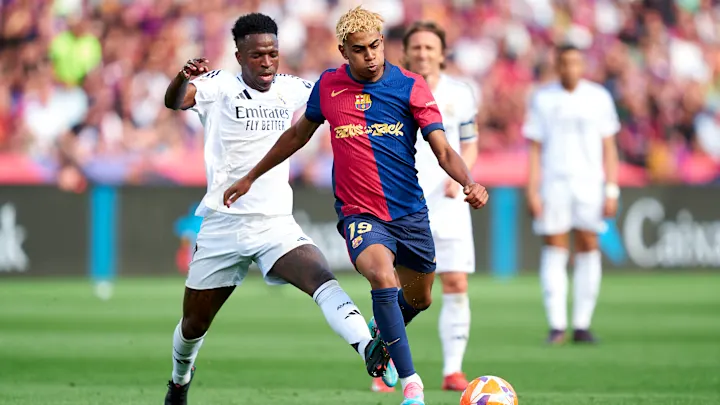
MADRID (BN24) — Real Madrid will be looking to move five points clear at the top of the La Liga table when they welcome Barcelona to Bernabeu on Sunday afternoon for the latest installment of El Clasico.
Los Blancos are currently two points clear of second-placed Blaugrana at the summit, but both have already lost in Spain’s top flight this term, and it is shaping up to be another fascinating battle between the bitter rivals.
Real Madrid have almost been note-perfect this season, posting eleven wins from their twelve matches in all competitions, with their only defeat coming away to Atletico Madrid at the end of September. Xabi Alonso’s side have won eight of their nine league matches, with twenty-four points seeing them top of the table, two points ahead of second-placed Barcelona, and they recorded a 1-0 victory over Getafe in La Liga last time out.
Los Blancos were also 1-0 winners in the Champions League on Wednesday night, with Jude Bellingham on the scoresheet against Juventus to keep the capital outfit perfect in the league phase of the tournament.
Real Madrid have not been at their best this season, already conceding nine times in their nine matches, but they are the second-highest goalscorers in Spain’s top flight this term on twenty goals, four fewer than Barcelona have managed.
Los Blancos have four more games before the November international break kicks in, welcoming Valencia to Bernabeu on November 1 before the small matter of a trip to Liverpool in the Champions League three days later. Alonso’s side will then head to Rayo Vallecano in the league on November 9.
Real Madrid will have revenge on their minds in this match, as Barcelona won all four matches between the two sides last season across three competitions, including a stunning 4-0 victory at Bernabeu last October.
Barcelona were in Champions League action during the week, recording a 6-1 victory over Olympiacos to return to winning ways in the competition, making it six points from their first three matches.
The Catalan outfit were stunned by Sevilla before the October international break, suffering a 4-1 defeat, but they managed to bounce back against Girona last weekend, securing a 2-1 win, before finding the back of the net on six occasions in the Champions League last time out.
Barcelona’s other dropped points in La Liga this season came away to Rayo Vallecano at the end of August, and injury problems have caused the champions issues early in the campaign. Their defense has also been far from watertight, and that will be a cause for concern ahead of this match.
Hansi Flick’s side will play four more matches before the campaign is again halted in November, taking on Elche and Celta Vigo either side of a Champions League game away to Club Brugge.
Barcelona will again be looking to Lamine Yamal for inspiration on Sunday, but he will need help from those around him, with the Catalan outfit set to be missing some key attackers at Bernabeu.
Real Madrid have welcomed Trent Alexander-Arnold, Dani Carvajal and Dean Huijsen back into their squad for Sunday’s match, but Antonio Rudiger is still out with a serious muscular injury. David Alaba will also again miss out due to a groin complaint, but Dani Ceballos has returned, while Los Blancos have not suffered any fresh issues in the build-up to the much-anticipated contest.
Due to the uncertainty at the back, Federico Valverde is likely to continue at right-back, with Raul Asencio in the middle. The latter was forced off late against Juventus but was only suffering from cramp.
Bellingham scored his first goal of the campaign against Juventus, and the England international will be looking to join an attack which is set to include Franco Mastantuono, Kylian Mbappe and Vinicius Junior.
As for Barcelona, Frenkie de Jong is back in training after an illness and will start, but Jules Kounde is a major doubt, having missed training on Thursday and Friday due to a knock.
Raphinha was also absent from training Friday, with the Brazilian losing his battle to recover from a hamstring injury in time, which is a major blow for Barcelona, as he was expected to be available.
Joan Garcia, Marc-Andre ter Stegen, Gavi, Robert Lewandowski and Dani Olmo are definitely out of the match, so Lamine Yamal, Fermin Lopez and Marcus Rashford could form the attacking three behind Ferran Torres.
Ronald Araujo is likely to feature in the middle of the defense alongside Pau Cubarsi if Kounde is ruled out, with Eric Garcia potentially being required at right-back.
Real Madrid’s possible starting lineup features Courtois in goal, Valverde, Militao, Asencio and Carreras in defense, Guler, Tchouameni and Bellingham in midfield, with Mastantuono, Mbappe and Vinicius in attack.
Barcelona’s possible starting lineup includes Szczesny in goal, Eric Garcia, Araujo, Cubarsi and Balde in defense, Pedri and De Jong in midfield, with Yamal, Fermin and Rashford supporting Ferran Torres in attack.
This is always a difficult match to predict, but Real Madrid will enter as favorites considering that it is at Bernabeu while also taking into account Barcelona’s injury problems. That said, the Catalan giants still have significant quality in their side.
Real Madrid’s La Liga form shows six matches with five wins and one loss. Barcelona’s La Liga form shows six matches with five wins and one loss. Both teams have been strong in all competitions with Real Madrid posting six matches with five wins and one loss, while Barcelona shows six matches with four wins and two losses.
The match represents a critical juncture in the La Liga title race. A Real Madrid victory would establish a five-point cushion at the top of the table, while a Barcelona win would level the teams on points and potentially shift momentum in the championship chase.
The historical context adds intrigue to Sunday’s encounter. Barcelona’s sweep of all four meetings last season, including the emphatic 4-0 triumph at Bernabeu, gives Real Madrid additional motivation to avenge those defeats.
Both managers face selection challenges. Alonso must manage defensive absences while maintaining attacking potency. Flick confronts a more severe injury crisis, particularly in attack where the unavailability of Lewandowski, Olmo and Raphinha forces creative solutions.
The tactical battle will likely center on how Barcelona’s makeshift attack handles Real Madrid’s reorganized defense. Yamal’s creativity becomes even more crucial given Barcelona’s offensive absences, while Real Madrid’s attacking trio of Mbappe, Vinicius and Bellingham presents formidable threats.
An entertaining draw appears the most likely outcome given both teams’ quality and current circumstances, though home advantage and Barcelona’s injury problems tilt odds slightly toward Real Madrid securing three points to extend their league lead.
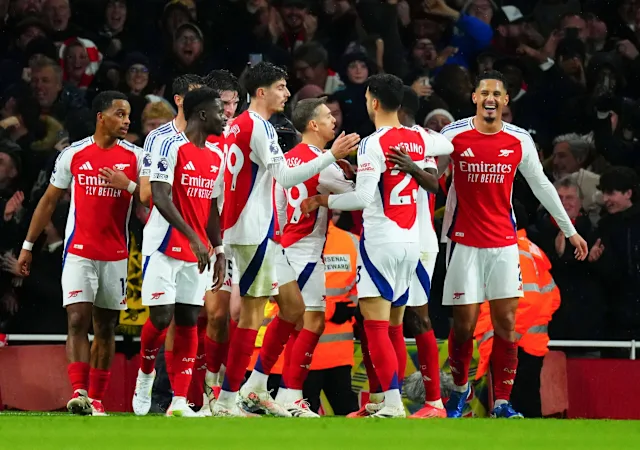
LONDON (BN24) — Premier League leaders Arsenal return to action on Sunday afternoon at the Emirates Stadium, aiming to extend their advantage at the top of the table as they host a resilient Crystal Palace side.
The Gunners and the Eagles last met in north London in a thrilling 2–2 draw, a result that came when Arsenal’s title hopes were beginning to falter. Despite that setback, Mikel Arteta’s men went on to win both of their other meetings with Palace last season, including a dominant 5–1 victory away from home.
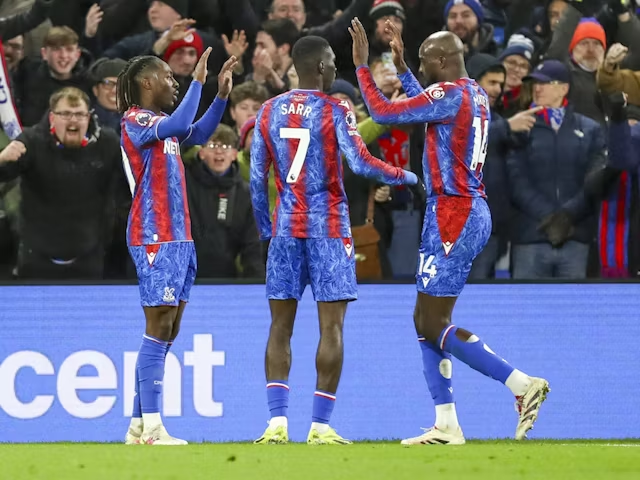
Crystal Palace, led by manager Oliver Glasner, have enjoyed an impressive spell since then — lifting both the FA Cup and the Community Shield while setting a new club record with an 18-match unbeaten run. However, their momentum has dipped in recent weeks. The Eagles enter Sunday’s clash winless in three games across all competitions, including a disappointing home defeat to AEK Larnaca in Thursday’s Europa Conference League fixture.
Arsenal, on the other hand, continue to display formidable form. The north London club notched their sixth straight victory on Tuesday night, overpowering Atlético Madrid 4–0 in the Champions League. The result maintained their perfect start to Europe’s top competition and reaffirmed their credentials as serious contenders on multiple fronts.
Arteta’s men boast the league’s tightest defense, but the manager faces a potential setback with the possible absence of star defender Gabriel, who has not trained since sustaining an injury in midweek. Should he be unavailable, Cristhian Mosquera is expected to partner William Saliba at the heart of defense, while recent signing Piero Hincapié may also be an option after making just one appearance since joining on deadline day.
Riccardo Calafiori and Leandro Trossard are likely to return to the starting lineup, while Eberechi Eze is expected to retain his place as he faces his former club. Arsenal will again be without Noni Madueke, Kai Havertz, Gabriel Jesus, and captain Martin Ødegaard due to ongoing injuries.
For the visitors, Glasner is expected to rotate his squad after Thursday’s European defeat. Chris Richards and Adam Wharton are likely to return to the lineup, while former Arsenal striker Eddie Nketiah could start in tandem with Jean-Philippe Mateta up front. Injured pair Cheick Doucouré and Chadi Riad remain sidelined.
Prediction: Arsenal 2, Crystal Palace 0. Crystal Palace’s recent dip in form and their struggles in the final third may continue against an Arsenal side that has looked nearly flawless this season. Even without Gabriel, the Gunners’ defensive discipline and attacking firepower are expected to be too strong for the visitors, who will find it difficult to breach the hosts’ back line at the Emirates.
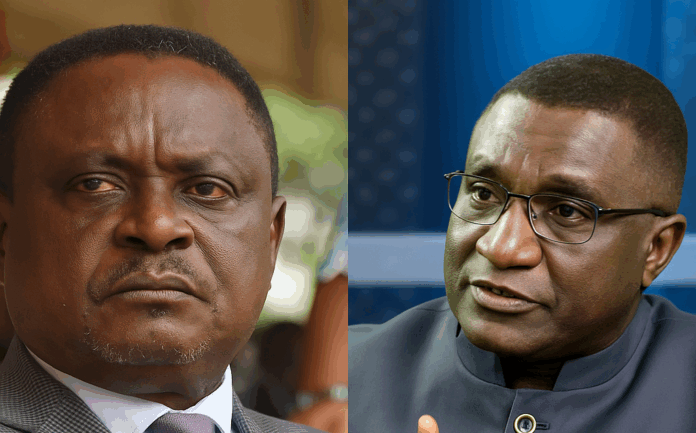
YAOUNDE, Cameroon (BN24) — Tensions in Cameroon escalated on Friday as two prominent opposition leaders were arrested amid protests over the controversial presidential election results, which are set to be announced by the country’s constitutional council on Monday.
Anicet Ekane and Djeukam Tchameni, key figures in the Union for Change political platform, were arrested late Friday in Douala, Cameroon’s economic hub, according to their parties. Both men had endorsed Issa Tchiroma Bakary, a leading opposition candidate who claims he defeated President Paul Biya in the October 12 election. Their arrest has intensified the unrest sweeping across the nation, with opposition groups alleging electoral fraud and government attempts to suppress dissent.
The African Movement for New Independence and Democracy (MANIDEM) party also reported that several of its members, including the party’s treasurer, were “kidnapped” by local security forces. In a statement, MANIDEM accused the government of using force to intimidate opposition figures and supporters, warning that such actions are aimed at stifling democratic expression.
The precise circumstances surrounding the arrests remain unclear, and neither the government nor the security forces has provided detailed explanations. However, Paul Atanga Nji, Cameroon’s Minister of Territorial Administration, confirmed the arrests of several individuals earlier in the week. Speaking to reporters on Saturday, Nji claimed that these individuals were suspected of plotting violent acts under the guise of protests. He added that the government had intercepted plans to infiltrate peaceful demonstrations and incite violence, which would then be blamed on law enforcement.
“We are fully aware of the situation,” Nji said. “These individuals were planning to infiltrate groups of protesters and cause terrorist attacks that would result in the loss of lives. These deaths would later be attributed to the forces of law and order.”
As the government prepares to announce the final results of the election, opposition supporters have continued to demonstrate across the country, calling for a fair and transparent voting process. Tchiroma, who has alleged that he won the election based on results collated by his party, has accused Biya’s government of attempting to rig the vote and disrupt the democratic process.
Protests took place in several cities on Saturday, including in Bafoussam, the capital of the West Region, where groups of motorcyclists flooded major roads, demanding a credible election. In the days prior, security forces clashed with demonstrators in other cities, leading to several arrests. Authorities also reported that one person was killed during the protests in Garoua, a northern city.
The victim, a 30-year-old primary schoolteacher named Zairatou Hassana, was not involved in the protests, according to her uncle, Amadou Adji. He told The Associated Press that she had been out to check on her sister, who had not yet returned home from school. Hassana’s death has sparked outrage across the country, with many accusing the government of using excessive force against unarmed civilians.
“Her death is a painful reminder of the injustices under this regime,” Adji said. “Like many other Cameroonians, I now carry a bad memory of this government.”
In response to the arrests and rising protests, Tchiroma posted a message on social media Friday, warning that any attempt to arrest him would be “an assault against the entire Cameroonian people.” In a Facebook post, he called on the government to recognize the will of the people and the results of what he claims was a legitimate election victory.
“The people are simply asking you to recognize their victory,” Tchiroma said.
As tensions rise ahead of the final election results, the situation in Cameroon remains volatile. The country, which has seen a series of disputed elections in recent years, faces growing unrest as citizens demand a transparent and fair process. With the final vote count expected on Monday, all eyes are on the constitutional council’s announcement, which could either quell or intensify the unrest.
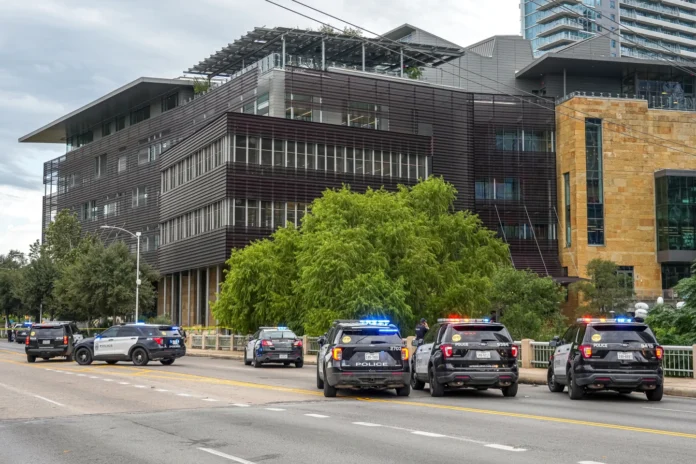
A shooting inside the Austin Central Library on Saturday afternoon left one person seriously injured and prompted a temporary lockdown in downtown Austin, police said. Authorities later arrested a suspect in connection with the incident.
According to the Austin Police Department, officers responded to multiple 911 calls shortly after noon reporting gunfire inside the city’s main public library, located in the heart of the state capital. Assistant Police Chief Lee Rogers said during a briefing that emergency crews arrived within minutes and found one person suffering from gunshot wounds. The victim was transported to a local hospital in serious but stable condition.
Police said the suspect fled the scene before officers arrived but was located and taken into custody in South Austin at approximately 1:25 p.m. Rogers did not release details about the suspect’s identity, possible motive, or what led up to the shooting. Investigators are still determining where inside the library the shooting took place.
“This appears to be an isolated incident, not an active shooter situation,” Rogers said. “We believe there is no ongoing threat to the community.”
The Austin Central Library, a major public facility that often attracts weekend visitors and students, was immediately evacuated. The city’s emergency management office issued a shelter-in-place alert for the surrounding downtown area as police secured the scene and ensured there were no additional threats. The alert was lifted later in the afternoon once the situation was contained.
Video from the scene showed multiple police cruisers, ambulances, and fire trucks parked along West César Chávez Street, with officers escorting library patrons and staff to safety. Witnesses said confusion spread quickly as alarms sounded and people were told to evacuate.
Authorities have not yet released the name or age of the victim. Police said the investigation remains active and urged anyone who witnessed the incident or recorded video footage to contact Austin police detectives.
The Austin Police Department thanked residents for their cooperation during the lockdown and emphasized that early evidence suggests the shooting stemmed from a personal dispute rather than a random act of violence.
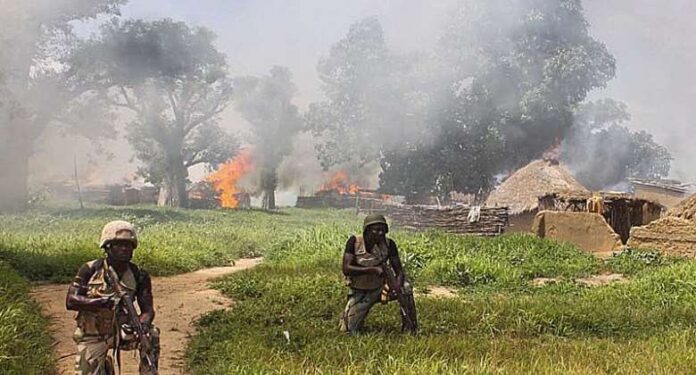
BAWKU, Ghana (BN24) — At least four people, including two women, have been killed in separate shootings within 24 hours in Bawku and surrounding communities in Ghana’s Upper East Region, in what security officials fear could mark a resurgence of violent conflict in the area.
The attacks, which began early Friday and continued into Saturday morning, have left residents terrified and prompted an intensified military presence in the volatile municipality, long marred by ethnic tension between Kusasi and Mamprusi groups.
According to local sources, the first victim, a woman, was shot dead early Friday morning after stepping out of her home to meet a colleague. Her death was followed by another attack that evening around 7 p.m., when two armed men on a motorbike opened fire at a popular drinking spot in Garu, killing a man identified as Salam. Witnesses said the gunmen fled the scene immediately, leaving residents in shock.
Later that night, around 11 p.m., another woman was gunned down in Binduri under similar circumstances. Her attackers reportedly escaped before security forces could respond. The following morning, around 6 a.m. Saturday, gunmen ambushed and killed a man identified only as Azimbe along the Atuba road near Binduri.
Reports suggest that Azimbe was the son of the late Kusasi chief, who was murdered in Asawasi, Kumasi, in July this year, raising fears that the killings may be linked to ongoing reprisals and long-standing family or ethnic grievances.
The series of attacks has plunged the Bawku municipality into renewed tension. The area has been under a dusk-to-dawn curfew for several months, with restrictions on movement and a ban on carrying firearms. Security officials said the new wave of violence threatens to undermine peace efforts and humanitarian support in the area.
Military sources confirmed that ten people have been arrested in connection with the killing of the second woman in Binduri. The suspects are reportedly assisting police with investigations. Security patrols have since been increased across Bawku, Garu, and Binduri, as joint police-military teams move to restore calm and prevent retaliatory attacks.
Residents say fear has gripped the community, with many choosing to remain indoors. Schools and businesses operated below capacity on Saturday, as uncertainty hung over the municipality.
Bawku, a bustling trading hub near Ghana’s border with Burkina Faso, has been plagued by intermittent clashes for decades, largely fueled by deep-rooted chieftaincy and ethnic disputes. Despite government mediation and multiple peace initiatives, sporadic violence continues to erupt, claiming dozens of lives in recent years.
Local leaders and civil society groups are once again urging the government to intensify peacebuilding efforts and address the root causes of the Bawku conflict. “We cannot continue to live like this every few months; more blood is shed,” a resident told Myjoyonline.com on condition of anonymity.
Security analysts warn that the renewed violence could further destabilize the Upper East Region if swift and decisive action is not taken to curb reprisal attacks and disarm militant groups.
Authorities have urged residents to remain calm and cooperate with security agencies as investigations continue into the killings.
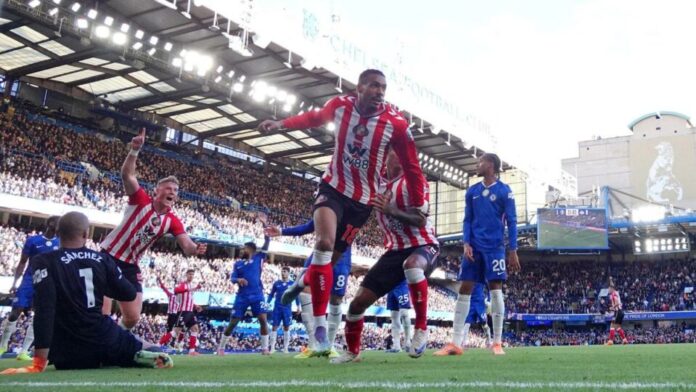
LONDON (BN24)— Sunderland pulled off a remarkable 2-1 victory over Chelsea at Stamford Bridge on Saturday, climbing to second place in the Premier League. The newly-promoted Black Cats, in their first season back in England’s top-flight, produced a gritty performance that left the Chelsea faithful stunned and sent shockwaves through the league.
Chelsea, coming off a strong start to the season, dominated possession early in the match. Their efforts were rewarded in the fifth minute when Alejandro Garnacho broke the deadlock with a clinical strike. A well-weighted pass from Pedro Neto sliced through the Sunderland defense, finding Garnacho, who calmly slotted the ball past Sunderland goalkeeper Robin Roefs.
The Blues continued to press, and Marc Cucurella and Moisés Caicedo both went close to doubling Chelsea’s lead. Despite their dominance, Sunderland weathered the storm, showing remarkable resilience under pressure. The Black Cats gradually found their footing, and in the 22nd minute, they seized an opportunity to equalize.
A scrappy corner kick caused chaos in the Chelsea penalty area. Wilson Isidor reacted quickest to the loose ball, stabbing it home from close range to level the score at 1-1. It was a scrappy goal, but it shifted the momentum in Sunderland’s favor, and the visitors grew in confidence.
From that point forward, Chelsea continued to control possession, but Sunderland’s defensive shape frustrated the hosts. At times, all 11 Sunderland players were packed into a 30-yard zone in front of their own goal, denying Chelsea the space to carve out clear-cut chances. Chelsea pushed forward, but their attempts were repeatedly thwarted by Sunderland’s disciplined defense.
“We knew Chelsea was going to dominate possession,” Sunderland manager Régis Le Bris said after the match. “But our players showed incredible patience and determination. We defended as a unit, and when the moment came, we took our chance.”
Despite several chances for Chelsea in the second half, including a deflected shot from young winger Estevão Willian and a strong save by Roefs from Enzo Fernández, the Blues could not break down Sunderland’s resolute defense. The match seemed to be heading for a 1-1 draw, but in the dying moments, Sunderland delivered a dramatic and well-executed counter-attack.
In the 90+3rd minute, with Chelsea committing men forward in search of a winner, Sunderland launched a swift break. Brian Brobbey, who had been a constant threat on the counter, held off his marker and played a perfectly timed pass to Chemsdine Talbi. The midfielder made no mistake, slotting the ball past Chelsea keeper Robert Sánchez into the bottom corner, sending Sunderland’s supporters into wild celebration.
“It was a great team goal,” said Le Bris. “We waited for our moment, and when it came, we executed it perfectly. The players were incredible today.”
The victory marked a historic achievement for Sunderland, who not only secured their first league win at Stamford Bridge since 2014 but also ended a 14-year winless streak at Chelsea’s home ground. The last time Sunderland won at Stamford Bridge was on April 19, 2014, when they triumphed 2-1, with goals from Connor Wickham and Fabio Borini.
Saturday’s win is also significant for the Premier League standings. Sunderland’s three points lifted them to second place, just two points behind Arsenal, who have a game in hand. The result is a testament to Sunderland’s impressive start to the season, and it firmly places them in the conversation as one of the league’s early surprise packages.
For Chelsea, the loss was a bitter blow. Despite dominating large parts of the game, they were undone by a lack of precision in the final third and a lapse in concentration late on. Chelsea manager Enzo Maresca admitted that Sunderland’s defensive discipline was difficult to break down.
“We couldn’t find a way through,” Maresca said. “We had control of the game, but Sunderland were very compact, and their defending was excellent. It’s disappointing to lose in that manner, but we have to move on.”
The defeat leaves Chelsea in mid-table, with the team now needing to regroup ahead of their upcoming Carabao Cup clash with Wolverhampton Wanderers and a crucial Premier League London derby against Tottenham Hotspur next weekend.
As for Sunderland, the victory at Stamford Bridge has proven that their promotion to the Premier League is no fluke. Manager Le Bris has instilled a sense of belief and discipline in his team, and they are proving to be a formidable force.
“This win is about more than just the three points,” Le Bris said. “It shows that we belong at this level. The players showed incredible character, and I’m incredibly proud of them.”
For the Black Cats, the journey back to the Premier League has been a memorable one. But with this win, they have now set their sights on further challenges, determined to make their mark in the English top-flight.
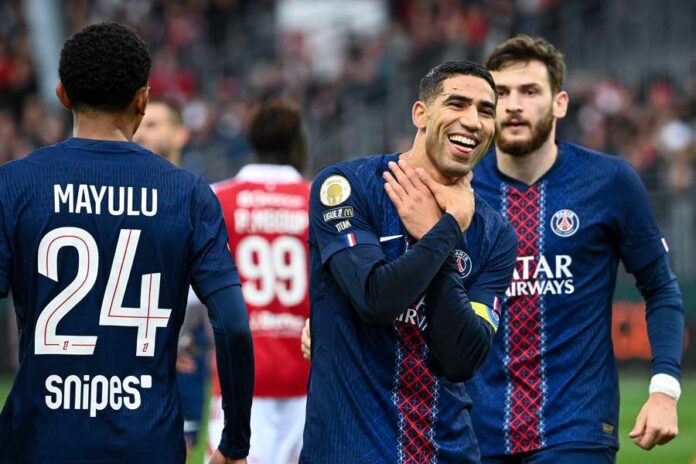
BREST, France (BN24) — Achraf Hakimi showcased his attacking prowess once again on Saturday, scoring twice as Paris Saint-Germain triumphed 3-0 at Brest, taking them two points clear of Marseille at the top of Ligue 1.
The Moroccan full-back, renowned for his attacking contributions as well as his solid defensive performances, played a key role in PSG’s dominant display. After a resounding 7-2 victory over Bayer Leverkusen in the Champions League earlier in the week, PSG continued their impressive form with a commanding performance in domestic competition.
Hakimi opened the scoring in the 29th minute with a well-executed right-footed volley following a clever pass from Vitinha. The ball was floated over the Brest defense, and Hakimi made no mistake in finishing it past goalkeeper Marco Bizot to give PSG the lead. It was his first Ligue 1 goal of the season and his third brace in the French top flight, adding to his growing reputation as one of the most attacking right-backs in Europe.
Just 10 minutes later, Hakimi doubled PSG’s advantage with a powerful strike from close range. Khvicha Kvaratskhelia, who had been a constant threat, created havoc in the Brest defense before feeding the ball to Hakimi, who finished emphatically from a tight angle.
While PSG controlled much of the match, Brest did have their moments. The hosts were awarded a penalty in the second half when Romain Del Castillo was fouled inside the box. However, Del Castillo’s effort was wayward, as he slipped and sent the ball over the bar, a golden opportunity wasted.
As the match wore on, PSG continued to press for more goals. In added time, Desire Doué sealed the victory for the defending champions, tapping in after hitting the post moments earlier. Doué’s goal ensured that PSG returned to winning ways after two consecutive draws in the league.
With the win, PSG now sits two points ahead of Marseille in Ligue 1, although the latter could reclaim the top spot with a victory over Lens later on Saturday.
For Brest, the defeat marked their fourth loss in nine league matches. Despite their struggles, the team showed moments of promise but were ultimately undone by PSG’s clinical finishing.
PSG’s victory served as a timely reminder of their strength, both in attack and defense. With Hakimi leading the charge, the capital club looks set to maintain its challenge for another Ligue 1 title this season.
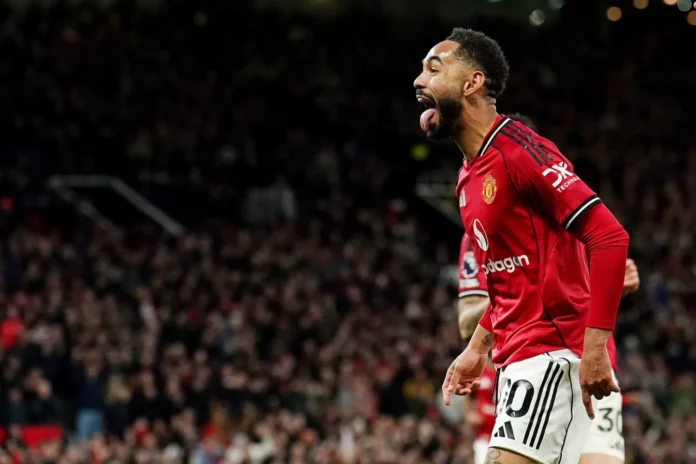
MANCHESTER, England (BN24) — Manchester United’s recent struggles appear to be behind them, for now at least, after a thrilling 4-2 win over Brighton on Saturday. The victory, which extended United’s winning streak to three matches, lifted them into the top five of the Premier League table, bringing a renewed sense of optimism to Old Trafford.
This win was significant for United, as it marked their first three-game Premier League winning streak since February 2024. It also ended Brighton’s three-year run of victories in this fixture, a streak that had added to the pressure on United manager Ruben Amorim following a challenging start to his tenure.
The match had its nervy moments, particularly when Brighton mounted a late comeback attempt, but United ultimately saw out the win, ensuring their momentum continues. Despite a rocky start to the season, including a woeful campaign last year that saw them finish outside the Champions League places, United’s recent form is a sign of progress under Amorim.
“I think we’re heading in the right direction,” Amorim said after the match. “The players have shown belief, and we’re starting to build something. But there’s still a lot of work to be done.”
The match got off to a strong start for United, with summer signing Matheus Cunha playing a key role in breaking the deadlock. In the 24th minute, Cunha curled a stunning shot from outside the box, giving United a 1-0 lead. It was the Brazilian forward’s first goal for the club and provided an early boost for the home team.
Casemiro doubled United’s advantage just before the break with a deflected shot, which wrong-footed Brighton goalkeeper Robert Sanchez and found the back of the net. That 2-0 lead was a much-needed cushion for United, but the second half saw Brighton fight back fiercely.
Bryan Mbeumo, who has been in fine form for United, scored twice in the second half to secure the victory. His first came in the 55th minute when he finished off a brilliant team move. Mbeumo’s second goal, however, was a key moment in the match as it came in the 82nd minute, following a tense period when Brighton seemed poised to make a comeback.
Brighton had given themselves hope when former United player Danny Welbeck scored a stunning free-kick in the 69th minute, curling it into the top corner to pull one back for the visitors. The atmosphere inside Old Trafford grew tense when substitute Charalampos Kostoulas headed in another goal for Brighton in injury time, making it 3-2 and setting the stage for a nerve-wracking finale.
But Mbeumo’s second goal in the 87th minute sealed the win for United, ensuring the three points remained at Old Trafford. The result is a massive boost for Amorim, whose side now sits just outside the top four in the league, with a growing sense of momentum following two strong wins.
“We showed resilience and quality today,” Mbeumo said after his brace. “We know there’s still a lot to improve, but this win will give us confidence moving forward.”
The win over Brighton comes on the heels of last week’s morale-boosting 2-1 victory over Liverpool, and while it’s still early in the season, United is starting to look like a team capable of challenging for a higher finish this term.
As for Brighton, the loss was a tough one to swallow, especially after their spirited second-half response. Despite creating several chances, including Welbeck’s spectacular free-kick and Kostoulas’s late header, the Seagulls could not find the equalizer. Brighton now faces a difficult run of fixtures as they look to bounce back from the defeat.
Liverpool, the defending champions, were playing Brentford later on Saturday, and a win for them would move them up to second in the table.
For Manchester United, the victory signals a clear improvement under Amorim, and while the team’s start to the season had been shaky, they are now heading in the right direction with growing belief and key contributions from their summer signings.
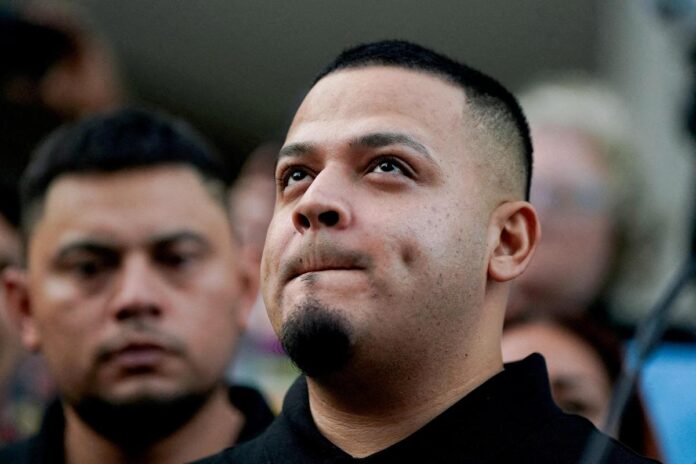
Washington (BN24) – The United States government plans to deport Kilmar Abrego Garcia, a Salvadoran national whose case has become a flashpoint in the debate over President Donald Trump’s immigration policies, to Liberia as early as October 31, according to a new court filing from the Department of Homeland Security (DHS).
Abrego Garcia’s case drew national attention after he was mistakenly deported to El Salvador last year in violation of a federal settlement agreement. The U.S. Supreme Court later ordered the Trump administration to facilitate his return, and he was flown back to the United States in June. Because his earlier deportation to El Salvador was deemed unlawful, immigration authorities can no longer send him back there.
In the months since his return, Immigration and Customs Enforcement (ICE) has unsuccessfully attempted to deport Abrego Garcia to several African countries, including Uganda, Eswatini, and Ghana. According to Friday’s DHS filing, Liberia has now agreed to accept him.
The government defended its decision, calling Liberia “a thriving democracy and one of the United States’ closest partners on the African continent.” The court document described Liberia as a nation with “robust protections for human rights,” an English-speaking population, and a constitution that guarantees the humane treatment of refugees. DHS said the agency could proceed with deportation “as soon as October 31.”
Abrego Garcia’s attorney, Simon Sandoval-Moshenberg, condemned the decision, calling it “punitive, cruel, and unconstitutional.” In a statement, he said, “After failed attempts with Uganda, Eswatini, and Ghana, ICE now seeks to deport our client, Kilmar Abrego Garcia, to Liberia, a country with which he has no connection, thousands of miles from his family and home in Maryland. Costa Rica stands ready to accept him as a refugee — a viable and lawful option. Yet the government has chosen a course calculated to inflict maximum hardship.”
Abrego Garcia, who has an American wife and child and has lived in Maryland for years, first entered the U.S. illegally as a teenager. In 2019, an immigration judge granted him protection from deportation to El Salvador, citing a “well-founded fear” of gang violence against his family. He has since applied for asylum in a separate immigration proceeding.
A federal judge in Maryland has previously blocked Abrego Garcia’s immediate deportation while his lawsuit remains pending. That lawsuit accuses the Trump administration of using the deportation process to retaliate against him for the embarrassment caused by his earlier wrongful removal.
In addition to his immigration case, Abrego Garcia is also facing criminal charges in federal court in Tennessee, where prosecutors allege he was involved in human smuggling. He has pleaded not guilty and filed a motion to dismiss the charges, arguing that the prosecution is vindictive and politically motivated.
For now, his fate rests with both the Maryland court and immigration authorities. If the deportation proceeds, it would mark the latest chapter in a long and contentious legal battle that has drawn international attention to how the Trump administration handles deportation cases involving political sensitivities and human rights considerations.