MOSCOW (BN24)— A powerful earthquake with a magnitude of 7.4 struck early Saturday near the eastern coastline of Russia’s Kamchatka Peninsula, according to the U.S. Geological Survey. The quake’s epicenter was located approximately 111.7 kilometers (69.3 miles) east of Petropavlovsk-Kamchatsky at a depth of 39 kilometers beneath the Earth’s surface.
While the tremor prompted initial tsunami concerns, the Pacific Tsunami Warning System later withdrew its alert. The Japan Meteorological Agency noted that while slight sea level changes were possible in coastal zones, the risk of significant damage remained low.
As of early Saturday, no injuries or major property damage had been reported. The seismic event is one of five powerful earthquakes to impact the region on July 20, with this one being the most intense in magnitude.
Kamchatka, a volcanically active region in Russia’s Far East, frequently experiences seismic activity due to its location along the Pacific Ring of Fire.
CHICAGO (BN24) — A U.S. Immigration and Customs Enforcement officer shot and killed a Mexican national in a Chicago suburb on Friday during an attempted arrest, igniting sharp criticism from local leaders and renewed debate over federal immigration tactics.
The Department of Homeland Security confirmed the incident, saying ICE agents were conducting a vehicle stop to detain Silverio Villegas-Gonzalez, 38, when he allegedly drove his car toward the officers. According to DHS, one officer was dragged by the vehicle and opened fire, striking and killing Villegas-Gonzalez. The officer, whose name has not been released, was injured and remains in stable condition.
The Consulate General of Mexico in Chicago identified the deceased as Villegas-Gonzalez, a cook originally from Mexico. Officials said they are in contact with his family and have requested further information from U.S. authorities.
DHS Defends Shooting, Local Leaders Condemn Tactics
DHS said the officer used “appropriate force” during the confrontation, citing Villegas-Gonzalez’s history of reckless driving. The agency accused activists of encouraging undocumented migrants to resist law enforcement — a claim strongly rejected by elected officials.
Illinois Gov. J.B. Pritzker and State Rep. Lilian Jimenez said the shooting took place in Franklin Park, just outside Chicago. Pritzker called for transparency, writing on X that Illinois residents “deserve a full, factual accounting of what’s happened today.”
Jimenez denounced the death, saying: “This endangers all of our community for ICE to operate in this manner. Now we have seen the ultimate, horrific circumstances that we were all worried about. They have taken away the life of our community member.”
U.S. Reps. Jesús “Chuy” García, Delia Ramirez, and State Rep. Norma Hernandez also criticized ICE’s tactics, describing them as “a violent escalation.”
Trump Administration Launches New Enforcement Push
The fatal encounter occurred days after the Trump administration announced “Operation Midway Blitz,” a targeted immigration enforcement initiative in Chicago and across Illinois.
President Donald Trump has recently signaled that he could deploy National Guard troops and additional federal officers to Chicago to combat crime and illegal immigration. His threat has drawn protests across the city and its suburbs, with critics warning that federal crackdowns will heighten tensions in immigrant communities.
On Friday, Trump told reporters he would send National Guard troops to Memphis, Tennessee, part of a broader federal push to address what he calls urban lawlessness and failures of Democratic-led cities.
Community Demands Accountability
Immigrant-rights advocates said the shooting reflects the dangers of intensified ICE operations under Trump’s leadership. “We warned that ICE’s aggressive tactics and disregard for due process were a violent escalation,” García, Ramirez, and Hernandez said in a joint statement.
For now, DHS maintains that its officers acted lawfully, while Mexican officials press for answers and Illinois leaders demand accountability. The death of Villegas-Gonzalez is expected to add pressure to the already contentious debate over immigration enforcement in Chicago, a city with one of the nation’s largest immigrant populations.
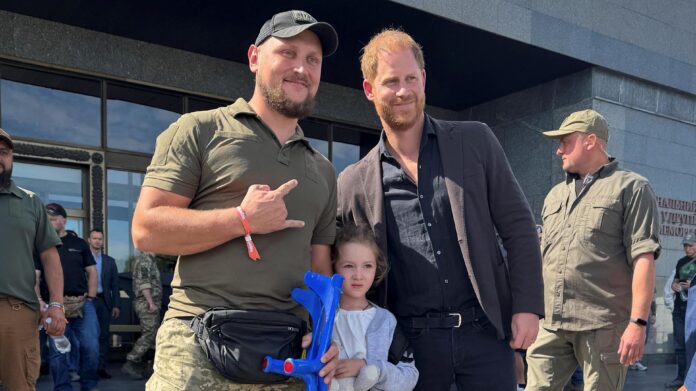
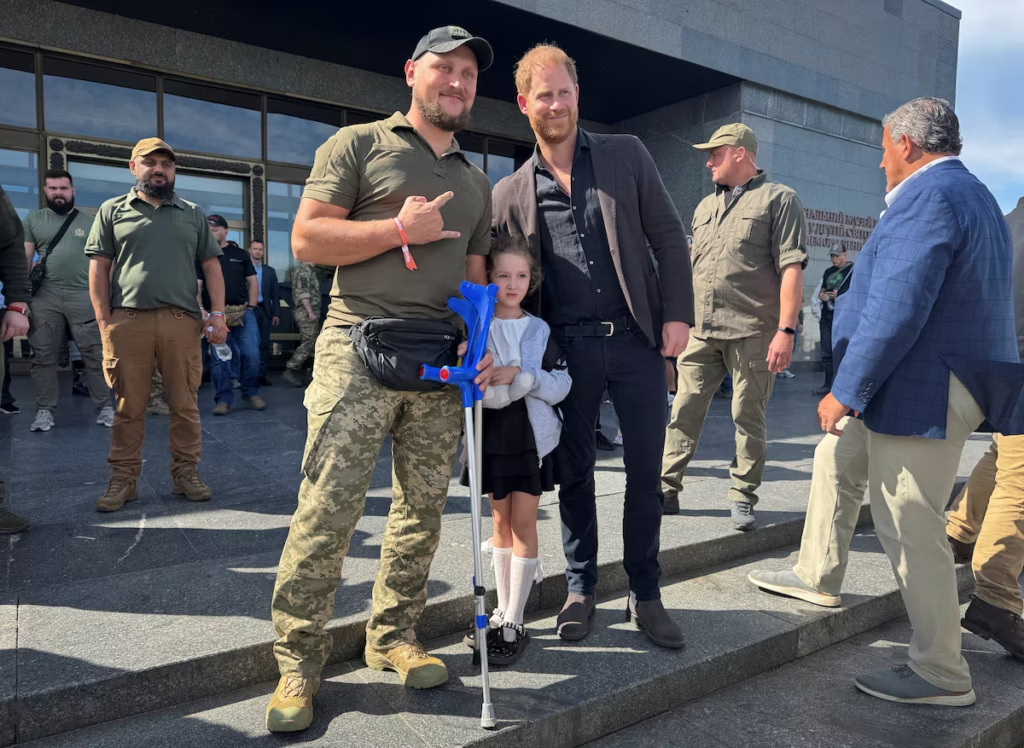
LONDON (BN24) — Prince Harry made an unannounced visit to Ukraine on Friday, meeting with wounded service members in a show of solidarity and support for their recovery. The trip marks his second visit to the war-torn country and comes as Ukraine positions itself as a potential host for the Invictus Games in four years.
The Duke of Sussex, who founded the Invictus Games to support injured and sick service personnel and veterans, traveled by overnight train to the capital. His visit underscores continued international support for Ukrainian soldiers wounded in Russia’s ongoing invasion.
“We cannot stop the war but what we can do is do everything we can to help the recovery process,” Harry told The Guardian during his journey to Kyiv.
Representatives for Prince Harry confirmed his arrival, though the visit had not been publicly announced beforehand. Ukraine is among several nations vying to host a future edition of the Invictus Games, the Paralympic-style sporting event that Harry launched in 2014.
His visit is seen as both a morale boost for Ukraine’s wounded veterans and a reaffirmation of the Invictus Games’ mission to empower those who have sacrificed in military service.
TRABZON, Turkey (BN24) — Cameroonian goalkeeper André Onana has been officially unveiled as a Trabzonspor player following a season-long loan move from Manchester United, the Turkish club confirmed Friday.
The 29-year-old departs Old Trafford temporarily after falling down the pecking order, following the arrival of young Belgian keeper Senne Lammens. Onana’s loan will run until June 30, 2026, with no loan fee involved and no option for Trabzonspor to make the transfer permanent.
“An agreement has been reached with Manchester United for the temporary transfer of footballer André Onana to our club, free of charge, for the 2025–2026 football season,” Trabzonspor said in an official statement.
While Manchester United will not receive a financial return for the move, the deal is expected to benefit Onana significantly. According to The Daily Mail, the former Inter Milan keeper will see his salary nearly double, thanks to a lucrative signing bonus and additional performance-related incentives built into the agreement.
Onana, who joined Manchester United in 2023, has had a turbulent spell in England and now looks to revive his form with regular minutes in the Turkish Süper Lig. The loan offers a fresh opportunity for both player and club as the Cameroonian international looks to regain momentum ahead of next season.
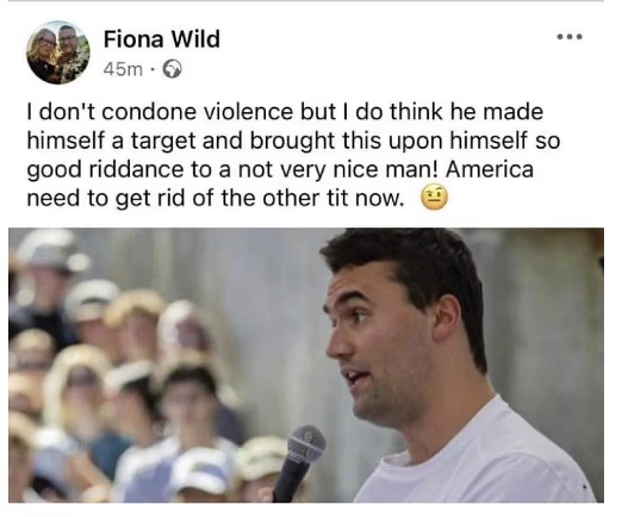
LONDON (BN24) — A local British councillor has resigned following a wave of public outrage after she suggested American conservative commentator Charlie Kirk “brought his assassination upon himself” in a controversial social media post.
Fiona Wild, who was serving as an independent councilor in Burnley, stepped down after her comments about Kirk who was shot in the neck while speaking at a university campus in Utah drew condemnation from across the political spectrum. Authorities in the U.S. are still searching for the gunman responsible for the attack.
In a now-deleted post, Wild wrote: “I don’t condone violence, but I do think he made himself a target and brought this on himself, so good riddance to not a very nice man! America needs to get rid of the other tit now.” Her remarks quickly went viral, prompting widespread calls for her resignation.
Burnley Council confirmed her departure in a statement on Friday: “People may be aware of a social media post made by former independent councillor Fiona Wild. We can confirm that Ms Wild has now resigned from her position. Ms Wild was serving as an independent councillor at the time of her resignation and was not affiliated with any political party group within Burnley Council.”
Council leader Jamie McGowan, who had earlier urged Wild to resign, labeled her comments as “vile,” noting the emotional toll on Kirk’s family. “I think what Cllr Fiona Wild forgets is that two small children have woken up without their daddy this morning, because of nothing more than his political beliefs,” McGowan said. “It’s such a disgusting thing to say, which shows a nasty side I didn’t know she had.”
Wild had previously quit the Labour Party in August and had been serving as an unaffiliated councillor since then. McGowan, a Conservative, responded tersely to her resignation, saying, “All I can say is, good riddance to a not very nice woman.”
Kirk, a prominent figure in the U.S. conservative movement and founder of Turning Point USA, was reportedly addressing issues related to mass shootings when he was struck by a bullet in a targeted attack. He remains in critical condition, according to U.S. authorities, as the investigation continues.
ACCRA, Ghana (BN24) — Tensions escalated in parts of Ghana on Tuesday as groups of protesters took to the streets demanding the expulsion of Nigerians, accusing them of driving up crime and dominating local economic sectors.
Videos widely shared on social media showed demonstrators holding placards with inflammatory slogans, including accusations of kidnapping, ritual killings, and widespread prostitution allegedly linked to Nigerian nationals. Some signs claimed Nigerians were behind the disappearance of children and rising violence in several Ghanaian communities.
One woman, shouting into a megaphone in a protest video, said, “Nigerians must go because you can’t be in someone’s country and be doing anyhow.” Another protester, referring to Nigeria’s Igbo ethnic group, said, “They even have an Igbo king in Ghana. They have hijacked our lands. It is just a matter of time; we will conquer them and take over our country.”
Protesters also held up an image of a man they alleged had been killed by a Nigerian in the capital, Accra, though no independent confirmation of the incident was available at the time of reporting.
The Ghanaian government has not yet issued an official response to the protests or addressed the status of Nigerian nationals residing in the country. The Nigerian government had also made no public statement as of press time.
The unrest raises concerns of a diplomatic rift between the two West African neighbors, whose history includes a reversal of similar tensions. In 1983, Nigerian President Shehu Shagari ordered the mass expulsion of nearly two million undocumented immigrants mostly Ghanaians—during an economic downturn, a move widely remembered under the phrase “Ghana Must Go.”
At the time, Shagari justified the decision, saying, “If you break a law, then you have to pay for it. Illegal immigrants, under normal circumstances, should not be given any notice whatsoever.”
Tuesday’s protest represents one of the most overt public backlashes against Nigerian immigrants in Ghana in recent memory and has reignited debates around immigration policy, regional cooperation, and the rise of xenophobic rhetoric in West Africa.
Authorities have not confirmed any arrests or incidents of violence connected to the demonstrations. However, the situation remains volatile, with community leaders and regional observers urging calm amid fears the unrest could escalate further.
LAGOS, Nigeria (BN24) — Nigerian celebrity chef and Guinness World Record holder Hilda Baci on Friday officially began her latest culinary challenge: cooking the world’s largest pot of jollof rice.
The ambitious attempt, held at the Eko Hotel and Suites in Lagos, is part of the “Gino Jollof Festival,” a food-themed event hosted in collaboration with seasoning and culinary brand Gino.
Baci, who made international headlines in 2023 after setting the Guinness World Record for the longest cooking marathon, is now eyeing another milestone with a custom-built pot designed specifically for the feat. The massive vessel measures six meters in both width and height and will hold 250 bags of rice during the cooking process.
Before the cooking commenced, the lead pastor of Harvesters International Christian Centre, Bolaji Idowu, offered prayers and a blessing over the event, marking a ceremonial start to the historic effort.
A crowd of celebrities and influencers, including Enioluwa Adeoluwa, Tomike Adeoye, Folagade Banks, and Veekee James, were present to support Baci. Thousands of attendees, largely made up of Gen Zs, millennials, and food enthusiasts, gathered at the venue, turning the event into a vibrant celebration of Nigerian cuisine.
Organizers reported that over 20,000 people registered to attend the festival, which is free and open to the public.
Baci assured attendees of the meal’s quality, promising that the jollof rice would be “amazing and hygienic,” and described the event as a chance to create a record-breaking experience centered on one of West Africa’s most beloved dishes.
BOSTON(BN24) — A federal appeals court ruled Friday that the Trump administration has the authority to end humanitarian parole protections for more than 430,000 migrants from Cuba, Haiti, Nicaragua and Venezuela, a decision that could force many to leave the United States.
The 1st U.S. Circuit Court of Appeals issued a two-page ruling lifting a lower court stay that had temporarily blocked the administration from moving forward. While the decision marks a legal victory for President Donald Trump’s administration, it does not immediately change the status of migrants as the lawsuit continues.
Court Says Harm Does Not Outweigh Legal Authority
In its opinion, the three-judge panel acknowledged the “risks of irreparable harm” raised by the lower court — including family separation, loss of lawful employment, and the possibility of returning to dangerous conditions in home countries. But the court found those concerns were insufficient to override the administration’s legal authority.
“Absent a strong showing of likelihood of success on the merits, the risk of such irreparable harms cannot, by itself, support a stay,” the judges wrote.
The ruling allows the Department of Homeland Security to move forward with its plan to revoke parole, which grants migrants two-year authorization to live and work in the U.S.
Reaction From Both Sides
Attorneys for the migrants expressed disappointment. Esther Sung, legal director of the Justice Action Center, said the decision “hurts everyone.”
“People who came here from Cuba, Haiti, Nicaragua, and Venezuela did everything the government asked of them, and the Trump administration cruelly and nonsensically failed to hold up the government’s end of the bargain,” Sung said, vowing to continue litigation.
Government lawyers, led by Solicitor General D. John Sauer, argued that the program was always discretionary and temporary, and that requiring case-by-case reviews would be a “gargantuan task” that would undermine removal efforts.
“The Secretary’s discretionary rescission of a discretionary benefit should have been the end of the matter,” Justice Department attorneys said.
A Historic Rollback of Migrant Protections
The decision stems from Trump’s March announcement to terminate humanitarian parole programs introduced under President Joe Biden. The administration argued that Homeland Security Secretary Kristi Noem has full authority to end parole designations without judicial intervention.
Attorneys for the plaintiffs countered that Noem ignored humanitarian concerns and that the law requires individualized review. They described the policy change as “the largest mass illegalization event in modern American history.”
The Supreme Court had already lifted a district court stay in May, signaling skepticism of challenges to Trump’s policy. Friday’s appeals court ruling reinforces the administration’s position, even as broader litigation continues.
Trump’s Immigration Agenda
The ruling underscores Trump’s broader campaign pledge to deport millions and dismantle immigration pathways expanded under Biden. The administration’s move represents the first-ever mass revocation of humanitarian parole in U.S. history, setting up a precedent for sweeping changes in immigration law.
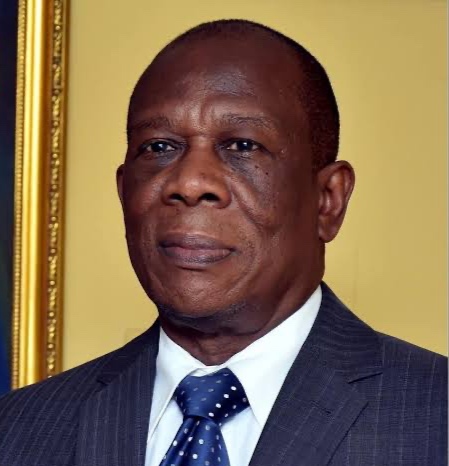
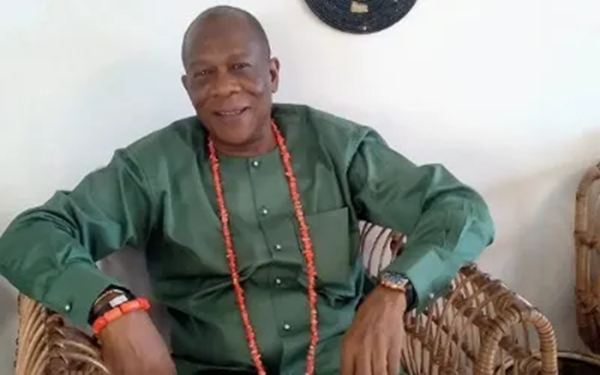
ABUJA (BN24) — President Bola Tinubu expressed deep condolences to the Delta State Government and the All Progressives Congress following the death of Air Vice Marshal Terry O. Okorodudu, a prominent party chieftain who passed away September 9 at age 70.
The president extended sympathies to Okorodudu’s wife, children, extended family, associates and friends in a statement released by his Special Adviser on Information and Strategy, Bayo Onanuga, on Wednesday.
President Tinubu recognized the significant contributions Okorodudu made to APC’s political fortunes at both state and national levels, including his service as a member of the security committee for Tinubu’s 2023 Presidential Campaign Council. The president described the deceased as “my political ally for many years” who worked diligently and selflessly for Nigeria.
Air Vice Marshal Okorodudu, born August 27, 1955, in Port Harcourt, Rivers State, traced his heritage to Warri in Delta State through the Itsekiri, Okpe and Ijaw ethnic groups. He began his distinguished military career after earning his commission as a Nigerian Air Force pilot officer on January 5, 1976, following his graduation from the prestigious Nigerian Defence Academy.
The retired officer’s military service spanned over three decades, during which he held numerous significant positions including operational pilot duties on multiple aircraft types, staff positions at various command levels, and leadership roles in specialized units. His career progression reflected steady advancement built on exemplary service and professional competence.
From 1979 to 1983, Okorodudu served as an operational pilot on the Dornier 28-D-2 aircraft before transitioning to fly the G-222 aircraft as an operational officer from 1984 to 1988. His expertise led to assignments including Staff Officer 2 Training at Military Airlift Headquarters in Ibadan and Military Assistant to the Air Officer Commanding, Military Airlift Command.
One of his most prestigious assignments came from 1991 to 1998 when he served as Operations Officer with the Presidential Air Fleet, a position requiring the highest levels of security clearance and professional competence. This role was followed by an appointment as Directing Staff at the Armed Forces Command and Staff College in Jaji from 1998 to 2000.
Okorodudu’s international service included a notable deployment as Nigeria’s Defence Attaché to Moscow, Russia, from February 2006 to July 2009, with concurrent accreditation to Ukraine, Belarus and Georgia. During this diplomatic assignment, he represented Nigeria’s defense interests in these strategically important regions.
His educational achievements complemented his military service, including a Master’s degree in Strategic Studies from the University of Ibadan and professional military education at institutions including the Junior Staff College, Jaji, and the Naval War College in Rhode Island, where he studied Military and Peacekeeping Operations in accordance with international law.
International colleagues recognized Okorodudu’s leadership qualities during his studies at the Defense Institute of International Legal Studies in Newport. Roy Kevin, International Military Student Officer, praised him as “a tremendously articulate and skilled officer and a consummate professional” whose contributions enriched fellow students from 19 countries.
In 2009, Okorodudu was appointed Chief Executive of Aeronautical Engineering and Technical Services Limited, a subsidiary of the Nigerian Air Force focused on aircraft maintenance and technical services. His leadership at the company strengthened Nigeria’s local capacity in aeronautical maintenance while reducing dependence on expensive foreign contractors.
The late Air Vice Marshal pioneered innovative approaches to military procurement and maintenance that became foundations for what developed into a multi-billion-naira defense entity. His vision for direct procurement of aircraft parts and local servicing of military hardware represented significant cost savings for the Nigerian government.
Beyond military service, Okorodudu founded the Grassroots Initiatives for Transformation, a platform designed to mobilize citizens toward mindset change, peacebuilding, security and economic development. After his voluntary retirement in October 2010, he established Centurion Security Company Limited, an integrated technology and defense security firm.
President Tinubu noted Okorodudu’s meritorious military career and his rise “to the peak of his career” while mentoring countless officers throughout his service. The president emphasized the deceased officer’s dedication to national service and his role in Nigeria’s security architecture.
The Air Vice Marshal served as Chairman of the Board of Trustees of Harry’s Friends Club, described as a think-tank for good governance, demonstrating his continued commitment to Nigeria’s democratic development even after retirement.
Okorodudu’s personal interests extended beyond military and political affairs to include music, sports, astronomy, poetry and literature, reflecting the breadth of his intellectual curiosity and cultural engagement.
He is survived by his wife, one son and four grandchildren who carry forward his legacy of integrity, resilience and service to Nigeria.
“He rose to the peak of his career and mentored countless officers. He worked diligently and selflessly for our country. I pray that Almighty God will grant his soul eternal rest and comfort his family,” President Tinubu stated in his tribute.
The death of Air Vice Marshal Okorodudu represents a significant loss for both the All Progressives Congress and Nigeria’s military community, removing a figure who bridged professional military service with active political engagement in support of democratic governance.
His passing comes as the APC continues building its organizational strength across Nigeria’s 36 states, making the loss of such an experienced and committed party stalwart particularly significant for the party’s activities in Delta State and the broader South-South geopolitical zone.
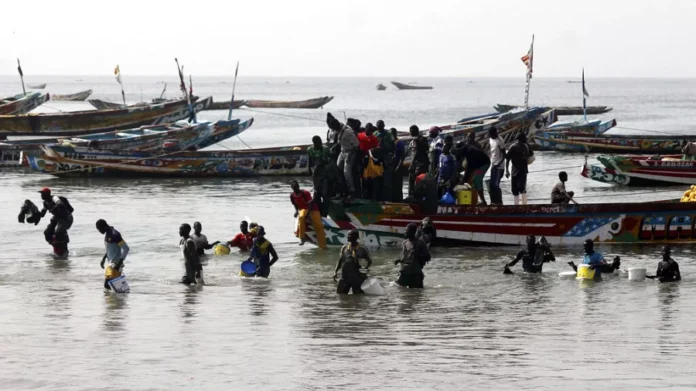
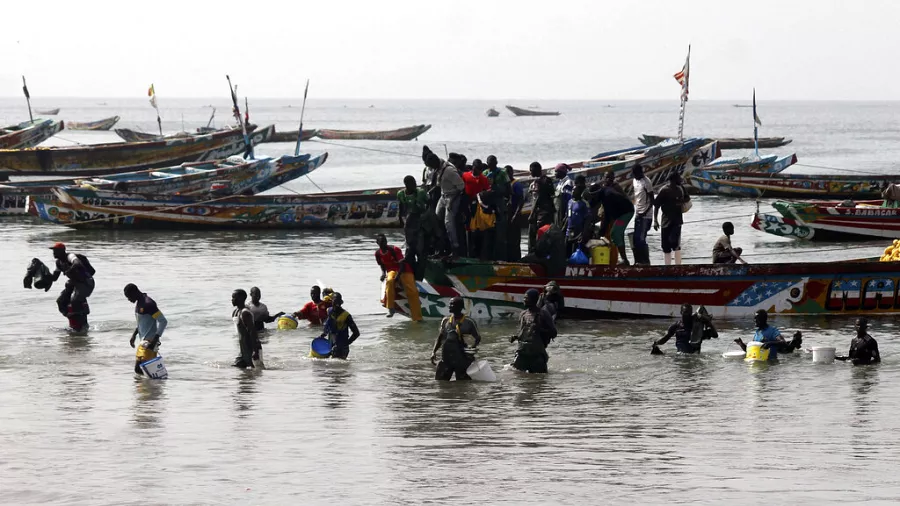
KINSHASA, Congo (BN24) — Two separate boat disasters in northwestern Congo this week have killed at least 193 passengers and left dozens more missing, authorities confirmed Friday, underscoring the persistent dangers of water travel in the vast Central African nation.
The first accident occurred Wednesday in Equateur province’s Basankusu territory, where a motorized boat carrying scores of passengers capsized, killing at least 86 people. State media reported that most of the victims were students traveling along the Congo River. Civil society groups said the toll could be higher, but officials have not confirmed additional figures.
Just a day later, tragedy struck again about 150 kilometers away in Lukolela territory, where a whaleboat with nearly 500 passengers caught fire and capsized Thursday evening near the village of Malange. The Ministry of Humanitarian Affairs said 209 people were rescued, but many remain unaccounted for.
Causes Under Investigation
State media attributed Wednesday’s sinking to “improper loading and night navigation.” Images from the scene showed villagers gathered around recovered bodies as families mourned. Local groups blamed the government for failing to enforce safety rules and claimed the actual number of victims was being underreported.
The causes of Thursday’s accident remain unclear. Officials have not said whether search and rescue efforts are continuing, and communication from the remote areas has been limited.
Deadly Pattern of Congo River Travel
Boat accidents are tragically common in Congo, where waterways are often the only means of transportation across its vast and largely roadless terrain. Most of the vessels are poorly maintained, overcrowded, and rarely equipped with life jackets. Many also travel at night, making rescue operations more difficult and leaving many bodies unrecovered.
The twin disasters this week have renewed calls for stronger safety regulations and enforcement to prevent similar tragedies.