Washington (BN24) – Uganda has reached an agreement with the United States to accept deported migrants, but only under strict conditions that exclude individuals with criminal records and unaccompanied minors, officials said Thursday.
In a statement, Uganda’s Ministry of Foreign Affairs confirmed that the two countries had “concluded” the deal and were now working on the “detailed modalities” of how it will be carried out. The ministry also emphasized that Kampala preferred the deportees to be of African nationalities.
It remains unclear whether a formal agreement has been signed, but the announcement marks the latest step in Uganda’s long-standing reputation for hosting displaced populations. However, International Relations Minister Henry Okello Oryem stressed that the arrangement has clear limits.
“Uganda is known worldwide for its benevolent refugee policy, but there are boundaries,” Oryem told The Associated Press. “We are talking about cartels — people unwanted in their own countries. How can we integrate them into local communities in Uganda?”
He further questioned the fairness of the arrangement, noting that discussions between Kampala and Washington were focused on “visas, tariffs, sanctions, and related issues — not accepting illegal aliens from the U.S. That would be unfair to Ugandans.”
The development comes weeks after the United States deported five men with criminal backgrounds to Eswatini and sent another eight to South Sudan. Uganda’s stipulation that it will not take in individuals with criminal histories reflects concerns about security and integration challenges in host communities.
LUANDA, Angola (BN24) — Nigeria’s senior men’s basketball team, D’Tigers, will look to extend their unbeaten run and take a major step toward a second AfroBasket title as they clash with Senegal in a hotly anticipated quarter-final Wednesday at the Pavilhão Multiusos de Luanda.
The matchup marks a significant test for Nigeria, who topped Group B with a perfect record, sweeping all three of their group-stage opponents. D’Tigers opened the tournament with a dominant 77-59 victory over Madagascar, followed by a statement win against defending champions Tunisia, 87-66. Their third game, a hard-fought 99-90 triumph over Cameroon, sealed their passage to the last eight with maximum points.
Head coach Mohammed Abdulrahman has emphasized a high-tempo, defensively aggressive identity for his squad, built on speed and ball pressure. “Our identity is to play good defence and then see if we can run and get quick and easy baskets,” Abdulrahman said before the quarter-final. “We are not the biggest team, so we turn that into an advantage by staying quick on the floor and trying to choke opponents defensively.”
Senegal arrives at the quarter-final via a more turbulent route. The Teranga Lions started strong with an 88-53 win over Uganda, but stumbled against Egypt in a 91-77 loss before recovering to defeat Mali 80-70. Finishing outside the top two in their group, they were forced into a playoff to reach the quarter-finals. In that do-or-die encounter, Senegal dispatched South Sudan 78-65 to earn the right to face Nigeria.
The encounter renews one of African basketball’s most enduring rivalries. Nigeria and Senegal have met eight times in previous competitions, with the 2015 champions holding a slight edge with five wins to Senegal’s three. Their rivalry dates back to the 2001 AfroBasket, where D’Tigers claimed an 80-65 win. Notable clashes include Nigeria’s semi-final victories in 2015 and 2017, as well as Senegal’s lone knockout win in the 2013 quarter-finals.
Recent meetings have been split. Nigeria dominated 89-61 in the 2018 World Cup qualifiers, only for Senegal to bounce back with an 84-63 win months later. Most recently, at the 2023 FIBA Pre-Olympic Qualifying Tournament in Lagos, the Lions edged the hosts 93-87 in a high-scoring affair.
D’Tigers will count heavily on NBA guard Josh Okogie of the Houston Rockets, along with co-captains Ike Nwamu and veteran forward Stan Okoye, the lone holdover from Nigeria’s historic 2015 AfroBasket title-winning squad. Caleb Agada has also emerged as a key contributor, supported by a versatile bench that has stepped up when needed.
Senegal’s primary weapons lie in the hands of captain Brancou Badio and guard Jean Jacques Boissy. Badio poured in 31 points in the crucial playoff win over South Sudan, while Ibrahim Faye has been a constant interior threat on both ends of the floor.
With a place in the semi-finals at stake, both teams are expected to bring their best to Luanda in what promises to be one of the marquee fixtures of the 2025 AfroBasket quarter-final stage.
Uthai Thani, Thailand (BN24) — A 17-year-old male student at a private school in Uthai Thani province violently assaulted his female math teacher after she refused to raise his midterm test score from 18 to 20, leaving her with broken ribs and other injuries.
The incident occurred on August 5 after the grade 11 student questioned why he did not receive a perfect score on the exam. The teacher explained that while his answers were correct, he failed to show his working process, which prevented her from awarding full marks. She advised him to consult other teachers, who later confirmed that her marking was accurate.
Unsatisfied, the student returned to the classroom and demanded that the teacher increase his grade. When she refused, he became agitated, kicked a desk, and stormed out. About 10 minutes later, he came back, insisting that she apologize. The teacher asked, “Who should be apologizing?” triggering the teenager’s violent outburst.
According to witnesses, the student struck the teacher 17 times in front of her class, punching her in the head and kicking her as she tried to escape. She was later rushed to a hospital where doctors confirmed broken ribs, a bruised eye and swelling on her head.
Police said the teacher has filed a report and is expected to provide a formal statement. School officials confirmed the student has been removed from the institution. His parents have contacted the teacher to apologize for his actions.
The shocking classroom assault has drawn attention across Thailand, raising concerns about student violence and teacher safety.
NEW YORK (BN24) — 2Face Idibia’s “African Queen” has topped Billboard’s list of the Top 50 Best Afrobeats Songs of All-Time. The 2004 hit, considered a key track in the global rise of Afrobeats, secured the No. 1 position, cementing its place as a landmark song in African music history.
Billboard’s ranking highlights the dominance of Nigerian artists in the genre. Wizkid stands out with two tracks in the top 10: “Ojuelegba” at No. 2 and “Essence” at No. 5, featuring Tems. Both songs have garnered massive international success, further solidifying Wizkid’s position as one of the most influential figures in Afrobeats.
Other Nigerian artists also made strong showings in the list’s top 10. Rema’s “Calm Down” ranked at No. 4, while Favour’s “Nwa Baby (Ashawo Remix)” secured the No. 3 spot. CKay’s “Love Nwantiti” landed at No. 6, continuing its global success. D’banj’s “Oliver Twist”, Davido’s “Fall”, Burna Boy’s “Ye”, and P-Square’s “Chop My Money (Remix)” featuring Akon, also made the cut in the top 10.
The list also included two Ghanaian artists, Fuse ODG and Sarkodie, representing the broader West African influence on the Afrobeats genre. Fuse ODG’s “Azonto” (featuring Itz Tiffany) placed at No. 18, and Sarkodie’s “Adonai” (featuring Castro) came in at No. 19.
Beyond the top 10, Styl-Plus’s “Olufunmi” claimed the No. 11 spot, while 9ice’s “Gongo Aso” ranked No. 12. P-Square’s “Do Me” and Davido’s “Dami Duro” rounded out the list at No. 13 and No. 14, respectively.
Yemi Alade is the highest-ranked female artist, with her track “Johnny” securing the No. 15 position. Wande Coal’s “Bumper to Bumper” and Phyno’s “Fada Fada” (featuring Olamide) rounded out the top 20, further demonstrating the diversity and reach of Afrobeats music.
The rankings showcase not only the growing international appeal of Afrobeats but also the enduring influence of Nigerian artists on the global music scene.
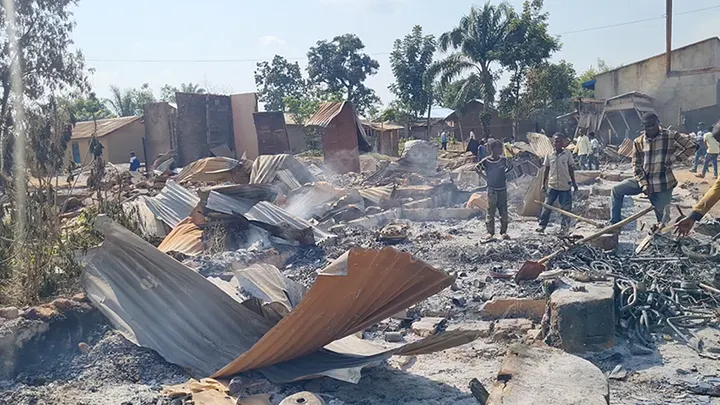
TIM VILLAGE, Plateau (BN24) — Five people were killed and 10 thatched houses set on fire in a fresh attack by suspected herdsmen on Tim village in the Chakfem District of Mangu Local Government Area in Plateau State on Tuesday evening, Aug. 19, 2025.
Several others were injured in the attack, which left the village in shock and fear. Initial reports suggest the assault may have been a reprisal linked to allegations of cattle rustling in the area, according to security analyst Zagazola Makama.
The bodies of the victims have since been buried in accordance with local customs, while the injured are receiving treatment at nearby hospitals.
Residents of Tim village have criticized the delayed response of security forces, attributing it to the village’s difficult terrain, poor network coverage, and its remote location. Although calm has returned to the area, locals remain tense and fear further reprisal attacks if underlying grievances are not addressed.
The attack comes amid increasing violence between herders and farmers in Plateau State, with cattle rustling often cited as a major trigger for conflict.
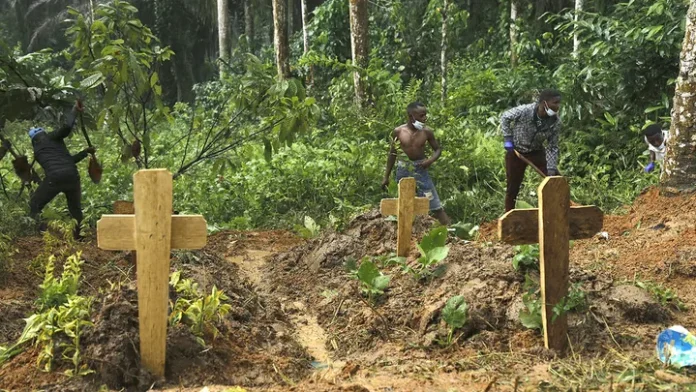
KISII, Kenya (BN24) — Heart-wrenching images surfaced this week showing two young boys gazing at the body of their 3-year-old friend, Moses Mokua, who tragically passed away after a visit to a neighbor’s home in Kisii County.
Moses, described by family as healthy and playful, was in the care of a relative at his grandmother’s compound on August 6, 2025. He was invited by a neighbor to play with her child, but when Moses did not return home, a search ensued. The search ended in devastation as Moses was discovered in a water drum, a discovery that has left the community in shock.
The neighbor’s request for Moses to join her child for a playdate has since been marred by the tragedy. His family, overwhelmed with grief, confirmed that the boy was found unresponsive in the water drum. The loss has raised questions within the neighborhood, as no one could have predicted such an outcome from what seemed like an innocent visit.
Moses was laid to rest on August 19, 2025, in a ceremony that drew mourning friends and family. Among the most poignant moments were the images of Moses’s young friends standing by his coffin, their faces filled with confusion and sorrow. The photos have since sparked emotional reactions on social media, with many Kenyans expressing sympathy for the children, who appeared unable to understand why their friend wouldn’t wake up to join them in play. Some speculated that the young boys were trying to make sense of the situation, wondering what had happened to their friend, while others suggested that the sight of Moses lying motionless may have left them wondering why he could not get up.
The untimely death of Moses Mokua has left a profound impact on his family, friends, and the community at large. The event serves as a reminder of the fragile nature of life, especially among children, and the profound grief that comes with the loss of young innocence.
Moscow (BN24) – Russia declared Wednesday that any attempt to negotiate Ukraine’s future security without its involvement amounted to a “dead-end path,” issuing a sharp warning as Western leaders race to shape guarantees for Kyiv’s protection.
Foreign Minister Sergei Lavrov
Foreign Minister Sergei Lavrov condemned a recent White House meeting between President Donald Trump, Ukrainian President Volodymyr Zelenskiy, and European leaders, saying that excluding Moscow from such talks was futile.
“We cannot agree with the idea that questions of collective security can be resolved without the Russian Federation. This will not work,” Lavrov said during a joint press conference with Jordan’s foreign minister.
U.S. and European military planners have been weighing post-war security guarantees for Ukraine, sources told Reuters, but Lavrov dismissed the discussions as unrealistic. “Seriously discussing security without Russia is a utopia. It’s a road to nowhere,” he said.
The warning came as NATO commanders held a video conference to review recent negotiations, emphasizing the need for a “just, credible and durable peace.” Meanwhile, a smaller group of military officials met in Washington to continue shaping proposals.
Tensions spiked further after Polish officials accused Russia of deliberately provoking NATO by sending a drone into eastern Poland, just as talks on peace efforts were gaining traction.
Lavrov also lashed out at European leaders, accusing them of staging “clumsy and unethical” attempts to pressure Trump into altering U.S. policy toward Ukraine. Trump reiterated that Washington would help guarantee Ukraine’s security but ruled out deploying U.S. troops, though he left the door open for air support in a future agreement.
Kyiv, for its part, confirmed that its military teams were actively drafting the defense framework of potential guarantees. Zelenskiy’s chief of staff, Andriy Yermak, said Ukraine was also preparing contingency plans with allies in case Russia “continues to prolong the war and disrupt agreements.”
Lavrov suggested Moscow favored “truly reliable” guarantees modeled on a draft accord discussed in Istanbul in 2022, which envisioned security commitments from major powers, including Russia. Kyiv rejected that proposal at the time, arguing it would have effectively granted Moscow veto power over military intervention.
San Francisco (BN24) – A federal appeals court has sided with President Donald Trump, granting his administration authority to move forward with ending temporary protections for tens of thousands of migrants from Central America and Nepal.
The 9th U.S. Circuit Court of Appeals in San Francisco issued its ruling on Wednesday, halting a lower court’s order that had kept in place Temporary Protected Status (TPS) for more than 60,000 migrants. The decision marks a major legal victory for Trump, whose administration has sought to dismantle programs that have shielded long-term immigrant communities from deportation.
The ruling immediately affects approximately 7,000 Nepalis, whose protections expired Aug. 5, as well as 51,000 Hondurans and 3,000 Nicaraguans whose legal status is set to expire Sept. 8. Once those deadlines pass, migrants under TPS would become eligible for removal, potentially disrupting families and communities where many have lived for decades.
The three-judge panel, which included appointees of both Republican and Democratic presidents, said the administration could proceed with its policy changes while litigation continues. “The district court’s order granting plaintiffs’ motion to postpone, entered July 31, 2025, is stayed pending further order of this court,” the panel wrote.
The decision came just one week after U.S. District Judge Trina L. Thompson had blocked the administration from moving forward, saying the policy shift lacked an “objective review” of conditions in Honduras, Nicaragua, and Nepal. Thompson pointed to continuing political violence in Honduras, recent hurricane devastation in Nicaragua, and ongoing instability in Nepal as reasons to maintain protections.
Created in 1990, Temporary Protected Status allows migrants to remain and work legally in the United States if their home countries are deemed too dangerous due to conflict, natural disasters, or other emergencies. Critics of the program, including Trump and Homeland Security Secretary Kristi Noem, argue that TPS was never intended to become a pathway to permanent residency but has been used that way by prior administrations.
“The Trump administration is systematically de-documenting immigrants who have lived lawfully in this country for decades, raising U.S.-citizen children, starting businesses, and contributing to their communities,” said Jessica Bansal, attorney with the National Day Laborer Organizing Network.
Administration officials countered that TPS was never meant to be “a de facto asylum system.” Tricia McLaughlin, assistant secretary at DHS, said the decision reflects a return to the program’s original intent.
Many of those affected have lived in the United States for decades. Honduran and Nicaraguan migrants were first granted TPS in 1998 after Hurricane Mitch devastated Central America. Nepalis gained protection in 2015 after a catastrophic earthquake. Advocates say removing protections now would rip apart communities where TPS holders have started businesses, bought homes, and raised American-born children.
The Trump administration has already ended TPS designations for other nationalities, including 350,000 Venezuelans, 500,000 Haitians, 160,000 Ukrainians, and thousands from Afghanistan and Cameroon. Lawsuits challenging those decisions remain pending.
Immigrant rights groups are vowing to continue their legal fight. The case is expected to move back to the lower courts for further hearings, with the next session scheduled for Nov. 18. Lawyers for the plaintiffs argue that the administration’s moves were politically motivated and rooted in racial animus, pointing to Trump’s campaign promises to restrict immigration.
Meanwhile, the U.S. Supreme Court has already allowed the administration to terminate TPS protections for Venezuelans in a separate case earlier this year, signaling that the justices may ultimately side with the government in the broader fight over migrant protections.
For now, the appeals court’s ruling clears the way for Trump to press forward with one of his most sweeping immigration rollbacks, even as tens of thousands of families brace for possible deportation.
NEW YORK (BN24) — A federal judge Wednesday rejected the Trump administration’s request to unseal grand jury transcripts from Jeffrey Epstein’s sex trafficking case, delivering a significant blow to government efforts to release records from investigations into the late financier’s sexual abuse of young women and girls.
Judge Richard Berman, who presided over Epstein’s 2019 case, issued his ruling one week after another Manhattan federal judge turned down the government’s request to release transcripts from the grand jury that indicted Epstein’s longtime associate Ghislaine Maxwell on related charges.
The decision appears to foreclose the possibility of federal courts releasing Epstein-related grand jury testimony, barring reversal on appeal. A federal judge in Florida previously declined to release grand jury documents from investigations conducted there in 2005 and 2007, though some material from a state case against Epstein was made public last year.
The rulings represent a resounding rejection of the Justice Department’s effort to unlock the sealed records, a move the Republican administration pursued amid intense criticism over its refusal to release a massive collection of documents in its possession related to the case.
Both Berman and Judge Paul A. Engelmayer, who handled Maxwell’s case, indicated in their rulings that the grand jury transcripts contain limited information unlikely to satisfy enormous public interest in the high-profile case. Berman characterized the government’s request as a “diversion” from more substantial records available.
President Donald Trump had called for the release of transcripts amid speculation and criticism about his past association with Epstein. During his presidential campaign, Trump promised to release files related to Epstein but faced criticism, including from supporters, when the Justice Department released only a small number of records lacking significant new revelations.
The Justice Department declined to comment on the ruling Wednesday.
Each judge who rejected the unsealing requests cited longstanding grand jury secrecy rules and concluded the government failed to meet extraordinary legal exceptions that could justify making the records public under federal law.
The judges also noted that the Justice Department possesses extensive records related to Epstein that fall outside grand jury secrecy protections. Berman wrote that information contained in approximately 70 pages of Epstein grand jury transcripts “pales in comparison to the Epstein investigative information and materials in the hands of the Department of Justice,” which he said totals around 100,000 pages.
“The Government is the logical party to make comprehensive disclosure to the public of the Epstein Files,” Berman wrote, appearing to reference the Justice Department’s refusal to release additional records. He said the request to release grand jury records “appears to be a ‘diversion’ from the breadth and scope of the Epstein files in the Government’s possession.”
Berman noted that the Justice Department informed him the only witness to testify before the Epstein grand jury in 2019 was an FBI agent who “had no direct knowledge of the facts of the case and whose testimony was mostly hearsay.” The remainder of the grand jury presentation consisted of a PowerPoint slideshow and a call log, according to court documents.
Last year, a Florida judge unsealed approximately 150 pages of transcripts from grand jury proceedings that led to Epstein’s indictment on state charges there in 2006, providing limited public insight into earlier investigations.
Maxwell, a British socialite and publishing heiress, is serving a 20-year prison sentence following her 2021 conviction on sex trafficking charges for helping Epstein sexually abuse underage girls. She was recently transferred from a Florida prison to a prison camp in Texas. Epstein died in jail in 2019 while awaiting trial on federal sex trafficking charges.
Public focus on Maxwell’s case has intensified since the Justice Department announced last month it would not release additional documents from the Epstein sex trafficking investigation. The decision angered online investigators, conspiracy theorists and elements of Trump’s political base who hoped to find evidence of a government cover-up.
Since then, officials in Trump’s Republican administration have attempted to position themselves as promoting transparency in the case, including through requests to unseal grand jury transcripts.
Deputy Attorney General Todd Blanche recently interviewed Maxwell at a Florida courthouse. The House Oversight Committee has also expressed interest in questioning Maxwell, with her attorneys indicating openness to an interview contingent on immunity from prosecution.
In correspondence with Maxwell’s lawyers, Committee Chairman Rep. James Comer wrote that the panel was willing to delay any deposition until after resolution of Maxwell’s appeal to the Supreme Court, expected in late September. Comer stated that while Maxwell’s testimony was “vital” to the Republican-led investigation into Epstein, the committee would not provide immunity or advance questions for her testimony.
KABUL, Afghanistan (BN24) — The death toll from a fiery bus crash in western Afghanistan has climbed to 79 people, including 19 children, after two survivors succumbed to their injuries, an interim Taliban administration official announced Wednesday.
The deadly collision occurred late Tuesday in Herat province’s Guzara district when a passenger bus carrying Afghan deportees from Iran struck a motorcycle and then collided with a fuel truck, triggering a massive fire that engulfed the vehicles, according to Abdul Mateen Qani, spokesman for the interim Interior Ministry.
Mohammad Janan Moqadas, chief physician at the military hospital treating survivors, told reporters in Kabul that many victims were burned beyond recognition, complicating identification efforts. Only three people survived the inferno, witnesses said.
The bus was transporting Afghans recently expelled from Iran to the capital Kabul when the accident occurred, provincial spokesman Mohammad Yousuf Saeedi confirmed. The central government has ordered a full investigation into the incident.
Witness accounts described scenes of horror as the collision sparked an intense blaze that prevented rescue attempts. Akbar Tawakoli, 34, who observed the crash, said the fire was so severe that would-be rescuers could not approach within 50 meters of the burning vehicles.
“There was a lot of fire and a lot of screaming, but we couldn’t even get within 50 metres to rescue anyone,” Tawakoli said. “Only three people were saved from the bus. They were also on fire and their clothes were burned.”
Another witness, identified only as Abdullah, 25, expressed grief over the victims’ demographics, saying most passengers were women and children returning to Afghanistan after being deported from Iran.
Cleanup crews worked throughout Wednesday to remove the charred remains of the bus and twisted wreckage from the accident site, according to journalists at the scene.
The interim Taliban government issued a statement expressing condolences for what it called a tragic loss of Afghan lives. “It is with deep sorrow that we mourn the loss of numerous Afghan lives and the injuries sustained in a tragic bus collision and subsequent fire in Herat province last night,” the statement read.
The accident highlights the dangerous conditions faced by Afghan deportees traveling on the country’s poorly maintained road network. More than 1.5 million Afghans have returned from Iran and Pakistan this year alone, according to the United Nations migration agency, as both neighboring countries have intensified deportation efforts after decades of hosting Afghan refugees.
Many deportees arrive with limited resources and face dire conditions in a country struggling with widespread poverty and mass unemployment following the Taliban’s return to power in 2021.
The state-run Bakhtar News Agency characterized Tuesday’s crash as one of Afghanistan’s deadliest traffic accidents in recent years. The country has experienced several major transportation disasters involving fuel tankers and passenger vehicles.
In December 2023, two separate bus crashes involving fuel tankers killed 52 people across different provinces. Three months later, another collision in Helmand province claimed 20 lives. In late 2022, a tanker truck overturned in the treacherous Salang Pass north of Kabul, igniting a fire that killed 31 people.
Afghanistan’s road safety record remains poor due to inadequate infrastructure maintenance, limited traffic enforcement and the prevalence of aging vehicles on major transportation routes connecting the country’s provinces to the capital.