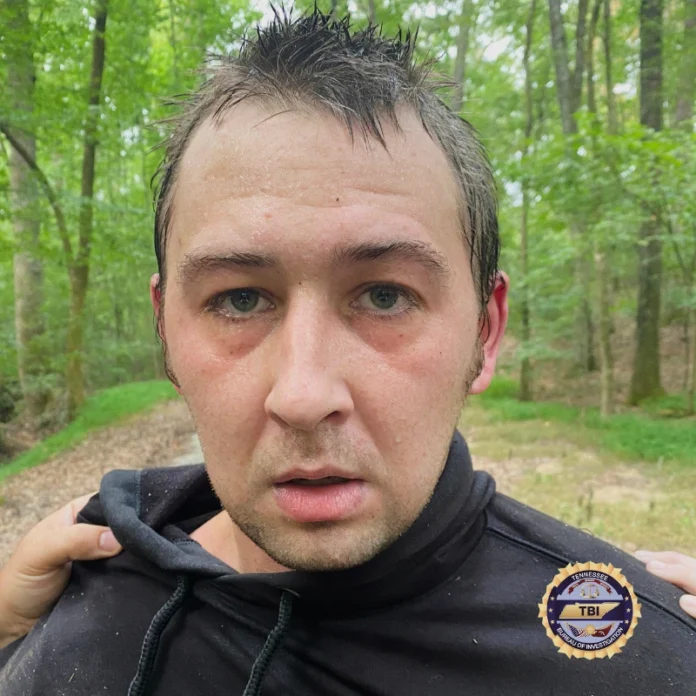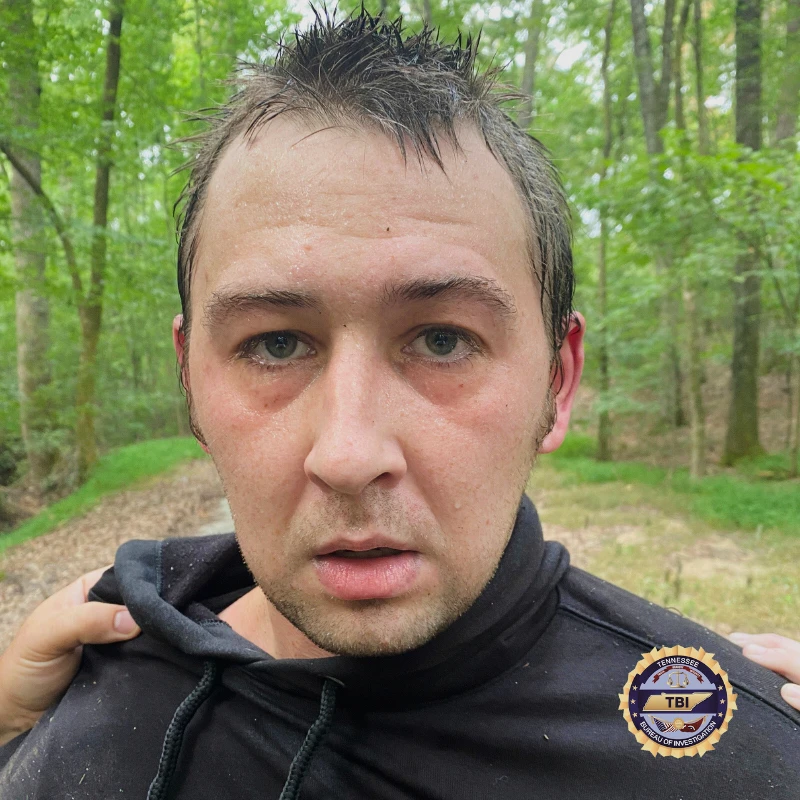
NAIROBI, Kenya (BN24) — Kenyan authorities have arrested outspoken human rights activist Boniface Mwangi in connection with last month’s deadly anti-government protests, accusing him of involvement in what they described as “terrorist acts.”
Mwangi was detained at his home in Machakos County on Saturday and is expected to appear in court Monday, Kenya’s Directorate of Criminal Investigations (DCI) announced in a statement posted Sunday on social media platform X.
During the arrest, police said they recovered two unused tear gas canisters, a 7.62mm blank cartridge, two mobile phones, a laptop, and notebooks. Authorities indicated Mwangi will face terrorism-related charges as well as prosecution for alleged unlawful possession of ammunition.
A representative for Mwangi was not immediately available for comment.
Mwangi’s arrest follows weeks of unrest in Kenya, where youth-led demonstrations have surged in response to economic hardship, corruption allegations, and police violence. The protests were reignited by the June death of political blogger Albert Ojwang, who died in police custody under disputed circumstances. His death galvanized fresh demonstrations across the country.
According to the Kenya National Commission on Human Rights, a state-funded watchdog, 19 people were killed during protests on June 25. Another 31 deaths were confirmed after protests resumed on July 7. The DCI cited those figures in its announcement about Mwangi’s arrest.
The demonstrations, primarily organized by young Kenyans through social media, have sparked a national reckoning over government accountability and police conduct.
Mwangi, a former parliamentary candidate who ran on an anti-corruption platform, has long been a vocal critic of state abuse and impunity. His activism has drawn both domestic and international attention.
In May, Mwangi was arrested and deported from Tanzania, where he had traveled to attend the trial of opposition leader Tundu Lissu. Upon his return to Kenya, he alleged that Tanzanian authorities sexually assaulted him while in detention. Last Friday, he lodged a formal complaint with the East African Court of Justice over the incident.
Mwangi’s detention marks a sharp escalation in the Kenyan government’s response to the ongoing protests and is likely to further inflame public anger.
SOFIA, Bulgaria (BN24) — Bulgarian border officials seized more than 200 kilograms of cocaine hidden in a van headed toward Turkey, one of the largest land-border drug hauls in the country’s history, authorities announced Sunday.
The Belgian-plated van, inspected at the Kapitan Andreevo crossing point near the Turkish border, was found to be carrying 206 kilograms (453 pounds) of cocaine, according to customs officials. The cocaine, packed into 179 vacuum-sealed bags and concealed in five suitcases among personal items, is estimated to have a street value of 20 million euros ($22 million).
Haskovo District Prosecutor Ivan Stoyanov said three individuals were arrested in connection with the smuggling attempt. They include a 40-year-old diplomat from the Democratic Republic of Congo, who is accredited in Belgium; a 54-year-old Belgian national; and a 43-year-old Bulgarian man who was driving the vehicle.
Authorities said the suspects were attempting to cross into Turkey when border agents flagged the vehicle for further inspection. The suspects could face up to 20 years in prison if convicted of drug trafficking, according to Bulgarian prosecutors.
“This is the largest cocaine seizure ever recorded at a Bulgarian land border,” Stoyanov told reporters. “An investigation is underway in cooperation with partner organizations in several European Union countries to trace the origin of the drugs and identify their intended recipients.”
Bulgaria, which lies on the Balkan drug-trafficking route, has ramped up anti-narcotics operations in recent years. The region is a key corridor for transporting heroin from Asia and the Middle East to Western Europe, and increasingly, for shipping cocaine from Latin America.
Officials said the discovery highlights the growing use of diplomatic channels and multinational networks in sophisticated smuggling operations across Europe.
The three suspects remain in custody as authorities expand their investigation across multiple jurisdictions.
WASHINGTON (BN24) — President Donald Trump is threatening to block a proposed stadium deal for the Washington Commanders unless the NFL team abandons its current name and reinstates its former one, the Redskins—a name dropped amid national calls for racial justice and cultural sensitivity.
In a post Sunday on his social media platform, Trump said he may oppose plans to build a new stadium in Washington unless the team reverts to its old moniker, saying the name “Commanders” is “ridiculous” and claiming the franchise would be “much more valuable” as the Redskins.
“I may put a restriction on them that if they don’t change the name back to the original ‘Washington Redskins’… I won’t make a deal for them to build a Stadium in Washington,” Trump wrote.
The Commanders and city officials from the District of Columbia announced earlier this year plans to construct a new stadium at the site of the old RFK Stadium, where the team played for decades before moving to Maryland. The deal was made possible after President Joe Biden signed legislation in January transferring control of the federally owned land to the D.C. government.
While Trump’s ability to directly halt the project is uncertain, his remarks reflect a broader political push to reverse name changes that emerged from the racial justice movement. The Redskins name was officially retired in 2020, along with the team’s Indian head logo, amid a nationwide reckoning with systemic racism.
Trump also took aim at Cleveland’s Major League Baseball team, demanding it revert from the Guardians to the Indians. “There is a big clamoring for this,” Trump said, echoing his claim that cultural sensitivity initiatives have gone too far. He even linked the team name to electoral performance, saying former Guardians owner Matt Dolan “might actually win an Election” if the team changed its name back.
The Guardians, who officially adopted the new name in 2021 after phasing out their “Chief Wahoo” logo in 2018, have shown no sign of reverting. Chris Antonetti, the team’s president of baseball operations, told reporters Sunday there are no plans to revisit the change, saying the franchise is focused on building its new brand.
“We understand there are different perspectives… but obviously it’s a decision we made,” Antonetti said before the team’s game against Oakland.
Josh Harris, who acquired the Commanders in 2023 from longtime owner Dan Snyder, has also firmly dismissed suggestions of returning to the Redskins name. Shortly after taking over, Harris ended speculation by stating the name change would remain permanent.
Despite Trump’s pressure, there has been no response from the Commanders regarding his threat. The NFL team has not issued a public comment.
Trump’s latest foray into the debate over team names underscores his ongoing campaign to undo elements of the cultural reckoning that followed the death of George Floyd and protests against racial injustice in 2020. It also plays to his political base, many of whom view the name changes as unnecessary capitulations to political correctness.
Trump, who is seeking re-election in November, has turned the naming controversy into a campaign issue, branding the Cleveland name change as politically motivated and unpopular.
“The Owner of the Cleveland Baseball Team, Matt Dolan… has lost three Elections in a row because of that ridiculous name change,” Trump posted. “MAKE INDIANS GREAT AGAIN (MIGA)!”
Dolan, who has not been involved in team operations since 2016, unsuccessfully ran in two U.S. Senate races in Ohio. He currently holds no formal role with the Guardians.
Both the Commanders and Guardians declined to comment on the latest developments.
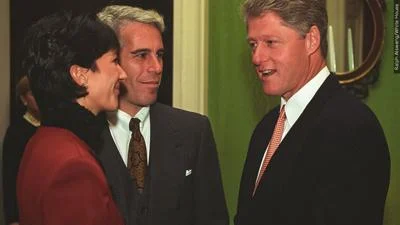
WASHINGTON (BN24) — The long-speculated client list tied to convicted sex offender Jeffrey Epstein is unlikely to ever be released to the public, according to a former CIA officer who claims the information is too sensitive to national intelligence agencies to be exposed.
John Kiriakou, a CIA whistleblower jailed in 2012 for revealing details about U.S. torture programs at Guantanamo Bay, said in a recent podcast interview that the U.S. Central Intelligence Agency will never declassify or disclose Epstein’s alleged “black book” of clients. Kiriakou asserted the document holds intelligence value too significant to be compromised—even amid mounting public pressure for transparency.
Speaking with entrepreneur and host Patrick Bet-David, Kiriakou said the list remains hidden because of Epstein’s purported connections to foreign intelligence, namely Israel’s national spy agency.
“I believe that he was a Mossad access agent. It makes perfect sense to me,” Kiriakou stated, pointing to the theory that Epstein was used as a conduit to collect compromising information on powerful individuals.
Though there is no confirmed link between Epstein and Israel’s Mossad, Kiriakou claimed Epstein functioned exactly as a classic access agent would—targeting influential people, inviting them into compromising environments, and secretly recording encounters to leverage them for intelligence purposes.
“If you’re an intelligence service and you want access to important people, you don’t try to recruit them directly,” he said. “You go after someone close to them. Epstein fit that profile—a wealthy man with a private island, his own planes, access to elites.”
Ghislaine Maxwell, Epstein’s longtime associate now serving a prison sentence for her role in sex trafficking minors, has also faced speculation over alleged intelligence ties. Her father, the late media mogul Robert Maxwell, was widely suspected of collaborating with Israeli intelligence during his career. While none of these claims have been definitively proven, they remain at the heart of widespread theories surrounding Epstein’s mysterious finances and elite connections.
Kiriakou also revisited the testimony of Virginia Giuffre, a key accuser in Epstein’s trafficking network who claimed she was coerced into sex with British royal Prince Andrew. Giuffre, 41, died by suicide in April. In previous legal statements, she and several other women alleged that Epstein’s properties were equipped with surveillance monitors capturing every room—including bathrooms—suggesting a systematic operation of blackmail.
“If those women were telling the truth—and I believe they were—then yes, there absolutely was a client list,” Kiriakou said. “And I think a lot of people know who’s on it. But that’s not something the CIA is ever going to just hand over because the public demands it.”
The existence of Epstein’s “black book” was confirmed years ago; the original document, containing names and contact information of numerous high-profile figures, was even sold at Sotheby’s. But the full contents remain concealed from the public.
Kiriakou questioned why Maxwell never used the list to negotiate a lighter sentence, further suggesting its immense value and potential risk.
“If it was destroyed, why? If not, where is it? Why didn’t Maxwell use it to save herself?” he asked.
The controversy around Epstein’s client list and his death in federal custody in 2019 continues to spark intense debate—particularly in conservative circles. Recently, the Trump administration has faced backlash from within its own base over its handling of Epstein-related files.
Attorney General Pam Bondi, appointed under President Donald Trump, came under fire after the Department of Justice claimed the client list “never existed” and reaffirmed the position that Epstein’s jailhouse death was a suicide. Those remarks ignited outrage among Trump loyalists, many of whom believe the administration broke its promise to release the records.
Following the backlash, Trump appeared frustrated during a cabinet meeting, reportedly calling his supporters “weaklings” for falling for what he called a Democrat-driven “hoax.” He has since urged his base to move on from the Epstein issue.
When asked if Trump himself was withholding the documents out of personal implication, Kiriakou dismissed the idea.
“I don’t believe that for a second,” he said.
Kiriakou is not alone in alleging intelligence involvement. Former Fox News host Tucker Carlson made similar claims earlier this month, suggesting Epstein worked for Mossad to blackmail U.S. political figures.
Speaking to a crowd of young conservatives in Florida, Carlson questioned the origins of Epstein’s massive fortune and how he ascended from a high school math teacher to owning multiple planes, a private island, and one of the most expensive townhouses in Manhattan.
“No one has ever tried to get to the bottom of that,” Carlson said. “And the reason they haven’t is because the answer makes people in Washington very uncomfortable.”
Carlson also speculated that Epstein maintained close ties with the Israeli government—referring to Epstein’s documented relationship with former Israeli Prime Minister Ehud Barak, who reportedly visited Epstein’s homes multiple times starting in 2013.
“Was he running a blackmail operation for a foreign government?” Carlson asked, before adding that questions about foreign influence are not anti-Israel, but legitimate concerns.
“The idea that even asking this is somehow off-limits is what’s created resentment and suspicion,” Carlson said.
As questions continue to swirl around Epstein’s connections, alleged intelligence ties, and the hidden client list, public frustration is rising. Whether the full truth will ever come to light remains uncertain. But as Kiriakou emphasized, the stakes are far greater than celebrity scandal—they lie at the intersection of global espionage, political power, and the darkest corridors of influence.
ASABA, Nigeria (BN24) — A 27-year-old man, Kelvin Obakpororo, is in police custody in Delta State after allegedly killing his girlfriend and the mother of his two children in what authorities are calling a violent domestic incident.
The Delta State Police Command confirmed the arrest on Sunday, weeks after the June killing sparked outrage across social media. The victim, identified simply as Excellence, was reportedly murdered during an altercation at Obakpororo’s residence in Sapele.
Police Public Relations Officer SP Bright Edafe said the suspect initially fled but was eventually tracked and taken into custody. “Between June 26 and 27, 2025, social media was awash with the mysterious murder of a girl named Excellence in Sapele. The suspect initially escaped, but we eventually arrested him,” Edafe said in a statement from Asaba. “He is currently in custody and will be arraigned in court very soon.”
Obakpororo has confessed to the killing, admitting that he struck the victim multiple times on the forehead with a hammer after she allegedly threatened him with a knife during an argument. He also claimed to have been under the influence of tramadol at the time of the incident.
“She was into hookups. Whenever she came to my house, she would change clothes and go out to see another man,” Obakpororo told investigators. “So, on that day, we argued. She took a knife, and I took a hammer. After I overpowered her, I used the hammer to hit her on the forehead three times before she fell and died.”
The suspect said he consumed 200 milligrams of tramadol and claimed he was not fully aware of his actions. “I didn’t know she would die, and I wasn’t in my right senses,” he said, expressing remorse for the death of the woman who bore him two sons, ages three and two.
Authorities also revealed that Obakpororo is involved in internet fraud, known locally as “pressing.” While not currently facing cybercrime charges, his admission has added another layer of public concern in a case that has drawn widespread calls for justice.
The murder of Excellence has reignited debates in Nigeria over domestic violence, substance abuse, and the psychological toll of internet fraud culture among youth. Police have assured the public that the case is being handled with urgency and that the suspect will face prosecution in accordance with the law.
PORTRUSH, Northern Ireland (BN24) — Scottie Scheffler’s march toward golf history continued on Sunday as the world’s No. 1 player delivered another clinical performance to win the British Open by four shots, capturing his second major title of the year and the third leg of a career Grand Slam.
From the opening hole at Royal Portrush, where he stuck his approach to within 10 inches for birdie, the final round felt like a formality. Scheffler built a seven-shot lead within an hour and never allowed anyone to get closer than four as he closed with a composed 3-under 68, finishing at 17-under 267.
The 29-year-old Texan now owns three different major titles, having previously won the PGA Championship in May and the Masters in both 2022 and 2024. His British Open triumph leaves only the U.S. Open between him and the career Grand Slam.
“I love the work, the grind,” Scheffler said earlier this week. “But sometimes I wonder why the thrill of winning doesn’t last longer. It’s fleeting. Still, I want to win so badly.”
That inner drive showed as Scheffler tapped in for par at the 18th and briefly let down his guard, lifting his arms in triumph before embracing his family, tossing his cap skyward, and cradling the silver claret jug.
Rory McIlroy, a home-country favorite and the reigning Masters champion, called Scheffler’s victory “inevitable,” and by Sunday evening, there was little doubt. The American opened his final round with precision, adding birdies at the fourth and fifth holes. But it was his 15-foot par save on No. 6—followed by a fist pump worthy of Tiger Woods—that showed just how locked in he was.
He stumbled briefly at the par-4 eighth, finding a bunker and carding a double bogey—his first dropped shots in 32 holes. Chris Gotterup, this year’s Scottish Open champion, briefly narrowed the lead to four shots with a birdie at the ninth. But Scheffler immediately answered with a birdie of his own at the 10th, then coasted home with eight pars and a final birdie on the back nine.
“It felt like he was going to birdie every hole,” said Shane Lowry, who played with Scheffler on Thursday and Friday. “His bad shots are still good. That’s when you know he’s on another level.”
Scheffler’s win marks his fourth victory of the year and the 11th time in a row he has converted a 54-hole lead into a win. Remarkably, each of his first four major victories has come by at least three strokes—a feat unmatched in the last century.
His dominance is drawing comparisons to the game’s legends.
“I don’t think we thought anyone would come close to Tiger’s dominance so soon,” said Xander Schauffele, who won the Open last year and tied for seventh this week. “But here’s Scottie, and he’s taken that mantle. It’s not a hot streak—he’s been doing this for two years.”
Scheffler’s control was even more evident in contrast to his closest competitors. Harris English, who shot a 66, was runner-up in a major for the second time this year—both times trailing only Scheffler. Despite visa issues that kept his longtime caddie away, English bolstered his case for the U.S. Ryder Cup team with another strong finish.
“The only guy who’s beaten me at the PGA and now here is Scottie,” English said. “He’s the best front-runner I’ve seen. Maybe ever.”
Li Haotong of China, Matt Fitzpatrick of England, and Wyndham Clark of the U.S. all tied for fourth. Li’s finish earns him a berth at next year’s Masters.
McIlroy, who thrilled the home crowd with a 69 on Sunday, never got within five shots and acknowledged Scheffler’s separation from the field.
“He is the standard right now,” McIlroy said. “I wish I could have put more pressure on him. But to be out there, in front of my home crowd, was unforgettable. I’ll remember that walk up the last hole forever.”
Even Scheffler’s 15-month-old son, Bennett, tried to join the celebration—face-planting as he toddled up the slope toward the 18th green and his triumphant father.
As the sun set over Royal Portrush, the champion held the claret jug aloft, now one win away from joining the elite club of golfers to claim all four majors. The U.S. Open next June looms large—not just as a tournament, but as the stage where Scottie Scheffler might complete his rise to all-time greatness.
CASTEL GANDOLFO, Italy (BN24) — Pope Leo XIV has delivered a stinging denunciation of what he called the “barbarity” and “indiscriminate use of force” in Gaza, as reports emerged that at least 85 Palestinians were killed while trying to access food aid amid the deepening humanitarian catastrophe in the besieged territory.
Speaking after Sunday’s Angelus prayer from his summer residence near Rome, the pontiff expressed outrage at both the scale of the violence and the mounting civilian toll. “I call for an immediate end to the barbarity of the war and for a peaceful resolution to the conflict,” Pope Leo said, decrying what he described as violations of international law, including collective punishment and forced displacement.
His remarks came just hours after Gaza’s civil defence agency reported that dozens were killed in separate incidents—most of them in northern Gaza—while waiting for aid trucks at the Zikim crossing with Israel. Officials said 69 of the dead had been struck by Israeli fire as they waited in food queues, with more than 150 others wounded.
The UN’s World Food Programme confirmed a convoy of 25 trucks carrying food was met by large crowds of starving civilians, who were then fired upon. “Any violence involving civilians seeking humanitarian aid is completely unacceptable,” the WFP said.
Dr. Mohammed Abu Salmiya, director of Gaza’s al-Shifa hospital, told the Associated Press the hospital had received 48 bodies and at least 150 injured victims from the Zikim area alone. He could not verify whether the gunfire came from Israeli forces, local armed groups, or both.
The Israeli military acknowledged firing on a large crowd of Palestinians it claimed posed a threat but disputed the casualty figures reported by Gazan officials, saying initial assessments showed significantly lower numbers.
The death toll is only the latest grim marker of Gaza’s deteriorating humanitarian situation. The UN says that since July 13, at least 875 people have been killed attempting to access food—674 near Gaza Humanitarian Foundation (GHF) distribution points and 201 near UN aid convoys or along access routes. Children have reportedly died while trying to fetch water for their families.
Meanwhile, the pope voiced anguish over a separate Israeli strike on Gaza’s only Catholic church last week, which killed three people and wounded 10, including the parish priest. The Church of the Holy Family had been sheltering some 600 displaced people, many of them children and those with special needs. Israel expressed “deep sorrow” and launched an investigation.
“This act, unfortunately, adds to the ongoing military attacks against the civilian population and places of worship in Gaza,” Pope Leo said. “I appeal to the international community to observe humanitarian law and respect the obligation to protect civilians.”
UNRWA, the United Nations agency for Palestinian refugees, echoed the pope’s concern. It accused Israel of “starving civilians in Gaza,” including 1 million children, and said it has enough food stockpiled in Egypt to feed the population for over three months. “Open the gates, lift the siege, allow UNRWA to do its work,” the agency said.
The Israeli government has banned UNRWA from operating in Gaza and the West Bank, alleging infiltration by Hamas. However, an independent review concluded Israel had not produced credible evidence to support those claims. UNRWA had historically been Gaza’s principal aid distributor, providing essential services in health and education.
Since May, aid has been coordinated primarily by the GHF—a body backed by the U.S. and Israel—but shortages remain severe under Israel’s continuing blockade, imposed in early March.
In a further escalation, Israel on Sunday issued evacuation orders for several districts in central Gaza, including parts of Deir al-Balah, a zone previously spared from ground offensives. The area is home to hundreds of thousands of displaced Palestinians and key international aid groups.
Israeli warplanes struck multiple homes in the district, triggering another mass displacement, according to residents. Leaflets dropped from aircraft ordered civilians to flee south.
The orders have alarmed the families of Israeli hostages, who suspect some of the captives are being held in these areas. “Can anyone promise us that this decision will not come at the cost of losing our loved ones?” the families asked in a joint statement.
The Israeli military said its troops would “continue to operate with great force to destroy the enemy’s capabilities and terrorist infrastructure in the area,” while stressing that it had not yet entered the new evacuation zones during this war phase.
The Gaza war was triggered by Hamas’s October 7, 2023, attack on southern Israel, in which militants killed roughly 1,200 people—mostly civilians—and abducted 251. Since then, at least 58,895 Palestinians have been killed and 140,980 wounded by Israeli strikes, according to the Gaza health ministry.
LAGOS, Nigeria (BN24)— The National Drug Law Enforcement Agency (NDLEA) stepped up its anti-narcotics campaign last week, executing high-impact operations across multiple Nigerian states, including the arrest of a fugitive drug kingpin, massive seizures of cocaine, methamphetamine, tramadol, and synthetic cannabis, and coordinated raids on hotels and trafficking routes.
The agency confirmed on Sunday that it had apprehended 60-year-old Okpara Paul Chigozie, a major drug cartel leader who had eluded capture since 2019. His arrest followed the interception of a white Toyota Sienna van at Ilasamaja, along the Apapa-Oshodi Expressway in Lagos, around 5:45 a.m. on July 13. The van, headed toward Onitsha in Anambra State, was found to be transporting a concealed consignment of narcotics.
NDLEA spokesperson Femi Babafemi said operatives, acting on credible intelligence, arrested one of Okpara’s couriers, 51-year-old Achebe Kenneth Nnamdi, during the vehicle stop. A subsequent search using sniffer dogs revealed 7.6 kilograms of cocaine and 900 grams of methamphetamine hidden in the vehicle’s body compartments.
A follow-up raid on Okpara’s residence at 72 Michael Ojo Street in the Isheri area of Ojo, Lagos, led to the recovery of an additional 1.8 kilograms of cocaine and 1.3 kilograms of methamphetamine, further solidifying his role in the nationwide drug trafficking network.
In a related operation at Murtala Muhammed International Airport in Lagos, NDLEA officers, in collaboration with Aviation Security personnel, intercepted 7,790 pills of tramadol and rohypnol from a passenger identified as Omoregie Uyiosa, who was traveling to Italy via Turkish Airlines on July 16. Uyiosa reportedly confessed that he planned to sell the drugs overseas.
A day later, on July 17, NDLEA operatives at the airport’s export shed seized 17 parcels of cannabis sativa, commonly known as skunk, weighing 1.7 kilograms. The drugs were hidden in cereal packs intended for shipment to Pakistan. Chioba Robert Uchenna, who attempted to export the package, was taken into custody.
In Lagos’s Kosofe area, NDLEA agents raided Sarah Sam Hotels on Ogudu Road on July 19 after surveillance linked the facility to the distribution of illicit substances. The hotel, operated as a family-run business, was allegedly used to sell “party drugs.” From a room tied to suspect Obayemi Oyetade, officers recovered 1.3 kilograms of cannabis-infused chocolate, 900 grams of cannabis gummies, and 22.9 grams of skunk. Three vehicles were also seized during the raid.
The agency’s efforts extended nationwide. In Kaduna State, three men — Onyeka Madu, Monday Nwadishi, and Emmanuel Madu — were arrested on July 19 in Narayi High Cost, Chikun LGA, with 742.866 kilograms of skunk and a synthetic cannabis strain known as Colorado.
In Kano, operatives arrested Lawan Rabiu on July 16 with 36,000 tramadol pills along the Danbatta-Kazaure Road. On July 18 in Gombe State, NDLEA seized 25,000 pills of tramadol and Exol-5 from a suspect named Aliyu Abubakar at Gombe Roundabout. The same day, Mohammed Adamu and Furaira Idris were caught in Kwadom, Yemaltu Deba LGA, transporting 29 kilograms of compressed skunk.
In Borno State, authorities intercepted a Mercedes-Benz C180 carrying 74,360 opioid pills on Baga Road in Maiduguri on July 19. Audu Modu, 44, was arrested in connection with the seizure.
Further south in Bayelsa, 63-year-old grandmother Akuna Nelson was taken into custody on July 17 in the Osiri area of Yenagoa. She was linked to the illegal distribution of 163 liters of “skuchies,” a locally brewed psychoactive drink.
In Kogi State, NDLEA officers on July 17 arrested four suspects — Ikechukwu Abugu, 42; Sunday Ani, 18; Chukwu Christian, 46; and Emmanuel Olisakwe, 55 — along the Okene-Lokoja highway. A search of their vehicle revealed 2 kilograms of methamphetamine destined for Minna, Niger State.
In Abia, a targeted raid on July 14 at 4 Niger Street, off Ugwa Road in Aba, led to the arrest of notorious dealer Nduka Obi, 39. Officers seized multiple drug types, including tramadol, cocaine, heroin, and methamphetamine, as well as N736,000 in cash believed to be proceeds of drug sales.
The NDLEA’s latest offensive is part of its ongoing nationwide crackdown on drug trafficking, reinforcing its commitment to disrupting supply chains and dismantling criminal networks in Nigeria’s illicit drug economy.
MEKELE, Ethiopia (BN24) — A chilling exposé by Dailymail.com has brought to light the scale of sexual violence endured by women and girls during Ethiopia’s Tigray war, with survivors recounting scenes of unimaginable brutality, including the gang-rape of a mother and her toddler, and the torture and dismemberment of civilians by armed forces. The report, published by Le Monde and supported by rights groups and humanitarian organizations, points to more than 120,000 victims of sexual violence during the two-year conflict.
Among the most disturbing accounts is that of Tseday, a mother of two who fled Ethiopia’s Oromia region as the war intensified. She told Le Monde that she and her two-year-old daughter were gang-raped by federal soldiers before being forced to watch as her husband was butchered in front of them.
“They raped me first, then my daughter,” she said. “Then they killed my husband and cut him up while we watched.”
In another case, 17-year-old Nigist described being attacked by unidentified armed men in her village in Kafta Humera, western Tigray, in an incident that left her unconscious after repeated sexual assaults. “They tore off my clothes and raped me,” she recalled. “Then I fainted.”
The atrocities described in the report are part of what regional officials and international human rights groups have termed a systematic campaign of sexual violence. According to Tigrayan authorities, nearly one in ten women and girls in the region were subjected to sexual assault during the conflict, many of whom were mutilated or left with lasting psychological and physical trauma.
Torture, Forced Abortions and Mutilation
Birhan Gebrekristos, an author and researcher, detailed numerous acts of sexual torture, including the insertion of metal objects, screws, and needles into women’s reproductive organs. One pregnant woman reportedly suffered a forced abortion when Eritrean soldiers inserted needles into her womb, leading to a fatal infection after her unborn child died.
Testimonies suggest that many of these acts were deliberately carried out to terrorize the civilian population. The use of rape as a weapon of war was documented by rights groups, with accusations leveled against Ethiopian federal troops, Eritrean forces, and the Tigray People’s Liberation Front (TPLF).
Widespread Impunity and Continued Violence
Despite the November 2022 peace deal that officially ended hostilities between Ethiopia’s federal government and Tigrayan leaders, the violence and trauma have not ceased. Survivors speaking with Le Monde and The Reporter Ethiopia say they continue to face threats, social stigma, and a lack of support.
Meseret Hadush, founder of the Hiwyet Charity Association (HCA) in Mekele, said her group has provided emergency aid and counseling to nearly 6,000 survivors but remains unfunded by the government. “The war may be over, but the suffering is not,” she said. “Sexual violence continues, driven by poverty, trauma, and impunity.”
Hadush noted that many women have been ostracized by their communities or abandoned by their husbands, especially those who became pregnant due to rape. “They’re blamed, not supported,” she said. “And many prefer to remain silent to protect what’s left of their families’ reputations.”
Unfolding Ethnic Cleansing and War Crimes
The Tigray war began in November 2020 after Prime Minister Abiy Ahmed ordered a military offensive against the TPLF, accusing it of attacking federal military bases. The TPLF denied the accusations, claiming the offensive was a pretext for political repression after the federal government postponed regional elections.
As war erupted, Eritrean forces entered Tigray from the north while Ethiopian troops advanced from the south. Although Abiy denied the involvement of Eritrean troops for months, he later admitted their presence in March 2021. Reports quickly emerged of massacres, rape, and ethnic cleansing.
In one of the war’s most gruesome chapters, Amnesty International reported in February 2021 that Eritrean soldiers had killed hundreds of civilians in Axum. U.S. officials later declared that ethnic cleansing had occurred in Western Tigray.
By June 2023, Human Rights Watch had gathered testimony from 35 people detained between September 2022 and April 2023. They described detention centers where Tigrayans were held purely based on their ethnicity. One detainee at Bet Hintset prison in Humera recalled a place where “people were left to die without medical care.”
Millions Displaced, Thousands Dead
More than two million people were forced from their homes during the conflict. Entire towns, hospitals, and schools were looted or destroyed. Reports from international agencies revealed that 47,000 refugees had crossed into Sudan by the end of 2022.
The war’s legacy is being carried in the bodies and minds of survivors. Some, like Tseday, endured daily rape in makeshift cells before being freed when Tigrayan fighters recaptured territory.
A Forgotten Crisis
Despite the scale of the violence, many victims say they feel abandoned by both the Ethiopian and international communities. Investigative journalist Lucy Kassa, who has documented federal abuses, claimed she received threats for exposing atrocities.
The Nobel Peace Prize awarded to Abiy Ahmed in 2019 for brokering peace with Eritrea has been widely criticized in hindsight, with critics accusing the prime minister of using war to consolidate power.
BOMET, Kenya (BN24) — Kenyan authorities have indefinitely shut down Kaplong Girls High School in Bomet County following a violent student protest over allegations of sexual harassment by a male member of the teaching staff. The closure, announced Sunday, came after a weekend of mounting unrest at the institution, which saw school property vandalized and students injured in a stampede.
School Principal Claire Mitei confirmed the indefinite closure, stating the decision was necessary to restore order and create space for a full investigation into the serious allegations. “We had no choice but to suspend learning activities and send the girls home for their safety and well-being,” Mitei said.
The unrest erupted on Saturday night, when students began protesting what they described as repeated instances of sexual misconduct by a teacher. According to police and local reports, students accused the teacher of making sexually inappropriate comments, sending explicit messages, and luring students to his office under false pretenses. Though the allegations remain unverified, they have ignited outrage within the school community and beyond.
During the rampage, students damaged multiple facilities, including classroom windows and dormitories. The school bus was pelted with stones, and several installations within the school compound were vandalized. A police report noted that some students sustained minor injuries during a stampede as panic spread across the campus. The injured were treated at St. Claire Kaplong Mission Hospital.
Officers from Sotik Police Station responded to the scene to quell the chaos and reestablish order. Once calm was restored, students were released to return to their homes Sunday morning.
The incident has sparked national concern, with parents, alumni, and education stakeholders calling for swift and transparent investigations into the allegations. “There must be accountability,” said a parent who spoke on condition of anonymity. “We need assurances that our girls are learning in a safe environment.”
The Ministry of Education has dispatched officials to the school, while local security teams continue to assess the damage and monitor the situation. Meanwhile, the Teachers Service Commission (TSC) is facing renewed scrutiny over how it handles cases of sexual misconduct in schools.
Just days before the Kaplong unrest, the TSC placed a male teacher from Alliance Girls High School on a 30-day compulsory leave pending an investigation into similar allegations of professional misconduct. Acting TSC CEO Evaleen Mitei confirmed the disciplinary action on July 25, citing violations of the Teachers Service Commission Act and the Code of Regulations for Teachers.
The suspension came on the heels of an exposé by investigative outlet Africa Uncensored, titled The Teacher and the System, which uncovered a disturbing two-decade pattern of abuse involving the teacher in question. Former students accused the man—who served as a Christian Union patron and mentor—of using his influence to manipulate and exploit vulnerable girls.
The developments at Kaplong Girls have intensified calls for institutional reforms and greater accountability within Kenya’s education system, particularly regarding teacher conduct and the protection of female students.
As of Monday, investigations into the Kaplong incident are ongoing, and authorities have not yet confirmed whether the accused teacher has been formally suspended or arrested.