Home Blog Page 26

Death Toll Nears 200 as Bandit Attacks Devastate Communities in Katsina and Kwara States (Sensitive Photos Inside)

0

The death toll from coordinated attacks by armed groups on rural communities in Nigeria’s Katsina and Kwara states has climbed to nearly 200, according to accounts from lawmakers, residents, police and humanitarian groups, marking one of the deadliest episodes of violence in the country this year and deepening concerns about Nigeria’s widening security crisis.
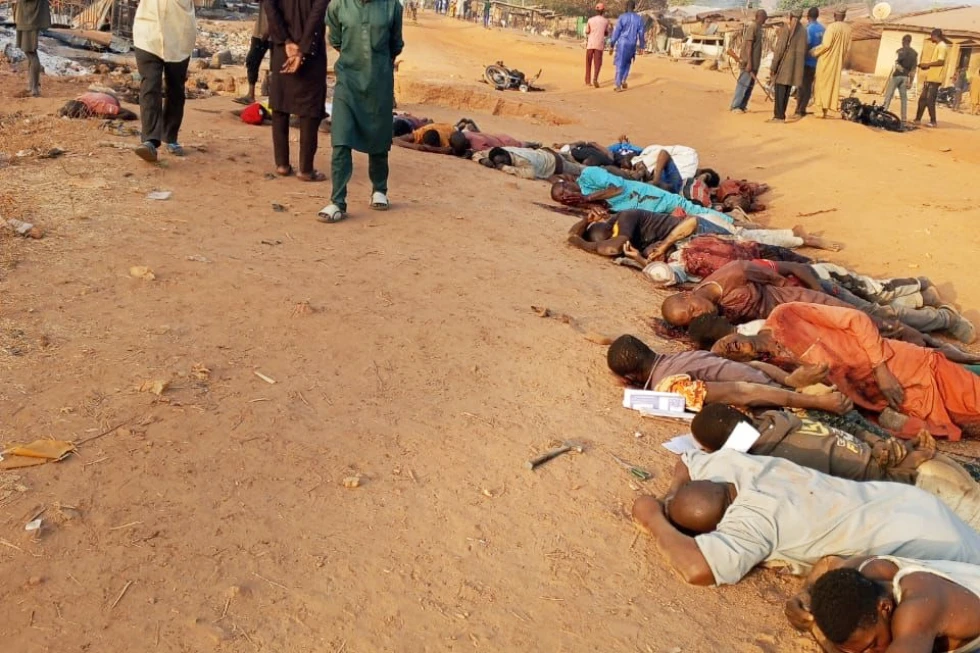
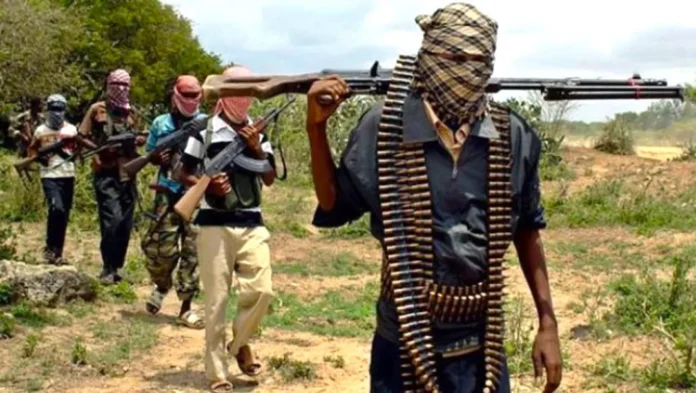
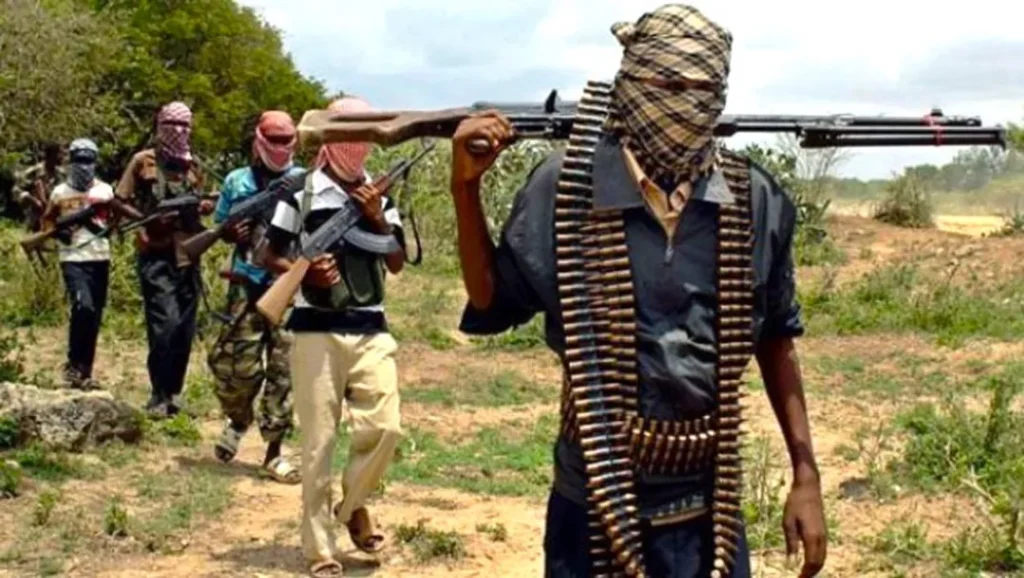
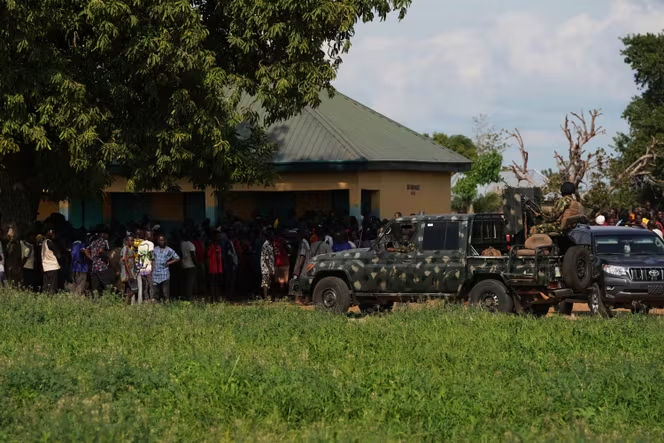
The assaults, which unfolded late Tuesday and into Wednesday, targeted isolated villages in northwestern Katsina State and north-central Kwara State, areas that have increasingly come under attack by heavily armed groups known locally as bandits. Survivors and officials said gunmen stormed villages, set homes ablaze, looted shops and executed residents, forcing hundreds to flee into surrounding forests.

In Kwara State, the deadliest violence was reported in the villages of Woro and Nuku in Kaiama Local Government Area, near Nigeria’s border with Niger and Benin. Saidu Baba Ahmed, the lawmaker representing the area, said by phone that at least 170 people were killed in Woro alone, pushing the combined death toll from the Kwara and Katsina attacks close to 200.

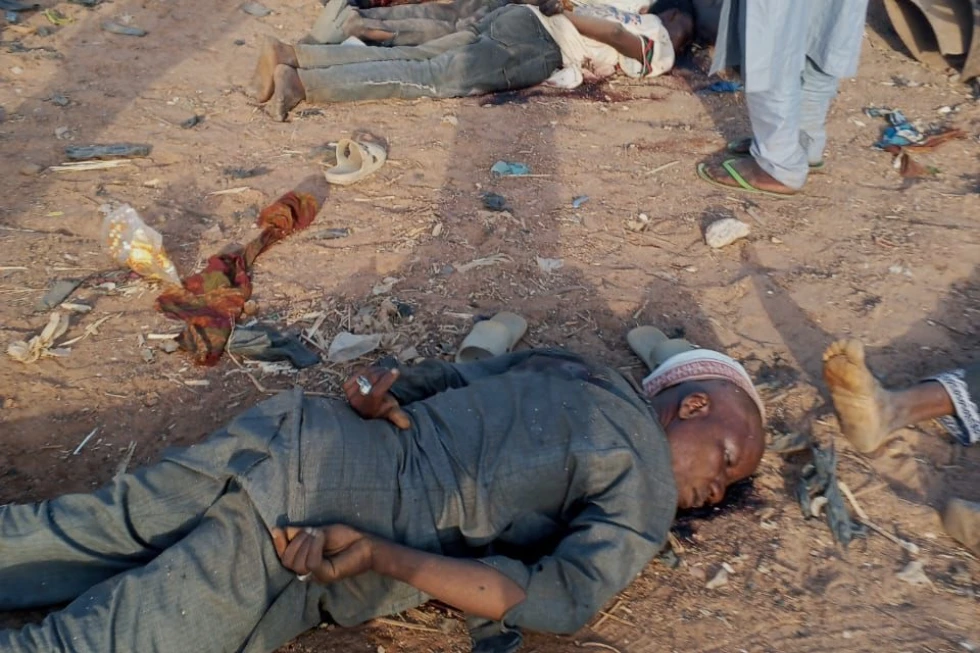
“This is the worst attack we have ever recorded in this district,” Ahmed said, describing scenes of widespread destruction. He said gunmen rounded up villagers, tied their hands behind their backs and shot them at close range. Ahmed shared photographs of bodies with Reuters, though the news agency said it could not independently verify the images.

“As I’m speaking to you now, I’m in the village with military personnel, sorting dead bodies and combing the surrounding areas for more,” Ahmed said, underscoring the scale of the killings and the difficulty of accounting for all the victims.
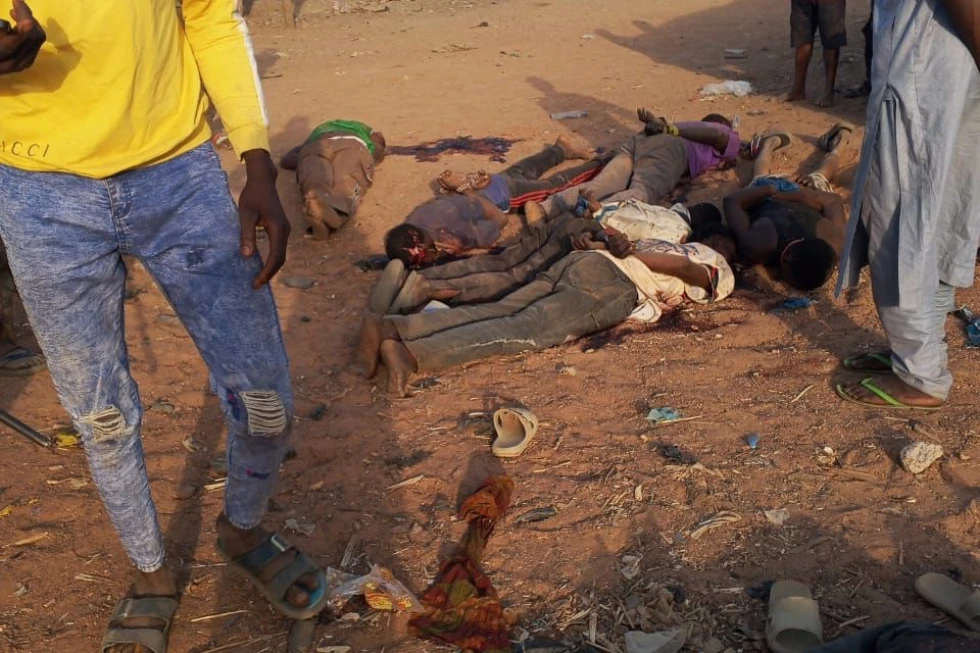
Residents who survived the attack told Reuters that the assailants, believed to be Islamist militants, had previously visited the villages to preach and demand that locals renounce allegiance to the Nigerian state and accept the imposition of Sharia law. When villagers resisted, the gunmen opened fire, witnesses said. Many residents escaped by running into nearby bushland, where some remained missing hours after the attack.

Police confirmed that “scores” of people were killed in Kwara but declined to provide a precise figure. Kwara State police spokesperson Adetoun Ejire-Adeyem said security forces had been deployed alongside the military to carry out search-and-rescue operations and pursue the attackers.

Humanitarian organizations and rights groups warned that the toll could rise further. Amnesty International said in a statement that more than 170 people were killed in the Kwara attacks, adding that homes were burned and shops looted. The group said the gunmen had been sending warning letters to villagers for more than five months, pointing to serious security lapses.

“The failure to act on these warnings is unacceptable,” Amnesty said, calling for an independent investigation and better protection for vulnerable rural communities.

The Nigerian Red Cross said it had been unable to reach the affected villages because of their remoteness. Ayodeji Emmanuel Babaomo, the Red Cross secretary in Kwara State, said the communities are about eight hours’ drive from the state capital and lie close to international borders, complicating access for emergency responders.
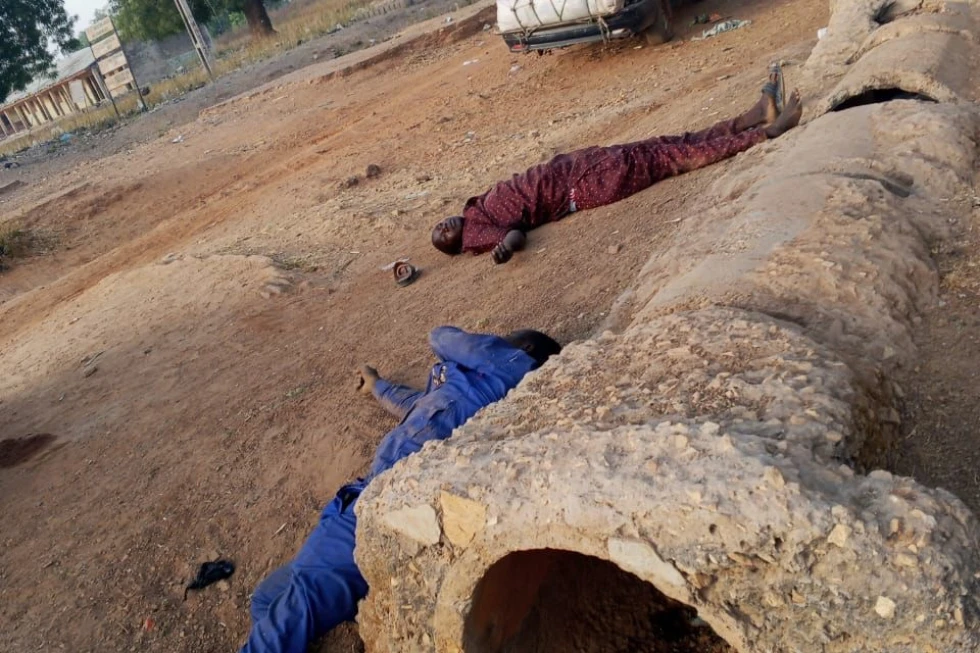
In Katsina State, a separate attack unfolded around the same time in Doma community, Tafoki Ward, Faskari Local Government Area. Residents and local officials said gunmen moved from house to house, shooting villagers and burning property. Earlier accounts put the death toll at around 20, but local sources said additional bodies were later recovered, contributing to the overall figure nearing 200.

The Katsina attack shattered a fragile peace pact that had held for about six months between the community and armed groups. Such informal truces, in which villagers provide food or money to avoid attacks, have become increasingly common in parts of northern Nigeria where state security presence is limited.

A police spokesperson in Katsina, Abubakar Sadiq Aliyu, confirmed the attack but said investigations were ongoing. No group immediately claimed responsibility for the killings.

The Kwara State government condemned the violence, with Governor Abdulrahman Abdulrazaq describing it as a “cowardly expression of frustration by terrorist cells” responding to ongoing military operations against armed groups in the state. His office said security agencies had been ordered to intensify operations to prevent further attacks.

Analysts and lawmakers say the attacks highlight the growing reach and brutality of armed groups operating across Nigeria’s northwest and north-central regions. While banditry in the northwest initially centered on cattle rustling and kidnappings for ransom, recent assaults have increasingly taken on ideological overtones, with some groups linked to extremist organizations.

A member of parliament representing the affected Kwara area, Mohammed Omar Bio, told The Associated Press that the attacks were carried out by Lakurawa, an armed group believed to be affiliated with the Islamic State group. The Nigerian military has previously said Lakurawa has roots in neighboring Niger and became more active in Nigeria’s border communities after a 2023 military coup there.

James Barnett, a researcher at the Washington-based Hudson Institute, said the Kwara massacre was most likely carried out by Jama’atu Ahlis Sunna Lidda’awati wal-Jihad, or JAS, a Boko Haram faction that has been blamed for other mass killings in the region. Nigeria hosts multiple armed groups, including Boko Haram and its offshoot, the Islamic State West Africa Province, as well as the lesser-known Islamic State Sahel Province, known locally as Lakurawa.
The violence comes as Nigeria faces mounting international scrutiny over its ability to protect civilians. U.S. President Donald Trump accused Nigeria last year of failing to protect Christians amid repeated Islamist attacks and mass kidnappings. In December, U.S. forces carried out airstrikes on what they described as terrorist targets in Nigeria, and on Tuesday the head of U.S. Africa Command said a small team of U.S. military officers had been sent to the country to support security efforts.

Nigerian authorities have denied claims of systematic persecution of Christians and say they are working closely with international partners to improve security. Still, the scale of the latest attacks has renewed debate over the effectiveness of military campaigns and the lack of state presence in remote areas.

Beyond the immediate loss of life, the attacks have triggered a humanitarian emergency. Entire villages have been emptied, with survivors seeking refuge in neighboring communities that are themselves struggling with poverty and insecurity. Burned homes, destroyed farms and looted shops mean many families have lost their livelihoods overnight.

Security experts say the near-simultaneous attacks in Katsina and Kwara point to a worrying level of coordination and underscore how armed groups exploit Nigeria’s vast forests, porous borders and limited rural policing. They warn that without sustained security deployments, intelligence-led operations and economic support for vulnerable communities, such massacres could become more frequent.

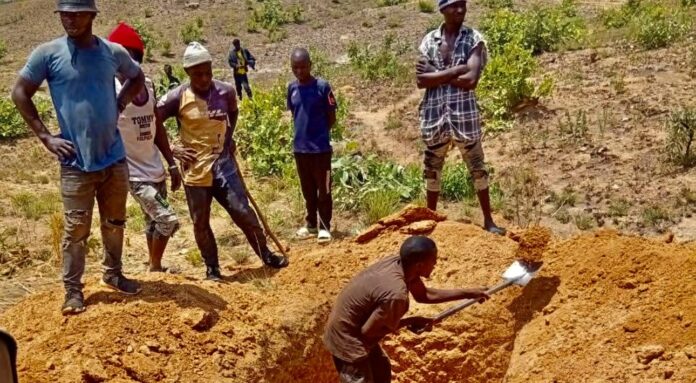
For residents of Woro, Nuku and Doma, the immediate concern is burying the dead and finding the missing. As soldiers and police continue combing surrounding bushland, families wait anxiously for news of loved ones, while community leaders fear that fear and displacement will further erode already fragile social structures.

With the death toll now approaching 200, the attacks rank among the deadliest in Nigeria in recent months, adding urgency to calls for a comprehensive response to a security crisis that shows little sign of easing.

AP/Reuters
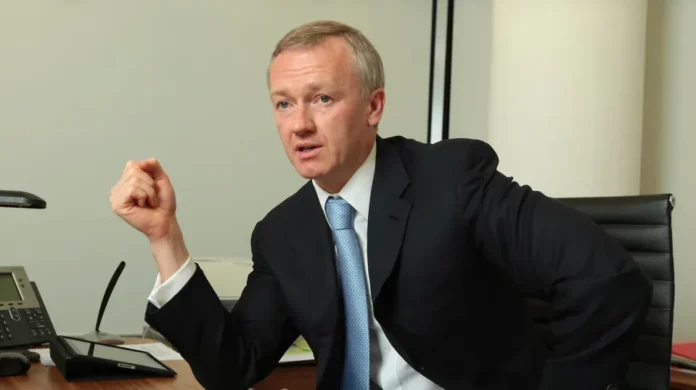
Body Found on Cyprus Beach Identified as Missing Russian Tycoon Vladislav Baumgertner

0

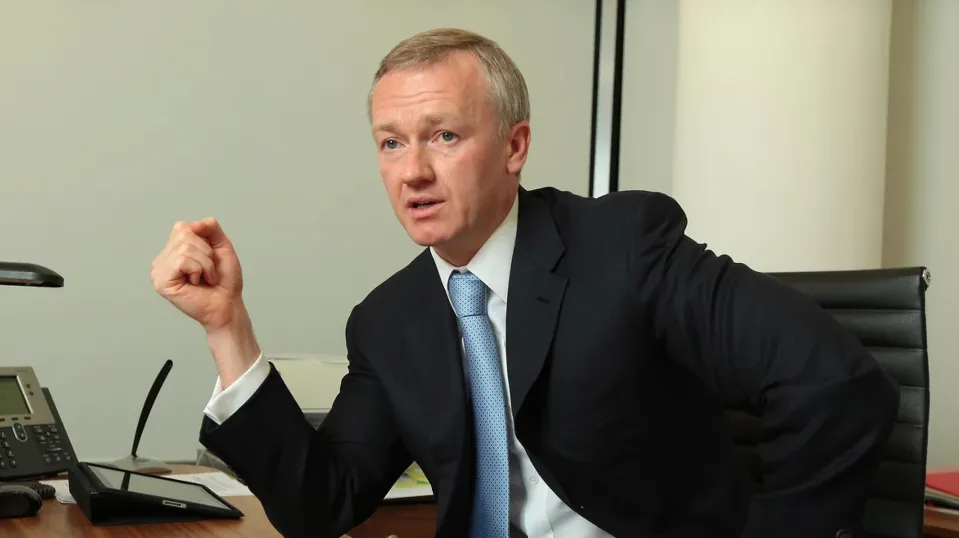
Authorities in Cyprus have identified a body recovered last month from a beach along the island’s southern coast as Vladislav Baumgertner, the former chief executive of Russia’s largest potash producer, whose high-profile detention in Belarus more than a decade ago once rattled global fertilizer markets.

Police operating within the British Sovereign Base Areas on Cyprus said Wednesday that DNA testing confirmed the remains belonged to Baumgertner, 53, who had been reported missing from his home in the coastal city of Limassol on Jan. 7. His body was discovered roughly a week later on Avdimou beach, an area that falls within one of the two military bases Britain retained after Cyprus gained independence from colonial rule in 1960.

Investigators said inquiries into the circumstances and cause of death remain underway. Baumgertner’s family has been formally notified, British base police said, adding that no conclusions have yet been reached regarding whether foul play was involved.

Avdimou lies inside the Western Sovereign Base Area, one of two enclaves where British authorities maintain separate police forces and courts independent of the Republic of Cyprus. Deaths occurring within the bases are handled under British jurisdiction, though cooperation with Cypriot authorities is routine.

Baumgertner had been living in Cyprus for several years and was part of a sizable Russian expatriate community centered in Limassol, a Mediterranean port city that has become a hub for Russian businesses, professionals and retirees. Local media said he had been residing in an apartment above his place of business at the time he disappeared.

While his death has drawn attention locally, Baumgertner’s name is best known internationally for his dramatic arrest in Belarus in 2013, an episode that exposed deep political and economic rifts in the global potash industry.

At the time, Baumgertner was the chief executive of Uralkali, Russia’s dominant potash producer and one of the world’s largest suppliers of the fertilizer ingredient. Belarusian authorities placed him under house arrest in September 2013 during a visit to Minsk, accusing him of abusing his office in a way that damaged the Belarusian economy.

The detention followed a bitter dispute between Uralkali and its Belarusian trading partner, the state-owned Belarusian Potash Co. For years, the two companies had marketed potash exports through a joint venture that controlled roughly a quarter of global supply, giving the partnership significant influence over international prices.

That arrangement unraveled after Uralkali withdrew from the venture, accusing authorities in Minsk of allowing Belarusian Potash Co. to bypass the joint structure and sell independently. The move effectively collapsed the cartel-like alliance and sparked fears of a price war in fertilizer markets already sensitive to shifts in supply.

Belarusian President Alexander Lukashenko publicly accused Uralkali and Baumgertner of deliberately undermining Belarus’s economic interests. Belarusian investigators said Baumgertner’s actions as CEO had caused financial harm to the country, a claim that analysts at the time widely interpreted as political retaliation for Uralkali’s decision to abandon the joint venture.

Baumgertner was held under house arrest for about two months before being released and extradited to Russia. Russian prosecutors later opened their own criminal case against him on abuse-of-office charges, though the matter gradually faded from public view as Uralkali’s corporate leadership changed and global potash markets stabilized.

The episode nonetheless marked one of the most striking instances of a senior Western-educated Russian business executive being detained abroad amid an international commercial dispute. It also underscored the degree to which geopolitics and state interests can intersect with commodity markets, particularly in sectors dominated by a handful of major producers.

Following his release, Baumgertner largely retreated from the public spotlight. His move to Cyprus mirrored a broader trend among Russian business figures who relocated to the island nation in the past two decades, drawn by its favorable tax regime, strategic location and established Russian-speaking community.

Cyprus has long served as a financial and logistical bridge between Russia and Europe, though that role has come under increasing scrutiny in recent years amid tighter European Union regulations and sanctions linked to Russia’s war in Ukraine. Even so, Limassol remains home to thousands of Russian nationals and dual citizens.

The discovery of Baumgertner’s body has raised questions about his final days, though officials cautioned against speculation while the investigation continues. Authorities have not disclosed whether signs of injury were found or whether environmental factors, such as currents or weather conditions, may have played a role.

British base police said forensic examinations are ongoing and that findings will be shared once conclusions are reached. Under procedures governing deaths within the sovereign base areas, any inquest would be conducted through the bases’ own judicial system.

From a broader perspective, Baumgertner’s death closes a chapter on a figure whose career became emblematic of the volatile intersection of business, politics and state power in the post-Soviet space. Once seen as a key player in shaping global fertilizer markets, he later became a symbol of how swiftly fortunes can change when corporate strategy collides with national interests.

For Cyprus, the case also highlights the unique legal and administrative complexities that arise from the presence of British military bases on the island, remnants of colonial history that continue to operate with their own jurisdiction more than six decades after independence.

As investigators work to determine how Baumgertner died, attention remains focused on the unanswered questions surrounding his disappearance and the circumstances that led him from a quiet life in Limassol to a fatal end on a remote stretch of beach.

TheIndependent

Trump Assassination Attempt Defendant Ryan Routh Sentenced to Life Imprisonment by Federal Judge

0

A federal judge sentenced Ryan Routh to life imprisonment Wednesday for attempting to assassinate Donald Trump at a Florida golf course less than two months before the 2024 presidential election, concluding a case that exposed vulnerabilities in presidential security and underscored escalating political violence targeting major American political figures.

U.S. District Judge Aileen Cannon handed down the maximum sentence after determining that Routh, 59, engaged in a “premeditated, calculated plot to take a human life” when he concealed himself in bushes at Trump International Golf Club in West Palm Beach on September 15, 2024, armed with a semi-automatic rifle while the then-candidate golfed nearby.

Routh was convicted by a jury last September of five criminal counts including attempted assassination after controversially serving as his own defense attorney throughout the trial despite lacking formal legal training. The other convictions encompassed three illegal firearm possession charges and one count of impeding a federal officer during his arrest.

Appearing in court shackled and wearing beige prison garb, Routh delivered a rambling 15-minute address that avoided discussing case facts and instead focused on foreign conflicts and his desire to be exchanged for political prisoners held abroad. Judge Cannon eventually terminated his remarks, characterizing them as irrelevant to sentencing considerations.

Routh characterized himself as a “failure,” declared his sentence “totally unimportant” and lamented that “sadly, execution is not an option.” He claimed: “I have given every drop of who I am every day for the betterment of my community and this nation,” assertions that Judge Cannon directly challenged during sentencing.

Prosecutors had recommended life imprisonment while Routh requested a 27-year term through his attorney Martin Roth, who portrayed his client as a troubled and complex individual possessing a “very good core” and genuine concern for others’ wellbeing. The attorney announced plans to appeal both the conviction and sentence following the hearing.

Attorney General Pam Bondi issued a statement emphasizing that Routh will never regain freedom. “Ryan Routh’s heinous attempted assassination of President Trump was not only an attack on our President — it was a direct assault against our entire democratic system,” Bondi declared, framing the crime within broader concerns about threats to American democratic institutions.

Prosecutor John Shipley urged Judge Cannon during the hearing to impose a sentence sending clear messages that political violence remains unacceptable in American society. Shipley characterized Routh’s crimes as aimed at “upending American democracy,” positioning the assassination attempt as threatening constitutional governance beyond endangering one individual.

In delivering the life sentence, Cannon emphasized the “sheer seriousness” of Routh’s offenses while noting his extensive criminal history comprising at least 36 prior convictions. These included possession of a weapon of mass destruction, illegal firearm possession and larceny, demonstrating what the judge characterized as a longstanding pattern of disregarding societal norms and legal constraints.

“There has been much in this case about this narrative of your peaceful nature. For me, it’s the opposite,” Cannon stated, directly rejecting defense characterizations of Routh as fundamentally non-violent despite his attempted assassination of a presidential candidate.

Routh had resided most recently in Hawaii after previously living in North Carolina at the time of his September 2024 arrest. Secret Service agents discovered him hiding in dense vegetation several hundred yards from Trump’s golfing location at the West Palm Beach course, prompting him to flee the scene while leaving behind his semi-automatic rifle and other equipment.

Prosecutors established during trial that Routh arrived in South Florida approximately one month before the incident, staying at a truck stop while tracking Trump’s movements and schedule. He carried six cellular phones and employed fake identities to conceal his presence, according to trial evidence. Investigators determined he lay in wait within thick bushes for nearly 10 hours on September 15 before Secret Service detection.

Law enforcement personnel recovered the abandoned rifle, body armor-like metal plates and a video camera pointed toward the golf course from Routh’s concealment position. These items provided physical evidence corroborating the premeditated nature of the assassination attempt that Judge Cannon emphasized during sentencing.

The September 15 incident constituted the second assassination attempt against Trump during the 2024 campaign season. Two months earlier, a gunman’s bullet grazed Trump’s ear at a campaign rally in Butler, Pennsylvania, killing one attendee and seriously wounding two others before Secret Service counter-snipers killed the shooter.

Both assassination attempts occurred during the run-up to the November 2024 election in which Trump defeated Democratic candidate Kamala Harris to regain the presidency after losing the 2020 election to Joe Biden. The repeated targeting raised profound questions about Secret Service protective capabilities and the escalating dangers facing political figures in increasingly polarized American politics.

Trump transformed the assassination attempts into campaign issues, asserting that the Justice Department under Biden administration leadership could not be trusted to conduct impartial investigations. These claims reflected broader Trump narratives about weaponization of federal law enforcement against him and his supporters.

Routh pleaded not guilty to all charges but dismissed his court-appointed attorneys and chose self-representation at trial despite complete absence of legal training or courtroom experience. This decision proved disastrous, as Routh lacked understanding of evidentiary rules, legal procedures and effective advocacy strategies necessary to mount competent defense.

In earlier court filings, Routh denied intending to kill Trump and expressed willingness to undergo psychological treatment for a personality disorder during imprisonment. He suggested jurors were misled about case facts due to his inability to provide adequate legal defense, essentially arguing his self-representation constituted ineffective assistance of counsel.

Following the jury’s guilty verdict announcement, Routh apparently attempted to stab himself multiple times with a pen, requiring physical restraint by U.S. marshals present in the courtroom. His daughter shouted that her father had harmed no one and vowed to secure his release from prison, emotional outbursts reflecting family trauma surrounding the conviction.

Trump praised the verdict via his Truth Social platform, writing: “This was an evil man with an evil intention, and they caught him.” The former and future president’s characterization emphasized moral condemnation beyond legal culpability, framing Routh as embodying malevolence rather than merely committing crimes.

The life sentence ensures Routh will die in federal custody absent successful appeal or presidential commutation—unlikely given the victim’s identity and current position. At 59 years old at sentencing, Routh faces decades of imprisonment with no possibility of release.

The case highlighted persistent challenges facing Secret Service protective operations in an era when presidential candidates conduct extensive public activities at known locations like private golf clubs. Trump’s preference for golfing at his own properties created predictable patterns that determined adversaries could exploit for attack planning.

The month-long surveillance period Routh allegedly conducted demonstrated sophisticated pre-operational preparation exceeding impulsive violence. His tracking of Trump’s schedule, acquisition of appropriate weapons and equipment, selection of concealment positions, and extended patience waiting for opportunity revealed calculating intent Judge Cannon emphasized when characterizing the plot as premeditated.

The video camera pointed at the golf course suggested Routh may have intended to document the assassination, raising questions about whether he sought notoriety, desired to create propaganda, or planned to share footage with accomplices or ideological compatriots. Investigators have not publicly disclosed whether the camera was activated or contained recordings.

Routh’s possession of six cellular phones under fake identities indicates operational security awareness typically associated with intelligence operatives or sophisticated criminals rather than impulsive actors. This tradecraft knowledge likely derived from extensive internet research or possible prior exposure to clandestine operational techniques.

The 36 prior convictions spanning possession of weapons of mass destruction, illegal firearms and property crimes demonstrate escalating criminal behavior culminating in attempted political assassination. This progression from conventional criminality to politically motivated violence mirrors patterns observed in other domestic extremists who radicalize over time.

Judge Cannon’s appointment by Trump during his first presidency created potential appearance of conflict given she was sentencing an individual who attempted assassinating her appointing president. However, neither prosecution nor defense raised recusal motions, and Cannon’s life sentence imposed the maximum penalty prosecutors requested, suggesting the judicial relationship did not produce leniency.

The case proceeds to appellate review where Routh’s attorney will challenge both conviction and sentence. Likely appeal arguments include ineffective assistance of counsel stemming from self-representation, evidentiary errors during trial, and disproportionate sentencing. However, appellate courts typically grant substantial deference to trial outcomes absent clear legal errors.

For Secret Service personnel responsible for presidential protection, the Routh case provides lessons about perimeter security at semi-public venues like golf courses, the necessity of counter-surveillance detection, and threats posed by determined individuals conducting extended reconnaissance. The agency has presumably implemented enhanced protocols following the two 2024 assassination attempts.

As political polarization intensifies and rhetoric escalates, the Routh prosecution demonstrates that American criminal justice system treats political violence with utmost seriousness regardless of target’s political affiliation or perpetrator’s motivations. The life sentence sends definitive message that assassination attempts against political figures will result in maximum consequences available under law.

 Bandit Attacks Kill 30 in Katsina and Kwara, Nigeria, Shattering Months of Fragile Calm

0

At least 30 people were killed Tuesday in coordinated bandit attacks on rural communities in northwestern Katsina State and north-central Kwara State, Nigeria, local officials and residents said, as armed groups renewed deadly assaults that torched homes, destroyed vehicles and forced villagers to flee into surrounding bushlands.

In Katsina State, gunmen killed no fewer than 20 people when they overran Doma community in Tafoki Ward of Faskari Local Government Area, residents and local authorities said. Survivors said the attackers entered the village without resistance, shooting residents and setting fire to houses and vehicles before withdrawing.

Surajo Aliyu, chairman of Faskari Local Government Area, confirmed the attack and described it as the most lethal incident in the area in several months. He said the assault appeared to be retaliatory in nature, though he did not specify what may have triggered it.

“This was a reprisal attack, and it is extremely deadly,” Aliyu said. “We have not witnessed anything of this magnitude here in the past five months.” He said at least 20 people were killed and significant property was destroyed before the attackers fled.

Aliyu said local authorities alerted security agencies as the assault unfolded, but forces were unable to reach the community in time to stop the killings. “We informed the security personnel, but unfortunately they arrived after the bandits had already carried out their heinous acts,” he said.

The bodies of the victims were evacuated from Doma for burial scheduled for Wednesday morning, Aliyu added, extending condolences to the affected families and the wider Katsina community. “We sympathize deeply with the people of Doma, Tafoki Ward, Faskari and the entire Katsina State. These senseless killings must come to an end,” he said.

The attack marked a grim reversal in Faskari, which had experienced relative calm after local authorities entered into a truce with bandit groups about five months ago. Residents said that agreement had reduced large-scale violence until Tuesday’s raid, raising fresh doubts about the durability of such informal arrangements.

Hundreds of kilometers south, violence also erupted in Kwara State, where at least 10 people were killed when armed men attacked Woro and Nuku communities in Kaiama Local Government Area on Tuesday evening. A community leader, who requested anonymity because of security concerns, said the attackers arrived in large numbers around 6 p.m., firing indiscriminately and causing residents to scatter.

“So far, about 10 people have been confirmed dead,” the community leader said. “Many others ran into the bush, and we are still searching for them. Several houses were set ablaze during the attack.”

Residents and local sources said the attackers were believed to be operating from forested areas of Borgu National Park, which stretches across parts of neighboring Niger State and has long been cited by security officials as a hideout for armed groups involved in banditry and kidnapping.

The Kwara State government said Gov. Abdulrahman Abdulrazaq was closely monitoring developments and condemned the killings. In a statement issued late Tuesday, the governor’s chief press secretary, Rafiu Ajakaye, described the attack as a “cowardly expression of frustration” by terrorist cells facing sustained security pressure.

“The governor condemns the attack, which he says reflects the frustration of terrorist elements following ongoing counterterrorism campaigns and the successes recorded so far,” the statement said. The government suggested the timing of the assault was intended to distract security forces and undermine recent gains against kidnapping gangs in the region.

Abdulrazaq offered condolences to families of the victims and residents of Kaiama, assuring them that security agencies had been instructed to intensify operations to prevent further attacks. As of the time of reporting, however, the Kwara State Police Command had not released an official statement detailing casualties or announcing additional deployments to the affected communities.

Similarly, efforts to obtain comment from the Katsina State Police Command were unsuccessful. Calls and messages sent to police spokesperson DSP Abubakar Sadiq were not returned.

The twin attacks underscore Nigeria’s persistent security crisis, particularly in rural areas across the northwest and north-central regions, where armed groups—often referred to locally as bandits—have carried out mass killings, kidnappings and raids on villages for years. Despite repeated military operations, peace deals and community-level negotiations, violence continues to flare with deadly consequences.

Analysts say the renewed attacks highlight the limitations of truces with armed groups that lack centralized command structures. While such agreements can bring temporary relief, they often collapse when splinter factions defect or when disputes arise over perceived betrayals or unmet demands.

In Katsina, residents said Tuesday’s violence shattered a sense of cautious optimism that had taken hold since the truce. “People thought the worst was behind us,” said a resident who fled Doma during the attack and spoke on condition of anonymity. “Now everyone is afraid again.”

The situation in Kwara reflects a broader southward spread of bandit activity, which was once concentrated mainly in the northwest. Security experts say porous borders between states, vast forest reserves and limited state presence have allowed armed groups to move freely and regroup after security operations.

Beyond the immediate death toll, the attacks carry significant humanitarian implications. Villagers displaced by the violence are seeking refuge in neighboring communities, placing additional strain on already limited resources. Burned homes and vehicles also mean many families have lost their livelihoods overnight, deepening poverty in areas that were already struggling.

The federal government has repeatedly pledged to restore security, deploying troops, police and air assets to affected regions. Yet residents and local officials continue to complain about slow response times, inadequate manpower and the challenges of securing remote settlements.

For communities like Doma, Woro and Nuku, Tuesday’s attacks reinforce a grim reality: despite official assurances and periodic lulls in violence, daily life remains precarious. Until security forces can establish a sustained presence and address the underlying drivers of banditry—ranging from poverty and arms proliferation to weak local governance—residents fear the cycle of attacks and reprisals will continue.

As burial preparations begin in Katsina and search efforts continue in Kwara, families are left to mourn loved ones while bracing for what may come next, uncertain whether the calm will return or if more violence lies ahead.

Israeli Fire Kills 17 Palestinians in Gaza as Fragile Ceasefire Faces Renewed Strain

0

Israeli military fire killed at least 17 Palestinians across the Gaza Strip on Wednesday, most of them women and children, local hospital officials said, while Israel’s army said militant gunfire wounded an Israeli soldier, underscoring the growing fragility of a ceasefire that many Palestinians say exists more on paper than in daily life.

Hospital officials in Gaza said the latest deaths occurred in multiple locations, marking another deadly day since a U.S.-backed truce took effect on Oct. 10, 2025. The agreement was intended to halt large-scale fighting after months of war, but it has been repeatedly tested by Israeli strikes and militant attacks. Gaza’s Health Ministry says more than 530 Palestinians have been killed by Israeli fire since the ceasefire began, a figure that has fueled mounting skepticism among residents and drawn concern from mediators trying to keep the deal intact.

“The genocidal war against our people in the Gaza Strip continues,” Dr. Mohamed Abu Selmiya, director of Shifa Hospital, wrote on Facebook. “Where is the ceasefire? Where are the mediators?” His remarks reflected widespread anger and despair among Palestinians who say the truce has failed to bring meaningful relief after months of devastation.

The Israeli military said Wednesday that its forces came under fire from militants and responded to protect troops operating in Gaza. An Israeli reservist soldier was badly wounded by gunfire and evacuated to a hospital, the army said, describing the militant attack as a violation of the ceasefire agreement. Israeli officials say at least three soldiers have been killed since the truce took hold, and they maintain that military actions are defensive responses to ongoing threats.

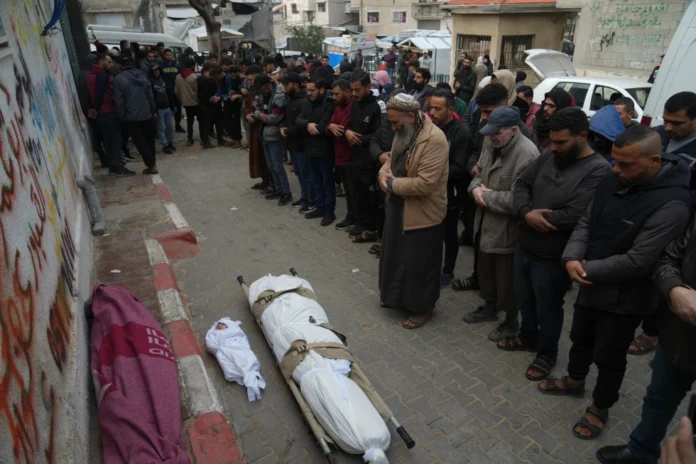
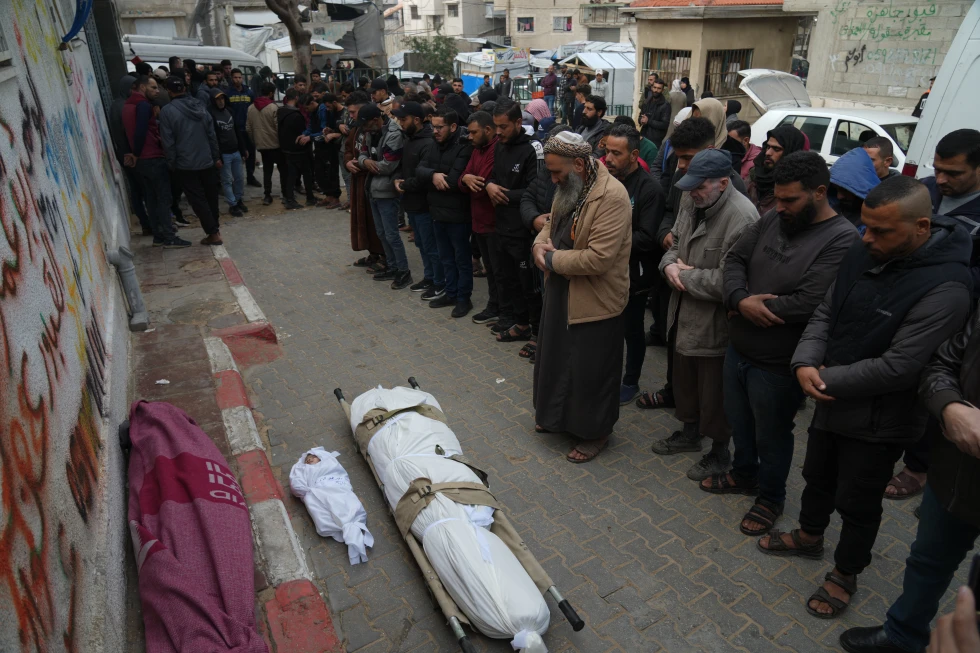
Early Wednesday, Israeli troops fired on a building in the Tuffah neighborhood of northern Gaza, killing at least 11 people, most of them from the same extended family, according to Shifa Hospital, which received the bodies. Hospital officials said the dead included two parents, their 10-day-old baby girl, her 5-month-old cousin and their grandmother. The strike added to the toll of civilians killed in residential areas since the ceasefire began, a pattern that has drawn repeated condemnation from humanitarian groups.

The Israeli military said aircraft and armored units returned fire after militants began shooting at troops in the area. It did not provide details about the militants targeted or comment on the civilian casualties reported by hospital officials. As with many recent incidents, independent verification of events on the ground was not immediately possible.

Additional strikes across Gaza pushed the death toll higher. In the southern city of Khan Younis, a strike hit a family’s tent, killing three people, including a 12-year-old boy, according to Nasser Hospital, which received the bodies. Elsewhere, tank shelling in Gaza City’s eastern Zaytoun neighborhood killed three more Palestinians, including a husband and wife, Shifa Hospital officials said.

The cumulative effect of these incidents has shaken confidence in the ceasefire among Gaza’s 2.3 million residents, many of whom have been displaced multiple times and are living in overcrowded shelters or makeshift camps. While large-scale bombardments have subsided compared with earlier phases of the war, Palestinians say daily life remains marked by fear, insecurity and sudden violence.

Mediators involved in brokering the truce have criticized the attacks and urged restraint. Hamas has accused Israel of repeatedly breaching the agreement, while Israel says Hamas and other militant groups continue to stage attacks on its forces, leaving the military little choice but to respond. The competing narratives have complicated efforts to stabilize the ceasefire and move toward broader talks on ending the conflict.

Since the war began, more than 71,800 Palestinians have been killed, according to Gaza’s Health Ministry. The ministry does not distinguish between civilians and combatants in its public counts, but it maintains detailed casualty records that United Nations agencies and independent experts generally view as credible. Israel disputes some of the figures but has not released comprehensive data of its own on Palestinian casualties.

The latest violence comes amid growing international concern that the ceasefire could collapse entirely. Diplomats say the truce was always fragile, built on narrow understandings rather than a comprehensive political framework. Without progress on issues such as humanitarian access, prisoner exchanges and a path toward governance in Gaza, analysts warn that sporadic violence could easily spiral back into full-scale war.

Beyond the immediate bloodshed, the ongoing strikes highlight deeper questions about the sustainability of ceasefires in asymmetrical conflicts where one side maintains overwhelming military superiority and the other operates through dispersed militant networks. Israeli officials argue that even limited militant attacks pose unacceptable risks to their troops and civilians, while Palestinians and human rights groups say the cost is borne disproportionately by civilians in Gaza.

The humanitarian implications are stark. Hospitals in Gaza, already strained by shortages of fuel, medicine and staff, continue to receive casualties despite the ceasefire. Doctors say treating repeated waves of wounded civilians while lacking basic supplies has become a grim routine. Aid groups warn that without a genuine halt to hostilities, rebuilding Gaza’s shattered infrastructure will remain impossible.

Politically, the rising death toll threatens to undermine U.S. and regional efforts to position the ceasefire as a stepping stone toward a longer-term settlement. Public anger in Gaza, coupled with hardline positions in Israel, narrows the space for compromise. Each new incident hardens attitudes and reinforces mutual distrust, making it harder for mediators to convince either side that restraint serves their interests.

For Palestinians like those mourning families in Tuffah, Khan Younis and Zaytoun, the debate over violations and responses feels distant from daily reality. Many say the promise of a ceasefire has been overshadowed by continued loss, leaving them to question whether the war has truly paused or simply changed form.

As the truce enters another uncertain phase, the events of Wednesday stand as a stark reminder that without robust enforcement and political follow-through, ceasefires in Gaza risk becoming little more than fragile interludes in a cycle of violence that has already claimed tens of thousands of lives.

The Associated Press

United States Deploys Military Team to Nigeria Following Airstrikes Against Islamic State Affiliates

0

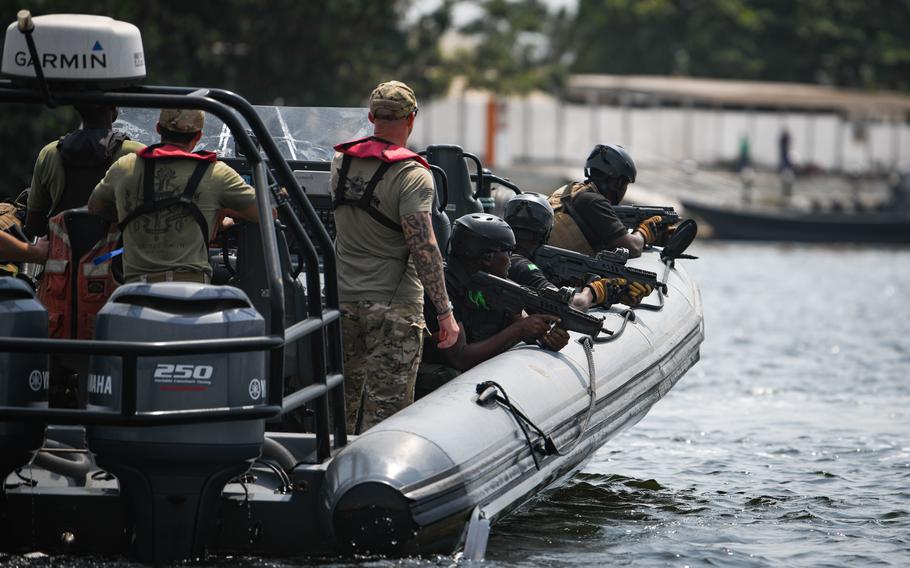
The United States has deployed a small military team to Nigeria as part of expanding security cooperation following airstrikes against Islamic State-affiliated groups, the commander of U.S. Africa Command disclosed Tuesday, marking an intensification of American military involvement in the West African nation’s counterterrorism efforts.

General Dagvin R.M. Anderson revealed during a media briefing that the deployment followed his meeting with Nigerian President Bola Tinubu in Rome late last year. The military officers bring specialized capabilities intended to augment Nigeria’s ongoing counterinsurgency operations against multiple armed groups terrorizing the country.

“That has led to increased collaboration between our nations, to include a small U.S. team that brings some unique capabilities from the United States in order to augment what Nigeria has been doing for several years,” Anderson explained. The general did not specify when the team arrived in Nigeria or provide details regarding the size or specific mission parameters of the deployment.

The military presence represents the latest development since U.S. forces launched airstrikes on December 25 against groups affiliated with the Islamic State operating in northwestern Nigeria. President Donald Trump announced the Christmas Day strikes via social media, characterizing them as “powerful and deadly” operations against Islamic State forces he accused of systematically targeting Christian civilians.

Trump’s December 25 post on his social media platform did not provide operational details or specify the extent of damage inflicted by the strikes in Sokoto state. A Defense Department official, speaking anonymously to discuss non-public information, confirmed the United States coordinated with Nigeria to execute the strikes and that Nigerian authorities in Abuja approved the operations.

Nigeria’s Ministry of Foreign Affairs characterized the cooperation as including intelligence exchange and strategic coordination conducted “consistent with international law, mutual respect for sovereignty and shared commitments to regional and global security.” The diplomatic language reflects sensitivity regarding foreign military operations on Nigerian territory and the government’s desire to emphasize sovereign control over security decisions.

The Associated Press could not independently verify the extent of the strikes’ impact or casualty figures from the operations. This information gap reflects both operational security considerations and the remote locations where strikes likely occurred, limiting immediate damage assessment and media access.

Nigeria confronts security threats from multiple armed groups including at least two Islamic State affiliates. The Islamic State West Africa Province operates primarily in the northeastern region as an offshoot of Boko Haram extremist organization. The less-known Lakurawa group has gained prominence in northwestern states, utilizing vast forest areas as operational bases for attacks against communities and security forces.

Security analysts suggested the Lakurawa organization likely constituted the primary target of U.S. strikes given its increasing lethality and territorial control in Sokoto and neighboring Kebbi states. “Lakurawa is a group that is actually controlling territories in Nigeria, in Sokoto state and in other states like Kebbi,” explained Malik Samuel, a Nigerian security researcher at Good Governance Africa. “In the northwest, there has been the incursion of violent extremist groups that are ideologically driven.”

Samuel attributed the extremist expansion to “the near absence of the state and security forces in hot spots,” highlighting governance failures that create environments permitting armed groups to establish territorial control and impose authority over civilian populations.

Trump justified the airstrikes by asserting they targeted Islamic State militants “who have been targeting and viciously killing, primarily, innocent Christians.” This characterization sparked immediate pushback from Nigerian officials, residents and security analysts who emphasized that violence affects both Christians—predominant in southern regions—and Muslims, who constitute the majority in northern areas.

“Terrorist violence in any form, whether directed at Christians, Muslims or other communities, remains an affront to Nigeria’s values and to international peace and security,” Nigeria’s Ministry of Foreign Affairs declared, directly challenging Trump’s framing of the security crisis as specifically targeting Christians.

The Nigerian government has consistently rejected Trump administration claims of Christian genocide, emphasizing that armed groups attack victims regardless of religious affiliation. This factual dispute reflects fundamental disagreement about the nature of Nigeria’s security crisis and appropriate international responses.

Nigeria has found itself in diplomatic crosshairs following Trump’s repeated accusations that the West African nation fails to adequately protect Christian citizens. These allegations prompted the United States to designate Nigeria as a “Country of Particular Concern” under the International Religious Freedom Act—a congressional designation for countries responsible for religious oppression.

This designation carries potential consequences including visa restrictions and economic sanctions, though the practical impact depends on implementation decisions by the State Department. The designation primarily serves symbolic and diplomatic functions, signaling American displeasure with perceived religious freedom violations.

The State Department recently announced visa restrictions for Nigerians and family members allegedly involved in killing Christians, though specific criteria for determining involvement and the number of individuals affected remain unclear. These measures represent punitive responses intended to pressure Nigerian authorities toward policy changes.

Trump ordered the Pentagon last month to develop plans for potential military action in Nigeria to address what he characterized as Christian persecution. This directive suggested possibilities for expanded military operations beyond the limited airstrikes already conducted, though the feasibility of larger interventions remains questionable.

Defense Secretary Pete Hegseth amplified the administration’s messaging Thursday night via social media platform X, asserting “The President was clear last month: the killing of innocent Christians in Nigeria (and elsewhere) must end.” Hegseth claimed U.S. military forces are “always ready, so ISIS found out tonight — on Christmas,” adding “More to come…Grateful for Nigerian government support & cooperation” before concluding “Merry Christmas!”

The Christmas timing of military strikes generated criticism from some quarters as inappropriate militarization of a religious holiday, while others viewed it as symbolically defending Christians on Christianity’s most sacred celebration.

The diplomatic dispute paradoxically has accelerated military cooperation between Washington and Abuja despite tensions over Trump’s characterizations of Nigeria’s security situation. The cooperation terms remain partially opaque, though confirmed elements include U.S. military equipment supplies, reconnaissance mission support across Nigerian territory, and now direct military personnel deployment.

Nigeria’s population of approximately 220 million divides almost equally between Christians and Muslims, with complex geographic, ethnic and religious dynamics shaping the country’s social fabric. The nation has confronted persistent insecurity from multiple sources including Boko Haram, which seeks to impose its radical Islamic law interpretation and has targeted Muslims deemed insufficiently devout alongside Christian communities.

Attacks in Nigeria frequently reflect varying motivations beyond religious ideology. Violence stems from religiously motivated extremism targeting both faiths, farmer-herder conflicts over diminishing natural resources, communal rivalries, secessionist movements and ethnic clashes. This complexity challenges simplified narratives attributing all violence to anti-Christian persecution.

Last month, armed groups launched coordinated attacks on three churches in northwestern Kaduna state, abducting 168 people in operations that generated international attention and provided evidence supporting Trump’s Christian persecution claims. However, these incidents represent one category within Nigeria’s broader security crisis rather than defining the entirety of violence affecting the nation.

The diminishing U.S. security footprint across Africa—where military partnerships have been scaled down or terminated in multiple countries—complicates prospects for large-scale American military intervention in Nigeria. U.S. forces likely would require redeployment from other global theaters for any substantial Nigerian operation, competing with commitments in Europe, Middle East and Indo-Pacific regions.

Recent American military withdrawals from Niger and reductions in other African nations reflect strategic reassessments and deteriorating relationships with governments skeptical of U.S. intentions. This context makes the Nigeria deployment noteworthy as countertrend, though the small team size suggests limited engagement rather than major commitment.

General Anderson’s emphasis on the team bringing “unique capabilities” suggests specialized functions potentially including intelligence collection, training advisory roles, or technical expertise unavailable within Nigerian security forces. These capabilities might encompass signals intelligence, drone operations, special operations planning or counterterrorism tactical training.

The deployment’s impact will depend substantially on mission scope, rules of engagement, and Nigerian receptivity to American military presence. Previous foreign military assistance programs in Nigeria have faced challenges including corruption, human rights concerns about recipient units, and limited sustainability when external support concludes.

Nigeria battles Boko Haram insurgency that has killed tens of thousands since 2009 and displaced millions from their homes in the northeast. The group’s 2014 kidnapping of 276 schoolgirls from Chibok generated global outrage and the #BringBackOurGirls campaign, though many victims remain missing years later.

The Islamic State West Africa Province split from Boko Haram in 2016, establishing itself as the dominant insurgent force in northeastern Borno state and adjacent areas. The group controls territory, administers its version of Islamic governance, and conducts sophisticated military operations against Nigerian security forces.

Northwestern violence involves different actors and dynamics than northeastern insurgencies. Armed criminal gangs often labeled “bandits” terrorize rural communities through kidnapping for ransom, cattle rustling and village raids. Some groups have adopted Islamist ideologies, blurring distinctions between criminality and extremism.

The Lakurawa group represents this evolution, combining criminal activities with jihadist ideology and territorial ambitions. Its emergence in northwestern states previously dominated by non-ideological banditry signals dangerous radicalization trends that could transform Nigeria’s security landscape.

Trump’s continued pressure on Nigeria despite expanded cooperation reflects his administration’s determination to demonstrate action on Christian persecution issues important to evangelical supporters. Whether military strikes and advisory deployments meaningfully improve security for Christian or Muslim Nigerians remains uncertain given the complex, multifaceted nature of violence affecting the country.

Reuters/SaharaReporters

Saif al-Islam Gaddafi Assassinated in Libya, Ending Bid by Former Regime Heir to Reclaim Power

0

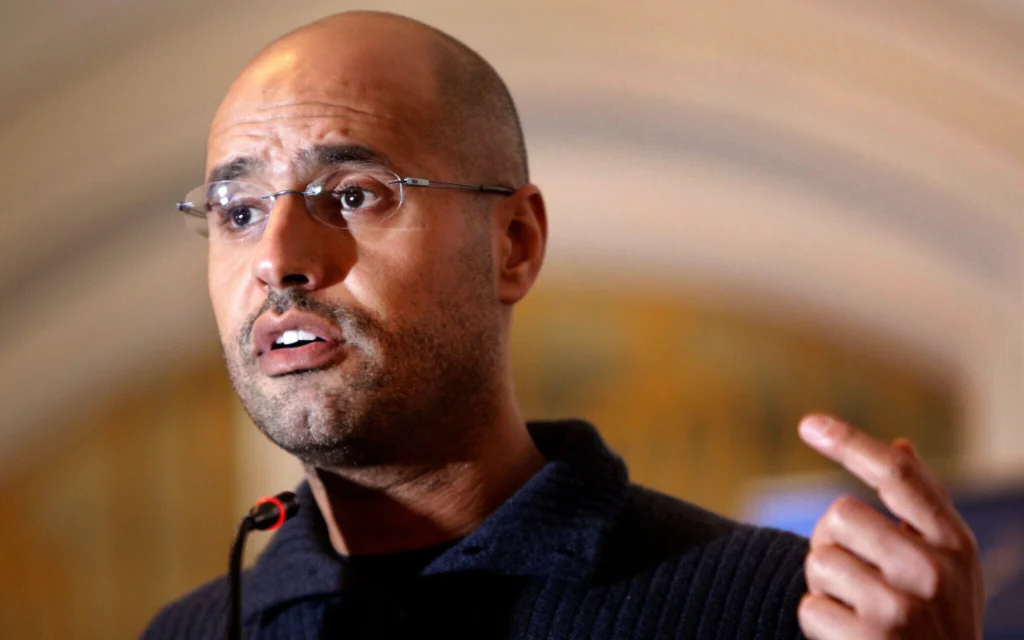
Saif al-Islam Gaddafi, the son of Libya’s longtime autocratic ruler Muammar Gaddafi and once the regime’s most prominent heir, was killed early Tuesday after gunmen opened fire at his residence in western Libya, Libyan media and sources close to his family said, abruptly ending a controversial political comeback attempt that had reopened deep wounds from the country’s past.

Saif al-Islam, 53, was shot and killed in the garden of his home in Zintan, a town in Libya’s Nafusa Mountains where he spent years in captivity following the 2011 uprising that toppled his father. Saudi-owned broadcaster Al Arabiya first reported that four attackers confronted him at the property and fled shortly afterward. The killing occurred at about 2:30 a.m. local time, the outlet said.

Reuters, citing sources close to the family and Saif al-Islam’s lawyer Khaled el-Zaydi, confirmed his death but said details surrounding the circumstances were still emerging. Libyan authorities have not yet issued an official account, and no group immediately claimed responsibility.

Saif al-Islam had lived largely out of public view in recent years, aware that his name alone made him a target in a country still fractured by militia rule, political paralysis and unresolved grievances from decades of dictatorship and a brutal civil war.

Once viewed as Libya’s most powerful figure after his father, Saif al-Islam occupied a singular position in the regime before 2011. Educated at the London School of Economics and fluent in English, he cultivated ties with Western governments and institutions, presenting himself as a reform-minded figure capable of guiding Libya out of international isolation.

He played a central role in negotiations that led Libya to abandon its weapons of mass destruction program and helped broker compensation for the families of victims of the 1988 bombing of Pan Am Flight 103 over Lockerbie, Scotland. For years, diplomats and analysts regarded him as the acceptable face of a regime seeking rehabilitation.

That image collapsed during the Arab Spring. When protests erupted against Muammar Gaddafi’s four-decade rule in 2011, Saif al-Islam publicly aligned himself with his father and became one of the most visible advocates of a violent crackdown. In televised speeches cited by Reuters at the time, he warned that “rivers of blood” would flow and dismissed opponents as “rats,” vowing that the regime would fight to the last.

“We fight here in Libya, we die here in Libya,” he said in an interview during the uprising, predicting that the country would descend into chaos if his father fell.

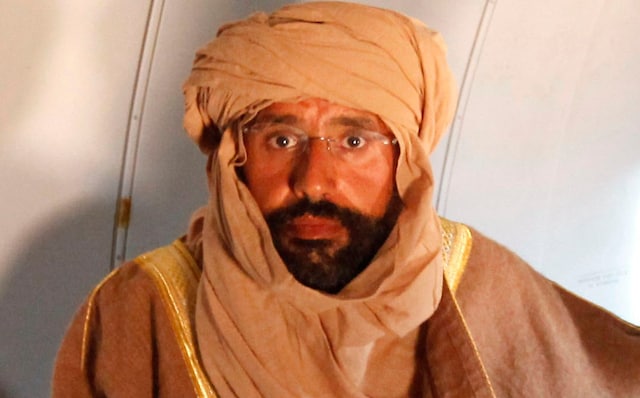
After Tripoli was overrun by rebel forces, Saif al-Islam attempted to flee toward neighboring Niger disguised as a Bedouin tribesman. He was captured on a desert road by the Abu Bakr Sadik Brigade militia and flown to Zintan about a month after his father was hunted down and killed by rebels.

Audio recordings from that period captured Saif al-Islam telling those around him that leaving Libya would mean certain death. “They’ll empty their guns into me the second I go out there,” he said.

He spent the next six years detained in Zintan, far removed from the privileged life he had once led. Human Rights Watch representatives who met him during his captivity said he did not allege physical abuse, though they raised concerns about prolonged solitary confinement. Hanan Salah, the group’s Libya director, told Reuters he appeared isolated, missing a tooth and cut off from visitors, though he was allowed access to television and books.

In 2015, a court in Tripoli sentenced Saif al-Islam to death by firing squad for war crimes, a verdict issued in absentia while he remained in militia custody. He was also charged by the International Criminal Court, which issued an arrest warrant accusing him of crimes against humanity, including murder and persecution.

He was released by the Zintan militia in 2017 under an amnesty law passed by Libya’s eastern-based authorities, though the ICC warrant remained outstanding. From that point, Saif al-Islam largely disappeared from public life, living under protection and moving cautiously to avoid assassination, Libyan analyst Mustafa Fetouri told Reuters.

Despite the legal and political obstacles, Saif al-Islam reemerged in 2021, filing paperwork to run in Libya’s long-delayed presidential election. Wearing traditional Libyan dress, he appeared in the southern city of Sabha to register his candidacy, betting that nostalgia for the relative stability of his father’s rule would resonate with voters weary of a decade of conflict and economic collapse.

His bid immediately polarized the country. Victims of the Gaddafi era and armed groups that fought the regime rejected his return outright, while others argued that excluding him undermined claims of an inclusive political process. Libya’s High National Elections Committee ultimately disqualified him because of his criminal convictions, a decision he attempted to appeal.

The appeal process descended into chaos when armed fighters blocked access to the court, a standoff that became emblematic of Libya’s inability to hold a national vote. The election collapsed soon afterward, plunging the country back into political stalemate.

In a 2021 interview with The New York Times Magazine, Saif al-Islam outlined his long-term strategy, acknowledging the hostility he faced. “I’ve been away from the Libyan people for 10 years,” he said. “You need to come back slowly, slowly.”

His death now removes one of the most divisive figures from Libya’s already crowded political landscape. Analysts say the killing underscores the persistent dangers facing anyone associated with the former regime and the enduring absence of rule of law.

From an analytical standpoint, Saif al-Islam’s assassination highlights the unresolved legacy of Libya’s 2011 revolution. While his supporters saw him as a symbol of order and national sovereignty, opponents viewed his return as an insult to those who suffered under his father’s rule. That divide remains central to Libya’s instability.

The killing may also deter other controversial figures from reentering politics, reinforcing a climate where violence continues to shape outcomes more than institutions. With rival governments still competing for legitimacy and armed groups exercising de facto control across much of the country, political disputes frequently spill into lethal confrontations.

Libyan authorities said an investigation was expected, though accountability in high-profile killings has historically been elusive. For many Libyans, Saif al-Islam’s death closes a chapter that began with the fall of his father but leaves unanswered questions about justice, reconciliation and the country’s path forward.

Reuters

14 Migrants Killed in Aegean Sea After Boat Collides With Greek Coast Guard Near Chios

0

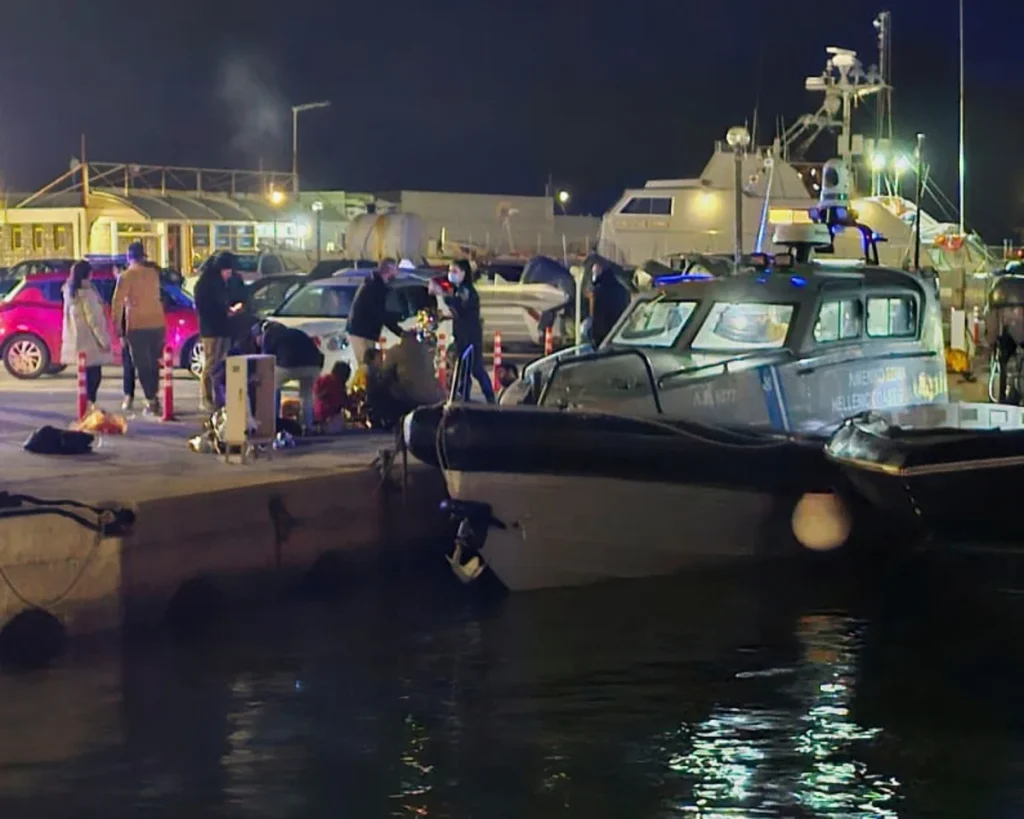
Fourteen migrants were killed early Tuesday in the Aegean Sea after a small boat carrying them collided with a Greek coast guard vessel off the eastern island of Chios, authorities said, reviving scrutiny of Greece’s maritime enforcement practices along one of Europe’s most sensitive migration corridors.

The Greek coast guard said the incident occurred when officers identified an inflatable dinghy moving toward Chios, an island just a few miles from the Turkish coast, and attempted to intercept it. A coast guard official said the migrants’ vessel was ordered to turn back but instead altered course, leading to a collision at sea.

“The smugglers manoeuvred toward the coast guard vessel, causing a collision,” the official said in an account provided to Reuters.

Reuters said it was unable to independently confirm the precise sequence of events that led to the crash. Authorities have not yet released details about the nationalities of those on board, nor the identities of the victims.

A second coast guard official told Reuters that 24 migrants were rescued from the water following the collision. Two coast guard officers were injured during the incident and taken to a hospital for treatment. A government official said witnesses estimated that between 30 and 35 people had been aboard the dinghy before the collision.

Search-and-rescue operations continued throughout the day, involving multiple coast guard vessels, private boats and divers, the coast guard said. Officials did not rule out the possibility that additional victims could still be missing as efforts continued in the surrounding waters.

The deadly incident unfolded in one of the most heavily trafficked maritime routes for migrants attempting to reach the European Union from Turkey. Chios, like several other Greek islands in the eastern Aegean, has long been a frontline destination for people fleeing conflict, poverty and instability in parts of the Middle East, Africa and Asia.

Greece sits at the southeastern edge of the EU and has for years served as a primary gateway for asylum seekers hoping to reach Europe. During the height of the migration crisis in 2015 and 2016, nearly one million people arrived on Greek islands after crossing from Turkey, overwhelming local infrastructure and prompting emergency measures across the bloc. Chios was among the islands that saw mass arrivals during that period.

In the years since, arrivals have fallen significantly as Greece tightened border controls and expanded patrols at sea. Since 2019, the country’s center-right government has pursued a policy of deterrence, reinforcing land borders with fences and increasing maritime surveillance to prevent irregular crossings.

The government maintains that its approach complies with international law and is necessary to disrupt smuggling networks and protect lives. Greek officials routinely argue that dangerous crossings encouraged by traffickers are responsible for fatalities in the Aegean, rather than enforcement actions by authorities.

Still, Greece has faced repeated criticism from human rights groups, international organizations and media investigations over its handling of migrants at sea. Allegations have included claims that asylum seekers were forcibly returned toward Turkish waters — practices commonly referred to as “pushbacks” — without being allowed to lodge asylum claims.

Those concerns intensified following a separate maritime disaster in 2023, when hundreds of migrants died after a fishing trawler sank off southern Greece. Survivors and witnesses alleged that the coast guard attempted to tow the overcrowded vessel before it capsized. Greek authorities denied wrongdoing in that case, but the incident remains one of the deadliest migrant shipwrecks recorded in the Mediterranean in recent years.

The European Union’s border agency, Frontex, said last year that it was reviewing 12 cases involving Greece for potential violations of fundamental rights, including allegations that migrants were pushed back from Greek frontiers. Greece has consistently rejected those accusations, saying it does not conduct illegal returns and that all operations are carried out in line with European and international obligations.

Tuesday’s collision is likely to add to ongoing debates within the EU over border enforcement, accountability and the balance between deterrence and humanitarian protection. While Greece argues that aggressive patrols are essential to combat organized smuggling rings, critics say such tactics increase the risk of fatal encounters at sea, especially when small, overcrowded boats are involved.

Maritime safety experts note that inflatable dinghies used by smugglers are highly unstable and vulnerable to capsizing, particularly when sudden maneuvers occur near larger vessels. Even low-speed collisions can prove catastrophic, especially at night or in rough conditions, when passengers may not be wearing life jackets.

From a broader analytical perspective, the incident underscores the structural pressures still shaping migration in the eastern Mediterranean. Despite reduced arrival numbers compared with a decade ago, economic hardship, conflict and political repression in migrants’ countries of origin continue to drive attempts to reach Europe. Smuggling networks exploit these pressures, often launching boats under unsafe conditions to evade detection.

The deaths also highlight the limited progress made toward a unified EU migration policy. Frontline states such as Greece remain responsible for border enforcement and initial reception, while broader responsibility-sharing mechanisms among EU members remain politically contested. That imbalance, analysts say, contributes to tougher national enforcement strategies that prioritize deterrence.

For residents of islands like Chios, the incident reopens painful memories of the migration crisis years, when local communities were thrust into the center of a humanitarian emergency. While arrivals have dropped, fatal accidents continue to occur, reinforcing the sense that the Aegean remains a dangerous crossing despite intensified controls.

Greek officials said an investigation into the collision is underway, though no timeline has been provided for preliminary findings. The coast guard said it would cooperate with judicial authorities to establish the circumstances of the incident.

As recovery efforts continued, humanitarian organizations renewed calls for safer migration pathways and greater transparency in maritime operations. Without such measures, they argue, tragedies like Tuesday’s collision are likely to persist.

For now, the deaths of 14 migrants off Chios stand as the latest reminder of the human cost of irregular migration and the unresolved tensions at Europe’s borders — where enforcement, humanitarian duty and political pressure continue to collide in the waters of the Aegean Sea.

Reuters

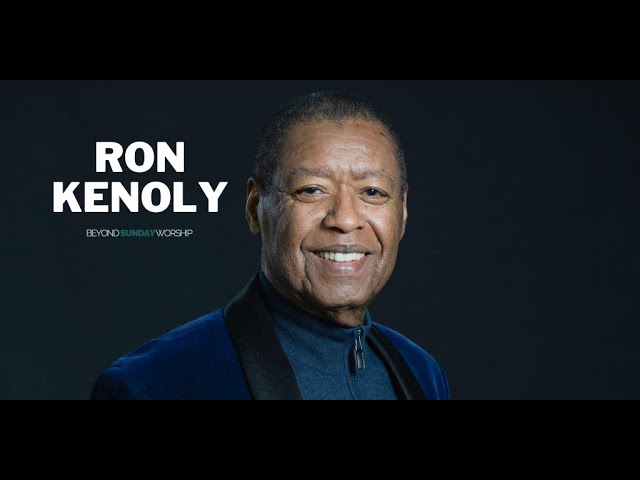
Gospel Music Pioneer Ron Kenoly Dies at 81, Leaving Legacy of Global Worship Transformation

0

Renowned American gospel singer, worship leader and pastor Ron Kenoly died Tuesday at age 81, prompting an international outpouring of tributes from Christian music communities and worship leaders who credit him with fundamentally reshaping contemporary praise and worship music across multiple continents.

His death on February 3, 2026, was confirmed by longtime music director Bruno Miranda through an Instagram post that characterized Kenoly’s ministry as marked by unwavering faithfulness and a distinctive understanding of worship leadership transcending entertainment or artistry.

“This morning, February 3, 2026, we said goodbye to Dr. Ron Kenoly,” Miranda wrote. “For over 20 years, I had the honor of walking alongside him in ministry around the world—not just as his music director, but as a son, a student, and a witness to a life marked by faithfulness. Doc was very intentional about one thing: he was never an artist, never an entertainer. He was a worship leader. And he took all the time necessary to explain what that truly meant.”

This distinction—between performance-oriented artistry and worship leadership focused on facilitating congregational encounter with the divine—defined Kenoly’s approach throughout a career spanning more than three decades and influencing generations of Christian musicians worldwide.

Born December 6, 1944, in Coffeyville, Kansas, Kenoly rose to international prominence during the late 20th century as contemporary Christian music evolved from traditional hymn-based worship toward more dynamic, participatory expressions. He gained widespread acclaim with the 1992 release of “Lift Him Up With Ron Kenoly,” an album that helped redefine praise music through its energetic, congregation-engaging approach.

Songs including “Ancient of Days,” “Jesus Is Alive” and “We’re Going Up” became enduring worship classics sung in churches spanning denominational, cultural and geographic boundaries. These compositions transcended their original recordings to become foundational elements of modern worship repertoires, with congregations worldwide incorporating Kenoly’s melodies and lyrics into regular services.

Over his prolific career, Kenoly released more than 20 albums including “God Is Able,” “Sing Out With One Voice” and “Welcome Home.” His energetic, choir-backed performances and congregational worship style broke new ground by blending gospel traditions, contemporary praise expressions and Christian music in innovative combinations that influenced subsequent generations of worship leaders.

Kenoly’s ministry and music resonated far beyond American borders, reaching churches across Africa, Europe, Asia and the Americas where his recordings became integral components of worship services. His global impact reflected both the universal themes embedded in his compositions and his intentional engagement with international Christian communities through tours, conferences and mentorship relationships.

Beyond recording and performance, Kenoly served as respected pastor and worship leader, holding prominent positions including his tenure at Jubilee Christian Center in San Jose, California. His pastoral role grounded his musical ministry in theological foundations and practical church leadership, distinguishing his approach from purely commercial Christian entertainment.

Kenoly became a regular presence at international worship conferences, seminars and church events where he mentored worship teams and led large-scale praise gatherings. These educational and ministerial activities extended his influence beyond recorded music, enabling him to personally shape worship philosophies and practices for thousands of musicians and ministry leaders.

His teaching emphasized the spiritual dimensions of worship leadership, stressing that effective worship facilitation requires more than musical competence—it demands spiritual maturity, theological understanding and genuine devotion. This holistic approach to worship ministry became characteristic of Kenoly’s legacy, influencing how churches conceptualize and train worship leaders.

Following the announcement of his death, tributes poured in from gospel artists, pastors and admirers worldwide. Nigerian gospel minister Nathaniel Bassey numbered among notable worship leaders acknowledging Kenoly’s profound influence on multiple generations of psalmists. Bassey and others credited Kenoly with demonstrating possibilities for worship music that balanced artistic excellence with spiritual authenticity.

The international scope of tributes—spanning continents and denominations—testifies to Kenoly’s remarkable cross-cultural appeal and the universal resonance of his worship philosophy. Christians from Pentecostal, evangelical, mainline Protestant and independent church backgrounds found common ground in Kenoly’s music and ministry approach.

His influence on African worship music proved particularly significant, as Nigerian and broader African gospel artists incorporated elements of his style while developing indigenous worship expressions. The fusion of Kenoly’s congregational approach with African musical traditions contributed to the contemporary gospel explosion that has positioned African worship music as global phenomenon.

Kenoly married his wife Diana in 2014, finding companionship during his later years of ministry. He is survived by Diana, along with children and grandchildren whose names have not been publicly disclosed. The family has not released official statements regarding his death or memorial arrangements as of Tuesday evening.

The cause of death has not been officially disclosed by family members or representatives. This privacy reflects the family’s understandable desire for space to grieve privately before engaging public memorial processes.

Plans for memorial services and celebrations of Kenoly’s life are expected to be announced in coming days. Given his international influence and the global Christian community’s affection for his ministry, memorial events will likely occur in multiple locations to accommodate those wishing to honor his legacy.

The structure of memorial services may reflect Kenoly’s own worship philosophy—emphasizing participatory praise rather than performance, celebrating his contributions through the congregational singing he championed rather than merely eulogizing his accomplishments. Such an approach would authentically honor both his theological convictions and his ministerial style.

Ron Kenoly leaves behind a lasting legacy as pioneer of contemporary worship music and devoted servant of Christian faith, remembered for lifting countless voices in praise across the globe. His recordings will continue serving churches for generations, while his influence on worship leadership philosophy and practice extends through the thousands of musicians and ministers he mentored directly and indirectly.

The worship movement Kenoly helped catalyze during the 1990s fundamentally transformed how churches across denominational lines approach congregational singing. The shift toward more participatory, emotion-engaging worship experiences—as opposed to performance-oriented presentations—owes substantial debt to Kenoly’s modeling and advocacy.

His emphasis on worship as spiritual discipline rather than entertainment established frameworks that continue shaping contemporary Christian music. As the industry grapples with tensions between commercial viability and spiritual authenticity, Kenoly’s example offers a model for musicians seeking to maintain ministerial integrity while achieving broad influence.

The theological content of Kenoly’s songs—celebrating God’s sovereignty, Christ’s resurrection, and believers’ identity as worshipers—provided accessible yet substantive expressions of core Christian doctrines. This combination of theological depth and musical accessibility enabled his compositions to serve both educational and devotional functions within congregational worship.

For the millions who encountered God through Kenoly’s music—whether in stadium worship gatherings, local church services, or private devotional moments—his death marks the loss of a spiritual father whose ministry facilitated transformative encounters with divine presence. The testimonies pouring forth from global Christian communities reveal how profoundly his worship leadership shaped individual faith journeys and collective spiritual experiences.

As contemporary worship music continues evolving, Kenoly’s foundational contributions provide reference points for evaluating new directions and maintaining connection with the movement’s spiritual roots. His insistence that worship leadership differs fundamentally from entertainment performance offers corrective wisdom for an era when those boundaries sometimes blur.

The legacy Ron Kenoly bequeaths extends beyond his recorded catalog or his specific musical innovations. He leaves a vision of worship leadership grounded in spiritual devotion, theological substance and genuine concern for facilitating congregational encounter with God—a vision that will continue inspiring and challenging Christian musicians for generations to come.

TheSun/Vangaurdng

United States Prepares Deportation of 79 Nigerians Convicted of Serious Crimes in Immigration Enforcement Escalation

0

The United States Department of Homeland Security has identified at least 79 Nigerian nationals for deportation after designating them among what officials characterized as the “worst of the worst” criminal aliens arrested during intensified nationwide immigration enforcement operations under the Trump administration.

Information published on the DHS website Monday disclosed that the Nigerian nationals were convicted of various offenses including fraud, narcotics trafficking, assault, manslaughter, robbery and related crimes. Immigration and Customs Enforcement arrested the individuals as part of an aggressive crackdown targeting immigrants with serious criminal convictions.

“The U.S. Department of Homeland Security is highlighting the worst of the worst criminal aliens arrested by the U.S. Immigration and Customs Enforcement,” the agency statement declared. “Under Secretary Noem’s leadership, the hardworking men and women of DHS and ICE are fulfilling President Trump’s promise and carrying out mass deportations, starting with the worst of the worst, including the illegal aliens you see here.”

The comprehensive list encompasses individuals convicted of serious felonies, with detainees predominantly characterized as former convicts who completed criminal sentences and now face removal proceedings. The DHS designation positions these cases as enforcement priorities within the administration’s broader immigration crackdown strategy.

Those identified for deportation include Boluwaji Akingunsoye, Ejike Asiegbunam, Emmanuel Mayegun Adeola, Bamidele Bolatiwa, Ifeanyi Nwaozomudoh, Aderemi Akefe, Solomon Wilfred, Chibundu Anuebunwa, Joshua Ineh, Usman Momoh, Oluwole Odunowo, Bolarinwa Salau and Oriyomi Aloba.

Additional names published on the enforcement list include Oludayo Adeagbo, Olaniyi Akintuyi, Talatu Dada, Olatunde Oladinni, Jelili Qudus, Abayomi Daramola, Toluwani Adebakin, Olamide Jolayemi, Isaiah Okere, Benji Macaulay and Joseph Ogbara.

Further individuals designated for deportation are Olusegun Martins, Kingsley Ariegwe, Olugbenga Abass, Oyewole Balogun, Adeyinka Ademokunla, Christian Ogunghide, Christopher Ojuma, Olamide Adedipe, Patrick Onogwu, Olajide Olateru-Olagbegi and Omotayo Akinto.

The list continues with Kenneth Unanka, Jeremiah Ehis, Oluwafemi Orimolade, Ayibatonye Bienzigha, Uche Diuno, Akinwale Adaramaja, Boluwatife Afolabi, Chinonso Ochie, Olayinka A. Jones, Theophilus Anwana, Aishatu Umaru and Henry Idiagbonya.

Additional names include Okechukwu Okoronkwo, Daro Kosin, Sakiru Ambali, Kamaludeen Giwa, Cyril Odogwu, Ifeanyi Echigeme, Kingsley Ibhadore, Suraj Tairu, Peter Equere, Dasola Abdulraheem, Adewale Aladekoba and Akeem Adeleke.

Also designated are Bernard Ogie Oretekor, Abiemwense Obanor, Olufemi Olufisayo Olutiola, Chukwuemeka Okorie, Abimbola Esan, Elizabeth Miller, Chima Orji, Adetunji Olofinlade, Abdul Akinsanya, Elizabeth Adeshewo, Dennis Ofuoma and Boluwaji Akingunsoye.

The final group includes Quazeem Adeyinka, Ifeanyi Okoro, Oluwaseun Kassim, Olumide Bankole Morakinyo, Abraham Ola Osoko, Oluchi Jennifer and Chibuzo Nwaonu.

The deportation announcement emerges amid President Trump’s administration continuing aggressive enforcement operations targeting immigrants with criminal records and those residing in the United States without legal authorization. Numerous Nigerians have reportedly been affected by the intensified policy implementation, with some individuals going into hiding while others quietly return to Nigeria before formal removal proceedings commence.

Saturday Punch previously disclosed that fear of deportation has prompted behavioral changes within Nigerian immigrant communities, with some individuals choosing voluntary departure over potential detention and formal removal. The enforcement climate reflects broader administration priorities emphasizing removal of immigrants convicted of crimes as foundational to immigration policy objectives.

The sweeping enforcement actions—including residential raids and targeted operations—have generated controversy, fear and public protests in multiple American cities, particularly following several high-profile incidents involving federal immigration officers. The operations in Minnesota generated intense national scrutiny after Immigration and Customs Enforcement officers killed two American citizens during separate enforcement actions in Minneapolis.

The “worst of the worst” designation employed by DHS represents rhetorical framing intended to justify aggressive enforcement tactics by emphasizing public safety rationales. However, the characterization raises questions about proportionality, due process protections and whether all individuals on the list truly represent severe public safety threats warranting prioritized removal.

The specific criminal convictions underlying each deportation case vary substantially, ranging from serious violent offenses like manslaughter and assault to economic crimes like fraud. This diversity suggests the “worst of the worst” categorization encompasses a broad spectrum of criminal conduct rather than limiting enforcement to the most egregious offenders.

Drug trafficking convictions feature prominently among the offenses cited, reflecting both the prevalence of narcotics cases in federal criminal prosecution and the administration’s emphasis on drug-related crimes as deportation priorities. Fraud convictions also appear frequently, potentially encompassing financial crimes, identity theft and immigration document fraud.

The public identification of deportees by name on the DHS website represents an enforcement strategy designed to demonstrate accountability and deterrence. However, the practice raises privacy concerns and potential stigmatization extending to family members who may be U.S. citizens or lawful residents unconnected to the criminal conduct.

For Nigerian immigrant communities in the United States, the deportation list creates anxiety extending beyond those specifically named. Family members face potential separation, with American-born children sometimes remaining in the United States while parents face removal. The disruption to established lives—including employment, housing and community ties—creates humanitarian concerns even when deportees have completed criminal sentences.

The timing of deportations following completion of criminal sentences means many individuals have already served punishment for their offenses through incarceration. The additional penalty of deportation—civil rather than criminal in nature—effectively imposes double consequences for single criminal acts, a framework critics characterize as disproportionate.

Nigeria’s capacity to receive and reintegrate 79 deportees with criminal backgrounds presents logistical and social challenges. Former prisoners returning without resources, employment prospects or support networks may struggle to establish stable lives, potentially creating conditions conducive to recidivism or social instability.

The absence of detailed information about specific criminal convictions, sentence lengths or time since offense completion prevents comprehensive assessment of whether individual cases truly represent ongoing public safety threats warranting removal. Some individuals may have committed offenses years or decades ago, completed sentences, and established law-abiding lives since release.

Immigration law permits deportation of non-citizens convicted of various crimes regardless of rehabilitation, family ties or length of U.S. residence. This framework prioritizes citizenship status over individual circumstances, enabling removal of long-term residents with deep American connections based solely on criminal convictions.

The Trump administration’s emphasis on mass deportation “starting with the worst of the worst” suggests a phased enforcement approach beginning with individuals convicted of crimes before potentially expanding to other categories of unauthorized immigrants. This strategy attempts to build public support by addressing cases where criminal convictions provide clear justification for removal.

However, the broader implications of intensified enforcement extend beyond those with criminal records. The climate of fear generated by aggressive operations affects entire immigrant communities, including lawful residents and U.S. citizens who may avoid interactions with authorities or curtail normal activities to minimize deportation risks to family members.

The house-to-house raids referenced in enforcement descriptions represent controversial tactics that civil liberties advocates argue violate Fourth Amendment protections against unreasonable searches. The constitutionality of immigration enforcement methods continues generating litigation as communities challenge the scope of federal authority to conduct residential operations without judicial warrants.

As the 79 Nigerian deportees face removal proceedings, questions remain about legal representation access, appeal opportunities and due process protections available to contest deportation orders. Immigration courts face substantial backlogs, potentially delaying final resolution of cases even as individuals remain in detention.

The international implications of mass deportations include diplomatic considerations affecting U.S.-Nigeria relations. While governments typically cooperate on accepting deported nationals, large-scale removals can strain bilateral relationships and generate domestic political pressures within receiving countries.

For the individuals named on the DHS list, deportation represents exile from a country where many may have lived for years or decades, establishing families, careers and community ties. The permanent separation from American-born children who remain in the United States creates lasting trauma affecting multiple generations.

TheSun/Punchng/SaharaReporters

DON'T MISS ANY OF OUR UPDATE