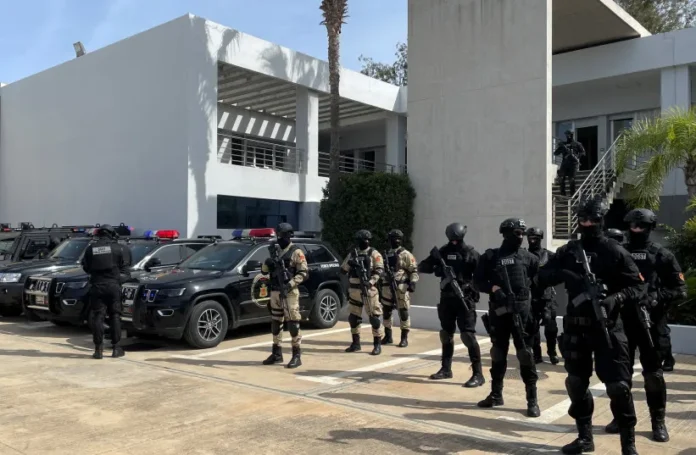
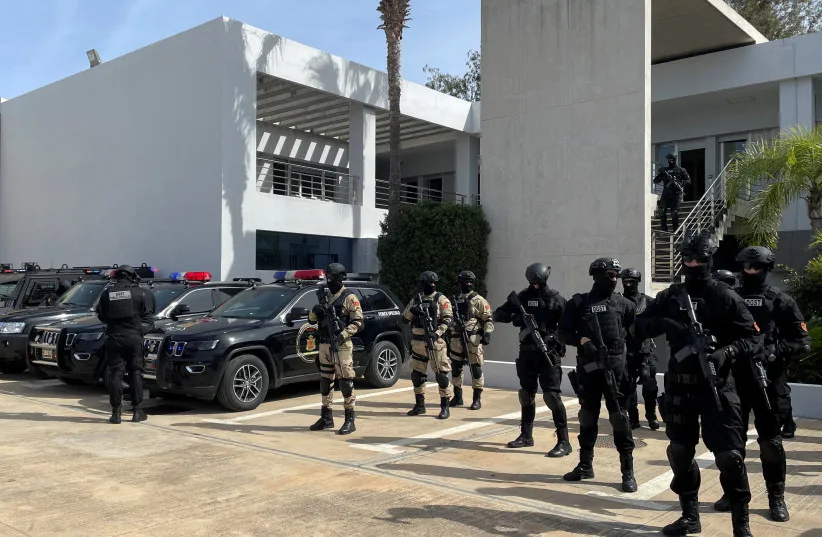
Moroccan authorities said they have dismantled an alleged militant cell linked to the Islamic State affiliate in the Sahel, arresting 10 suspects accused of planning attacks on sensitive facilities and public security targets across the country.
The arrests were carried out during coordinated counterterrorism operations in the cities of Agadir, Taroudant, Casablanca, Hajeb, Tetouan, Fqih Ben Salah and Safi, Morocco’s Central Bureau for Judicial Investigations, known as BCIJ, announced Monday.
Investigators said preliminary findings indicate the suspects had pledged allegiance to the Islamic State organization and were receiving direct instructions from the group’s affiliate operating in the Sahel region.
Authorities allege the group was preparing attacks against strategic locations in Morocco, although officials did not disclose the specific targets.
During searches conducted at multiple locations, security personnel recovered bladed weapons, military style clothing, documents containing instructions for manufacturing explosive devices, digital storage materials and chemical substances believed to be linked to the investigation.
Investigators also seized a modified vehicle that authorities suspect was being prepared for use in either a vehicle ramming attack or a suicide bombing operation.
The suspects remain under investigation as authorities work to determine the full extent of the alleged network and identify any additional individuals connected to the case.
What We Know So Far
Morocco’s Central Bureau for Judicial Investigations arrested 10 suspects during coordinated operations across several cities.
Authorities allege the group was affiliated with the Islamic State branch operating in the Sahel and was planning attacks against sensitive locations inside Morocco.
Security officers recovered weapons, military equipment, suspected bomb making instructions, chemical substances and a modified vehicle during the raids.
Officials have not announced when the alleged attacks were expected to take place or identified the intended targets.
What Authorities Are Saying
The BCIJ said preliminary investigations indicate the suspects pledged allegiance to the Islamic State organization and maintained operational links with its affiliate in the Sahel.
Authorities said the operation prevented planned attacks against public security and strategic facilities while investigations continue into the group’s activities and possible international connections.
Why This Matters
The operation highlights growing concerns over the regional reach of militant organizations operating across the Sahel, where armed groups linked to the Islamic State and al Qaeda have significantly expanded their activities in recent years.
Countries including Burkina Faso, Mali and Niger have experienced persistent attacks by extremist organizations, contributing to widespread insecurity and humanitarian crises across the region.
Although Morocco has generally maintained a strong domestic security record, authorities continue to monitor potential cross border threats as instability in the Sahel increases opportunities for militant recruitment, financing and operational planning.
Counterterrorism analysts have frequently pointed to regional cooperation, intelligence sharing and early intervention as critical tools for preventing extremist groups from extending their operations beyond conflict zones.
What Happens Next
Moroccan investigators are expected to continue questioning the suspects while examining electronic devices, recovered documents and other evidence seized during the raids.
Authorities are also likely to strengthen intelligence operations aimed at identifying additional networks or individuals linked to extremist organizations operating across North Africa and the Sahel.
The investigation may also contribute to broader regional counterterrorism cooperation as governments seek to curb the movement and influence of armed groups across increasingly unstable areas of the Sahel.
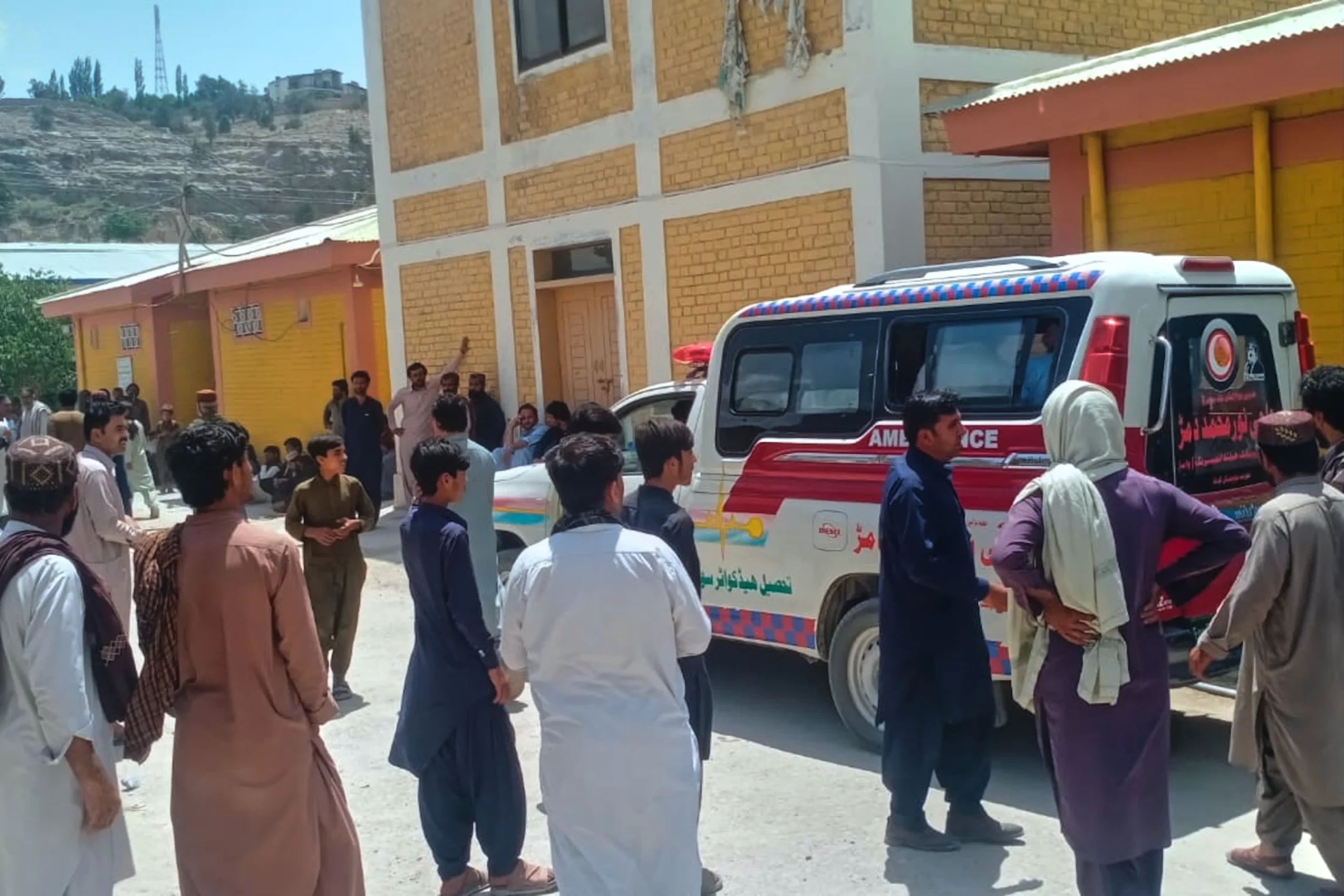
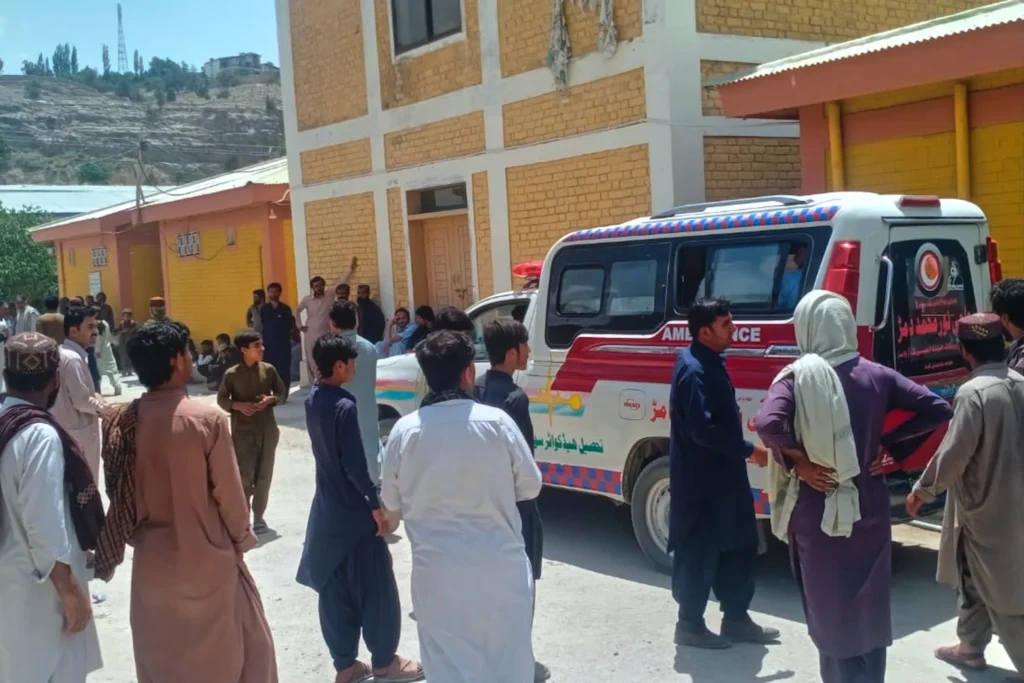
Pakistani security forces said they killed 15 militants during a large-scale clearance operation after an overnight assault on a police post in the southwestern province of Balochistan left nine police officers dead and several others injured or abducted.
The attack occurred before dawn in the remote Ziarat district, where heavily armed militants stormed a police checkpoint, triggering an intense gun battle with security personnel.
Provincial government spokesperson Shahid Rind said the subsequent operation involved the military, the Frontier Corps, Balochistan Police, the Counterterrorism Department, the Special Operations Wing and the Anti Terrorism Force.
Rind said the joint operation ended with the deaths of 15 militants.
Among the officers killed were the station house officers of the Mangi and Kawas police stations.
He added that eight police officers who had been abducted during the attack later reached the Kach police station safely, while another officer was rescued during the security operation.
Authorities are still searching for additional missing personnel.
“The terrorists have paid a heavy price for attempting to disrupt peace in Balochistan,” Rind said, adding that intelligence driven operations against militant groups would continue throughout the province.
Prime Minister Shehbaz Sharif condemned the attack, describing those responsible as enemies of peace and development.
In a statement issued by his office, Sharif expressed condolences to the families of the fallen officers and pledged that security forces would continue operations against militant organizations until they were dismantled.
No group immediately claimed responsibility following the attack.
However, Reuters cited local officials as saying the Tehreek e Taliban Pakistan claimed responsibility for the assault.
Deputy Police Commissioner Abdul Qudoos Achakzai told Reuters that five police officers remained missing following the attack.
The Tehreek e Taliban Pakistan is separate from Afghanistan’s Taliban government and has carried out a prolonged insurgency against the Pakistani state.
Pakistani authorities maintain that many leaders and fighters of the group operate from neighboring Afghanistan, an allegation the Afghan government has repeatedly rejected.
Pakistan has also accused India of supporting militant organizations operating in Balochistan, a claim New Delhi has consistently denied.
What We Know So Far
The attack targeted a police post in Ziarat district before dawn, leading to a prolonged exchange of gunfire between militants and security personnel.
Nine police officers were killed during the assault, including two senior station commanders.
Pakistani security forces later launched a coordinated clearance operation that officials said resulted in the deaths of 15 militants.
Eight abducted officers were recovered safely, while authorities continue efforts to locate additional missing personnel.
Reuters reported that the Tehreek e Taliban Pakistan claimed responsibility for the attack, although Pakistani authorities had not officially confirmed the claim.
What Authorities Are Saying
Provincial spokesperson Shahid Rind said the operation demonstrated the government’s determination to prevent militant groups from destabilizing Balochistan.
Prime Minister Shehbaz Sharif praised the sacrifices of the fallen officers and vowed that security operations would continue until militant organizations are eliminated.
Security officials also pledged to intensify intelligence based operations across the province to prevent future attacks.
Why This Matters
The latest assault highlights the persistent security challenges facing Pakistan’s largest province, where separatist movements and militant organizations continue to target security forces, government institutions and infrastructure.
Balochistan has experienced decades of insurgency fueled by separatist groups seeking greater autonomy or independence, alongside attacks carried out by extremist organizations including the Tehreek e Taliban Pakistan.
The province also occupies strategic importance because it borders both Iran and Afghanistan and hosts major infrastructure projects linked to regional trade and energy development.
Continued attacks threaten not only domestic security but also economic projects and foreign investment, particularly initiatives associated with regional transport and energy corridors.
The differing militant groups operating in Balochistan also complicate Pakistan’s counterterrorism efforts, requiring simultaneous responses to separatist violence and religious extremism.
What Happens Next
Security forces are expected to continue search operations across Ziarat district to locate any remaining militants and determine whether additional suspects were involved in planning the attack.
Investigators are also expected to examine how the militants were able to penetrate the police post and whether security measures require strengthening.
The latest violence is likely to prompt renewed counterterrorism operations across Balochistan as Pakistan seeks to contain escalating attacks against security personnel and public institutions.
Sources: The Associated Press (AP); Reuters; Arab News
Hamas announced Monday that it has dissolved its governing administration in Gaza and is preparing to transfer civilian authority to a United Nations backed technocratic committee, describing the move as part of efforts to implement a United States brokered ceasefire agreement and accelerate postwar reconstruction.
The announcement marks one of the most significant political developments since the ceasefire took effect, although uncertainty remains over whether the decision will lead to meaningful changes in governance or security across the Palestinian territory.
Hamas said government ministries would continue providing essential public services during the transition, with technical and professional staff remaining in their positions under the supervision of a new National Committee for the Administration of Gaza.
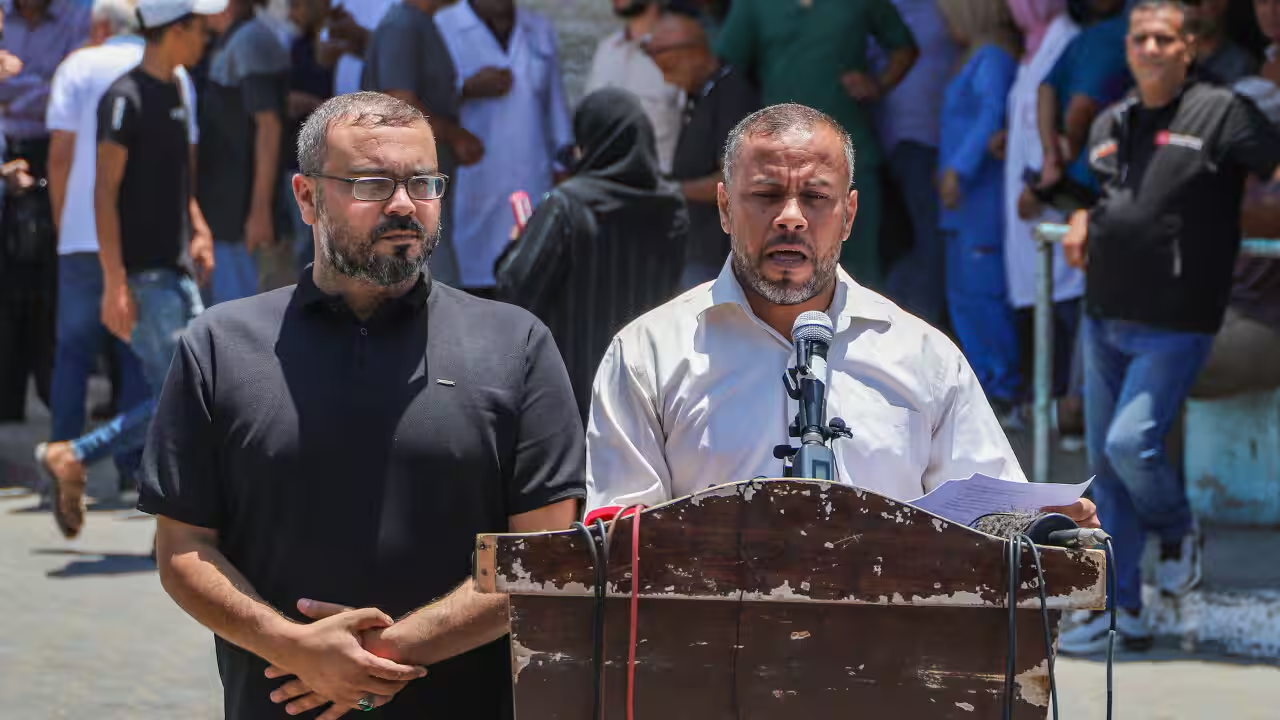
Speaking at a news conference in Deir al Balah, Ismail al Thawabta, director of the Hamas Government Media Office, said civil servants were prepared to continue their work under the incoming technocratic administration.
He described the dissolution of Hamas’ governing body as evidence of the group’s commitment to implementing the ceasefire agreement and supporting Gaza’s reconstruction after years of conflict.
Hamas spokesperson Hazem Qassem also characterized the decision as an important step toward fulfilling the terms of the ceasefire.
The new administrative committee, based in Cairo, is headed by Ali Shaath, a Gaza born engineer and former official with the Palestinian Authority.
The committee has been tasked with restoring essential public services and overseeing civilian affairs under the supervision of the United Nations and the Board of Peace, an international body established under the ceasefire framework.
Ali Shaath acknowledged Hamas’ announcement and said the committee’s effectiveness would depend on the establishment of a single governing authority operating under one legal framework with a unified security structure accountable to that authority.
The Board of Peace, established under the ceasefire arrangement and supported by United States President Donald Trump, said it had taken note of Hamas’ decision but emphasized that its assessment would depend on concrete implementation rather than public declarations.
In a statement, the board said full compliance with the ceasefire requires the technocratic committee to exercise authority over all weapons in Gaza, a condition that remains one of the central points of disagreement between Hamas and Israel.
Israeli Foreign Minister Gideon Saar dismissed Hamas’ announcement, arguing that any civilian administration would remain subject to Hamas as long as the militant group retained its military capabilities.
Israel continues to insist that Hamas must completely disarm before the ceasefire process can advance to its next phase.
Hamas, however, maintains that discussions over its weapons should only take place after the first stage of the ceasefire is fully implemented, including broader Israeli military withdrawals and reconstruction measures.
Nine months after the ceasefire agreement was reached, negotiations between the two sides remained stalled over the implementation of the second phase.
Meanwhile, violence has continued despite the truce.
Health officials in Gaza said Israeli airstrikes on Monday killed at least five people, including three in Khan Younis and two in Gaza City.
The Israeli military said it targeted a Hamas operative in Gaza City and a member of the Palestinian Islamic Jihad in Khan Younis, describing the operations as efforts to prevent militant attacks.
Since the ceasefire took effect, Israeli officials say five Israeli soldiers have been killed in attacks carried out by militants operating inside Gaza.
The conflict began after the Hamas led attack on Israel on Oct. 7, 2023, which Israeli authorities say killed about 1,200 people and resulted in the abduction of 251 hostages.
Gaza’s Health Ministry says Israel’s subsequent military campaign has killed more than 73,000 Palestinians. The ministry does not distinguish between civilians and combatants, although United Nations agencies and independent experts have generally regarded its casualty records as broadly reliable.
What We Know So Far
Hamas has formally dissolved the administrative body that has governed Gaza for more than a decade and says it is prepared to transfer civilian administration to a technocratic committee backed by the United Nations under the ceasefire framework.
Government ministries and public employees will continue operating during the transition to ensure the delivery of essential services.
The National Committee for the Administration of Gaza, chaired by Ali Shaath, is expected to oversee civilian governance once the necessary operational conditions are established.
Despite the political announcement, Hamas has not committed to disarming or transferring control of its security forces, leaving one of the ceasefire’s most contentious issues unresolved.
What Authorities Are Saying
Hamas says dissolving its government demonstrates its commitment to implementing the ceasefire agreement and facilitating Gaza’s recovery.
The Board of Peace said it will evaluate Hamas based on implementation rather than public statements, emphasizing that all weapons in Gaza must ultimately come under the authority of the new civilian administration.
Israeli Foreign Minister Gideon Saar rejected Hamas’ announcement, arguing that genuine political transition cannot occur while the group’s armed wing remains intact.
Ali Shaath said successful governance requires one legal authority, one administrative structure and a unified security apparatus accountable to civilian leadership.
Why This Matters
The dissolution of Hamas’ governing administration could represent the first tangible step toward restructuring civilian governance in Gaza after years of conflict. However, the announcement alone does not resolve the deeper political and security disputes that continue to hinder implementation of the ceasefire.
The central obstacle remains Hamas’ military wing. Israel insists complete disarmament is essential before reconstruction and long term governance arrangements can move forward, while Hamas argues that political and humanitarian commitments under the ceasefire must be fulfilled first.
The transition also carries broader regional implications. A functioning civilian administration backed by international institutions could accelerate humanitarian assistance and reconstruction efforts in Gaza, where widespread destruction has displaced much of the population and severely damaged infrastructure.
Whether the proposed governance model succeeds will depend largely on cooperation among Hamas, Israel, international mediators and Palestinian institutions, all of whom continue to disagree over the future political and security structure of Gaza.
What Happens Next
International mediators are expected to continue negotiations aimed at advancing the second phase of the ceasefire agreement, including discussions on reconstruction, governance and long term security arrangements.
The National Committee for the Administration of Gaza is expected to prepare for assuming civilian responsibilities once the required legal, financial and security conditions are established.
At the same time, continuing Israeli military operations and Hamas’ refusal to disarm indicate that significant obstacles remain before a lasting political transition can take hold.
Belgium punished a series of costly defensive mistakes to defeat the United States 4 to 1 on Monday, eliminating the tournament co hosts from the FIFA World Cup and securing a place in the quarterfinals.
Charles De Ketelaere starred for Belgium with two goals and an assist as the Red Devils produced a clinical display to end the United States’ hopes of reaching the World Cup quarterfinals for the first time since 2002.
Belgium will now face defending European champion Spain national football team on Friday for a place in the semifinals, where either France national football team or Morocco national football team awaits.
The United States entered the match with striker Folarin Balogun restored to the lineup after FIFA suspended his one match ban, a decision that generated widespread debate before kickoff. However, the forward struggled to influence the contest as Belgium controlled large stretches of play.
Belgium opened the scoring inside the first 10 minutes when Charles De Ketelaere finished from close range after the American defense failed to clear the danger.
The United States responded in the 31st minute through Malik Tillman, whose free kick took a deflection before beating Belgian goalkeeper Thibaut Courtois.
The equalizer lasted barely a minute.
De Ketelaere restored Belgium’s lead with a powerful header after the United States again failed to defend a cross into the penalty area, leaving coach Mauricio Pochettino visibly frustrated on the touchline.
Belgium extended its advantage shortly after halftime when American goalkeeper Matt Freese hesitated while controlling the ball outside his goal area. Hans Vanaken capitalized on the mistake by sending a long range effort into the net to make it 3 to 1.
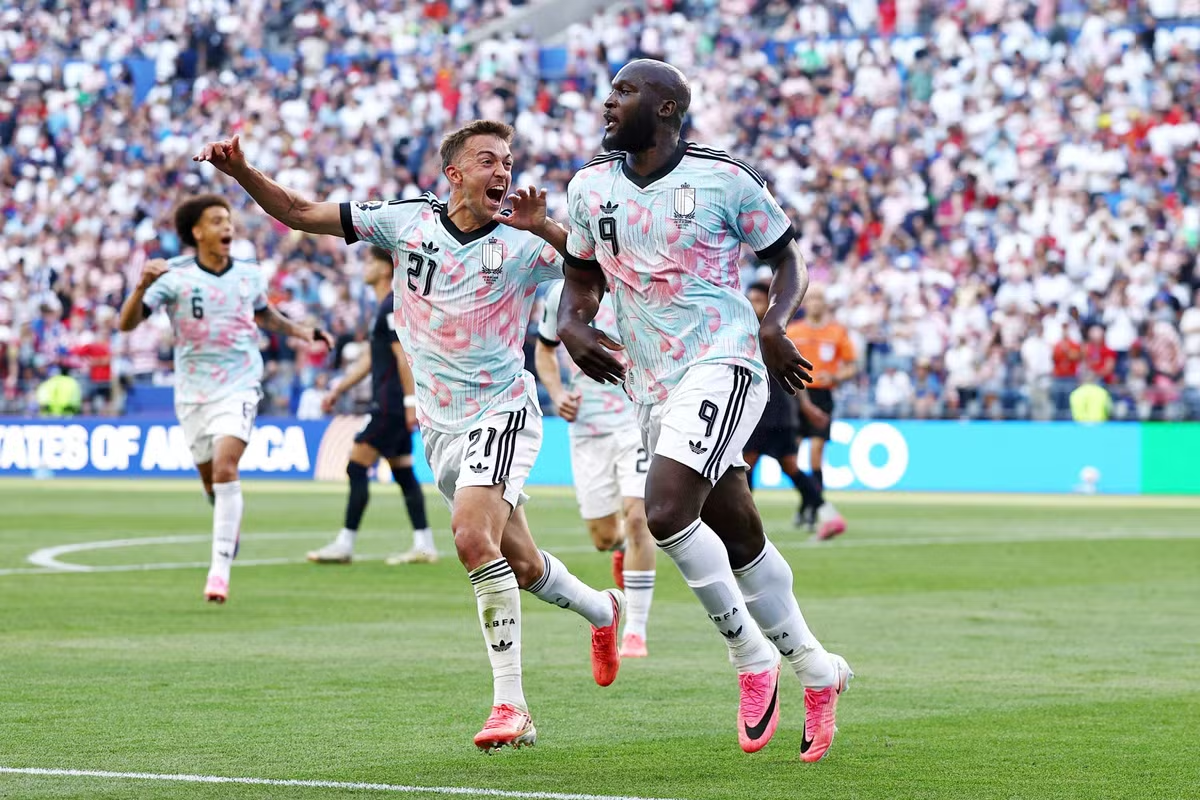
Substitute Romelu Lukaku completed the scoring deep into stoppage time after Belgium won possession high up the field.
The defeat ended the United States’ most successful World Cup campaign in the expanded 48 team tournament despite winning three matches before reaching the knockout stage.
American captain Christian Pulisic suffered a foot injury early in the second half after colliding with Belgian captain Youri Tielemans and was substituted minutes later, limiting the Americans’ attacking threat.
Belgium, meanwhile, continued its impressive form despite leaving experienced stars Kevin De Bruyne and Jérémy Doku on the bench for much of the contest.
What We Know So Far
Belgium advanced to the World Cup quarterfinals after defeating the United States 4 to 1 in Seattle.
Charles De Ketelaere produced the standout performance with two goals and one assist, while Hans Vanaken and Romelu Lukaku also found the net.
Malik Tillman scored the only goal for the United States.
The victory extended Belgium’s unbeaten run to 18 matches and marked its seventh consecutive victory over the United States.
The defeat also meant all three World Cup co-hosts from the CONCACAF region, the United States, Canada and Mexico, were eliminated in the Round of 16.
What Officials and Coaches Are Saying
United States coach Mauricio Pochettino expressed visible frustration during the match as repeated defensive errors undermined his team’s efforts.
Belgium coach Rudi Garcia praised his side’s composure and attacking efficiency after another disciplined performance in the knockout stage.
FIFA’s decision to suspend Balogun’s one match suspension remained one of the major talking points before kickoff, although the striker was unable to make a decisive impact against Belgium’s organized defense.
Why This Matters
Belgium’s victory reinforces its status as one of the strongest contenders for the 2026 World Cup title. With experienced players blending effectively with emerging talents such as Charles De Ketelaere, the Red Devils continue to demonstrate the depth that has kept them among the world’s elite national teams.
For the United States, the defeat ends hopes of matching or surpassing its memorable 2002 World Cup run despite hosting the tournament. While the team showed progress by winning three matches in a single World Cup for the first time, defensive inconsistencies remained a recurring weakness throughout the competition.
The result also highlights the continued dominance of European football in the latter stages of major international tournaments. With every CONCACAF nation eliminated before the quarterfinals, Europe, South America and Africa will once again provide the remaining contenders for the title.
Questions are also likely to intensify over the future direction of the United States under Mauricio Pochettino, whose tactical decisions and defensive organization are expected to come under scrutiny following another disappointing knockout stage exit.
What Happens Next
Belgium will meet Spain in the quarterfinals, with the winner advancing to face either France or Morocco in the semifinals.
The United States will begin evaluating its performance ahead of future international competitions, including preparations for the next cycle of major tournaments and efforts to build on the progress made during the expanded World Cup.
Belgium, meanwhile, remains firmly in contention for its first FIFA World Cup title as it prepares for one of the tournament’s biggest quarterfinal clashes.
Sources: The Associated Press (AP); Reuters; Flashscore
JESSE, Nigeria — Reigning AIWF Intercontinental Professional Wrestling Heavyweight Champion Jimmy Palm formally presented his championship belt to the Ovie of Idjerhe Kingdom, His Majesty Obukohwo Monday Whiskey, Udurhie I, during a royal courtesy visit that celebrated the monarch’s support for youth development, sports and community advancement.
The ceremony took place Monday at the royal palace in Jesse, the administrative headquarters of the Idjerhe Kingdom in Ethiope West Local Government Area of Delta State, Nigeria.
The presentation symbolized respect for the traditional ruler’s leadership and acknowledged his continued commitment to promoting opportunities for young people through sports and community development.
Jimmy Palm, whose birth name is Samuel Omare Omene Johnson, said he remains committed to representing the Idjerhe Kingdom with distinction both within Nigeria and on the international professional wrestling stage.
The visit also highlighted growing cooperation between traditional institutions and the emerging professional wrestling industry in Africa.
High Chief Olorogun Samuel Omowo Otojareri, the Egbowhin of Idjerhe Kingdom, introduced guests attending the ceremony. Olusesan Olukoya, Secretary General of Pro Wrestling Africa and representative of the Allied Independent Wrestling Federations in the United States, delivered a goodwill message outlining the significance of the occasion.
During the ceremony, the monarch congratulated Jimmy Palm on his achievements and offered royal prayers for his continued success.
His Majesty praised the wrestler’s accomplishments, describing him as a worthy ambassador of the kingdom whose success has brought recognition to the Idjerhe community.
“We are immensely proud of Jimmy Palm and remain committed to showcasing his remarkable achievements and contributions,” the monarch said.
He added that the kingdom would introduce the champion to the Ethiope West Local Government and the Delta State Sports Commission in recognition of his accomplishments.
The royal father also commended Jimmy Palm for inspiring young people through dedication, discipline and excellence in professional sports.
Olukoya said the championship belt presentation represented more than a sporting achievement, describing it as a symbol of humility, respect and appreciation for traditional leadership.
He said traditional rulers continue to play an important role in encouraging young people to pursue excellence through sports while promoting peace, unity and positive community engagement.
The ceremony also provided an opportunity for Pro Wrestling Africa to outline its plans for expanding professional wrestling across Nigeria and the African continent through athlete development, training initiatives and international partnerships.
What We Know So Far
Jimmy Palm is the reigning AIWF Intercontinental Professional Wrestling Heavyweight Champion.
The championship belt was formally presented to the Ovie of Idjerhe Kingdom during a ceremonial visit to the royal palace in Jesse, Delta State.
The event brought together traditional leaders, representatives of Pro Wrestling Africa, officials from the Allied Independent Wrestling Federations and members of the wrestling community.
The monarch offered royal blessings and publicly recognized Jimmy Palm’s achievements while expressing the kingdom’s commitment to supporting his career.
What Organizers Are Saying
Pro Wrestling Africa said the ceremony reflects the organization’s commitment to building stronger relationships between professional sports and Nigeria’s traditional institutions.
Secretary General Olusesan Olukoya said the presentation demonstrates the wrestling community’s appreciation for royal fathers who continue to promote youth empowerment and community development.
The Ovie of Idjerhe Kingdom described Jimmy Palm as a source of pride for the kingdom and pledged continued support for efforts that recognize his accomplishments and encourage future generations.
Why This Matters
Traditional institutions continue to play a significant role in promoting sports development across many Nigerian communities. Public recognition by respected traditional rulers often provides athletes with greater visibility while encouraging young people to pursue careers in sports.
Professional wrestling remains a developing sport in Nigeria compared with football, athletics and boxing. Events such as the royal presentation reflect ongoing efforts by Pro Wrestling Africa and its international partners to increase public awareness, attract institutional support and create opportunities for African wrestlers on the global stage.
The ceremony also underscores the growing collaboration between cultural institutions and sports organizations as both seek to promote youth development, leadership and positive community engagement.
What Happens Next
Pro Wrestling Africa plans to continue working with traditional institutions, government agencies and international partners to strengthen the sport’s presence across Nigeria and Africa.
The organization said future initiatives will focus on athlete development, coaching programs, talent identification and expanding international opportunities for African professional wrestlers.
Jimmy Palm is expected to continue defending his AIWF Intercontinental Professional Wrestling Heavyweight Championship while representing both the Idjerhe Kingdom and Nigeria in international competition.
Substitute Mikel Merino scored in the first minute of second-half stoppage time to give Spain a 1-0 victory over Portugal on Monday, ending a fiercely contested Iberian derby and bringing the curtain down on Cristiano Ronaldo’s World Cup career in one of the most emotionally charged results of the tournament so far.
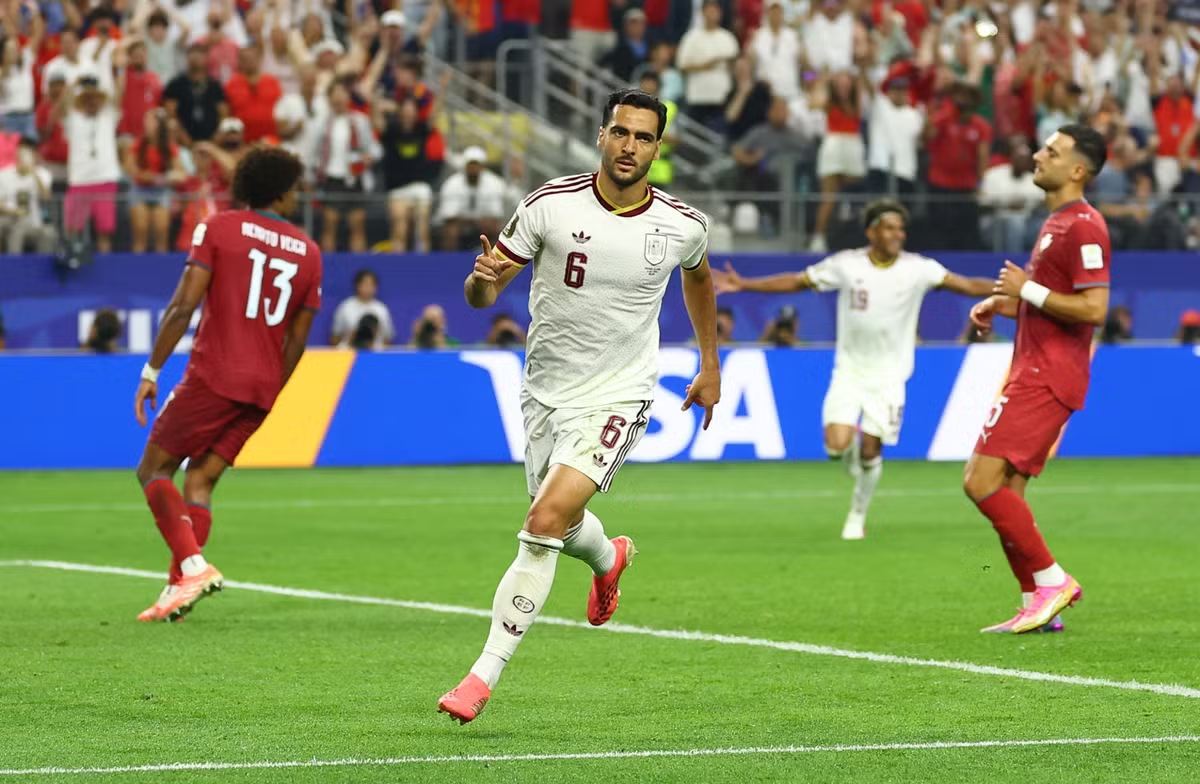
Merino, who had been on the pitch for just six minutes, slotted calmly past goalkeeper Diogo Costa after combining with fellow substitute Ferran Torres to complete a move that came out of nowhere and shattered a contest that had appeared destined for extra time.
What We Know So Far
The match was tightly contested and largely devoid of clear-cut opportunities throughout, with Spain dominating possession and field position but finding Costa in inspired form across both halves.
Spain created the better chances in the opening period. Mikel Oyarzabal dragged a one-on-one effort wide after being released by Dani Olmo in only the eighth minute, a miss that loomed large as the match wore on. Costa also made sharp saves to deny Lamine Yamal and then Alex Baena’s immediate follow-up with a full-stretch fingertip stop, Flashscore confirmed.
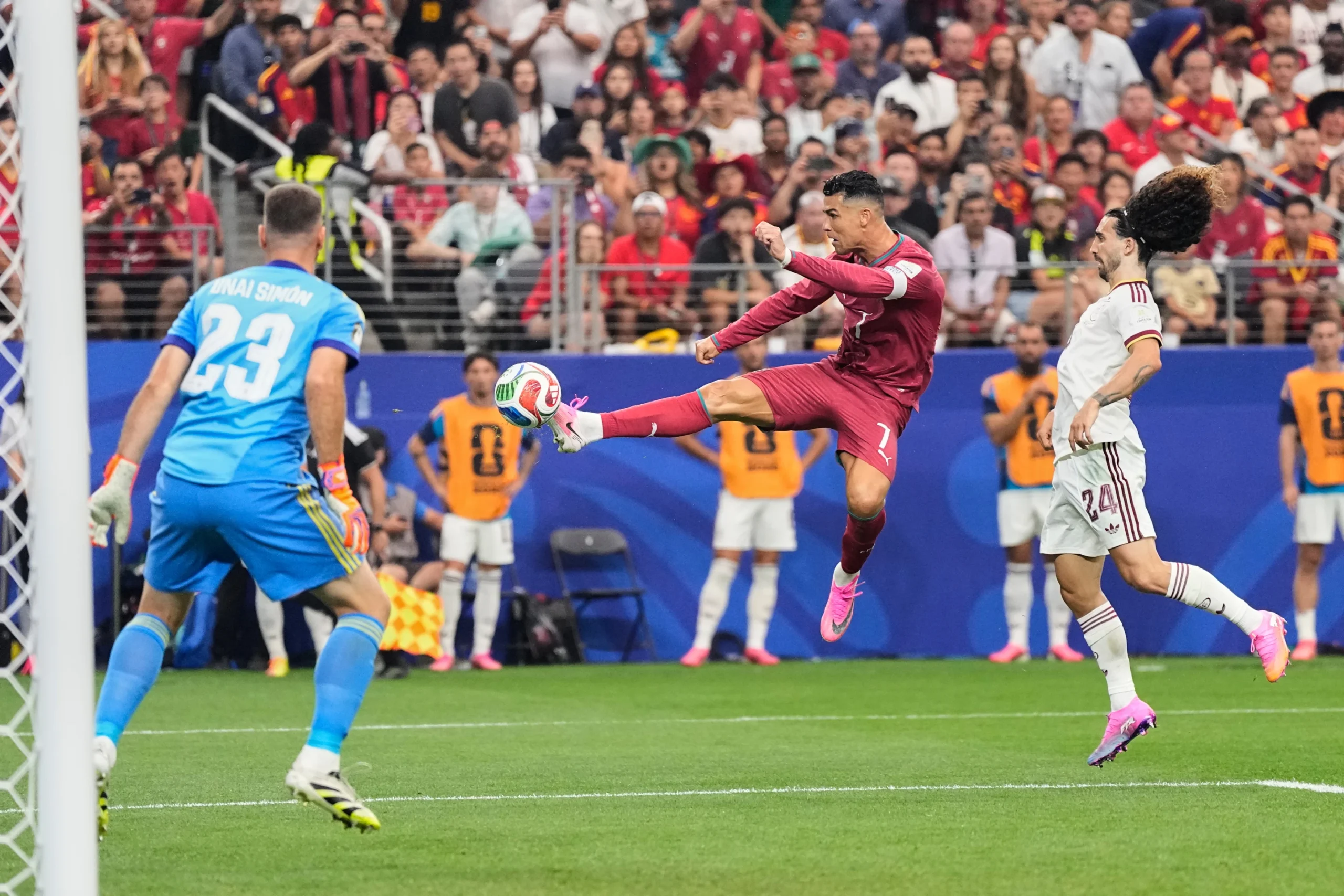
Portugal’s best moment of the first half came when a Nuno Mendes shot was deflected onto the crossbar by Pedro Porro’s inadvertent intervention with Spain goalkeeper Unai Simon beaten. Ronaldo had two efforts in the opening period, both comfortably gathered by Simon, whose cumulative World Cup record without conceding a goal extended to 609 minutes, the Associated Press confirmed.
The second half followed a similar pattern. Spain controlled possession through Rodri and an increasingly influential Pedri, while Portugal defended with discipline and occasional menace on the counter. Lamine Yamal’s free kick was tipped over the bar by Costa. A Vitinha shot deflected to Bruno Fernandes, who fired into the side netting with a clear look at goal.
Ronaldo, 41, barely touched the ball in the second half and offered little threat without the service that had brought him three goals in the tournament’s group stage.
Spain coach Luis de la Fuente introduced Merino for Olmo with five minutes of normal time remaining. The Arsenal midfielder, who had been doubtful to make the Spanish squad due to injury, took control of a free kick situation with quick thinking that caught Portugal’s defense off balance.
As a Portugal player argued with the referee over the free kick, Merino played the ball quickly, ran toward goal, received Torres’s through pass and slotted composedly into the bottom corner past Costa to complete Spain’s winner in the 91st minute, Reuters confirmed.
Bernardo Silva had one final opportunity in the 97th minute, rising above Rodri to head a cross, but his effort cleared the bar by a fraction and Spain’s passage to the quarterfinals was confirmed.
A crestfallen Ronaldo left the field to generous applause from the sold-out crowd at Dallas Stadium. The day before, he had confirmed publicly that this would be his final World Cup.
Spain advanced to the quarterfinals, where they will play either the United States or Belgium on Friday in Inglewood, California. Rodri was named player of the match by Flashscore.
What The Numbers Say
Spain’s statistical dominance across the match told a clear story, even if the result remained in doubt until the final seconds. Spain finished with 15 shots to Portugal’s 10, six shots on target to Portugal’s two, and an expected goals figure of 1.77 against Portugal’s 0.58, ESPN confirmed. Spain completed 467 passes to Portugal’s 357, achieved 190 touches in the attacking third to Portugal’s 140, and controlled 61.7 percent of the field tilt across the 90 minutes.
Spain also became the first team in World Cup history to record six successive clean sheets in a single tournament, according to Flashscore.
What The Coaches And Players Are Saying
The decisive moment came through Merino’s instinctive decision-making rather than any set piece design. The quick restart caught Portugal’s players mid-argument and their defensive line unprepared, a moment of alertness that reflected the quality Spain’s manager had trusted when bringing the midfielder on late in the match.
Ronaldo’s confirmed farewell to the World Cup stage, made explicit by his pre-match announcement, gave the occasion a weight that transcended the result. The all-time leader in international goals with 146, and in appearances with 233, exits the tournament having scored three goals but without a quarterfinal in his final chapter, the Associated Press noted.
His only World Cup hat trick came against Spain in the 2018 tournament’s group stage, a 3-3 draw widely regarded as one of the competition’s most memorable individual performances. That memory now serves as the defining high point of a World Cup career that promised more than its single semifinal appearance ultimately delivered.
Why This Matters
Spain’s victory is a result of genuine quality rather than fortune, even if Merino’s goal arrived with the suddenness of a lightning strike. La Roja’s statistical control across both halves, their defensive solidity through six consecutive shutouts, and the tactical flexibility that allowed them to win a tight knockout match through a substitute six minutes after his introduction all point to a team operating at a high level as the tournament approaches its decisive phase.
The end of Ronaldo’s World Cup story closes a chapter that defined global football for nearly two decades. He first appeared at a World Cup in 2006, when Portugal finished third in Germany, and spent the following 19 years pursuing the one title that eluded him.
At club level, his Champions League record is unmatched. Internationally, the European Championship of 2016 represents his peak achievement. The World Cup, football’s ultimate prize, ends for him as a tournament in which he contributed regularly but never found the team environment or the sustained personal form that would have carried Portugal deep enough to matter.
Portugal exit at the round of 16 for the second consecutive tournament, their longest run without reaching consecutive knockout wins since 2006. Their defensive resilience across 90 minutes suggested they have the structure to compete at this level, but the absence of consistent attacking threat beyond Ronaldo’s individual moments has defined their limitations throughout this tournament and the last.
Spain, by contrast, entered the quarterfinals with momentum, clean sheet records, and a squad depth that was demonstrated perfectly on Monday. A player considered doubtful to make the squad scored the winner with his first touch of significance on the night.
What Happens Next
Spain faces either the United States or Belgium in Inglewood, California on Friday. Both those teams met Monday in Seattle in the other round of 16 fixture, with the United States playing with the controversial benefit of Folarin Balogun’s reinstated availability after FIFA lifted his red card suspension following President Trump’s call to FIFA President Gianni Infantino.
For Ronaldo, his departure from the World Cup stage was marked by sustained applause from a crowd that recognized the scale of the career ending before them. Whether he continues at club level or announces a broader retirement from professional football remains unconfirmed.
For Spain, the focus shifts immediately to Friday. A team that has now gone 609 minutes without conceding a World Cup goal will enter that quarterfinal as one of the tournament’s most defensively reliable sides, with an attacking quality capable of conjuring decisive moments from the most unlikely sources.
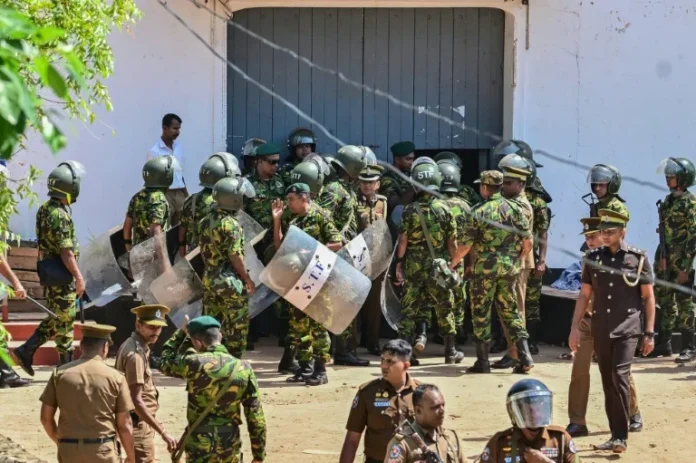
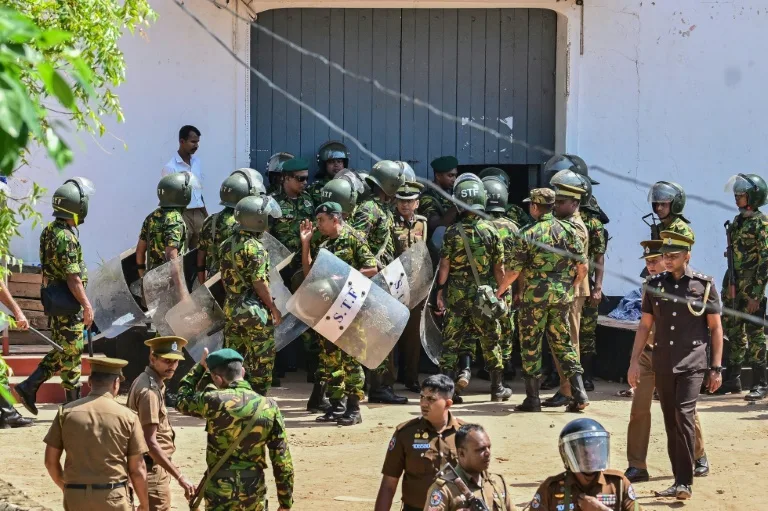
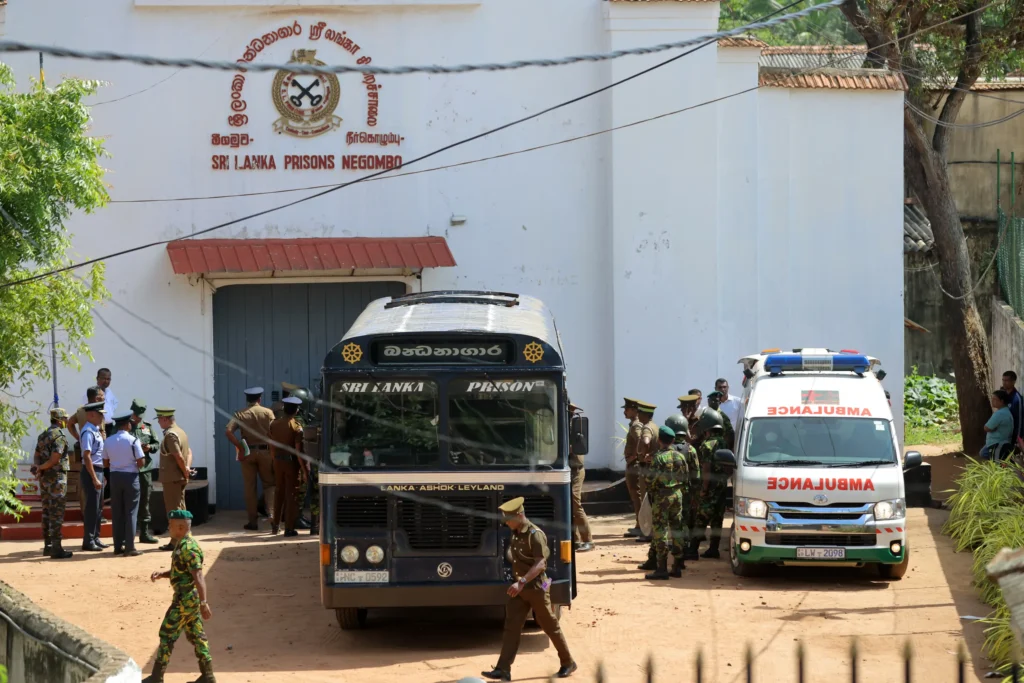
NEGOMBO, Sri Lanka — At least 26 people were killed and more than 100 injured after violent clashes erupted inside the Negombo Prison on the outskirts of Sri Lanka’s capital over the weekend and intensified Monday, in one of the deadliest prison disturbances in the country’s recent history.
The unrest began Saturday between rival drug trade gangs, escalated Sunday when female and male inmates staged rooftop protests, and reached its deadliest point Monday when inmates attacked prison officials who moved in to restore order.
What We Know So Far
The initial confrontation broke out around noon Saturday between two groups of prisoners, killing two inmates and leaving more than 25 others injured, hospital sources told the Daily Mirror Sri Lanka. Those injured were admitted to Negombo Hospital, where the two fatalities were confirmed.
By Sunday, the situation had deteriorated further. Inmates from the women’s ward climbed onto rooftops in protest following the Saturday violence, and a separate group of male inmates occupied the rooftops of other prison buildings in a parallel demonstration. Authorities deployed large contingents of police and the Police Special Task Force to contain the situation.
The crisis reached its most violent phase Monday morning when a group of inmates attempted to force their way through the prison’s main entrance in an apparent bid to escape, the Daily Mirror Sri Lanka confirmed.
When prison guards moved to intervene, inmates turned on the officials. Police, the Special Task Force, and later the Army and Air Force were all deployed to suppress the violence. Multiple gunshots were heard from within the prison premises as security forces worked to regain control.
An official at the main state-run hospital in the area, speaking on condition of anonymity because he was not authorized to speak to the media, told the Associated Press that seven prison officials and 18 inmates had died, with another 43 being treated for injuries at that facility alone.
Three other hospitals were also treating dozens of additional wounded. The Daily Mirror Sri Lanka subsequently raised the confirmed death toll to 26, with at least five prison officers and 20 inmates among the fatalities. Eight critically injured victims were transferred to the National Hospital of Sri Lanka in Colombo for specialized care.
Justice Minister Harshana Nanayakkara confirmed that the original confrontation began between two rival gangs connected to the illegal drug trade. After order was restored Monday evening, Nanayakkara said the inmates identified as having led the violence had been transferred to two other prisons. Army troops remained deployed around the facility.
Prison Commissioner and spokesperson A.C. Gajanayake said the broader transfer of inmates to prisons across the country was being arranged as an urgent measure to ease tensions and restore stability at Negombo.
What Authorities Are Saying
Gajanayake described Monday’s escalation directly. “They started attacking the prison officials,” he told reporters, explaining that guards had attempted to intervene among the inmates before becoming targets themselves.
Justice Minister Nanayakkara’s confirmation that drug trade rivalries sparked the initial confrontation points to a pattern of gang activity inside Sri Lankan prisons that has persisted despite repeated government pledges to address it.
The deployment of the Army and Air Force alongside police and the Special Task Force to control a single prison reflects the seriousness with which authorities viewed the threat of a mass escape and the scale of violence inside the facility.
Why This Matters
The Negombo Prison violence is the inevitable consequence of a correctional system operating at nearly four times its intended capacity. Sri Lanka’s prisons hold more than 39,000 inmates across a network built for just 10,000, the Associated Press confirmed. That level of overcrowding does not simply create discomfort. It creates the conditions under which gang rivalries are intensified, contraband networks flourish, and minor confrontations escalate rapidly into mass violence because there is no physical space to separate competing factions.
The drug trade dimension is central to understanding what happened at Negombo. Sri Lanka has experienced a significant expansion of narcotics trafficking in recent years, and prisons have become organizing hubs for drug networks whose rivalries do not stop at the prison gate.
Rival groups that compete on the outside for territory and supply chains continue those conflicts inside, and the extreme overcrowding means that the physical distance between rival factions is often nonexistent.
The rooftop protests by both female and male inmates on Sunday, before the Monday escalation, also signal something broader than a straightforward gang fight. Inmates were communicating publicly, taking visible action in view of the world outside, suggesting a level of collective grievance that extends beyond the specific Saturday confrontation.
Whether those grievances relate to conditions, treatment, the handling of the initial deaths, or some combination of factors, the willingness of prisoners to climb onto rooftops in public protest indicates that tensions inside Negombo had been building well before the first punch was thrown on Saturday.
Sri Lanka’s prison system has faced criticism from human rights organizations for years over overcrowding, inadequate healthcare, violence, and the conditions in which remand prisoners await trial. Many of those counted in the prison population have not been convicted of any crime. The Negombo deaths will add new urgency to those longstanding concerns.
What Happens Next
Authorities were continuing to transfer inmates from Negombo to other facilities Monday in an effort to reduce the population at the prison and prevent further violence. The ringleaders of Monday’s attack had already been removed to separate prisons, the justice minister confirmed.
Army troops remained deployed around the perimeter as of Monday evening, and the Police Special Task Force maintained a presence inside. Whether the transfers and security deployments will be sufficient to prevent a recurrence will depend in part on whether the underlying gang rivalries that sparked the original confrontation can be physically separated through the dispersal of key individuals across the prison network.
Sri Lanka’s government faces broader questions that cannot be resolved through individual transfers. A prison system holding nearly four times its intended population requires either a substantial expansion of capacity, a meaningful reduction in the remand population through faster judicial processing, or both.
Without structural change, the conditions that made Negombo a site of lethal violence on Saturday will continue to exist in every overcrowded facility across the country.
The justice ministry had not announced a formal independent investigation into the deaths as of Monday evening. Families of those killed, both inmates and prison officers, will be pressing for accountability as the full circumstances of the weekend’s events become clearer.
A 23 year old Nigerian medical graduate has died after suffering severe injuries in a Russian airstrike in the eastern Ukrainian city of Kharkiv, just days before she was scheduled to receive her medical degree.
Nnani Adaobi Marian, a final year student at Kharkiv National Medical University, succumbed to injuries while undergoing specialist treatment in Germany after being critically wounded during a Russian aerial attack on June 29.
The attack also claimed the life of her close friend and fellow medical graduate, Fatima Huseynova, who died at the scene as the two young women were traveling to a graduation photo session one day before their diploma ceremony.
Kateryna Bohuslavska, a Kharkiv resident widely known for documenting developments in the Russia Ukraine war, announced Marian’s death on social media Monday.
She said Marian sustained life threatening injuries when Russian forces launched guided aerial bombs on Kharkiv’s Kholodnohirskyi district. Despite emergency treatment in Kharkiv and a subsequent medical transfer to Germany, doctors were unable to save her.
“Nnani Adaobi Marian, a 23 year old who was injured during a Russian strike on Kharkiv, has passed away in Germany,” Bohuslavska wrote, adding that both women had traveled to Kharkiv to attend their graduation ceremony and had “their whole life ahead of them.”
Kharkiv National Medical University later confirmed Marian’s death in a statement titled “In Memory of Nnani Adaobi Marian.”
The university said Marian enrolled in the institution in 2020 and distinguished herself throughout her studies through academic excellence, professionalism and dedication to medicine.
University officials said she completed international internships at the University of Cambridge in 2024 and Biruni University in 2025, where she expanded her medical training and participated in scientific research.
Doctors battled to save her life first in Kharkiv and later in Germany after she suffered catastrophic injuries during the bombardment, the university said.
The institution described Marian as an intelligent, compassionate and hardworking student whose commitment to helping others left a lasting impression on lecturers and classmates.
Adaobi and Fatima died from the Russian attack
University administrators, faculty members, students and staff also extended condolences to her family, friends and colleagues, saying she would be remembered as a gifted future physician whose promising career ended far too soon.
As of publication, Nigerian authorities had not publicly confirmed Marian’s nationality, although multiple Nigerian media organizations identified her as a Nigerian citizen.
Local authorities in Ukraine said Russian forces struck Kharkiv’s Kholodnohirskyi district with guided aerial bombs on June 29, damaging homes, businesses, vehicles, public infrastructure and a tram. The attack killed one person immediately and injured at least 12 others. Officials later confirmed Marian was among those critically wounded.
The Kharkiv Regional Prosecutor’s Office said medical teams fought to save her life until her death.
What We Know So Far
Marian was born on April 24, 2003, and began studying medicine at Kharkiv National Medical University in 2020.
She successfully completed her medical education in 2026 and was expected to receive her degree on June 30 before tragedy struck.
Her classmate, Fatima Huseynova, a 23 year old medical graduate from Azerbaijan, was killed instantly during the same attack while both women were traveling to a graduation photo session.
Friends told Pravda, Kharkiv Today and Radio Liberty that the two graduates had returned to Ukraine only to collect their diplomas after studying remotely since Russia launched its full scale invasion.
Investigators said Marian suffered burns across about 90 percent of her body and multiple blast injuries before she was transferred for advanced treatment in Germany.
What Authorities Are Saying
Kharkiv National Medical University praised Marian’s academic achievements and described her as a dedicated future doctor who consistently pursued excellence through international training and scientific research.
The university said everyone involved in her treatment hoped for her recovery but acknowledged that medical teams could not overcome the severity of her injuries.
The Kharkiv Regional Prosecutor’s Office confirmed that doctors continued treatment until the final moments of her life while extending condolences to her family and loved ones.
The head of the Council of Azerbaijanis of Ukraine, Fizuli Hanbarov, also expressed sympathy following the death of Fatima Huseynova, describing the loss as a tragedy for the Azerbaijani community in Ukraine.
Why This Matters
The deaths of Marian and Huseynova underscore the continuing danger civilians face across Ukraine, even in areas far from active front line combat.
Their deaths also highlight the international impact of the conflict, which has claimed the lives of citizens from numerous countries studying, working or living in Ukraine since Russia launched its full scale invasion in 2022.
For Nigeria, Marian’s death represents the loss of a young professional who had invested years in medical education and international clinical training. Her story reflects the growing risks faced by international students pursuing higher education in countries affected by armed conflict.
The attack also illustrates how Russia’s continued use of guided aerial bombs against urban areas continues to place civilian infrastructure, educational institutions and residential neighborhoods at risk, drawing ongoing international concern over the humanitarian consequences of the war.
What Happens Next
Ukrainian authorities are expected to continue documenting civilian casualties linked to the June 29 attack as investigations into damage caused by the bombardment continue.
Marian’s family is expected to make arrangements for her funeral, while tributes continue to pour in from classmates, lecturers and members of the international medical community.
The latest deaths come as Kharkiv remains one of Ukraine’s most frequently targeted cities, with emergency services continuing to respond to repeated aerial attacks that have disrupted civilian life and higher education throughout the region.
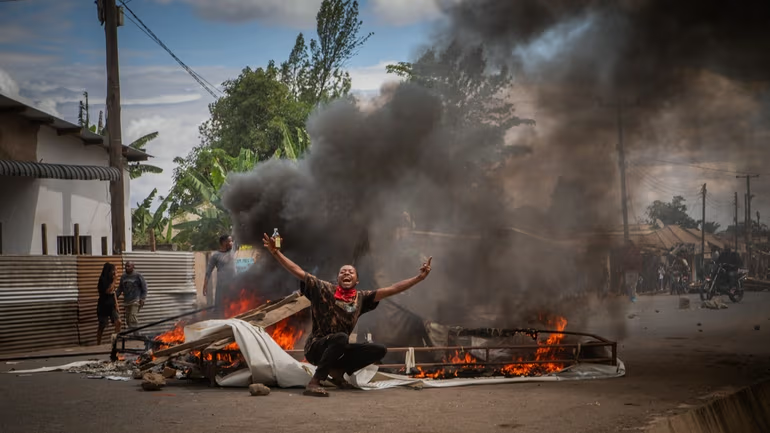
Tanzanian authorities have detained dozens of people ahead of planned nationwide demonstrations calling for democratic reforms and the release of jailed opposition leader Tundu Lissu, deepening concerns over the country’s political climate as security forces expand operations across the nation.
The planned protests are scheduled for Tuesday, the same day Tanzania’s ruling party marks the 72nd anniversary of its founding. Organizers have called on citizens to demonstrate against political repression and demand Lissu’s release as tensions continue to rise following last year’s disputed general election.
Military spokesperson Sylvester Mangure warned that authorities would not tolerate unauthorized demonstrations following the government’s recent suspension of political rallies. He also alleged that unidentified individuals were recruiting young people to participate in the protests while falsely claiming the military supported the planned action.
Mangure urged citizens to alert security agencies about anyone organizing or encouraging participation in the demonstrations. He said the armed forces would continue protecting public order and take action against anyone found violating the country’s laws.
Security has been noticeably strengthened across Dar es Salaam, where soldiers and police officers have increased patrols along major roads, business districts and other public spaces. Although officials have not directly linked the deployment to Tuesday’s planned demonstrations, critics argue the expanded security presence is intended to discourage public gatherings.
The commercial capital is also preparing to host the 50th Dar es Salaam International Trade Fair, commonly known as Saba Saba, one of Tanzania’s largest annual business exhibitions, which is expected to attract thousands of visitors.
Police spokesperson David Misime said law enforcement agencies had intensified operations targeting groups allegedly mobilizing people through social media to participate in what authorities describe as illegal demonstrations.
He warned that anyone involved in organizing or participating in unauthorized protests would face legal consequences.
Prime Minister Mwigulu Nchemba confirmed last week that several people had been arrested for allegedly recruiting young people to join Tuesday’s demonstrations, although he did not disclose the number of those detained.
The protests center largely on demands for the release of Tundu Lissu, leader of the main opposition party Chadema, who was arrested on treason charges after calling for electoral reforms before the 2025 general election.
President Samia Suluhu Hassan secured another term during the October 2025 election with 97 percent of the vote after the country’s two leading opposition parties, Chadema and ACT Wazalendo, boycotted the poll and declined to field presidential candidates.
Violence erupted during demonstrations challenging the election outcome. A government appointed commission later concluded that more than 500 people were killed during three days of unrest. Human rights organizations and opposition figures have argued that the actual death toll was considerably higher.
What We Know So Far
Authorities have confirmed arrests linked to preparations for Tuesday’s planned protests while expanding security operations in Dar es Salaam and other locations.
The demonstrations were organized by activists demanding democratic reforms and the release of opposition leader Tundu Lissu, whose treason case remains unresolved more than a year after his arrest.
The government recently suspended political rallies nationwide until further notice, citing public security concerns and the possibility that campaign gatherings could trigger wider unrest.
What Authorities Are Saying
Government officials maintain that the restrictions are necessary to preserve public order.
Military spokesperson Sylvester Mangure said security forces remain committed to protecting peace and urged citizens to report anyone attempting to organize demonstrations.
Police spokesperson David Misime said authorities had intensified enforcement operations against individuals using social media to mobilize participants for protests, warning that those involved would face prosecution.
Prime Minister Mwigulu Nchemba also confirmed that arrests had already been made in connection with recruitment efforts ahead of Tuesday’s planned demonstrations.
Why This Matters
The renewed ban on political rallies marks a significant reversal of one of President Samia Suluhu Hassan’s most visible democratic reforms.
Public political gatherings were first prohibited in 2016 under former President John Magufuli, whose administration drew widespread criticism over restrictions on political freedoms. After succeeding Magufuli in 2021, Hassan lifted the ban in 2023 as part of broader promises to expand political openness.
The latest restrictions follow the deadly aftermath of the 2025 general election, which fundamentally changed Tanzania’s political landscape. Analysts say widespread public demonstrations after that vote demonstrated a level of organized civic resistance rarely seen in modern Tanzanian politics.
Political scientist Dan Paget, writing through All Africa Tanzania, argues that political rallies in Tanzania serve a much broader purpose than election campaigning. Unlike many democracies where parties rely heavily on television or digital media, rallies remain one of the country’s primary methods of political communication and grassroots organization.
Survey data cited by Paget indicates that political rallies have historically attracted exceptionally high public participation in Tanzania, making restrictions on public gatherings especially significant for opposition movements seeking to organize supporters.
He argues that following the unrest surrounding the 2025 election, authorities increasingly view even peaceful rallies as potential flashpoints for broader demonstrations, helping explain the government’s decision to restore restrictions despite earlier reform commitments.
More broadly, the developments reflect the continuing tension between national security priorities and demands for greater political freedoms across East Africa. Human rights advocates have repeatedly expressed concern that prolonged restrictions on assembly and delayed legal proceedings involving opposition leaders could further deepen political divisions before future elections.
What Happens Next
Security forces are expected to remain on high alert as Tanzania observes both the anniversary of the ruling party and the opening of the Saba Saba International Trade Fair.
Authorities will likely continue monitoring social media and public gatherings while enforcing the nationwide ban on political rallies.
Attention will also remain focused on Tundu Lissu’s ongoing treason case, which has become a defining issue for the country’s opposition movement. How authorities respond to Tuesday’s planned demonstrations could influence Tanzania’s political environment in the months ahead and shape international scrutiny of the country’s commitment to democratic governance.
Sources: The Associated Press (AP); All Africa Tanzania, including analysis by political scientist Dan Paget
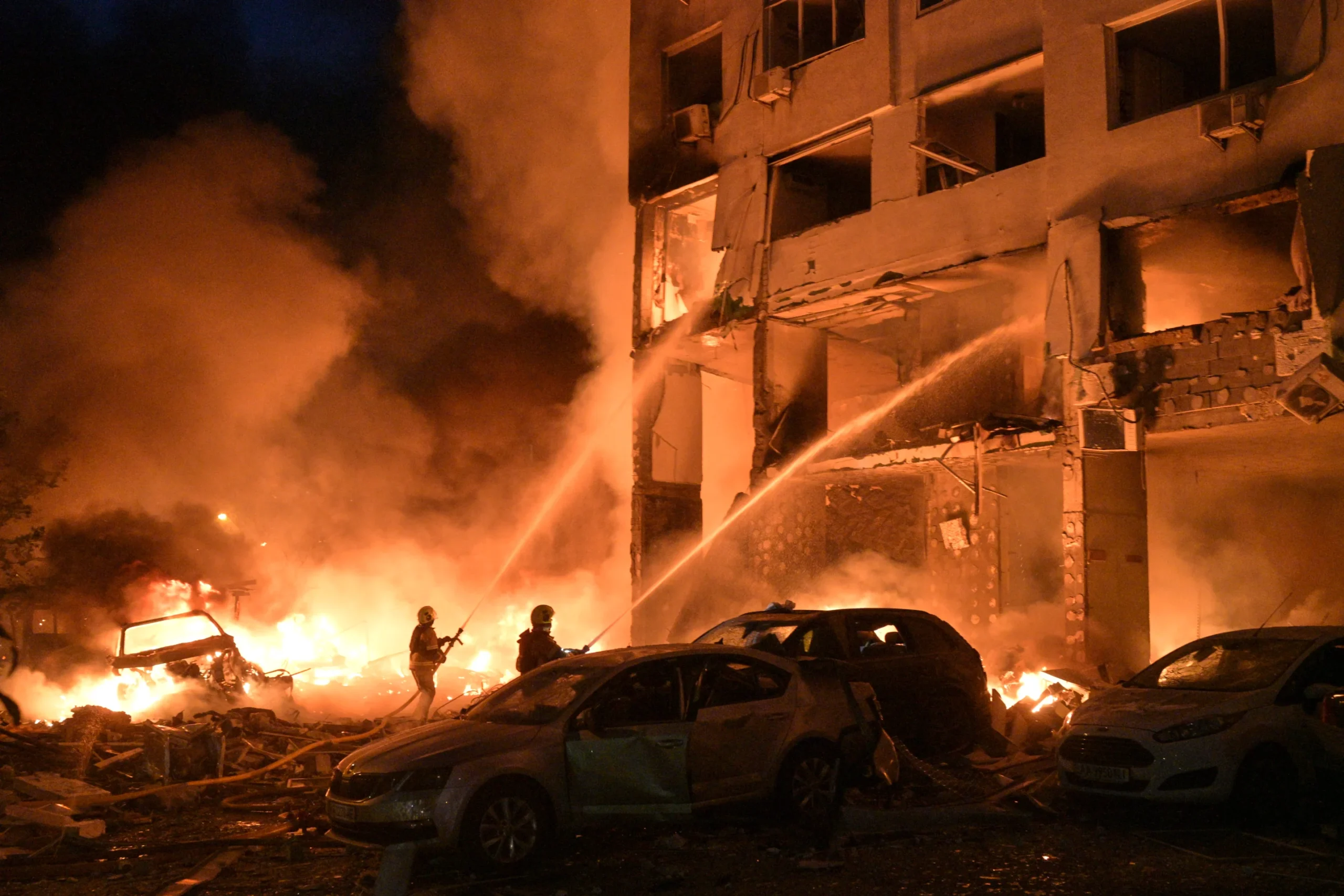
Russia launched one of its heaviest overnight assaults on Kyiv in months early Monday, killing at least 12 people, wounding more than 60, and exposing a deepening crisis in Ukraine’s ability to intercept ballistic missiles as every one of the ballistic projectiles Russia fired struck its intended target.
The attack came days after a separate Russian strike killed 31 people in the capital last Thursday, the deadliest assault on Kyiv this year, and arrived on the eve of a NATO summit in Ankara, Turkey, where Ukrainian President Volodymyr Zelenskyy is expected to make an urgent plea for more Patriot interceptor missiles.
What We Know So Far
Ukraine’s Air Force confirmed Russia fired 68 missiles and 351 drones overnight, targeting primarily Kyiv. Air defenses intercepted 37 missiles and more than 90 percent of the drones, but none of the 23 ballistic missiles were stopped, Reuters confirmed. Super and hypersonic missiles also struck their targets without being intercepted.
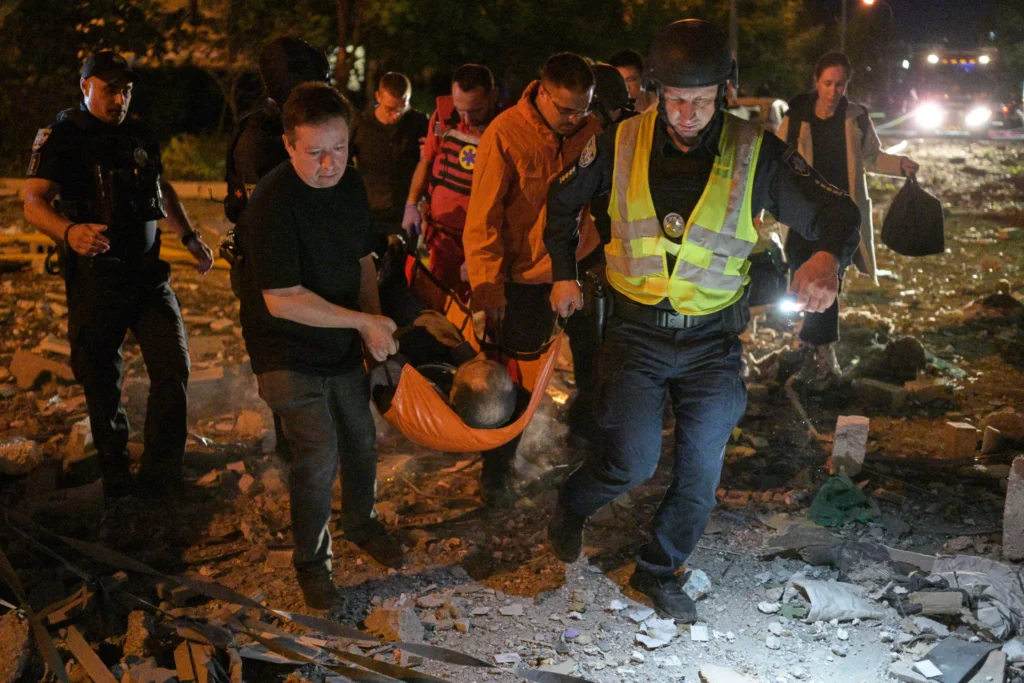
Kyiv Mayor Vitali Klitschko confirmed at least 12 deaths and more than 50 wounded across the city. An entire family, two parents and their child, was pulled from the rubble in one district, Ukrainian Foreign Minister Andrii Sybiha said.
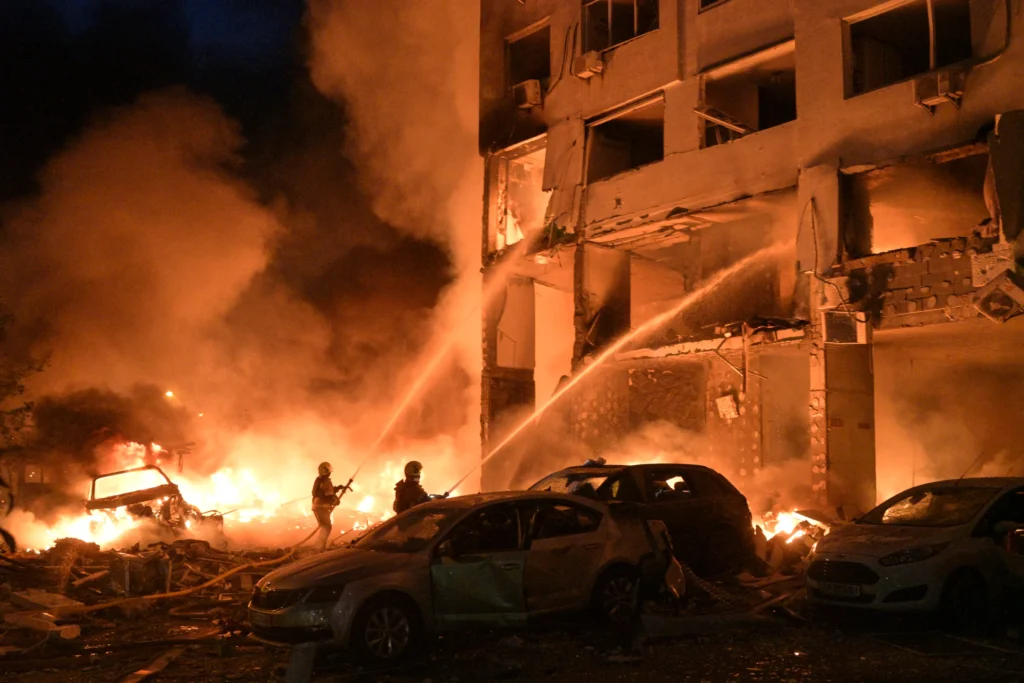
Close to 30 residential buildings were significantly damaged. A nine-story apartment block in the historic Podilskyi district was largely destroyed from the fifth floor upward, officials confirmed. The Darnytsia district also sustained severe damage, with several multistory buildings struck and residents believed trapped beneath the rubble.
Reuters television footage showed what appeared to be human remains trapped under concrete debris on an upper floor of a Podilskyi building as emergency workers used ladder trucks to reach upper floors and firefighters battled lingering flames.
Five additional people were killed and 26 injured in the surrounding Kyiv region. The southern port city of Odessa also came under attack, with at least one person wounded there, local officials said.
Poland scrambled fighter jets briefly as a precautionary measure before standing them down with no airspace violation recorded.
Ukraine launched its own drone attacks against Russia overnight. Ukrainian strikes damaged the Baltic Sea ports of Vysotsk and Ust-Luga, a major Russian oil export facility, Russian authorities confirmed.
A power blackout struck Sevastopol in Russian-occupied Crimea, home to Russia’s Black Sea Fleet, with the Moscow-appointed city head acknowledging that Ukrainian strikes had cut power supplies before backup systems restored them. Russia’s Defense Ministry separately said its air defenses downed 519 Ukrainian drones overnight.
Russia’s Yaroslavl region governor confirmed two people were wounded in a separate Ukrainian drone attack on the city there, with an online news outlet reporting the strike targeted an oil refinery and caused a fire.
What Authorities Are Saying
Zelenskyy had warned on Sunday that a large-scale Russian attack was imminent. After the strikes, he addressed the global community directly and with urgency.
“As long as Patriot missiles remain in our allies’ stockpiles, Russia is only encouraged to keep destroying residential buildings,” he wrote on X. “The United States and Europe have enough strength to stop this terror.”
Ahead of the NATO summit, Zelenskyy called on allies to leave Ankara with concrete commitments to bolster Ukraine’s air defense capacity and protect civilian lives. He acknowledged that Ukrainian forces had performed adequately against cruise missiles and drones but were powerless against ballistic missiles without sufficient interceptors.
Air Force spokesman Yurii Ihnat was direct about the underlying cause of Monday’s failures. “To intercept ballistics, we need the means for interception,” he said on national television. “Russians are certainly using the fact that there is a serious deficit of interceptor missiles now, in Ukraine and the world.”
Tymur Tkachenko, head of Kyiv’s Military Administration, described the human reality of the strikes in a Telegram post. “These are residential buildings. Places where people slept and lived their ordinary lives,” he said, confirming that a building in the Podilskyi district had partially collapsed and that people were believed trapped in the Darnytsia district.
Russia’s Defense Ministry maintained that its forces had targeted weapons factories in Kyiv, including facilities producing drones, armored vehicles, and missiles, as well as fuel and energy infrastructure. Those claims could not be independently verified, the Associated Press noted.
Witnesses Recount The Night’s Terror
Khrystyna Piatetska, 20, described being jolted awake by the first explosion, followed immediately by a second blast that blew out the windows in her apartment. The lights failed, smoke filled the stairwell, and the smell of burning hung in the air as residents scrambled to evacuate.
“When we were leaving the building, bodies were lying there,” Piatetska told reporters. “When we got downstairs, cars started exploding, and we came out from under the rubble straight into the fire.”
Halina Ivanivna, 61, said she was woken at around 2 a.m. by the first strike and watched her building begin to collapse around her before a second strike hit approximately five minutes later. “Everything was falling down,” she said.
A 22-year-old woman named Alyona waited at a playground near one of the damaged buildings for news of her 19-year-old friend Vika, who was missing after the attack. “We’re sitting here and waiting until they retrieve them,” she told Reuters, holding back tears. “She’s so kind, only 19 years old. She’s such a kind girl.”
Why This Matters
Monday’s attack crystallizes a strategic reality that has been building for months. Russia has recognized that Ukraine’s most critical vulnerability is no longer on the battlefield but in the air, specifically in the finite and increasingly depleted supply of Patriot interceptor missiles that represent Kyiv’s only reliable defense against ballistic projectiles.
The war in the Middle East has strained the global supply of Patriot interceptors, which are manufactured in limited quantities and have been drawn down by competing demands across multiple conflict zones.
Ukraine’s reliance on a weapons system that its allies cannot readily replenish has created an exploitable gap that Russia is now deliberately widening with each successive ballistic missile barrage.
The timing is also diplomatically pointed. By launching its most comprehensive assault in recent weeks on the eve of a NATO summit where Ukraine’s survival needs will be at the center of debate, Russia is sending a clear signal about the consequences of Western hesitation.
Zelenskyy arrives in Ankara with fresh photographs of collapsed buildings and a death toll that has now crossed 40 in Kyiv in less than a week, a context that he will use to press allies for the interceptors his air force acknowledges it cannot otherwise provide.
More than 16,000 Ukrainian civilians have been killed since Russia’s full-scale invasion began in February 2022, according to the United Nations. Monday’s attack adds to that toll and to the body of evidence that Russia’s aerial campaign continues to target residential areas regardless of its stated military justifications.
Ukraine’s own offensive drone campaign has delivered measurable results in recent months, slowing Russian advances along the 1,200-kilometer front line by targeting supply routes and logistics infrastructure behind Russian positions. Strikes on oil facilities at Ust-Luga and Vysotsk on Monday continued that campaign.
But the asymmetry between Ukraine’s drone effectiveness and its air defense vulnerability reflects a war that is being fought simultaneously in the air, on the ground, and in the logistics chains of governments thousands of kilometers away.
What Happens Next
Zelenskyy heads to Ankara for the NATO summit beginning Tuesday, where Trump is also expected, with the two leaders set to meet for discussions on renewed efforts to end the war. The overnight attack will define the political atmosphere of those conversations in ways that no diplomatic briefing could replicate.
Rescue operations were continuing across Kyiv Monday morning as emergency workers searched rubble for survivors in the Podilskyi and Darnytsia districts. The full casualty count was expected to rise as crews reached areas still inaccessible in the immediate aftermath.
Ukraine’s air force has made clear that without a significant resupply of Patriot interceptors, the country’s ability to defend its capital against Russian ballistic missiles will remain critically limited.
Whether NATO allies leave Ankara with the commitments Zelenskyy is demanding will determine whether Monday’s scenes are repeated in the weeks ahead.