Home Blog Page 263

Israel Admits Gaza Church Strike Was Mistake Following Trump Call, Issues Rare Statement of Regret

JERUSALEM (BN24) — Israel has issued an uncommon public apology after a military strike on Gaza’s only Catholic church killed three people, injured ten others, and left the historic building heavily damaged. The announcement, which came Thursday, followed a call from President Donald Trump to Israeli Prime Minister Benjamin Netanyahu demanding clarification over the deadly incident.

The strike on the Holy Family Church in Gaza City occurred Thursday morning as hundreds of Palestinians, including members of the enclave’s small Christian minority, sheltered inside. The church had served as a rare sanctuary amid the ongoing war, continuing to hold mass and offer refuge even as fighting devastated surrounding neighborhoods.

In an uncharacteristically swift response, the Israeli government admitted responsibility and expressed sorrow, stating: “Israel deeply regrets that a stray ammunition hit Gaza’s Holy Family Church. Every innocent life lost is a tragedy. We share the grief of the families and the faithful. We are grateful to Pope Leo for his words of comfort. Israel is investigating the incident and remains committed to protecting civilians and holy sites.”

The statement came after Trump, reportedly outraged by news of the attack, demanded answers from Netanyahu during a phone call. According to a senior U.S. official who spoke to Axios, Trump insisted the Israeli leader publicly acknowledge the strike was a mistake. Netanyahu complied shortly afterward.

White House Press Secretary Karoline Leavitt confirmed that Trump’s reaction to the church strike was “not a positive reaction,” highlighting the U.S. president’s growing impatience with Israel’s conduct in Gaza.

Holy Family Church, one of the oldest and most significant Christian sites in the Gaza Strip, suffered serious structural damage when its roof was hit. While Israel’s initial assessment cited stray shrapnel as the likely cause, church officials have accused the Israeli military of directly targeting the building. “We are not sure about this,” said Cardinal Pierbattista Pizzaballa, the Latin Patriarch of Jerusalem. “They hit the church directly.”

Among the injured was parish priest Father Gabriel Romanelli, who had received nightly phone calls from the late Pope Francis during earlier stages of the war. The Vatican said Pope Leo XIV was “deeply saddened” by the loss of life and once again urged for an immediate ceasefire.

The incident marks a rare moment of Israeli contrition in the Gaza conflict, particularly so soon after a strike. It also reflects the weight of Trump’s influence in pressing for accountability — an influence that appears to be prompting swifter responses from the Netanyahu government.

The Holy Family Church tragedy unfolds against a backdrop of devastation in Gaza, where more than 58,000 Palestinians have been killed since the war began, according to the Hamas-run Health Ministry. A January report by the United Nations estimated that 70% of buildings in the territory had been damaged or destroyed.

Axios.com

ICE Granted Access to Medicaid Data for 79 Million Americans in Secretive Deal to Boost Immigration Raids

WASHINGTON (BN24) — U.S. Immigration and Customs Enforcement (ICE) will gain access to the personal data of nearly 79 million Americans enrolled in Medicaid under a newly revealed agreement aimed at ramping up immigration enforcement across the country, according to a document obtained Thursday by The Associated Press.

The agreement, signed earlier this week between the Department of Homeland Security (DHS) and the Centers for Medicare and Medicaid Services (CMS), permits ICE agents to search a trove of sensitive information — including home addresses, racial and ethnic background, birth dates, and Social Security numbers — to locate individuals suspected of residing in the country unlawfully.

The arrangement, which had not been previously disclosed to the public, marks a significant escalation in President Donald Trump’s ongoing crackdown on illegal immigration and has sparked alarm among immigration advocates and privacy experts. The data-sharing initiative could heighten fears among low-income families and immigrants already hesitant to seek medical care or government assistance for fear of being targeted.

According to the agreement, ICE will use CMS data “to receive identity and location information on aliens identified by ICE,” bolstering the agency’s ability to conduct targeted raids across the United States. While the document does not allow ICE to download the information in bulk, agents will be granted live access to the database from 9 a.m. to 5 p.m., Monday through Friday, through September 9.

A CMS official, speaking on the condition of anonymity, expressed concern about the agency’s role in the operation. “They are trying to turn us into immigration agents,” the official said, criticizing what they described as an unprecedented use of a public health database for deportation purposes.

The Medicaid program, jointly funded by states and the federal government, provides health care coverage to the nation’s poorest residents, including millions of children. While undocumented immigrants are barred from enrolling in regular Medicaid, they are entitled under federal law to access emergency Medicaid, which covers lifesaving care in hospitals regardless of immigration status.

Health and Human Services officials have publicly insisted the deal is primarily intended to identify individuals who may be fraudulently receiving Medicaid benefits. But the agreement itself clearly outlines deportation as a primary function, stating that the information will help ICE locate “the location of aliens” across the U.S.

Civil liberties advocates warn that the program will likely chill immigrant access to health care and increase fear in vulnerable communities. Past enforcement policies have already made schools, hospitals, and courthouses feel like high-risk areas for undocumented families.

Photographs and documents detailing the agreement were not published alongside the announcement, and there was no public rollout or news briefing. The covert nature of the arrangement has only deepened criticism about transparency under the Trump administration’s immigration policies.

Astronomer CEO Praised New HR Chief Months Before Kiss Cam Caught Them Embracing at Coldplay Concert

NEW YORK (BN24) — Months before they were caught in an intimate moment on the kiss cam at a Coldplay concert, Astronomer CEO Andy Byron publicly praised the hiring of Kristin Cabot, now at the center of widespread speculation over an alleged workplace affair.

Byron, who leads the New York-based artificial intelligence firm, heralded Cabot’s arrival in November 2024 as a pivotal addition to the company’s leadership team. At the time, he described her as “a proven leader” with the experience and passion to guide the company’s growth.

“Kristin’s exceptional leadership and deep expertise in talent management, employee engagement, and scaling people strategies will be critical as we continue our rapid trajectory,” Byron said in a company press release announcing her appointment. He emphasized her record of success at growth-stage companies and credited her with fostering “diverse, collaborative workplaces,” calling her “a perfect fit for Astronomer.”

Cabot, who previously worked at the data analytics firm Neo4j, was brought on as the company’s chief human resources officer. She, too, expressed enthusiasm about her new role in the same announcement, saying she was “energized in my conversations with Andy and the Astronomer leadership team about the opportunities that exist here.”

That professional relationship took an unexpected public turn this week, when Byron and Cabot were seen cuddling on the kiss cam during Coldplay’s performance at Gillette Stadium in Foxborough, Massachusetts. The moment — captured on the stadium’s jumbotron — appeared to catch both by surprise, with the pair seen attempting to cover their faces as the crowd reacted.

The band’s frontman, Chris Martin, paused during the show and commented on the footage. “Oh, what?” Martin said from the stage. “Either they’re having an affair or they’re just very shy.”

The embrace, broadcast in front of thousands, quickly went viral and has drawn scrutiny given the pair’s workplace roles — particularly Byron’s position as CEO and Cabot’s leadership of HR at a company specializing in AI-driven workplace solutions.

Astronomer has not publicly commented on the incident or the nature of the relationship between Byron and Cabot. Neither has responded to media inquiries.

White House Confirms Trump Diagnosed With Chronic Vein Condition Amid Speculation Over Bruising

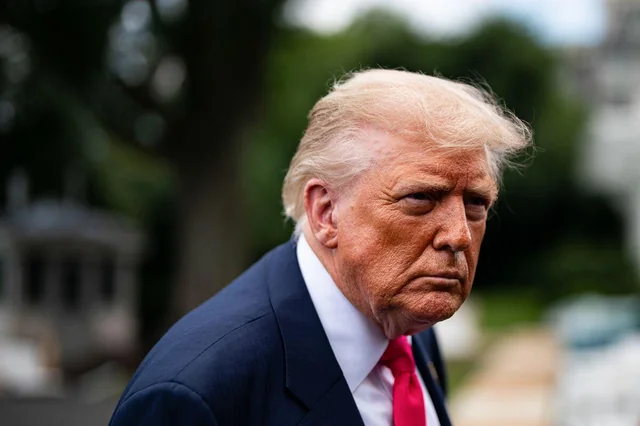
WASHINGTON (BN24) — President Donald Trump has been diagnosed with chronic venous insufficiency, a vein condition common in older adults, the White House said Thursday, after days of public speculation over images showing bruises on the president’s hand and swelling in his legs.

White House Press Secretary Karoline Leavitt said the diagnosis followed a “comprehensive exam,” including a vascular study, after Trump experienced noticeable swelling in his legs. She attributed the bruising on his hand to tissue damage caused by frequent handshaking, combined with his use of aspirin, which she noted is part of a standard cardiovascular prevention regimen.

Trump, 79, has long boasted of his physical fitness, once calling himself “the healthiest president that’s ever lived.” The recent diagnosis, according to officials, does not suggest any major health concerns.

Chronic venous insufficiency occurs when the veins in the legs fail to efficiently return blood to the heart, causing it to pool in the lower extremities. This can lead to swelling, discomfort, and in some cases, visible skin changes such as bruising.

White House physician Dr. Sean Barbabella released a written statement confirming the diagnosis, calling the condition “benign and common,” particularly in individuals over the age of 70. He emphasized that Trump showed “no evidence of deep vein thrombosis or arterial disease,” and that “all test results were within normal limits.”

Barbabella further clarified that additional testing ruled out any signs of heart failure, kidney problems, or systemic illness. “President Trump remains in excellent health,” the doctor wrote.

The president’s health became a subject of renewed online scrutiny after photographs taken at the FIFA Club World Cup final in New Jersey on July 13 showed his legs appearing swollen. Days later, additional images from a White House meeting with Bahraini Prime Minister Salman bin Hamad bin Isa Al Khalifa revealed bruises on Trump’s hand. Similar marks had also been visible in photos from his February meeting with French President Emmanuel Macron.

Speculation over Trump’s condition spread rapidly across social media, prompting the White House to issue Thursday’s clarification.

Trump, who was sworn in for his second term in January at age 78, is the oldest person ever to be inaugurated as president. In his most recent annual physical conducted in April, Barbabella noted the president “exhibits cognitive and physical health.”

With the November election drawing closer, Trump’s health remains a key concern for voters. However, Thursday’s statement appeared intended to put to rest any rumors surrounding his condition, reinforcing his longstanding claims of good health.

Greek Police Arrest Ex-Wife, 4 Others in Killing of UC Berkeley Professor in Athens

ATHENS, Greece (BN24) — Greek police have arrested five people in connection with the fatal shooting of a University of California, Berkeley marketing professor in Athens, including the victim’s ex-wife and her boyfriend, who has confessed to carrying out the killing, authorities said Thursday.

Przemyslaw Jeziorski, 43, an associate professor at UC Berkeley’s Haas School of Business, was gunned down on July 4 in an upscale Athenian neighborhood near the home of his 10-year-old twins, Zoe and Angelo. According to Greek officials, a masked gunman approached Jeziorski and fired multiple shots to his chest and back before fleeing the scene.

Police say Jeziorski’s ex-wife orchestrated the attack. Her boyfriend and three alleged accomplices have also been taken into custody. All five suspects appeared in court in Athens on Thursday and are scheduled for another hearing Monday.

Greek authorities say the suspects attempted to conceal their identities. Investigators traced the vehicle used before the shooting and said the gunman had handed over his phone and car keys to one of the accomplices to avoid detection. Two other suspects allegedly left the area without the shooter following the killing.

Jeziorski, a Polish-American scholar known to colleagues and students as “PJ,” was reportedly in Greece to attend a court hearing concerning a custody and property dispute with his former spouse. He had planned to take his children to his hometown of Gdynia, Poland, and later to Disneyland Paris, according to his brother, Lukasz Jeziorski.

“Our family is heartbroken,” Lukasz said in a statement. “But we are grateful to Greek police and security professionals who have identified and captured those accountable. We want justice to be fully served.”

The murder has shocked both the academic community and Jeziorski’s personal circle. His close friend, Chemtai Mungo, said the professor expected to spend a month with his children in Poland under a previous court agreement. But upon arriving in Greece, he was informed of a new legal dispute requiring his attendance in court.

“He was hopeful and excited to spend time with his kids,” Mungo told ABC News. “The relationship with his ex-wife was not cordial, and he didn’t anticipate the situation would turn deadly.”

Mungo said Jeziorski had stayed in frequent contact while in Athens and that the circumstances of the shooting—occurring in a well-regarded neighborhood—left no doubt the killing was deliberate. Police reportedly told the family the gunman fired five rounds into Jeziorski’s chest and neck.

The couple had divorced three years earlier, and the children, both U.S. and Polish citizens, are now under state care in accordance with Greek custody protocols, officials confirmed.

Jeziorski’s death marks a tragic end to what had initially been a routine international custody matter. Authorities have not publicly disclosed additional evidence but say further legal proceedings are underway as prosecutors prepare formal charges against the suspects.

Yemeni Forces Seize 750 Tons of Suspected Iranian Weapons Bound for Houthis

SANAA, Yemen (BN24) — Yemeni fighters loyal to the country’s exiled government announced Wednesday they had seized a massive Iranian arms shipment allegedly destined for the Houthi rebels, marking one of the largest interdictions of Tehran-supplied weaponry in the war-torn nation’s decade-long conflict.

The National Resistance Force, a militia led by Brig. Gen. Tariq Saleh, claimed it intercepted approximately 750 tons of weapons and missiles in late June. The cache reportedly included advanced anti-ship and anti-aircraft missiles similar to those the Houthis have used in recent months to attack Red Sea shipping lanes.

While Iranian officials and Houthi leadership did not respond to the announcement, video footage released by Saleh’s forces showed what appeared to be Iranian-made Type 358 surface-to-air missiles and anti-ship systems resembling those deployed in Houthi strikes that sank two commercial vessels this year, killing at least four crew members. Drone parts, warheads, and weapons manuals written in Farsi were also allegedly found among the seized cargo.

Though the U.S. Navy and Western allies have previously interdicted Iranian arms at sea, this marks the first major seizure carried out independently by the National Resistance Force. It represents a notable shift in the broader fight to curb Iran’s influence and disrupt weapons flows to the Houthis, who seized Yemen’s capital, Sanaa, in 2014 and continue to defy a United Nations arms embargo.

U.S. Central Command (CENTCOM) praised the operation, with Gen. Michael Erik Kurilla calling Iran “the most destabilizing actor in the region” and describing the shipment as proof of Tehran’s ongoing violations. CENTCOM said the weapons bore markings tied to an Iranian defense firm under U.S. sanctions, adding that the material demonstrated Iran’s persistent efforts to fuel regional instability.

“The interdiction of this massive Iranian shipment shows that Iran remains the most destabilizing actor in the region,” Kurilla said in a statement. “Limiting the free flow of Iranian support to the Houthis is critical to regional security, stability and freedom of navigation.”

Iran has consistently denied supplying weapons to the Houthis, despite repeated discoveries of Tehran-manufactured arms in both battlefield and maritime contexts. U.S. officials say the Houthis have used Iranian weaponry to down 26 U.S. MQ-9 drones since the war began.

The conflict in Yemen escalated in 2015 when a Saudi-led coalition — supported by U.S. intelligence and weaponry — intervened on behalf of the exiled Yemeni government. The resulting stalemate has left over 150,000 people dead and driven millions to the brink of starvation in what the United Nations has called one of the world’s worst humanitarian crises.

While Wednesday’s announcement drew international attention, it remains unclear whether the captured weapons shipment will shift momentum in the drawn-out conflict, which has seen no major diplomatic breakthroughs despite multiple ceasefire efforts.

Russian Woman and Her Daughters Found Living in Forest Cave in India, Face Deportation

GOKARNA, India (BN24) — Indian police discovered a Russian woman and her two young daughters living in a remote forest cave in Karnataka, ending what authorities describe as years of isolation and visa violations. The case has drawn international attention for its mystery and the unusual life the family led deep in the wilderness.

The woman, identified as 40-year-old Nina Kutina, was found on July 9 along with her daughters, aged six and five, in a natural cave nestled in the rugged Ramatirtha Hills near the coastal town of Gokarna. Local police encountered the trio during a routine patrol in the landslide-prone forest area, popular with tourists but dangerous due to wildlife and unstable terrain.

Sub Inspector Sridhar S.R. of the Gokarna police said the family had been residing in the cave for nearly two months, with no artificial lighting and minimal contact with the outside world. “They were surviving on groceries Kutina brought from town, and they lived entirely by natural light,” Sridhar said. The police described the cave’s entrance as covered with red saris serving as curtains, and decorated with photographs of Hindu deities.

Kutina, who arrived in India on a business visa in 2016, reportedly overstayed her permitted stay by more than seven years. Though she made a brief trip to Nepal, she returned and went off the grid around 2018, vanishing into Karnataka’s coastal forests. Officials said she had worked previously as a Russian language tutor in Goa and spent time meditating, painting, singing, and reading in the forest, according to interviews with local media.

“The snakes are our friends. They don’t harm us unless we trouble them,” Kutina reportedly told officers who convinced her to leave the cave, citing safety concerns.

The circumstances of her extended stay and the paternity of her children have added further complexity. Kutina gave birth to both daughters in India. The children’s father, Israeli national Brar Goldstien, told The Indian Express that he met Kutina in 2017. He said she had two sons from a prior relationship — one of whom died in an accident in October 2024. Goldstien claimed he had taken care of the surviving boy and accused Kutina of denying him access to his daughters since October of last year. In December 2024, he filed a police complaint alleging Kutina physically assaulted him and extracted money from him to send to her mother.

Police located Kutina’s passport near the cave and have since moved her and her daughters to a Foreigners Regional Registration Office (FRRO) detention center. The deportation process to Russia is underway but may take time due to bureaucratic and legal hurdles. Indian officials have confirmed she lacked valid residency documentation. Authorities have also indicated that her travel out of the country is expected to be self-funded, as neither the Indian nor Russian governments are likely to cover repatriation costs.

Kutina has declined to speak publicly since her discovery, though police cited a message she sent to friends lamenting the loss of her quiet sanctuary: “Our peaceful life in the cave has ended — our cave home destroyed.”

Legal uncertainty now surrounds the future of her two daughters. Goldstien is reportedly seeking shared custody, though the path ahead remains unclear amid custody disputes, immigration proceedings, and the lack of legal residency status for the children.

The unusual case has captivated local and international observers, raising broader questions about how long-term foreign overstays are handled in India, as well as the psychological and legal welfare of children born and raised in such extreme isolation.

Israeli Shell Hits Catholic Church in Gaza, Killing 3 and Wounding Priest Known to Pope Francis

GAZA CITY, Gaza Strip (BN24) — A deadly Israeli strike hit the Holy Family Catholic Church compound in Gaza on Thursday, killing three people and injuring ten others, including the parish priest who had been in regular contact with the late Pope Francis. The shelling, which occurred amid intensifying military operations in the region, drew condemnation from religious leaders and deepened concerns about civilian safety as the Israel-Hamas war rages into its 21st month.

Church officials said the compound, which has served as a refuge for hundreds of displaced Palestinians — including Muslims, Christians, elderly residents, and disabled children — was hit by Israeli shell fragments during what the military described as “operational activity” in the area. Among the victims were a 60-year-old church janitor and an 84-year-old woman receiving psychosocial support from Caritas Jerusalem. The church’s priest, Rev. Gabriel Romanelli, was lightly wounded.

The Israeli military issued a statement expressing regret and said an investigation was underway. It noted that the shell’s impact was unintended and stressed that the military does not target religious sites, asserting it “makes every feasible effort to mitigate harm to civilians and religious structures.”

The late Pope Francis, who died in April, had frequently spoken by phone with Romanelli and voiced deep concern over the humanitarian cost of the conflict. In his memory, Pope Leo XIV condemned the church strike and renewed calls for an immediate ceasefire. “This is a grave violation of the sanctity of life and of religious sanctuaries,” he said in a message of condolence, adding that the attack underscores the urgent need for “dialogue, reconciliation, and lasting peace.”

President Donald Trump, who has publicly supported Israel throughout the war, called Israeli Prime Minister Benjamin Netanyahu to express “frustration and disappointment” over the incident, the White House said. Netanyahu later issued a statement saying Israel “deeply regrets” the impact on Gaza’s lone Catholic parish.

Italian Prime Minister Giorgia Meloni condemned the attack, describing it as “unacceptable,” and accused Israel of waging indiscriminate strikes on civilian populations for months.

The Holy Family Church compound, located near Al-Ahli Hospital, has been struck repeatedly over the past week, according to hospital officials. The Greek Orthodox Patriarchate of Jerusalem, which operates another church in Gaza that has previously sustained damage, said the Catholic compound was sheltering 600 people — including 54 with disabilities — when the strike occurred.

“The targeting of holy places violates the sanctity of life and the historical role of churches as safe havens in times of war,” the Patriarchate said in a statement.

In a separate incident, another Israeli strike hit two schools in the Al-Bureij refugee camp, killing one and wounding 17, according to Al-Awda Hospital. The Israeli military did not comment on that strike.

Mourners attend the burial of Palestinian Christians Saad Salama and Foumia Ayyad, who were killed in an Israeli strike on the Holy Family Church, according to medics, at the Greek Orthodox Saint Porphyrius Church, in Gaza City, July 17, 2025. REUTERS/Dawoud Abu Alkas

Gaza’s Health Ministry said hospitals had received the bodies of 94 people killed in Israeli attacks over the previous 24 hours, along with 367 wounded. The ministry, part of the Hamas-run government but operated by medical professionals, is considered the most reliable source of casualty figures by the United Nations and other international agencies. According to its latest figures, Israel’s military campaign has killed over 58,600 Palestinians, with women and children making up more than half of the deaths. Israel does not distinguish between civilians and militants in its casualty assessments.

The conflict began after the Hamas-led assault on southern Israel on Oct. 7, 2023, which left 1,200 people dead and 251 taken hostage. Israel has said 50 hostages remain in Gaza, fewer than half of whom are believed to be alive.

Ceasefire talks, brokered through international intermediaries, have made little visible progress in recent months. An Israeli official speaking anonymously said negotiators are showing “flexibility” on issues such as the military’s corridor presence in Gaza but acknowledged that major disputes remain, including the release of Palestinian prisoners and guarantees to end the war. A deal is not believed to be imminent.

For the roughly 1,000 Christians who remain in Gaza — most of them Greek Orthodox — the church strike is another blow to a dwindling and deeply traumatized community. Local leaders have long decried rising threats to Christian heritage and safety in the region, including settler violence and the erosion of religious freedoms.

French Army Ends 64-Year Military Presence in Senegal with Final Troop Withdrawal

DAKAR, Senegal (BN24) — France formally ended its six-decade military presence in Senegal on Thursday, completing the withdrawal of its remaining 350 troops and handing over its final bases in a move emblematic of France’s waning influence across West and Central Africa.

The symbolic pullout, marked by a ceremony in Dakar, saw French forces return control of Camp Geille—their largest Senegalese base—and the adjacent airfield at Dakar’s international airport to the Senegalese military. The event concluded a phased departure that began in March and effectively ended France’s uninterrupted military presence in the West African country since it gained independence in 1960.

Senegalese President Bassirou Diomaye Faye, who surged to power in 2024 on a platform calling for a radical realignment of foreign relations and greater national sovereignty, had called for the complete withdrawal of foreign troops by the end of 2025. While Senegal has avoided the hostile rhetoric seen in other former colonies like Mali, Burkina Faso and Niger, where military juntas severed ties with France and embraced Russia, Faye made it clear that Senegal would now treat France like any other partner—not as a privileged power.

“Senegal is an independent country, it is a sovereign country and sovereignty does not accept the presence of military bases in a sovereign country,” Faye said in remarks made in late 2024. Still, he emphasized that “France remains an important partner for Senegal,” signaling the shift was more about equality than estrangement.

French forces in Senegal had primarily engaged in joint operations and training with the Senegalese military, rather than direct combat missions. Their departure is the latest in a series of withdrawals across Africa by Paris, as a wave of anti-French sentiment and strategic recalibration continues to reshape its footprint on the continent.

France has recently shuttered or significantly reduced troop levels at its remaining bases in other former colonies. In February, France vacated its last outpost in Côte d’Ivoire, while the month prior, it relinquished the Kossei base in Chad—its final stronghold in the Sahel, a region engulfed in jihadist violence. In the Central African Republic, where Russian paramilitary presence has expanded, France has also drawn down operations under pressure from local authorities.

The trend mirrors broader disillusionment with France’s post-colonial military role across Africa. Coups in Niger, Burkina Faso and Mali since 2020 led to a rupture with Paris and a pivot toward Moscow. In Gabon, another former French colony, France has restructured its military footprint into a shared facility with the local army.

After Thursday’s withdrawal, the only remaining French military base on the African continent will be in Djibouti, a small nation in the Horn of Africa that also hosts U.S., Chinese and other foreign military installations. France plans to maintain its 1,500-person contingent there as its strategic African command center.

Despite the pullout, Faye has urged France to acknowledge its colonial legacy more fully, calling for an official apology for historic atrocities, including the December 1, 1944 massacre of African soldiers who fought for France in World War II—a flashpoint in France’s complicated relationship with its former colonies.

The exit from Senegal marks a historic turning point for France’s post-colonial presence in Africa and signals a new era in Franco-African relations, one where mutual cooperation may continue—but without boots on the ground.

lemonde.fr

U.S. Deports Immigrants to Eswatini Amid Rights Concerns and Widening Use of Third-Country Transfers

WASHINGTON (BN24) — The Trump administration has deported five foreign nationals to the African kingdom of Eswatini in what officials described as part of a broader campaign to remove individuals whose countries of origin refuse to accept them — a strategy that has ignited fresh concerns over human rights and due process.

The government of Eswatini confirmed Wednesday that it received five deportees from the United States, identifying the individuals as citizens of Laos, Vietnam, Jamaica, Cuba, and Yemen. The deportations are the latest example of the Trump administration’s effort to use third-party countries to expel individuals whom their home nations have refused to repatriate.

“This is the result of months of robust high-level engagements,” Eswatini government spokesperson Thabile Mdluli said in a statement, noting the deportees are being held in correctional facilities in isolated units “where similar offenders are kept.” While affirming Eswatini’s commitment to international human rights standards, Mdluli acknowledged the sensitivity of accepting non-citizens for deportation and said her government is working with the International Organization for Migration to facilitate the eventual transfer of the deportees to their home countries.

The U.S. Department of Homeland Security confirmed the deportation, with spokesperson Tricia McLaughlin describing the deportees in highly charged terms. “This flight took individuals so uniquely barbaric that their home countries refused to take them back,” she posted on social media, adding that the deportees had been convicted of serious crimes such as murder and child rape.

Critics, however, argue that the Trump administration is bypassing legal protections and due process in its effort to expedite removals. Human rights advocates warn that deporting individuals to countries like Eswatini — an absolute monarchy led by King Mswati III, which has been accused of crushing dissent — exposes them to potential abuse and mistreatment.

In 2021, security forces in Eswatini allegedly killed dozens of protesters during pro-democracy demonstrations. Several politicians were later handed lengthy prison terms for inciting violence, a charge opposition leaders said was politically motivated.

Despite its record, the Eswatini government defended the deportation agreement. “The Kingdom of Eswatini and the United States of America have enjoyed fruitful bilateral relations spanning over five decades,” the statement said. “Every agreement entered into is done with meticulous care and consideration, putting the interests of both nations at the forefront.”

Wednesday’s flight to Eswatini is part of a growing trend in which deportees are sent to third-party countries outside their national origin. In March, the Trump administration deported roughly 200 Venezuelans to El Salvador, where they were incarcerated in a maximum-security prison under conditions rights groups described as akin to torture. In May, a similar flight was attempted to Libya but was blocked at the last moment by a federal court.

That same month, eight immigrants were flown from the United States to South Sudan, a nation the U.S. State Department has flagged for human rights violations including extrajudicial killings and torture. A federal court in Massachusetts halted that flight, citing insufficient opportunity for the deportees to contest their removal. But the U.S. Supreme Court later reversed that decision in a brief order, allowing the deportations to proceed.

In a scathing 19-page dissent, Justice Sonia Sotomayor condemned the administration’s approach. “The Government has made clear in word and deed that it feels itself unconstrained by law, free to deport anyone anywhere without notice or an opportunity to be heard,” she wrote.

A recently leaked memo obtained by The Washington Post indicates that the administration has acknowledged that third-country deportations may occur even without credible assurances that individuals will be protected from torture or persecution. According to the document, removals can be carried out with as little as six hours’ notice under “exigent circumstances.”

Since returning to office in January, President Donald Trump has expanded mass deportation efforts and intensified policies targeting undocumented immigrants, including controversial agreements with countries like El Salvador, South Sudan, and now Eswatini. Human rights groups say these moves signal a shift away from international norms and toward a deportation regime that sidesteps legal scrutiny.

While the administration maintains that its actions are necessary for national security and immigration enforcement, opponents argue that the policy exposes vulnerable individuals to potentially grave dangers — all while circumventing the very legal systems designed to protect them.