Home Blog Page 27

Epstein Files Reveal Allegations of Secret Children and Eugenics-Inspired Reproductive Scheme

0

WASHINGTON — Newly released Justice Department documents contain disturbing allegations from an Epstein victim who claims she gave birth to a child fathered by the deceased financier when she was a teenager, with the infant removed from her care within minutes of delivery as part of what she described as his ambition to create a genetically superior bloodline.
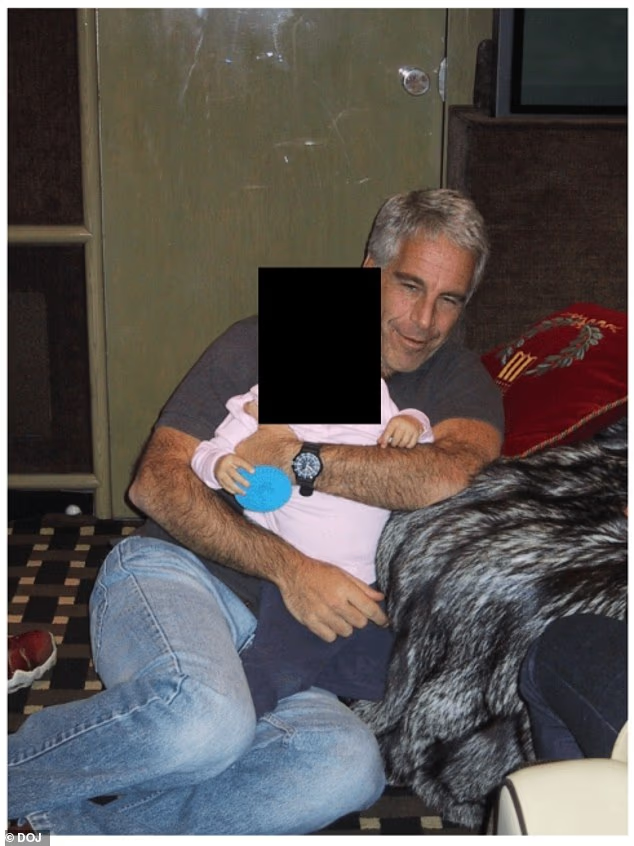
The victim’s diary entry, buried within the three million pages of materials published Friday by the U.S. Department of Justice, alleges she delivered a baby girl around 2002 when she would have been 16 or 17 years old. The woman expressed profound discomfort with what she characterized as Epstein’s objective to establish a superior gene pool through selective reproduction—a concept she compared to Nazi ideology.

“Why me? It makes no sense. Why my hair and eye colour?” the victim wrote in the diary entry, questioning the criteria by which Epstein selected her for his alleged reproductive scheme.

The victim’s attorneys at Wigdor LLP shared the diary with federal prosecutors investigating Epstein and his convicted co-conspirator Ghislaine Maxwell. The document includes a pregnancy ultrasound scan dated to 20 weeks’ gestation alongside the words: “She is gone and she won’t be coming back.”

The woman described the birth in harrowing detail, writing: “A shot and those rod like things had a hook and so much pain. Ghislaine said to push all the pain away.” She recounted observing “between her fingers this tiny head and body in the doctors hands. It reached its tiny arm up and had a tiny foot.”

The victim wrote that she heard Maxwell say in the hallway that the baby “was beautiful,” prompting her anguished response: “SHE WAS. Not is. She was a beautiful girl! I heard her! Where is she? Why did she stop whimpering?”

The woman later characterized herself as feeling like “nothing but your property and incubator,” asserting “there is no respect for me as a human.” She elaborated on Epstein’s alleged genetic ambitions, writing: “The piano and music comments are made to convince me this is right and will create perfect offspring … I don’t think it works that way and its making me hate playing together.”

This victim subsequently filed a lawsuit in 2023 under the pseudonym Jane Doe against Leon Black, former chief executive of Apollo Global Management and an Epstein associate. The complaint alleges Black raped her at Epstein’s residence in an assault that caused her to bleed. Black has denied the allegations and the case remains ongoing.

The document release also revealed a September 21, 2011 email from Sarah Ferguson, Duchess of York, congratulating Epstein on the birth of a “baby boy” after his release from prison for child sex offenses. Ferguson offered him her “love, friendship and congratulations” after hearing the news from “The Duke,” presumably referring to Andrew Mountbatten-Windsor, her former husband.

Ferguson appeared to use the news as pretext for reestablishing contact with Epstein despite his criminal conviction. “Don’t know if you’re still on this bbm [BlackBerry Messenger] but have heard from The Duke that you have had a baby boy,” she wrote, adding: “Even though you never kept in touch, I am still here with love, friendship and congratulations on your baby boy.” The message was signed “Sarah xx.”

The potential existence of this son—who would now be approximately 14 years old—has never been publicly confirmed. Epstein’s will, drafted before his August 2019 death in a New York prison cell, did not mention any offspring.

One undated video from Friday’s release appears to show a DNA paternity test on a table at Epstein’s seven-story Manhattan mansion, though the video provides no definitive confirmation of test results or purposes.

Email correspondences between Epstein and Maxwell leaked to Bloomberg last year suggested the pair discussed undergoing fertility treatments. On October 20, 2005, police executed a search warrant at Epstein’s Palm Beach residence. Days after the raid, Maxwell sent Epstein detailed instructions regarding sperm donation for shared fertility treatment.

“You can do the sample at home,” Maxwell wrote, specifying that it “has to be within 90 mins of my procedure” and that “all the ejaculate must be collected.”

In a 2007 email to Epstein—shortly before he signed a controversial non-prosecution agreement with federal prosecutors—Maxwell provided additional detailed instructions for another fertility procedure. This correspondence occurred around the time Maxwell claimed to have departed Epstein’s orbit and had begun a relationship with technology billionaire Ted Waitt.

“Your cup + instructions are in the oval room… The sample has to be dropped off at 10 + you HAVE to fill out the forms – I would have filled them for you but I was not sure what you wanted to put on them Let me know if you need/want me to do anything,” Maxwell wrote.

The New York Times previously disclosed in 2019 that Epstein confided in scientists about a scheme to propagate the human race with his DNA by impregnating women at his New Mexico ranch. Sources once close to Epstein revealed that the financier surrounded himself with academics over the years, sharing with them his plan to develop what he characterized as a superior race of humans carrying his genetic material.

Epstein hosted dinner parties where scientists mingled with attractive, college-educated women he regarded as potential candidates to bear his offspring. He told one associate that upon his death, he wanted his head and genitals frozen and donated to charities supporting transhumanism—the belief that humanity can further evolve through scientific advancement.

Dozens of acquaintances, including one former defense attorney, told the Times that Epstein’s reproductive ambitions were fueled by fascination with eugenics—the discredited ideology that human populations can be improved through selective breeding. This philosophy, which gained prominence in the early 20th century and was infamously embraced by Nazi Germany, has been thoroughly rejected by modern science and ethics as both scientifically invalid and morally abhorrent.

Epstein cultivated relationships within elite scientific communities and involved himself in numerous research pursuits. According to his inbox records, one of his final book purchases included “The Formula: Unlocking the Secrets to Raising Highly Successful Children.”

Sources indicated Epstein modeled his alleged baby ranch concept on the Repository for Germinal Choice, a controversial sperm bank established to be stocked with genetic material from Nobel laureates in an effort to enhance the human gene pool. Only one Nobel Prize winner ever admitted contributing sperm to the repository, which discontinued operations in 1999.

Epstein’s last-known girlfriend was Karyna Shuliak, to whom he reportedly expressed intentions to bequeath his private island Little Saint James, $50 million in cash, and his Manhattan townhouse. Whether these plans were executed or legally enforceable remains unclear.

The correspondence from Ferguson and the victim’s diary entry are among three million pages of documents, 180,000 images and 2,000 videos posted publicly by the Justice Department on Friday. The publication came six weeks after the December 19 deadline established by the Epstein Files Transparency Act, legislation that passed Congress and became law in November mandating comprehensive disclosure of all government files related to Epstein’s crimes and associations.

The materials released Friday conclude what Deputy Attorney General Todd Blanche characterized as the administration’s planned document production under the transparency legislation, though congressional Democrats have questioned whether all materials have been disclosed as legally required.

The victim testimony regarding forced childbirth and infant removal raises profound questions about the full scope of Epstein’s criminal conduct and the potential complicity of others in facilitating his alleged reproductive schemes. If the allegations prove accurate, they suggest systematic exploitation extending beyond the sexual abuse for which Epstein was convicted, encompassing forced pregnancy and separation of mothers from newborns.

The involvement Maxwell is alleged to have played—both in the described birth and in fertility treatment coordination—adds additional dimensions to her already documented role in Epstein’s abuse network. Maxwell is currently serving a 20-year federal prison sentence for sex trafficking and conspiracy charges related to her facilitation of Epstein’s recruitment and abuse of underage girls.

The eugenics ideology apparently motivating Epstein’s reproductive ambitions connects his personal criminal conduct to broader historical patterns of powerful men believing themselves genetically superior and entitled to propagate their DNA regardless of consent or the autonomy of women they exploited. This framing positions Epstein’s alleged actions within longstanding traditions of reproductive coercion that have victimized vulnerable women throughout history.

For the victim who authored the diary entries, the alleged forced separation from her infant daughter represents trauma compounding the sexual abuse she endured. The psychological impact of carrying a pregnancy resulting from exploitation, experiencing childbirth under coercive circumstances, and having one’s child immediately removed creates layers of harm that extend far beyond typical understandings of sex trafficking.

The Ferguson email raises questions about what members of elite social circles knew regarding Epstein’s personal life and reproductive activities, and whether knowledge of children existed within networks that maintained relationships with him even after his criminal conviction. Her apparent knowledge of a baby boy born around 2011—two years after Epstein’s initial conviction and release from custody—suggests information about his personal life circulated among associates despite his status as registered sex offender.

As investigators, journalists and advocacy organizations continue reviewing the massive document release, additional revelations about Epstein’s criminal network and the extent of his exploitation may emerge. The diary testimony and fertility treatment correspondence provide new evidence of how his wealth and connections enabled conduct that victimized women in ways extending beyond the sexual abuse charges for which he faced prosecution.

dailymail

13-Year-Old Australian Swims for Hours to Save Family After They Are Swept Out to Sea

0

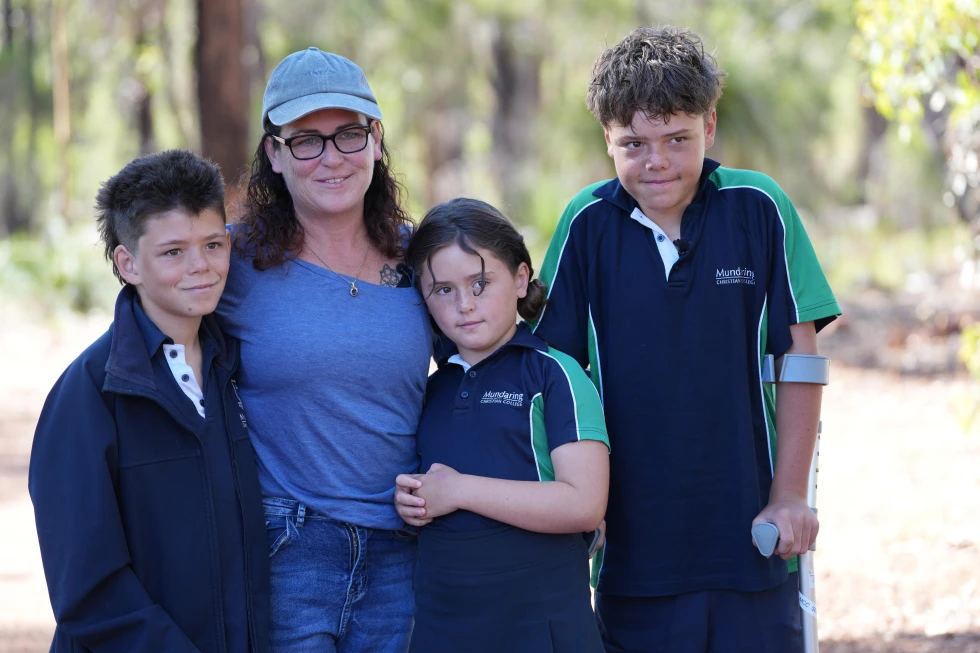
A 13-year-old boy is being hailed by police and emergency officials in Western Australia after swimming for hours through rough seas to summon help for his mother and two younger siblings, a decision authorities say directly led to their rescue after the family was swept far offshore.

Austin Appelbee, 13, swam approximately 4 kilometers (2.5 miles) to shore on Friday after ocean conditions overwhelmed the family during a coastal outing near Quindalup, south of Perth, police said. His mother, Joanne Appelbee, 47, along with Austin’s brother Beau, 12, and sister Grace, 8, were later found alive after drifting nearly 14 kilometers (9 miles) out to sea.

Western Australia Police said the family had been using kayaks and paddle boards rented from their hotel while on vacation when worsening winds and waves began pulling them away from shore around midday. As conditions deteriorated and their ability to return weakened, Joanne Appelbee made the decision to send her eldest child to seek help.

Austin initially attempted to paddle back on an inflatable kayak, but police said the vessel began taking on water, leaving him with little choice but to continue without it. He removed his life jacket after determining it restricted his movement in the heavy swell and began swimming alone toward land.

Speaking Tuesday, Austin described the ordeal as a battle against exhaustion, fear and cold, saying he focused on maintaining forward momentum despite the dangerous conditions. He estimated the swim lasted about four hours.

“The waves were massive and I didn’t have a life jacket,” Austin said. “I just kept telling myself to keep going.”

He reached shore at about 6 p.m., collapsed on the beach and raised the alarm, triggering an urgent search-and-rescue response.

Police Inspector James Bradley credited the teenager’s determination with saving three lives.

“The actions of the 13-year-old boy cannot be praised highly enough,” Bradley said. “His courage and persistence ultimately ensured his mother and siblings were found alive.”

A police helicopter located Joanne Appelbee and the two younger children at about 8:30 p.m., more than two hours after Austin reached shore. Officers said the three were wearing life jackets and clinging to a paddleboard, having spent up to 10 hours in the water as darkness approached.

Joanne Appelbee later told Australian Broadcasting Corp. that asking her son to swim for help was the most difficult decision she had ever made.

“I couldn’t leave the three of them,” she said. “I said to Austin, ‘Try and get to shore and get some help. This could get really serious really quickly.’”

She said she believed her son was capable of reaching land but became increasingly anxious as daylight faded and rescue had not yet arrived.

As waves grew larger and temperatures dropped, she said the family tried to keep spirits up by singing and joking, treating the situation lightly for as long as possible.

“We kept it positive for the kids,” she told ABC. “But once the sun started to go down, the sea became very rough. That’s when it really hit how dangerous it was.”

By the time rescuers reached them, all three were suffering from cold exposure. Beau had lost sensation in his legs due to prolonged immersion, his mother said, and all were shivering heavily.

Despite the ordeal, police said all four family members were medically assessed and none required hospitalization.

From a broader perspective, maritime safety officials say the incident highlights the rapid changes that can occur in coastal conditions and the risks faced by inexperienced swimmers and paddlers, particularly when winds strengthen offshore. Even relatively short distances can become life-threatening under such circumstances, experts note, as currents and waves sap strength and disorient swimmers.

Authorities also pointed to the importance of emergency decision-making under pressure. While sending a child alone into the ocean would ordinarily be unthinkable, police acknowledged that Joanne Appelbee’s decision reflected a stark calculation in an extreme situation.

Emergency responders emphasized that Austin’s physical conditioning, calm focus and willingness to abandon equipment that hindered his movement were critical factors in his survival. They cautioned, however, that similar attempts could easily end in tragedy and urged the public to avoid entering the water when conditions are unfavorable.

The rescue operation drew praise from local officials and renewed calls for tourists to seek updated marine forecasts and heed warnings when renting watercraft. Western Australia’s coastline, while popular with visitors, is known for strong currents and rapidly shifting weather.

Analysts say the incident also underscores the psychological dimension of survival at sea. Austin’s account of maintaining positive thoughts and focusing on incremental progress aligns with established survival principles used by lifeguards and maritime professionals, who stress the importance of conserving energy and avoiding panic.

For the Appelbee family, the outcome has reframed the experience less as a tale of danger than one of resilience.

“I have three babies,” Joanne Appelbee said. “All three made it. That’s all that matters.”

Police said no further investigation is planned, but officials hope the story will serve as both a reminder of the ocean’s unpredictability and an example of extraordinary bravery under impossible circumstances.

AP

Russian Missiles and Drones Strike Kyiv, Kharkiv as Winter Attacks Intensify Ahead of Peace Talks

0
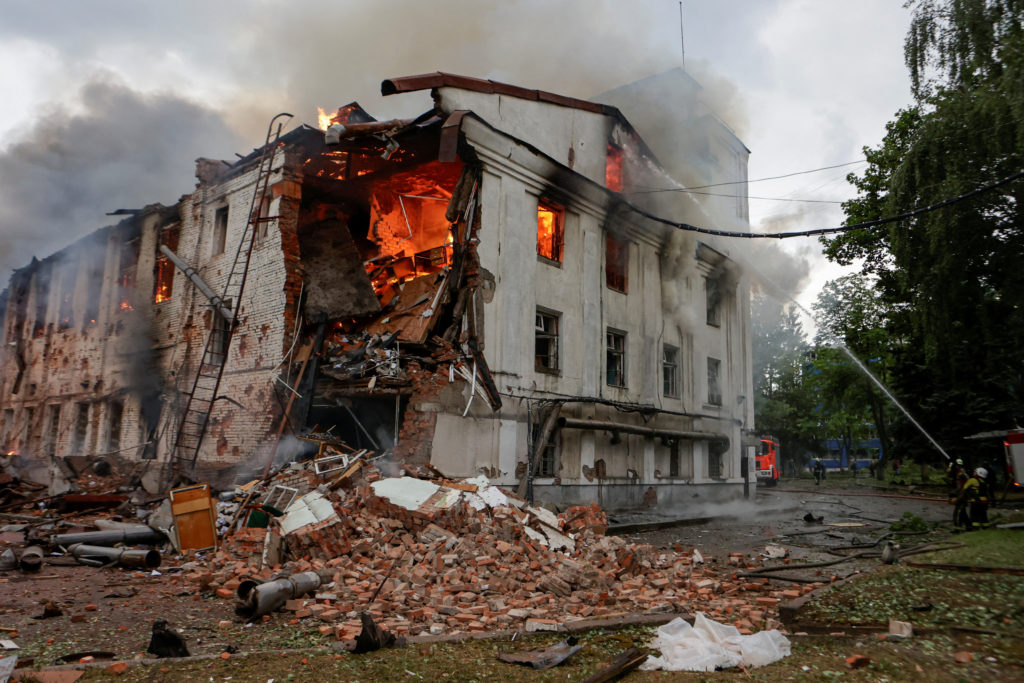
Firefighters work at the site of a building hit by a Russian drone strike, amid Russia's attack on Ukraine, in Kharkiv, Ukraine June 7, 2025. REUTERS/Sofiia Gatilova TPX IMAGES OF THE DAY

Russian forces launched a fresh wave of missile and drone attacks on Ukraine’s capital and other major cities early Tuesday, igniting fires, damaging residential buildings and delivering renewed blows to already strained energy systems as temperatures plunged and diplomatic efforts to address the war continued abroad, Ukrainian officials said.

Firefighters work at the site of a building hit by a Russian drone strike, amid Russia’s attack on Ukraine, in Kharkiv, Ukraine June 7, 2025. REUTERS/Sofiia Gatilova TPX IMAGES OF THE DAY

Explosions echoed across Kyiv shortly after midnight as air defenses engaged incoming threats, with residents reporting the sounds of both missiles and unmanned aerial vehicles over the city. The strikes came amid near-record cold, with nighttime temperatures falling close to minus 20 degrees Celsius (minus 4 Fahrenheit), compounding the impact on civilians facing power and heating disruptions.

Tymur Tkachenko, head of Kyiv’s military administration, said on Telegram that at least five districts were affected. Three apartment buildings sustained damage, along with a structure housing a kindergarten. Emergency crews responded to multiple fires, including one that engulfed an upper-floor apartment, scenes captured in videos circulating on social media. An air raid alert remained in force for more than five hours, underscoring the scale and duration of the assault.

City officials said four people were injured in Kyiv and Kharkiv, Ukraine’s second-largest city, though they warned the toll could change as damage assessments continued. The attacks marked another heavy strike against urban centers that have endured repeated bombardment since the start of the full-scale invasion nearly four years ago.

In Kharkiv, Mayor Ihor Terekhov said Russian fire struck critical energy infrastructure, forcing authorities to take emergency measures to prevent catastrophic failures in the city’s heating network. Writing on Telegram, Terekhov said coolant would need to be drained from heating systems serving 820 apartment buildings connected to a single thermal plant to keep pipes from freezing.

“The goal is obvious: to cause maximum destruction and leave the city without heat in severe cold,” Terekhov wrote, framing the attacks as an effort to weaponize winter conditions against civilians.

Ukraine’s public broadcaster Suspilne reported that Russian strikes also knocked out electricity in the towns of Izium and Balakliia in the Kharkiv region. In the northern city of Sumy, two apartment buildings were hit, adding to a growing list of residential targets affected during the overnight assault.

The renewed strikes followed a series of large-scale attacks on Kyiv since New Year’s Day that have already left hundreds of apartment blocks without stable power and heating. On Monday, emergency crews were still working to restore warmth to buildings where residents have endured days of freezing indoor temperatures.

The timing of the attacks added a diplomatic dimension to the unfolding crisis. They occurred on the eve of planned three-way talks in the United Arab Emirates focused on resolving the conflict, now approaching its fourth year. While details of the talks have not been made public, their proximity to the strikes highlighted the sharp contrast between battlefield escalation and parallel diplomatic efforts.

The bombardment also coincided with disputes over a proposed moratorium on attacks against energy infrastructure, an initiative both Moscow and Kyiv have discussed at the request of U.S. President Donald Trump. Russia said the pause expired on Sunday, while Ukrainian officials maintained that it was intended to remain in effect for a week starting Jan. 30.

On Monday, President Volodymyr Zelenskiy said Russian forces had not targeted Ukrainian energy facilities with missiles or drones in the previous 24 hours. He cautioned, however, that artillery and other forms of shelling continued to strike energy infrastructure near front-line areas, blurring the practical effect of any ceasefire understanding.

The overnight attacks appeared to challenge the spirit, if not the letter, of any temporary restraint. Ukrainian officials argued that the scale of damage to power and heating systems in major cities illustrated the vulnerability of civilian infrastructure during winter operations.

From an analytical perspective, the latest strikes fit a broader pattern seen throughout the war: intensified pressure on urban centers and utilities during cold months, when disruptions carry heightened humanitarian consequences. By targeting energy networks and residential areas simultaneously, Russian forces increase the logistical burden on Ukrainian authorities already stretched by frontline demands and limited repair capacity.

The attacks also underscore the fragile nature of informal or partial ceasefires. Without clearly defined enforcement mechanisms or mutual trust, pauses in fighting — particularly those covering specific categories such as energy infrastructure — remain susceptible to collapse amid shifting military priorities.

For Ukraine, the strikes reinforce the urgency of air defense reinforcement and decentralized energy solutions, including mobile generators and localized heating systems. Officials have repeatedly called on Western partners to accelerate delivery of air defense systems capable of intercepting both missiles and drones, arguing that layered defenses are essential to protecting cities during sustained winter campaigns.

For Russia, continued strikes on cities like Kyiv and Kharkiv serve multiple strategic purposes: degrading morale, stretching emergency response resources, and signaling leverage ahead of any negotiations. Even limited damage, when delivered consistently, can have outsized psychological and political effects during prolonged conflict.

As dawn broke over Kyiv, firefighters and utility workers moved through damaged neighborhoods, while residents assessed shattered windows and scorched walls. In Kharkiv and Sumy, local officials faced urgent decisions about how to preserve heating systems and restore electricity before temperatures dipped again overnight.

With no immediate indication that attacks would ease, the latest barrage highlighted the enduring human cost of the conflict and the precarious balance between diplomacy and continued military action. As talks loom abroad, Ukrainians braced for the possibility that winter, once again, would be fought not only on the front lines but in apartment blocks, power stations and city streets far from the battlefield.

Reuters

Clintons Signal Willingness to Testify in House Epstein Probe as Contempt Vote Looms

0

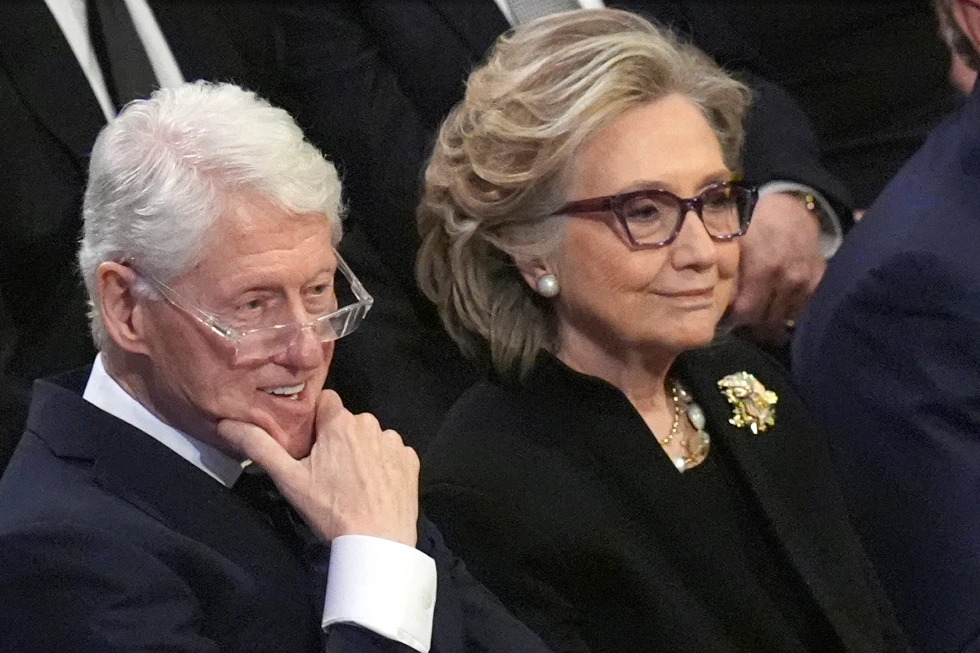
Former President Bill Clinton and former Secretary of State Hillary Clinton moved late Monday toward compliance with House subpoenas tied to the congressional investigation into convicted sex offender Jeffrey Epstein, signaling through their attorneys that they are prepared to sit for sworn depositions as lawmakers pressed ahead with a potential contempt of Congress vote that could mark a historic escalation by Capitol Hill.

The development unfolded as House Republicans advanced resolutions that would hold both Clintons in criminal contempt for failing to comply with subpoenas issued by the House Oversight Committee last August. The committee is examining Epstein’s network of associates and the federal government’s handling of investigations into his activities before his death in a New York jail in 2019.

Rep. James Comer of Kentucky, the Republican chair of the Oversight Committee, acknowledged receiving an email from lawyers for the Clintons indicating the former president and former secretary of state would appear for depositions on dates to be mutually agreed upon. The attorneys also asked Comer to halt contempt proceedings in exchange for that cooperation.

Comer declined to immediately withdraw the resolutions, telling reporters that no binding agreement had been finalized. He said discussions were ongoing and emphasized that clarity on timing and conditions remained unresolved. While leaving open the possibility of accepting the Clintons’ offer, Comer stressed that the committee would decide its next steps only after reviewing concrete terms.

The standoff reached a critical point as the House Rules Committee delayed consideration of the contempt resolutions while negotiations continued. The pause came just as Republican leaders were preparing to move the measures toward a floor vote, an action that could expose a former president to fines or even jail time if the Justice Department were to pursue prosecution. Congress has never before advanced criminal contempt proceedings against a former president, reflecting the gravity of the moment and the institutional tensions at play.

Earlier Monday, Comer rejected a proposal from the Clintons’ attorneys that would have allowed Bill Clinton to participate in a four-hour transcribed interview while Hillary Clinton responded to questions through a sworn written declaration. In a letter to counsel, the committee reiterated that both subpoenas required in-person, sworn depositions.

“The Clintons do not get to dictate the terms of lawful subpoenas,” Comer said, underscoring his insistence that the committee’s authority be fully respected.

The subpoenas stem from the Oversight Committee’s broader inquiry into Epstein and his associates. The panel issued demands for testimony not only to the Clintons but also to a slate of former Justice Department and FBI leaders, including former Attorneys General Merrick Garland, Loretta Lynch, Eric Holder, William Barr, Jeff Sessions and Alberto Gonzales, as well as former FBI Directors James Comey and Robert Mueller. The committee said it was seeking testimony related to what it described as the “horrific crimes perpetrated by Jeffrey Epstein.”

For months, attorneys for the Clintons challenged the validity and scope of the subpoenas, arguing that Hillary Clinton had no meaningful connection to Epstein and that Bill Clinton had already addressed his limited interactions with the financier. As the Oversight Committee escalated toward contempt proceedings, those objections gave way to renewed talks aimed at avoiding a floor vote.

Last month, the Republican-led committee advanced contempt charges with notable bipartisan support. Nine Democrats joined Republicans in backing the measure against Bill Clinton, while three Democrats supported advancing contempt against Hillary Clinton, citing the need for transparency in the Epstein investigation.

Republicans have focused particular attention on Bill Clinton’s past association with Epstein, which dates back to the late 1990s and early 2000s. Clinton’s name appeared in flight logs and photographs connected to Epstein, though Clinton has consistently denied any wrongdoing. His office has said he traveled on Epstein’s plane in connection with Clinton Foundation work before Epstein faced criminal charges and cut ties with him well before Epstein’s 2006 arrest for soliciting sex from a minor.

The Clintons and their allies have accused Comer of politicizing the investigation while failing to aggressively pursue the release of remaining Epstein-related files held by the Justice Department. They argue that the Trump administration bears responsibility for delays in making those records public.

Angel Ureña, a spokesperson for the Clintons, responded sharply to Comer’s posture Monday, saying the former president and former secretary of state had engaged constructively while the committee had not. Ureña said the Clintons had already testified under oath about what they know and accused Republicans of prioritizing confrontation over substance.

House Democratic leader Hakeem Jeffries echoed that criticism earlier in the day, signaling skepticism within his caucus about supporting contempt resolutions. Jeffries said Democrats would confer later in the week but made clear his opposition, characterizing the effort as political retribution rather than a serious attempt to obtain information.

“They don’t want a serious interview, they want a charade,” Jeffries said, while also pressing the Justice Department to release all remaining Epstein materials.

The Associated Press has noted that Congress historically has shown deference to former presidents, none of whom has been compelled to testify before lawmakers. While a handful have appeared voluntarily in limited contexts, the prospect of a contempt vote against a former president represents a sharp break from precedent and raises questions about congressional norms and separation of powers.

According to NBC News, Ureña reiterated in a public response that the Clintons would appear and welcomed what he described as a precedent that should apply equally to all witnesses. Still, the timing and location of any depositions remained unclear late Monday.

In a statement issued Monday night, Comer said that although the Clintons’ attorneys claimed agreement with committee terms, they had yet to provide specific dates or final assurances. He said the committee would clarify the conditions and then determine how to proceed.

From a broader perspective, the confrontation reflects the enduring political aftershocks of the Epstein case, which continues to draw scrutiny across administrations and party lines. It also highlights the expanding use of contempt powers by Congress in an era of heightened polarization, where oversight battles increasingly carry symbolic as well as legal weight.

Whether the Clintons’ willingness to testify will defuse the conflict or merely delay a historic vote remains uncertain. What is clear is that the Oversight Committee’s push has already forced a rare negotiation involving a former president and a former secretary of state, placing the Epstein investigation at the center of a consequential debate over congressional authority, accountability and political motive.

AP/NBC

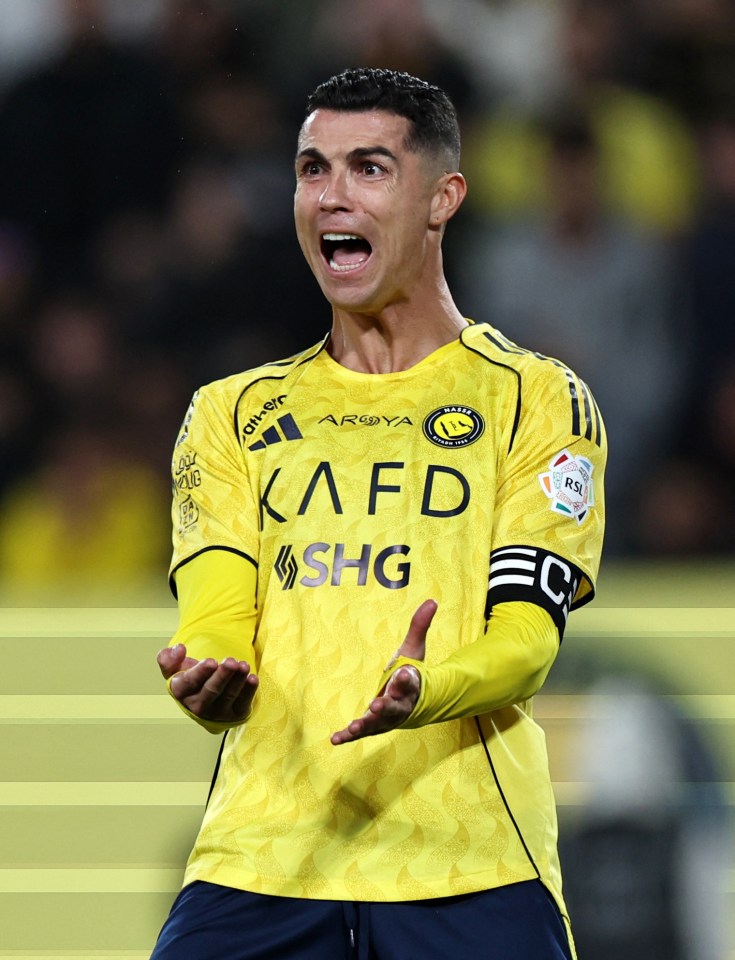
Benzema Joins Al-Hilal in Shock Saudi Move as Ronaldo’s Frustration at Al-Nassr Deepens

0

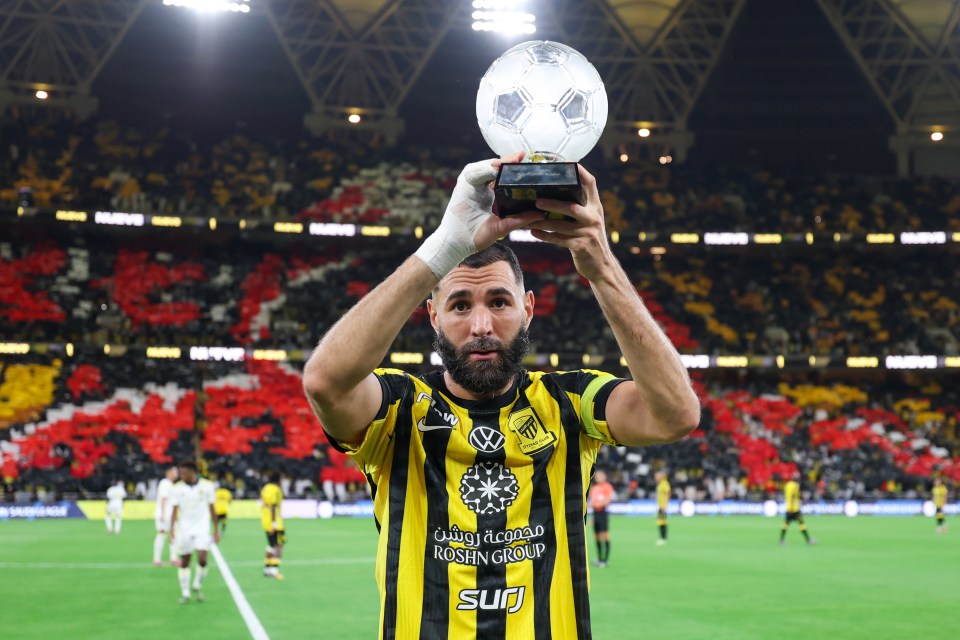
Karim Benzema’s transfer across the Saudi Pro League divide has sent fresh shockwaves through the kingdom’s rapidly evolving football landscape, with the former Champions League winner completing a permanent move to Al-Hilal in a deal that threatens to further inflame tensions involving Cristiano Ronaldo and rival club Al-Nassr.

Al-Hilal confirmed the signing of Benzema, who arrives on a free transfer after ending his stint with Al-Ittihad. The French striker has agreed to a one-and-a-half-year contract with the Riyadh-based club, which currently sits atop the Saudi Pro League standings. The move reunites Benzema with the league’s most dominant side and places him directly in competition with longtime former Real Madrid teammate Ronaldo.

Benzema, 38, departs Al-Ittihad after a turbulent final stretch marked by internal disagreement and prolonged uncertainty. Local and European media coverage over recent weeks described a breakdown in relations between the striker and Al-Ittihad officials, centered on contractual terms and sporting direction. Benzema was left out of the matchday squad ahead of last week’s league fixture against Al Fateh and subsequently trained away from the first team, developments widely interpreted as signaling an imminent exit.

The transfer was initially delayed amid internal review involving Saudi Arabia’s Ministry of Sports and the Public Investment Fund, which holds a controlling interest in several top-flight clubs. Approval was granted before the close of the transfer window, allowing Al-Hilal to complete the deal without a transfer fee.

Benzema leaves Al-Ittihad having scored 54 goals in 83 appearances since joining from Real Madrid in 2023. His output helped reinforce the Saudi Pro League’s growing international profile, particularly during the league’s early wave of high-profile acquisitions from Europe’s elite competitions.

His arrival at Al-Hilal, however, carries broader implications beyond on-field production. The club is one of Al-Nassr’s fiercest domestic rivals and currently holds a narrow one-point advantage over Ronaldo’s side in the title race. The timing and scale of the move have fueled renewed debate over competitive balance in a league where multiple clubs operate under the same ownership structure.

Portuguese outlet A Bola has reported that Ronaldo is increasingly frustrated with what he views as uneven support from the Public Investment Fund, which owns 75 percent stakes in Al-Nassr, Al-Hilal, Al-Ittihad and Al-Ahli. According to A Bola, Ronaldo has expressed anger over what he perceives as preferential treatment toward rival clubs during the transfer window, particularly Al-Hilal’s ability to secure marquee reinforcements.

Ronaldo, now 40, has not featured in Al-Nassr’s most recent match amid ongoing discontent. The outlet says the forward has raised concerns internally about the lack of squad investment, noting that head coach Jorge Jesus received only one addition during the window — 21-year-old midfielder Haydeer Abdulkareem — despite requesting multiple reinforcements to sustain a title challenge.

Against that backdrop, Benzema’s move to Al-Hilal is likely to sharpen Ronaldo’s sense of grievance. The two players, who once formed a prolific partnership at Real Madrid, now find themselves on opposing sides of an increasingly competitive Saudi title race, with contrasting levels of institutional backing.

Al-Hilal’s recruitment of Benzema further underscores the club’s aggressive approach to squad building. Already stacked with international experience, the addition of a Ballon d’Or winner strengthens their position domestically and enhances their continental ambitions. For Al-Nassr, the contrast in transfer activity has become a focal point of internal and external scrutiny.

The Public Investment Fund has played a central role in reshaping Saudi football, underwriting blockbuster arrivals such as Benzema, Ronaldo, Riyad Mahrez and Kalidou Koulibaly over the past two seasons. The strategy has elevated the league’s global visibility, attracted broadcast interest and accelerated commercial growth. Yet it has also introduced governance challenges more commonly associated with Europe’s top leagues.

Analysts note that while PIF has maintained that each club operates independently, high-profile cases such as Benzema’s transfer risk reinforcing perceptions that sporting parity is unevenly enforced. Those perceptions can have tangible consequences, particularly among elite reminding players whose expectations extend beyond financial rewards.

From a sporting perspective, Benzema’s arrival gives Al-Hilal a proven finisher with extensive experience in high-pressure environments. From a structural standpoint, the move may act as a stress test for the league’s competitive credibility as it seeks long-term legitimacy on the world stage.

Ronaldo’s situation illustrates that tension. Since joining Al-Nassr in December 2022, he has remained one of the league’s most productive players and its most visible ambassador. His dissatisfaction, as outlined by A Bola, suggests that even unprecedented salaries and global exposure may not offset concerns about sporting ambition and institutional support.

The rivalry between Al-Hilal and Al-Nassr now extends beyond points on the table. It reflects a broader struggle over influence, resource allocation and identity within a league still defining its governance norms. Benzema’s move, while legal and approved, amplifies those underlying questions.

Whether Ronaldo’s discontent escalates or subsides may depend on how Al-Nassr respond in the coming months. For now, Benzema’s signing stands as a decisive statement of intent by Al-Hilal — and a development that is unlikely to go unnoticed inside Al-Nassr’s dressing room.

As the Saudi Pro League continues its rapid ascent, moments like this underline the complexity of balancing commercial growth with competitive integrity. With global attention fixed firmly on Riyadh, the decisions made now may shape not only the title race but the league’s long-term reputation.

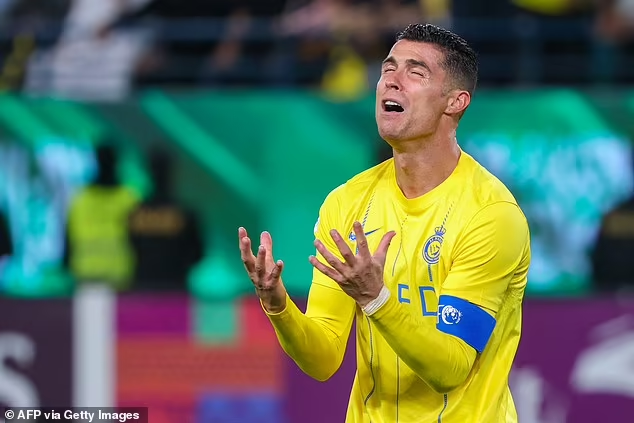
Cristiano Ronaldo Sits Out Al-Nassr Match Amid Growing Rift With Saudi Club Power Brokers

0

Cristiano Ronaldo’s absence from Al-Nassr’s upcoming Saudi Pro League fixture has intensified scrutiny around the internal dynamics of one of the kingdom’s most prominent football clubs, as fresh details point to mounting frustration by the Portuguese star over transfer policy, governance and competitive balance within the league.

Ronaldo, the most decorated scorer in modern football and the highest-paid player in the sport’s history, will not feature in Al-Nassr’s next league match against Al-Riyadh. Initial explanations circulating in Saudi media suggested the 41-year-old was dealing with a minor physical concern. However, reporting by Portuguese outlet A Bola indicates the decision is rooted in dissatisfaction rather than fitness.

According to A Bola, Ronaldo has grown increasingly disillusioned with the role played by Saudi Arabia’s Public Investment Fund, which holds a controlling stake in Al-Nassr and three other Saudi Pro League clubs. The outlet attributes the forward’s frustration to what he perceives as preferential treatment toward rival sides, particularly league leaders Al-Hilal, during the most recent transfer window.

Ronaldo, who joined Al-Nassr in December 2022, has remained prolific on the pitch. He has scored 18 goals in 22 appearances across all competitions this season and has delivered 117 goals in 133 matches since arriving in Saudi Arabia. His contributions helped secure the Arab Club Champions Cup in 2023, one of the club’s most notable achievements in recent years.

Despite that output, A Bola reports that Ronaldo has privately voiced concerns that Al-Nassr failed to provide head coach Jorge Jesus with the reinforcements requested during the January transfer window. The club’s sole incoming addition was 21-year-old Iraqi midfielder Haydeer Abdulkareem, a signing that has done little to alter perceptions of competitive imbalance within the league.

In contrast, Al-Hilal bolstered their squad significantly, completing deals for former Arsenal defender Pablo Marí from Fiorentina and French forward Kader Meïté from Rennes in a transfer valued at approximately £26 million. The club has also been linked with a further £26 million move for Neom winger Saimon Bouabre, underlining the disparity in spending power between league rivals operating under the same ownership umbrella.

Last month, Jorge Jesus publicly acknowledged that imbalance, remarking that Al-Nassr “doesn’t have the political power of Al-Hilal.” The comments, delivered during a media appearance, prompted Al-Hilal to formally request a lengthy suspension for the coach, citing reputational harm. While no such sanction has been announced, the episode exposed tensions simmering beneath the league’s rapid expansion.

Further complicating matters for Al-Nassr is an internal restructuring that has reduced the influence of two figures close to Ronaldo. Sporting director Simão Coutinho and chief executive José Semedo, both long-time associates of the forward, had their authority curtailed earlier this month following a board-level decision. That move, as outlined by A Bola, has contributed to Ronaldo’s growing sense of marginalization within the club’s hierarchy.

The Public Investment Fund owns 75 percent stakes in Al-Nassr, Al-Hilal, Al-Ittihad and Al-Ahli and has been instrumental in transforming the Saudi Pro League into a global talking point. Its investment strategy has attracted elite players such as Karim Benzema, Riyad Mahrez and Kalidou Koulibaly, reshaping perceptions of Middle Eastern football and accelerating the league’s commercial profile.

Ronaldo’s situation, however, underscores the challenges of managing competitive integrity within a multi-club ownership model. While PIF has emphasized that each club operates independently, the uneven allocation of resources has fueled debate among players, coaches and supporters about fairness and long-term sustainability.

From a broader perspective, Ronaldo’s reported refusal to play marks a rare public rupture between the superstar and an employer that has built much of its global identity around his presence. Since arriving in Riyadh, Ronaldo has served as both a sporting talisman and a commercial ambassador, drawing unprecedented international attention to Saudi football.

His dissatisfaction carries implications beyond Al-Nassr. As the league continues to court elite talent, player confidence in governance structures may prove as important as financial incentives. High-profile figures expect not only lucrative contracts but also a clear commitment to competitiveness and sporting ambition.

Analysts note that Ronaldo’s stature amplifies the issue. When one of football’s most influential figures expresses discontent, it resonates across dressing rooms and boardrooms alike. The episode may prompt PIF and league officials to reassess how transfer strategies are communicated and how perceptions of favoritism are addressed.

At 41, Ronaldo remains driven by competition and legacy. While his scoring record in Saudi Arabia remains formidable, his ambitions extend beyond personal milestones. For Al-Nassr, resolving the standoff may require more than assurances; it may demand tangible evidence that the club intends to compete on equal footing with its rivals.

Whether Ronaldo’s absence represents a brief protest or a deeper fracture remains unclear. What is evident is that the Saudi Pro League’s rapid ascent now brings scrutiny that mirrors Europe’s elite competitions, where governance, transparency and sporting balance are increasingly central to the game’s credibility.

Bad Bunny makes Grammy history as Spanish-language album wins top prize amid political overtones

0
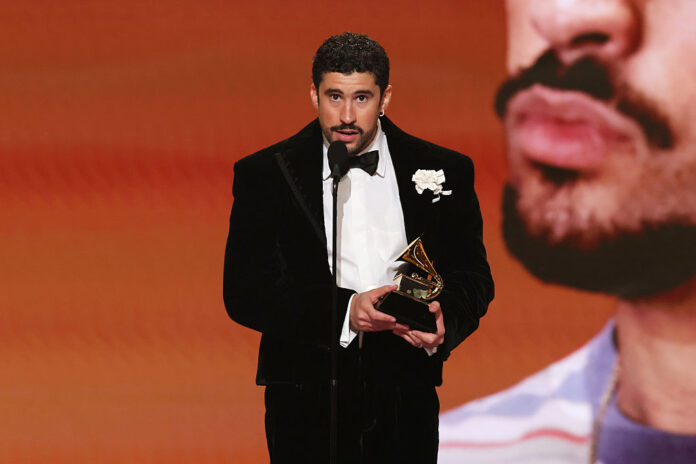
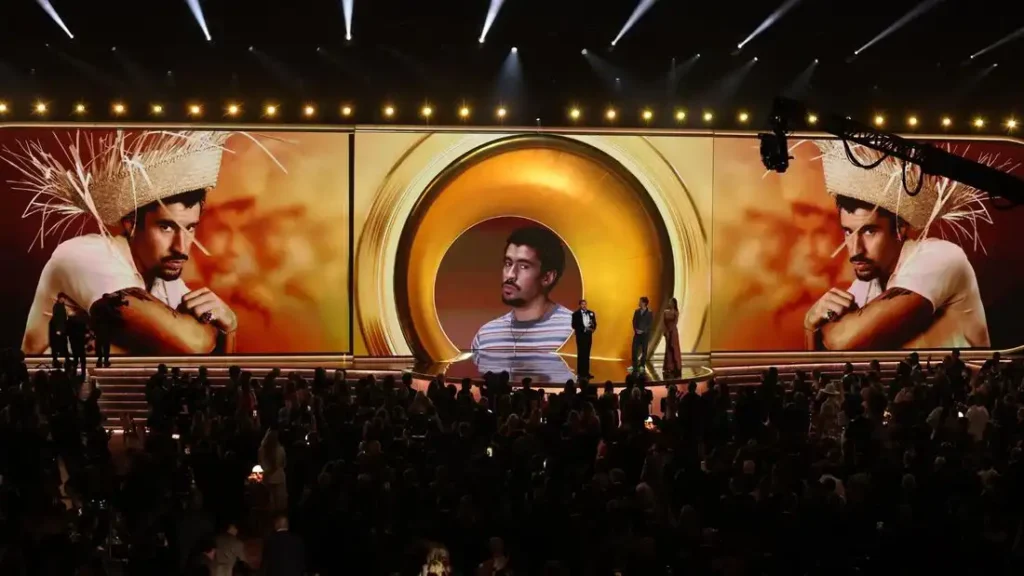
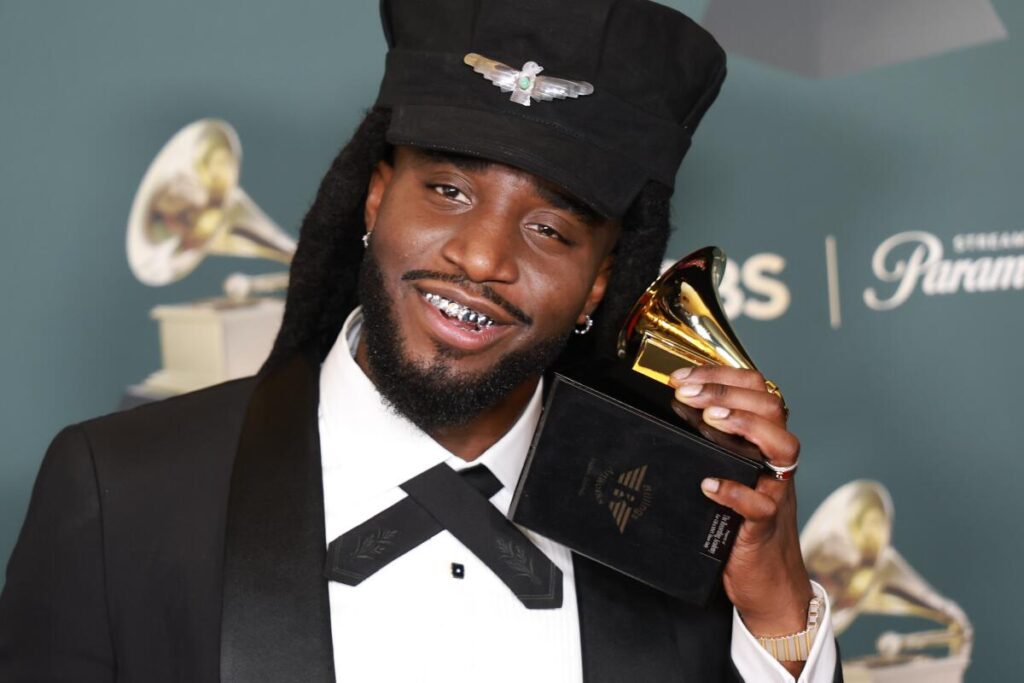
LOS ANGELES, CALIFORNIA - FEBRUARY 01: Bad Bunny accepts the Album of the Year award for "DeBÍ TiRAR MáS FOToS" onstage during the 68th GRAMMY Awards at Crypto.com Arena on February 01, 2026 in Los Angeles, California. (Photo by Kevin Winter/Getty Images for The Recording Academy)

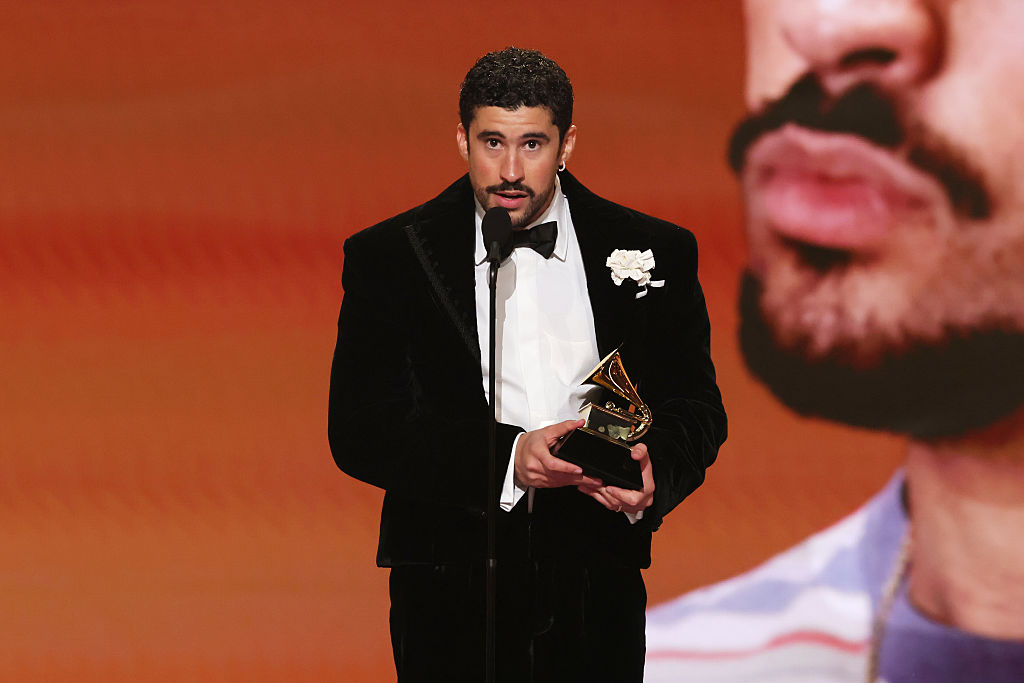
Bad Bunny delivered one of the most consequential moments in Grammy Awards history on Sunday night, as his album “DeBÍ TiRAR MáS FOToS” captured Album of the Year, becoming the first all–Spanish-language release to claim the Recording Academy’s most prestigious honor.

LOS ANGELES, CALIFORNIA – FEBRUARY 01: Bad Bunny accepts the Album of the Year award for “DeBÍ TiRAR MáS FOToS” onstage during the 68th GRAMMY Awards at Crypto.com Arena on February 01, 2026 in Los Angeles, California. (Photo by Kevin Winter/Getty Images for The Recording Academy)

The victory marked a watershed moment for global music and for Latin artists long underrepresented in the Grammys’ top categories. Accepting the award, Bad Bunny opened his remarks in Spanish, emphasizing the album’s deep connection to Puerto Rico, which he has described as his most culturally rooted project to date.

“Puerto Rico, believe me when I tell you that we are bigger than 100 by 35,” he told the audience, referencing the island’s size. “There is nothing we cannot achieve.”

The album’s title translates to “I Should Have Taken More Photos,” a reflection on memory, loss and identity that resonated far beyond Spanish-speaking audiences. The Recording Academy’s recognition followed the project’s Album of the Year win at the Latin Grammy Awards in November, cementing it as a critical and commercial favorite entering Sunday’s ceremony.

The award was Bad Bunny’s third of the night. Born Benito Antonio Martínez Ocasio, the 31-year-old artist used his final appearance on stage to thank the Recording Academy, collaborators and supporters throughout his career, including his mother. He then switched to English to dedicate the honor to immigrants.

“I want to dedicate this award to all the people who have had to leave their homeland, their country, to follow their dreams,” he said.

NBC News noted that Bad Bunny also addressed perseverance and grief, encouraging those who have lost loved ones to continue moving forward. The remarks echoed the emotional response to his song “DtMF,” which has inspired a viral trend of tribute videos honoring deceased friends and relatives.

Earlier in the broadcast, Bad Bunny injected sharper political commentary into the ceremony while accepting the Grammy for best música urbana album. Before offering thanks, he declared, “ICE out,” a phrase that drew applause inside the Crypto.com Arena.

“We’re not savage. We’re not animals. We’re not aliens,” he added. “We are humans, and we are Americans.”

Reuters reported that his words reflected a broader current of solidarity with immigrants that ran throughout the telecast. Opposition to deportation efforts ordered by U.S. President Donald Trump surfaced repeatedly, with several attendees, including Justin Bieber, seen wearing “ICE Out” buttons during the three-hour-plus broadcast.

The political undertones surrounding Bad Bunny’s recognition extended beyond the stage. He has been an outspoken critic of Immigration and Customs Enforcement sweeps and previously skipped touring in parts of the continental United States, citing concerns that federal agents might target his fans. 

His prominence comes as he prepares for an even wider introduction to mainstream American audiences next Sunday, when he is scheduled to headline the Super Bowl halftime show in Santa Clara, California. He will be the first Spanish-language Latin solo artist and the first reggaeton performer to lead the NFL’s marquee entertainment event.

His Super Bowl selection has drawn criticism from some traditionalists, including President Donald Trump, who called the choice “absolutely ridiculous” and said he had never heard of Bad Bunny. The artist publicly supported Trump’s Democratic opponent, Kamala Harris, in the 2024 presidential election.

Beyond Bad Bunny, the Grammys reflected a night shaped by both musical achievement and cultural symbolism. British soul-pop singer Olivia Dean, accepting the award for Best New Artist, paid tribute to her grandmother, who immigrated to Britain from Guyana as a teenager.

“I’m up here as a granddaughter of an immigrant,” Dean told the audience. “I am a product of bravery, and those people deserve to be celebrated.”

Kendrick Lamar entered the ceremony with a leading nine nominations and emerged with five awards, including Best Rap Album for “GNX” and a shared Record of the Year honor for “luther,” his collaboration with SZA. Song of the Year, which recognizes songwriters, went to Billie Eilish and her brother Finneas O’Connell for “Wildflower.”

In a milestone during the non-televised portion of the ceremony, “Golden,” from the Netflix animated film “KPop Demon Hunters,” earned Best Song Written for Visual Media. Reuters noted that the win marked the first time a K-pop song had received a Grammy. The track was performed in the film by a fictional group voiced by EJAE, Audrey Nuna and Rei Ami.

Lady Gaga collected awards for Best Pop Vocal Album with “Mayhem” and Best Dance-Pop Recording for “Abracadabra.” Trevor Noah hosted the Grammys for the sixth time, a role he previously said would be his final appearance as emcee.

The ceremony also produced a landmark moment for filmmaker Steven Spielberg, who achieved EGOT status — winning Emmy, Grammy, Oscar and Tony awards — after securing his first Grammy for Best Music Film as producer of “Music by John Williams.”

Grammy winners are selected by roughly 15,000 voting members of the Recording Academy, including artists, songwriters, producers and engineers. The organization has overhauled its membership in recent years to increase diversity. Reuters reported that about 1,000 Latin Grammy voters became eligible to vote this year, and nearly three-quarters of the current membership has joined since 2019.

Bad Bunny’s Album of the Year win signals more than a breakthrough for Spanish-language music; it reflects a broader recalibration within the Recording Academy toward global relevance. As streaming erases linguistic barriers, commercial success and cultural impact increasingly transcend English-language dominance. 

The convergence of music and political expression at this year’s Grammys suggests the awards are evolving into a platform where artistic achievement and social identity are openly intertwined. For Latin artists and immigrant communities, Bad Bunny’s victory stands as both validation and visibility, reinforcing the Grammys’ shifting role in an industry defined by international audiences rather than national borders.

Reuters/NBC

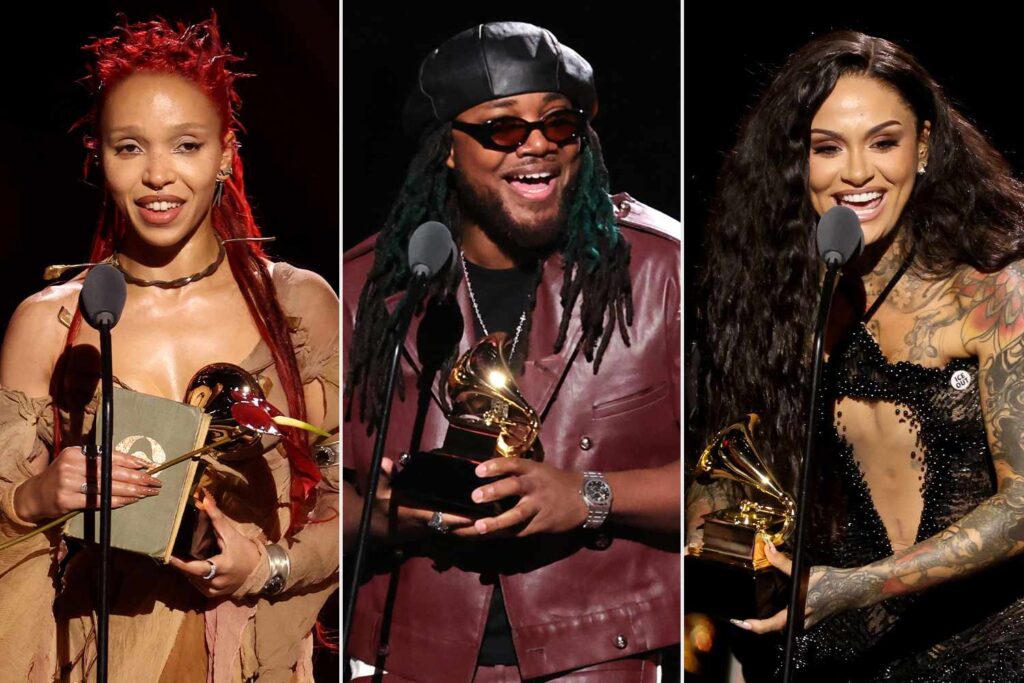
Grammys 2026 spotlight global music’s reach as Kendrick Lamar, Bad Bunny and Lady Gaga lead a wide-ranging field (Full List of Winners)

0

The 2026 Grammy Awards unfolded as a sweeping portrait of a music industry in transition, blending superstar dominance with an expanding global footprint that reached far beyond the traditional centers of pop and rock. As the Recording Academy revealed winners and nominees across nearly 100 categories, the ceremony underscored how genre boundaries continue to blur while international sounds command growing attention from voters.

At the top of the marquee categories, Kendrick Lamar emerged as one of the night’s most influential figures, earning nominations across Album of the Year for GNX and multiple entries in Song and Record of the Year, including “luther” with SZA. Bad Bunny, whose Spanish-language releases have redefined global pop economics, also claimed a central place in the conversation with DeBÍ TiRAR MáS FOToS competing for Album of the Year and “DtMF” appearing in both Song and Record of the Year fields. Lady Gaga’s MAYHEM reinforced her staying power, while Justin Bieber, Sabrina Carpenter, Tyler, The Creator and Leon Thomas rounded out a field that mixed established hitmakers with newer chart forces.

The Album of the Year lineup alone reflected the Academy’s balancing act between commercial success and cultural influence. Alongside Bad Bunny and Lamar, voters recognized projects from Carpenter, Clipse with Pusha T and Malice, Lady Gaga, Bieber and Tyler, The Creator. Industry analysts note that the category now routinely accommodates hip-hop and Latin albums that once struggled for recognition in the Grammys’ most prestigious race, signaling a recalibration of what constitutes “mainstream” music.

Song of the Year and Record of the Year echoed similar themes. Entries such as Billie Eilish’s “WILDFLOWER,” Doechii’s “Anxiety,” ROSÉ and Bruno Mars’ “APT.” and Chappell Roan’s “The Subway” highlighted a year in which pop, alternative and hip-hop songwriting shared equal footing. Observers say the overlap between the two categories points to an era where strong songwriting and sonic innovation increasingly travel together, rather than occupying separate lanes.

Beyond the headline races, the breadth of the Grammys became most apparent in genre-specific categories. African and global music received heightened visibility, with Burna Boy, Davido, Ayra Starr and Tyla competing in Best African Music Performance, a category that continues to draw attention for its role in amplifying sounds from the continent. Global Music Performance and Global Music Album categories extended that reach further, recognizing artists from Latin America, Asia and Africa whose audiences now rival those of Western pop acts.

In hip-hop, the Academy leaned into both lyrical tradition and contemporary experimentation. Best Rap Album nominees included GNX by Kendrick Lamar, CHROMAKOPIA by Tyler, The Creator and Let God Sort Em Out from Clipse, Pusha T and Malice. Rap performance and songwriting fields featured a mix of veteran voices and newer artists, reinforcing hip-hop’s continued evolution rather than a fixed stylistic identity.

Pop categories told a parallel story. Best Pop Solo Performance and Best Pop Vocal Album featured familiar names such as Bieber, Gaga and Miley Cyrus, while Best Pop Duo/Group Performance showcased cross-genre collaborations, including Cynthia Erivo and Ariana Grande’s “Defying Gravity” and SZA’s partnership with Kendrick Lamar. Music industry commentators say these collaborations reflect a streaming-driven era in which fan bases merge across stylistic lines.

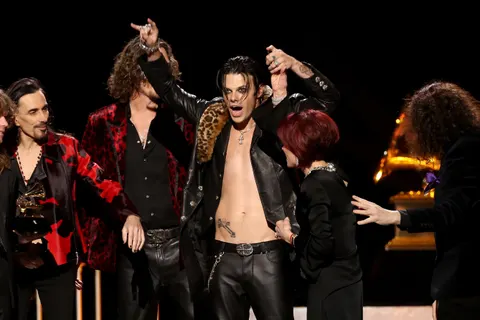
Rock, alternative and metal categories highlighted resilience within guitar-driven music, even as those genres occupy a smaller share of mainstream charts. Acts like Turnstile, Linkin Park, Hayley Williams and YUNGBLUD appeared across performance, song and album fields, suggesting that innovation within rock continues to resonate with Grammy voters despite shifting commercial trends.

R&B categories emphasized both traditional craftsmanship and modern reinterpretation. Leon Thomas surfaced repeatedly, appearing in album, performance and songwriting fields, while established voices such as Summer Walker, Chris Brown and Ledisi maintained a presence. Analysts note that R&B’s Grammy recognition increasingly rewards versatility, with artists moving fluidly between live recordings, studio projects and collaborative efforts.

Country, Americana and roots music categories painted a picture of continuity and reinvention. Tyler Childers, Lainey Wilson, Miranda Lambert and Willie Nelson anchored fields that balanced heritage with contemporary storytelling. At the same time, Americana and roots awards leaned into lyrical depth and regional identity, reinforcing the Grammys’ role as a platform for music that thrives outside pop radio.

Classical, jazz and instrumental categories remained a cornerstone of the ceremony’s artistic scope. From orchestral and opera recordings to jazz vocal and instrumental albums, these fields underscored the technical rigor that continues to define the Grammys’ more traditional domains. Producers, engineers and arrangers also received recognition, highlighting the collaborative labor behind recorded music.

Taken together, the 2026 Grammy Awards illustrated an institution still negotiating its place in a rapidly globalizing industry. While star power remains central to its appeal, the expanding range of nominees suggests a broader definition of excellence—one that increasingly reflects how audiences around the world consume, share and shape music.

As the Recording Academy continues to refine its categories and voting practices, the outcomes of 2026 point toward a future in which international influence and genre hybridity are no longer exceptions but expectations. Whether that evolution satisfies critics of the Grammys or fuels further debate, the ceremony once again succeeded in capturing a snapshot of music at a moment of change.

Full list:

2026 Grammy Award Winners and Nominees

Album of the Year

  • DeBÍ TiRAR MáS FOToS, Bad Bunny
  • SWAG, Justin Bieber
  • Man’s Best Friend, Sabrina Carpenter
  • Let God Sort Em Out, Clipse, Pusha T & Malice, Pharrell Williams
  • MAYHEM, Lady Gaga
  • GNX, Kendrick Lamar
  • MUTT, Leon Thomas
  • CHROMAKOPIA, Tyler, The Creator

Song of the Year

  • “Abracadabra,” Lady Gaga
  • “Anxiety,” Doechii
  • “APT.,” ROSÉ & Bruno Mars
  • “DtMF,” Bad Bunny
  • “Golden” (From KPop Demon Hunters), EJAE & Mark Sonnenblick
  • “luther,” Kendrick Lamar with SZA
  • “Manchild,” Sabrina Carpenter
  • “WILDFLOWER,” Billie Eilish

Best New Artist

  • Olivia Dean
  • KATSEYE
  • The Marías
  • Addison Rae
  • sombr
  • Leon Thomas
  • Alex Warren
  • Lola Young

Record of the Year

  • “DtMF,” Bad Bunny
  • “Manchild,” Sabrina Carpenter
  • “Anxiety,” Doechii
  • “WILDFLOWER,” Billie Eilish
  • “Abracadabra,” Lady Gaga
  • “luther,” Kendrick Lamar with SZA
  • “The Subway,” Chappell Roan
  • “APT.,” ROSÉ & Bruno Mars

Producer of the Year, Non-Classical

  • Dan Auerbach
  • Cirkut
  • Dijon
  • Blake Mills
  • Sounwave

Songwriter of the Year, Non-Classical

  • Amy Allen
  • Edgar Barrera
  • Jessie Jo Dillon
  • Tobias Jesso Jr.
  • Laura Veltz

Best Pop Solo Performance

  • “DAISIES,” Justin Bieber
  • “Manchild,” Sabrina Carpenter
  • “Disease,” Lady Gaga
  • “The Subway,” Chappell Roan
  • “Messy,” Lola Young

Best Pop Duo/Group Performance

  • “Defying Gravity,” Cynthia Erivo & Ariana Grande
  • “Golden” (From KPop Demon Hunters), HUNTR/X
  • “Gabriela,” KATSEYE
  • “APT.,” ROSÉ & Bruno Mars
  • “30 For 30,” SZA with Kendrick Lamar

Best Pop Vocal Album

  • SWAG, Justin Bieber
  • Man’s Best Friend, Sabrina Carpenter
  • Something Beautiful, Miley Cyrus
  • Mayhem, Lady Gaga
  • I’ve Tried Everything But Therapy (Part 2), Teddy Swims

Best Dance/Electronic Recording

  • “No Cap,” Disclosure & Anderson .Paak
  • “Victory Lap,” Fred again.., Skepta & PlaqueBoyMax
  • “SPACE INVADER,” KAYTRANADA
  • “VOLTAGE,” Skrillex
  • “End of Summer,” Tame Impala

Best Dance Pop Recording

  • “Bluest Flame,” Selena Gomez & Benny Blanco
  • “Abracadabra,” Lady Gaga
  • “Midnight Sun,” Zara Larsson
  • “Just Keep Watching” (From F1 The Movie), Tate McRae
  • “Illegal,” PinkPantheress

Best Dance/Electronic Album

  • EUSEXUA, FKA twigs
  • Ten Days, Fred again..
  • Fancy That, PinkPantheress
  • Inhale / Exhale, RÜFÜS DU SOL
  • F** U SKRILLEX YOU THINK UR ANDY WARHOL BUT UR NOT!! <3*, Skrillex

Best Remixed Recording

  • “Abracadabra (Gesaffelstein Remix),” Gesaffelstein
  • “Don’t Forget About Us,” KAYTRANADA
  • “A Dream’s A Dream – Ron Trent Remix,” Ron Trent
  • “Galvanize,” Chris Lake
  • “Golden – David Guetta REM/X,” David Guetta

Best Rock Performance

  • “U Should Not Be Doing That,” Amyl and the Sniffers
  • “The Emptiness Machine,” Linkin Park
  • “NEVER ENOUGH,” Turnstile
  • “Mirtazapine,” Hayley Williams
  • “Changes (Live From Villa Park),” YUNGBLUD feat. Nuno Bettencourt, Frank Bello, Adam Wakeman & II

Best Metal Performance

  • “Night Terror,” Dream Theater
  • “Lachryma,” Ghost
  • “Emergence,” Sleep Token
  • “Soft Spine,” Spiritbox
  • “BIRDS,” Turnstile

Best Rock Song

  • “As Alive As You Need Me To Be,” Nine Inch Nails
  • “Caramel,” Sleep Token
  • “Glum,” Hayley Williams
  • “NEVER ENOUGH,” Turnstile
  • “Zombie,” YUNGBLUD

Best Rock Album

  • private music, Deftones
  • I quit, HAIM
  • From Zero, Linkin Park
  • NEVER ENOUGH, Turnstile
  • Idols, YUNGBLUD

Best Alternative Music Performance

  • “Everything Is Peaceful Love,” Bon Iver
  • “Alone,” The Cure
  • “SEEIN’ STARS,” Turnstile
  • “Mangetout,” Wet Leg
  • “Parachute,” Hayley Williams

Best Alternative Music Album

  • SABLE, fABLE, Bon Iver
  • Songs of a Lost World, The Cure
  • DON’T TAP THE GLASS, Tyler, The Creator
  • moisturizer, Wet Leg
  • Ego Death at a Bachelorette Party, Hayley Williams

Best R&B Performance

  • “YUKON,” Justin Bieber
  • “It Depends,” Chris Brown feat. Bryson Tiller
  • “Folded,” Kehlani
  • “MUTT (Live From NPR’s Tiny Desk),” Leon Thomas
  • “Heart of a Woman,” Summer Walker

Best Traditional R&B Performance

  • “Here We Are,” Durand Bernarr
  • “UPTOWN,” Lalah Hathaway
  • “LOVE YOU TOO,” Ledisi
  • “Crybaby,” SZA
  • “VIBES DON’T LIE,” Leon Thomas

Best R&B Song

  • “Folded,” Kehlani
  • “Heart of a Woman,” Summer Walker
  • “It Depends,” Chris Brown feat. Bryson Tiller
  • “Overqualified,” Durand Bernarr
  • “YES IT IS,” Leon Thomas

Best Progressive R&B Album

  • BLOOM, Durand Bernarr
  • Adjust Brightness, Bilal
  • LOVE ON DIGITAL, Destin Conrad
  • Access All Areas, FLO
  • Come As You Are, Terrace Martin & Kenyon Dixon

Best R&B Album

  • BELOVED, GIVĒON
  • Why Not More?, Coco Jones
  • The Crown, Ledisi
  • Escape Room, Teyana Taylor
  • MUTT, Leon Thomas

Best Rap Performance

  • “Outside,” Cardi B
  • “Chains & Whips,” Clipse, Pusha T & Malice feat. Kendrick Lamar & Pharrell Williams
  • “Anxiety,” Doechii
  • “tv off,” Kendrick Lamar feat. Lefty Gunplay
  • “Darling, I,” Tyler, The Creator feat. Teezo Touchdown

Best Melodic Rap Performance

  • “Proud of Me,” Fridayy feat. Meek Mill
  • “Wholeheartedly,” JID feat. Ty Dolla $ign & 6LACK
  • “luther,” Kendrick Lamar with SZA
  • “WeMaj,” Terrace Martin & Kenyon Dixon feat. Rapsody
  • “SOMEBODY LOVES ME,” PARTYNEXTDOOR & Drake

Best Rap Song

  • “Anxiety,” Doechii
  • “The Birds Don’t Sing,” Clipse feat. John Legend & Voices of Fire
  • “Sticky,” Tyler, The Creator feat. GloRilla, Sexyy Red & Lil Wayne
  • “TGIF,” GloRilla
  • “tv off,” Kendrick Lamar feat. Lefty Gunplay

Best Rap Album

  • Let God Sort Em Out, Clipse, Pusha T & Malice
  • GLORIOUS, GloRilla
  • God Does Like Ugly, JID
  • GNX, Kendrick Lamar
  • CHROMAKOPIA, Tyler, The Creator

Best Spoken Word Poetry Album

  • A Hurricane in Heels: healed people don’t act like that (partially recorded live @City Winery & other places), Queen Sheba
  • Black Shaman, Marc Marcel
  • Pages, Omari Hardwick & Anthony Hamilton
  • Saul Williams meets Carlos Niño & Friends at Treepeople, Saul Williams, Carlos Niño & Friends
  • Words For Days Vol. 1, Mad Skillz

Best Country Solo Performance

  • “Nose on the Grindstone,” Tyler Childers
  • “Good News,” Shaboozey
  • “Bad As I Used to Be” (From F1 The Movie), Chris Stapleton
  • “I Never Lie,” Zach Top
  • “Somewhere Over Laredo,” Lainey Wilson

Best Country Duo/Group Performance

  • “A Song to Sing,” Miranda Lambert & Chris Stapleton
  • “Trailblazer,” Reba McEntire, Miranda Lambert & Lainey Wilson
  • “Love Me Like You Used to Do,” Margo Price & Tyler Childers
  • “Amen,” Shaboozey & Jelly Roll
  • “Honky Tonk Hall of Fame,” George Strait & Chris Stapleton

Best Country Song

  • “Bitin’ List,” Tyler Childers
  • “Good News,” Shaboozey
  • “I Never Lie,” Zach Top
  • “Somewhere Over Laredo,” Lainey Wilson
  • “A Song to Sing,” Miranda Lambert & Chris Stapleton

Best Contemporary Country Album

  • Patterns, Kelsea Ballerini
  • Snipe Hunter, Tyler Childers
  • Evangeline Vs. The Machine, Eric Church
  • Beautifully Broken, Jelly Roll
  • Postcards From Texas, Miranda Lambert

Best Traditional Country Album

  • Dollar a Day, Charley Crockett
  • American Romance, Lukas Nelson
  • Oh What a Beautiful World, Willie Nelson
  • Hard Headed Woman, Margo Price
  • Ain’t in It for My Health, Zach Top

Best American Roots Performance

  • “LONELY AVENUE,” Jon Batiste feat. Randy Newman
  • “Ancient Light,” I’m With Her
  • “Crimson and Clay,” Jason Isbell
  • “Richmond on the James,” Alison Krauss & Union Station
  • “Beautiful Strangers,” Mavis Staples

Best Americana Performance

  • “Boom,” Sierra Hull
  • “Poison in My Well,” Maggie Rose & Grace Potter
  • “Godspeed,” Mavis Staples
  • “That’s Gonna Leave a Mark,” Molly Tuttle
  • “Horses,” Jesse Welles

Best American Roots Song

  • “Ancient Light,” I’m With Her
  • “BIG MONEY,” Jon Batiste
  • “Foxes in the Snow,” Jason Isbell
  • “Middle,” Jesse Welles
  • “Spitfire,” Sierra Hull

Best Americana Album

  • BIG MONEY, Jon Batiste
  • Bloom, Larkin Poe
  • Last Leaf on the Tree, Willie Nelson
  • So Long Little Miss Sunshine, Molly Tuttle
  • Middle, Jesse Welles

Best Bluegrass Album

  • Carter & Cleveland, Michael Cleveland & Jason Carter
  • A Tip Toe High Wire, Sierra Hull
  • Arcadia, Alison Krauss & Union Station
  • Outrun, The Steeldrivers
  • Highway Prayers, Billy Strings

Best Traditional Blues Album

  • Ain’t Done With the Blues, Buddy Guy
  • Room on the Porch, Taj Mahal & Keb’ Mo’
  • One Hour Mama: The Blues of Victoria Spivey, Maria Muldaur
  • Look Out Highway, Charlie Musselwhite
  • Young Fashioned Ways, Kenny Wayne Shepherd & Bobby Rush

Best Contemporary Blues Album

  • Breakthrough, Joe Bonamassa
  • Paper Doll, Samantha Fish
  • A Tribute to LJK, Eric Gales
  • Preacher Kids, Robert Randolph
  • Family, Southern Avenue

Best Folk Album

  • What Did the Blackbird Say to the Crow, Rhiannon Giddens & Justin Robinson
  • Crown of Roses, Patty Griffin
  • Wild and Clear and Blue, I’m With Her
  • Foxes in the Snow, Jason Isbell
  • Under the Powerlines (April 24 – September 24), Jesse Welles

Best Regional Roots Music Album

  • Live at Vaughan’s, Corey Henry & The Treme Funktet
  • For Fat Man, Preservation Brass & Preservation Hall Jazz Band
  • Church of New Orleans, Kyle Roussel
  • Second Line Sunday, Trombone Shorty & New Breed Brass Band
  • A Tribute to the King of Zydeco, Various Artists

Best Latin Pop Album

  • Cosa Nuestra, Rauw Alejandro
  • BOGOTÁ (DELUXE), Andrés Cepeda
  • Tropicoqueta, KAROL G
  • Cancionera, Natalia Lafourcade
  • ¿Y ahora qué?, Alejandro Sanz

Best Música Urbana Album

  • DeBÍ TiRAR MáS FOToS, Bad Bunny
  • Mixteip, J Balvin
  • FERXXO VOL X: Sagrado, Feid
  • NAIKI, Nicki Nicole
  • EUB DELUXE, Trueno
  • SINFÓNICO (En Vivo), Yandel

Best Latin Rock or Alternative Album

  • Genes Rebeldes, Aterciopelados
  • ASTROPICAL, Bomba Estéreo, Rawayana & ASTROPICAL
  • PAPOTA, CA7RIEL & Paco Amoroso
  • ALGORHYTHM, Los Wizzards
  • Novela, Fito Páez

Best Música Mexicana Album (Including Tejano)

  • MALA MÍA, Fuerza Regida & Grupo Frontera
  • Y Lo Que Viene, Grupo Frontera
  • Sin Rodeos, Paola Jara
  • Palabra De To’s (Seca), Carín León
  • Bobby Pulido & Friends Una Tuya Y Una Mía – Por La Puerta Grande (En Vivo), Bobby Pulido

Best Tropical Latin Album

  • Fotografías, Rubén Blades, Roberto Delgado & Orquesta
  • Raíces, Gloria Estefan
  • Clásicos 1.0, Grupo Niche
  • Bingo, Alain Pérez
  • Debut y Segunda Tanda, Vol. 2, Gilberto Santa Rosa

Best Global Music Performance

  • “EoO,” Bad Bunny
  • “Cantando en el Camino,” Ciro Hurtado
  • “JERUSALEMA,” Angélique Kidjo
  • “Inmigrante Y Que?,” Yeisy Rojas
  • “Shrini’s Dream (Live),” Shakti
  • “Daybreak,” Anoushka Shankar feat. Alam Khan & Sarathy Korwar

Best African Music Performance

  • “Love,” Burna Boy
  • “With You,” Davido feat. Omah Lay
  • “Hope & Love,” Eddy Kenzo & Mehran Matin
  • “Gimme Dat,” Ayra Starr feat. Wizkid
  • “PUSH 2 START,” Tyla

Best Global Music Album

  • Sounds Of Kumbha, Siddhant Bhatia
  • No Sign of Weakness, Burna Boy
  • Eclairer le monde – Light the World, Youssou N’Dour
  • Mind Explosion (50th Anniversary Tour Live), Shakti
  • Chapter III: We Return To Light, Anoushka Shankar
  • Caetano e Bethânia Ao Vivo, Caetano Veloso & Maria Bethânia

Best Reggae Album

  • Treasure Self Love, Lila Iké
  • Heart & Soul, Vybz Kartel
  • BLXXD & FYAH, Keznamdi
  • From Within, Mortimer
  • No Place Like Home, Jesse Royal

Best New Age, Ambient or Chant Album

  • Kuruvinda, Kirsten Agresta-Copely
  • According To The Moon, Cheryl B. Engelhardt, GEM & Dallas String Quartet
  • Into The Forest, Jahnavi Harrison
  • Nomadica, Carla Patullo feat. The Scorchio Quartet & Tonality
  • The Colors In My Mind, Chris Redding

Best Album Cover

  • CHROMAKOPIA, Tyler, The Creator
  • The Crux, Djo
  • Debí Tirar Más Fotos, Bad Bunny
  • Glory, Perfume Genius
  • moisturizer, Wet Leg

Best Recording Package

  • And The Adjacent Possible, OK Go
  • Balloonerism, Mac Miller
  • Danse Macabre: De Luxe, Duran Duran
  • Loud Is As, Tsunami
  • Sequoia, Various Artists
  • The Spins (Picture Disc Vinyl), Mac Miller
  • Tracks II: The Lost Albums, Bruce Springsteen

Best Album Notes

  • Adios, Farewell, Goodbye, Good Luck, So Long: On Stage 1964–1974, Buck Owens & His Buckaroos
  • After The Last Sky, Anouar Brahem et al.
  • Árabe, Amanda Ekery
  • The First Family: Live At Winchester Cathedral 1967, Sly & The Family Stone
  • A Ghost Is Born (20th Anniversary Deluxe Edition), Wilco
  • Miles ’55: The Prestige Recordings, Miles Davis

Best Historical Album

  • Joni Mitchell Archives – Volume 4: The Asylum Years (1976-1980)
    Patrick Milligan & Joni Mitchell, compilation producers; Bernie Grundman, mastering engineer (Joni Mitchell)
  • The Making of Five Leaves Left
    Joe Black, Cally Callomon & Johnny Chandler, compilation producers; Simon Heyworth & John Wood, mastering engineers; Richard Whittaker & John Wood, restoration engineer (Nick Drake)
  • Roots Rocking Zimbabwe – The Modern Sound Of Harare’ Townships 1975-1980 (Analog Africa No.41)
    Samy Ben Redjeb, compilation producer; Michael Graves, mastering engineer; Michael Graves & Jordan McLeod, restoration engineers (Various Artists)
  • Super Disco Pirata – De Tepito Para El Mundo 1965-1980 (Analog Africa No. 39)
    Samy Ben Redjeb, compilation producer; Michael Graves, mastering engineer; Jordan McLeod, restoration engineer (Various Artists)
  • You Can’t Hip A Square: The Doc Pomus Songwriting Demos
    Will Bratton, Sharyn Felder & Cheryl Pawelski, compilation producers; Michael Graves, mastering engineer; Michael Graves & Jordan McLeod, restoration engineers (Doc Pomus)

Best Jazz Performance

  • “Noble Rise,” Lakecia Benjamin feat. Immanuel Wilkins & Mark Whitfield
  • “Windows – Live,” Chick Corea, Christian McBride & Brian Blade
  • “Peace Of Mind / Dreams Come True,” Samara Joy
  • “Four,” Michael Mayo
  • “All Stars Lead To You – Live,” Nicole Zuraitis et al.

Best Jazz Vocal Album

  • Elemental, Dee Dee Bridgewater & Bill Charlap
  • We Insist 2025!, Terri Lyne Carrington & Christie Dashiell
  • Portrait, Samara Joy
  • Fly, Michael Mayo
  • Live at Vic’s Las Vegas, Nicole Zuraitis et al.

Best Jazz Instrumental Album

  • Trilogy 3 (Live), Chick Corea, Christian McBride & Brian Blade
  • Southern Nights, Sullivan Fortner
  • Belonging, Branford Marsalis Quartet
  • Spirit Fall, John Patitucci
  • Fasten Up, Yellowjackets

Best Large Jazz Ensemble Album

  • Orchestrator Emulator, The 8-Bit Big Band
  • Without Further Ado, Vol. 1, Christian McBride Big Band
  • Lumen, Danilo Pérez & Bohuslän Big Band
  • Basie Rocks!, Deborah Silver & The Count Basie Orchestra
  • Lights on a Satellite, Sun Ra Arkestra
  • Some Days Are Better: The Lost Scores, Kenny Wheeler Legacy

Best Latin Jazz Album

  • La Fleur de Cayenne, Paquito D’Rivera & Madrid–New York Connection
  • The Original Influencers, Arturo O’Farrill & The Afro Latin Jazz Orchestra
  • Mundoagua, Arturo O’Farrill & The Afro Latin Jazz Orchestra
  • A Tribute to Benny Moré and Nat King Cole, Gonzalo Rubalcaba et al.
  • Vanguardia Subterránea (Live), Miguel Zenón Quartet

Best Alternative Jazz Album

  • honey from a winter stone, Ambrose Akinmusire
  • Keys To The City Volume One, Robert Glasper
  • Ride into the Sun, Brad Mehldau
  • LIVE-ACTION, Nate Smith
  • Blues Blood, Immanuel Wilkins

Best Traditional Pop Vocal Album

  • Wintersongs, Laila Biali
  • The Gift of Love, Jennifer Hudson
  • Who Believes in Angels?, Elton John & Brandi Carlile
  • Harlequin, Lady Gaga
  • A Matter of Time, Laufey
  • The Secret of Life: Partners, Volume 2, Barbra Streisand

Best Musical Theater Album

  • Buena Vista Social Club
  • Death Becomes Her
  • Gypsy
  • Just In Time
  • Maybe Happy Ending

Best Gospel Album

  • Sunny Days, Yolanda Adams
  • Tasha, Tasha Cobbs Leonard
  • Live Breathe Fight, Tamela Mann
  • Only on the Road (Live), Tye Tribbett
  • Heart of Mine, Darrel Walls, PJ Morton

Best Gospel Performance/Song

  • “Do It Again,” Kirk Franklin
  • “Church,” Tasha Cobbs Leonard & John Legend
  • “Still (Live),” Jonathan McReynolds & Jamal Roberts
  • “Amen,” Pastor Mike Jr.
  • “Come Jesus Come,” CeCe Winans feat. Shirley Caesar

Best Contemporary Christian Music Performance/Song

  • “I Know A Name,” Elevation Worship, Chris Brown & Brandon Lake
  • “YOUR WAY’S BETTER,” Forrest Frank
  • “Hard Fought Hallelujah,” Brandon Lake with Jelly Roll
  • “Headphones,” Lecrae, Killer Mike & T.I.
  • “Amazing,” Darrel Walls & PJ Morton

Best Contemporary Christian Music Album

  • CHILD OF GOD II, Forrest Frank
  • Coritos Vol. 1, Israel & New Breed
  • King of Hearts, Brandon Lake
  • Reconstruction, Lecrae
  • Let the Church Sing, Tauren Wells

Best Roots Gospel Album

  • I Will Not Be Moved (Live), The Brooklyn Tabernacle Choir
  • Then Came the Morning, Gaither Vocal Band
  • Praise & Worship: More Than A Hollow Hallelujah, The Isaacs
  • Good Answers, Karen Peck & New River
  • Back to My Roots, Candi Staton

Best Compilation Soundtrack for Visual Media

  • A Complete Unknown
  • F1 The Album
  • KPop Demon Hunters
  • Sinners
  • Wicked

Best Score Soundtrack For Visual Media (Includes Film And Television)

  • How To Train Your Dragon, John Powell, composer
  • Severance: Season 2, Theodore Shapiro, composer
  • Sinners, Ludwig Göransson, composer
  • Wicked, John Powell & Stephen Schwartz, composers
  • The Wild Robot, Kris Bowers, composer

Best Score Soundtrack for Video Games and Other Interactive Media

  • Avatar: Frontiers of Pandora – Secrets of the Spires, Pinar Toprak, composer
  • Helldivers 2, Wilbert Roget, II, composer
  • Indiana Jones and the Great Circle, Gordy Haab, composer
  • Star Wars Outlaws: Wild Card & A Pirate’s Fortune, Cody Matthew Johnson & Wilbert Roget, II, composers
  • Sword of the Sea, Austin Wintory, composer

Best Song Written for Visual Media

  • “As Alive As You Need Me To Be [From TRON: Ares],” Trent Reznor & Atticus Ross, songwriters (Nine Inch Nails)
  • “Golden [From KPop Demon Hunters],” EJAE, Park Hong Jun, Joong Gyu Kwak, Yu Han Lee, Hee Dong Nam, Jeong Hoon Seo & Mark Sonnenblick, songwriters, (HUNTR/X: EJAE, Audrey Nuna, REI AMI)
  • “I Lied to You [From Sinners],” Ludwig Göransson & Raphael Saadiq, songwriters (Miles Caton)
  • “Never Too Late [From Elton John: Never Too Late],” Brandi Carlile, Elton John, Bernie Taupin & Andrew Watt, songwriters (Elton John, Brandi Carlile)
  • “Pale, Pale Moon [From Sinners],” Ludwig Göransson & Brittany Howard, songwriters (Jayme Lawson)
  • “Sinners [From Sinners],” Leonard Denisenko, Rodarius Green, Travis Harrington, Tarkan Kozluklu, Kyris Mingo & Darius Poviliunas, songwriters (Rod Wave)

Best Music Video

  • “Young Lion,” Sade
  • “Manchild,” Sabrina Carpenter
  • “So Be It,” Clipse
  • “Anxiety,” Doechii
  • “Love,” OK Go

Best Music Film

  • Devo, Devo
  • Live at the Royal Albert Hall, RAYE
  • Relentless, Diane Warren
  • Music by John Williams, John Williams
  • Piece by Piece, Pharrell Williams

Best Engineered Album, Non-Classical

  • All Things Light, Jesse Brock, Jon Castelli, Matt Chamberlain, Tyler Johnson, Nick Lobel, Simon Maartensson, Lawrence “Boo” Mitchell, Rob Moose, Anders Mouridsen, Ryan Nasci, Ernesto Olvera-LaPier, Ethan Schneiderman. Rahm Silverglade & Owen Stoutt, engineers; Dale Becker, mastering engineer (Cam)
  • Arcadia, Neal Cappellino & Gary Paczosa, engineers; Brad Blackwood, mastering engineer (Alison Krauss & Union Station)
  • For Melancholy Brunettes (& sad women), Joseph Lorge, Blake Mills & Sebastian Reunert, engineers; Patricia Sullivan, mastering engineer (Japanese Breakfast)
  • That Wasn’t A Dream, Joseph Lorge & Blake Mills, engineers; Patricia Sullivan, mastering engineer (Pino Palladino, Blake Mills)

Best Engineered Album, Classical

  • Cerrone: Don’t Look Down, Mike Tierney, engineer; Alan Silverman, mastering engineer (Sandbox Percussion)
  • Eastman: Symphony No. 2; Tchaikovsky: Symphony No. 2, Gintas Norvila, engineer; Jennifer Nulsen, mastering engineer (Franz Welser-Möst & The Cleveland Orchestra)
  • Shostakovich: Lady Macbeth of the Mtsensk District, Shawn Murphy & Nick Squire, engineers; Tim Martyn, mastering engineer (Andris Nelsons, Kristine Opolais, Günther Groissböck, Peter Hoare, Brenden Gunnell & Boston Symphony Orchestra)
  • Standard Stoppages, Sean Connors, Robert Dillon, Peter Martin, Bill Maylone, Judith Sherman & David Skidmore, engineers; Joe Lambert, mastering engineer (Third Coast Percussion)
  • Yule, Morten Lindberg, engineer; Morten Lindberg, mastering engineer (Trio Mediæval)

Producer of the Year, Classical

  • Blanton Alspaugh
  • Sergei Kvitko
  • Morten Lindberg
  • Dmitriy Lipay
  • Elaine Martone

Best Instrumental Composition

  • “First Snow,” Remy Le Boeuf, composer (Nordkraft Big Band, Remy Le Boeuf & Danielle Wertz)
  • “Live Life This Day: Movement I,” Miho Hazama, composer (Miho Hazama, Danish Radio Big Band & Danish National Symphony Orchestra)
  • “Lord, That’s A Long Way,” Sierra Hull, composer (Sierra Hull)
  • “Opening,” Zain Effendi, composer (Zain Effendi)
  • “Train to Emerald City,” John Powell & Stephen Schwartz, composers (John Powell & Stephen Schwartz)
  • “Why You Here / Before the Sun Went Down,” Ludwig Göransson, composer (Ludwig Göransson Featuring Miles Caton)

Best Arrangement, Instrumental or A Cappella

  • “Be Okay,” Cynthia Erivo, arranger (Cynthia Erivo)
  • “A Child Is Born,” Remy Le Boeuf, arranger (Nordkraft Big Band & Remy Le Boeuf)
  • “Fight On,” Andy Clausen, Addison Maye-Saxon, Riley Mulherkar & Chloe Rowlands, arrangers (The Westerlies)
  • “Super Mario Praise Break,” Bryan Carter, Charlie Rosen & Matthew Whitaker, arrangers (The 8-Bit Big Band)

Best Arrangement, Instruments and Vocals

  • “Big Fish,” Erin Bentlage, Sara Gazarek, Johnaye Kendrick, Nate Smith & Amanda Taylor, arrangers (Nate Smith Featuring säje)
  • “How Did She Look?,” Nelson Riddle, arranger (Seth MacFarlane)
  • “Keep an Eye on Summer,” Jacob Collier, arranger (Jacob Collier)
  • “Something in the Water (Acoustic-Ish),” Clyde Lawrence, Gracie Lawrence & Linus Lawrence, arrangers (Lawrence)
  • “What A Wonderful World,” Cody Fry, arranger (Cody Fry)

Best Orchestral Performance

  • “Coleridge-Taylor: Toussaint L’Ouverture; Ballade Op. 4; Suites From ’24 Negro Melodies,’” Michael Repper, conductor (National Philharmonic)
  • “Messiaen: Turangalîla-Symphonie,” Andris Nelsons, conductor (Boston Symphony Orchestra)
  • “Ravel: Boléro, M. 81,” Gustavo Dudamel, conductor (Simón Bolívar Symphony Orchestra Of Venezuela)
  • “Still & Bonds,” Yannick Nézet-Séguin, conductor (The Philadelphia Orchestra)
  • “Stravinsky: Symphony In Three Movements,” Esa-Pekka Salonen, conductor (San Francisco Symphony)

Best Opera Recording

  • “Heggie: Intelligence,” Kwamé Ryan, conductor; Jamie Barton, J’Nai Bridges & Janai Brugger; Blanton Alspaugh, producer (Houston Grand Opera; Gene Scheer)
  • “Huang Ruo: An American Soldier,” Carolyn Kuan, conductor; Hannah Cho, Alex DeSocio, Nina Yoshida Nelsen & Brian Vu; Adam Abeshouse, Silas Brown & Doron Schachter, producers (American Composers Orchestra; David Henry Hwang)
  • “Kouyoumdjian: Adoration,” Alan Pierson, conductor; Miriam Khalil, Marc Kudisch, David Adam Moore, Omar Najmi, Naomi Louisa O’Connell & Karim Sulayman; Mary Kouyoumdjian, producer (Silvana Quartet; The Choir Of Trinity Wall Street)
  • “O’Halloran: Trade & Mary Motorhead,” Elaine Kelly, conductor; Oisín Ó Dálaigh, John Molloy & Naomi Louisa O’Connell; Alex Dowling & Emma O’Halloran, producers (Irish National Opera Orchestra; Mark O’Halloran)
  • “Tesori: Grounded,” Yannick Nézet-Séguin, conductor; Ben Bliss, Emily D’Angelo, Greer Grimsley & Kyle Miller; David Frost, producer (The Metropolitan Opera Orchestra; The Metropolitan Opera Chorus; George Brant

Best Choral Performance

  • “Advena – Liturgies For A Broken World,” Craig Hella Johnson, conductor (Simon Barrad, Emily Yocum Black & Michael Hawes; Conspirare)
  • “Childs: In the Arms of the Beloved,” Grant Gershon, conductor (Billy Childs, Dan Chmlellnskl, Christian Euman, Larry Koonse, Lyris Quartet, Anne Akiko Meyers, Carol Robbins & Luciana Souza; Los Angeles Master Chorale)
  • “Lang: Poor Hymnal,” Donald Nally, conductor (Steven Bradshaw, Michael Hawes, Lauren Kelly, Rebecca Siler & Elisa Sutherland; The Crossing)
  • “Ortiz: Yanga,” Gustavo Dudamel, conductor; Grant Gershon, chorus master (Los Angeles Philharmonic & Tambuco Percussion Ensemble; Los Angeles Master Chorale)
  • “Requiem of Light,” Steven Fox, conductor; Emily Drennan & Patti Drennan, chorus masters (Brian Giebler & Sangeeta Kaur; The Clarion Choir)

Best Chamber Music/Small Ensemble Performance

  • “Dennehy: Land Of Winter,” Alan Pierson & Alarm Will Sound
  • “La Mer – French Piano Trios,” Neave Trio
  • “Lullabies for the Brokenhearted,” Lili Haydn & Paul Cantelon
  • “Slavic Sessions,” Mak Grgić & Mateusz Kowalski
  • “Standard Stoppages,” Third Coast Percussion

Best Classical Instrumental Solo

  • “Coleridge-Taylor: 3 Selections From ’24 Negro Melodies,’” Curtis Stewart; Michael Repper, conductor (National Philharmonic)
  • “Hope Orchestrated,” Mary Dawood Catlin; Jesús David Medina & Raniero Palm, conductors (Venezuela Strings Recording Ensemble)
  • “Inheritances,” Adam Tendler
  • “Price: Piano Concerto In One Movement In D Minor,” Han Chen; John Jeter, conductor (Malmö Opera Orchestra)
  • “Shostakovich: The Cello Concertos,” Yo-Yo Ma; Andris Nelsons, conductor (Boston Symphony Orchestra)
  • “Shostakovich: The Piano Concertos; Solo Works,” Yuja Wang; Andris Nelsons, conductor (Boston Symphony Orchestra)

Best Classical Solo Vocal Album

  • Alike – My Mother’s Dream, Allison Charney, soloist; Benjamin Loeb, conductor (National Symphonia Orchestra)
  • Black Pierrot, Sidney Outlaw, soloist; Warren Jones, pianist
  • In This Short Life, Devony Smith, soloist; Danny Zelibor, pianist; Michael Nicolas, accompanist
  • Kurtág: Kafka Fragments, Susan Narucki, soloist; Curtis Macomber, accompanist
  • Schubert Beatles, Theo Hoffman, soloist; Steven Blier, pianist (Rupert Boyd, Julia Bullock, Alex Levine, Andrew Owens, Rubén Rengel & Sam Weber)
  • Telemann: Ino – Opera Arias For Soprano, Amanda Forsythe, soloist; Robert Mealy, Paul O’Dette & Stephen Stubbs, conductors (Boston Early Music Festival Orchestra)

Best Classical Compendium

  • Cerrone: Don’t Look Down, Sandbox Percussion; Jonathan Allen, Victor Caccese, Christopher Cerrone, Ian Rosenbaum, Terry Sweeney & Mike Tierney, producers
  • The Dunbar/Moore Sessions, Vol. II, Will Liverman; Jonathan Estabrooks, producer
  • Ortiz: Yanga, Gustavo Dudamel, conductor; Dmitriy Lipay, producer
  • Seven Seasons, Janai Brugger, Isolde Fair, MB Gordy & Starr Parodi; Nicholas Dodd, conductor; Jeff Fair, Starr Parodi & Kitt Wakeley, producers
  • Tombeaux, Christina Sandsengen; Shaun Drew & Christina Sandsengen, producers

Best Contemporary Classical Composition

  • Cerrone: Don’t Look Down, Christopher Cerrone, composer (Conor Hanick & Sandbox Percussion)
  • Dennehy: Land of Winter, Donnacha Dennehy, composer (Alan Pierson & Alarm Will Sound)
  • León: Raíces (Origins), Tania León, composer (Edward Gardner & London Philharmonic Orchestra)
  • Okpebholo: Songs in Flight, Shawn E. Okpebholo, composer (Will Liverman, Paul Sánchez & Various Artists)
  • Ortiz: Dzonot, Gabriela Ortiz, composer (Alisa Weilerstein, Gustavo Dudamel & Los Angeles Philharmonic)

Best Immersive Audio Album

  • All American F***boy, Andrew Law, immersive mix engineer (Duckwrth)
  • Immersed, Justin Gray, immersive mix engineer; Michael Romanowski, immersive mastering engineer; Justin Gray, Drew Jurecka & Morten Lindberg, immersive producers (Justin Gray)
  • An Immersive Tribute to Astor Piazzolla (Live), Andrés Mayo & Martín Muscatello, immersive mix engineers; Andrés Mayo & Martín Muscatello, immersive producers (Various Artists)
  • Tearjerkers, Hans-Martin Buff, immersive mix engineer; Hans-Martin Buff, immersive producer (Tearjerkers)
  • Yule, Morten Lindberg, immersive mix engineer; Morten Lindberg, immersive mastering engineer; Arve Henriksen & Morten Lindberg, immersive producers (Trio Mediæval)

Best Comedy Album

  • Drop Dead Years, Bill Burr
  • PostMortem, Sarah Silverman
  • Single Lady, Ali Wong
  • What Had Happened Was…, Jamie Foxx
  • Your Friend, Nate Bargatze, Nate Bargatze

Tyla beats Davido, Burna Boy to win Best African Music Performance at 2026 Grammys

0

South African singer Tyla won the Grammy Award for Best African Music Performance on Sunday night, beating Nigerian heavyweights Davido and Burna Boy at the 2026 Grammy Awards in Los Angeles.

The win came as the Recording Academy celebrated global music excellence across nearly 100 categories during its annual ceremony, which honors achievements ranging from Album of the Year to Best New Artist. The award was announced during the Grammys’ premiere events ahead of the main televised show.

The 68th annual Grammy Awards, hosted by Trevor Noah, aired Sunday night on CBS and Paramount+ from the Crypto.com Arena in downtown Los Angeles. Performers included Sabrina Carpenter, Bruno Mars and Lady Gaga.

Kendrick Lamar entered the night as the most-nominated artist, earning nods in nine categories. Lady Gaga followed with seven nominations, tied with producers Jack Antonoff and Cirkut, while Sabrina Carpenter and Bad Bunny each received six nominations.

For many nominees, including those in the African music category, the Grammys festivities began earlier in the day at the premiere ceremony held at the Peacock Theater. The event is where the Recording Academy announces winners in the majority of categories not featured during the main broadcast.

Tyla’s victory marks another milestone for African music on the global stage, highlighting the growing influence of the continent’s artists within the Recording Academy’s voting body.

Reheated School Meal Sends Dozens of Students to Hospital, Raising Fresh Food Safety Concerns in India

0

More than 20 schoolchildren were hospitalized after falling ill from food poisoning linked to a reheated meal served at a government-run primary school in southern India, an incident that has intensified scrutiny of food safety practices in public education programs.

The illnesses occurred Thursday, Jan. 29, at a Mandal Parishad primary school in Telangana state, where students were served food that had been prepared the previous day and reheated before being distributed under a government-supported school lunch initiative. The episode was first brought to public attention by CNN-News 18 and Telangana Today.

Local officials said at least 42 students consumed the meal, while 22 later exhibited symptoms associated with foodborne illness. Several children became visibly unwell while eating, complaining of vomiting, diarrhea and abdominal pain, prompting school staff to arrange emergency medical care, CNN-News 18 and Telangana Today said.

The students were transported to a nearby hospital, where doctors evaluated and treated them. Medical personnel stabilized all of the affected children, and none were reported to be in critical condition, CNN-News 18 said.

Media accounts indicated the meal had originally been cooked for a school-related function held a day earlier and was later reheated and served to students. Health and education officials have launched an inquiry into how the food was stored, reheated and distributed, as well as whether safety guidelines were followed.

As the investigation unfolded, authorities removed a staff member involved in preparing the lunch from their post, The Independent reported. The school’s principal was also issued a show-cause notice by the District Educational Officer, a formal administrative step requiring the official to explain their actions before potential disciplinary measures are considered.

The Khammam District government did not respond to requests for comment from PEOPLE as of Sunday, Feb. 1.

The Jan. 29 incident marked the second reported case of food poisoning at a public school in the area within a span of days, according to Telangana Today, heightening concerns among parents and community members about systemic lapses in food handling and oversight.

Parents interviewed by local outlets urged authorities to strengthen food safety protocols governing meals served in government schools, particularly those participating in large-scale lunch programs designed to address child nutrition and school attendance.

While the immediate medical crisis appears to have been contained, the incident underscores persistent challenges facing school meal programs across parts of India, where large volumes of food are prepared daily under tight budgets and logistical constraints.

Government-run lunch initiatives have long been credited with improving student enrollment and nutrition outcomes, particularly among low-income families. However, experts say those gains can be undermined when food safety standards are inconsistently applied or inadequately monitored.

Public health specialists note that reheated food, if not stored and handled correctly, poses a heightened risk of bacterial growth, especially in warm climates. Improper refrigeration, delayed consumption, and insufficient reheating temperatures can all contribute to contamination, increasing the likelihood of gastrointestinal illness among children, who are especially vulnerable.

The recurrence of similar incidents within a short time frame has fueled debate over whether existing inspection regimes are sufficient. Education advocates argue that oversight often varies widely between districts, with some schools lacking trained kitchen staff or access to proper storage facilities.

Although officials have not yet released findings from the ongoing investigation, the disciplinary steps taken so far suggest authorities are treating the matter seriously. Observers say the issuance of a show-cause notice to a school principal is a notable move, signaling accountability beyond frontline kitchen staff.

Incidents involving school meals tend to resonate strongly with the public because they strike at the intersection of child welfare, education and government responsibility. Even isolated cases can erode trust in programs intended to safeguard students’ health and well-being.

Parents and advocacy groups have called for clearer guidelines on reheating leftovers, mandatory food safety training for school staff, and more frequent inspections by health officials. Some have also urged the introduction of real-time monitoring systems or third-party audits to ensure compliance.

While authorities have yet to outline specific reforms in response to the Telangana cases, similar incidents in other regions have previously led to temporary suspensions of meal programs, revised safety protocols, and expanded training for kitchen workers.

As investigators work to determine the precise cause of the children’s illnesses, the episode serves as a reminder of the delicate balance between scale and safety in public nutrition programs. Ensuring that millions of meals are delivered efficiently each day remains a logistical achievement, but one that carries inherent risks if safeguards falter.

For the families affected in Khammam District, reassurance will likely depend not only on the recovery of the children but also on visible steps to prevent a recurrence. Whether the latest case prompts lasting changes in oversight or remains another entry in a troubling pattern may shape public confidence in school meal programs well beyond this community.

For now, officials say all affected students have returned home in stable condition, while parents and educators await the outcome of the investigation and any measures that may follow.

People.com

DON'T MISS ANY OF OUR UPDATE