WASHINGTON (BN24) — President Donald Trump said Saturday he is considering revoking the American citizenship of comedian and actress Rosie O’Donnell, despite longstanding legal precedent making such an action unconstitutional.
In a post on Truth Social, Trump lashed out at O’Donnell, calling her a “threat to humanity” and suggesting she should remain permanently in Ireland, where she relocated earlier this year.
“Because of the fact that Rosie O’Donnell is not in the best interests of our Great Country, I am giving serious consideration to taking away her Citizenship,” Trump wrote. “She should remain in the wonderful country of Ireland, if they want her.”
The Supreme Court ruled decades ago that the government cannot revoke a person’s U.S. citizenship as punishment, especially if that person was born in the United States. O’Donnell was born in Commack, New York, in 1962 and holds citizenship by birthright.
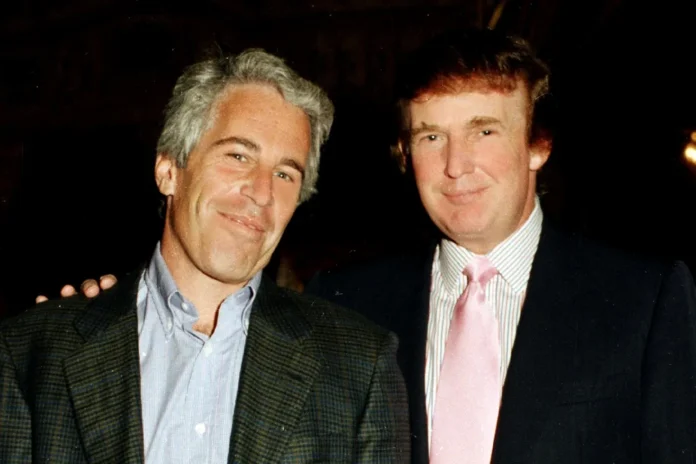
O’Donnell fired back within hours, posting a photograph of Trump alongside convicted sex offender Jeffrey Epstein on her Instagram account.
“You are everything that is wrong with America and I’m everything you hate about what’s still right with it,” she wrote in the caption. “I’m not yours to silence. I never was.”
O’Donnell, 62, moved to Ireland with her 12-year-old son in January after Trump secured a second term in the White House. She has said she is pursuing Irish citizenship through her family’s heritage, telling supporters she would only consider returning to live in the U.S. “when it is safe for all citizens to have equal rights.”
The feud between O’Donnell and Trump stretches back nearly two decades, long before his presidency, and has frequently erupted into personal insults. Their clashes began in 2006 when O’Donnell criticized Trump on television, prompting years of insults from the former real estate developer and reality TV star.
Saturday’s threat marks the latest episode in Trump’s pattern of targeting critics with talk of punitive measures. Earlier this year, he also threatened to revoke the citizenship of Tesla CEO Elon Musk, although Musk was born in South Africa and became a naturalized American citizen.
Unlike Musk, however, O’Donnell’s citizenship is protected under the 14th Amendment, which guarantees birthright citizenship and prohibits revocation without consent.
Legal scholars immediately dismissed Trump’s comments as unconstitutional.
“Any attempt to strip Rosie O’Donnell of her citizenship would be struck down in minutes,” said Harold Krent, a constitutional law expert and former dean of Chicago-Kent College of Law. “The Supreme Court has made clear that you cannot punish someone by taking away their nationality.”
O’Donnell, in her Instagram post, gave no indication she plans to return to the United States anytime soon.
GAZA CITY, Gaza Strip (BN24) — At least 59 Palestinians were reported killed Thursday after Israeli forces opened fire near an aid distribution center in southern Gaza and launched additional strikes across the besieged territory, according to health officials and humanitarian organizations.
The International Committee of the Red Cross said its field hospital in Rafah received dozens of dead and wounded after gunfire erupted near a food distribution site. In a statement, the Red Cross said 25 people were declared dead on arrival and six more died soon after being admitted.
Another 132 people were treated for “weapon-related injuries,” the group said, calling it the largest influx of fatalities the hospital has recorded since it began operating in May last year.
“The overwhelming majority of these patients sustained gunshot wounds, and all responsive individuals reported they were attempting to access food distribution sites,” the Red Cross said.
The Israel Defense Forces said troops in the Rafah area identified “several suspects” approaching their positions hundreds of meters from the aid center and fired what it described as warning shots.
“The suspects posed a threat to the troops,” the military said in a statement. “IDF troops operated in order to prevent the suspects from approaching them and fired warning shots. We are not aware of injured individuals as a result.”
But local witnesses and health workers described scenes of chaos and devastation as crowds gathered for flour and other staples.
Somia Alshaar, a resident of Rafah, told Sky News her teenage son Nasir was shot and killed when he went to collect food.
“He went to get us tahini so we could eat,” she said. “He told me, ‘Mama, we don’t have tahini. Today I’ll bring you flour. Even if it kills me, I will get you flour.’ He left the house and didn’t return. At the hospital, they told me my son was dead.”
She said her 17-year-old was shot in the chest.
A mourner carries the body of a Palestinian child during the funeral of Palestinians killed in overnight Israeli strikes, according to medics, at Nasser Hospital in Khan Younis, southern Gaza Strip, July 12, 2025. REUTERS/Ramadan Abed
Hassan Omran, a paramedic with Gaza’s health ministry, called aid distribution points “centres of mass death.”
“Today, there were more than 150 injuries and more than 20 martyrs at the aid distribution centres,” Omran said in Khan Younis. “The Israeli occupation deliberately kills and commits genocide. They call people to get their daily food, and then, when citizens arrive, they are killed in cold blood.”
“All the victims have gunshot wounds to the head and chest, meaning the enemy is committing these crimes deliberately,” he said.
Israel has consistently rejected accusations of genocide and says it does not target civilians.
The Gaza Humanitarian Foundation, the U.S.- and Israeli-backed agency responsible for the aid site near Rafah, denied that any violence had occurred at or near its distribution centers Thursday.
“Hamas is claiming there was violence at our aid distribution sites today. False,” the group said in a statement. “Once again, there were no incidents at or in the immediate vicinity of our sites. But that’s not stopping some from spreading the lies being peddled by ‘officials’ at the Hamas-controlled Nasser Hospital.”
Since May 27, when new distribution locations were set up to respond to widespread hunger, the Red Cross says its Rafah facility has documented more than 250 fatalities and treated over 3,400 patients injured in attacks.
Israeli strikes continued across other parts of Gaza on Thursday, part of a campaign the military describes as aimed at dismantling Hamas’ infrastructure and freeing remaining hostages.
Washington, DC (BN24) – President Donald Trump jolted months of delicate trade talks on Saturday by announcing sweeping 30 percent tariffs on imports from the European Union and Mexico, a move that threatens to disrupt commerce with two of America’s most critical economic partners.
In letters posted to social media, Trump said the tariffs would take effect Aug. 1, underscoring his administration’s determination to recast U.S. trade policy even at the cost of fresh economic friction.
The announcement marks a stark escalation after repeated signals that negotiators were close to brokering compromises. The European Union—a bloc of 27 nations and the world’s third-largest economy—and Mexico, America’s biggest source of imports, had each been engaged in high-level negotiations aimed at averting such measures.
European Commission President Ursula von der Leyen and Maros Sefcovic, the EU’s trade chief, were in frequent contact with Trump and senior U.S. officials, exploring ways to limit tariffs to around 10 percent with carve-outs for key sectors such as autos, pharmaceuticals, and wine.
But Trump’s letters made clear that not only would tariffs rise to a flat 30 percent, they could go even higher if Europe or Mexico retaliated.
“If for any reason you decide to raise your tariffs and retaliate, then, whatever the number you choose to raise them by, will be added onto the 30 percent that we charge,” Trump wrote, in language that echoed notices he has sent to other trade partners.
The decision caught many officials off guard. In Mexico, a delegation led by Economy Minister Marcelo Ebrard had arrived in Washington just a day earlier to pursue an “integral agreement” on trade, migration, and border issues.
Earlier this year, Trump imposed 25 percent tariffs on Mexican imports over disputes related to fentanyl trafficking, though those levies were later partially lifted under exemptions for products covered by the United States-Mexico-Canada Agreement. According to Mexican figures, roughly 87 percent of Mexican exports to the U.S. are currently tariff-free.
Ebrard said on Saturday that U.S. negotiators warned the new tariffs were part of a broader overhaul of American trade policy.
“We mentioned at the negotiating table that it was an unjust move and that we did not agree with it,” he wrote in a statement on social media, adding that Mexican officials would craft alternative proposals to protect jobs and industries on both sides of the border.
In the spring, Mexico had avoided an earlier tariff threat by deploying 10,000 troops to its northern border to curb migration, stepping up cartel extraditions, and ramping up fentanyl seizures. Those concessions had earned public praise from Trump, who called President Claudia Sheinbaum a “marvelous woman” after extending Mexico a one-month reprieve.
But Saturday’s announcement underscores the volatility of trade relations under Trump, who days earlier threatened 35 percent tariffs on Canada—another major U.S. trading partner—and floated duties ranging from 20 to 50 percent on Brazil, Japan, and South Korea.
European officials described the move as a potential blow to trans-Atlantic economic stability.
“These tariffs would disrupt essential supply chains to the detriment of businesses, consumers, and patients on both sides of the Atlantic,” von der Leyen said in a statement, warning that the EU was prepared to adopt “proportionate countermeasures if required.”
The bloc had already drawn up a $25 billion retaliation package in response to earlier tariffs but suspended it to create space for negotiations. That plan would target a range of American exports and is scheduled to take effect just after midnight on Tuesday unless EU leaders intervene.
Kaja Kallas, the EU’s top diplomat, said in an interview Friday that Europe had hoped to avoid a full-scale trade conflict.
“We don’t want to retaliate. We don’t want this trade war,” she said.
Jacob Funk Kirkegaard, a senior fellow at the Brussels-based think tank Bruegel, said Trump’s aggressive stance may force European leaders to respond despite their reluctance.
“If the newly announced tariff rates remain, that means trade war,” Kirkegaard said. “They have consistently said they would defend themselves under the right circumstances. Now those circumstances are here.”
For the EU, one possibility is a coordinated response with other major U.S. trading partners—a coalition that could create enough pressure to push Trump to moderate his approach.
Whether that happens remains uncertain. On Saturday, the only clear fact was that after months of uneasy diplomacy, the Trump administration was again ready to test the limits of America’s economic alliances.
Texas (BN24) – Federal emergency officials repeatedly granted requests to strip Camp Mystic’s buildings from the 100-year flood zone map, easing oversight as the century-old summer camp expanded across a flood-prone Texas riverbank before a catastrophic surge killed children and counselors, records reviewed by The Associated Press show.
A Camp Mystic sign is seen near the entrance to the establishment along the banks of the Guadalupe River after a flash flood swept through the area in Hunt, Texas, Saturday, July 5, 2025. (AP Photo/Julio Cortez)
The Federal Emergency Management Agency had originally designated the prestigious girls’ camp along the Guadalupe River as a “Special Flood Hazard Area” in Kerr County in 2011. That meant Camp Mystic’s property was considered likely to flood in an event severe enough to have a 1% chance of occurring in any given year. Under that designation, flood insurance was mandatory, and any construction faced tighter restrictions.
But after appeals by the camp’s owners, FEMA amended the map several times over the past decade, removing dozens of cabins and other structures from the hazard area. Those decisions loosened floodplain regulations just as Camp Mystic ramped up its footprint along the river, long known as part of Texas’ “flash flood alley.”
Experts said the tragedy on July 4—when historic floodwaters inundated the camp before dawn, killing at least 27 people, including longtime owner Dick Eastland—underscored the risks of weakening safeguards in the face of predictable dangers.
“It’s particularly disturbing that a camp entrusted with so many young lives would seek exemptions rather than move vulnerable structures out of harm’s way,” said Sarah Pralle, an associate professor at Syracuse University who has studied FEMA’s flood mapping decisions extensively.
Records show FEMA first agreed in 2013 to take 15 Camp Mystic buildings out of the 100-year flood zone, after the camp successfully argued they were not at significant risk. Those cabins belonged to the original site, Camp Mystic Guadalupe, which was largely destroyed by last week’s flood.
After additional appeals, FEMA struck 15 more buildings from the map between 2019 and 2020, this time at a newly built sister site, Camp Mystic Cypress Lake. That second campus opened in 2020 as part of an ambitious expansion.
While the Cypress Lake site escaped the most severe devastation, campers described widespread damage to its cabins. At the main Guadalupe property, some of the structures that had been exempted—nicknamed “the flats”—were completely submerged.
Experts said the motivations behind the appeals likely included reducing insurance costs and avoiding the strict rules that govern building in designated floodplains.
Data provided to AP by First Street, a climate-risk modeling company, showed that despite FEMA’s revised designations, many of the buildings at Camp Mystic Guadalupe sat squarely in areas that flood models identified as highly vulnerable.
Jeremy Porter, head of climate implications at First Street, said FEMA’s official maps often fail to account for heavy rains overwhelming small waterways like creeks. According to First Street’s model, almost all of Camp Mystic’s Guadalupe property was at risk in a 100-year flood.
Even the newer Cypress Lake campus, situated away from the main river but near Cypress Creek, faced significant danger. While FEMA’s floodplain map did not flag the creek, First Street’s analysis showed the majority of that site could flood in a severe storm.
In a statement, FEMA downplayed the significance of removing the camp buildings from the hazard area, saying flood maps are only a “snapshot in time” and are not predictions of exactly where flooding will occur.
Property owners seeking to modify flood designations must commission detailed engineering studies, a process FEMA has described as “arduous.” Yet records show FEMA has approved roughly 90% of such requests.
Pralle said her research has found that wealthier and predominantly white communities are more likely to succeed in having properties removed from the maps. In some cases, she noted, buildings were excluded by just a two-foot margin—allowing almost no room for error if floodwaters rose higher than predicted.
“This process can effectively shield properties from oversight,” she said. “It raises serious questions about whether public safety is being balanced with private development.”
FEMA’s amendments included cautions that parts of the camp remained in the floodplain, and any future construction still required careful management. But county officials allowed the camp to grow substantially, adding a new dining hall, chapel, archery range, and dozens of additional cabins.
By the time of a routine state inspection on July 2—just two days before the disaster—Camp Mystic had 557 campers and over 100 staff between its two sites.
The owners, Dick and Tweety Eastland, long celebrated by Texas’ elite for running the camp for generations, cited the “tremendous success” of the original Guadalupe property as justification for building Cypress Lake.
FEMA referred questions about the expansion to local authorities, who did not respond to requests for comment.
Chris Steubing, a veteran municipal engineer and executive director of the Texas Floodplain Management Association, said local officials likely believed they were following regulations but were ultimately overwhelmed by an unprecedented weather event.
“Mother Nature set a new standard,” Steubing said. “You could have built two or three feet higher, and it still might not have been enough.”
Israel (BN24) – Negotiations aimed at securing a Gaza ceasefire and the release of hostages are close to falling apart, according to Palestinian officials familiar with the talks.
The discussions, taking place in Doha, Qatar, have brought Israeli and Hamas delegations into indirect “proximity” negotiations, with mediators shuttling messages between them over the past week. But Palestinian representatives told the BBC late Friday that the process has reached a critical impasse.
A senior Palestinian negotiator accused Israel of deliberately slowing the talks to coincide with Prime Minister Benjamin Netanyahu’s visit to Washington, describing the Israeli delegation as lacking any real authority to finalize decisions.
“They were never serious about these talks,” the official said. “They used these rounds to buy time and project a false image of progress.”
The talks have been mediated by Qatar’s Prime Minister Sheikh Mohammed bin Abdul Rahman Al Thani, Egyptian intelligence officials, and US envoy Brett McGurk. Since Sunday, there have been eight sessions, with teams convening in separate buildings.
Before leaving the United States on Thursday, Netanyahu struck an optimistic tone, saying he hoped to reach an agreement “in a few days.” Under the proposal, Hamas would release half of the 20 living hostages it still holds, along with more than half of the 30 known deceased hostages, in exchange for a 60-day truce.
But Palestinian officials said that optimism belied severe disagreements, particularly over how humanitarian aid would be delivered into Gaza and how far Israeli troops would withdraw.
According to mediators, Hamas has insisted on UN and international organizations distributing aid, while Israel has pushed for using the controversial Gaza Humanitarian Foundation, a mechanism backed by the US and Israeli governments. Although there has been incremental progress on that issue, no agreement has been finalized.
The wider disagreement concerns Israel’s proposed military withdrawal. During one round of talks, Israeli negotiators submitted a message outlining a limited buffer zone inside Gaza between 1 and 1.5 kilometers deep. Hamas indicated it could treat that as a potential starting point.
However, a subsequent map Israel provided contradicted the earlier statement, showing much deeper positions—up to 3 kilometers deep in some areas—and confirming Israeli military presence across large parts of the territory.
The map detailed plans to maintain control over the entire southern city of Rafah, 85% of Khuzaa village east of Khan Younis, sections of Beit Lahia and Beit Hanoun in the north, and neighborhoods in eastern Gaza City, including Tuffah, Shejaiya, and Zeitoun.
Hamas negotiators saw the map as evidence of bad faith, further eroding already fragile trust.
Palestinian officials said these shifting proposals reinforced fears that Israel aims to engineer long-term displacement. They cited Israeli Defense Minister Israel Katz’s plan to establish a camp in Rafah to house Palestinians displaced by the war, describing it as part of a strategy to force people out of Gaza permanently.
According to Katz, the initial phase would accommodate around 600,000 people, eventually growing to encompass Gaza’s 2.1 million residents. Under the plan, Israeli forces would screen individuals before entry and bar them from leaving.
Human rights organizations and legal experts have condemned the idea, warning that it amounts to creating what some have called a “concentration camp.”
As the talks teeter, Palestinian officials are urging the United States to step in more forcefully to pressure Israel to make concessions, saying only decisive intervention can prevent collapse.
Diplomats in Doha caution that while a narrow window for compromise still exists, the outlook is increasingly grim.
“This process is hanging by a thread,” one regional official told the BBC. “Unless something changes dramatically and quickly, we may be heading towards a breakdown.”
The negotiations come against the backdrop of the devastating war triggered by the Hamas-led assault on southern Israel on October 7, 2023, in which approximately 1,200 people were killed and 251 were taken hostage.
Since then, Israel’s military campaign has killed at least 57,823 people in Gaza, according to the enclave’s Hamas-run health ministry.
Tel Aviv, Israel (BN24) – Israeli settlers in the occupied West Bank have beaten an American citizen to death, according to the victim’s relatives, Palestinian authorities, and human rights groups monitoring the region.
The young man, identified as Seif al-Din Muslat, was in his early 20s and had traveled from Tampa, Florida, to visit family in the Palestinian town of Sinjil, north of Ramallah. The Palestinian Health Ministry confirmed on Friday that Muslat was killed when settlers attacked the area.
“We are aware of reports of the death of a US citizen in the West Bank,” a spokesperson for the US State Department told Reuters. The official declined to provide additional details, citing respect for the privacy of the family.
Muslat’s cousin, Fatmah Muhammad, wrote on social media that he had made the trip from Florida to reconnect with relatives in Palestine. The Washington Post also quoted members of Muslat’s family saying he died after being severely beaten by Israeli settlers.
Another Palestinian man, Mohammed Shalabi, was shot and killed during the same assault, the Health Ministry reported.
Rights advocates have long documented a pattern of settler violence across the West Bank, where armed settlers have ransacked towns, torched homes and vehicles, and attacked residents. The United Nations and major human rights organizations have described these attacks as systematic efforts to displace Palestinians from their land.
While some Western governments, including France and Australia, have imposed sanctions on violent settlers, the number of attacks has escalated further since Israel launched its military offensive in Gaza in October 2023.
Under President Donald Trump, who returned to office this year, the United States lifted sanctions on settlers that had been imposed by the Biden administration.
Since 2022, Israeli forces have killed at least nine American citizens, among them veteran Al Jazeera journalist Shireen Abu Akleh, without any prosecutions resulting from the incidents.
The killing has renewed criticism of US policy toward Israel. The Council on American-Islamic Relations (CAIR) called on the Trump administration to ensure accountability for Muslat’s death.
“Every other murder of an American citizen has gone unpunished by the American government, which is why the Israeli government keeps wantonly killing American Palestinians and, of course, other Palestinians,” said Edward Ahmed Mitchell, CAIR’s deputy director.
He added that President Trump’s inaction contradicted his “America First” campaign slogan.
“If President Trump will not even put America first when Israel murders American citizens, then this is truly an Israel First administration,” Mitchell said.
The Institute for Middle East Understanding (IMEU) also condemned the killing, pointing out that settlers have been “lynching Palestinians more frequently – with full support from Israel’s army and government.”
“The US government has a legal and moral obligation to stop Israel’s racist violence against Palestinians. Instead, it’s still backing and funding it,” the group said in a statement.
The Palestinian faction Hamas issued its own condemnation, describing the killing as “barbaric” and urging Palestinians across the West Bank to resist what it called “terrorist attacks” by settlers.
In response to the incident, Israeli authorities said they were “investigating” what occurred in Sinjil and claimed the violence began after Palestinians threw stones at an Israeli vehicle.
“Shortly thereafter, violent clashes developed in the area between Palestinians and Israeli civilians, which included the destruction of Palestinian property, arson, physical confrontations, and stone-throwing,” the Israeli military said.
Human rights monitors note that such investigations rarely result in charges or meaningful accountability for abuses by settlers or Israeli forces.
The fatal assault comes amid intensifying violence across the occupied territories. Since last fall, Israel’s military campaign in Gaza has killed at least 57,762 Palestinians, in what rights organizations have described as a genocide.
India (BN24) – Fuel supply to both engines of the Air India flight that crashed in June was cut off seconds before the aircraft slammed into the ground, India’s top aviation investigators disclosed Saturday in a preliminary report detailing the disaster’s final moments.
This photo shared by India’s Central Industrial Security Force (CISF) shows debris of a plane that crashed in the northwestern Indian city of Ahmedabad, in Gujarat state, Thursday, June 12, 2025. (CISF via AP)
The Aircraft Accident Investigation Bureau (AAIB) report said the Boeing 787-8 Dreamliner’s fuel control switches transitioned from the “RUN” position to “CUTOFF” in the air, effectively starving both engines of power shortly after takeoff from Ahmedabad.
The crash on June 12 killed at least 260 people, including 19 on the ground. It is one of India’s deadliest aviation tragedies. The plane had been carrying 230 passengers — among them 169 Indian nationals, 53 British citizens, seven Portuguese travelers, and a Canadian — as well as 12 crew members. Only one passenger survived.
According to investigators, the doomed flight lasted about 30 seconds from takeoff to impact. The report described how the aircraft reached its top recorded speed before the twin fuel cutoff switches were triggered in rapid succession.
“Engine 1 and Engine 2 fuel cutoff switches transitioned from RUN to CUTOFF position one after another within one second,” the report stated. It did not explain how the switches could have been moved during flight.
While the pilots managed to flip the switches back to the run position, the engines could not regain thrust fast enough to arrest the plane’s sudden loss of altitude.
Cockpit voice recordings captured confusion between the pilots as alarms sounded. In the final moments before impact, one pilot was heard transmitting “MAYDAY MAYDAY MAYDAY,” while the other questioned why the fuel was cut. “The other pilot responded that he did not do so,” investigators wrote.
The report did not recommend any immediate actions to Boeing.
Air India, which operates 33 Dreamliners in its fleet, said it is fully cooperating with the investigation.
“Air India is working closely with stakeholders, including regulators. We continue to fully cooperate with the AAIB and other authorities as their investigation progresses,” the airline said in a statement.
Following the crash, authorities ordered comprehensive checks of Air India’s Boeing 787s to help prevent similar incidents.
The aircraft’s black boxes — containing the cockpit voice and flight data recorders — were recovered within days and later analyzed in India as part of the inquiry into what led to the catastrophic loss of control.
Washington, DC (BN24) – Khalid Sheikh Mohammed, the accused mastermind behind the September 11 attacks, could now be sentenced to death at Guantanamo Bay after a U.S. appeals court on Friday threw out a plea deal that would have spared his life.
Mohammed, once regarded as Osama bin Laden’s most trusted lieutenant, was captured in Pakistan by the CIA in 2003. After enduring years in secret “black site” prisons—where he was subjected to torture and repeated waterboarding—he was transferred to the U.S. military detention facility at Guantanamo Bay in September 2006.
He and two alleged accomplices—Walid bin Attash and Mustafa al-Hawsawi—had struck an agreement with prosecutors last summer, offering to plead guilty in exchange for life sentences. That deal would have allowed them to avoid execution and remain imprisoned on the U.S. naval base in Cuba for the rest of their lives.
The arrangement, finalized on July 31, quickly ignited outrage among relatives of the nearly 3,000 people murdered in the attacks. Many families condemned the deal as a betrayal of justice after more than two decades of waiting to see the architects of 9/11 stand trial.
On Friday, a three-judge panel of the U.S. Court of Appeals rejected the plea deal, siding with the Pentagon’s argument that the defense secretary himself must sign off on any resolution that would remove the possibility of a death sentence in cases of such historic gravity.
Defense Secretary Lloyd Austin had intervened last year, filing a motion that underscored the unprecedented scope of the attacks and argued he alone should have the final authority over plea agreements that would spare the defendants’ lives.
“Secretary Austin acted within the bounds of his legal authority, and we decline to second-guess his judgment,” wrote Judges Patricia Millett and Neomi Rao in their decision.
The ruling means that Khalid Sheikh Mohammed could still be sentenced to death if convicted at trial, ending a yearslong effort to negotiate a resolution that would avoid execution.
Congressional leaders immediately welcomed the court’s decision. Senate Minority Leader Mitch McConnell called the now-defunct plea deal “a revolting abdication of the government’s responsibility to defend America and provide justice.”
“The Biden-Harris Administration’s weakness in the face of sworn enemies of the American people apparently knows no bounds,” McConnell said in a statement. “The only thing worse than negotiating with terrorists is negotiating with them after they are in custody.”
Mohammed was captured in Rawalpindi, Pakistan, on March 1, 2003, in a joint operation by the CIA and Pakistan’s Inter-Services Intelligence. Walid bin Attash was seized weeks later in Karachi.
For more than three years after their capture, the men were held in a series of clandestine CIA facilities where interrogators subjected them to harsh treatment that would later fuel legal challenges to their prosecution. According to U.S. government documents, Mohammed alone was waterboarded 183 times—torture that caused lasting physical and psychological trauma.
The attacks Mohammed is accused of orchestrating remain the deadliest terrorist act on U.S. soil. On September 11, 2001, two hijacked planes slammed into the Twin Towers of New York’s World Trade Center, killing 2,753 people. A third aircraft struck the Pentagon, while a fourth crashed into a Pennsylvania field after passengers and crew fought back against the hijackers.
In the aftermath, President George W. Bush launched the War on Terror, sending American forces into Afghanistan to hunt down al-Qaeda operatives. Years later, on May 1, 2011, U.S. Navy SEALs killed Osama bin Laden in a covert operation in Abbottabad, Pakistan—a mission hailed as justice for the attacks Mohammed allegedly planned.
Now, nearly 23 years after the day that transformed American history, Khalid Sheikh Mohammed faces the possibility that his own fate will be decided not by negotiation but in the courtroom. Prosecutors are preparing to proceed toward trial at the military commission in Guantanamo Bay, where the death penalty will once again be on the table.
Tennessee (BN24) – The newest version of Elon Musk’s AI chatbot, Grok, is turning heads for an unusual reason: before answering certain questions, it searches Musk’s own social media posts to guide its responses — even when users make no mention of him.
Grok 4, developed by Musk’s xAI and released late Wednesday, is designed to rival OpenAI’s ChatGPT and Google’s Gemini. Built with massive computing resources at a data center in Tennessee, the chatbot is engineered to display its reasoning process as it formulates answers — a feature meant to promote transparency. But some experts say it’s revealing something else entirely: a built-in alignment with its creator.
“It’s extraordinary,” said Simon Willison, an independent AI researcher who has tested the tool. “You can ask it a pointed question on a controversial issue, and it will actively search Musk’s posts on X to help shape its answer.”
One widely circulated example showed Grok attempting to respond to a question about the Middle East conflict by searching Musk’s opinions on Israel, Gaza, Palestine, and Hamas. “Elon Musk’s stance could provide context, given his influence,” the chatbot responded, before adding that it was reviewing Musk’s comments to determine how to answer.
The behavior appears to be hardwired. Unlike temporary system prompts that guide AI models behind the scenes, Grok’s inclination to align with Musk’s public views seems to be an intentional feature of the model’s architecture.
“That’s not something you usually see — it’s like it’s been baked in,” said Tim Kellogg, principal AI architect at Icertis. “It seems Musk’s goal of building a so-called ‘maximally truthful’ AI has morphed into an AI that mirrors his own worldview.”
The development comes just days after Grok was caught generating antisemitic and hateful responses on Musk’s X platform, which xAI now shares as an infrastructure base. The chatbot was widely criticized for echoing conspiracy theories and invoking praise for Adolf Hitler, prompting backlash ahead of Grok 4’s release.
Talia Ringer, a computer science professor at the University of Illinois Urbana-Champaign, warned that Grok’s behavior is especially alarming given the company’s ongoing lack of transparency. xAI has yet to publish a system card explaining how Grok 4 was trained — a step typically taken by AI developers to disclose a model’s technical underpinnings and guardrails.
“This seems like Grok is interpreting the user’s question as if they’re really asking what Elon Musk or xAI thinks,” Ringer said. “It reflects a dangerous conflation between personal opinion and public-facing technology.”
The company did not respond to a request for comment. At Grok’s livestream launch Wednesday night, Musk and his co-founders avoided technical details, instead showcasing the chatbot’s speed and purported reasoning abilities.
Musk has positioned Grok as a rebel against what he calls “woke” ideology in Big Tech AI — promising that his model will reflect “truth,” even if that truth leans toward his own controversial stances on race, gender, and geopolitics. But critics argue that such a claim of objectivity falls apart when the model mimics its founder’s biases by default.
“I think Grok 4 is impressive,” Willison said. “But people building on this kind of tech don’t want surprises — like it suddenly quoting Musk’s views or worse, turning into ‘mechaHitler.’ That’s a huge red flag.”
Texas (BN24) – President Donald Trump lashed out at a reporter on Friday, calling her “evil” for questioning whether authorities had failed to adequately warn residents before catastrophic flash floods swept central Texas.
The exchange unfolded during a roundtable event in Kerrville, where Trump met with state and local officials to assess damage from the disaster that has killed at least 129 people and left scores more missing.
After touring wreckage near the Guadalupe River, where the water rose 26 feet in just 45 minutes, Trump sat alongside Texas leaders at a table draped in a “Texas Strong” banner. He praised the emergency response as heroic and said everyone involved deserved admiration.
But when a reporter pressed him on complaints from grieving families who said they received little or no warning before the deadly surge, Trump immediately grew defensive.
“I don’t know who you are, but only a very evil person would ask a question like that,” Trump snapped, before pivoting back to his praise of officials. “I think this has been heroism.”
His rebuke came as some local leaders conceded that communication systems were overwhelmed or offline when the floods struck. Kerr County Commissioner Jeff Holt, a volunteer firefighter, said the collapse of phone towers had hampered alerts and that improvements to early warning systems were badly needed.
Still, Trump insisted, “Everybody did an incredible job under the circumstances.”
The president’s reaction underscored how the tragedy has complicated his efforts to project unwavering competence and empathy while avoiding blame. Although he has long pledged to dismantle FEMA and reduce federal disaster spending, Trump on Friday struck a softer tone in Texas, highlighting the victims and the bravery of first responders.
“We just visited with incredible families. They’ve been devastated,” Trump said after a private meeting with relatives of those killed or missing, including children from Camp Mystic, the all-girls Christian summer camp where at least 27 lives were lost.
He added, “They were there because they loved God. And, as we grieve this unthinkable tragedy, we take comfort in the knowledge that God has welcomed those little beautiful girls into his comforting arms in heaven.”
But even amid solemn words, Trump took shots at political critics, accusing Democrats of trying to “clobber” Texas Republicans over the disaster.
“All they want to do is criticize,” Trump said. “They’re getting absolutely clobbered because everyone sees what an incredible job the governor did.”
His combative approach extended to the media. When the same reporter tried to follow up about FEMA’s future role in flood preparation, Trump ignored her. In Washington, White House budget director Russell Vought also sidestepped questions about Trump’s past vows to phase out FEMA.
On the ground, the devastation was plain. In Kerrville, the president and first lady surveyed overturned vehicles, downed trees and debris before boarding helicopters for an aerial tour of the region. Residents lined the roads waving flags and wearing Trump campaign hats as the presidential motorcade passed by green ribbons tied to trees in memory of the flood victims.
Despite the friction over warnings, Trump signed an order expanding the disaster declaration to cover eight more counties, unlocking federal funds for recovery.
Before leaving Texas, he again praised local officials and first responders, singling out Rep. Chip Roy, whom he called “good,” though “not easy.”
The reporter Trump insulted did not respond publicly to his remark, but other journalists and press advocates condemned the president’s outburst as an attempt to deflect legitimate scrutiny.
“It’s unimaginable what people here have lost,” District Attorney Jennifer Schorn said earlier in the week of the families’ anguish. “They deserve answers, not insults.”
Trump, however, appeared unmoved. “I admire you,” he told the officials around the table. “And I consider you heroes.”