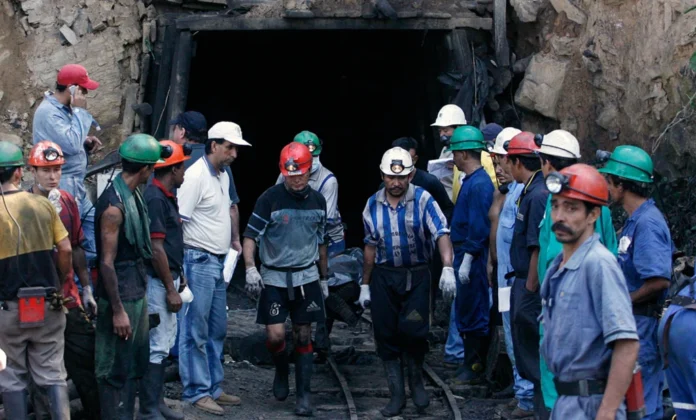
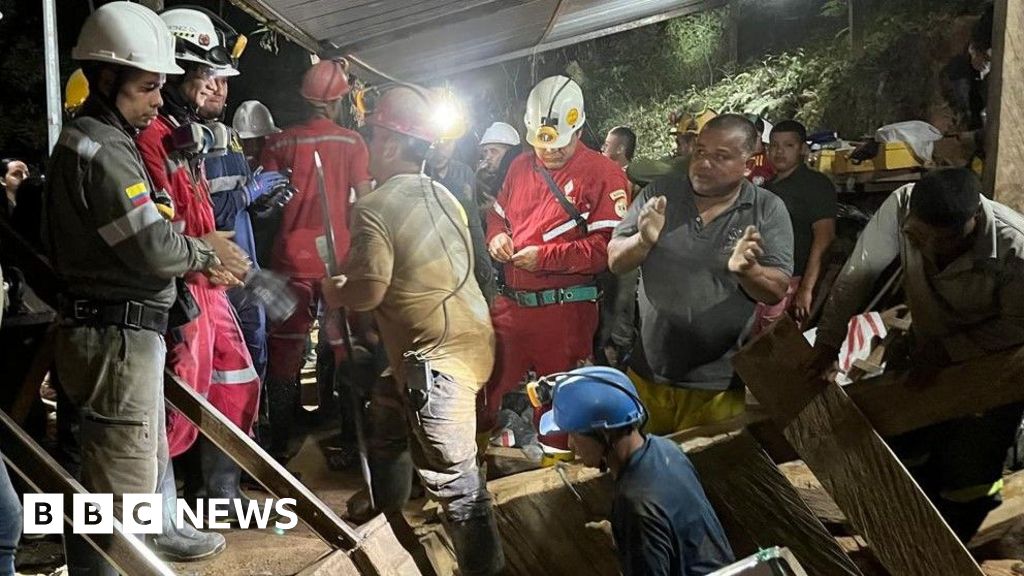
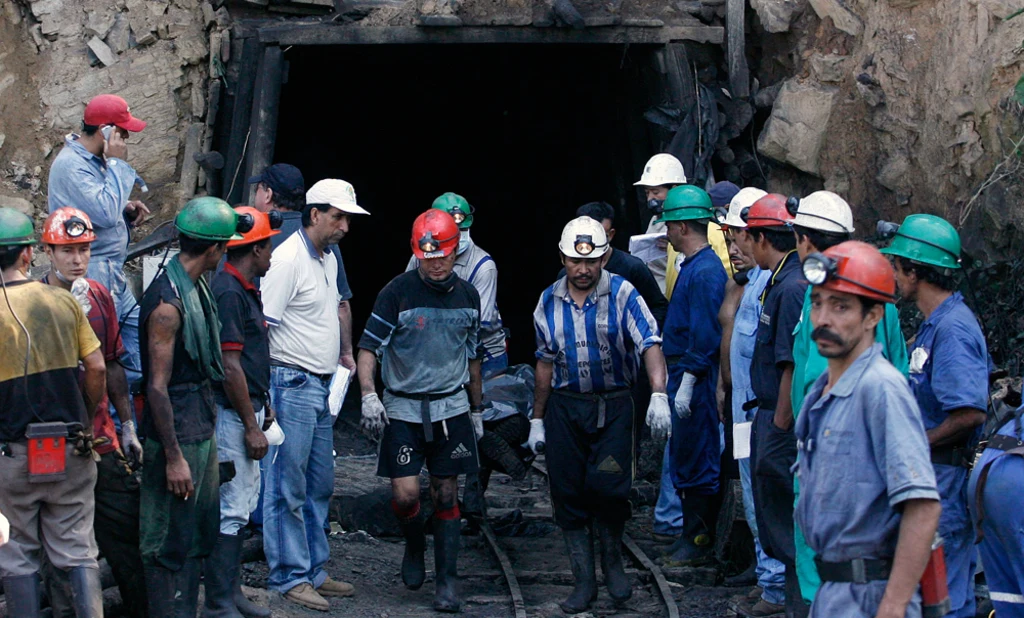
MEDELLÍN, Colombia (BN24) — Eighteen Colombian gold miners trapped underground for nearly 18 hours were safely rescued early Friday morning after emergency crews worked through the night to reach them. The miners had been stuck inside the El Minón mine, located in the Antioquia region’s Remedios municipality, following an equipment failure that led to a structural collapse, officials said.
Colombia’s National Mining Agency (ANM) confirmed that all the miners were brought to the surface alive and in good health following a complex rescue operation that lasted about 12 hours. Footage from the scene showed emotional reunions, with fellow miners cheering and clapping as their colleagues emerged one by one from the narrow mine shaft.
The incident began Thursday afternoon when a mechanical failure caused a collapse in a key support structure designed to prevent landslides within the mine, said Yarley Erasmo Marin, a local mining association leader, speaking to AFP. The collapse blocked the main exit, trapping the workers deep underground with limited air and light.
Oxygen was supplied through hoses during the ordeal, according to reports from local radio station ABC, which helped sustain the miners as crews drilled and cleared debris to reach them.
Energy Minister Andrés Camacho announced the successful rescue on social media just after 3:00 a.m. local time Friday, praising the efforts of emergency responders and calling the operation a “testament to the courage and resilience of Colombian workers.”
However, questions are emerging over the legality of the El Minón mine. In a letter to national authorities, the mayor of Remedios said the mine appeared to be operating without official permits. The ANM echoed that concern, urging mining communities to avoid unlicensed operations, which it said pose “serious risks to human life, the environment, and the nation’s resources.”
Mining accidents are a recurring issue in Colombia, where both legal and illegal mining operations are widespread. Dozens of fatalities have been recorded in recent years, often due to lax safety standards or unregulated practices in remote regions.
While this latest incident ended without loss of life, it has reignited debates about mining oversight, worker safety, and the ongoing dangers associated with unauthorized mining operations in the country’s resource-rich northwest.
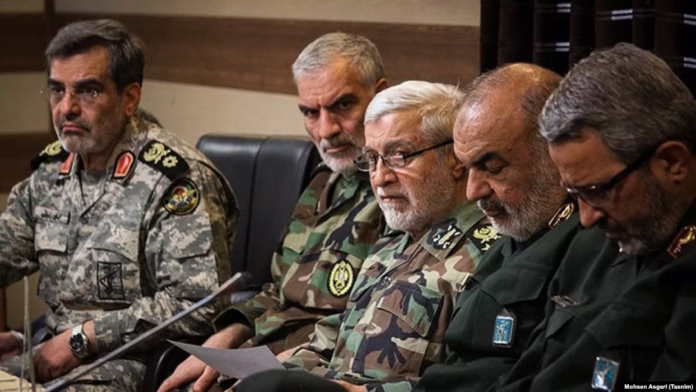
TEHRAN, Iran (BN24) — Iran’s top military commanders have issued stark warnings that the country is fully prepared to resume war with Israel if provoked, just days after a U.S.-brokered ceasefire brought an uneasy end to a 12-day conflict. The bold statements from Tehran have heightened fears across the region that a return to open hostilities may be imminent.
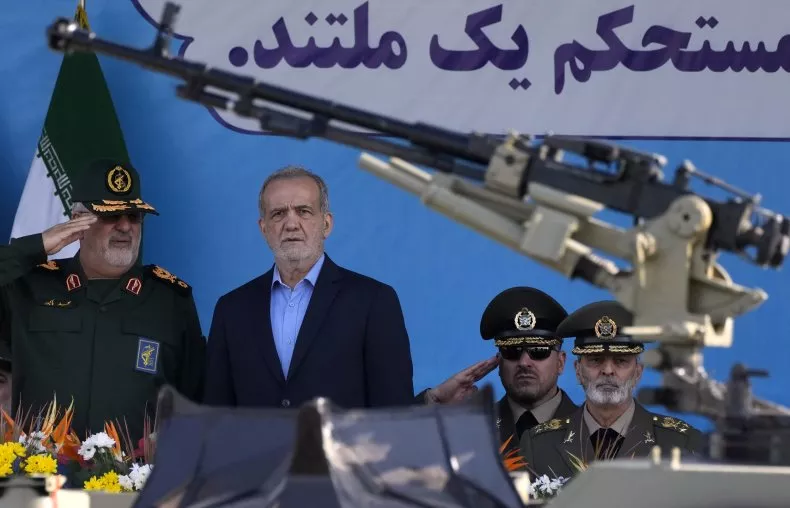
Major General Mohammad Pakpour, the commander of Iran’s elite Revolutionary Guard Corps (IRGC), declared that Iranian forces are “fully prepared to resume combat from exactly where it stopped.” Speaking alongside Iran’s Army chief, Major General Amir Hatami, Pakpour vowed that “aggressors will not be spared” and praised what he called the “unity and strength of the Iranian people.” He emphasized that while Iran does not seek war, it will respond decisively if attacked.
The statement comes amid fresh signals from Israel that it considers the recent round of fighting incomplete. Israeli Military Chief of Staff Eyal Zamir said bluntly, “The campaign against Iran is not over. We are entering a new phase.”
While Washington continues to advocate for a diplomatic resolution, the Biden administration is keeping military options on the table, underscoring the volatile balance between pressure and peace. With the Middle East already on edge, Iran’s posture further complicates U.S. efforts to defuse the situation.
In parallel to the growing military rhetoric, controversy has erupted over the status of Iran’s nuclear program following recent U.S. airstrikes. A new intelligence assessment obtained by NBC News contradicts claims made by President Donald Trump that Iran’s nuclear sites had been “obliterated.”
According to multiple U.S. officials familiar with the findings, the Fordow nuclear enrichment facility was significantly damaged during last month’s strikes. However, the key facilities at Isfahan and Natanz reportedly sustained limited setbacks and could resume operations within months.
The assessment drew immediate backlash from Trump allies. Pentagon spokesperson Sean Parnell took to social media, writing, “False. The credibility of the Fake News Media is similar to that of the current state of the Iranian nuclear facilities: destroyed, in the dirt, and will take years to recover.”
Meanwhile, diplomatic efforts to revive the nuclear agreement remain stalled. Iran’s Foreign Minister Abbas Araghchi has rejected demands from European leaders and the U.S. to finalize a new deal by the end of August, calling such deadlines unfair and one-sided.
In a statement following calls with the foreign ministers of France, Germany, the U.K., and EU diplomat Josep Borrell, Araghchi pushed back, saying, “It was the U.S. that withdrew from a two-year negotiated deal—coordinated by the EU in 2015—not Iran.” He added that it was Washington, not Tehran, that abandoned negotiations in June in favor of a military strike.
Iran continues to insist that it will only re-enter talks under terms it considers balanced and just, warning that further Western pressure could derail diplomacy altogether.
As regional leaders brace for the next move, Iran’s threats to reignite the war have deepened concerns about the durability of the current ceasefire. While U.S. officials press for renewed negotiations and restraint, both Iran and Israel are digging in, leaving the prospect of renewed fighting perilously close.
With military threats, nuclear site uncertainties, and failed diplomacy intertwining, the Middle East finds itself teetering between a fragile peace and the brink of a broader conflict.
NAMUR, Belgium (BN24) — A 15-month-old baby has died from heat exposure after being left for hours inside a parked car in the southern Belgian city of Namur, local prosecutors said Friday, prompting a manslaughter investigation into the tragic incident.
Authorities believe the child was unintentionally left behind by a parent on Thursday, as outdoor temperatures in the region climbed to around 25 degrees Celsius (77 degrees Fahrenheit). According to initial findings from the investigation, the baby died from hyperthermia, or overheating, after being left unattended inside the vehicle for several hours.
The Namur prosecutor’s office confirmed that a forensic examination found no signs of foul play. “According to the preliminary findings of the investigation, the child was forgotten inside a vehicle,” officials stated.
Local media reported that the baby’s father had intended to drop the child off at daycare before heading to work, but instead proceeded directly to his company, unknowingly leaving the infant in the back seat. The car was reportedly parked at his workplace for the entire day.
The child’s death has shocked the local community and reignited concern about the dangers of leaving children unattended in vehicles, even in seemingly moderate temperatures. Experts warn that the temperature inside a parked car can quickly rise to dangerous levels, putting young children at extreme risk of fatal heatstroke.
The investigation remains ongoing as prosecutors determine whether charges will be filed in what is being treated as a case of manslaughter due to negligence.
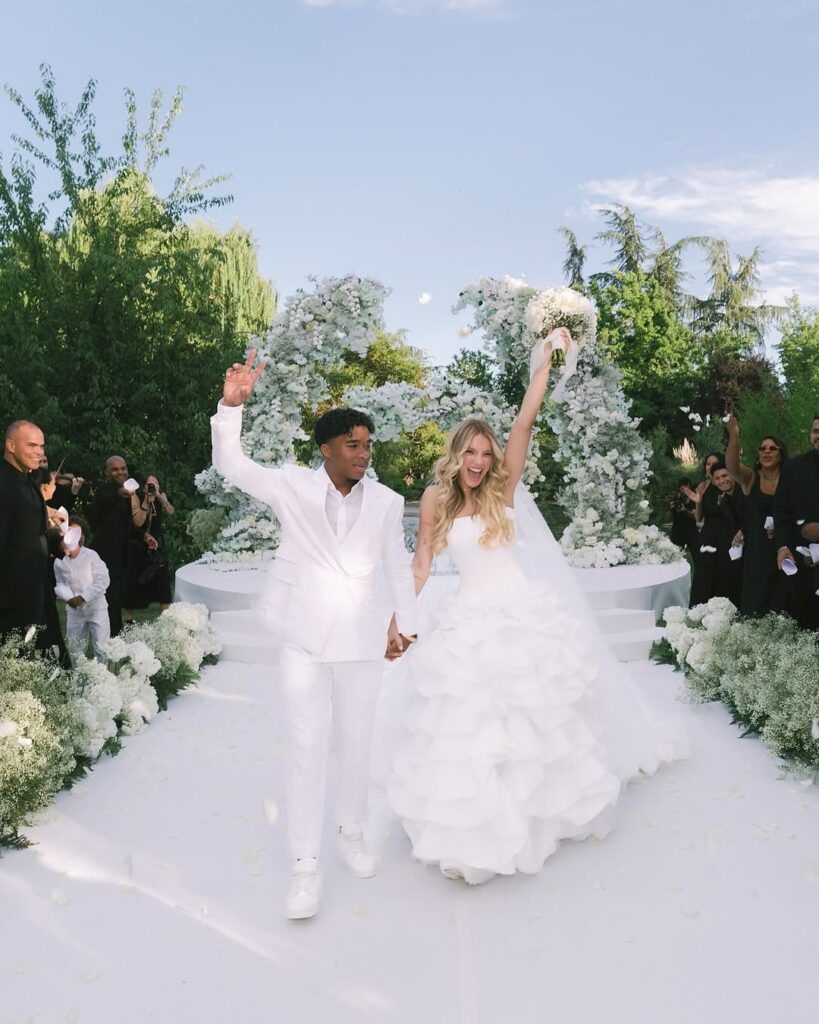
MADRID (BN24) — Real Madrid forward Endrick and Gabriely Miranda have held a long-awaited wedding ceremony, nearly a year after the Brazilian couple officially married in September 2024. The event marked the public celebration of their union, with photos showing the pair exchanging rings in a private gathering.
Endrick, 18, who signed with Real Madrid from Palmeiras, has been romantically linked with Miranda since his teenage years. Miranda, a 24-year-old Brazilian model and social media influencer, has been a visible presence in Endrick’s life since his rise at Palmeiras and was notably present during his unveiling at Real Madrid last summer.
Though their legal marriage took place months earlier, the ceremony held this week was the first public celebration of their relationship. Miranda began dating Endrick in 2023, with the couple marrying within a year of meeting. The six-year age gap between them has drawn public scrutiny in Brazil, especially given that Endrick was still 17 when the relationship began.
Miranda previously shared that she had no idea Endrick was a footballer when they first met by chance at a mall. “He was sitting alone, and I thought, ‘What a wonderful man,’” she recalled in an interview. “He had a seductive look and strong character. I fell in love instantly — and only later found out he played for Palmeiras.”
Their relationship has made headlines in Brazil not only due to the age gap but also due to a unique ‘relationship contract’ they created together. Speaking on the popular podcast Pod Delas, Endrick confirmed that he and Miranda had agreed on a set of rules to maintain trust and affection in their relationship.
Among the stipulations is a requirement to always say “I love you” in any situation. The contract also bans both from forming addictions to substances like alcohol or drugs. According to Endrick, the agreement was born out of a shared desire to protect their bond amid growing media attention.
Now on vacation with his wife, Endrick is enjoying time off before rejoining Real Madrid’s preseason training in early August. The teenage striker, one of the most hyped young talents in world football, will turn 19 on July 21.
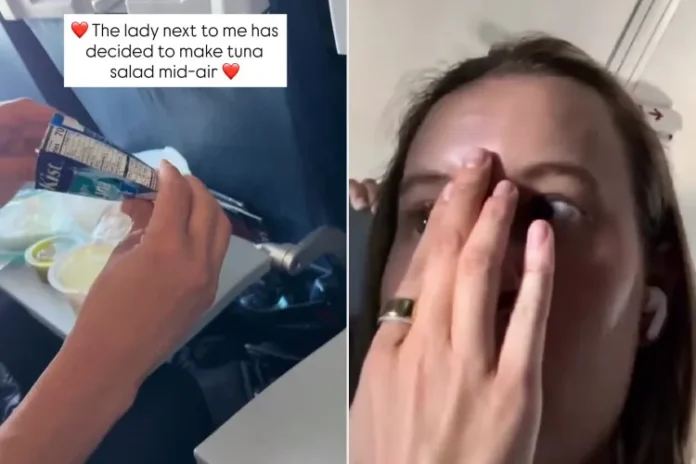
TikTok video of in-flight tuna salad preparation draws millions of views and widespread backlash
Atlanta, GA. (BN24) – A plane passenger preparing tuna salad at 30,000 feet has left social media users stunned — and sparked enough uproar to warrant a cheeky response from the Transportation Security Administration.
The incident, which unfolded on a June 10 flight from Nashville to Atlanta, was captured in a brief but widely shared TikTok video posted by a passenger named Katie. In the nine-second clip, a woman is seen methodically preparing tuna salad on her tray table using silverware, before the camera pans to Katie’s visibly disturbed expression. The video, set to the ROB49 track “WTHELLY,” has racked up over 1.3 million views, with many viewers calling the behavior “offensive” and “grounds for a no-fly list.”
“Tuna lover here: that’s an at-home food,” one commenter wrote, echoing a wave of disgusted reactions. Another simply declared: “Federal offense.” Some even joked the act deserved placement on a “no fly list.”
Speaking exclusively to People, Katie recalled the moment. “She pulled out her stuff and asked the flight attendant for silverware,” she said. “They told her they didn’t have any, so she put it all away, and I thought, ‘Thank God, that could’ve been wild.’” But minutes later, the passenger apparently obtained utensils elsewhere and proceeded to mix and eat the tuna salad — an act that reportedly took her 45 minutes.
“I was just thinking my friends aren’t going to believe this,” Katie said. “I got upgraded to comfort class and was so excited — then this happened.” Despite her visible discomfort, Katie added that she understood the woman’s possible dietary motivations. “I love tuna,” she said. “If you’ve ever dieted as a woman, you know it’s a solid protein with low calories.”
The viral moment even caught the attention of the TSA, which reposted the video to its official Instagram account on June 30 with a pun-filled caption. “Tuna be or not tuna be… Making tuna salad at 30,000 feet? That’s a reel bold move,” the post read. “Sure, your salad might be off the hook, but your seatmate’s face says, ‘I’m not reely loving this.’” The TSA ultimately confirmed that tuna salad is permitted on flights but gently advised travelers to consider their seatmates before diving into pungent snacks.
“Feel like a fish out of water?” the post continued. “Drop a line to AskTSA and they’ll tackle your travel questions, hook, line, and sinker.”
Though Katie’s video was meant to be shared with close friends and family, the unexpected viral fame brought a wave of humor — and divisiveness — over what is, essentially, a very fragrant inflight meal.
While there’s no official rule banning tuna at cruising altitude, many frequent flyers now agree: just because you can doesn’t mean you should.
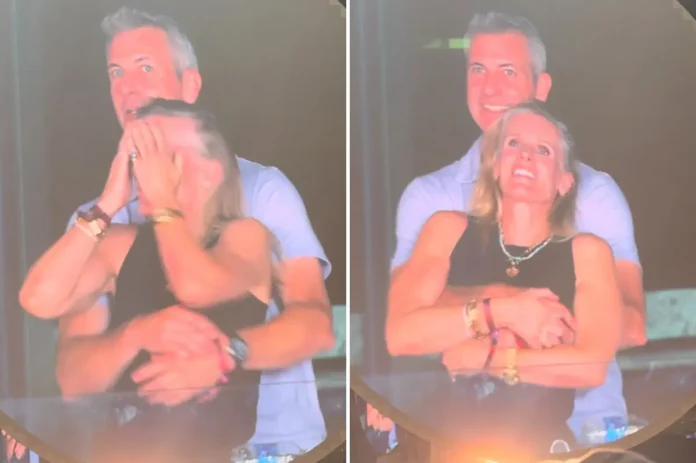
BOSTON (BN24) – Technology company Astronomer announced Friday it has launched a formal investigation after CEO Andy Byron was caught on a kiss cam at a Coldplay concert with the company’s chief people officer, creating a viral moment that has drawn millions of views across social media platforms.
The incident occurred Wednesday during Coldplay’s performance at Gillette Stadium in Massachusetts when the venue’s kiss cam displayed couples in attendance. Andy Byron, the chief executive officer of New York-based Astronomer, was spotted on a Jumbotron screen at a Coldplay concert at Gillette Stadium in Massachusetts on Wednesday, embracing Kristin Cabot, the company’s chief people officer, who oversees the organization’s human resources.
The awkward moment quickly went viral after the pair realized they were being filmed. The blonde-haired woman covered her face while the silver-haired man ducked out of frame, creating a reaction that captured widespread internet attention. Video clips of the incident have gained millions of views across platforms including X, TikTok and Instagram.
The tech company Astronomer issued a statement Friday announcing an investigation into the Kiss Cam video seen ’round the world of CEO Andy Byron in a warm embrace with a woman not his wife, but Chief People Officer Kristin Cabot, at a Coldplay concert at Gillette Stadium near Boston Wednesday
During the concert, Coldplay frontman Chris Martin appeared to comment on the situation from the stage. “Oh, look at these two. You’re all right,” he said, according to video footage that circulated online. “You’re OK. Oh, what? Either they’re having an affair or they’re just very shy.”
In its statement posted on X Friday, Astronomer addressed the viral incident directly. “Astronomer is committed to the values and culture that have guided us since our founding,” the company said. “Our leaders are expected to set the standard in both conduct and accountability.”
The company’s board of directors has “initiated a formal investigation into this matter and we will have additional details to share very shortly,” according to the statement. Astronomer CEO Andy Byron and chief people officer Kristin Cabot have been put on leave pending an investigation, per a source familiar with the situation, as their employer has finally broken its own silence.
Internet users quickly identified Byron as the individual in the video, though the company noted that Byron has not issued a personal statement regarding the incident. The company stated that any “reports saying otherwise are all incorrect,” suggesting that fabricated statements may have circulated online.
The viral nature of the incident highlights the intersection of personal privacy and corporate accountability in the digital age. Concert attendees routinely capture moments on their phones, and kiss cams have become standard entertainment features at sporting events and concerts, though participants typically expect these moments to remain localized to the venue.
The incident has drawn particular attention because it involves senior executives from the same company, raising questions about workplace conduct and professional relationships. Cabot, as chief people officer, would typically oversee human resources policies including those related to workplace relationships and conduct standards.
The timing of Astronomer’s response, coming more than 24 hours after the video began circulating, suggests the company was carefully considering its approach to addressing the situation. The formal investigation indicates the company is treating the matter seriously, particularly given the executive positions of both individuals involved.
The investigation’s scope and timeline remain unclear, though the company has promised to provide additional details shortly. The incident represents a significant challenge for the New York-based technology company as it navigates the intersection of personal conduct, corporate leadership standards, and viral internet culture.
Neither Byron nor Cabot responded to requests for comment regarding the incident.
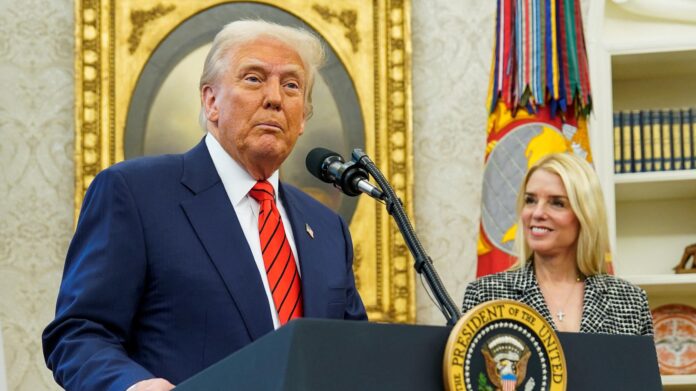
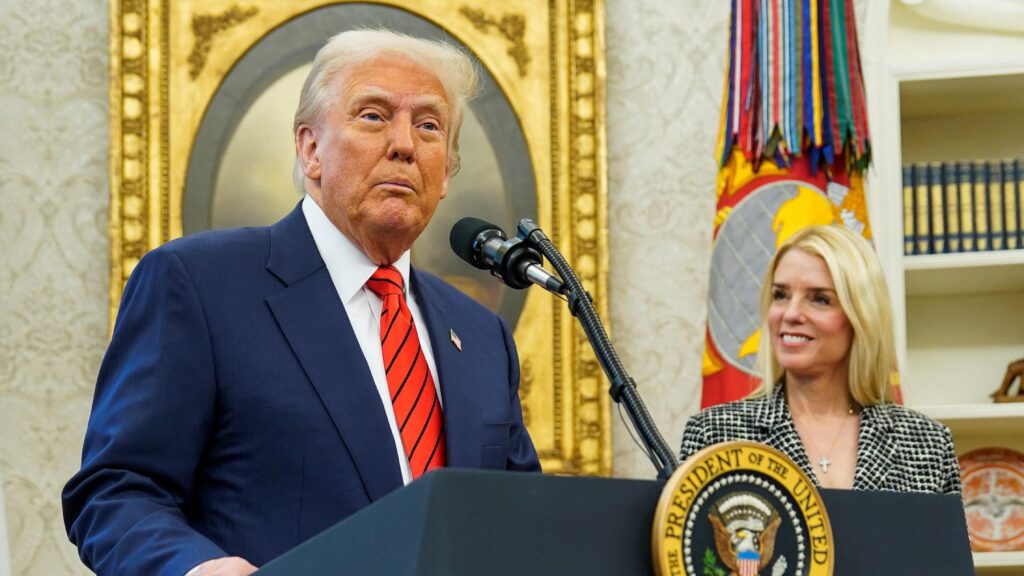
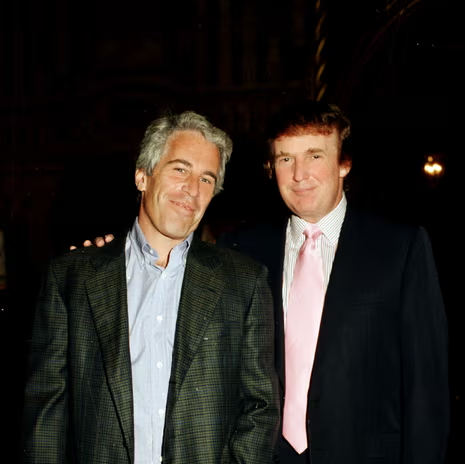
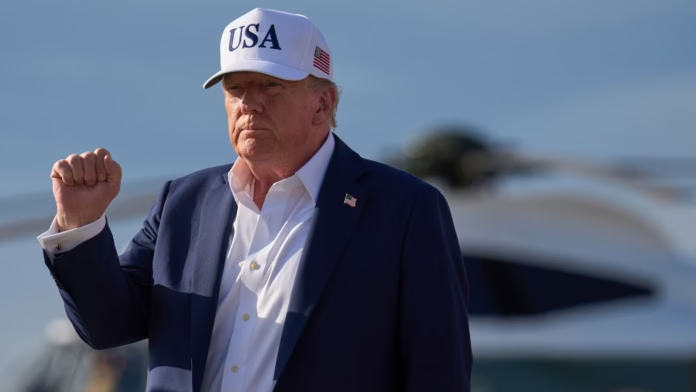
WASHINGTON (BN24) — President Donald Trump has ordered the Department of Justice to seek the release of sealed grand jury transcripts tied to the Jeffrey Epstein case, intensifying the administration’s response to growing public and political demands for transparency. The decision, announced Thursday night and acted upon by Attorney General Pam Bondi on Friday, marks a sharp reversal following weeks of criticism over what many viewed as a botched handling of sensitive Epstein files.
The Justice Department filed a motion in Manhattan federal court Friday asking a judge to unseal the long-shielded testimony given before a grand jury during the criminal investigation into Epstein, the disgraced financier who died by suicide in federal custody in 2019 while awaiting trial on sex trafficking charges.
“In light of continued public interest, and under the direction of Attorney General Bondi, the government moves to unseal grand jury transcripts associated with the Epstein indictment,” the DOJ filing reads. It notes that all victim-identifying information would be redacted prior to release, in accordance with federal privacy laws.
The move comes as the Trump White House faces increasing backlash from both critics and supporters who expected the president to fully declassify the Epstein files. Trump’s directive follows a Wall Street Journal report that described a bizarre birthday letter allegedly sent by Trump to Epstein in 2003 — featuring a crude sketch of a naked woman. Trump has denied any association with the letter, calling it “fake,” and has since sued the Journal’s parent company and reporters involved in the story.
“Based on the ridiculous amount of publicity given to Jeffrey Epstein, I have asked Attorney General Pam Bondi to produce any and all pertinent Grand Jury testimony, subject to Court approval,” Trump wrote Thursday night on Truth Social. “This SCAM, perpetuated by the Democrats, should end, right now!”
Bondi echoed Trump’s call in a post on X, saying the DOJ was “ready to move the court tomorrow.”
The lawsuit against the Journal’s publisher and the sudden DOJ filing mark a broader attempt by the Trump administration to wrest control of the narrative surrounding Epstein. The DOJ has been criticized for last week’s release of a heavily redacted memo that concluded there was “no credible evidence” Epstein maintained a “client list” or was murdered — conclusions that outraged many in Trump’s base, who had expected more explosive disclosures.
That memo also included the release of 10 hours of jailhouse footage showing no unauthorized access to Epstein’s cell on the day of his death. Still, the findings failed to quell speculation and anger among supporters who had hoped the Trump administration would expose a network of high-profile figures tied to Epstein.
The administration’s credibility took another hit after the Journal published its story on the birthday letter, allegedly signed “Donald” with a graphic drawing. The letter, the report said, ended with the words, “Happy Birthday — and may every day be another wonderful secret.” In response, Trump lashed out, threatening legal action against the outlet and calling the article part of a political smear campaign.
Friday’s DOJ motion makes clear the administration’s pivot: it seeks to portray Trump as leading the charge for transparency, even as key documents remain under wraps. The motion, signed by Bondi and Deputy Attorney General Todd Blanche, states that lawmakers, media, and the public “remain deeply interested and concerned about the Epstein matter.”
While federal judges have previously released some material related to Epstein and his associate Ghislaine Maxwell — who was sentenced in 2022 to 20 years for her role in Epstein’s sex trafficking scheme — much of the remaining evidence has been held back to protect victims and uncharged individuals.
Now, the release of grand jury testimony will depend on Judge Richard Berman, who presided over Epstein’s criminal case before his death. Before any material can be unsealed, Berman must consult with victims and any uncharged persons referenced in the transcripts. That process could take weeks or even months.
Legal experts say grand jury records typically remain sealed unless compelling public interest overrides privacy concerns. While the grand jury process is only a portion of the broader investigation, the Trump administration appears to be using the court motion as a legal avenue to offload responsibility — and avoid further redactions from the DOJ itself.
Trump’s move also coincides with his signing of unrelated legislation establishing federal cryptocurrency regulation and the conclusion of budget negotiations that saw congressional approval for deep cuts to NPR, PBS, and foreign aid — a string of political maneuvers likely intended to shift headlines away from the Epstein controversy.
While Trump praised Bondi for acting quickly, discontent remains high among Republicans, including House Speaker Mike Johnson and Rep. Ralph Norman, who have urged Trump to go further. Bondi has yet to clarify whether the DOJ will pursue additional disclosures beyond the grand jury transcripts.
As the political stakes rise and legal processes play out in federal court, Trump is walking a narrow line — attempting to cast himself as a truth-teller on Epstein while navigating the fallout from past associations and the latest press scrutiny.
Lawsuit filed in Florida denies report alleging Trump sent risqué 2003 note to Jeffrey Epstein
WEST PALM BEACH, Fla. (BN24) — President Donald Trump filed a lawsuit Friday against The Wall Street Journal’s parent company, its publisher, two reporters, and media mogul Rupert Murdoch, accusing them of defamation over an article claiming Trump once sent Jeffrey Epstein a birthday letter that included a drawing of a naked woman.
The lawsuit, submitted in the U.S. District Court for the Southern District of Florida, comes less than a day after the Journal published a report alleging Trump had sent the letter to Epstein in 2003 to mark the financier’s 50th birthday. According to the article, the message included a hand-drawn outline of a nude woman, alongside Trump’s first-name signature.
Trump has strongly denied the claim, calling it “categorically false” and slamming the report as a politically motivated attempt to smear him during a heated election season.
The lawsuit names Dow Jones & Company, News Corp., Wall Street Journal publisher Almar Latour, and two unnamed reporters as defendants, in addition to Murdoch, the global media executive whose empire oversees the Journal.
None of the defendants had issued a public response to the lawsuit as of Friday afternoon, and the filing has yet to appear on the public court docket.
Trump’s legal team argues the Journal’s reporting is not only defamatory but timed to damage his reputation as he seeks re-election. The complaint also suggests the article is part of a broader pattern of what it describes as “reckless disregard for the truth” in coverage related to Trump’s past associations with Epstein, the disgraced financier who died in jail in 2019 while awaiting federal sex trafficking charges.
The Wall Street Journal article did not provide the original document it cited, and it remains unclear how or where the letter was obtained. The report quickly drew attention given Trump’s long-standing efforts to distance himself from Epstein, despite past social ties in the early 2000s.
While Trump has acknowledged knowing Epstein and appearing with him in photographs, he has repeatedly insisted he cut ties well before Epstein’s legal troubles came to light.
The lawsuit marks yet another legal front for Trump, who is simultaneously facing multiple criminal indictments and mounting civil litigation while running for a second term in the White House. It also underscores his escalating battle with media organizations he views as hostile, particularly as scrutiny around his past associations intensifies.
JERUSALEM (BN24) — Israel on Friday rejected claims published by Syria’s state news agency that it carried out additional airstrikes near the southern city of Sweida overnight, amid a wave of sectarian bloodshed and rising regional tensions.
“The Israel Defense Forces are not aware of any overnight strikes in Syria,” a military spokesperson told AFP, pushing back against reports by the official Syrian Arab News Agency (SANA) that suggested Israel had launched further attacks in the region late Thursday.
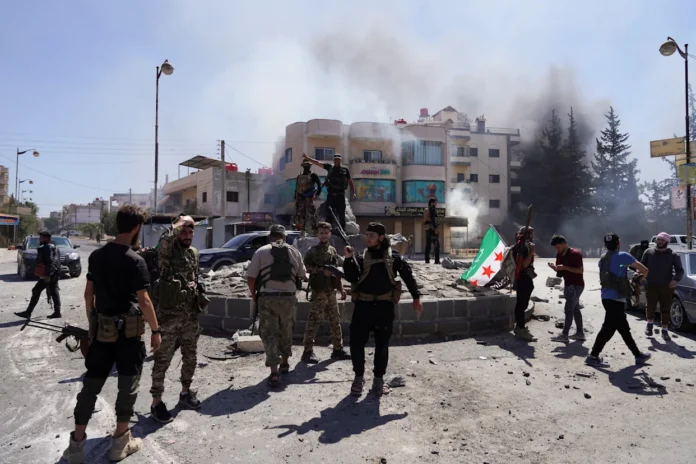
Earlier this week, Israel conducted airstrikes targeting Syrian army positions in both Sweida and the capital, Damascus. The strikes were aimed at forcing Syria’s Islamist-aligned government to withdraw its military presence from the largely Druze-populated Sweida region following deadly clashes involving Druze fighters, Sunni Bedouin tribes, and government forces.
The Israeli military said its operations were intended to prevent a buildup of Syrian forces near its borders and to protect the local Druze population, a minority community that has increasingly come under threat amid the spiraling violence. Syrian troops reportedly pulled out of Sweida on Thursday in the wake of the strikes.
Amid growing concern over the humanitarian fallout, Israeli Foreign Minister Gideon Saar announced Friday the urgent dispatch of aid to the Druze population in southern Syria. “In light of the recent attacks targeting the Druze community in Sweida and the severe humanitarian situation in the area, Foreign Minister Saar has ordered the urgent transfer of humanitarian aid,” the Israeli Foreign Ministry said in a statement.
The aid package, valued at approximately two million shekels ($600,000), includes food parcels and medical supplies. The ministry noted this is not the first such effort, pointing to a similar aid mission to the Druze community in Syria back in March.
This week’s violence in the Sweida region has marked one of the most intense outbreaks of sectarian conflict in southern Syria since the civil war began over a decade ago. The UK-based Syrian Observatory for Human Rights reported that at least 594 people had been killed in the clashes, which pitted Druze factions against Sunni Bedouin militias, government troops, and allied forces.
On Wednesday, Israel reportedly shelled government buildings in Damascus as part of its pressure campaign on the Syrian regime. However, by early Friday, Israeli officials were distancing themselves from any suggestions of continued military operations, dismissing the Syrian state media reports as inaccurate.
While Israel has frequently targeted Iranian and Hezbollah-linked forces operating in Syria, its involvement in this latest episode represents a notable shift — aligning its strategic goals with humanitarian overtures toward the country’s Druze minority, many of whom have familial and cultural ties to Israel’s own Druze citizens.
The unfolding crisis in Sweida underscores both the fragility of Syria’s internal balance and the broader regional implications, as foreign powers cautiously navigate the complex and volatile dynamics on the ground.
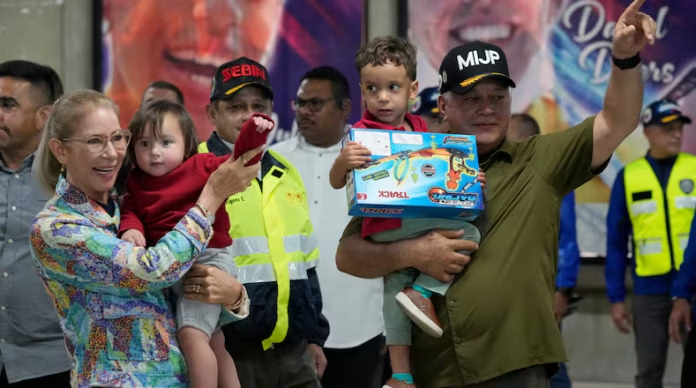
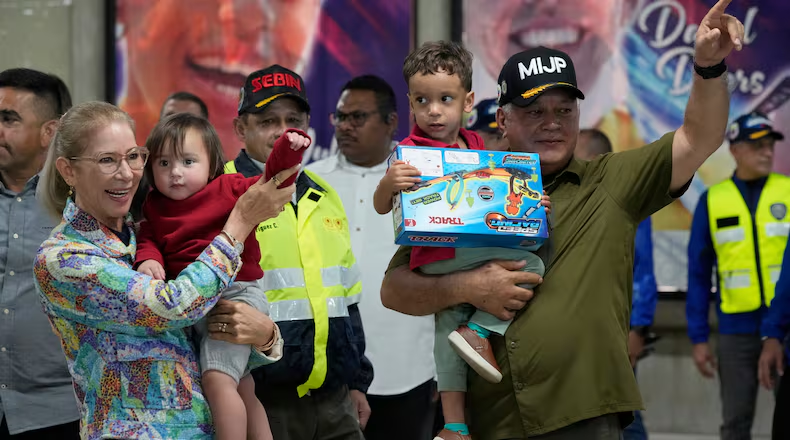
CARACAS, Venezuela (BN24) — Venezuela released 10 American citizens on Friday in a three-country diplomatic deal that also saw El Salvador send back hundreds of Venezuelan migrants who had been deported by the United States under President Donald Trump’s immigration crackdown.
The agreement marks a significant win for Venezuelan President Nicolás Maduro, who leveraged the fate of the detained Americans to force concessions from both Washington and San Salvador, while reaffirming his authority on the global stage despite widespread allegations of election fraud. For Trump, it represents another high-profile achievement in bringing Americans home from foreign prisons — a key goal of his administration.
Secretary of State Marco Rubio confirmed the Americans’ release on social media. “Ten Americans who were detained in Venezuela are on their way to freedom,” Rubio posted on X, thanking President Trump and Salvadoran President Nayib Bukele for finalizing the complex agreement.
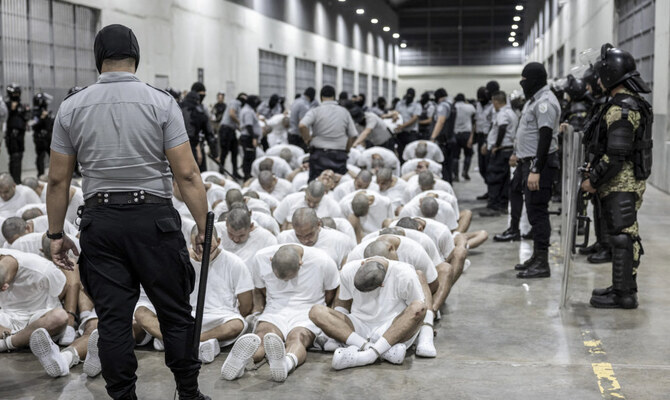
The deal involves El Salvador repatriating roughly 300 Venezuelan migrants who had been imprisoned in the country’s high-security Terrorism Confinement Center (CECOT), a sprawling mega-prison known for its brutal conditions and allegations of torture. The facility, part of Bukele’s hardline anti-gang campaign, became a temporary holding site after Trump invoked a rarely used 18th-century wartime law to remove migrants his administration had linked to the feared Tren de Aragua gang.
As part of the agreement, the Trump administration paid El Salvador $6 million to house the Venezuelans, a controversial arrangement that sparked international outcry. Human rights organizations condemned the conditions in CECOT, where hundreds of deaths and abuses have been reported since its opening.
Maduro had long used the plight of the Venezuelan detainees in El Salvador to criticize U.S. immigration policy, flipping the human rights narrative to his advantage. Even some of his political adversaries acknowledged the harsh treatment of their compatriots abroad, a dynamic that has allowed Maduro to bolster support among his shrinking base and further entrench his grip on power.
The freed Americans were among nearly a dozen U.S. citizens arrested by Venezuelan authorities in late 2024 during a sweeping crackdown that targeted dissidents, activists, labor leaders, and opposition figures following Maduro’s contested reelection. The U.S. and several Western countries do not recognize Maduro’s victory, citing credible vote tallies showing opposition candidate Edmundo González winning by a more than two-to-one margin.
In the months after the disputed July election, Venezuela detained over 2,000 people — mostly poor young men — while González fled into exile in Spain. The crackdown drew international condemnation but also opened channels for backdoor diplomacy between Caracas and Washington.
Friday’s deal follows a series of quiet prisoner swaps between the two nations. In May, Venezuela freed U.S. Air Force veteran Scott St. Clair, who had traveled to South America seeking treatment for PTSD. His release came after a meeting between Maduro and Richard Grenell, Trump’s envoy for special missions. Grenell also facilitated the earlier release of six other Americans during a visit to Caracas.
At that meeting, Grenell urged Maduro to take back Venezuelan migrants deported from the U.S., particularly those accused of criminal activity. Since then, hundreds of Venezuelans have been returned, though more than 200 remained detained in El Salvador’s prison system until this latest breakthrough.
Little was known about the Venezuelans’ fate inside CECOT until the swap. Attorneys had limited access, and public information was restricted to state-run media broadcasts showing inmates in dehumanizing conditions.
The sudden transfer came with little warning even to legal teams representing the migrants, who only learned of their departure as they boarded planes home.
The resolution of the detainee standoff signals a deepening, if unofficial, channel of negotiation between the Trump administration and Maduro’s government — one driven by humanitarian objectives, political maneuvering, and high-stakes diplomacy amid contested legitimacy.