Home Blog Page 287

Riot Police Clash with Protesters Calling for End to Serbian President’s Rule

Serbia (BN24) – Riot police clashed for hours with protesters in the Serbian capital late Saturday as tens of thousands gathered to demand snap elections and an end to President Aleksandar Vucic’s 12-year grip on power, a challenge that has grown into one of the most serious threats to his rule in over a decade.

The massive anti-government demonstration filled Belgrade’s central Slavija Square and surrounding streets, echoing months of protests that erupted after the deadly collapse of a newly renovated rail station canopy in November. The tragedy, which killed 16 people, became a rallying point for widespread anger over alleged corruption and negligence in state infrastructure projects.

Police in helmets and body armor deployed throughout the city’s core, sealing off government buildings and parliament as tensions simmered. Organizers, many of them university students, delivered speeches denouncing Vucic’s leadership. One student, who declined to give her name, declared the authorities “illegitimate,” urging early parliamentary elections as a way out of what she called a deepening social crisis.

“Elections are a clear way out of the social crisis caused by the deeds of the government, which is undoubtedly against the interests of their own people,” she told the cheering crowd.

As night fell, confrontations intensified. Protesters hurled bottles, rocks and flares toward riot police blocking access to Pionirski Park, where hundreds of Vucic’s supporters have camped for months in a show of loyalty. Officers responded with tear gas in several locations across central Belgrade to scatter the crowds, resulting in chaotic scenes that stretched late into the evening.

Police detained several dozen demonstrators and reported that six officers were injured during the clashes. Dragan Vasiljevic, Serbia’s police director, confirmed the arrests during a late-night press conference.

In a statement posted to Instagram after the violence, Vucic, who has cultivated an increasingly authoritarian style since coming to power, appeared defiant. “Serbia always wins in the end,” he wrote.

Vucic and his right-wing Serbian Progressive Party have rejected calls for early elections, accusing opposition activists of provoking unrest under orders from foreign powers, though officials have offered no evidence to support those claims. The president, a former extreme nationalist who now says he wants Serbia to join the European Union, has been widely criticized by rights groups and Western observers for suppressing democratic freedoms and tightening ties with Russia and China.

While the demonstrations had diminished in scale in recent weeks, the turnout on Saturday underscored the lingering anger toward the government and the determination of opponents to keep up pressure. After nearly eight months of protests—sometimes almost daily—the latest rally revealed that frustration over corruption, stalled reforms and creeping authoritarianism remains a potent force on Serbia’s streets.

Israel Orders Evacuations in Northern Gaza as Trump Calls for War to End

GAZA CITY (BN24) — The Israeli military ordered Palestinians to evacuate areas in northern Gaza on Sunday before intensified fighting against Hamas, as President Donald Trump called for an end to the 20-month conflict amid renewed international efforts to broker a ceasefire.

Trump’s early morning post on his Truth Social platform delivered a direct message regarding the ongoing hostilities: “Make the deal in Gaza, get the hostages back.” The presidential intervention came as Arab mediators backed by the United States launched a new diplomatic push to halt the protracted conflict and secure the release of Israeli and foreign hostages still held by Hamas.

Israeli Prime Minister Benjamin Netanyahu was scheduled to hold discussions later Sunday on the progress of Israel’s military offensive. A senior security official indicated that military commanders would inform Netanyahu that the campaign was approaching its strategic objectives while warning that expanding operations to new areas in Gaza could endanger the remaining Israeli hostages.

Despite these internal deliberations, the Israeli military issued evacuation orders covering the Jabalia area and most Gaza City districts through statements posted on social media platform X and text messages sent directly to residents. The military directed Palestinians in northern parts of the enclave to move south toward the Al-Mawasi area in Khan Younis, which Israel has designated as a humanitarian zone.

The military statement emphasized the intensity of planned operations, declaring that “The Defense Forces is operating with extreme force in these areas, and these military operations will escalate, intensify, and extend westward to the city center to destroy the capabilities of terrorist organizations.”

Palestinian and United Nations officials contested the safety of designated evacuation areas, maintaining that nowhere in Gaza remains secure for civilians. The evacuation directive came as Israeli bombardments escalated in the early morning hours in Jabalia, with medics and residents reporting the destruction of several houses and at least six fatalities.

The violence extended to southern Gaza, where five people were killed in an airstrike on a tent encampment near Mawasi in Khan Younis, according to medical officials. The attacks underscored the continued intensity of combat operations despite international diplomatic efforts.

The renewed ceasefire initiative involves Arab mediators Egypt and Qatar, supported by the United States, seeking to end the prolonged conflict and secure hostage releases. Interest in resolving the Gaza situation has intensified following recent U.S. and Israeli bombing campaigns targeting Iran’s nuclear facilities, which have heightened regional tensions.

A Hamas official confirmed to Reuters that the organization had informed mediators of its readiness to resume ceasefire negotiations. However, the group reaffirmed its established demands that any agreement must definitively end the war and guarantee complete Israeli withdrawal from the coastal territory.

Hamas maintains its position that it will only release the remaining hostages in Gaza, with approximately 20 believed to still be alive, as part of a comprehensive deal ending the conflict. Israel has consistently stated it can only conclude the war if Hamas is completely disarmed and dismantled as an organization. Hamas leadership refuses to surrender its weapons or dissolve its military capabilities.

The current escalation represents the latest chapter in the decades-old Israeli-Palestinian conflict, which reached a devastating turning point in October 2023. Hamas launched a surprise attack against Israel, resulting in 1,200 Israeli deaths and the capture of 251 hostages, according to Israeli government tallies.

Israel’s subsequent military response has resulted in more than 56,000 Palestinian deaths according to the Gaza health ministry, displaced nearly the entire population of 2.3 million residents, created a severe humanitarian crisis, and left large portions of the territory in ruins. The sustained military campaign has fundamentally altered the landscape and infrastructure of the densely populated coastal enclave.

The international community continues to grapple with the humanitarian implications of the conflict, as evacuation orders affect hundreds of thousands of Palestinians who have already been displaced multiple times throughout the 20-month war. The repeated displacement has created logistical challenges for aid organizations attempting to provide essential services to the civilian population.

Netanyahu’s upcoming security briefing will likely address the military’s assessment of Hamas capabilities and the strategic value of continued operations versus the risks to hostage safety. The tension between achieving military objectives and protecting civilian lives, including hostages, remains a central challenge in Israeli decision-making.

The renewed diplomatic efforts come at a critical juncture, with Trump’s direct involvement signaling potential shifts in U.S. engagement with the conflict resolution process. The coordination between American officials and regional mediators represents an attempt to leverage multiple diplomatic channels to achieve breakthrough agreements.

As military operations continue in northern Gaza, the humanitarian situation deteriorates further for Palestinian civilians caught between evacuation orders and ongoing combat. The cycle of displacement, bombardment, and diplomatic efforts reflects the complex dynamics that have sustained this conflict for nearly two years without resolution.

Reuters

Elon Musk Says Senate Bill Would Destroy Jobs and Harm U.S.

Washinghton, DC (BN24) – Billionaire entrepreneur Elon Musk sharply escalated his criticism of President Donald Trump’s sweeping tax and spending package on Saturday, warning that the Senate legislation would devastate American jobs and cripple the nation’s future industries.

Musk, who only weeks ago stepped down as head of Trump’s Department of Government Efficiency, denounced the latest draft of the bill as “utterly insane and destructive” in a series of posts to his 220 million followers on X, the platform he owns. His remarks came just before the Senate prepared to open debate on the sprawling measure, which would make permanent Trump-era tax cuts, slash spending on federal programs such as Medicaid and food assistance, and channel hundreds of billions into defense and deportation priorities.

“The latest Senate draft bill will destroy millions of jobs in America and cause immense strategic harm to our country!” Musk wrote Saturday. “It gives handouts to industries of the past while severely damaging industries of the future.”

Musk, whose companies Tesla and SpaceX have been closely linked to federal climate and technology policy, has emerged as one of the most prominent critics of the legislation. He previously called the bill a “disgusting abomination” for failing to impose deeper cuts to government spending. In a later post Saturday, he claimed that polls showed the legislation could be “political suicide for the Republican Party.”

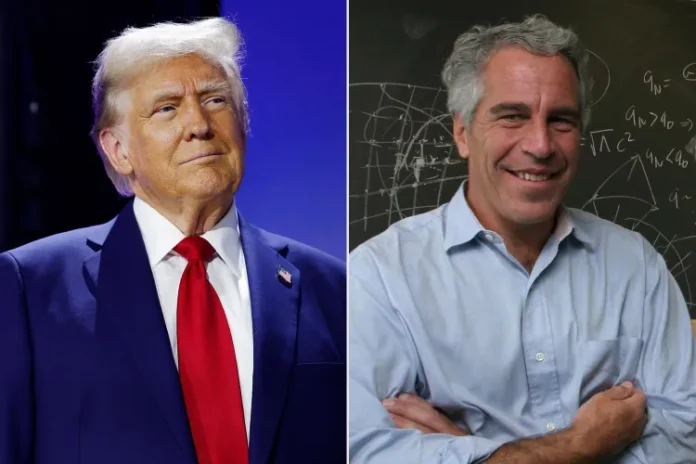
The dispute marks the latest twist in Musk’s turbulent relationship with Trump. Earlier this year, Musk accused the president of appearing in confidential Justice Department files related to the late sex trafficker Jeffrey Epstein, an allegation the White House forcefully denied. In June, Musk publicly apologized, saying, “I regret some of my posts about President @realDonaldTrump last week. They went too far,” though he did not specify which accusations he was retracting.

Trump has responded by blaming Musk’s increasingly hostile stance on his administration’s decision to end federal subsidies for electric vehicles and reject Musk’s preferred candidate to lead NASA. In a post on Truth Social, Trump claimed Musk “just went CRAZY” after the White House revoked what he called the “EV Mandate” that had supported Tesla’s growth.

“Elon was ‘wearing thin,’ I asked him to leave,” Trump wrote. “I took away his EV Mandate that forced everyone to buy Electric Cars that nobody else wanted (that he knew for months I was going to do!), and he just went CRAZY!”

The Senate’s late-night vote Saturday to advance the measure capped days of wrangling among Republican lawmakers. Even as Trump lobbied holdouts in tense private meetings, the legislation has faced backlash from multiple quarters, with critics warning it could erode health coverage for millions and deepen deficits over the next decade.

Musk’s intervention underscored the stakes of the debate, as some Republicans fear alienating voters ahead of the 2026 midterm elections while others remain committed to fulfilling Trump’s campaign promises.

Iran Says at Least 71 Killed in Israeli Strike on Tehran’s Evin Prison

Tehran, Iran (BN24) – Iran’s judiciary announced Sunday that at least 71 people were killed when Israeli forces struck Tehran’s Evin prison, the country’s most notorious detention facility used to hold political prisoners, activists, and dissidents.

Judiciary spokesperson Asghar Jahangir said in a statement published by the state-run Mizan news agency that the dead included prison staff, soldiers, inmates, and visiting family members. The figures could not be independently confirmed.

The strike occurred on June 23, a day before Israel and Iran agreed to a ceasefire following nearly two weeks of hostilities. Several sections of the prison complex were reportedly hit, including the infirmary, engineering offices, the judicial affairs building, and a visitation hall where relatives were meeting prisoners.

It remains unclear why Evin was targeted. On the day of the attack, Israel’s Defense Ministry said it was carrying out operations against “regime targets and government repression bodies in the heart of Tehran.”

The assault was quickly overshadowed by an Iranian missile strike later that same day on a U.S. base in Qatar, which caused no casualties, and by the announcement of the ceasefire.

The New York-based Center for Human Rights in Iran condemned the attack, saying it violated international law by failing to distinguish between civilian and military objectives. The organization also criticized Iranian authorities for not taking steps to protect the prison population.

“Iran has a legal obligation to safeguard those in its custody,” the group said. “Their failure to evacuate inmates, provide timely medical care, or inform families about the status of their loved ones amounts to a serious breach of duty.”

Jahangir said some injured were treated at the scene while others were transported to hospitals. Iran had not disclosed casualty figures until Sunday, though officials previously confirmed the death of Ali Ghanaatkar, Tehran’s top prosecutor.

Ghanaatkar, known internationally for prosecuting dissidents including Nobel Peace Prize laureate Narges Mohammadi, was buried Sunday at a shrine in Qom following a large funeral procession held in Tehran.

The Evin prison strike was part of a broader Israeli military campaign launched June 13 that targeted Iran’s nuclear infrastructure and military command. Israeli officials claimed to have killed around 30 senior commanders and 11 nuclear scientists and to have struck eight nuclear-related sites along with more than 700 military facilities.

According to the Washington-based Human Rights Activists group, the 12-day operation killed over 1,000 people in Iran, including at least 417 civilians.

In retaliation, Iran fired more than 550 ballistic missiles into Israel. While most were intercepted, several struck populated areas, killing 28 people.

U.S. Senate Republicans Advance Trump’s Tax and Spending Cuts Bill After Dramatic Midnight Vote

Washington (BN24) – Senate Republicans narrowly advanced President Donald Trump’s sweeping tax and spending legislation in a tense late-night session Saturday, moving a step closer to enacting his signature economic plan before the July Fourth deadline he demanded.

The 51-49 vote capped hours of suspense on the Senate floor, with Vice President JD Vance arriving to break a potential tie. The chamber fell into an extended stalemate as GOP leaders negotiated with holdout senators behind closed doors, and voting dragged on for more than three hours. In the end, two Republicans — Sen. Thom Tillis of North Carolina and Sen. Rand Paul of Kentucky — joined all Democrats in opposing the measure.

A Weekend of High Stakes

The bill — formally titled the “One Big Beautiful Bill Act” — is a sprawling 940-page package combining permanent extensions of $3.8 trillion in Trump-era tax cuts with steep reductions in Medicaid, food assistance, and clean energy investments to offset the cost. It also earmarks $350 billion for defense priorities, including funding for mass deportation operations.

Senate Majority Leader John Thune of South Dakota urged Republicans to stay united despite deep divisions. “It’s time to get this legislation across the finish line,” he said.

Trump, who spent Saturday at his Virginia golf course before returning to the White House, lashed out publicly and privately at GOP dissenters. According to one person familiar with the late-night calls, the president threatened to campaign against Sen. Tillis for opposing Medicaid cuts he argued would devastate care in North Carolina.

Meanwhile, billionaire Elon Musk weighed in, calling the bill “utterly insane and destructive” on social media.

Visitors to the U.S. Capitol rest in the shade on Capitol Hill in Washington, D.C., U.S., June 25, 2025. REUTERS/Nathan Howard

Dramatic Moments in the Chamber

The vote was preceded by the bill’s release just before midnight Friday, leaving senators little time to study its contents. Senate Democratic Leader Chuck Schumer slammed Republicans for “unveiling the bill in the dead of night” and immediately ordered the entire text read aloud, delaying debate by hours.

In the final moments before the tally closed, attention fixed on Sen. Lisa Murkowski of Alaska, who was encircled by GOP leaders in whispered discussions before casting her vote to proceed.

Sen. Ron Johnson of Wisconsin, who had initially opposed the bill over its debt limit increase, flipped to a “yes” after private negotiations. Sen. Rick Scott of Florida and Sen. Mike Lee of Utah were summoned to Thune’s office with Vance and Johnson as talks dragged deep into the night. They emerged together to cast their votes.

Lee later told reporters the group had agreed on “more deficit reduction” strategies, adding, “I feel good about the direction.”

Make-or-Break for the GOP

The procedural victory kicks off what could be a defining weekend for Trump’s party. With narrow GOP majorities in both chambers, leaders can afford few defections. If the Senate passes the bill, it will return to the House for final approval.

House Speaker Mike Johnson sent members home for the weekend but instructed them to be ready to reconvene quickly if the Senate clears the package.

A fresh analysis from the nonpartisan Congressional Budget Office forecast that the bill could leave 11.8 million more Americans uninsured by 2034. The CBO also projected the top income earners would see tax cuts averaging $12,000 annually, while the lowest-income households could lose roughly $1,600.

Republican Divides and Policy Revisions

The bill’s progress has been slowed by internal disputes over Medicaid reductions and provisions to raise the SALT (state and local tax) deduction cap. Some Republicans pressed for an increase from $10,000 to $40,000; the final draft settled on a temporary five-year cap at that higher level — a compromise that still leaves many in the party dissatisfied.

Earlier setbacks forced Republicans to rework controversial sections after the Senate parliamentarian ruled they violated the chamber’s Byrd Rule, which limits budget reconciliation bills to provisions directly impacting spending or revenue. Provisions shifting food stamp costs to states and restructuring the Consumer Financial Protection Bureau had to be revised or postponed.

In a bid to placate rural-state holdouts, the final text delayed Medicaid provider tax cuts and created a $25 billion fund to support rural hospitals.

The Road Ahead

Trump has been relentless in pushing lawmakers to act. “We all want to get to yes,” Sen. Scott said after meeting with the president.

Sen. Tillis and Sen. Paul remain opposed, citing the damage to Medicaid and concerns over adding $5 trillion to the debt ceiling. Other Republicans, worried about the growing deficit, want even deeper spending cuts.

Despite the hurdles, Thune urged his caucus to finish the job: “The American people expect us to keep our word.”

AP

Russian Drone Attack on Odesa Kills Married Couple, Injures 17, Ukrainian Officials Say

Russian drone strikes hit the southern Ukrainian port city of Odesa overnight, killing a married couple and wounding at least 17 people, Ukrainian authorities reported Saturday.

Emergency services said a drone slammed into a multi-story residential tower, damaging three floors and trapping residents in the rubble. Among those injured were three children, according to Odesa regional Governor Oleh Kiper.

The attack came as Ukraine continued its own aerial operations against Russian forces. A Ukrainian security official said special drones struck the Kirovske military airfield on Russian-occupied Crimea, destroying several helicopters and an air defense system.

“Available data indicate the destruction of Mi-8, Mi-26, and Mi-28 helicopters, as well as a Pantsir-S1 self-propelled anti-aircraft missile and gun complex,” the official said, speaking on condition of anonymity because of security protocols.

Moscow has not issued an official response to either strike. However, Russia’s Defense Ministry claimed that its forces shot down over 40 Ukrainian drones overnight and early Saturday over Crimea and western Russian regions.

The war, now entering its fourth year, has increasingly become a proving ground for drone warfare, with both sides racing to field more advanced and lethal systems.

Ukrainian drones have been credited with major attacks deep inside Russian territory. Earlier this month, Ukrainian forces damaged or destroyed nearly a third of Moscow’s strategic bomber fleet using inexpensive, long-range drones launched in covert operations.

Closer to the front line, smaller drones remain a constant threat. The United Nations Human Rights Monitoring Mission in Ukraine reported Thursday that between February 2022 and April 2025, short-range drone attacks killed at least 395 civilians and injured 2,635. Nearly 90% of those attacks were attributed to Russian forces.

Overall, more than 13,300 civilians have died and over 34,700 have been wounded since Russia launched its full-scale invasion, the U.N. Office of the High Commissioner for Human Rights said in a June 11 report.

cbsnews

More Than $130 Million in Cocaine Seized From Ship Docked in London Port, U.K. Officials Say

British authorities have recovered more than $130 million worth of cocaine from a ship that arrived in England from Panama, marking one of the largest drug seizures in the United Kingdom in recent years, officials announced Saturday.

The 2.4 metric tons of cocaine—valued at approximately 96 million pounds ($132 million)—was discovered concealed beneath containers on a vessel docked at London Gateway port, east of London. Authorities said the shipment was uncovered during an intelligence-led operation involving multiple agencies.

The Home Office, Britain’s interior ministry, said the bust ranks as the sixth-largest cocaine seizure ever recorded in the country.

“This seizure is just one example of how dedicated Border Force maritime officers remain one step ahead of the criminal gangs who threaten our security,” Charlie Eastaugh, director of U.K. Border Force Maritime, said in a statement. “Our message to these criminals is clear—more than ever before, we are using intelligence and international law enforcement cooperation to disrupt and dismantle your operations.”

The National Crime Agency describes the U.K. as one of Europe’s largest markets for cocaine. According to government data, cocaine-related deaths in England and Wales surged by 31% between 2022 and 2023.

The record seizure comes amid a string of major interdictions worldwide. Just last week, Mexican naval forces intercepted a semisubmersible “narco sub” carrying 3.5 tons of cocaine off the Pacific coast, releasing video footage of the dramatic operation.

In April, the U.S. Coast Guard announced the seizure of roughly 10,000 pounds of cocaine—worth an estimated $74 million—from a fishing vessel operating in the Atlantic Ocean.

Israeli Strikes Kill 72 Across Gaza as Trump Predicts Ceasefire “Next Week”

Israeli airstrikes killed at least 72 Palestinians in Gaza between Friday and Saturday morning, health officials in the Hamas-run territory said, as President Trump expressed optimism that a ceasefire could be reached in the coming days.

Among the dead were 12 people killed near the Palestine Stadium in Gaza City, where many displaced families had sought shelter, according to staff at Shifa Hospital who received their bodies. More than 20 others were killed in strikes on the Nasser Hospital area, while 11 people died in a separate attack midday Saturday on a street in eastern Gaza City. Their bodies were taken to Al-Ahli Hospital.

In Muwasi, near the southern city of Khan Younis, an Israeli strike on a tent camp overnight killed a couple and their three children while they were sleeping, relatives said.

“What did these children do to them? What is their fault?” asked the children’s grandmother, Suad Abu Teima, as she waited for their bodies to arrive at the morgue.

The surge in airstrikes came as Trump told reporters in the Oval Office that a truce between Israel and Hamas could be imminent.

“I think it’s close,” he said Friday. “We think within the next week, we’re going to get a ceasefire.”

Neither the Israeli government nor Hamas have publicly commented on whether negotiations have advanced.

Since returning to the White House in January, Trump has pressured both sides to pause hostilities. Yet a deal has remained elusive, with talks repeatedly collapsing since Israel resumed its campaign in March, deepening Gaza’s humanitarian catastrophe.

Late last month, Trump’s Middle East envoy, Steve Witkoff, proposed a 60-day ceasefire. Under that plan—details of which were obtained by CBS News—Hamas would free 10 living hostages and hand over the remains of 18 others abducted during the October 2023 attacks. In exchange, Israel would release 125 prisoners serving life sentences, 1,111 Palestinian detainees, and the bodies of 180 deceased Palestinians.

Israel endorsed the proposal, but Hamas submitted amendments that Witkoff called “totally unacceptable.”

An official familiar with the talks said Israel’s Minister for Strategic Affairs, Ron Dermer, will travel to Washington next week for further discussions on the ceasefire, Iran, and other regional issues. The official spoke anonymously because they were not authorized to brief reporters.

Roughly 50 hostages remain in Gaza, though fewer than half are believed to be alive. They were among the approximately 250 people seized in Hamas’ attack on October 7, which triggered the 21-month war.

Gaza’s health ministry says more than 56,000 Palestinians have been killed since then, more than half of them women and children. The ministry does not differentiate between civilians and combatants.

Some families of the hostages have expressed hope that Trump’s involvement—after helping broker a recent truce between Israel and Iran—might add pressure for a resolution.

Israeli Prime Minister Benjamin Netanyahu, buoyed by public support following the Iran conflict, may feel he has more political space to negotiate an end to the war in Gaza, despite opposition from far-right partners in his coalition.

Hamas has reiterated it would release all hostages if Israel agreed to end the war, but Netanyahu has insisted he will not stop military operations until Hamas is disarmed and removed from Gaza—conditions Hamas has rejected outright.

Meanwhile, Palestinians face an increasingly desperate humanitarian crisis. After a blockade of food shipments for more than two months, Israel began allowing limited deliveries into Gaza in mid-May.

Distribution has been chaotic, with aid convoys looted by armed gangs or overwhelmed by desperate crowds. Some Palestinians have been shot while trying to reach distribution sites operated by the American- and Israeli-supported Gaza Humanitarian Foundation, according to Gaza health officials and witnesses.

Witnesses reported Israeli troops firing on crowds traveling to the aid locations. Israel’s military said it is reviewing reports of civilians harmed during those incidents.

Senate Poised for Crucial Vote on Trump’s Sweeping Tax and Spending Bill

WASHINGTON (BN24) — The Senate is expected to hold a critical procedural vote late Saturday on President Trump’s sweeping tax and spending proposal, branded by Trump as the “One Big Beautiful Bill,” even as support within the Republican caucus remains uncertain.

Senate Majority Leader John Thune (R-S.D.) acknowledged Friday he was still short of commitments to guarantee the measure could clear the initial hurdle. The bill’s prospects were complicated by lingering policy disputes and last-minute rulings from the Senate parliamentarian, who determined that several controversial provisions violated reconciliation rules that require measures to directly impact federal spending.

Senate Republicans released the updated 1,200-page bill only late Friday night, leaving lawmakers little time to review the text before the vote to proceed. Trump has pressed Congress to deliver the legislation before the Fourth of July holiday, describing it as a signature fulfillment of his promises to voters.

In a statement to CBS News on Saturday, the White House warned that failure would amount to a betrayal of trust.

“The One Big Beautiful Bill Act reflects the shared priorities of both the Congress and the Administration,” the statement said. “President Trump is committed to keeping his promises, and failure to pass this bill would be the ultimate betrayal.”

The proposal pairs sweeping tax cuts with funding increases for defense and Trump’s immigration priorities. To offset costs, it would cut spending on Medicaid and trim benefits under the Supplemental Nutrition Assistance Program.

Over the past week, the parliamentarian ruled that several sections — including provisions curbing the state and local tax deduction and a mechanism for raising the debt ceiling — would have to be dropped or rewritten to comply with reconciliation rules.

While Republican leaders scrambled to salvage the bill, signs of progress emerged Saturday. Two GOP senators who had criticized aspects of the legislation said they would vote to advance it.

Sen. Susan Collins (R-Maine) announced she would support the procedural vote but left her position on final passage open.

“If the bill is not further changed, I would be leaning against the bill,” Collins said.

Sen. Josh Hawley (R-Mo.), who previously blasted the Medicaid cuts, said he would support final passage after securing concessions for Missouri, including delays in proposed changes to the provider tax framework and an increase in rural hospital funding.

“With these changes, Missouri’s Medicaid dollars will actually increase over the next four years,” Hawley said. “But I want to be clear: I’m going to spend however long it takes trying to make sure the cuts we’ve delayed never take place.”

Several Republicans remained firmly opposed. Sen. Thom Tillis (R-N.C.) confirmed he would vote against both advancing the bill and its final passage. Sens. Rand Paul (R-Ky.) and Ron Johnson (R-Wis.) have repeatedly warned of the bill’s impact on the deficit and signaled continued opposition.

Paul golfed with Trump earlier Saturday, according to Sen. Lindsey Graham (R-S.C.). Asked if Paul could be persuaded, Graham said, “There’s some things we might be able to do if we need to, but I don’t think he’ll vote for final passage.”

With a narrow 53-seat majority, Republicans can only lose three votes before requiring Vice President JD Vance to cast a tie-breaker. Thune said Vance would be available if needed.

The House passed its version of the bill by a thin margin in May. If the Senate amends the measure, the House would have to reconvene to consider the changes, a process complicated by House Republicans’ warnings that substantial revisions could sink the legislation altogether.

On the Senate floor Saturday, Thune acknowledged the divisions but urged unity.

“Fifty-three members will never agree on every detail,” Thune said. “But we are united in our commitment to what we’re doing in this bill. It’s time to get this legislation across the finish line.”

Democrats, powerless to block the bill outright under reconciliation rules, prepared procedural tactics to delay final passage. Senate Minority Leader Chuck Schumer (D-N.Y.) instructed Democrats to demand a full reading of the bill on the floor, a maneuver that could stall proceedings for hours.

Iran Holds State Funeral for Dozens of Military Leaders and Scientists Killed in Conflict with Israel

TEHRAN, Iran (BN24) — Thousands of mourners filled the streets of Tehran on Saturday as Iran held a state funeral for nearly 60 people, including senior military commanders and nuclear scientists, killed during the 12-day conflict with Israel that ended earlier this week.

Coffins draped in Iranian flags and adorned with portraits of the dead lined Enghelab Square, where crowds chanted anti-Israel slogans and waved banners in defiance. Authorities had called on the public to attend and provided free buses and metro rides across the capital. Government offices were closed nationwide to mark the occasion.

Among those buried was Mohammad Bagheri, Iran’s highest-ranking military officer and chief of staff of the armed forces, who died along with his wife and daughter in an Israeli airstrike. Also laid to rest were Hossein Salami, commander-in-chief of the Islamic Revolutionary Guard Corps, and Mohammad Mehdi Tehranchi, a prominent nuclear scientist and head of Azad University in Tehran.

State media said a total of 627 Iranians were killed during the hostilities. Israel reported 28 deaths in retaliatory missile attacks launched by Iran.

President Masoud Pezeshkian and Rear Admiral Ali Shamkhani, a top advisor to Supreme Leader Ayatollah Ali Khamenei who was injured in an Israeli strike, attended the funeral.

The funeral came days after U.S. President Donald Trump suggested he could order more strikes against Iran if American intelligence determined that Tehran’s uranium enrichment posed a renewed threat.

Speaking to reporters at the White House on Friday, Trump said he would “without question” bomb Iran again if necessary.

“Why would the so-called ‘Supreme Leader’ Ayatollah Ali Khamenei say so blatantly and foolishly that he won the war with Israel, when he knows his statement is a lie?” Trump posted on his Truth Social platform.

Trump also claimed he had spared Khamenei’s life during the recent escalation. “I saved him from a very ugly and ignominious death, and he does not have to say, ‘thank you, President Trump!’” he wrote.

Iran’s Foreign Minister Abbas Araghchi condemned Trump’s remarks as “disrespectful,” warning that such statements could jeopardize any diplomatic progress.

“If President Trump is genuine about wanting a deal, he should put aside the disrespectful and unacceptable tone,” Araghchi posted on X.

He also acknowledged that U.S. airstrikes had caused “excessive and serious” damage to Iran’s nuclear facilities.

The head of the International Atomic Energy Agency, Rafael Grossi, said the extent of the destruction or movement of Iran’s enriched uranium stockpiles and centrifuges remained unclear. He warned that airstrikes would not ultimately prevent Iran from pursuing nuclear capabilities.

“You are not going to solve this in a definitive way militarily,” Grossi told CBS News. “You are going to have an agreement.”

Trump later claimed he had been preparing to ease sanctions to help Iran recover but dropped the effort after Khamenei’s remarks.

“Instead I get hit with a statement of anger, hatred, and disgust, and immediately dropped all work on sanction relief, and more,” Trump wrote.