Home Blog Page 288

Russian Woman and Her Daughters Found Living in Forest Cave in India, Face Deportation

0

GOKARNA, India (BN24) — Indian police discovered a Russian woman and her two young daughters living in a remote forest cave in Karnataka, ending what authorities describe as years of isolation and visa violations. The case has drawn international attention for its mystery and the unusual life the family led deep in the wilderness.

The woman, identified as 40-year-old Nina Kutina, was found on July 9 along with her daughters, aged six and five, in a natural cave nestled in the rugged Ramatirtha Hills near the coastal town of Gokarna. Local police encountered the trio during a routine patrol in the landslide-prone forest area, popular with tourists but dangerous due to wildlife and unstable terrain.

Sub Inspector Sridhar S.R. of the Gokarna police said the family had been residing in the cave for nearly two months, with no artificial lighting and minimal contact with the outside world. “They were surviving on groceries Kutina brought from town, and they lived entirely by natural light,” Sridhar said. The police described the cave’s entrance as covered with red saris serving as curtains, and decorated with photographs of Hindu deities.

Kutina, who arrived in India on a business visa in 2016, reportedly overstayed her permitted stay by more than seven years. Though she made a brief trip to Nepal, she returned and went off the grid around 2018, vanishing into Karnataka’s coastal forests. Officials said she had worked previously as a Russian language tutor in Goa and spent time meditating, painting, singing, and reading in the forest, according to interviews with local media.

“The snakes are our friends. They don’t harm us unless we trouble them,” Kutina reportedly told officers who convinced her to leave the cave, citing safety concerns.

The circumstances of her extended stay and the paternity of her children have added further complexity. Kutina gave birth to both daughters in India. The children’s father, Israeli national Brar Goldstien, told The Indian Express that he met Kutina in 2017. He said she had two sons from a prior relationship — one of whom died in an accident in October 2024. Goldstien claimed he had taken care of the surviving boy and accused Kutina of denying him access to his daughters since October of last year. In December 2024, he filed a police complaint alleging Kutina physically assaulted him and extracted money from him to send to her mother.

Police located Kutina’s passport near the cave and have since moved her and her daughters to a Foreigners Regional Registration Office (FRRO) detention center. The deportation process to Russia is underway but may take time due to bureaucratic and legal hurdles. Indian officials have confirmed she lacked valid residency documentation. Authorities have also indicated that her travel out of the country is expected to be self-funded, as neither the Indian nor Russian governments are likely to cover repatriation costs.

Kutina has declined to speak publicly since her discovery, though police cited a message she sent to friends lamenting the loss of her quiet sanctuary: “Our peaceful life in the cave has ended — our cave home destroyed.”

Legal uncertainty now surrounds the future of her two daughters. Goldstien is reportedly seeking shared custody, though the path ahead remains unclear amid custody disputes, immigration proceedings, and the lack of legal residency status for the children.

The unusual case has captivated local and international observers, raising broader questions about how long-term foreign overstays are handled in India, as well as the psychological and legal welfare of children born and raised in such extreme isolation.
Israeli Shell Hits Catholic Church in Gaza, Killing 3 and Wounding Priest Known to Pope Francis

0

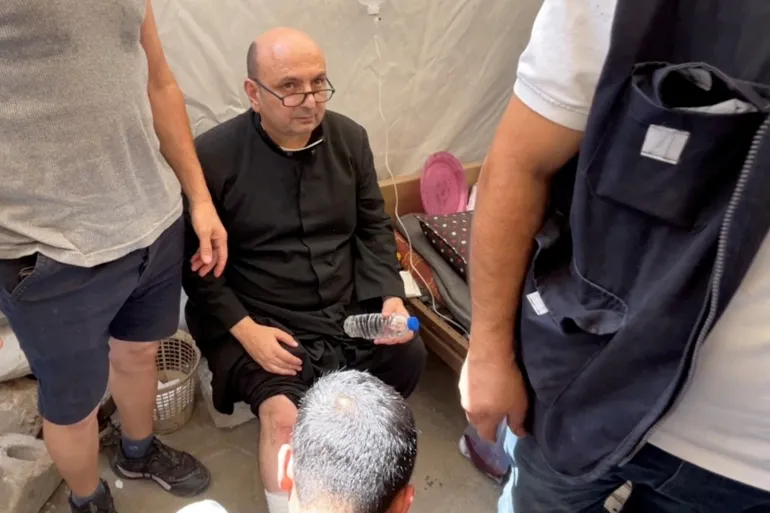
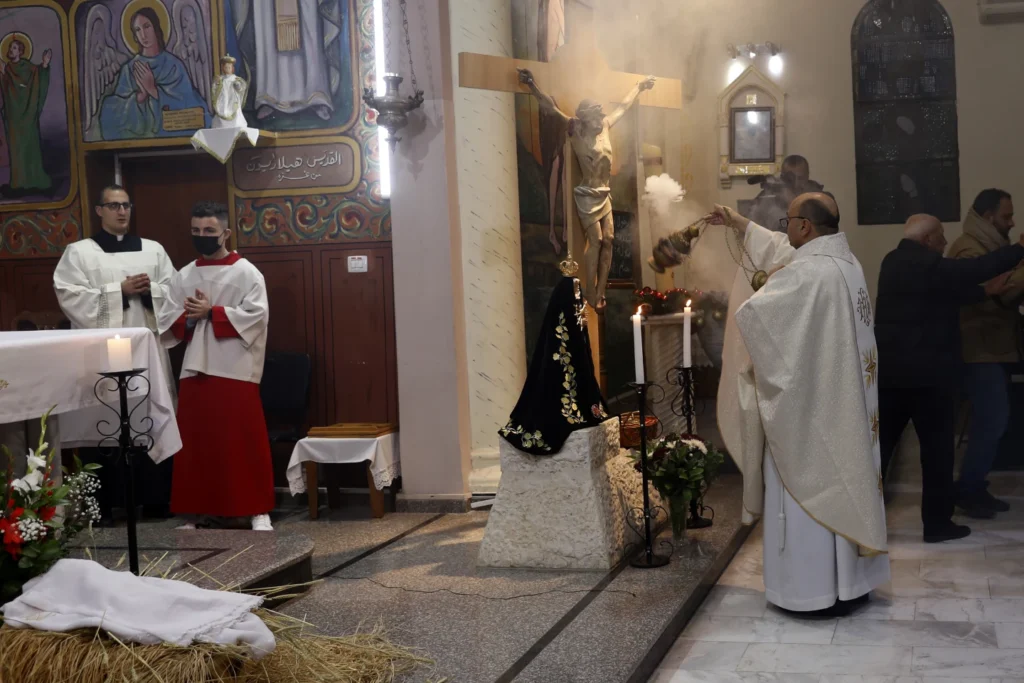
GAZA CITY, Gaza Strip (BN24) — A deadly Israeli strike hit the Holy Family Catholic Church compound in Gaza on Thursday, killing three people and injuring ten others, including the parish priest who had been in regular contact with the late Pope Francis. The shelling, which occurred amid intensifying military operations in the region, drew condemnation from religious leaders and deepened concerns about civilian safety as the Israel-Hamas war rages into its 21st month.

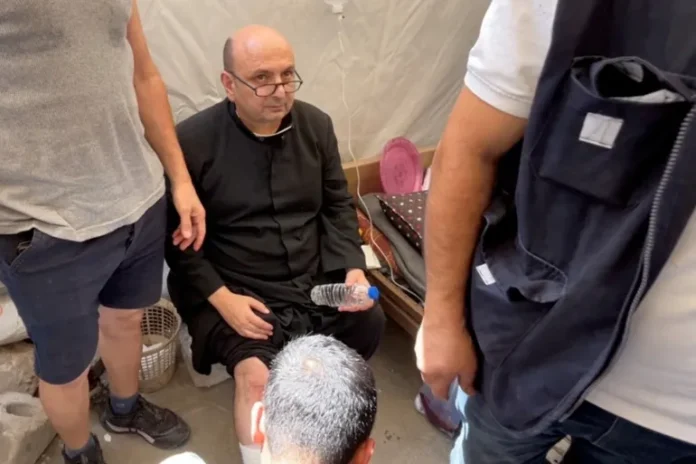
Church officials said the compound, which has served as a refuge for hundreds of displaced Palestinians — including Muslims, Christians, elderly residents, and disabled children — was hit by Israeli shell fragments during what the military described as “operational activity” in the area. Among the victims were a 60-year-old church janitor and an 84-year-old woman receiving psychosocial support from Caritas Jerusalem. The church’s priest, Rev. Gabriel Romanelli, was lightly wounded.

The Israeli military issued a statement expressing regret and said an investigation was underway. It noted that the shell’s impact was unintended and stressed that the military does not target religious sites, asserting it “makes every feasible effort to mitigate harm to civilians and religious structures.”

The late Pope Francis, who died in April, had frequently spoken by phone with Romanelli and voiced deep concern over the humanitarian cost of the conflict. In his memory, Pope Leo XIV condemned the church strike and renewed calls for an immediate ceasefire. “This is a grave violation of the sanctity of life and of religious sanctuaries,” he said in a message of condolence, adding that the attack underscores the urgent need for “dialogue, reconciliation, and lasting peace.”

President Donald Trump, who has publicly supported Israel throughout the war, called Israeli Prime Minister Benjamin Netanyahu to express “frustration and disappointment” over the incident, the White House said. Netanyahu later issued a statement saying Israel “deeply regrets” the impact on Gaza’s lone Catholic parish.

Italian Prime Minister Giorgia Meloni condemned the attack, describing it as “unacceptable,” and accused Israel of waging indiscriminate strikes on civilian populations for months.

The Holy Family Church compound, located near Al-Ahli Hospital, has been struck repeatedly over the past week, according to hospital officials. The Greek Orthodox Patriarchate of Jerusalem, which operates another church in Gaza that has previously sustained damage, said the Catholic compound was sheltering 600 people — including 54 with disabilities — when the strike occurred.

“The targeting of holy places violates the sanctity of life and the historical role of churches as safe havens in times of war,” the Patriarchate said in a statement.

In a separate incident, another Israeli strike hit two schools in the Al-Bureij refugee camp, killing one and wounding 17, according to Al-Awda Hospital. The Israeli military did not comment on that strike.

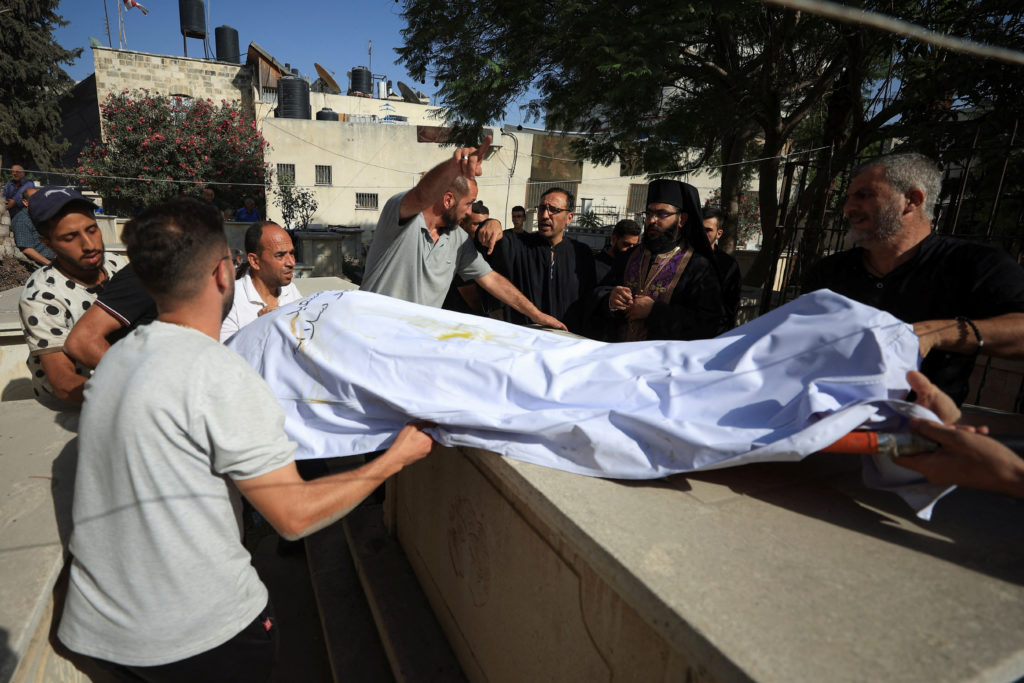
Mourners attend the burial of Palestinian Christians Saad Salama and Foumia Ayyad, who were killed in an Israeli strike on the Holy Family Church, according to medics, at the Greek Orthodox Saint Porphyrius Church, in Gaza City, July 17, 2025. REUTERS/Dawoud Abu Alkas

Gaza’s Health Ministry said hospitals had received the bodies of 94 people killed in Israeli attacks over the previous 24 hours, along with 367 wounded. The ministry, part of the Hamas-run government but operated by medical professionals, is considered the most reliable source of casualty figures by the United Nations and other international agencies. According to its latest figures, Israel’s military campaign has killed over 58,600 Palestinians, with women and children making up more than half of the deaths. Israel does not distinguish between civilians and militants in its casualty assessments.

The conflict began after the Hamas-led assault on southern Israel on Oct. 7, 2023, which left 1,200 people dead and 251 taken hostage. Israel has said 50 hostages remain in Gaza, fewer than half of whom are believed to be alive.

Ceasefire talks, brokered through international intermediaries, have made little visible progress in recent months. An Israeli official speaking anonymously said negotiators are showing “flexibility” on issues such as the military’s corridor presence in Gaza but acknowledged that major disputes remain, including the release of Palestinian prisoners and guarantees to end the war. A deal is not believed to be imminent.

For the roughly 1,000 Christians who remain in Gaza — most of them Greek Orthodox — the church strike is another blow to a dwindling and deeply traumatized community. Local leaders have long decried rising threats to Christian heritage and safety in the region, including settler violence and the erosion of religious freedoms.

French Army Ends 64-Year Military Presence in Senegal with Final Troop Withdrawal

0

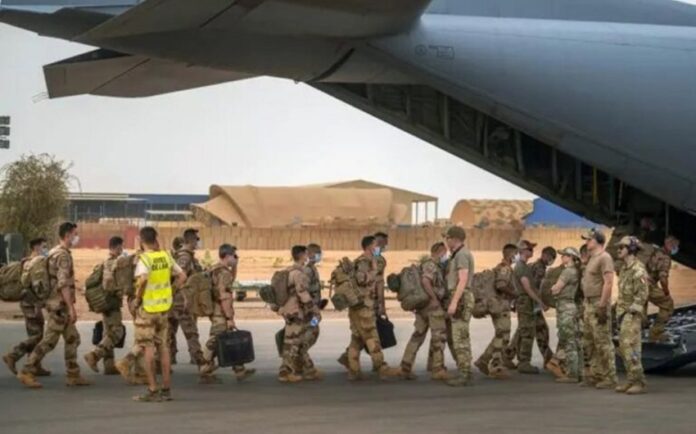
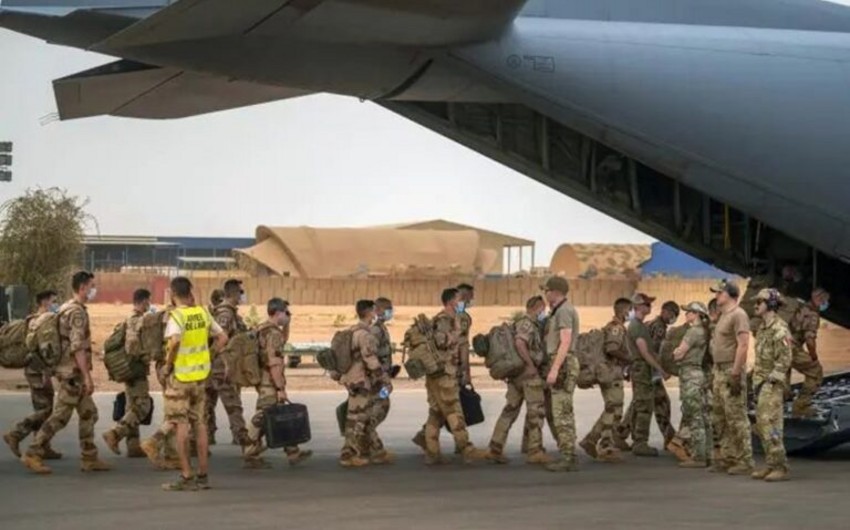
DAKAR, Senegal (BN24) — France formally ended its six-decade military presence in Senegal on Thursday, completing the withdrawal of its remaining 350 troops and handing over its final bases in a move emblematic of France’s waning influence across West and Central Africa.

The symbolic pullout, marked by a ceremony in Dakar, saw French forces return control of Camp Geille—their largest Senegalese base—and the adjacent airfield at Dakar’s international airport to the Senegalese military. The event concluded a phased departure that began in March and effectively ended France’s uninterrupted military presence in the West African country since it gained independence in 1960.

Senegalese President Bassirou Diomaye Faye, who surged to power in 2024 on a platform calling for a radical realignment of foreign relations and greater national sovereignty, had called for the complete withdrawal of foreign troops by the end of 2025. While Senegal has avoided the hostile rhetoric seen in other former colonies like Mali, Burkina Faso and Niger, where military juntas severed ties with France and embraced Russia, Faye made it clear that Senegal would now treat France like any other partner—not as a privileged power.

“Senegal is an independent country, it is a sovereign country and sovereignty does not accept the presence of military bases in a sovereign country,” Faye said in remarks made in late 2024. Still, he emphasized that “France remains an important partner for Senegal,” signaling the shift was more about equality than estrangement.

French forces in Senegal had primarily engaged in joint operations and training with the Senegalese military, rather than direct combat missions. Their departure is the latest in a series of withdrawals across Africa by Paris, as a wave of anti-French sentiment and strategic recalibration continues to reshape its footprint on the continent.

France has recently shuttered or significantly reduced troop levels at its remaining bases in other former colonies. In February, France vacated its last outpost in Côte d’Ivoire, while the month prior, it relinquished the Kossei base in Chad—its final stronghold in the Sahel, a region engulfed in jihadist violence. In the Central African Republic, where Russian paramilitary presence has expanded, France has also drawn down operations under pressure from local authorities.

The trend mirrors broader disillusionment with France’s post-colonial military role across Africa. Coups in Niger, Burkina Faso and Mali since 2020 led to a rupture with Paris and a pivot toward Moscow. In Gabon, another former French colony, France has restructured its military footprint into a shared facility with the local army.

After Thursday’s withdrawal, the only remaining French military base on the African continent will be in Djibouti, a small nation in the Horn of Africa that also hosts U.S., Chinese and other foreign military installations. France plans to maintain its 1,500-person contingent there as its strategic African command center.

Despite the pullout, Faye has urged France to acknowledge its colonial legacy more fully, calling for an official apology for historic atrocities, including the December 1, 1944 massacre of African soldiers who fought for France in World War II—a flashpoint in France’s complicated relationship with its former colonies.

The exit from Senegal marks a historic turning point for France’s post-colonial presence in Africa and signals a new era in Franco-African relations, one where mutual cooperation may continue—but without boots on the ground.

lemonde.fr

U.S. Deports Immigrants to Eswatini Amid Rights Concerns and Widening Use of Third-Country Transfers

0

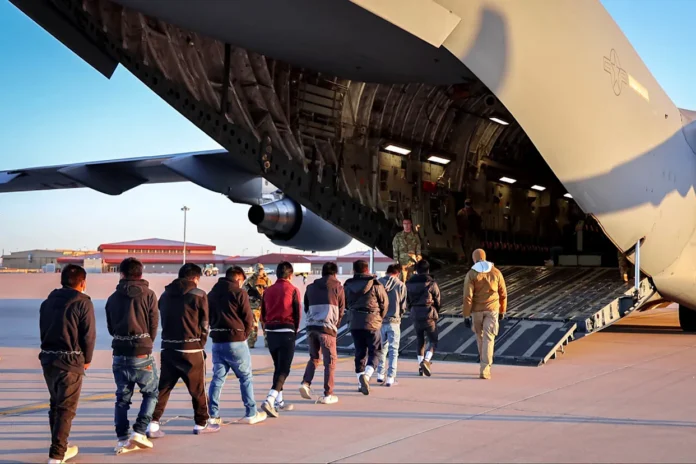
WASHINGTON (BN24) — The Trump administration has deported five foreign nationals to the African kingdom of Eswatini in what officials described as part of a broader campaign to remove individuals whose countries of origin refuse to accept them — a strategy that has ignited fresh concerns over human rights and due process.

The government of Eswatini confirmed Wednesday that it received five deportees from the United States, identifying the individuals as citizens of Laos, Vietnam, Jamaica, Cuba, and Yemen. The deportations are the latest example of the Trump administration’s effort to use third-party countries to expel individuals whom their home nations have refused to repatriate.

“This is the result of months of robust high-level engagements,” Eswatini government spokesperson Thabile Mdluli said in a statement, noting the deportees are being held in correctional facilities in isolated units “where similar offenders are kept.” While affirming Eswatini’s commitment to international human rights standards, Mdluli acknowledged the sensitivity of accepting non-citizens for deportation and said her government is working with the International Organization for Migration to facilitate the eventual transfer of the deportees to their home countries.

The U.S. Department of Homeland Security confirmed the deportation, with spokesperson Tricia McLaughlin describing the deportees in highly charged terms. “This flight took individuals so uniquely barbaric that their home countries refused to take them back,” she posted on social media, adding that the deportees had been convicted of serious crimes such as murder and child rape.

Critics, however, argue that the Trump administration is bypassing legal protections and due process in its effort to expedite removals. Human rights advocates warn that deporting individuals to countries like Eswatini — an absolute monarchy led by King Mswati III, which has been accused of crushing dissent — exposes them to potential abuse and mistreatment.

In 2021, security forces in Eswatini allegedly killed dozens of protesters during pro-democracy demonstrations. Several politicians were later handed lengthy prison terms for inciting violence, a charge opposition leaders said was politically motivated.

Despite its record, the Eswatini government defended the deportation agreement. “The Kingdom of Eswatini and the United States of America have enjoyed fruitful bilateral relations spanning over five decades,” the statement said. “Every agreement entered into is done with meticulous care and consideration, putting the interests of both nations at the forefront.”

Wednesday’s flight to Eswatini is part of a growing trend in which deportees are sent to third-party countries outside their national origin. In March, the Trump administration deported roughly 200 Venezuelans to El Salvador, where they were incarcerated in a maximum-security prison under conditions rights groups described as akin to torture. In May, a similar flight was attempted to Libya but was blocked at the last moment by a federal court.

That same month, eight immigrants were flown from the United States to South Sudan, a nation the U.S. State Department has flagged for human rights violations including extrajudicial killings and torture. A federal court in Massachusetts halted that flight, citing insufficient opportunity for the deportees to contest their removal. But the U.S. Supreme Court later reversed that decision in a brief order, allowing the deportations to proceed.

In a scathing 19-page dissent, Justice Sonia Sotomayor condemned the administration’s approach. “The Government has made clear in word and deed that it feels itself unconstrained by law, free to deport anyone anywhere without notice or an opportunity to be heard,” she wrote.

A recently leaked memo obtained by The Washington Post indicates that the administration has acknowledged that third-country deportations may occur even without credible assurances that individuals will be protected from torture or persecution. According to the document, removals can be carried out with as little as six hours’ notice under “exigent circumstances.”

Since returning to office in January, President Donald Trump has expanded mass deportation efforts and intensified policies targeting undocumented immigrants, including controversial agreements with countries like El Salvador, South Sudan, and now Eswatini. Human rights groups say these moves signal a shift away from international norms and toward a deportation regime that sidesteps legal scrutiny.

While the administration maintains that its actions are necessary for national security and immigration enforcement, opponents argue that the policy exposes vulnerable individuals to potentially grave dangers — all while circumventing the very legal systems designed to protect them.

Bangladeshi Forces Clash With Hasina Loyalists in Gopalganj, Leaving 4 Dead as Unrest Deepens

0

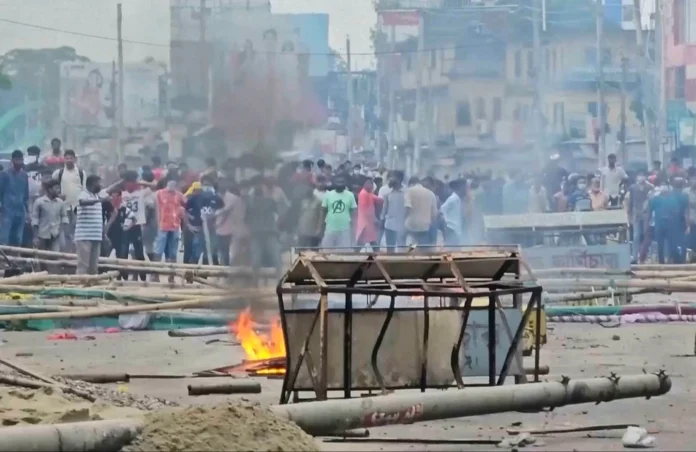
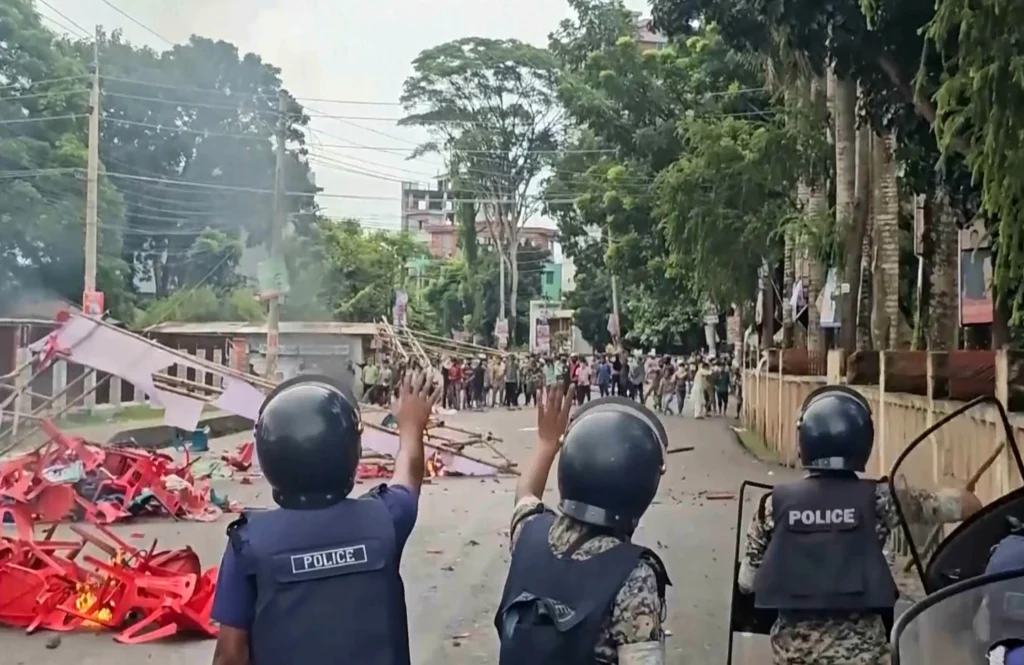
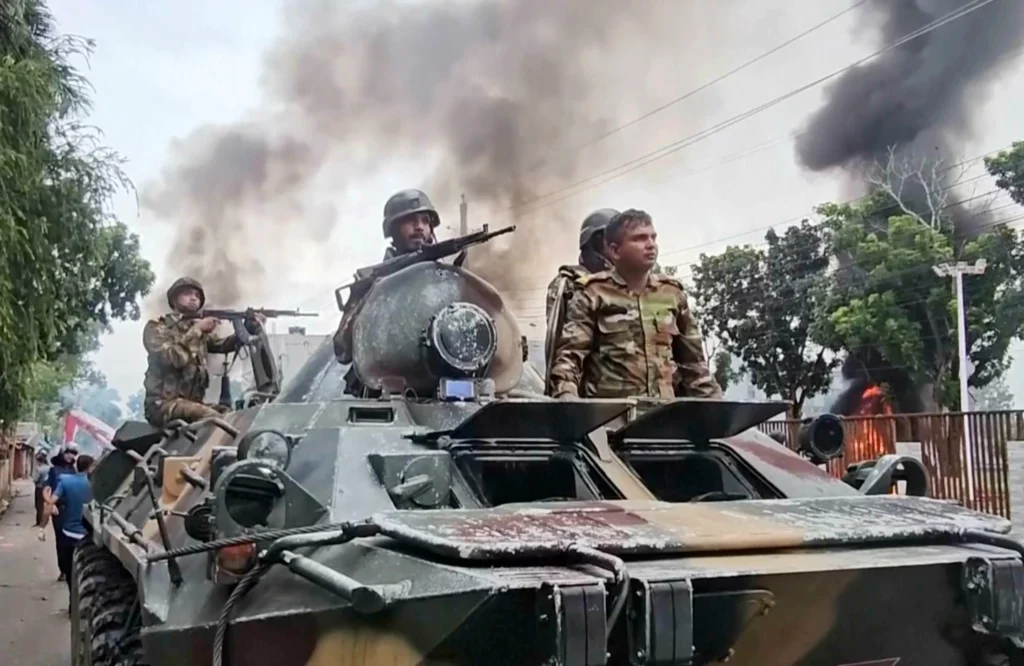
DHAKA, Bangladesh (BN24) — Deadly clashes erupted Wednesday between Bangladeshi security forces and supporters of ousted Prime Minister Sheikh Hasina in the politically volatile district of Gopalganj, leaving at least four people dead and dozens more injured, according to hospital officials and local media.

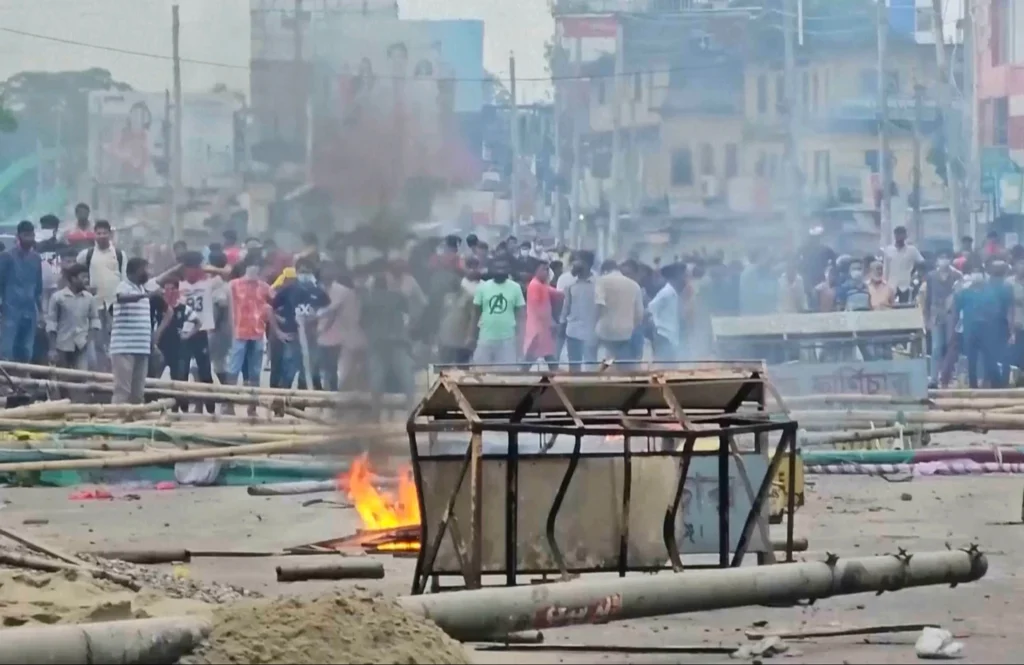
The violence broke out as members of the newly formed National Citizen Party, led by students who spearheaded the August uprising that removed Hasina from power, staged a symbolic march toward Gopalganj — Hasina’s ancestral home and former political stronghold. Television footage showed a chaotic scene as activists loyal to the former leader wielded sticks, confronted police, and set fire to vehicles, including those in a convoy carrying party leaders.

The confrontation marks one of the most violent incidents since the toppling of Hasina nearly a year ago, highlighting the persistent instability and widening political fracture under Nobel Peace Prize laureate Muhammad Yunus’ interim government. Authorities responded by imposing a curfew in the district and deploying military escorts to extract opposition leaders from the scene.

As tensions escalated, the student-led group accused the state of enabling political violence and demanded swift arrests. “We are giving the authorities 24 hours to detain those responsible,” said party figure Nahid Islam, threatening further action in neighboring Faridpur if demands were unmet.

Jibitesh Biswas, a senior official at a state hospital, confirmed at least three fatalities, while The Daily Star reported four deaths. The victims’ identities have not been released.

The interim government denounced the attack on the student-led party as “utterly indefensible.” In a statement issued on behalf of Yunus, officials promised that perpetrators would be held accountable, but critics accuse the administration of failing to prevent growing political violence that now threatens the nation’s fragile transition.

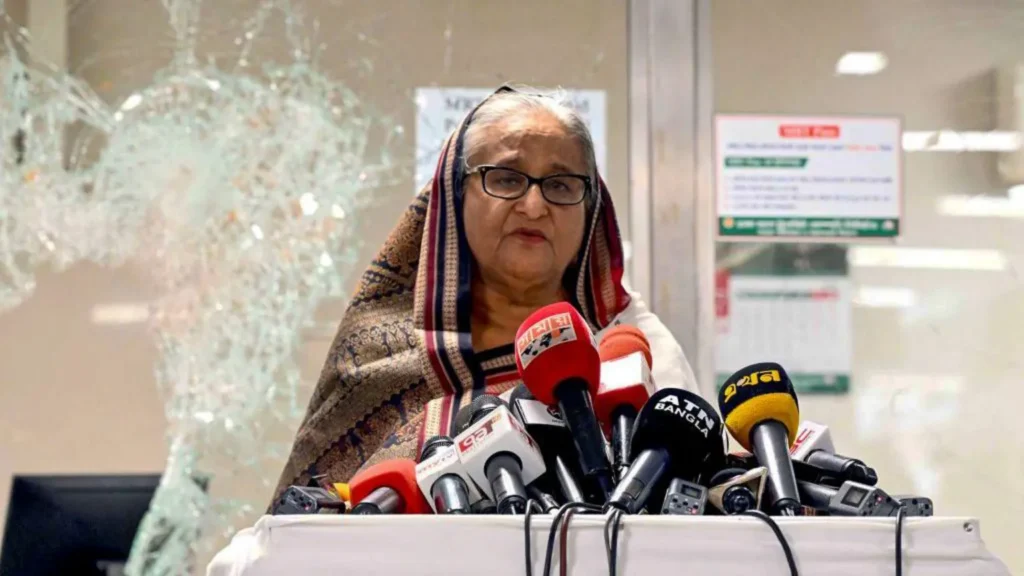
Hasina’s Awami League party, outlawed in May, issued multiple statements on social media platform X condemning the government’s role in the bloodshed. “We urge the world to take note of this blatant use of security apparatus,” one message read, accusing Yunus’ administration of weaponizing mob violence against dissenters.

Meanwhile, the Islamist Jamaat-e-Islami party, which has aligned itself with the rising opposition movement, announced nationwide protests for Thursday, calling the attack an “assault on democracy.”

Gopalganj remains a deeply symbolic site in Bangladesh’s political history. It is home to the mausoleum of Sheikh Mujibur Rahman, Hasina’s father and the founding leader of the country, who was assassinated in 1975 during a military coup that decimated much of his family. The National Citizen Party’s decision to march into the district was seen as a bold challenge to the remnants of Hasina’s influence.

The protest was part of the group’s broader “July March to Rebuild the Nation,” a grassroots campaign aimed at presenting itself as a viable third force in a country long dominated by the dynastic rivalry between Hasina’s Awami League and Khaleda Zia’s Bangladesh Nationalist Party, or BNP. While the BNP has largely remained quiet following Wednesday’s unrest, political observers say the party is positioning itself to benefit from Hasina’s absence ahead of the scheduled elections.

Yunus, who took over after Hasina fled to India amid allegations of crimes against humanity, has pledged to stabilize the country and hold new elections by April. However, critics argue that polarization is deepening under his watch, and warn that the promise of a peaceful democratic transition is slipping away.

India has yet to respond to Bangladesh’s formal request for Hasina’s extradition, adding another layer of uncertainty to a nation already gripped by unrest.

Source: The Associated Press

Cambodia Arrests Over 1,000 in Major Cybercrime Crackdown

0

PHNOM PENH, Cambodia (BN24) – Cambodia announced Wednesday that Prime Minister Hun Manet’s order for government bodies to crack down on criminal cybercrime operations resulted in the arrest of more than 1,000 suspects so far this week, marking one of the largest enforcement actions against international scam networks operating in the country.

More than 1,000 suspects were arrested in raids across at least five provinces between Monday and Wednesday, according to statements from Information Minister Neth Pheaktra and police. The operation targeted cybercrime operations that authorities say have been run by foreign criminal groups infiltrating Cambodia to conduct online scams.

Hun Manet issued the directive Tuesday, authorizing state action for “maintaining and protecting security, public order, and social safety.” In his statement, the prime minister acknowledged that “online scams are currently causing threats and insecurity in the world and the region” and noted that “foreign criminal groups have also infiltrated to engage in online scams” within Cambodia.

The arrests encompassed suspects from multiple countries, reflecting the international scope of cybercrime operations in Southeast Asia. Those detained included more than 200 Vietnamese, 27 Chinese, and 75 suspects from Taiwan and 85 Cambodians in the capital Phnom Penh and the southern city of Sihanoukville. Police also seized equipment, including computers and hundreds of mobile phones during the raids.

In Poipet, a border town with Thailand notorious for cyberscam and gambling operations, at least 270 Indonesians, including 45 women, were arrested Wednesday. The northeastern province of Kratie saw the arrest of 312 people, including nationals from Thailand, Bangladesh, Indonesia, Myanmar and Vietnam, while 27 people from Vietnam, China and Myanmar were detained in the western province of Pursat.

The United Nations and other international agencies estimate that cyberscams, most of them originating from Southeast Asia, generate billions of dollars annually for international criminal gangs. These operations have become increasingly sophisticated, targeting victims worldwide through various online platforms and communication channels.

The cybercrime industry in Cambodia has drawn significant international attention due to its scale and the human rights abuses associated with these operations. Amnesty International published findings last month from an 18-month investigation into cybercrime in Cambodia, concluding that evidence “point towards state complicity in abuses carried out by Chinese criminal gangs.”

The human rights organization documented extensive abuses within what it described as more than 50 scamming compounds located across the country. Agnes Callamard, Amnesty International’s Secretary General, characterized survivors’ experiences as being “trapped in a living nightmare” and described workers as “deceived, trafficked and enslaved” into criminal enterprises operating with apparent government consent.

Human trafficking remains closely associated with cyberscam operations throughout the region, as workers are frequently recruited under false pretenses and subsequently held captive. The deceptive recruitment practices often promise legitimate employment opportunities before forcing individuals into cybercrime activities against their will.

The timing of Cambodia’s crackdown coincides with escalating tensions with neighboring Thailand, which began with a brief armed skirmish in late May over disputed border territory. The conflict has led to border closures and daily exchanges of nationalistic rhetoric between the two nations, with previously friendly leaders becoming estranged.

Thailand has implemented measures including cutting off cross-border electricity supplies and closing crossing points, actions Cambodia has characterized as retaliatory responses to its territorial claims. Thailand initially stated its intentions were to combat long-existing cyberscam operations in Poipet, though the broader diplomatic dispute has complicated regional cooperation on cybercrime enforcement.

The current arrests represent Cambodia’s most significant public action against cybercrime operations in recent years, though questions remain about the long-term sustainability of enforcement efforts and whether the crackdown addresses the systemic issues that have allowed these operations to flourish across the country.

Trump Says Coca-Cola Agrees to Use Real Cane Sugar in US Drinks

0

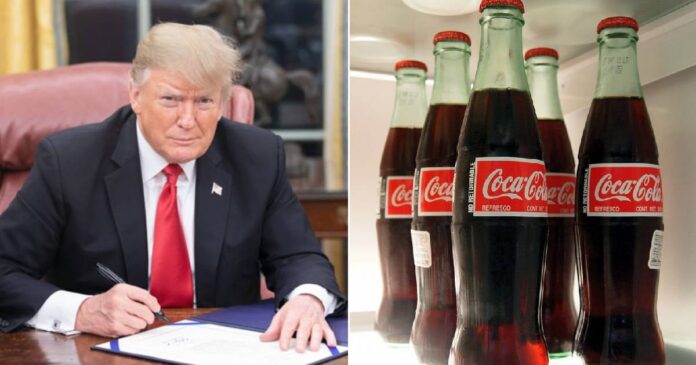
WASHINGTON (BN24) – President Donald Trump announced Wednesday that Coca-Cola Company has agreed to use real cane sugar in its U.S. beverages following discussions between Trump and company leadership, marking a potential shift away from the high-fructose corn syrup currently used in American production.

Trump revealed the agreement in a Truth Social post, stating he had been “speaking to Coca-Cola about using REAL Cane Sugar in Coke in the United States, and they have agreed to do so.” The president expressed gratitude to Coca-Cola leadership, writing “I’d like to thank all of those in authority at Coca-Cola. This will be a very good move by them — You’ll see. It’s just better!”

The announcement addresses a longstanding difference between Coca-Cola’s U.S. formula and its international versions. The switch to natural cane sugar from high-fructose corn syrup would follow in the steps of many other countries, including Mexico, South Africa and some in Europe. The beverage giant made the transition to corn syrup in the United States during the 1980s primarily due to cost considerations and agricultural supply factors.

Coca-Cola responded to the president’s announcement with a statement saying they “appreciate President Trump’s enthusiasm for our iconic Coca-Cola brand,” and indicated more details would be shared “soon.” However, it remains unclear whether the company plans to change the original recipe or introduce a new product.

The announcement comes amid the Trump administration’s broader “Make America Healthy Again” initiative, spearheaded by Health and Human Services Secretary Robert F. Kennedy Jr. The administration has taken several steps to address what it characterizes as a chronic disease epidemic, including recent moves to phase out artificial dyes from ice cream production and approving state waivers that would prevent SNAP recipients from purchasing soda and candy with government benefits.

Trump’s announcement carries particular irony given that the president is famously known for drinking Diet Coke, which contains aspartame rather than any sugar. Trump has previously acknowledged his preference for the diet version of the cola, even installing a Diet Coke button in the Oval Office during his first term.

The potential ingredient change has already drawn opposition from corn industry representatives. Corn Refiners Association President and CEO John Bode said in a statement that “replacing high fructose corn syrup with cane sugar doesn’t make sense.”

Many cola enthusiasts have long preferred the taste of Mexican Coca-Cola, which uses cane sugar and has developed a cult following among American consumers seeking the original flavor profile. Trump referenced this preference in his announcement, noting that Coca-Cola already uses cane sugar in its Mexican Coke.

The timing and implementation details of any formula change remain unclear, as Coca-Cola has not provided specific information about production timelines or whether the change would apply to all Coca-Cola products or represent a limited offering. The company’s measured response suggests the beverage giant is carefully considering the logistical and economic implications of such a significant ingredient modification.

If implemented, the change would represent one of the most substantial alterations to Coca-Cola’s U.S. formula in decades, potentially affecting supply chains, production costs, and consumer preferences across the American market.

Syrian Government and Druze Leaders Announce Ceasefire as Israeli Strikes Pound Damascus

0

Damascus (BN24) – Syrian officials and Druze religious leaders announced a renewed ceasefire Wednesday after days of fierce clashes in southern Syria that have jeopardized the country’s fragile postwar transition and triggered Israeli military intervention.

Convoys of Syrian government forces began withdrawing from the city of Sweida under the agreement, which was announced by the Interior Ministry and in a video statement from Druze religious authorities. But it was unclear whether the truce would hold: an earlier ceasefire collapsed within hours, and influential Druze cleric Sheikh Hikmat al-Hijri publicly rejected the new deal.

Even as officials declared the ceasefire, Israeli warplanes continued to strike Syrian targets.

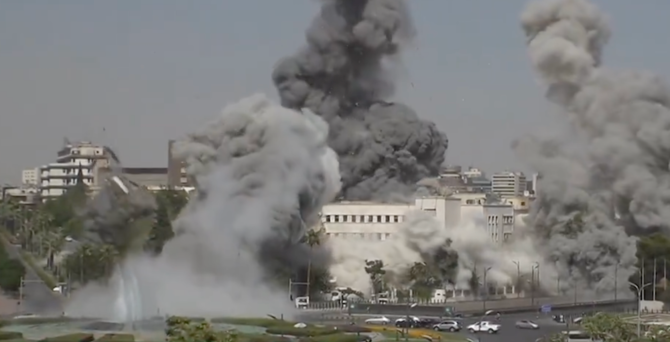
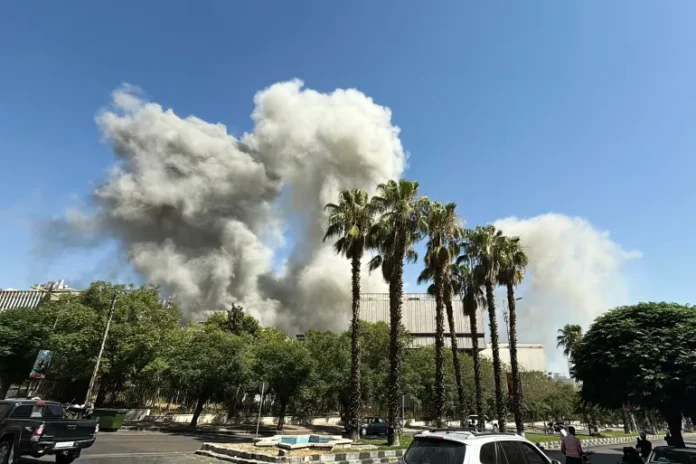
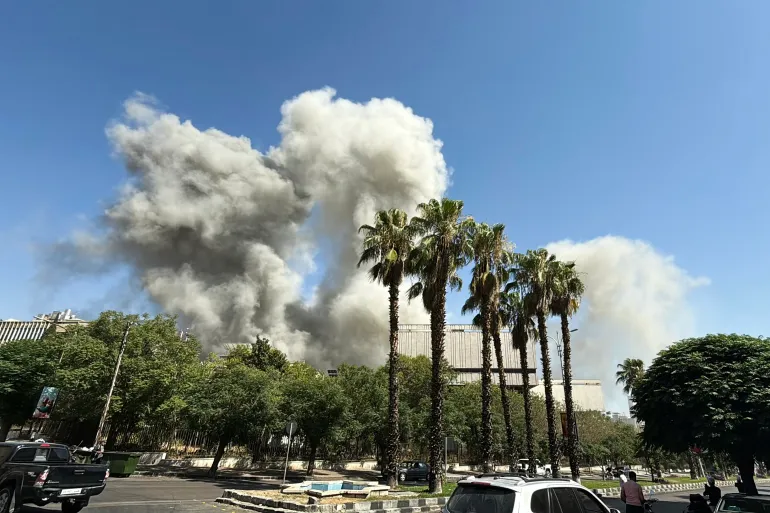
 The escalation reached new heights as Israel carried out rare airstrikes deep in the Syrian capital. One barrage targeted the Ministry of Defense headquarters, a prominent building near a busy square that has become a symbol of the country’s attempt to rebuild after the fall of Bashar al-Assad in December. Another strike hit near the presidential palace in the hills outside Damascus.

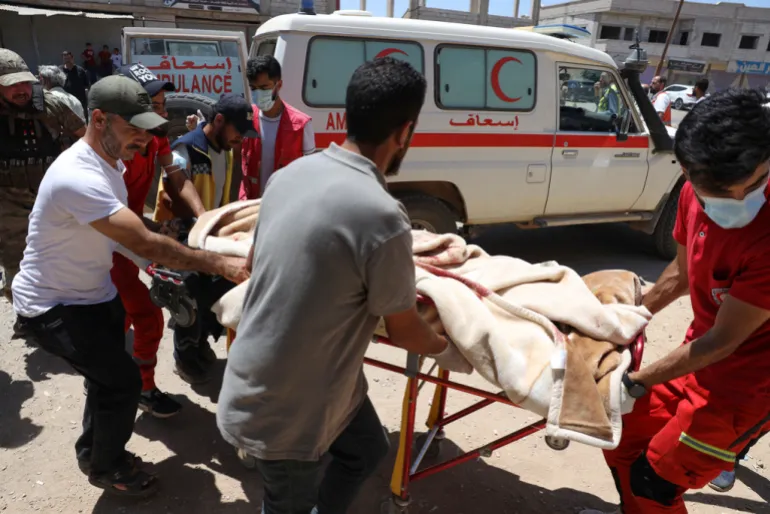
Syrian state media reported that at least three people were killed and 34 injured in the Damascus attacks.

Israel said the operations were intended to defend Syria’s Druze minority—seen in Israel as a potential ally—from both Islamist militant factions and government troops. The Druze community forms a significant minority in Israel and Syria and has long been viewed by Israeli leaders as a bridge between the countries.

Israeli Defense Minister Israel Katz called the strikes the start of “painful blows” and warned Damascus that the army would intensify attacks unless Syrian troops withdrew from Druze areas. “The army will continue to attack regime forces until they leave,” Katz said in a statement.

An Israeli military official, speaking anonymously under regulations, confirmed that thousands of troops were being redeployed from Gaza to the Golan Heights in anticipation of further escalation.

 The violence erupted after tit-for-tat abductions and attacks between Sunni Bedouin tribes and Druze militias in Sweida, a historically Druze province. When government forces deployed to restore order, they clashed with local fighters and were accused of carrying out reprisal attacks against civilians.

The fighting has become the most serious threat so far to the new Sunni-led authorities attempting to solidify power in Syria. The government, which replaced Assad’s rule after more than a decade of war, has faced suspicion and hostility from minorities, including the Druze and the Alawites, Assad’s own sect.

No updated official death toll was released Wednesday. The Syrian Observatory for Human Rights said at least 300 people have been killed since Monday, including children, women, and more than 160 soldiers and security personnel.

Interim President Ahmad al-Sharaa condemned the bloodshed in a statement Wednesday, saying “criminal and illegal actions cannot be accepted under any circumstances.” He promised those responsible for abuses would be prosecuted.

 Across Syria and in the diaspora, Druze families were desperate for news of relatives caught in the fighting.

In the Damascus suburb of Jaramana, 20-year-old Evelyn Azzam said she feared her husband, Robert Kiwan, was dead. Azzam had been speaking to Kiwan by phone when security forces stopped him and a colleague on suspicion of supporting Druze militias. She heard gunshots as her husband was shot in the hip.

“Since then, we have no idea what has happened,” she said in tears.

Other Druze who fled to the United Arab Emirates said they could hear shelling over the phone when speaking to relatives hiding in basements.

One woman told The Associated Press her cousin’s house had been set on fire with family members still inside. “It’s the same as when ISIS came in 2018,” she said.

 Videos circulating online showed graphic scenes of violence: government-aligned fighters shaving Druze sheikhs’ mustaches, stepping on Druze flags, and desecrating portraits of religious figures. Other footage appeared to show Druze militiamen beating captured soldiers and posing with their bodies.

The Syrian Observatory said at least 27 people were killed in summary executions.

 Israel’s intervention has expanded rapidly in recent days. The military has launched dozens of strikes targeting government convoys heading toward Sweida and installations across southern Syria.

Israel also took control of a U.N.-patrolled buffer zone along the border with the Golan Heights, territory it captured from Syria in 1967 and later annexed.

Defense Minister Katz said Israel would continue airstrikes and was prepared to escalate further if Syrian troops did not withdraw.

 U.S. Secretary of State Marco Rubio said Washington was “very concerned” by the violence, describing it as the result of a “misunderstanding.”

Rubio said American diplomats were in contact with both Damascus and Jerusalem to try to de-escalate the crisis.

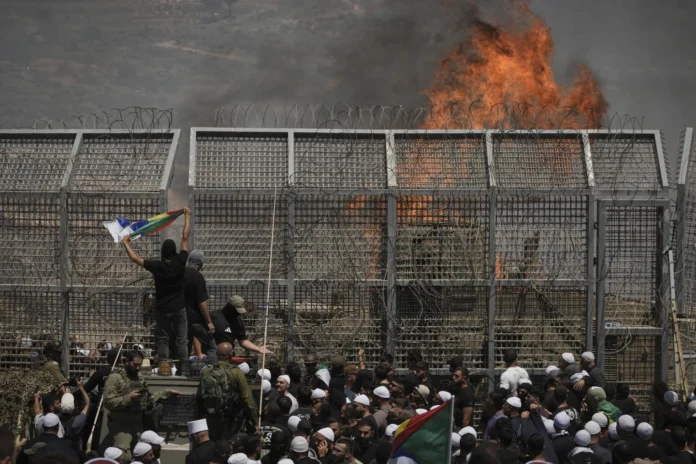
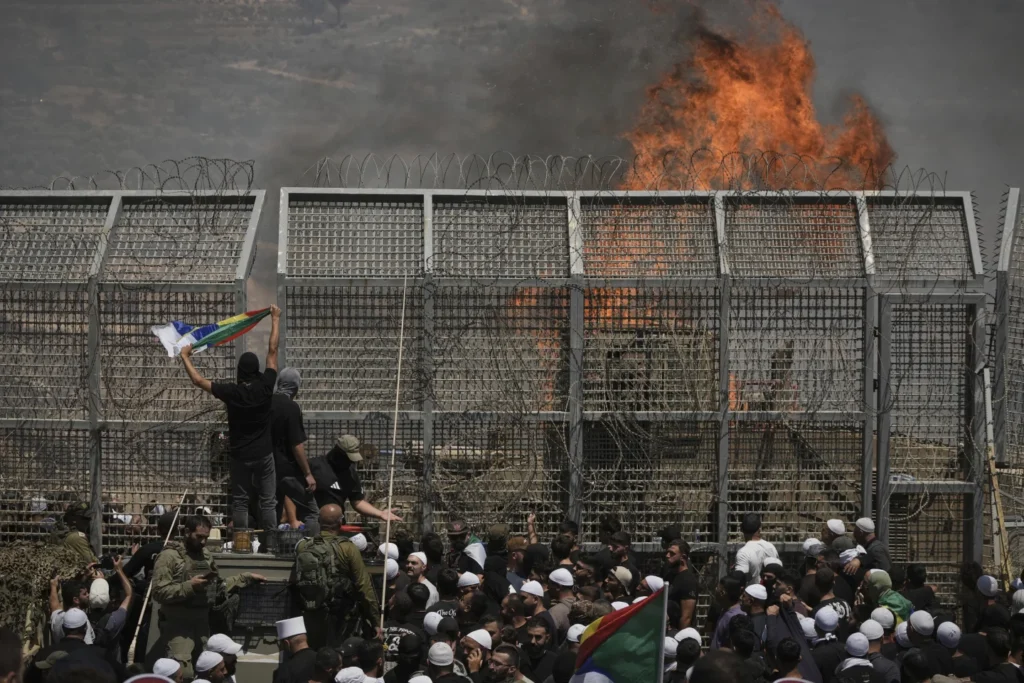
Meanwhile, Druze communities in the Israeli-occupied Golan gathered along the border fence to protest attacks on their relatives.

 For Syria’s new leadership, the Sweida crisis underscores the precariousness of postwar governance. After Assad’s ouster, authorities promised to unify the country and include minorities. But clashes with Druze fighters and reports of sectarian killings have deepened mistrust.

Political analyst Samy Akil told Al Jazeera the government’s failure to deliver an inclusive power-sharing arrangement is fueling the unrest.

“They have not backed up their rhetoric with any real guarantees to protect minorities,” he said. “That’s why we’re seeing this explosive violence now.”

Israel Strikes Syrian Military HQ Near Damascus Presidential Palace as Suwayda Fighting Spirals

0

Tel Aviv (BN24)  – Israel launched airstrikes on the headquarters of Syria’s Ministry of Defence and areas near the presidential palace in Damascus on Wednesday, marking a dangerous escalation in the region as sectarian violence in southern Syria spilled into the capital.

The strikes followed days of fierce clashes between Syrian government forces and Druze fighters in Suwayda province. Footage broadcast by Al Jazeera showed four massive explosions striking the Defence Ministry, sending columns of smoke billowing over Damascus before another airstrike hit close to the palace complex.

Syria’s Interior Ministry later announced a ceasefire in Suwayda, confirmed by Druze spiritual leader Sheikh Yousef Jarbou. The truce, which took effect immediately, was intended to halt all military operations and “fully integrate Suwayda into the Syrian state.”

But the fighting had already left deep scars. According to Syria’s Health Ministry, at least three people were killed and 34 wounded in the Israeli attacks. The UK-based Syrian Observatory for Human Rights reported even higher casualties in Suwayda, estimating more than 250 people killed, including 138 soldiers and security personnel, alongside civilians.


Israel claimed the strikes were meant to protect Syria’s Druze minority, describing them as natural allies threatened by government forces. However, many Druze leaders have historically rejected Israeli overtures and criticized foreign interference.

Israeli Defence Minister Israel Katz framed the bombardment as a final warning. “The warnings in Damascus have ended—now painful blows will come,” he declared in a statement on X. Katz said Israel’s military would sustain operations in Suwayda until Syrian forces withdrew entirely.

Al Jazeera’s Zeina Khodr, reporting live from Damascus, said the strikes were among the most brazen Israeli attacks on the capital in years. “This is a significant escalation,” she noted. “Israel is sending a very direct message that it will not hesitate to deepen its involvement.”

 Earlier attempts to end the fighting in Suwayda quickly fell apart. A ceasefire announced on Tuesday collapsed overnight as gun battles erupted between Syrian troops and Druze fighters.

Syrian Defence Ministry officials blamed “groups outside the law” for violating the truce. The ministry said it opened safe corridors for civilians to flee, but local reports described chaotic scenes as residents tried to escape.

Medical sources said more than 200 people were wounded in the violence. Witnesses told Reuters that the fighting began after a Druze merchant was abducted by Sunni Bedouin tribesmen, rekindling old rivalries.

 The violence has triggered chaos along the Israeli-occupied Golan Heights. Crowds of Israeli Druze gathered at the border, with some crossing into Syria to support their kin.

Israeli Prime Minister Benjamin Netanyahu personally appealed to the community to stay put. “You can be kidnapped, and you hurt the army’s efforts,” Netanyahu said. “Go back to your homes.”

Despite the pleas, Israeli warplanes continued pounding targets across southern Syria. Public broadcaster Kan reported nearly 160 strikes since Tuesday night, the majority focused on Suwayda.

 Al Jazeera’s Khodr said Israel’s demands for a demilitarized zone presented Syria’s leadership with an impossible choice. “If they stay in Suwayda, it will mean more airstrikes. If they pull back, it will be seen as surrender,” she said.

Syria’s Foreign Ministry condemned the attacks as “flagrant violations of sovereignty and international law.” Arab states also criticized Israel’s actions, though the government of President Ahmed al-Sharaa has struggled to rally international backing.

Since Bashar al-Assad’s overthrow in December, the new Syrian authorities have faced resistance from minority groups and former loyalist militias. In a sign of shifting dynamics, the United States recently removed the new ruling faction, Hayat Tahrir al-Sham, from its list of foreign terrorist organizations.

 The abrupt escalation appeared to catch Washington off guard. U.S. Secretary of State Marco Rubio voiced concern: “We’re going to be working on that issue as we speak.”

Al Jazeera’s Kimberly Halkett reported from Washington that the Biden administration had hoped to stabilize Syria after more than a decade of war, but Israeli strikes risk undermining that strategy.

 Analysts said the crisis in Suwayda underscores the fractured nature of post-Assad Syria. Political analyst Samy Akil told Al Jazeera the failure to create a truly inclusive system was fueling instability. “The government hasn’t backed its promises with tangible action,” Akil said.

Rob Geist Pinfold, a lecturer at King’s College London, said Israel’s alliance with Druze leader Hikmat al-Hijri, whose forces captured government buildings last week, shows it has chosen to continue military dominance rather than seek accommodation with Syria’s new rulers.

“Israel had an opportunity for a reset,” Pinfold said. “Instead, it’s maintaining the status quo—pursuing hegemony and occupation.”

UK PM Keir Starmer Suspends 4 Labour MPs Over Welfare Rebellion

0

LONDON (BN24) — Keir Starmer has suspended four Labour MPs for “repeated breaches of discipline,” in a dramatic escalation of tensions following the government’s bruising struggle to pass controversial welfare reforms.

The move came hours after a grim-faced Prime Minister’s Questions session and weeks of internal turmoil, culminating in a major rebellion on welfare cuts that forced a series of government U-turns.

Three of the suspended MPs — Neil Duncan-Jordan (Poole), Brian Leishman (Alloa and Grangemouth), and Chris Hinchcliff (North East Herefordshire) — were only elected at the last general election. The fourth, Rachael Maskell (York Central), has served in Parliament for a decade.

All four will now sit as independents and will be barred from standing as Labour candidates at the next election unless readmitted. Allies said they were “devastated” and shocked by the severity of the action.

Three other MPs — Dr Rosena Allin-Khan, Bell Ribeiro-Addy, and Mohammed Yasin — lost frontbench roles over their participation in the revolt. All were among 47 Labour MPs who defied the whip to oppose the government’s welfare overhaul, despite significant concessions.

Ministers ultimately pushed the legislation through by 335 votes to 260 after watering down large parts of the plan to prevent a total collapse. The government exempted existing Personal Independence Payment (PIP) claimants from tougher new rules and agreed to delay further changes pending a review.

The only measure MPs passed was a reduction in Universal Credit sickness benefits for new claimants, from £97 to £50 a week. Even so, the compromise left Chancellor Rachel Reeves facing a multibillion-pound fiscal shortfall — likely to require tax increases to plug the gap. Reeves reportedly broke down in tears during the first PMQs after the vote.

Many Labour MPs had believed the leadership would engage in dialogue after the rebellion rather than impose sweeping punishments. “When Number 10 said they were committed to engagement, this was not what we expected,” one MP said.

Meanwhile, the government suffered an additional setback as peers voted to strip out another manifesto pledge. The House of Lords defeated a Labour proposal to grant “day one” protection against unfair dismissal for new workers, backing instead a Tory amendment reducing the qualifying period from two years to six months.

The 304–160 vote sets up a fresh confrontation when the Employment Rights Bill returns to the Commons for “ping-pong,” where the Houses attempt to resolve their differences.

The bill would also expand immediate rights to sick pay, paternity leave and flexible working, and impose new restrictions on so-called “fire and rehire” tactics.

news.sky