MACON, Ga. (BN24) — Authorities recovered the bodies of two young sisters and a man from the Ocmulgee River in Macon, Georgia, on Wednesday, a day after all three drowned while swimming at a popular middle Georgia park.
Bibb County Coroner Leon Jones identified the victims as Johnny Collins III, 28, Skyler Worthen, 10, and her 7-year-old sister, Summer McRae.
Investigators said the girls had been swimming at Amerson River Park on Tuesday afternoon when they began drifting into deeper water. Collins jumped in to try to save them, but all three disappeared beneath the surface.
It was not immediately clear what Collins’ relationship to the children was.
Emergency crews launched boats and used sonar-equipped divers and a helicopter to search the river. The official search was called off at sundown Tuesday night, but family members continued looking in the dark. The bodies were recovered after authorities resumed operations Wednesday morning.
Since the park opened in 2009, at least 14 people have drowned in this stretch of the Ocmulgee, local media reported. While the river remains shallow in some areas—where tubing companies operate and rope swings draw crowds—officials have long warned that strong currents and sudden drop-offs can quickly overwhelm swimmers.
The park was closed Wednesday during the search but is expected to reopen Thursday, deputies said.
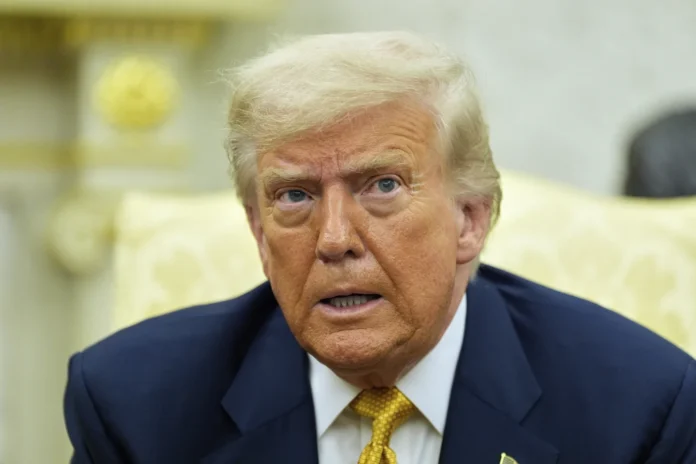
WASHINGTON (BN24) — President Donald Trump on Wednesday delivered a blistering rebuke of his own supporters, accusing them of being duped by Democrats and “stupid Republicans” over the controversy surrounding the release of Jeffrey Epstein investigation records, which Trump now dismisses as a “hoax.”
“Their new SCAM is what we will forever call the Jeffrey Epstein Hoax, and my PAST supporters have bought into this bull— hook, line, and sinker,” Trump wrote on his Truth Social platform, using an expletive. “They haven’t learned their lesson and probably never will, even after being conned by the Lunatic Left for 8 long years.”
The president went further, disavowing parts of his own base in unusually harsh terms: “Let these weaklings continue forward and do the Democrats’ work. Don’t even think about talking of our incredible and unprecedented success, because I don’t want their support anymore!”
The outburst marks Trump’s most aggressive public split with supporters who have fueled speculation for years about Epstein’s ties to political and business elites. The clash erupted after the Justice Department and the FBI confirmed last week that Epstein did not maintain a “client list” of people to whom underage girls were trafficked and said no further records would be released, despite repeated promises by Attorney General Pam Bondi to bring transparency.
Bondi, who previously suggested she was reviewing documents that would soon be public, clarified she was referring only to general case files. Trump has defended her handling of the matter, telling a reporter Tuesday, “I don’t understand what the interest or what the fascination is.”
Speaking from the Oval Office on Wednesday, he made clear he was finished discussing the issue. “It’s all been a big hoax,” Trump said. “It’s perpetrated by the Democrats, and some foolish Republicans fell into the net.”
He also complained that Bondi had been “waylaid” over the case and insisted she had already disclosed all “credible information.” “If she finds any more, she’ll give it. What more can she do than that?” he said, adding that Bondi had “bigger problems,” including removing criminal migrants.
The fallout has been swift. Several prominent pro-Trump influencers expressed anger and disbelief over the president’s dismissive stance.
Far-right commentator Alex Jones called Trump’s comments “the biggest train wreck I’ve ever seen,” telling viewers, “It’s not in character for you to be acting like this. You’re not the movement. You just surfed in on it.”
Benny Johnson, a conservative podcaster who has pushed for the Epstein files to be released, said he was disappointed but still hoped Trump would reconsider. “Maybe it hasn’t been framed correctly for the president,” he said.
House Speaker Mike Johnson, R-La., also broke ranks this week, telling Johnson’s show the Justice Department should “put everything out there and let the people decide.”
Others rushed to Trump’s defense. Turning Point USA’s Charlie Kirk urged supporters not to overreact, telling his audience Wednesday, “Don’t take too seriously this whole Truth Social here. I don’t believe he was trying to insult anybody personally.”
Kirk added, “The grassroots is not trying to make you look bad. We want to make sure the bad people who have done such terrible things to you can finally be held accountable.”
Meanwhile, Brenden Dilley, head of a group of pro-Trump meme creators, lashed out at the president’s critics: “He lent you his clout and voters. They don’t belong to you.”
LOS ANGELES (BN24) — California authorities have taken custody of 21 children amid an investigation into whether a Los Angeles-area couple misled surrogate mothers across the country, police said Wednesday.
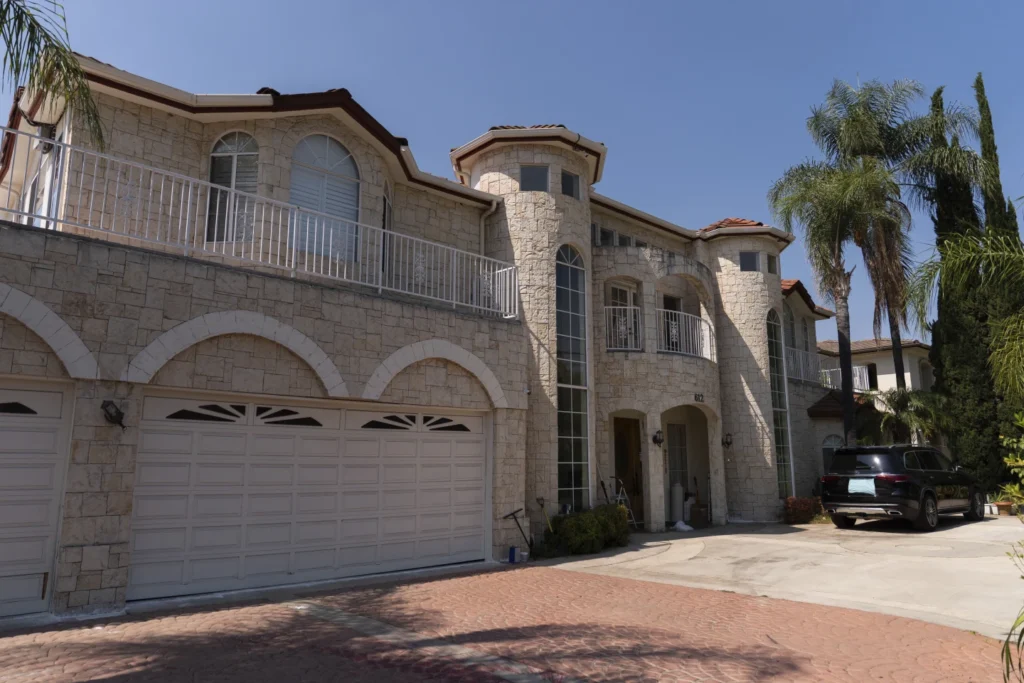
According to the Associated Press, fifteen children were removed in May from an opulent home in Arcadia, east of Los Angeles, following an abuse report. Six additional children living elsewhere were also located, Arcadia police Lt. Kollin Cieadlo said. The children, ranging in age from 2 months to 13 years old, are now under the care of county child welfare officials. Most of them are toddlers between 1 and 3 years old.
“We believe one or two of the children were born biologically to the mother,” Cieadlo said. “There are some surrogates who have come forward and said they were surrogates for the children.”
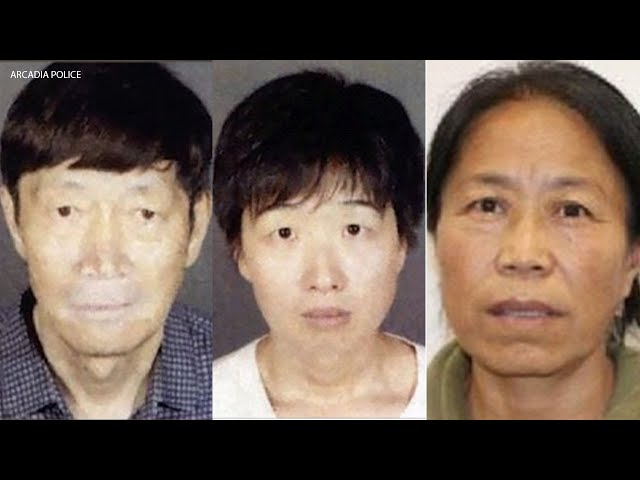
The couple, identified as Silvia Zhang, 38, and Guojun Xuan, 65, are believed to be the legal parents of all 21 children, he said.
Their arrests in May came after a local hospital alerted police that their 2-month-old infant had suffered a traumatic head injury. Investigators allege the injury was caused when a nanny violently shook the baby inside the home. The child was not taken to the hospital for two days.
Although authorities initially considered filing neglect charges, Cieadlo said those charges were not pursued to allow the broader investigation to continue.
According to police, Zhang and Xuan told officers they simply “wanted a large family.”
The case has raised questions about how many of the children were born through surrogacy and whether the women carrying the pregnancies were fully informed.
BANGKOK (BN24) — Thai police have arrested a woman accused of luring senior Buddhist monks into sexual relationships and extorting large sums of money to keep the affairs secret, a scandal that has shaken Thailand’s Buddhist institutions and fueled public outrage.
Wilawan Emsawat, reportedly in her mid-30s, was taken into custody Tuesday at her home in Nonthaburi province, just north of Bangkok. Authorities charged her with extortion, money laundering, and receiving stolen goods. Investigators said they discovered she had received money from a senior monk who diverted temple funds from a monastery in northern Thailand.
The scandal has already led to the downfall of at least nine abbots and senior monks, all of whom have been disrobed and expelled from the monkhood, the Royal Thai Police Central Investigation Bureau said. Police allege Wilawan deliberately targeted prominent monks to profit from their vows of celibacy.
“This woman is dangerous and we needed to arrest her as soon as possible,” Deputy Commissioner Jaroonkiat Pankaew told reporters Tuesday. He said the investigation began last month when an abbot at a well-known Bangkok temple abruptly left the monkhood under suspicious circumstances. Investigators later determined the abbot had been blackmailed after Wilawan claimed she was pregnant and demanded 7.2 million baht ($222,000) in “financial assistance.”
Police said they traced 385 million baht ($11.9 million) that flowed through Wilawan’s bank accounts over the past three years, much of it spent on online gambling. They also seized her mobile phones, which reportedly contained tens of thousands of photos and videos and chat logs showing intimate exchanges with several monks.
Before her arrest, Wilawan acknowledged to local media that she had been involved in at least one relationship and claimed she had given money to the monk. She has not issued any statement since being detained, and it was unclear if she had retained legal representation.
Scandals involving monks surface periodically in Thailand, but this case is unusual for its scale and for implicating high-ranking clergy. Under Theravada Buddhist rules, monks are required to remain celibate and are forbidden even to touch a woman.
Acting Prime Minister Phumtham Wechayachai has ordered a review of regulations governing temples and monks, particularly financial transparency, to help restore public confidence. “We must look carefully at the laws and consider strengthening them,” government spokesperson Jirayu Houngsub said Tuesday.
The Central Investigation Bureau has also created an online reporting system to allow the public to file complaints about monks suspected of misconduct. “I believe the ripple effects of this investigation will lead to a lot of changes,” Jaroonkiat said.
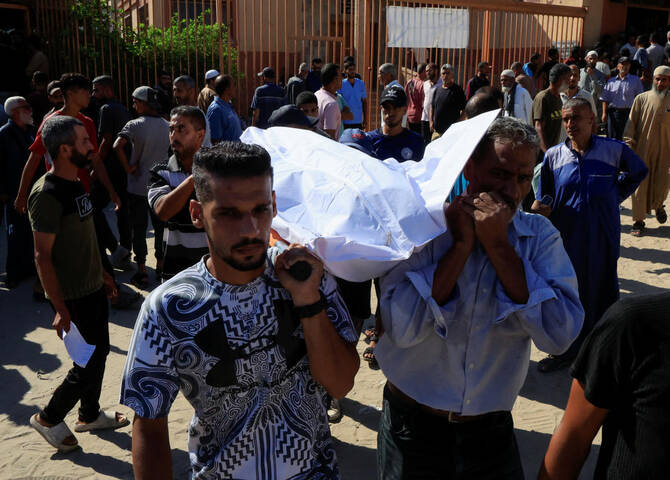
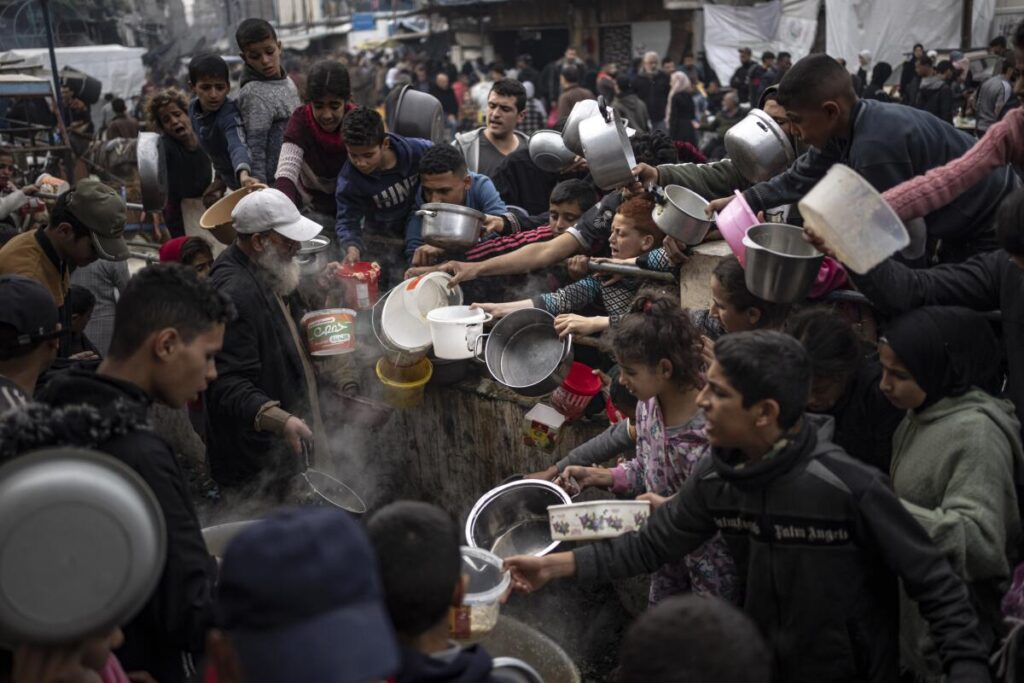
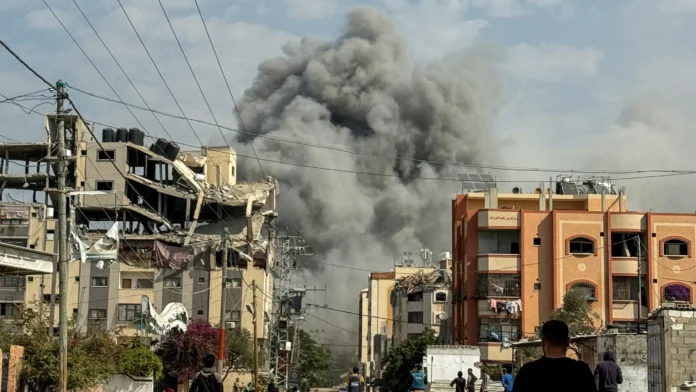
GAZA CITY, Gaza Strip (BN24) — An Israeli-backed American aid organization operating in Gaza said Wednesday that 20 Palestinians were killed near one of its food distribution sites in southern Gaza, as Israeli airstrikes elsewhere killed 22 more people, including 11 children, according to local hospital officials.
The Gaza Humanitarian Fund (GHF) reported that 19 people died in a stampede and another person was fatally stabbed as chaos erupted near a distribution hub in the city of Khan Younis. The organization, which is based in Delaware and began operating in February, rarely comments publicly about incidents at its aid centers but blamed the violence on what it called “deliberate panic and misinformation spread by Hamas.” It did not provide evidence for the accusation.
Since the start of the war on October 7, 2023—when Hamas fighters launched an unprecedented attack on Israel—Israeli forces have carried out an intense bombardment and blockade of Gaza that has driven much of the territory’s more than 2 million people into desperate hunger. Food security experts have repeatedly warned that famine is imminent for many communities.
Palestinians say the danger at distribution sites goes beyond overcrowding. According to Gaza’s Health Ministry and multiple eyewitness accounts, Israeli troops frequently open fire on crowds traveling through Israeli military zones on their way to collect aid. Hundreds have been killed and many more wounded as they attempted to reach food convoys.
The GHF distribution network was set up as part of an Israeli-approved relief initiative to deliver humanitarian supplies across Gaza during the war. But residents say even those efforts have often descended into deadly disorder as masses of hungry families gather in hopes of securing flour, rice, and other staples.
Wednesday’s incident marked one of the deadliest days recently at an aid location. Medical teams rushed the injured to nearby field hospitals already overwhelmed by casualties from Israeli airstrikes that hit residential areas across central and northern Gaza overnight.
LOS ANGELES (BN24) — The Trump administration announced Tuesday it will begin withdrawing 2,000 National Guard troops from Los Angeles, weeks after they were dispatched to help federal agents respond to protests against immigration raids.
Chief Pentagon spokesman Sean Parnell confirmed the decision in a statement but did not specify how long the remaining forces would remain in Southern California. About 4,000 California National Guard members and 700 active-duty Marines were originally mobilized in early June under orders from President Donald Trump. Their mission was to protect federal buildings and assist immigration authorities carrying out arrests.
The deployment, which was expected to last 60 days, quickly drew criticism from California’s Democratic leadership. Governor Gavin Newsom filed a lawsuit to block the deployment, arguing Trump had overstepped his authority by sending troops over the state’s objections. While a district judge initially ruled the president acted unlawfully, a federal appeals court allowed the deployment to continue while the case proceeds.
Newsom sharply criticized the operation as a political stunt, accusing Trump of using National Guard members as “pawns.”
“While nearly 2,000 of them are starting to demobilize, the remaining guardsmen continue without a mission, without direction, and without any hopes of returning to help their communities,” Newsom said in a statement. “We call on Trump and the Department of Defense to end this theater and send everyone home now.”
The protests that triggered the deployment erupted across Los Angeles and surrounding cities after immigration enforcement raids led to hundreds of arrests. Demonstrators accused federal agents of targeting immigrant communities and called for an end to the sweeps.
It remains unclear how soon the remainder of the troops and Marines will depart the region.
BEIRUT (BN24) — Israeli air strikes on Tuesday killed at least 12 people, including five Hezbollah fighters, in Lebanon’s Bekaa Valley, marking the deadliest escalation in the area since a U.S.-brokered truce took effect last November, according to Lebanese state media.
Lebanon’s National News Agency reported that the strikes hit the Wadi Fara region in northern Bekaa, damaging a camp housing displaced Syrians and injuring eight others. Bachir Khodr, governor of the Bekaa, said seven of those killed were Syrian nationals.
Israel’s military said the raids targeted training facilities and weapons warehouses used by Hezbollah’s elite Radwan force. Defence Minister Israel Katz described the assault as a “clear message,” accusing the Iranian-backed group of trying to rebuild its capacity to carry out cross-border attacks.
“Israel will respond with maximum force to any attempt at rebuilding,” Katz said, adding that responsibility for maintaining the ceasefire also rested with the Lebanese government.
There was no immediate comment from Hezbollah or Lebanon’s leadership on the latest strikes.
The air assault underscores the fragility of the ceasefire agreement reached last November to end months of clashes along the Israeli-Lebanese border. Under the deal, Hezbollah pledged to withdraw fighters north of the Litani River, roughly 30 kilometers (20 miles) from Israel, leaving the Lebanese army and United Nations peacekeepers as the sole armed forces in the area.
Israel, for its part, was required to pull out troops from Lebanese territory. But it has retained positions in five areas it considers strategic, fueling tension and sporadic violence.
Tuesday’s bombardment came despite repeated U.S. diplomatic efforts to prevent a renewed conflict. Washington recently offered a proposal to Beirut that would see Hezbollah disarm within four months in exchange for a full Israeli withdrawal and an end to aerial attacks.
Israel dealt Hezbollah heavy blows during last year’s war, assassinating its longtime leader Hassan Nasrallah and several top commanders while destroying much of its weapons stockpile. Yet Israeli officials have accused the group of quietly rebuilding infrastructure and smuggling arms.
The strikes on Wadi Fara triggered widespread panic among residents of nearby villages, many of whom fled homes fearing further attacks. Images published by Lebanese media showed destroyed buildings and charred vehicles.
The United Nations Interim Force in Lebanon (UNIFIL) called for restraint and urged both sides to adhere to the ceasefire agreement to avoid a broader confrontation.
DAURA, Nigeria (BN24) — Nigeria honoured former President Muhammadu Buhari on Tuesday with a state burial steeped in military ceremony, heartfelt chants of “Sai Baba,” and the quiet solemnity of a leader laid to rest in the backyard of his ancestral home.
Buhari, who died Sunday at age 82 in a London hospital after an undisclosed illness, was interred in Daura, the northern Katsina state town where he was born. His coffin, draped in Nigeria’s green and white flag, arrived by military aircraft and was received by President Bola Tinubu, senior officials, and hundreds of mourners.
A 21-gun salute thundered across the tarmac as a military parade paid final respects before the casket was driven 80 kilometers (50 miles) to Daura. There, throngs of supporters climbed trees and pressed against barricades for one last glimpse as the casket was lowered into the earth.
President Tinubu declared seven days of national mourning and a public holiday to commemorate Buhari’s legacy.
Buhari first seized power in a 1983 military coup, ruling for less than two years before being ousted. More than three decades later, he returned as a civilian politician, defeating incumbent Goodluck Jonathan in 2015 to become the first opposition candidate to win Nigeria’s presidency through the ballot box. He served two terms until stepping down in 2023.
While Buhari was celebrated by supporters as an austere leader who fought corruption and invested in infrastructure, his presidency was overshadowed by economic turmoil, widespread insecurity, and a deepening crisis in the oil sector.
Supporters at the burial site, some weeping, hailed him as a man who tried to guide Nigeria through turbulent times. “I belong to everybody and I belong to nobody,” Buhari often declared, cultivating an image as a principled figure above entrenched political factions.
But despite promises to restore security, violence spread far beyond Boko Haram’s insurgency in the northeast. Armed groups and criminal gangs extended their reach across large parts of the country, underscoring the limits of Buhari’s authority.
Speaking to Al Jazeera after Buhari’s death, Alexis Akwagyiram, managing editor of Semafor Africa and a longtime observer of Nigerian politics, said the former president will be remembered most for breaking Nigeria’s political mold.
“He was the first opposition candidate since the return to civilian rule to win at the ballot box,” Akwagyiram said. “History will remember him favourably for that.”
Yet Buhari’s economic stewardship drew criticism. His determination to prop up the naira led to multiple exchange rates and two recessions, which many economists blamed on policy missteps.
Still, Akwagyiram noted that Buhari’s image as a leader untainted by personal scandal resonated with Nigerians weary of corruption.
“He had the personal brand of integrity and honesty,” he said. “In a political climate renowned for graft, that was appealing. He didn’t try to enrich himself—that’s something history will look on favourably.”
As the chants of “Sai Baba” echoed across Daura and the last spadefuls of earth were thrown, Nigerians bid farewell to a leader whose legacy—like the nation itself—remains both complicated and unfinished.
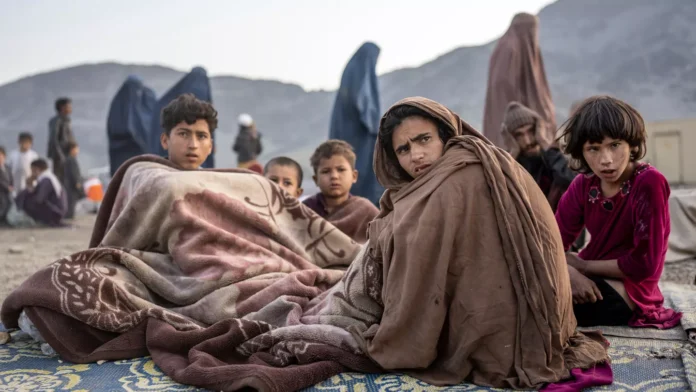
LONDON (BN24) — Britain established a covert programme to resettle thousands of Afghans after a Ministry of Defence data breach exposed the identities of more than 33,000 people, placing them in potential danger from the Taliban, newly released court documents have revealed.
A judgment issued in May 2024 by London’s High Court—made public Tuesday—indicated that as many as 20,000 Afghans could ultimately be offered relocation to the UK, a commitment expected to cost taxpayers several billion pounds.
Defence Minister John Healey told Parliament that approximately 4,500 people are either already in Britain or currently in transit under the secret scheme, known as the Afghan Response Route, at a cost of about £400 million ($540 million).
A Ministry of Defence-commissioned review, also published Tuesday, showed that by May, more than 16,000 people affected by the breach had been resettled in the UK.
The leak involved personal details of thousands of Afghans who had assisted British forces during the 20-year military campaign, which ended in a chaotic withdrawal in 2021. The breach first came to light in August 2023 when a portion of the data was inadvertently posted on Facebook. Officials discovered that the dataset included the names and personal information of nearly 19,000 applicants and their families seeking relocation.
The then-Conservative government obtained a rare superinjunction in September 2023 to prevent public disclosure of the breach, warning that exposure could lead to extrajudicial killings or other reprisals by the Taliban. That injunction was lifted this year following a legal challenge.
Prime Minister Keir Starmer’s centre-left government, which came to power last July, ordered a comprehensive review of the breach, the injunction, and the resettlement programme. While the review confirmed Afghanistan remains dangerous, it found little evidence that the Taliban were systematically targeting people connected to the UK.
Healey on Tuesday apologised for the breach, calling it “an incident that should never have happened,” and confirmed that the Afghan Response Route has now been closed.
Alongside those resettled through this special scheme, Britain has relocated about 36,000 more Afghans through other formal resettlement routes.
British troops first deployed to Afghanistan after the September 11 attacks as part of the US-led “War on Terror,” eventually peaking at nearly 10,000 UK service members on the ground.
The UK government is also facing lawsuits from those impacted by the leak.
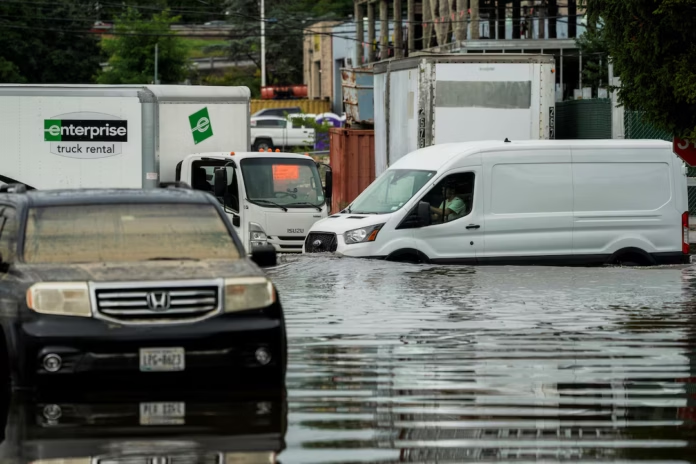
NEW YORK (BN24) — Torrential rain swept across the Northeast on Monday, killing at least two people in New Jersey and triggering widespread flooding that shut down subway lines, closed highways, and prompted states of emergency.
The deaths occurred in Plainfield, New Jersey, where authorities said a vehicle carrying two people was swept into Cedar Brook during flash flooding. Local officials confirmed the fatalities in a statement posted on Facebook.
The powerful storm inundated streets across New Jersey, New York, and Pennsylvania late Monday, stranding vehicles and leaving neighborhoods underwater. By early Tuesday, most flash flood warnings had expired, but numerous roads remained impassable.
New Jersey Governor Phil Murphy declared a state of emergency as the rainfall intensified, urging residents to stay off the roads. Footage shared by CBS showed floodwaters overtaking a major roadway in Scotch Plains, trapping buses and other vehicles.
In North Plainfield, a house caught fire and collapsed soon after the family inside managed to evacuate. Officials believe an explosion may have sparked the blaze. No injuries were reported.
The storm caused major disruptions to New York City’s subway system. The Metropolitan Transportation Authority temporarily suspended service on several lines, while others faced extensive delays. Videos posted online showed water pouring into a Manhattan subway station, flooding the platform. Another image captured passengers standing on seats to avoid rising water inside a train car.
Flooding also closed sections of the Cross Bronx Expressway and Saw Mill River Parkway, and toppled at least one tree in the Bronx.
Emergency teams in Westchester County worked through the night to rescue drivers trapped in submerged vehicles, county spokesperson Carolyn Fortino said. “Residents are still strongly advised to avoid all travel unless fleeing an area that is subject to flooding or under an evacuation order,” she added.
Staten Island recorded between 4 and 6 inches of rain, prompting a flood warning, while parts of southeastern Pennsylvania saw even more extreme totals. Officials in Mount Joy, Pennsylvania, declared a disaster emergency after more than 7 inches of rain fell in less than five hours, filling some homes with up to five feet of water. Emergency responders conducted at least 16 water rescues.
“The declaration enables us to access additional resources to support residents and accelerate recovery efforts,” Mount Joy’s emergency management coordinator Philip Colvin said. By Monday evening, water levels had begun to recede.
In Metuchen, New Jersey—about 34 miles southwest of Manhattan—Mayor Jonathan Busch said flooding was significant but had eased by nightfall. “It looks like the worst of the storm is behind us and thankfully, everyone is safe,” Busch wrote on Facebook.