Home Blog Page 302

Mali Military Junta Seizes Control of Barrick Gold Mine Amid Tax Dispute

BAMAKO, Mali (BN24) — Mali’s military junta has assumed operational control of the Loulo-Gounkoto gold mine, one of the world’s largest mining complexes owned by Canada’s Barrick Gold, amid a deepening dispute over unpaid taxes and strained relations between the West African nation and foreign investors.

On Monday, a Malian judge ruled that the Barrick-operated mine would be placed under provisional administration for six months, marking the most forceful step yet in the government’s bid to assert authority over the multibillion-dollar mining asset. Judge Issa Aguibou Diallo appointed Zoumana Makadji, a former health minister and accountant, to take over operations within 15 days, according to official correspondence with Barrick’s lawyers.

The mine is part of Barrick’s broader African portfolio that includes the Kibali mine in the Democratic Republic of Congo, with both sites ranking among the top 10 largest gold producers globally, per the company’s data.

While Barrick Gold retains legal ownership of the mine, the junta has effectively transferred operational control to a state-appointed administrator, the company confirmed in a statement, characterizing the move as part of a broader crackdown on foreign mining interests under Mali’s military rule.

The takeover follows a series of tense exchanges between Barrick Gold and Mali’s transitional government, which has accused the company of unpaid taxes and questionable contracts signed with prior administrations. The conflict intensified in December when an arrest warrant was issued for Barrick CEO Mark Bristow, and the company offered to pay $370 million in a bid to resolve the dispute.

Despite submitting a formal arbitration request to the International Centre for Settlement of Investment Disputes (ICSID), Malian authorities escalated pressure by suspending gold exports, detaining several Barrick employees, and now seizing mine operations outright.

A source close to the Malian government told AFP that the court’s decision was intended to “protect national economic interests” and “prevent the sudden closure of the mine in the absence of a revised agreement.”

Barrick Gold responded with alarm, stating that its detained employees remain “unjustly imprisoned” and were being “used as leverage” in negotiations. “To date, no credible rationale has been presented to justify this detention,” the company said. “The Government’s ever-increasing demands have lacked both factual and legal foundation.”

Despite the rising tensions, Barrick reaffirmed its commitment to engaging with Mali’s government through both arbitration and direct dialogue, aiming for a “constructive, mutually acceptable solution.”

The company also warned that the current actions undermine the transparency and trust necessary for long-term partnership, hinting at potential risks for Mali’s broader investment climate.

Mali, one of Africa’s top gold producers, has grown increasingly confrontational with foreign mining companies since its military seized power in 2020. The country has faced ongoing jihadist violence, severe economic hardship, and rising poverty, leading the junta to seek increased revenue from natural resources.

In a parallel incident last November, the CEO of Australian firm Resolute Mining and two employees were arrested in Bamako during a similar tax dispute. They were released only after the company paid $80 million upfront, with a promise of an additional $80 million later.

The developments signal a broader shift in Mali’s approach to resource governance, raising alarms among international investors and human rights advocates alike, who warn that arbitrary detentions and asset seizures may further isolate the country economically.

As the dispute with Barrick Gold continues, industry analysts say the outcome could serve as a critical test of Mali’s willingness to honor international contracts and its capacity to attract or retain credible foreign investment.

Kenyan Police Fire Teargas at Protesters Amid Outrage Over Blogger’s Death in Custody

NAIROBI, Kenya (BN24)— Kenyan police fired teargas at protesters in Nairobi on Tuesday as public anger erupted over the death of blogger Albert Ojwang, whose passing in police custody has intensified accusations of extrajudicial killings by security forces.

Violent clashes unfolded in downtown Nairobi as unidentified men on motorbikes—some hooded—attacked protesters, dispersing crowds in chaotic scenes captured by local broadcaster NTV. The bikers were heard shouting, “No protests,” before whipping demonstrators and bystanders alike, according to Amnesty International’s Kenya chapter in a post on X. Reuters said it could not immediately confirm who the motorcyclists were.

The Kenya police spokesperson did not respond to requests for comment on the escalating unrest or the origin of the armed bikers.

The protests, which also spread to Mombasa, Kenya’s second-largest city, were triggered by the death of 31-year-old teacher and blogger Albert Ojwang, who died just two days after being arrested earlier this month. Police initially claimed he had died by suicide while in custody.

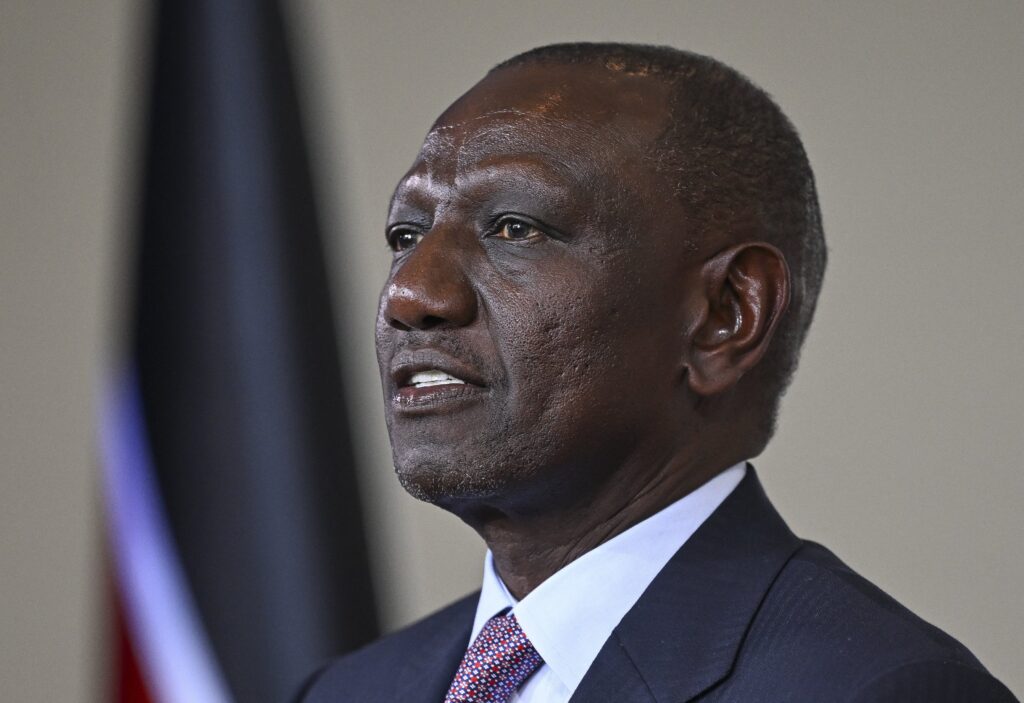
However, a subsequent independent autopsy revealed signs of assault, contradicting the official account and prompting national outrage. Police Inspector General Japhet Koome later issued a public apology, while President William Ruto called Ojwang’s death “heartbreaking and unacceptable,” admitting he had died “at the hands of the police.”

Ojwang was arrested after Kenya’s deputy police chief Eliud Lagat lodged a formal complaint against him, prompting a criminal probe by the Independent Policing Oversight Authority (IPOA). His death has quickly become a flashpoint in a broader debate over police accountability, especially in light of a pattern of brutality documented in recent years.

Protesters in both Nairobi and Mombasa held placards reading, “Stop killing us” and “Ruto must stop killing us,” in an appeal to the president to rein in police excesses. Demonstrations last week in the capital saw vehicles set ablaze and more teargas deployed by riot police. It remains unclear who was responsible for setting the vehicles on fire.

Deputy police chief Eliud Lagat announced on Monday that he was stepping aside temporarily pending the results of an ongoing investigation into Ojwang’s death. In a further development, two senior police officers and a CCTV technician allegedly ordered to dismantle surveillance cameras at the station where Ojwang was detained have been arrested in connection with the case.

Rights groups say the latest unrest underscores growing public frustration over persistent abuses by Kenyan security forces, despite repeated government promises to pursue reform. More than 60 people were killed in anti-government protests last year, many of them in police crackdowns on demonstrations over proposed tax hikes.

“This case has become a symbol of what Kenyans see as impunity within the police force,” said a Nairobi-based human rights advocate. “We’re seeing not just anger over one man’s death, but over a system that allows this violence to continue.”

The growing unrest presents a significant challenge for President Ruto, who faces mounting pressure to rein in security forces and demonstrate accountability. While Ruto has publicly condemned Ojwang’s death, critics say statements are not enough, and call for meaningful institutional reform and prosecution of those responsible.

As calls for justice grow louder, protesters vow to continue demonstrating until Ojwang’s killers are held accountable, and broader protections against police abuse are enacted.

Whether the government will address the root causes of the crisis—or continue to respond with force—remains a pressing question in a nation still haunted by a long history of security force impunity.

Uganda’s Museveni Signs Law Reinstating Military Trials for Civilians, Defying Supreme Court Ruling

KAMPALA, Uganda (BN24)— President Yoweri Museveni has signed into law new legislation reinstating military trials for civilians, Uganda’s parliament announced on Monday, setting the stage for a fresh legal and political showdown over the treatment of opposition figures and the separation of powers in the East African nation.

The move directly defies a Supreme Court ruling issued earlier this year, which had deemed the military prosecution of civilians unconstitutional and ordered an end to the long-standing practice. That landmark verdict had forced the government to transfer several high-profile political cases, including those involving opposition leader Kizza Besigye, from military to civilian courts.

In an official post on X, formerly Twitter, Uganda’s parliament confirmed Museveni had signed the Uganda Peoples’ Defence Forces (Amendment) Act, 2025, which was passed last month. The legislation provides a legal framework for military courts to once again try civilians, particularly in cases involving the alleged use of firearms in political violence.

The reintroduction of military tribunals has been widely condemned by human rights organizations and opposition leaders, who argue the law violates constitutional protections and serves primarily as a tool to intimidate and silence government critics. They also contend that the move could trigger another constitutional challenge.

“Reinstating military trials for civilians after the highest court declared them unlawful is not just a constitutional crisis—it’s a direct threat to Uganda’s fragile democratic framework,” said one Kampala-based legal rights advocate, speaking on condition of anonymity.

Opposition figures have repeatedly accused Museveni’s government of using military courts as a parallel justice system to persecute critics under the guise of national security. The 79-year-old president, who has ruled Uganda since 1986, has long defended the use of military tribunals for what he calls “grave offenses involving weapons.”

Government officials argue that the legislation is necessary to prevent the rise of “militant political groups” and maintain public order. After the bill’s passage, the Ugandan army’s spokesperson lauded the measure as a deterrent against groups seeking to subvert the democratic process.

The debate over military trials has deep political roots in Uganda. In the past, opposition leader Kizza Besigye was tried in a military court for treason and weapons charges—until court orders forced the trial to be moved to civilian jurisdiction. Likewise, Robert Kyagulanyi, known widely as Bobi Wine, was once charged in a military tribunal over alleged illegal gun possession—a case that was later dropped amid international pressure.

Bobi Wine, a pop star-turned-opposition leader, is expected to challenge Museveni in the 2026 elections and remains a vocal critic of state repression. His arrest, alleged torture, and surveillance by security forces have turned him into a symbol of youth-led resistance in a country where more than 75 percent of the population is under the age of 30.

Legal analysts say the newly signed law is likely to face immediate challenges in court, especially if Ugandan citizens or rights organizations file a petition citing the recent Supreme Court decision. “This sets up a constitutional confrontation between the executive, the military, and the judiciary,” said a Ugandan constitutional law scholar.

The Supreme Court ruling that banned military trials of civilians had been based on prior legislation that the court found to be incompatible with Uganda’s constitution. Museveni’s government, in response, introduced a revised legal framework aimed at sidestepping that ruling—a move critics say undermines judicial independence.

With tensions rising ahead of the 2026 general elections, the passage of the UPDF Amendment Act may fuel further unrest and deepen the sense of democratic backsliding in Uganda.

Rights organizations and international observers are now watching closely to see how Uganda’s courts respond—and whether the law will stand up to renewed judicial scrutiny.

Chinese Man in Germany Charged With Serial Rape, Attempted Murder After Drugging Victims

FRANKFURT, Germany (BN24)— A 43-year-old Chinese man has been formally charged with 22 criminal offenses in Germany, including aggravated rape, attempted murder, and the illegal distribution of sedatives, following a multi-year investigation into a series of violent sexual assaults involving drugged victims, authorities said Tuesday.

According to Frankfurt prosecutors, the man—whose name was withheld in accordance with German privacy laws—is accused of systematically sedating women, some of whom he knew personally, and sexually assaulting them while they were unconscious. The alleged crimes occurred between January 2020 and November 2024, and the suspect has been held in custody since his arrest in November last year.

In eight documented rape cases, the suspect is believed to have drugged his victims using prescription-strength sleeping pills. In seven of those cases, the dosage was so dangerously high that prosecutors said the victims’ lives were at risk. In four separate incidents, investigators said the suspect overpowered and anaesthetized victims during real estate viewings, during which he raped, filmed, or photographed the unconscious women.

“The defendant acted with extreme criminal energy,” Frankfurt prosecutors said in a written statement, describing the case as “among the most serious of its kind” in recent German legal history.

Investigators also uncovered that the man had been an active member of a private Telegram group, where he allegedly shared tips on how to sexually assault unconscious women. Prosecutors said he sold sedatives illegally to other members of the chat group and may have influenced or enabled other criminal acts through this network.

The suspect, a resident of Offenbach, a city just southeast of Frankfurt, is believed to have carefully planned his assaults over nearly five years, often luring women under false pretenses such as apartment showings or social gatherings before administering the sedatives.

Prosecutors emphasized that in several cases the victims were completely unaware of being assaulted, and only discovered the crimes through later investigation or notification by authorities.

The case comes on the heels of mounting public concern in Europe over the use of drugs in sexual assault crimes, including the recent conviction of Dominique Pelicot in France, who was sentenced in December for repeatedly drugging and raping his wife over nearly a decade, and inviting strangers to do the same. That case shocked the public and brought renewed attention to non-consensual drugging as a tool of sexual abuse.

German authorities say the Offenbach case has raised similarly urgent questions about online networks that promote rape culture, and the availability of sedatives through illegal channels.

If convicted, the man could face a lengthy prison sentence, particularly due to the combination of attempted murder and aggravated sexual assault, both of which carry significant penalties under German law.

Prosecutors said they continue to examine whether more victims may be identified, and encouraged anyone with relevant information to come forward. Authorities did not say whether the man had confessed or denied the charges, but indicated the case file contains substantial digital and forensic evidence, including videos and photographs found on the suspect’s electronic devices.

As the criminal case proceeds, it is likely to fuel broader debates in Germany and across Europe about how law enforcement and digital platforms can do more to prevent sexual violence facilitated by drugs and online communities.

China Begins Evacuations from Iran and Israel, Calls for Ceasefire Amid Escalating Conflict

BEIJING — As the Israel-Iran conflict enters its fifth consecutive day, China has begun evacuating its citizens from both countries and is ramping up diplomatic pressure for an immediate ceasefire, underscoring Beijing’s concern over rising regional instability and the safety of its nationals abroad.

The Chinese Foreign Ministry confirmed Tuesday that embassies and consulates in Israel and Iran have been actively assisting citizens seeking to leave, though specific details on evacuation operations were not disclosed. The move comes as fighting escalates between the two Middle Eastern rivals, with airstrikes damaging civilian infrastructure and casualties mounting on both sides.

At a press briefing in Beijing, Foreign Ministry spokesperson Guo Jiakun said that China is in close contact with both Tehran and Jerusalem, as well as with other stakeholders, in an effort to de-escalate the conflict.
“China calls on all relevant parties, especially those countries that have a special influence on Israel, to shoulder their due responsibilities,” Guo stated. “Immediate measures must be taken to cool down the tense situation and prevent further escalation and spread of the conflict.” Guo did not name specific nations, but the reference was widely interpreted as aimed at the United States.

Chinese diplomatic missions in both countries have issued multiple advisories in recent days, urging citizens to take heightened safety precautions and to leave the conflict zones if possible. The Chinese Embassy in Israel on Tuesday explicitly advised nationals to either return to China or exit the country via land border crossings, noting that Israeli airspace remains closed and a state of emergency has been extended until June 30.

The embassy cited increased security concerns and said many citizens had inquired about the resumption of Hainan Airlines flights and airport operations. However, those inquiries went unanswered as the security environment continued to deteriorate.

In a public notice on WeChat, the embassy listed multiple overland exit points and recommended the Jordanian route as the most viable option.
“The Israeli-Iranian conflict continues to escalate, with civilian facilities damaged and casualties rising,” the statement warned.

Meanwhile, the Chinese Embassy in Tehran issued a parallel evacuation notice, also on WeChat, warning that although Iranian airspace is still closed, land border crossings could soon be sealed due to the conflict’s unpredictability.

The embassy identified crossings into Turkey, Armenia, and Turkmenistan as possible escape routes, with distances from Tehran ranging from 760 to 910 kilometers (472 to 565 miles).

While facilitating evacuations, Beijing is also intensifying diplomatic outreach. China has consistently urged both Israel and Iran to halt military action, warning that unchecked escalation could plunge the broader Middle East into further chaos.

Behind the scenes, Iran has asked Qatar, Saudi Arabia, and Oman to urge U.S. President Donald Trump to leverage his influence over Israel to agree to a ceasefire, in exchange for greater Iranian flexibility in nuclear negotiations, sources told Reuters.

Trump, who praised Israel’s initial airstrikes and has so far maintained U.S. neutrality in direct engagement, has not commented on China’s mediation efforts. However, the administration has warned Iran against targeting U.S. interests or personnel in the region.

The evacuation orders signal not only Beijing’s concern for its citizens but also its broader apprehension about the destabilizing impact of the Iran-Israel war, which has already disrupted regional trade and energy markets. Civilian casualties in both countries continue to climb, and airspace closures are crippling commercial aviation and mobility.

While China remains publicly neutral in the conflict, its call for international powers to “shoulder their responsibilities” points to a larger diplomatic strategy: portraying itself as a responsible stakeholder amid Western paralysis and instability in the region.

As the violence shows no signs of immediate abatement, the question remains whether China’s dual-track approach—evacuating citizens while pushing for peace— can yield meaningful results in a conflict where trust, diplomacy, and restraint are in short supply.

G7 Backs Israel, Labels Iran a Threat as Middle East Conflict Escalates

KANANASKIS, Canada — As airstrikes between Israel and Iran threaten to plunge the Middle East into deeper chaos, leaders of the Group of Seven (G7) nations issued a forceful joint statement late Monday expressing unequivocal support for Israel and branding Iran as the “principal source of regional instability and terror.”

The statement, which came amid high-level talks in Canada’s Rocky Mountains, reflects the G7’s growing alarm over the spiraling violence that began Friday when Israel launched a preemptive strike on Iranian military sites, saying the move was necessary to thwart Tehran’s nuclear ambitions.

“We affirm that Israel has a right to defend itself. We reiterate our support for the security of Israel,” the G7 leaders said, while also warning, “Iran can never have a nuclear weapon.”

The conflict marks a dangerous escalation in a region already convulsed by nearly nine months of war in Gaza, where Israel’s military campaign has killed tens of thousands and displaced many more. Iran, which denies any nuclear weapons ambitions and claims its atomic program is for peaceful purposes, has vowed retaliation while accusing Israel of war crimes.

According to Iranian officials, more than 220 people—mostly civilians—have been killed in the strikes so far. Israel, meanwhile, reported 24 civilian deaths following Iranian missile retaliation.

As tensions soared, President Donald Trump announced he would leave the G7 summit early to return to Washington and monitor developments more closely. White House Press Secretary Karoline Leavitt confirmed that Trump would depart after a working dinner with fellow leaders.

The White House has denied direct U.S. involvement in Israel’s strikes but acknowledged that Washington had prior knowledge of the operation. Trump praised the strikes as “excellent” and urged Tehran to avoid targeting American personnel or facilities in the region.

In a dramatic post on social media, Trump issued an ominous warning: “Everyone should immediately evacuate Tehran.” Meanwhile, a new Israeli airstrike on Monday hit Iran’s state broadcaster, prompting further concerns about escalation and the targeting of civilian infrastructure.

Despite the strong support for Israel, the G7 statement also emphasized the need for restraint and broader diplomatic efforts, saying:
“We urge that the resolution of the Iranian crisis leads to a broader de-escalation of hostilities in the Middle East, including a ceasefire in Gaza.”

G7 leaders—representing the U.S., Canada, the UK, France, Germany, Italy, and Japan, along with the European Union—said they were prepared to coordinate efforts to stabilize global energy markets, which have already shown signs of volatility in response to the Israel-Iran crisis.

U.S. Secretary of State Marco Rubio also held a series of urgent phone calls with counterparts in the UK, France, and the EU, discussing the potential for coordinated diplomacy and sanctions in response to Iran’s actions. Despite the hostile rhetoric, Washington reiterated that a nuclear deal with Iran remains a long-term goal.

Iran, a signatory to the Nuclear Non-Proliferation Treaty (NPT), maintains it has the right to enrich uranium for peaceful energy purposes. Israel, which has never signed the treaty and is widely believed to possess a nuclear arsenal, neither confirms nor denies its nuclear capabilities.

The deep mistrust between the two regional powers has stymied diplomatic solutions, and the latest round of violence threatens to undo years of nuclear diplomacy. The G7’s declaration that Iran must never be allowed to obtain nuclear weapons underscores the bloc’s long-standing strategic alignment with Israel on the issue.

As the world watches the Middle East teeter on the edge of full-scale war, the G7’s unified stance signals that Western powers remain firmly behind Israel, while intensifying pressure on Iran—a dynamic that may shape not just the outcome of the current crisis, but the broader security landscape for years to come.

Works Begin in Ireland to Exhume Remains of Hundreds of Babies Found at Unwed Mothers’ Home

Officials in Ireland commenced excavation work Monday at the site of a former Catholic-run institution for unmarried women and their children, beginning a complex forensic operation to identify the remains of approximately 800 infants and young children who died at the facility over four decades.

The long-awaited excavation at the former Bon Secours Mother and Baby Home in Tuam, County Galway in western Ireland, represents a significant step in the country’s ongoing reckoning with historical abuses within church-operated institutions. The work marks a crucial moment for survivors and families seeking answers about loved ones who died at the facility.

The home, operated by an order of Catholic nuns until its closure in 1961, was among numerous institutions that housed tens of thousands of orphans and unmarried pregnant women throughout much of the 20th century. These facilities were part of a system that forced women to surrender their children in what was then an overwhelmingly Roman Catholic society with strict moral codes regarding pregnancy outside marriage.

The investigation into the Tuam facility began in 2014 when historian Catherine Corless conducted research that revealed a disturbing discrepancy in record-keeping. Corless tracked down death certificates for nearly 800 children who died at the home between the 1920s and 1961, but could locate burial records for only one child, raising immediate questions about the fate of the remaining deceased infants.

Subsequent investigations uncovered a mass grave containing the remains of babies and young children within an underground sewage structure on the grounds of the former home. DNA analysis of the discovered remains revealed that the ages of the deceased ranged from 35 weeks gestation to 3 years old, indicating that both premature infants and toddlers were among those buried at the site.

A comprehensive government inquiry into Ireland’s mother-and-baby homes system revealed the scope of child mortality within these institutions. The investigation found that approximately 9,000 children died across 18 different mother-and-baby homes, with respiratory infections and gastroenteritis, commonly known as stomach flu, among the major causes of death.

The mortality rates reflected the poor living conditions and inadequate medical care that characterized many of these institutions, where vulnerable women and children were housed in circumstances that often prioritized moral judgment over basic welfare and healthcare needs.

The religious order that operated the Tuam facility has acknowledged the failures of the institution. The sisters who ran the home offered a “profound apology” and admitted they had failed to “protect the inherent dignity” of the women and children housed there, representing a rare acknowledgment of institutional responsibility for the documented abuses.

Irish Prime Minister Micheal Martin addressed the gravity of the situation on Monday, describing the historical circumstances surrounding the home. “It’s a very, very difficult, harrowing story and situation. We have to wait to see what unfolds now as a result of the excavation,” Martin stated, reflecting the national significance of the forensic work beginning at the site.

Daniel MacSweeney, who leads the exhumation project, emphasized the unprecedented nature of the forensic operation. “This is a unique and incredibly complex excavation,” he said in a statement, noting that the memorial garden at the site would be placed under forensic control and closed to public access beginning Monday.

MacSweeney confirmed that survivors and family members would have opportunities to observe the excavation work in coming weeks, recognizing the personal stakes involved for those seeking closure regarding relatives who died at the institution.

The forensic process will involve meticulous analysis and preservation of remains recovered from the site. Officials have established protocols to ensure that any identified remains will be returned to family members according to their wishes, while unidentified remains will receive dignified burial with appropriate respect for the deceased.

The excavation represents a two-year commitment to uncovering the full extent of what occurred at the Tuam site. The extended timeline reflects both the complexity of the forensic work required and the determination to conduct thorough investigations that can provide definitive answers to families and the broader Irish public.

The Tuam excavation occurs within the broader context of Ireland’s confrontation with its institutional past. The country has undergone significant social transformation in recent decades, moving away from the strict religious conservatism that enabled the mother-and-baby home system to operate with minimal oversight or accountability.

The work at Tuam follows years of advocacy by survivors, historians, and human rights activists who demanded official recognition of the abuses that occurred within Ireland’s network of religious institutions. The excavation represents validation of their efforts to ensure that the experiences of vulnerable women and children are not forgotten or minimized.

The forensic investigation will employ advanced scientific techniques to identify remains and potentially reunite families with deceased relatives after decades of uncertainty. The process acknowledges the fundamental human dignity that was denied to these children in life and seeks to provide appropriate recognition in death.

The Tuam excavation also serves as a form of historical accountability, documenting the systematic failures that led to high child mortality rates within institutional care. The findings may contribute to broader understanding of how social stigma, religious doctrine, and inadequate oversight combined to create conditions that proved fatal for hundreds of vulnerable children.

The project represents Ireland’s commitment to confronting difficult aspects of its past while honoring the memory of those who suffered within institutional systems. The excavation work at Tuam stands as both a memorial to the deceased children and a testament to the country’s determination to acknowledge historical injustices and provide dignity to those who were denied it in life.

Israel Warns 300,000 People in Tehran to Evacuate as Trump Issues Ominous Message

Israel issued evacuation warnings to hundreds of thousands of Tehran residents on Monday as its air campaign against Iran’s capital appeared to expand on the fourth day of an intensifying conflict that has drawn urgent warnings from President Donald Trump about Iran’s nuclear capabilities.

The Israeli military directed 330,000 people to evacuate from central Tehran, targeting an area that houses Iran’s state television headquarters, police facilities, and three major hospitals, including one operated by Iran’s paramilitary Revolutionary Guard. The evacuation zone encompasses a significant portion of the capital, which is home to approximately 9.5 million residents.

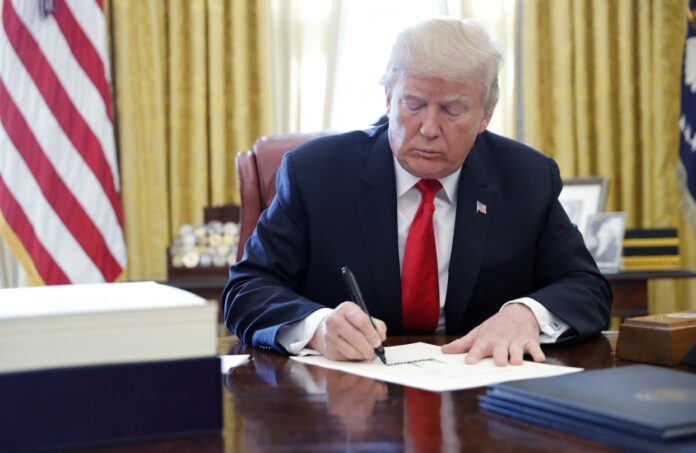
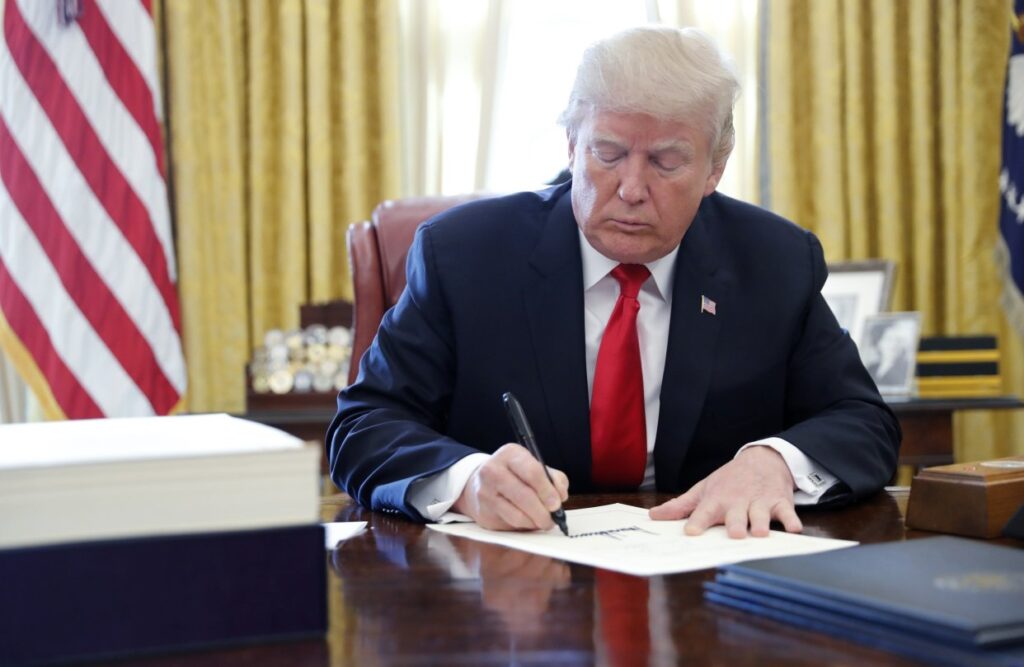
Trump issued an ominous warning on his social media platform Monday evening, declaring that “IRAN CAN NOT HAVE A NUCLEAR WEAPON” and urging immediate evacuation of Tehran. “Everyone should immediately evacuate Tehran!” the president wrote, underscoring the gravity of the escalating situation.

White House press secretary Karoline Leavitt announced on social media that Trump was returning from the G7 summit in Canada a day early due to the intensifying conflict between Israel and Iran, highlighting the administration’s concern about the rapidly deteriorating situation.

An Iranian television anchor was forced to flee her studio during a live broadcast as explosions struck the headquarters of the country’s state-run television station. The dramatic footage showed the reporter hurrying off camera as dust filled the studio following what she described as “the sound of aggression against the homeland.”

The state television network reported that its building was hit by four bombs, causing the live broadcast to abruptly switch to prerecorded programming. An anchor later assured viewers that while a few colleagues had been injured, their families should not worry. The network relocated its live programming to an alternative studio to continue operations.

Prime Minister Benjamin Netanyahu declared that Israeli strikes have set Iran’s nuclear program back “a very, very long time” and confirmed he maintains daily contact with Trump. “The regime is very weak,” Netanyahu added, suggesting that Israel’s campaign has significantly degraded Iranian capabilities.

Israel justifies its sweeping assault on Iran’s top military leadership, uranium enrichment facilities, and nuclear scientists as necessary to prevent Tehran from advancing toward nuclear weapons capability. The strikes have killed at least 224 people since operations began Friday, according to Iranian authorities.

Iran maintains that its nuclear program serves peaceful purposes, while U.S. intelligence assessments indicate Tehran has not pursued an organized nuclear weapons program since 2003. However, the head of the International Atomic Energy Agency has repeatedly warned that Iran possesses sufficient enriched uranium to produce several nuclear weapons if it chooses to do so.

Iran has retaliated by launching more than 370 missiles and hundreds of drones at Israeli targets. The Iranian counterattacks have resulted in 24 deaths in Israel and more than 500 injuries, demonstrating the conflict’s escalating human cost on both sides.

Israeli military spokesperson Brigadier General Effie Defrin announced Monday that Israeli forces had “achieved full aerial superiority over Tehran’s skies,” indicating complete control of Iranian airspace. The military reported destroying more than 120 surface-to-surface missile launchers in central Iran, representing approximately one-third of Iran’s total missile capability.

Israeli forces also eliminated two F-14 fighter aircraft that Iran had deployed against Israeli aircraft and neutralized multiple missile launchers moments before they could fire ballistic missiles toward Israel. The strikes targeted 10 command centers in Tehran belonging to Iran’s Quds Force, an elite Revolutionary Guard unit responsible for external military and intelligence operations.

Defrin characterized the Israeli strikes as “a deep and comprehensive blow to the Iranian threat,” suggesting systematic degradation of Iran’s military infrastructure and command capabilities.

Powerful explosions rocked Tel Aviv shortly before dawn Monday, creating plumes of black smoke over the coastal city. Iranian missiles struck a residential building in the central Israeli city of Petah Tikva, damaging concrete walls, shattering windows, and destroying walls of multiple apartments.

Iranian missiles targeted an oil refinery in the northern city of Haifa for the second consecutive night. The early morning strike killed three workers who were sheltering in a building’s safe room when the impact caused a stairwell to collapse, trapping them inside. Despite firefighters’ efforts to extinguish the resulting fire and conduct rescue operations, the three workers died before rescuers could reach them.

One Iranian missile fell near the American consulate in Tel Aviv, with blast waves causing minor damage to the facility. U.S. Ambassador Mike Huckabee confirmed on social media that no American personnel were injured in the incident.

Iranian Foreign Minister Abbas Araghchi appeared to make a diplomatic overture to the United States on Monday, suggesting Washington could play a crucial role in ending hostilities. “If Trump is genuine about diplomacy and interested in stopping this war, next steps are consequential,” Araghchi wrote on social media.

“It takes one phone call from Washington to muzzle someone like Netanyahu,” Iran’s top diplomat stated. “That may pave the way for a return to diplomacy.” The message came after scheduled talks between the United States and Iran were canceled over the weekend following Israeli targeting of key military and political officials in Tehran.

On Sunday, Araghchi indicated that Iran would cease its strikes if Israel implemented a similar cessation, suggesting potential diplomatic pathways despite the escalating violence.

The conflict has forced most Middle Eastern countries to close their airspace, with dozens of airports suspending all flights or severely reducing operations. The aviation disruptions have left tens of thousands of passengers stranded and prevented others from fleeing the conflict zone or returning home.

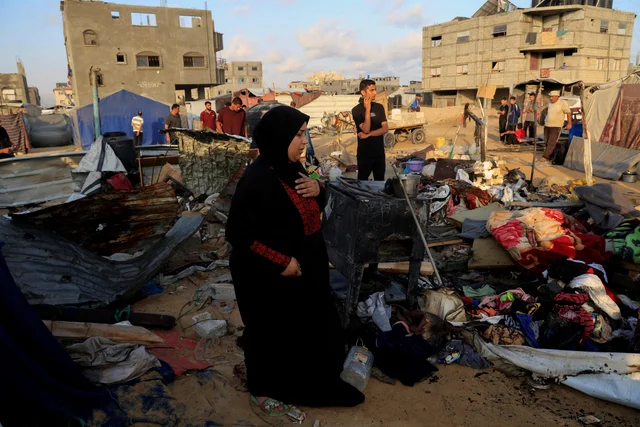
Iranian health authorities reported 1,277 wounded individuals across the country, while Iranians also reported implementation of fuel rationing measures. However, rights groups including the Washington-based Iranian advocacy organization Human Rights Activists suggest the Iranian government’s death toll represents a significant undercount.

The human rights organization claims to have documented more than 400 deaths, including 197 civilians, indicating that casualty figures may be substantially higher than officially reported. The discrepancy highlights the challenges of obtaining accurate information during active conflict.

Prior to launching its initial attack, Israel’s Mossad intelligence agency reportedly positioned explosive drones and precision weapons inside Iran, demonstrating extensive preparation and intelligence penetration. Iran has subsequently detained several individuals and executed one person on suspicion of espionage, reflecting the regime’s concern about internal security breaches.

The escalating conflict has raised international concerns about the potential for all-out war between the regional powers, threatening to propel the already volatile Middle East into greater upheaval. The involvement of nuclear facilities and Trump’s explicit warnings about Iran’s nuclear program add a dangerous dimension to the military confrontation.

The simultaneous targeting of civilian infrastructure, including hospitals and media facilities, alongside military targets has intensified humanitarian concerns about the conflict’s impact on non-combatant populations in both countries.

AP

Russian Drone and Missile Attack on Ukraine Kills 15, Injures 116

A massive Russian missile and drone bombardment killed at least 15 people and injured 116 others across Ukraine during overnight attacks Tuesday, with the heaviest assault concentrated on the capital Kyiv, where civilians were targeted while sleeping in their homes.

Kyiv City Military Administration head Tymur Tkachenko reported 14 deaths and 99 injuries as explosions reverberated throughout the city for hours during the nighttime assault. The bombardment completely destroyed a nine-story residential building and demolished dozens of apartments, prompting emergency workers to conduct rescue operations to extract survivors from beneath the debris.

Ukrainian President Volodymyr Zelenskyy described the scale of the Russian offensive, stating that Moscow launched more than 440 drones and 32 missiles at Ukrainian targets. He characterized the Kyiv attack as “one of the most terrifying strikes” on the capital since the conflict began.

The assault represents one of the deadliest attacks on Kyiv in recent months and occurred following two rounds of direct peace negotiations that failed to achieve progress toward ending the war, now in its fourth year. The timing underscores Russia’s continued commitment to military pressure despite diplomatic efforts.

Russia has systematically targeted civilian areas throughout Ukraine using missiles and drones, resulting in more than 12,000 Ukrainian civilian deaths according to United Nations documentation. Russian officials maintain they only strike military targets, despite extensive evidence of attacks on residential and civilian infrastructure.

Moscow has significantly intensified its aerial campaigns in recent months. Russia launched nearly 500 drones at Ukraine on June 10 in what represented the largest overnight drone bombardment of the war. The capital also endured heavy bombardment on April 24, when at least 12 people were killed in the deadliest assault on Kyiv in eight months.

The escalated long-range attacks have coincided with Russia’s summer offensive targeting eastern and northeastern sections of the approximately 1,000-kilometer front line, where Ukrainian forces face personnel shortages and require additional military support from Western allies.

Uncertainty surrounding U.S. policy regarding the conflict has generated doubts about the level of assistance Kyiv can expect. Zelenskyy had been scheduled to meet with President Donald Trump in Canada on Tuesday to advocate for increased support, but the White House announced Trump’s early return to Washington Monday night due to Middle East tensions.

Ukrainian forces have responded with their own domestically manufactured long-range drone capabilities. The Russian military reported intercepting 203 Ukrainian drones across 10 Russian regions between Monday evening and Tuesday morning, indicating the conflict’s expanding geographic scope.

Russian civil aviation agency Rosaviatsia temporarily suspended flights at all four Moscow airports overnight, along with airports in Kaluga, Tambov, and Nizhny Novgorod as a precautionary measure against potential Ukrainian drone activity.

The Russian drone strikes also targeted the southern Ukrainian port city of Odesa, killing one person and injuring 17 others, according to regional administration head Oleh Kiper. The attack on Odesa demonstrates Russia’s continued focus on disrupting Ukraine’s economic infrastructure and maritime capabilities.

Zelenskyy criticized international inaction regarding Russian aggression, stating that Putin “is doing this simply because he can afford to continue the war. He wants the war to go on. It is troubling when the powerful of this world turn a blind eye to it.”

The almost nine-hour Russian assault delivered “direct hits on residential buildings,” according to a Kyiv City Military Administration statement. “Rockets from the upper floors to the basement,” officials described, indicating the comprehensive destruction of targeted structures.

Interior Minister Ihor Klymenko confirmed that a U.S. citizen died in the attack after suffering shrapnel wounds, highlighting the international dimension of civilian casualties. Thirty apartments were destroyed in a single residential block after being struck by a ballistic missile, Klymenko reported.

“We have 27 locations that were attacked by the enemy. We currently have over 2,000 people working there, rescuers, police, municipal services and doctors,” Klymenko told reporters at one attack site, illustrating the massive emergency response required.

Olena Lapyshniak, a 49-year-old resident whose apartment building was nearly leveled, described the terrifying experience. She heard a whistling sound followed by two explosions that destroyed her windows and doors. “It’s horrible, it’s scary, in one moment there is no life,” she said. “There’s no military infrastructure here, nothing here, nothing. It’s horrible when people just die at night.”

Casualties were reported in Kyiv’s Sviatoshynskyi and Solomianskyi districts. Mayor Vitalii Klitschko said fires erupted in two additional city districts from falling debris of drones shot down by Ukrainian air defenses, demonstrating that even successful defensive actions can cause collateral damage.

The escalation follows Ukraine’s Security Service staging an audacious operation targeting Russian military aircraft at air bases deep within Russian territory, suggesting that Moscow’s intensified attacks may represent retaliation for Ukrainian strikes on Russian military assets.

The attack’s timing and scale reflect Russia’s strategy of maintaining pressure on Ukrainian civilians and infrastructure while diplomatic efforts remain stalled. The targeting of residential buildings during nighttime hours when families are sleeping represents a continuation of tactics that international observers have characterized as deliberate attacks on civilian populations.

The humanitarian impact extends beyond immediate casualties, as thousands of residents have been displaced from damaged buildings and essential services disrupted across affected areas. Emergency services continue working to assess the full extent of damage and provide assistance to affected civilians.

The international community faces renewed pressure to respond to the escalating civilian casualties and systematic targeting of non-military infrastructure. The attack underscores the ongoing challenges in protecting Ukrainian civilians while diplomatic solutions remain elusive in the protracted conflict.

Chelsea’s Club World Cup Opener Played Before Tens of Thousands of Empty Seats in Atlanta

ATLANTA — Chelsea’s much-anticipated debut in the Fifa Club World Cup was played out in front of nearly 50,000 empty seats at Atlanta’s Mercedes-Benz Stadium, highlighting growing concerns over scheduling, pricing, and the tournament’s lack of appeal to American audiences.

Despite Chelsea’s 2-0 win over Los Angeles FC, the sight of a mostly vacant stadium dominated conversation around the newly expanded tournament. Official attendance was listed at 22,137 in a venue that can accommodate 71,000, though the upper tier was closed entirely and vast swaths of the lower bowl sat half-empty.

The match kicked off at 3 p.m. on a Monday, a decision that baffled observers given the weekday work schedule and time zone constraints.

“The environment was a bit strange,” said Chelsea manager Enzo Maresca post-match. “The stadium was almost empty… but we are professionals and have to adapt.”

Ticket pricing and tournament marketing have been widely criticized. Though seats dropped to £26 during the match, prices were significantly higher earlier in the lead-up, with the cheapest pre-kickoff tickets hovering around £37. Despite this, tickets were still available in almost every section.

LAFC, a late addition to the tournament after Leon was disqualified, brought just 150 fans—but they dominated the atmosphere. Chelsea supporters were vocal for goals and player debuts, but overall engagement was subdued.

The matchup was also geographically awkward: Los Angeles is over 2,000 miles from Atlanta, and local interest seemed lacking despite the city being home to Atlanta United, one of Major League Soccer’s best-supported clubs with an average home attendance of 44,037.

In stark contrast, Chelsea previously drew more than 70,000 fans to the same stadium in 2022 for a preseason friendly against Newcastle, suggesting that the Club World Cup’s format and execution—not the teams—may be to blame.

The tournament, hosted exclusively in the United States, is being viewed as a test run for the 2026 World Cup, set to be held across the U.S., Canada, and Mexico. But the early signs are troubling.

Doug Roberson of the Atlanta Journal-Constitution attributed the low turnout to timing and lack of public familiarity.

“The people aren’t here because it’s Monday at 3 p.m.,” he said. “It’s a tournament that doesn’t mean a lot to people in the U.S. because it’s new… and people are trying to save money for the actual World Cup next year.”

Jonathan Tannenwald, chief soccer correspondent for the Philadelphia Inquirer, blamed Fifa’s marketing missteps.

“There was no local organizing committee,” Tannenwald said. “They expected people to just show up. That’s on Fifa.”

According to BBC Sport’s Phil McNulty, the sight of tens of thousands of empty red seats marked a “grim confirmation” of long-standing fears that the Club World Cup might struggle for relevance in an already oversaturated football calendar.

“It’s an early embarrassment for Fifa,” McNulty wrote, “and perhaps a warning about realistic ticket pricing and match scheduling ahead of 2026.”

While Chelsea-LAFC flopped in the stands, other matches have done better. More than 55,000 watched Boca Juniors vs. Benfica in Miami later the same day. The tournament opener between Inter Miami and Al Ahly reportedly drew 60,927 fans, while PSG’s 4-0 demolition of Atletico Madrid in California attracted 80,619.

Still, tickets remain available for every remaining match. While Real Madrid’s opener is nearly sold out through official channels, resale markets suggest thousands remain unsold.

Fifa implemented a “dynamic pricing” model, where ticket prices fluctuate based on demand. Reports indicated some students were even offered four free tickets with a single £14.70 purchase as part of late promotional efforts.

LAFC coach Steve Cherundolo noted the contrast between cities: “Maybe LA likes football more than Atlanta.”