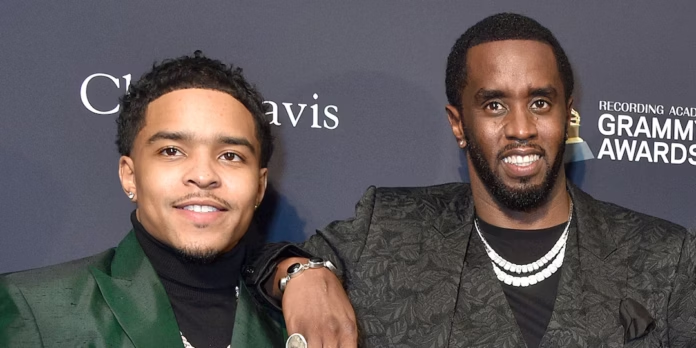
NEW YORK (BN24) — Sean “Diddy” Combs’ former girlfriend testified in harrowing detail Monday that the music mogul violently assaulted her and forced her into a coerced sexual encounter with a male sex worker just weeks after his public apology for abusing another woman surfaced online in 2024.
The woman, testifying under the pseudonym “Jane” for a third consecutive day in federal court, told jurors that Combs attacked her at his California home on June 18, 2024, after an argument sparked by her confronting him about infidelity. The alleged assault, she said, involved Combs putting her in a chokehold, punching her in the face, kicking down doors and dragging her back into the house after she attempted to flee.
According to Jane, the night she had hoped would be romantic turned violent. After the beating, she said Combs gave her ecstasy and forced her into what he described as a “freak-off” with a male sex worker. “You’re not going to ruin my night like this,” she recalled him saying, adding that she tried to resist, only to be asked: “Then is this coercion?”
The incident occurred during an ongoing federal investigation that led to Combs’ arrest in September 2024. He has since pleaded not guilty to sex trafficking and racketeering charges that could result in a life sentence if convicted.
Jane recounted that she had run several blocks away to hide for hours before returning, only to encounter Combs again. She described being chased into a backyard, beaten again, and ultimately dragged by her hair back into the house. In the shower, she said, Combs struck her so forcefully she collapsed. Despite her visible injuries, he allegedly instructed her to apply makeup and fix her hair for the arrival of the male sex worker.
The testimony draws disturbing parallels to a separate civil lawsuit filed in November 2023 by R&B singer Cassie, Combs’ former longtime girlfriend, who accused him of orchestrating drug-fueled group sex marathons referred to as “freak-offs.” That lawsuit was settled within a day for $20 million. Jane testified that when she read Cassie’s claims, she felt as if she were “reading [her] own sexual trauma,” saying the allegations mirrored her experience “word for word.”
Jane is among several women to publicly describe allegations of abuse at the hands of the Bad Boy Records founder. As she left the witness stand Monday, she said of Combs, “I just pray for his continued healing.”
Her testimony continues this week as prosecutors near the end of their presentation. Combs’ legal team is expected to begin cross-examination on Tuesday.
NEW YORK (BN24) — Khaby Lame, the world’s most-followed TikTok star, has left the United States after a brief but unexpected encounter with U.S. immigration authorities, following his appearance at the Met Gala in New York City.
Lame, 25, who has more than 162 million followers on TikTok, had arrived in the U.S. just days before attending the high-profile fashion event in May. The Senegal-born content creator, who was raised in Italy and now holds Italian citizenship, reportedly faced a temporary delay with U.S. Immigration and Customs Enforcement (ICE) over visa-related documentation shortly after his appearance at the gala.
According to a source close to Lame’s team, the issue stemmed from a bureaucratic misunderstanding, not a legal violation. He was briefly held and later released, but the incident prompted him to cut his stay short and return to Italy.
Lame gained international fame during the COVID-19 pandemic with his unique brand of silent comedy, using wordless expressions to mock overly complicated “life hack” videos. His understated, relatable content propelled him to the top of TikTok’s rankings, where he remains the platform’s most-followed creator.
His meteoric rise has also brought global recognition beyond social media. In 2022, he signed a multi-year deal with fashion brand Hugo Boss. More recently, in January 2025, he was named a UNICEF goodwill ambassador for his influence and positive messaging.
Despite the incident, Lame’s team emphasized that his relationship with the United States remains positive, and that future visits are expected once documentation is clarified.
At least 10 people have now died in a school shooting in the Austrian city of Graz, authorities confirmed Tuesday. The updated death toll includes the suspected shooter, a 21-year-old local who apparently took his own life inside the BORG Dreierschützengasse secondary school, located in the northwest of the city. Twelve others were injured in the attack, which took place around 10 a.m. local time.
Austrian Interior Minister Gerhard Karner initially reported nine fatalities, describing the victims as six females and three males. The shooter used two firearms recovered by police at the scene. Styrian State Police Director Gerald Ortner said more than 300 officers were deployed to secure the area, assist with evacuations, and manage the response. Emergency services arrived within minutes after receiving calls reporting the shooting.
Austrian Chancellor Christian Stocker called the event “a dark day” in the country’s history, announcing a three-day period of mourning. Flags will fly at half-staff on all public buildings and a minute of silence will be observed Wednesday. Stocker emphasized that violence has no place in resolving conflicts and underscored the need for schools to remain safe spaces for children.
The investigation is ongoing under the State Crime Office of Styria, with a crisis intervention team supporting victims and families affected by the tragedy. Victims were initially taken to the nearby Helmut List Hall for emergency care before transfer to hospitals. Authorities also set up a meeting point for parents at the ASKÖ football stadium.
Police urged the public to avoid the area and follow emergency services’ instructions while encouraging anyone with information to come forward. Austrian President Alexander Van der Bellen expressed deep sorrow over the loss, noting that the victims were young people with their whole lives ahead of them. “This horror cannot be put into words,” he said.
This latest tragedy in Graz has shocked Austria and raised urgent discussions about school safety and gun violence. The shooting is among the deadliest in recent Austrian history and has prompted national mourning and calls for renewed focus on preventing similar attacks.
NAIROBI, Kenya (BN24) — President William Ruto announced Tuesday that his administration has successfully facilitated the deployment of more than 400,000 young Kenyans to work abroad through the government’s overseas employment program, while urging religious leaders to encourage greater participation in international job opportunities.
Speaking during a meeting with over 600 leaders from the African Independent Pentecostal Church of Africa at State House in Nairobi, Ruto emphasized the success of the Kazi Majuu program and challenged church leaders to promote the initiative among their congregations.
“400,000 young people have gone to work outside Kenya,” President Ruto stated, highlighting what he described as the substantial scale of his government’s efforts in securing overseas employment opportunities for Kenyan youth facing domestic unemployment challenges.
The President specifically addressed church leaders and parents, expressing his desire for youth from AIPCA to benefit from international job opportunities. He outlined the financial advantages of overseas employment, emphasizing the earning potential for program participants.
“You go to work and get paid a salary of Ksh.100,000…Ksh.200,000…Is that little money?” Ruto posed to the assembled religious leaders, referencing monthly salaries equivalent to approximately $770 to $1,540 in U.S. dollars.
President Ruto challenged Kenyans to adopt what he termed a more pragmatic approach to job seeking, advising that people should not be selective about work locations when employment opportunities are available, including construction work and other manual labor positions.
The Head of State concluded his remarks with a call for attitudinal change, urging Kenyans to move away from what he characterized as a culture of complaints toward actively participating in available solutions to unemployment.
“Let us look for opportunities, instead of being people who complain, let us be part of the solution,” Ruto stated during the Tuesday gathering.
The Kazi Majuu program, launched June 30, 2023, represents a cornerstone of the Kenya Kwanza administration’s youth employment initiatives and continues to serve as the government’s primary strategy for addressing unemployment among young Kenyans through international labor mobility partnerships.
Former Foreign Affairs Cabinet Secretary Dr. Alfred Mutua, who announced the program’s launch, described it as a platform designed to empower Kenyan citizens to explore global job opportunities by providing direct access to international employment listings.
“Kenyans can go online and look for job opportunities all over the world. We will be posting a lot of opportunities from different countries. You go in there and you will find a section where you will put in your details to agents who are recruiting people from different parts of the world or even from this country,” Mutua explained during the program’s initial announcement.
The overseas employment initiative addresses Kenya’s persistent youth unemployment challenges by creating formal pathways for international labor migration. The program operates through online platforms where Kenyan job seekers can access listings from various countries and connect with recruiting agents worldwide.
President Ruto’s emphasis on the program’s success comes as his administration faces ongoing pressure to address domestic unemployment rates, particularly among young Kenyans who constitute a significant portion of the country’s population. The overseas employment strategy represents a shift toward international labor mobility as a solution to domestic economic challenges.
The President’s appeal to religious leaders reflects the government’s recognition of churches’ influence in Kenyan communities and their potential role in promoting participation in overseas employment opportunities. By engaging with AIPCA leadership, the administration seeks to leverage religious networks to expand program awareness and participation.
The Kazi Majuu program’s reported success in deploying 400,000 Kenyans abroad indicates the scale of international labor demand and Kenya’s capacity to meet global employment needs through structured migration programs.
ABUJA, Nigeria (BN24) — A Nigerian bishop who testified before Congress about Christian persecution has faced deadly retaliation in his home region, with his village attacked and 20 people killed in what he describes as escalating terrorist violence following his March congressional appearance.
Bishop Wilfred Anagbe of Makurdi Diocese told Fox News Digital that four fatal attacks occurred within 10 days in his diocese after he testified before U.S. lawmakers about the systematic killing of Christians by jihadi militants in Nigeria. The attacks represent a dramatic escalation in violence that Anagbe directly links to his congressional testimony calling international attention to religious persecution.
Nigeria ranks among the world’s most dangerous countries for Christians, according to Open Doors International’s 2025 World Watch List. Of 4,476 Christians killed globally during the organization’s latest reporting period, 3,100 deaths occurred in Nigeria, representing 69 percent of worldwide Christian fatalities.
Open Doors U.K. stated that “jihadist violence continues to escalate in Nigeria, and Christians are at particular risk from targeted attacks by Islamic militant groups, including Fulani militants, Boko Haram and ISWAP (Islamic State West Africa Province).”
The most devastating attack occurred May 25 in Anagbe’s home village of Aondona, where militants launched an hours-long assault that left more than 20 people dead, scores injured, and thousands displaced to makeshift camps. The violence began May 23 when one of Anagbe’s priests, Father Solomon Atongo, was shot in the leg by terrorists and nearly killed.
A subsequent attack June 1 targeted Naka town, with Anagbe reporting that “terror was unleashed” with many killed and displaced. The assault was so intense that even previously displaced residents seeking refuge in a nearby school were not spared.
Anagbe’s congressional testimony in March before the House Africa Subcommittee focused on his almost exclusively Christian diocese in north-central Nigeria, where constant attacks by Islamist Fulani militants have created what he terms a campaign of territorial conquest.
Following his testimony, several foreign embassies in Abuja warned Anagbe in April of credible high-level official threats, including potential detention upon his return to Nigeria and warnings that “something might happen to him.”
Representative Chris Smith, the New Jersey Republican who chairs the House Africa Subcommittee and hosted Anagbe’s testimony, expressed outrage over the threats. Smith stated he was “appalled by reports that Bishop Wilfred Anagbe and Father Remigius Ihyula are facing threats allegedly from Nigerian government sources and affiliated organizations because of the Bishop’s testimony before Congress detailing violence in Nigeria’s Benue State.”
The U.S. Mission in Nigeria posted on social media April 10 calling for the bishop’s “right to speak freely without fear of retribution or retaliation,” declaring that intimidation and threats had been made “because of their March 12 testimony.”
A senior church leader in Nigeria, using the pseudonym “Pastor Winyadebi” due to safety concerns, told Fox News Digital that the attacks represent systematic religious violence. “It has been attacks upon attacks, religious violence. And we say this because the communities that are attacked are Christian communities,” he said.
The pastor explained that Islamist militants “want to be sure that Islam takes over every part of these places. And so they’re doing everything to make sure that Christianity is brought down and Islam is established No. 1. They want to make sure that Sharia law has taken over Nigeria.”
Anagbe characterized the violence in his region as “nothing short of terror attacks on innocent villagers in order to seize their lands and occupy.” He described the perpetrators as conducting “a jihad and conquering territories and renaming them accordingly.”
The bishop drew historical parallels to previous genocides, warning that international inaction could lead to casualties that would “make the Rwandan genocide a child’s play.”
“The world has a lot to do. First of all, the world must learn from past mistakes, the Holocaust and most recently the Rwandan genocide. In both cases, the world hid its face in the sand like an ostrich,” Anagbe said. “If the world does not rise up now to put a stop to the atrocities orchestrated in the name of being politically correct, it may wake up one day to casualties that make the Rwandan genocide a child’s play.”
While the Nigerian government did not respond to requests for comment, the Catholic Herald reported that Nigeria’s Foreign Ministry contacted the United States regarding the bishop’s testimony, noting that “any reports of threats or intimidation against religious leaders would be investigated and appropriate actions would be taken.”
The escalating violence underscores the deteriorating security situation for Nigeria’s Christian population, with Anagbe noting that his years of advocacy about what he terms genocide has gained broader recognition following his congressional testimony and the subsequent deadly retaliation.
LOS ANGELES (BN24) — The Department of Justice on Monday identified the suspect accused of assaulting a federal officer during anti-Immigration and Customs Enforcement (ICE) protests in Southern California, as officials under President Donald Trump’s administration vowed a swift and forceful federal response against violent demonstrators.
U.S. Attorney Bill Essayli announced that Elpidio Reyna has been identified as the individual allegedly captured on video throwing rocks at federal officers in Paramount, California, during protests that turned violent on Saturday. According to federal authorities, Reyna is accused of injuring a federal officer and damaging law enforcement vehicles by hurling rocks in the vicinity of Alondra Boulevard around 3:30 p.m.
Attorney General Pam Bondi, appearing on Fox News’ Hannity, confirmed that a search warrant was being executed at Reyna’s residence and stated that he would be placed on the FBI’s Most Wanted list. “That guy has just been identified, and they are doing a search warrant on his house, as we speak,” Bondi said during her interview with host Sean Hannity. “You can run, you can’t hide. We are coming after you federally.”
The suspect was initially sought by the FBI, which offered a $50,000 reward for information leading to his arrest. A federal wanted poster described Reyna as armed and dangerous.
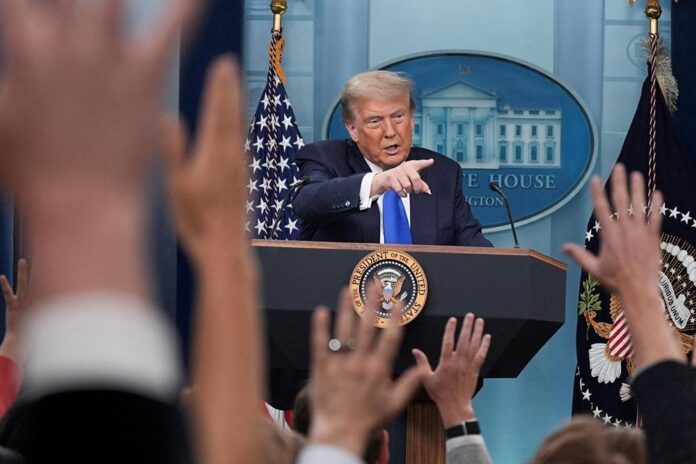
As the Trump administration signals a tougher posture on violent protest-related crimes, officials are invoking federal statutes, including the Hobbs Act, to pursue those who engage in looting, arson, or physical assaults on law enforcement. Bondi emphasized that those convicted of looting businesses in California could face up to 20 years in prison, while individuals charged with spitting on federal officers could face up to five years.
“As President Trump said: ‘You spit, we hit,’” Bondi stated. “Get ready. If you spit on a federal law enforcement officer, we are going to charge you with a crime federally.”
FBI Director Kash Patel echoed the administration’s hardline approach, warning that any assault on a law enforcement officer would be met with prosecution and prison time. “If you assault a law enforcement officer, you’re going to jail—period,” Patel told Fox News Digital. “It doesn’t matter where you came from, how you got here, or what cause you claim to represent.”
Patel reinforced his message on social media, writing, “If the local police force won’t back our men and women on the thin blue line, we @FBI will.”
The anti-ICE demonstrations in Los Angeles are the latest in a series of protests that have intensified across several states. Federal officials have repeatedly warned that those who escalate protests into violent confrontations will face serious consequences under federal law, particularly when injuries to officers or destruction of government property is involved.
The Department of Justice has not yet announced whether Reyna has been taken into custody.
LONDON (BN24) — Britain announced Tuesday it will invest an additional £14.2 billion ($19.25 billion) in the Sizewell C nuclear power plant project in southeast England, while committing more than $8 billion to expand submarine-building capacity as part of a comprehensive spending review defining government priorities over the next four years.
The nuclear investment represents the largest government commitment to atomic energy in a generation, bringing total public funding for the Sizewell C project to £17.8 billion when combined with the £3.6 billion already invested prior to the spending review. Chancellor Rachel Reeves characterized the move as launching “a new era of nuclear power” in Britain during remarks to a trade union conference Tuesday.
The Sizewell C facility, located in Suffolk, is projected to generate approximately 10,000 jobs during peak construction phases and produce sufficient electricity to power around 6 million homes once operational. The plant represents only the second new nuclear facility to be constructed in Britain in more than two decades, following the delayed and cost-overrun plagued Hinkley Point C project.
EDF, the French state-owned energy company developing Sizewell C, initially estimated the project would cost approximately 20 percent less than Hinkley Point C, which has faced multiple delays and is currently expected to begin operations in 2029 with costs ranging between £31-34 billion at 2015 prices.
The British government has not disclosed total projected costs for Sizewell C or provided completion timelines, drawing criticism from opposition groups. “With the continued secrecy about Sizewell C’s total cost, how can voters decide whether the 18 billion pounds pledged to Sizewell C is a good use of their money?” questioned Alison Downes of campaign group Stop Sizewell C.
Government ownership of the project increased significantly after purchasing China’s General Nuclear Power Group stake in 2022 amid security concerns. EDF financial results from February showed the UK government holding an 83.8 percent stake with EDF maintaining 16.2 percent, though EDF’s portion is expected to decrease following Tuesday’s announcement. The project developer indicated in December that five investors were participating in a bidding process.
Simone Rossi, CEO of EDF UK, welcomed the government decision, stating it represents “a vote of confidence in Hinkley Point C, which has re-started the UK nuclear industry and built the experience and skills that will benefit Sizewell C.”
The nuclear investment coincides with substantial defense spending increases, including over £6 billion ($8.13 billion) allocated to submarine building capacity over the four-year spending review period. The defense investment supports major contractors including BAE Systems and Rolls-Royce Submarines, responding to increased security demands and U.S. President Donald Trump’s calls for European nations to assume greater responsibility for regional defense.
Prime Minister Keir Starmer has pledged the largest sustained increase in British defense spending since the Cold War’s conclusion. Last week, Britain announced plans to expand its nuclear-powered attack submarine fleet from seven to as many as 12 vessels, following an independent military capacity review.
The submarine capacity investment encompasses what Reeves described as boosting “capacity, capability and productivity of the UK’s submarine industrial base.” The spending review will also include £4 billion over the next decade for Plymouth naval base improvements and investments in Scottish naval base redevelopment and Sheffield Forgemasters, a steel company producing submarine components.
Britain’s nuclear expansion strategy aims to replace aging power plants while enhancing energy security, meeting climate targets, and creating employment opportunities. The dual investment in nuclear power generation and submarine manufacturing capabilities reflects the government’s commitment to both energy independence and enhanced defense readiness amid evolving global security challenges.
The comprehensive spending announcements form part of Reeves’ first multi-year spending review, with complete results scheduled for release Wednesday, establishing Britain’s strategic priorities across energy and defense sectors for the coming four-year period.
JOHANNESBURG (BN24) — A powerful cold front moving across South Africa has brought heavy snowfall, hazardous road conditions, power outages and a deadly accident, officials said Tuesday, as the country grapples with winter weather disruptions.
Five people were killed in a crash along the N2 highway in the Eastern Cape, where icy conditions contributed to the collision, according to Eastern Cape transport department spokesperson Unathi Binqose. Speaking to local broadcaster Newzroom Afrika, Binqose confirmed that the accident was directly linked to the adverse weather sweeping across multiple provinces.
The South African Weather Service had warned late last week of an incoming cold front expected to cause a steep drop in temperatures nationwide. The system brought with it disruptive rainfall, damaging winds, and snowfall in high-lying eastern areas of the country.
Snowfall was reported beginning Monday in parts of the Eastern Cape, KwaZulu-Natal and the Free State, prompting road closures and travel warnings. Sections of the N2 highway, which connects the affected provinces, were shut down due to treacherous driving conditions, the KwaZulu-Natal transport department said.
South Africa typically experiences snowfall during its winter season from June through August, with temperatures frequently plunging below freezing. However, this week’s snow event is among the more disruptive in recent years due to its reach and intensity.
National power utility Eskom said it was responding to a surge in customer reports of outages across the country. In a post on X, Eskom attributed the widespread power failures to the inclement weather and said it was mobilizing additional resources to address the problem.
“The severe cold front has increased demand and caused technical challenges on the grid due to weather-related damage,” Eskom stated. The utility assured residents it was working to restore service as swiftly as possible.
The South African Weather Service forecasts that the cold front will persist through midweek, warning of continued low temperatures and potential snowfall in elevated regions.
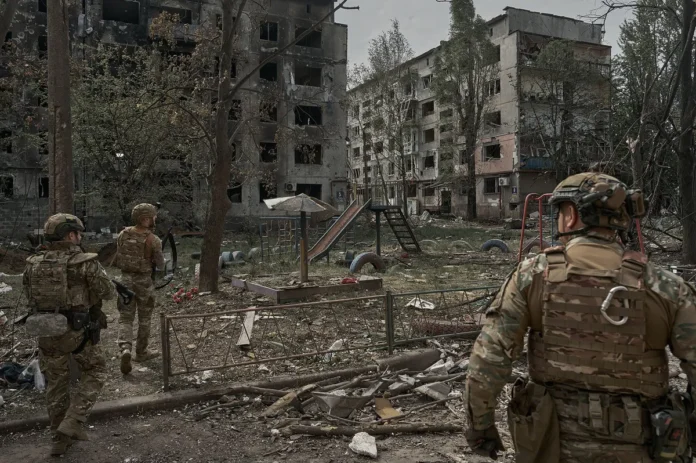
KYIV, Ukraine (BN24) — Russia launched one of the largest air strikes on Kyiv since the start of its full-scale invasion, striking multiple civilian targets including a maternity hospital in Odesa and damaging a UNESCO world heritage site in the Ukrainian capital, officials said Tuesday.
In this photo provided by the Ukrainian Emergency Service, firefighters work on a site of a building damaged after a Russian attack in Kyiv, Ukraine, Friday, Dec. 29, 2023. (Ukrainian Emergency Service via AP)
At least three people were killed and several others were injured in the overnight barrage, which came a day after Moscow conducted its largest drone attack of the war. Ukrainian authorities reported widespread damage and described the assault as part of a stepped-up campaign Moscow says is in retaliation for recent attacks on Russian soil.
In Kyiv, explosions rocked the capital in the early hours, igniting fires and sending plumes of smoke into the sky. According to local officials, seven of the city’s ten districts were hit. One person was killed and at least four were hospitalized. Ukrainian President Volodymyr Zelenskyy called it “one of the largest attacks on Kyiv” since the invasion began in February 2022.
Amid the destruction, the revered Saint Sophia Cathedral—a UNESCO heritage site in central Kyiv—suffered damage, according to Ukrainian Culture Minister Mykola Tochytskyi. “The enemy struck at the very heart of our identity again,” he wrote in a Facebook post, calling the cathedral “the soul of all Ukraine.”
In the southern port city of Odesa, a drone attack struck a maternity ward, residential buildings, and an emergency medical facility, according to regional governor Oleh Kiper. Two men were killed, but all patients and staff at the maternity hospital were safely evacuated.
Iryna Britkaru, 23, who had given birth just days earlier, said the attacks began just as hospital staff moved patients to the basement. “The third [strike] was already very loud, and shrapnel flew… it rained down in the corridor,” she told Reuters.
Natalia Kovalenko, 34, who also gave birth recently, said she was holding on to hope. “If we don’t have hope, then no one will be giving birth,” she said.
Russia’s Ministry of Defense claimed responsibility for the attacks, stating its forces targeted military infrastructure using precision-guided missiles and drones. The statement was reported by Russia’s state news agency, TASS.
Air raid sirens sounded across Kyiv and much of Ukraine for more than five hours, starting around midnight and lasting until approximately 5 a.m. local time. “A difficult night for all of us,” said Timur Tkachenko, head of Kyiv’s city military administration.
Ukraine’s air force reported intercepting 277 of the 315 drones launched nationwide, and said it had downed all seven missiles aimed at the capital. The attack followed Kyiv’s recent strikes on Russian strategic bombers and alleged sabotage of critical infrastructure, including bridge explosions that Moscow says killed seven people.
The latest escalation has also prompted a disruption in Russian domestic air travel. Flights were temporarily suspended at several major airports, including those in Moscow and St. Petersburg, due to incoming drone threats. Flights resumed later Tuesday without reports of damage.
President Zelenskyy renewed calls for stronger international support, urging allies to expedite military aid and impose additional sanctions on Moscow. Ukrainian Foreign Minister Andrii Sybiha echoed the plea, demanding new air defense systems to protect civilians from future attacks.
Despite two rounds of recent peace talks, progress has stalled, with both Moscow and Kyiv accusing the other of obstructing negotiations. The only notable outcome so far has been an agreement on prisoner exchanges. Meanwhile, Russian forces continue to press forward along the eastern front.
U.S. President Donald Trump, who has been vocal about ending the conflict, has expressed frustration over the ongoing stalemate.
LOS ANGELES (BN24)— A Chinese man living illegally in the United States has pleaded guilty to federal charges of exporting firearms, ammunition and military equipment to North Korea at the direction of Pyongyang officials, the US Department of Justice announced Monday.
Shenghua Wen, 42, of Ontario, California, admitted to one count of conspiracy to violate the International Emergency Economic Powers Act and one count of acting as an illegal agent of a foreign government. The 1977 federal law empowers the president to restrict commerce with countries deemed threats to national security.
According to prosecutors, Wen shipped at least three containers of guns bound for North Korea during 2023, with one shipment successfully arriving in Nampo, North Korea, via Hong Kong. The California resident orchestrated the illegal arms trafficking operation despite knowing such exports violated federal law and international sanctions.
To facilitate the weapons smuggling scheme, Wen purchased a firearms business in Houston, Texas, and used fraudulent paperwork to conceal the actual contents of his shipping containers, prosecutors said. The elaborate operation was designed to circumvent strict export controls governing military equipment shipments to the isolated communist nation.
Wen, who was arrested in December, also procured approximately 60,000 rounds of 9mm ammunition and obtained sensitive technology including a chemical threat identification device intended for shipment to North Korea. The extensive procurement operation involved multiple categories of restricted military and dual-use equipment.
The illegal arms trafficking operation began following Wen’s meetings with North Korean officials at the North Korean Embassy in China before he entered the United States on a student visa in 2012. These diplomatic contacts allegedly provided the initial instructions for the multi-year weapons procurement scheme.
North Korean government operatives allegedly transferred approximately $2 million to Wen to finance the illegal arms export operation. The substantial funding enabled the purchase of firearms, ammunition, and sensitive technology through legitimate American businesses that were unaware of the ultimate destination.
The US Attorney’s Office for the Central District of California emphasized that Wen acknowledged the illegal nature of his activities throughout the operation. “Wen admitted that at all relevant times he knew that it was illegal to ship firearms, ammunition, and sensitive technology to North Korea,” the office stated in a press release.
Prosecutors noted that Wen admitted to never obtaining the required federal licenses to export ammunition, firearms, and sensitive devices to North Korea. The defendant also acknowledged acting at the direction of North Korean government officials without providing mandatory notification to the Attorney General of the United States regarding his foreign agent activities.
During FBI questioning, Wen revealed his understanding of North Korea’s intentions for the smuggled weapons and ammunition. According to a criminal complaint filed in September, Wen told investigators he believed the North Korean government wanted the military equipment to prepare for an attack against South Korea.
The case highlights ongoing concerns about illegal arms trafficking to North Korea despite comprehensive international sanctions designed to prevent the regime from acquiring weapons and military technology. US authorities have intensified efforts to detect and prosecute individuals involved in sanctions evasion schemes.
Wen faces significant federal penalties when he appears for sentencing in August. The International Emergency Economic Powers Act violation carries a maximum penalty of 20 years in prison, while the illegal foreign agent charge could result in up to 10 years imprisonment.
The successful prosecution represents a major victory for federal authorities working to enforce arms export controls and prevent weapons technology from reaching hostile foreign governments. The case demonstrates the sophisticated methods used by foreign operatives to acquire American military equipment through legitimate business channels.
Federal investigators continue examining potential additional conspirators and related weapons trafficking networks that may have facilitated similar illegal exports to North Korea or other sanctioned nations. The investigation underscores the ongoing challenges facing US export control enforcement in an era of complex international supply chains.