Home Blog Page 313

Rwanda and Congo Sign U.S.-Brokered Accord on Troop Withdrawal and Economic Cooperation

0

Washington (BN24) – At a signing ceremony in Washington attended by U.S. Secretary of State Marco Rubio, the foreign ministers of Rwanda and the Democratic Republic of Congo formally pledged on Friday to carry out a 2024 agreement that will see Rwandan troops withdraw from eastern Congo within 90 days, according to a copy of the initialled deal reviewed by Reuters.
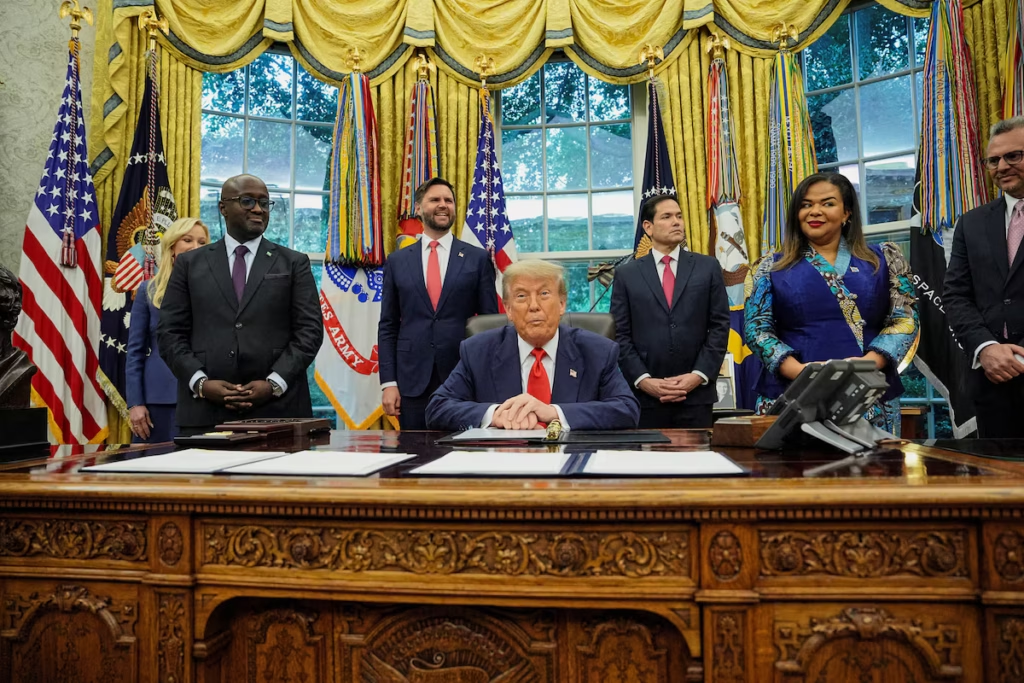
The agreement also commits the two countries to launch a regional economic integration framework over the same period.

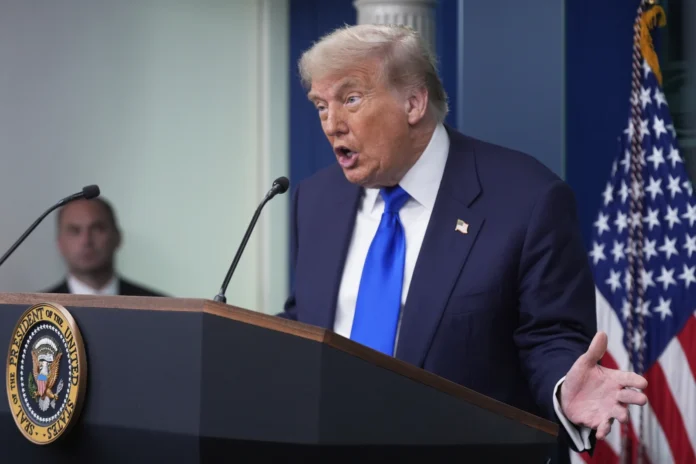
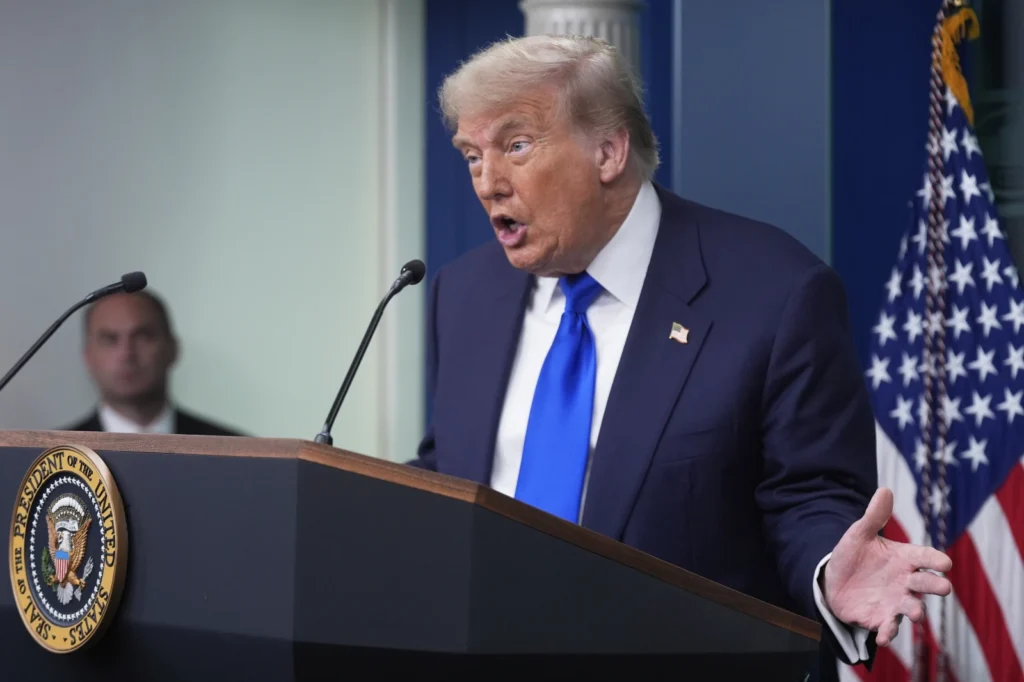
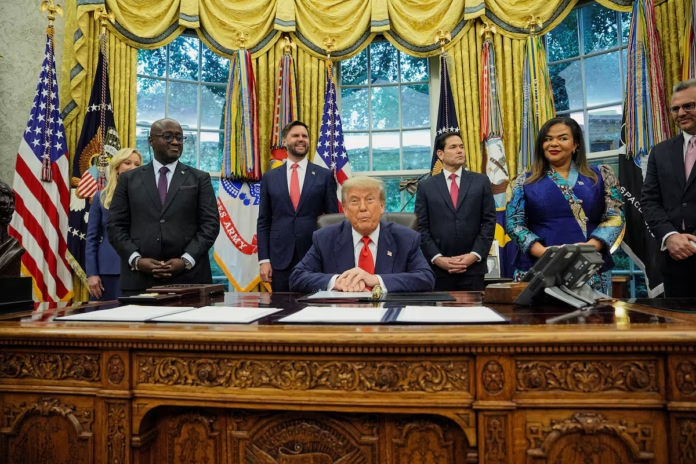
“They were going at it for many years—and with machetes. It is one of the worst wars anyone has ever seen,” President Donald Trump said Friday ahead of the signing. “And I just happened to have somebody that was able to get it settled.”

Trump added that as part of the deal, the United States would secure substantial rights to Congolese mineral resources. “They’re so honored to be here. They never thought they’d be coming,” he said, before a planned Oval Office meeting with the visiting foreign ministers.

M23 and the Path to Withdrawal
Rwanda has deployed at least 7,000 soldiers into eastern Congo, according to diplomats and analysts, backing the M23 rebels who earlier this year captured Congo’s two largest eastern cities and key mining zones.

M23’s offensive renewed longstanding fears of a broader regional war rooted in the aftermath of the 1994 Rwandan genocide.

Rwandan Foreign Minister Olivier Nduhungirehe hailed the agreement as a “turning point,” while Congo’s top diplomat, Therese Kayikwamba Wagner, stressed that true progress would require Rwanda to disengage on the ground.

The initialled text calls for the creation of a joint security coordination mechanism within 30 days to oversee the withdrawal. A separate plan to monitor and verify Rwanda’s exit is also expected to be implemented within three months.

Congolese military operations against the Democratic Forces for the Liberation of Rwanda—a group that includes remnants of forces responsible for the genocide—are scheduled to wrap up over the same timeline.

Reuters reported earlier this week that Congolese negotiators had dropped a previous demand for an immediate Rwandan pullout, clearing the way for the signing ceremony.

Congo, Western governments, and the United Nations have long accused Rwanda of supporting M23 by providing troops and weapons. Rwanda denies aiding the rebels, saying it is acting in self-defense against Congolese forces and Hutu militias linked to the genocide.

Economic Integration and Critical Minerals
The agreement envisions a new economic framework “to expand foreign trade and investment derived from regional critical mineral supply chains,” according to the version seen by Reuters.

Senior White House Africa adviser Massad Boulos previously told Reuters that Washington hoped to finalize the peace and minerals deals together this summer.

Rubio said Friday that heads of state from both countries would return to Washington “in a few weeks” to formalize the broader agreement.

One source familiar with the matter said another signing ceremony is planned at the White House, though no date has been set. Progress in separate Doha talks between M23 and the Congolese government remains a prerequisite before the economic framework can be concluded, the source said.

Analysts said the focus on de-risking and integrating mineral supply chains carried an unmistakable strategic message.

“This is the best chance we have at a peace process for the moment despite all the challenges and flaws,” said Jason Stearns, a political scientist at Simon Fraser University who studies the Great Lakes region. “But it will be up to the U.S., as the godfather of this deal, to make sure both sides abide by the terms.”

The agreement commits Rwanda and Congo to building joint value chains for critical minerals “in partnership, as appropriate, with the U.S. and U.S. investors.”

Tresor Kibangula, a political analyst at Congo’s Ebuteli research institute, said the focus on economic incentives underlined the stakes.

“It remains to be seen whether this economic logic will suffice to end the fighting,” he said.
Supreme Court Scales Back Injunctions Blocking Trump’s Birthright Citizenship Policy

0

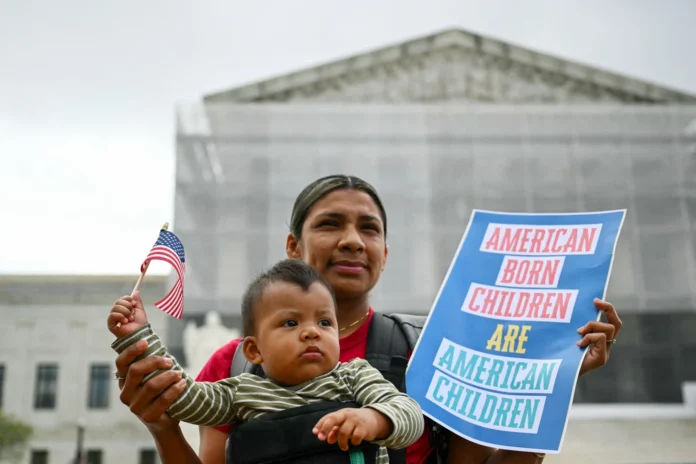
The Supreme Court on Friday delivered a significant victory to President Donald Trump, allowing his administration to advance—at least in part—its plan to end automatic birthright citizenship.

In a 6-3 decision split along ideological lines, the justices ruled that nationwide injunctions issued by lower courts should be narrowed to apply only to the plaintiffs and states that filed the lawsuits. The decision does not address the constitutionality of Trump’s policy itself but clears the way for the administration to begin laying groundwork for its implementation while litigation continues.

“This is a monumental decision,” Trump said at the White House. “It delivers a victory for the Constitution, the separation of powers, and the rule of law by striking down excessive nationwide injunctions.”

The administration argues that the 14th Amendment’s guarantee of citizenship to all people born in the U.S. does not apply to the children of non-citizens and undocumented immigrants. Trump’s executive order, signed on his first day in office in January, would confer citizenship only on children with at least one parent who is a U.S. citizen or lawful permanent resident.

For more than a century, courts have held that nearly all children born on U.S. soil are automatically citizens, with narrow exceptions such as children of foreign diplomats. Every court that has considered Trump’s order has so far blocked it.

The Supreme Court’s decision leaves injunctions in place but limits them to the specific plaintiffs involved in the suits in Maryland, Massachusetts, and Washington state. Justice Amy Coney Barrett, writing for the majority, said the broad injunctions were “more sweeping than necessary.” She directed lower courts to re-evaluate how wide the orders should reach.

“Federal courts must not exceed their authority simply because they believe the executive has exceeded his,” Barrett wrote.

Liberal justices strongly dissented. From the bench, Justice Sonia Sotomayor called the ruling “a travesty for the rule of law” and warned that it would “hamstring” federal judges who need to prevent harm nationwide. Justice Ketanji Brown Jackson in a separate dissent described the decision as “an existential threat to the rule of law.”

The Trump administration has repeatedly complained that nationwide injunctions have derailed its agenda on issues including deportations, federal workforce cuts, and regulation of universities. The Justice Department has argued such injunctions are an unconstitutional overreach by the judiciary.

Advocacy groups challenging the birthright citizenship order wasted no time in responding. Within hours, lawyers filed amended lawsuits and new class-action claims, which could potentially block the policy on a national basis again.

William Powell, senior counsel at the Institute for Constitutional Advocacy and Protection, said his group was seeking class certification to protect all affected children and parents nationwide. “Given this ruling, a class action is the fastest and most effective way to secure relief,” he said.

Trump, who has frequently attacked judges that stand in his way, portrayed the ruling as a correction of judicial activism. “This brings back the Constitution,” he said. “This is what it’s all about.”

For now, the policy technically remains blocked in New Hampshire under a separate lawsuit. The Supreme Court’s ruling allows the administration to continue drafting regulations and planning enforcement while further litigation plays out.

New Jersey Attorney General Matthew Platkin, whose state challenged the plan, said he was confident Trump’s order would never take effect. “And in the meantime, our fight continues,” he said.

Trump Ends Trade Negotiations with Canada Over Digital Tax on Tech Giants

0

President Donald Trump announced Friday that he is immediately ending trade negotiations with Canada in retaliation for its plan to press ahead with a digital services tax targeting major technology companies.

In a post on his social media platform, Trump called the tax “a direct and blatant attack on our country.”

According to the president, Canadian officials informed Washington this week that they would not back down from implementing the measure, which is set to take effect Monday.

The digital services tax applies a 3% levy on revenue generated from Canadian users by both Canadian and foreign companies. The policy will impact U.S. tech giants such as Amazon, Google, Meta, Uber and Airbnb and is retroactive, leaving American firms facing an estimated $2 billion bill payable by the end of the month.

“Canada has made it clear they intend to continue this unfair tax,” Trump wrote. “Accordingly, I am terminating all trade discussions with them immediately.”

The decision halts months of negotiations aimed at easing steep tariffs Trump imposed on Canadian goods. The talks had been viewed as a possible first step toward normalizing economic relations between the two countries.

Canada first approved the digital services tax in June 2024, arguing it was necessary to ensure that large technology platforms pay their fair share in the markets where they profit.

Immigration Officers Arrest Iranian Asylum-Seekers in Los Angeles Amid Rising Tensions

0

Pastor Ara Torosian was at home on Tuesday when he received a panicked phone call from two Iranian members of his Farsi-speaking congregation in Los Angeles: U.S. federal immigration officers were at their residence to arrest them, he told Reuters.

It was the second distressing call he had received that week.

A day earlier, another Iranian couple with a 3-year-old child was detained during a routine immigration appointment, Torosian said.

Both families had recently arrived in the United States as asylum-seekers, entering through the U.S.-Mexico border after securing appointments via the CBP One system—a process launched under President Joe Biden to facilitate orderly crossings. President Donald Trump ended the program shortly after taking office as part of his broader crackdown on immigration.

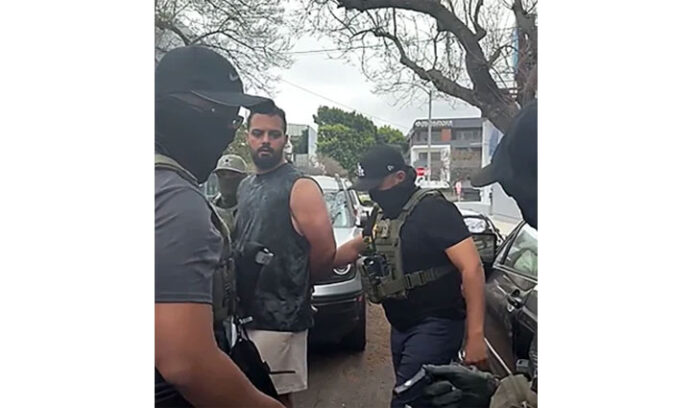
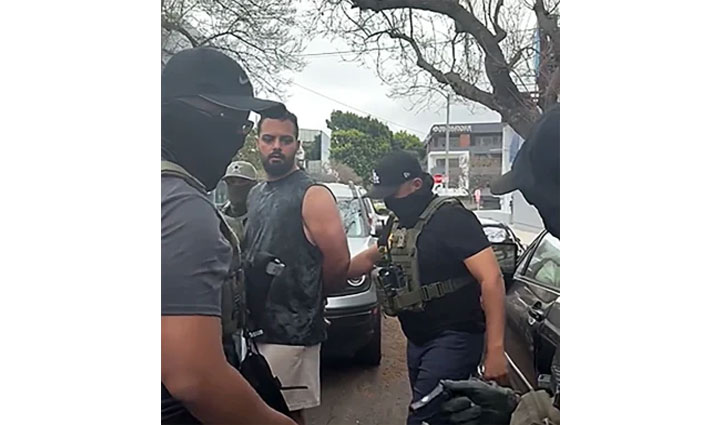
When Torosian arrived at the home on Tuesday, he described seeing “an army” of federal law enforcement officers. He began filming with his cellphone as agents stopped him from approaching his church members.

As officers restrained the woman, Torosian said she suffered a panic attack and began convulsing on the floor.

According to Torosian, the couple had fled religious persecution in Iran.

In a statement posted to X, the Department of Homeland Security confirmed that two Iranian nationals were detained in Los Angeles on Tuesday after being flagged for national security concerns. The agency said the woman was transported to a hospital but was later released and both individuals remain in immigration custody.

The arrests followed U.S. military strikes early Sunday on three Iranian nuclear facilities, escalating tensions between Washington and Tehran. In a separate release on Tuesday, DHS said it had apprehended 11 Iranians over the weekend who were in the U.S. unlawfully.

Although Iran does not accept deportees from the United States, the Supreme Court on Monday cleared the way for the Trump administration to deport migrants to third countries without offering them the chance to present evidence of the dangers they could face there.

Six Americans Arrested in South Korea Over Attempt to Send Rice and Bibles to North Korea by Sea

0

Six Americans were taken into custody Friday in South Korea after allegedly trying to send plastic bottles packed with rice, U.S. dollars, and Bibles toward North Korea by tossing them into the sea, police said.

Authorities said the group launched their effort from Gwanghwa Island, near the tense maritime border, aiming for the bottles to drift ashore in North Korea. A police official, who requested anonymity because he was not authorized to speak publicly, said the Americans are being investigated for potentially violating South Korea’s disaster and safety management laws.

A second police officer confirmed the detentions but provided no additional details, including whether any of the six had been involved in similar actions before.

For years, activists have sent plastic bottles or balloons over the heavily fortified border to deliver food, money, and anti-regime messages into North Korea. These campaigns have repeatedly fueled tensions between the two Koreas. In retaliation, North Korea has launched its own balloons filled with trash, including at least two that landed inside the presidential compound in Seoul last year.

South Korea’s Constitutional Court struck down a 2020 ban on sending such materials across the border, calling it an excessive infringement on free speech. However, the new liberal administration of President Lee Jae Myung, who took office in June, has vowed to crack down on cross-border civilian campaigns using other legal tools, citing safety risks to residents living near the frontier.

Just days before Friday’s detentions, police arrested another activist accused of launching balloons toward North Korea from the same island.

President Lee, who campaigned on pledges to revive dialogue with Pyongyang and reduce military tensions, suspended frontline anti-North Korea loudspeaker broadcasts shortly after taking office. Since then, North Korea has not resumed its own broadcasts into South Korea.

Still, it remains unclear if Lee’s gestures will lead to any thaw. North Korea declared last year that it would permanently sever ties with the South and abandon the idea of peaceful reunification. Official inter-Korean talks have been stalled since 2019, after the collapse of U.S.-led negotiations over North Korea’s nuclear program.

Brad Pitt’s Los Angeles Home Ransacked by Intruders While Actor Was Away

0

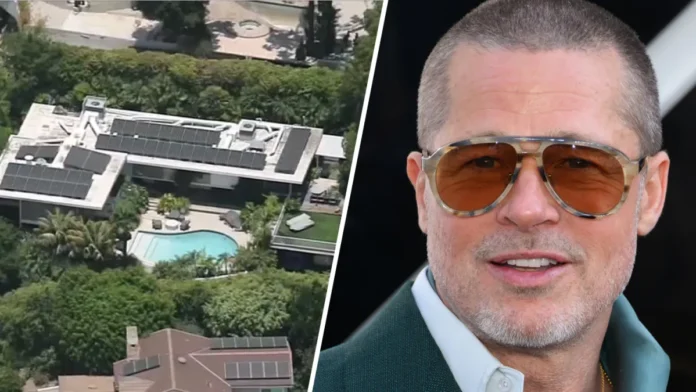
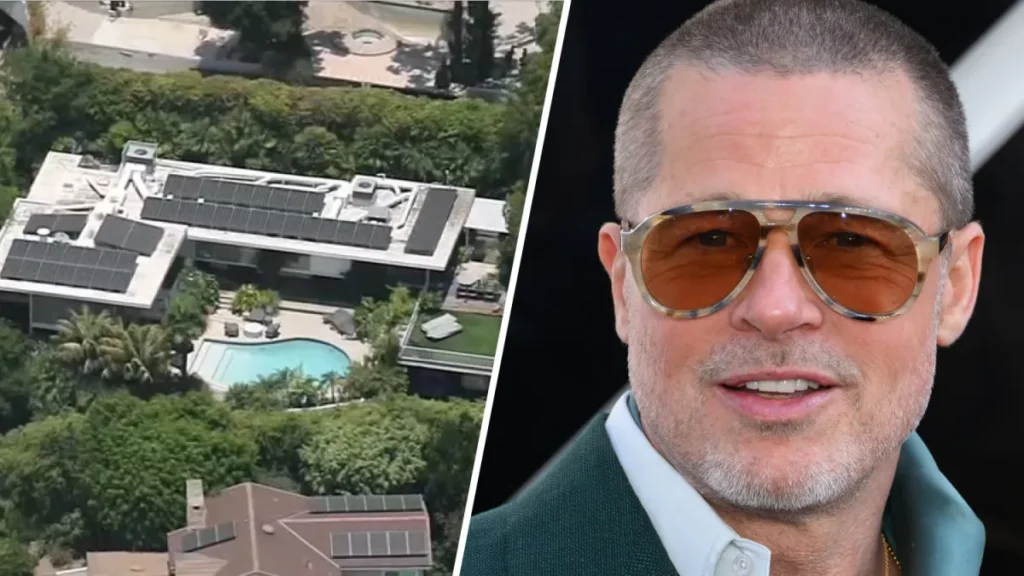
Brad Pitt’s Los Angeles residence was broken into by a group of burglars late Wednesday night while the actor was out of the country, according to two law enforcement sources who spoke to NBC News, Sky News’ US partner.

The Los Angeles Police Department confirmed that three suspects forced entry through a front window of the home in Los Feliz and “ransacked the location.” Authorities would not identify the owner, but property records confirm the address matches a house Pitt purchased in 2023.

Investigators said the intruders fled with stolen items, though it remains unclear exactly what was taken. The Oscar-winning actor was not home at the time.

Pitt, 60, had traveled to London earlier in the week for the premiere of his new film F1, where he appeared alongside Tom Cruise and seven-time Formula One world champion Lewis Hamilton.

Police said the burglary occurred around 10:30 p.m. local time Wednesday. They declined to confirm whether Pitt’s representatives had provided an inventory of missing property or to estimate the value of any stolen items. The BBC reported that Pitt’s team had also been contacted for comment.

The secluded three-bedroom property, surrounded by fencing and dense greenery near Griffith Park and the iconic Hollywood Sign, is designed to shield residents from public view.

The break-in is the latest in a string of celebrity home burglaries across Los Angeles. Earlier this year, the homes of Nicole Kidman and Keith Urban were also targeted by thieves.

Last month, a man was arrested on suspicion of stalking and vandalism after allegedly ramming his car into the gate of the home belonging to Pitt’s ex-wife, Jennifer Aniston.

Prosecutor: Sean ‘Diddy’ Combs Used Violence and Fear to Traffic Women as Criminal Trial Nears Verdict

0

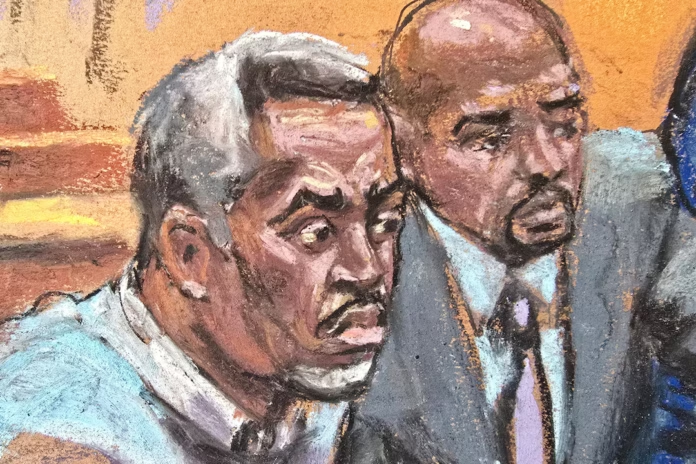
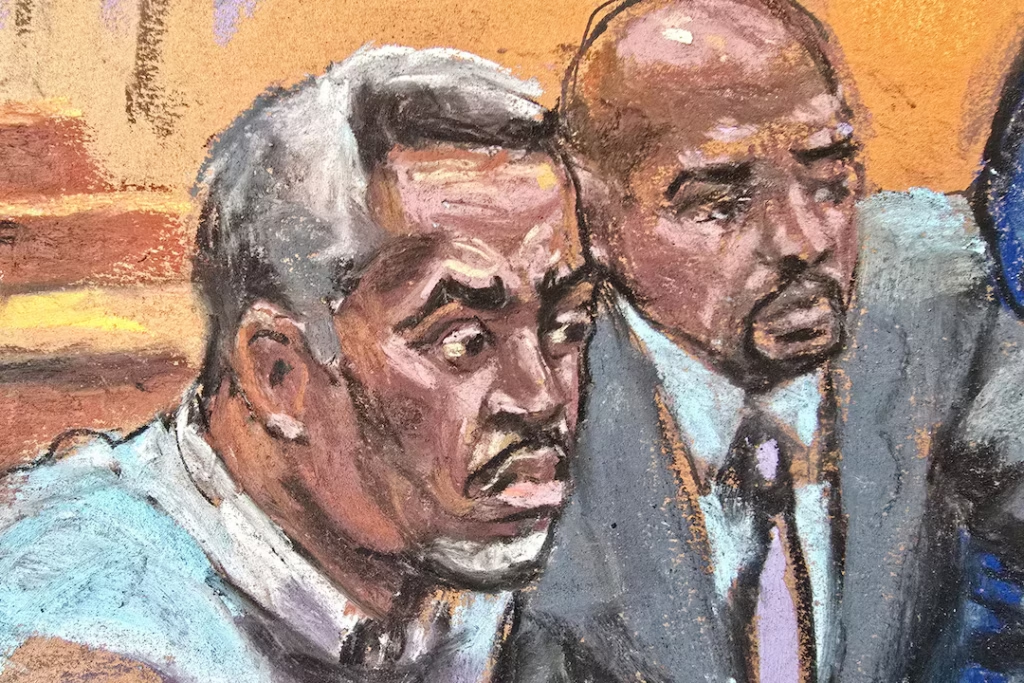
NEW YORK (BN24) — Music mogul Sean “Diddy” Combs ran a criminal enterprise built on “violence and fear” that enabled him to traffic women for sex, a federal prosecutor told jurors Thursday in a forceful closing argument at the end of the high-profile trial.

Combs, the 54-year-old founder of Bad Boy Records and once a billionaire at the helm of hip-hop’s commercial rise, has pleaded not guilty to charges of racketeering conspiracy and two counts each of sex trafficking and interstate transportation for prostitution. If convicted on all counts, he faces a mandatory minimum sentence of 15 years in prison and could be sentenced to life.

Over the course of six weeks in Manhattan federal court, jurors heard graphic testimony from two women—R&B singer Casandra “Cassie” Ventura and another woman identified only by the pseudonym “Jane”—who described being forced into “Freak Offs,” Combs’ term for drug-fueled sex parties involving male sex workers. Jurors viewed surveillance footage of Combs beating Ventura in a hotel hallway, and heard from his employees who detailed arranging hotel rooms and supplying drugs for the events.

“The defendant used power, violence and fear to get what he wanted,” prosecutor Christy Slavik told the jury. “He thought his fame, his money, and his power placed him above the law.”

Combs, who did not testify in his defense, has remained in federal custody at Brooklyn’s Metropolitan Detention Center since his arrest in September 2024. Deliberations are expected to begin late Friday or Monday.

Coercion and Consent at the Heart of the Case

Central to the prosecution’s case is whether the women willingly participated in the “Freak Offs” or were coerced through intimidation, manipulation, and threats. Both Ventura and Jane testified that they feared losing financial support or being publicly humiliated if they refused to comply.

Slavik directed jurors to text messages introduced during the trial in which Jane expressed fear that Combs would stop paying her rent if she did not continue performing. “It doesn’t require them to say no,” Slavik said of the coercion standard. “It doesn’t require them to try to run away.”

Combs’ defense team is expected to deliver its closing argument Friday. While his attorneys have conceded that he engaged in some violent behavior in domestic relationships, they argued the sex acts were consensual and not part of any criminal enterprise. They claim the women never expressed non-consent and participated because they loved Combs and wanted to please him.

Defense lawyers also argued that Combs’ employees, whom the prosecution accuses of facilitating and concealing the abuse, were not aware of any illegal activity and only procured drugs for Combs’ personal use—not in furtherance of trafficking.

Jury Will Decide Between Two Starkly Different Narratives

Combs’ legal team has sought to discredit the racketeering charge by portraying his associates not as co-conspirators but as unwitting employees, unaware of any abuse or coercion. The prosecution, however, maintains the mogul’s inner circle enabled a pattern of criminal behavior stretching back years.

“This case is not just about what happened behind closed doors,” Slavik said. “It’s about how he used his resources and entourage to perpetuate and protect that behavior.”

Legal experts say the jury’s decision will hinge on which account they find more credible: the prosecution’s depiction of calculated coercion and abuse, or the defense’s portrayal of flawed but consensual relationships.

“The question is which narrative is going to hold more weight,” said Heather Cucolo, a professor at New York Law School. “Jurors must be unanimous in finding guilt beyond a reasonable doubt, and both sides have presented compelling, if competing, versions of events.”

Iran Denies Any Plans for U.S. Meeting Next Week, Foreign Minister Says

0

TEHRAN, Iran (BN24) — Iran has no plans to hold talks with the United States next week, Foreign Minister Abbas Araqchi said Thursday, publicly rejecting a claim by President Donald Trump that a meeting was imminent between the two longtime adversaries.

Speaking in an interview broadcast on Iranian state television, Araqchi dismissed the idea of an upcoming dialogue with Washington, asserting that no such engagement is currently scheduled. His comments directly contradicted President Trump’s earlier statement that U.S. and Iranian officials were preparing for negotiations next week in the wake of a fragile ceasefire with Israel.

“There is no meeting planned between Iran and the United States at this time,” Araqchi said. “We are evaluating whether further talks serve our national interest, especially after the disruption of previous rounds.”

The foreign minister referred to five earlier rounds of U.S.-Iran negotiations—widely believed to have been held through intermediaries—which he said were derailed when U.S. and Israeli forces launched a series of coordinated strikes on Iranian nuclear facilities earlier this month.

Both Washington and Tel Aviv have justified the strikes as necessary measures to degrade Iran’s potential to develop nuclear weapons. Tehran, however, has maintained that its nuclear program is strictly civilian in nature, intended for energy production and medical research.

Araqchi acknowledged that the recent attacks had caused significant setbacks. “The damage to our nuclear infrastructure was not minor,” he said, adding that Iranian authorities were “reviewing the extent of the losses and recalibrating the future course of our nuclear policy accordingly.”

His remarks signal Tehran’s continued skepticism over Washington’s intentions, even as U.S. officials, including Trump, have floated the possibility of renewed talks. The conflicting statements underscore the uncertainty surrounding any future diplomatic engagement between the two nations.

While President Trump said earlier this week that “we’re going to talk to them [Iran] next week” and hinted at the possibility of an agreement, Araqchi’s denial suggests that Iran is not yet ready to return to the negotiating table—at least not on Washington’s timeline.

Diplomatic observers say Tehran’s calculus will likely hinge on a combination of factors, including the full extent of the damage to its nuclear infrastructure, the strength of regional alliances, and its internal political dynamics amid a wave of post-war nationalism.

Justice Department Launches Probe Into University of California Over Diversity Hiring Practices

0

WASHINGTON (BN24) — The Trump administration’s Justice Department has opened a civil rights investigation into the University of California’s hiring practices, examining whether the public university system’s push to diversify its faculty may violate federal anti-discrimination laws.

In a statement issued Thursday, the department confirmed that its Civil Rights Division will scrutinize whether the University of California has engaged in a “pattern or practice” of employment discrimination by using race and sex as factors in faculty hiring decisions. The investigation marks the latest escalation in President Donald Trump’s broader crackdown on what his administration views as political bias and unequal treatment at U.S. academic institutions.

“Institutional directives that use race- and sex-based hiring practices expose employers to legal risk under federal law,” said Harmeet Dhillon, assistant attorney general for the Civil Rights Division. The inquiry will determine whether any practices violate Title VII of the Civil Rights Act of 1964, which prohibits employment discrimination based on race, color, religion, sex, or national origin.

The investigation zeroes in on the University of California’s multi-campus strategic plan, which explicitly lists boosting the number of underrepresented minority and female faculty as a priority goal. Justice Department officials argue such directives could amount to unlawful quotas or preferences.

A spokesperson for the University of California responded in a statement that the university system “is committed to fair and lawful processes in all of our programs and activities, consistent with federal and state anti-discrimination laws.”

“The University also aims to foster a campus environment where everyone is welcomed and supported,” the spokesperson said, adding that UC would cooperate “in good faith” with federal authorities.

The inquiry adds to a growing list of confrontations between the Trump administration and institutions of higher learning over issues of identity, equality, and academic freedom. The administration has already launched probes into campus responses to antisemitism, sought to restrict federal research funding, and threatened universities with legal action over policies it views as discriminatory or ideologically driven.

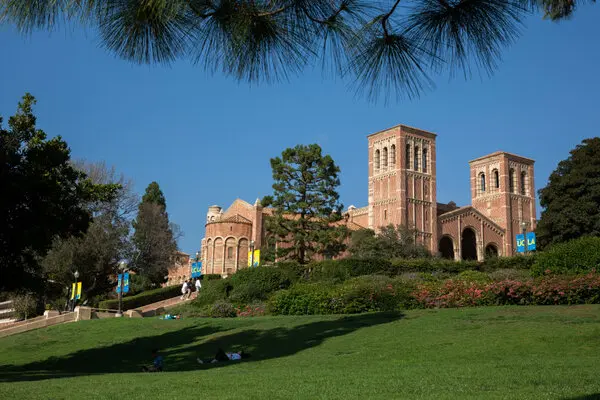
The University of California system, which spans 10 campuses and employs more than 20,000 faculty members, is widely seen as a national leader in diversity and inclusion initiatives. But officials in Washington say those efforts must not override legal protections against discrimination.

The move is expected to further strain relations between the Trump White House and California’s Democratic leaders, who have frequently clashed over immigration, education, and civil rights. Governor Gavin Newsom has already taken the administration to court over federal intervention in California’s National Guard deployments, and additional legal challenges may follow depending on the outcome of the hiring probe.

Tensions have also escalated over state legislation that allows transgender athletes to compete on girls’ teams in public schools, a law the Justice Department is reviewing separately as part of its broader challenge to progressive policies in the Golden State.

Trump Administration Plans Second Deportation of Kilmar Abrego, But El Salvador Not the Destination

0

WASHINGTON (BN24) — The Trump administration is preparing to deport Kilmar Abrego for a second time, but this time the Salvadoran national will not be returned to El Salvador, the country where he was wrongly deported in March, a Justice Department attorney told a federal judge on Thursday.

During a hearing in U.S. District Court in Maryland, government attorney Jonathan Guynn said the administration currently has “no imminent plans” to remove Abrego from the country. However, should a deportation take place, Abrego would be sent to a third, unnamed nation—not back to El Salvador, where his life was previously deemed at risk.

Abrego, 29, is at the center of a growing legal and political controversy after his March deportation violated a 2019 federal court order barring his removal to El Salvador over concerns of potential persecution. After being imprisoned in El Salvador, he was recently returned to the U.S. under federal custody to face criminal charges for allegedly smuggling undocumented migrants into the country. He has pleaded not guilty.

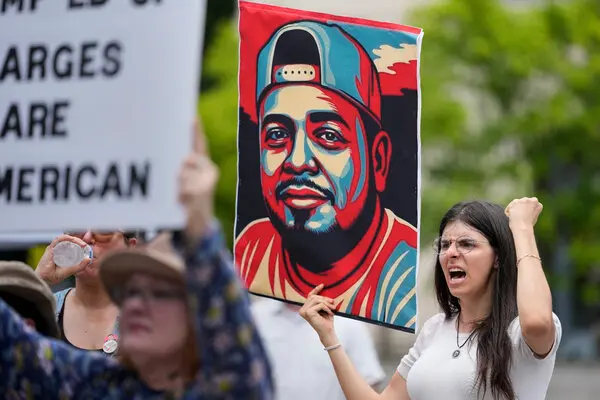
The Trump administration’s effort to remove Abrego again, even as legal proceedings remain underway, has further inflamed tensions surrounding the president’s aggressive immigration enforcement strategy. Abrego, who had been living in Maryland with his U.S. citizen wife and young child, has drawn widespread attention as a symbol of what critics say is a system disregarding due process protections for migrants.

A federal judge in Maryland has ordered that Abrego be released ahead of trial, possibly as early as Friday. However, the Department of Homeland Security has indicated it will take him into immigration custody immediately, raising fresh questions about his fate and the administration’s legal responsibilities.

Abrego’s attorneys have urged the court to keep him in Maryland while both the immigration and criminal cases proceed, and to ensure no further deportation is attempted until the legal matters are resolved. Two federal courts—one in Maryland and the other in Tennessee, where the criminal charges were filed—have yet to issue final rulings on those requests.

The Justice Department has remained largely silent about where Abrego might be deported if the removal goes ahead. “He will not be sent to El Salvador,” Guynn said Thursday, without providing further detail.

Meanwhile, Assistant U.S. Attorney Robert McGuire, who is leading the prosecution in Nashville, told Magistrate Judge Barbara Holmes this week that he would coordinate with DHS “as best as he could,” but acknowledged that prosecutorial discretion does not extend to immigration enforcement decisions.

The case has become a flashpoint in the Trump administration’s broader immigration agenda, which has faced repeated judicial challenges and criticism from human rights groups. Abrego’s wrongful deportation, his subsequent return to the United States, and now the uncertainty over a potential second removal have further underscored the legal complexity and human toll of fast-tracked immigration enforcement.